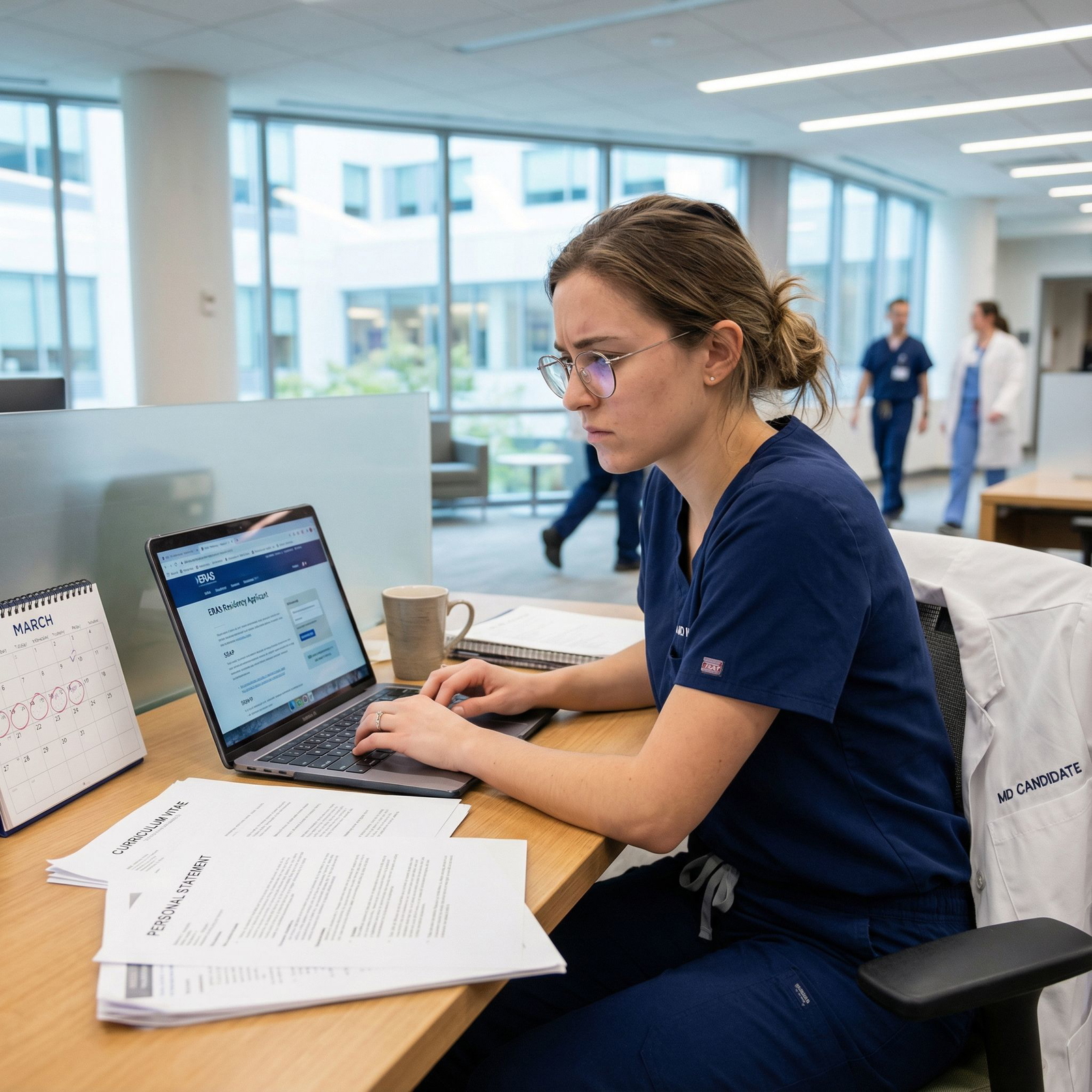
Preparing for the Supplemental Offer and Acceptance Program (SOAP) is one of the most high‑stakes, emotionally intense phases of the residency application process—especially if you are an international medical graduate (IMG) targeting a relatively small and specialized field like nuclear medicine residency.
This IMG residency guide will walk you step‑by‑step through SOAP preparation specifically tailored to nuclear medicine, so that if you end up in SOAP, you can respond strategically instead of reacting in panic.
Understanding SOAP and Why It Matters for IMGs in Nuclear Medicine
Before planning, you must clearly understand what is SOAP, how it works, and why it is particularly important for an IMG interested in nuclear medicine.
What Is SOAP?
SOAP (Supplemental Offer and Acceptance Program) is an organized, time‑limited process run by the NRMP during Match Week to help unmatched or partially matched applicants connect with unfilled residency positions.
Key points about SOAP:
You participate only if:
- You registered for the Main Match, and
- You are eligible (unmatched / partially matched, and not withdrawn).
SOAP involves:
- A list of unfilled positions released by NRMP (viewed in ERAS).
- Multiple application rounds to these unfilled programs via ERAS.
- Several offer rounds, where programs send offers through NRMP, and you accept or reject in real time.
In short, SOAP is a structured mini-Match over four intense days.
Why SOAP Is Critical for IMGs
As an international medical graduate, the nuclear medicine match may be especially challenging:
- Nuclear medicine is relatively small, with limited categorical positions.
- Many positions are subspecialty/fellowship level (post-radiology or post-internal medicine), and visa sponsorship can vary.
- Some programs are more cautious about sponsoring visas or interviewing IMGs without strong US experience.
This means:
- If you do not match initially, SOAP may be your best or only chance at obtaining a position in the current cycle.
- Effective SOAP preparation can distinguish you from other IMGs scrambling at the last minute.
How SOAP Connects to Nuclear Medicine
Nuclear medicine positions may appear in SOAP, but there are important nuances:
Categorical Nuclear Medicine Residencies:
- Fewer in number, highly variable in terms of IMG friendliness and visa support.
- Some slots may go unfilled and appear in SOAP, especially newly accredited or smaller programs.
Alternate Entry Routes:
- Internal medicine, radiology, or other categorical prelim/transitional year positions may be part of a long‑term plan to reach nuclear medicine.
- SOAP may not always offer nuclear medicine directly, but it can offer stepping-stone programs (e.g., preliminary medicine, transitional year) that keep you in the system and close to imaging departments.
Program Directors’ Perspective:
- During SOAP, PDs must move quickly.
- For nuclear medicine, they may prioritize applicants who:
- Show commitment to imaging and molecular medicine.
- Have relevant experience (research, observerships, rotations, QI projects) in nuclear medicine or radiology.
- Are ready to start logistically (visa, ECFMG certification, licensing steps).
Understanding these dynamics is the foundation of your SOAP preparation strategy.
Pre-Match SOAP Preparation Strategy for IMGs Targeting Nuclear Medicine
Preparation starts months before Match Week. Even if you’re optimistic about matching, you should have a SOAP plan—this is standard risk management, not pessimism.
1. Clarify Your Nuclear Medicine Career Path
As an IMG, nuclear medicine can be approached in multiple ways:
- Direct nuclear medicine residency (where available).
- Diagnostic radiology followed by nuclear medicine or molecular imaging fellowship.
- Internal medicine or other prelim year followed by later entry into imaging or nuclear medicine programs (depending on country and pathway).
Before SOAP:
- Decide what roles you would realistically consider if you do not match directly:
- Nuclear medicine residency only?
- Transitional year or prelim medicine as a bridge?
- Internal medicine or other specialties with strong imaging exposure?
Create a hierarchy of acceptability:
- Nuclear medicine categorical positions
- Imaging‑heavy transitional or prelim years
- Other categorical specialties you would realistically pursue
- Positions you would not accept, even via SOAP
Writing this down now avoids emotional, rushed decisions later.
2. Optimize Your ERAS Profile for SOAP
In SOAP, you cannot create a new application; you can only update certain parts of your ERAS file. Your core application must already be strong and well‑positioned.
Before rank list certification:
Update your CV with:
- Any new nuclear medicine research, abstracts, or posters.
- US clinical experience, especially imaging or radiology‑related.
- Teaching, leadership, or quality‑improvement projects.
Refine your descriptions:
- Emphasize quantitative details (e.g., “Analyzed 150+ PET/CT scans under supervision” rather than “Helped interpret scans”).
- Highlight decision-making, teamwork, and communication with radiologists, oncologists, and surgeons.
Ensure ECFMG status:
- Aim to be ECFMG certified before Match Week.
- Incomplete certification can make programs hesitant to offer SOAP positions, especially if start date is near.
Clarify visa status:
- Clearly specify if you are:
- Eligible for J‑1 only
- Eligible/preferred for H‑1B
- A permanent resident or citizen
- Nuclear medicine programs under time pressure may prefer visa‑simple applicants. If your visa status is straightforward, emphasize it.
- Clearly specify if you are:
3. Prepare Nuclear Medicine–Focused Documents in Advance
Even though you cannot re-write your entire ERAS personal statement overnight during SOAP, you can:
- Upload additional personal statements tailored to:
- Nuclear medicine specifically
- Transitional/prelim medicine with long‑term imaging interest
- Internal medicine with future imaging focus (e.g., cardiology/nuclear cardiology, oncologic imaging collaboration)
Prepare at least:
Nuclear Medicine Personal Statement
- Why nuclear medicine, specifically?
- How your IMG background (e.g., exposure to TB imaging, oncology, PET/CT in your home country) adds unique value.
- Evidence of long-term commitment: research, electives, conferences (SNMMI, RSNA, EANM).
- Understanding of the evolving field: theranostics, PET tracers, hybrid imaging, AI in imaging workflows.
Bridge-Year Personal Statement (Transitional/Prelim)
- Emphasize:
- Desire to build strong US clinical foundations.
- Interest in radiology and nuclear medicine collaboration, multidisciplinary tumor boards.
- Flexibility and eagerness to support general medical care while preparing for an imaging-focused career.
- Emphasize:
You can quickly assign different PS versions to different programs during SOAP. Having them ready is critical.
Building a Targeted SOAP Program List for Nuclear Medicine and Adjacent Paths
You cannot predict exactly which programs will be unfilled, but you can anticipate categories of programs and prepare a flexible approach.
1. Understand How SOAP Applications Work
- You will see the list of unfilled programs in ERAS at the start of SOAP.
- You can apply to a limited number of programs (NRMP sets a cap; historically, 45 maximum, but always confirm for the current year).
- You must strategically allocate these applications between:
- Nuclear medicine positions (if available)
- Transitional/prelim positions that keep imaging pathways open
- Back‑up categorical specialties you truly are willing to pursue
2. Research Likely Nuclear Medicine and Imaging-Friendly Programs Now
Before Match Week:
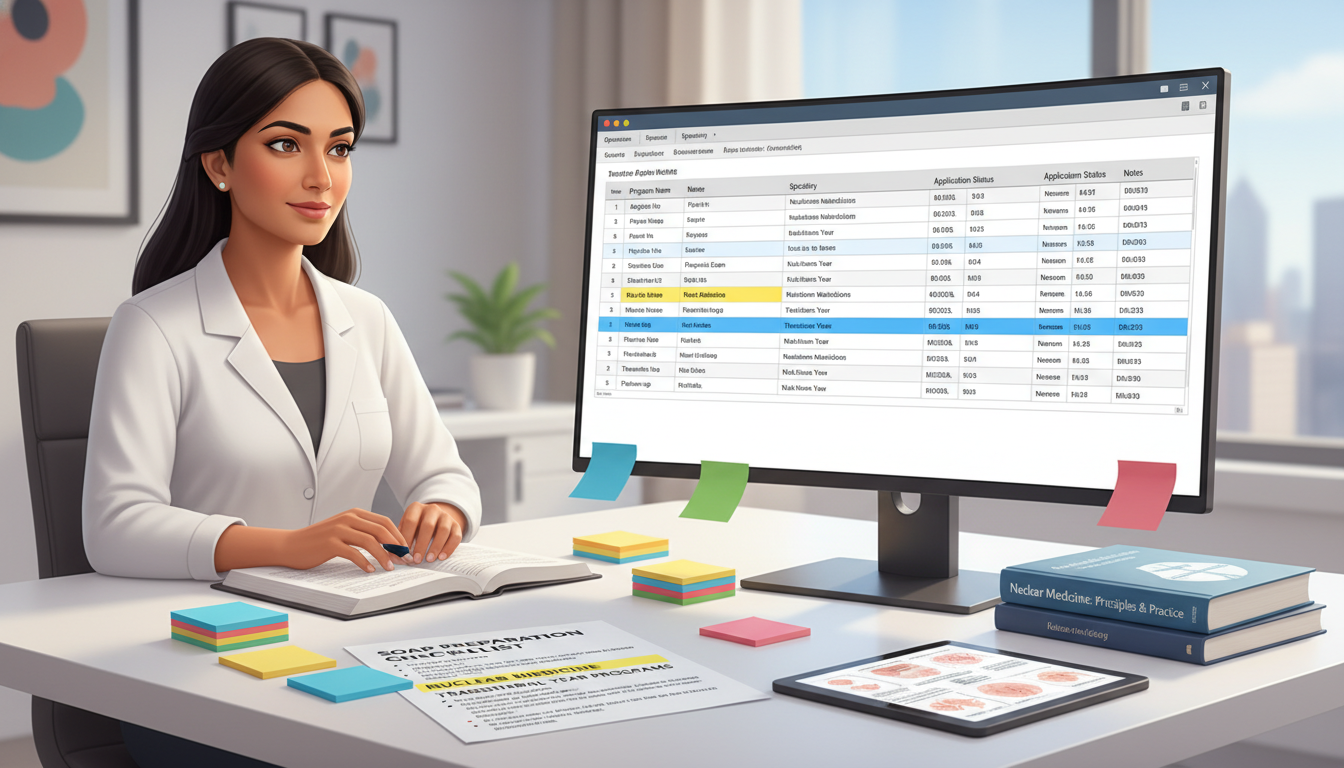
Make a spreadsheet with columns such as:
- Program name, institution
- Specialty (Nuclear Medicine, Transitional, Prelim IM, Categorical IM, Radiology)
- Location
- IMG friendliness (historical trends, if public)
- Visa sponsorship (from FREIDA/program website)
- Affiliated imaging centers / comprehensive cancer centers
- Nuclear medicine faculty interests (theranostics, PET/MR, etc.)
For nuclear medicine–focused opportunities:
- List all ACGME‑accredited nuclear medicine residency programs.
- Note which are part of large academic centers with strong imaging infrastructure.
- Identify programs that have historically taken IMGs.
Even if you don’t know which of these will appear in SOAP, you’ll be ready to quickly identify and prioritize them if they do.
3. Plan a Tiered Application Strategy
When the unfilled list appears:
Tier 1 – Direct Nuclear Medicine Positions
- Any nuclear medicine residency position that:
- Accepts IMGs
- Sponsors your visa type
- Aligns with your long-term goals
- Apply to all reasonable nuclear medicine positions first.
- Any nuclear medicine residency position that:
Tier 2 – Imaging-Friendly Transitional and Prelim Programs
- Transitional year programs at hospitals with:
- Active nuclear medicine or molecular imaging divisions.
- Large radiology departments, PET/CT, SPECT/CT, theranostics clinics.
- Prelim internal medicine programs strongly linked to cancer centers or academic radiology programs.
Explain in your PS and experiences:
- How this year will prepare you for nuclear medicine.
- Your interest in participating in imaging-related QI, research, or tumor boards.
- Transitional year programs at hospitals with:
Tier 3 – Categorical Programs as True Backups
- Only consider specialties you’re genuinely open to practicing if nuclear medicine does not work out.
- Example: Categorical internal medicine with a plan to work closely with imaging, or to pursue cardiology or oncology with nuclear imaging components.
This tiered approach prevents you from “wasting” applications on programs you would never accept while maximizing your chance of getting a position that keeps your nuclear medicine path realistic.
SOAP Week: Execution Plan for IMGs Pursuing Nuclear Medicine
When Match Week begins and you discover you are unmatched or partially matched, emotions are intense. Your pre‑planned SOAP preparation will help you stay focused.
1. Immediate Steps on Monday (Match Status Day)
If you discover you are unmatched or partially matched:
Allow yourself a short, honest emotional reaction, then quickly:
- Confirm your SOAP eligibility in NRMP.
- Log in to ERAS and verify:
- ECFMG certification status.
- Uploaded documents (USMLE transcripts, LoRs, PS versions).
- Contact information (email, phone, WhatsApp if listed—must be reachable).
Reach out to:
- Your medical school advisor (if accessible).
- Any US mentors in nuclear medicine/radiology who can:
- Provide advice.
- Potentially contact programs (ethically and within NRMP rules).
2. Reviewing the Unfilled List: Nuclear Medicine Opportunities
When the unfilled positions list is published:
Immediately filter for:
- Nuclear medicine
- Radiology (if available as integrated pathways)
- Transitional and prelim programs at institutions with strong imaging.
Use your pre‑created spreadsheet to:
- Cross‑reference the institution and see whether it aligns with your Tier 1, 2, 3 structure.
- Mark programs as High, Moderate, or Low Priority.
Example decisions:
- Program A – Nuclear medicine residency, major academic center, J‑1 accepted, previous IMGs in PD letter or website: High priority.
- Program B – Transitional year, NCI‑designated cancer center with theranostics clinic: High priority Tier 2.
- Program C – Categorical internal medicine in a rural, non‑imaging‑focused hospital with minimal nuclear medicine: Lower priority unless geographic or family reasons exist.
3. Efficiently Assigning Personal Statements and LoRs
Within ERAS during SOAP:
Assign your nuclear medicine–specific personal statement to:
- All nuclear medicine positions.
- Possibly transitional programs with clear nuclear medicine exposure (adjust as needed).
Assign your bridge-year personal statement to:
- Transitional year and prelim IM programs.
- Emphasize imaging collaboration and future nuclear medicine goals in a way appropriate to general medicine settings.
Select LoRs strategically:
- For nuclear medicine programs:
- Prioritize letters from nuclear medicine or radiology faculty.
- Include any letter highlighting your imaging research or analytic skills.
- For bridge-year programs:
- Include letters from internal medicine, surgery, or general clinical supervisors who can speak to clinical reliability, teamwork, and patient care.
- For nuclear medicine programs:

Interviewing and Communication During SOAP for Nuclear Medicine Candidates
SOAP interviews are shorter, faster, and more focused than regular season interviews. As an IMG, you must be particularly concise, clear, and reassuring.
1. Typical SOAP Interview Dynamics
Programs may:
- Conduct phone or video interviews lasting 10–20 minutes.
- Focus on:
- Your motivation for the specialty.
- Whether you are ready to start (certification, visa, relocation).
- Your professionalism and communication under pressure.
Be prepared for less structure—some SOAP interviews feel more like rapid screens than formal panels.
2. Key Talking Points for Nuclear Medicine–Oriented SOAP Interviews
For direct nuclear medicine positions, you should confidently address:
Why Nuclear Medicine?
- Be specific:
- Interest in hybrid imaging (PET/CT, SPECT/CT).
- Fascination with molecular imaging and theranostics (e.g., Lu-177, Ga-68).
- Desire to work at the intersection of oncology, cardiology, and imaging.
- Be specific:
Your Nuclear Medicine Exposure
- Mention:
- Clinical rotations or observerships in nuclear medicine or radiology.
- Research on PET tracers, dosimetry, imaging biomarkers, or theranostics.
- Any hands-on interactions with PACS, reporting, or multidisciplinary tumor boards.
- Mention:
How You Add Value as an IMG
- Global perspective on disease prevalence (e.g., infection imaging, TB, endemic cancers).
- Adaptability to resource-limited settings, and appreciation for appropriate imaging utilization.
- Multilingual communication beneficial for diverse patient populations.
Readiness and Logistics
- Clarify:
- ECFMG certificate in hand.
- Visa type and timeline (if J‑1, you understand requirements; if H‑1B possible, mention current USMLE Step 3 status).
- Plan for quick relocation if an offer is received.
- Clarify:
3. Talking Points for Transitional/Prelim Positions with Future Nuclear Medicine Goals
If interviewing for transitional year or prelim medicine:
- Emphasize clinical excellence first:
- Willingness to fully commit to general patient care, call responsibilities, and team integration.
- Connect to nuclear medicine appropriately:
- Interest in learning how imaging affects clinical decisions.
- Desire to contribute to QI projects involving imaging utilization, test appropriateness, or cancer staging workflows.
- Reassure them:
- You are not treating this as a “holding pattern” only, but as a real opportunity to grow as a clinician.
4. Communicating Professionalism and Resilience
Programs know that SOAP participants are under pressure. You can stand out by:
- Maintaining a calm, respectful tone.
- Avoiding complaints about not matching or blaming others.
- Briefly, honestly summarizing why you believe you were unmatched (if asked), then pivoting to:
- What you’ve learned.
- How you’ve improved your application.
- Why their program is a good fit now.
Managing Offers, Decisions, and Future Planning After SOAP
If you’ve prepared well, you may receive one or more offers during SOAP. Each offer must be evaluated quickly and thoughtfully.
1. Understanding SOAP Offers
- Offers are made in rounds during SOAP.
- If you accept an offer:
- You are committed (a binding agreement).
- You are removed from further SOAP participation.
- If you reject or let an offer expire:
- You may or may not receive another offer in later rounds.
Your goal is to avoid impulsive acceptance while also not missing realistic opportunities.
2. Evaluating a Nuclear Medicine SOAP Offer as an IMG
When you receive a nuclear medicine offer, consider:
Accreditation and Program Stability
- ACGME accreditation status.
- Affiliation with reputable academic or large community institutions.
- Adequate case volume (PET/CT, SPECT/CT, theranostics).
Visa and Long-Term Practice Prospects
- Will they sponsor your required visa type?
- Does completion of this program qualify you for:
- Board certification in nuclear medicine (ABNM) or equivalent.
- Practice opportunities in the US or your home country?
Educational Environment
- Access to:
- Faculty with diverse expertise.
- Research opportunities.
- Multidisciplinary conferences.
- Access to:
If the program is solid and aligns with your goals, accepting a nuclear medicine offer is usually wise, as such opportunities are limited.
3. Evaluating Transitional or Prelim Positions
For a bridge-year offer:
- Assess:
- Linkages to imaging departments.
- Opportunities to network with nuclear medicine and radiology faculty.
- Geographic and family considerations.
- Determine if this position is a strategic platform that:
- Keeps you in the US system.
- Allows you to build stronger relationships and credentials for a future nuclear medicine match.
4. If You Don’t Secure a Position in SOAP
If SOAP ends without an offer:
- It is emotionally difficult, but many IMGs have successfully:
- Strengthened their CV with research in nuclear medicine, new observerships, or advanced degrees (e.g., MPH with an imaging focus).
- Reapplied in subsequent cycles and matched.
Use the post‑SOAP period to:
- Request feedback from mentors and, where possible, programs.
- Correct systemic weaknesses:
- Additional US experience.
- Improved USMLE scores (Step 3, if not done).
- Stronger letters from nuclear medicine or radiology faculty.
This cycle still provides valuable insight into how competitive you are and what gaps to close.
FAQs: SOAP Preparation for IMGs in Nuclear Medicine
1. As an IMG, should I focus only on nuclear medicine positions during SOAP?
No. While you should prioritize nuclear medicine positions, the number of such slots in SOAP is usually very small. Include:
- All suitable nuclear medicine positions.
- Transitional and prelim positions in institutions with strong imaging services.
- Only those categorical backups you are truly willing to pursue.
A balanced strategy protects your nuclear medicine goals while avoiding complete unemployment in the cycle.
2. How can I demonstrate serious interest in nuclear medicine if I have limited direct experience?
You can strengthen perceived commitment by:
- Engaging in nuclear medicine or radiology research (even retrospective chart reviews or image-based studies).
- Completing observerships or electives in nuclear medicine/radiology.
- Attending and mentioning conferences (SNMMI, RSNA) or online CME modules on PET/CT, theranostics, or hybrid imaging.
In your personal statement and interviews, highlight specific clinical cases or imaging technologies that inspired your interest.
3. What is SOAP preparation I can start months before Match Week?
Key early actions include:
- Ensuring ECFMG certification and clear visa documentation.
- Drafting multiple personal statement versions (nuclear medicine–specific, transitional/prelim).
- Creating a spreadsheet of nuclear medicine and imaging-friendly programs with visa and IMG data.
- Strengthening your ERAS content with updated research, experiences, and precise descriptions of imaging exposure.
This early SOAP preparation transforms Match Week from chaos into a structured action plan.
4. If I accept a transitional or prelim position in SOAP, how does that affect my future nuclear medicine match chances?
A well-chosen transitional or prelim year can significantly improve your future prospects by:
- Providing strong US clinical experience and LoRs.
- Allowing you to network with radiology and nuclear medicine faculty.
- Demonstrating resilience, professionalism, and adaptability.
However, you must remain proactive—seek imaging-related projects, show interest in nuclear medicine, and plan your next application cycle early.
By approaching SOAP with a structured, nuclear medicine–focused strategy, you, as an international medical graduate, can transform a stressful situation into a meaningful opportunity—either to secure a nuclear medicine residency now or to move deliberately closer to that goal in the near future.