Understanding SOAP in the Context of Preliminary Surgery
The Supplemental Offer and Acceptance Program (SOAP) is both a safety net and a second chance for unmatched applicants—and it plays a particularly important role for those interested in a preliminary surgery year. Many categorical and advanced positions expect interns to have strong surgical foundations, and a prelim surgery residency can provide that bridge. But capitalizing on SOAP requires focused, early, and disciplined preparation.
Before diving into strategy, it’s essential to be clear on the basics.
What is SOAP?
SOAP is an organized, time-limited process run by the NRMP during Match Week for eligible applicants who are:
- Unmatched, or
- Partially matched (e.g., advanced position without a PGY-1 spot), and
- Registered for the Match and not withdrawn.
SOAP allows these applicants to:
- View a list of unfilled programs,
- Apply electronically via ERAS, and
- Receive and accept offers in several timed rounds.
SOAP is not a free-for-all scramble or open negotiation. It is regulated, scripted, and time-sensitive. Violations—such as contacting programs outside of allowed channels—can carry serious consequences.
For preliminary surgery specifically, SOAP often features:
- Multiple PGY-1 preliminary surgery positions at both academic and community programs,
- Some programs that regularly recruit their future categorical residents from the prelim pool,
- A mix of highly desirable and very demanding positions.
Knowing this landscape allows you to plan realistically and strategically.
Step 1: Clarify Your Goals for a Preliminary Surgery Year
Before doing any SOAP preparation, you must define what you want from a preliminary surgery year. Your strategy will look very different depending on your long-term goals.
Common goals for a prelim surgery residency
Bridge to categorical general surgery
- You ultimately want to be a general surgeon.
- You hope to convert to a categorical spot at the same institution or reapply to categorical surgery next cycle.
- You need a strong intern year, great evaluations, and letters from surgeons.
Stepping stone to a competitive specialty
- You are aiming for surgical subspecialties (e.g., neurosurgery, orthopedics, ENT, urology) or perhaps a non-surgical but competitive specialty.
- You need broad operative and critical care exposure, evidence of strong clinical performance, and academic productivity to improve your application.
PGY-1 clinical training to complement an advanced position
- You already matched into an advanced (PGY-2+) position but need a strong clinical base year.
- You may value rotations in ICU, trauma, and emergency general surgery more than pure operative volume.
Time to strengthen your application and explore options
- You are unsure about long-term specialty but want a rigorous clinical experience.
- You may be open to switching directions depending on how the year evolves.
How goals affect your SOAP strategy
If your priority is categorical surgery, target programs known to:
- Promote prelims into categorical spots,
- Provide constructive mentorship, and
- Offer structured education rather than pure service.
If your focus is a different competitive field, seek:
- Large academic centers,
- Strong ICU and perioperative exposure,
- Research infrastructure and leadership open to supporting your goals.
If you simply need a solid PGY-1 year, prioritize:
- Reasonable workload and supervision,
- Breadth of rotations (ICU, wards, consults, perhaps ED),
- Programs with a track record of supporting prelims’ next steps.
Write down your 2–3 top priorities (e.g., “academic center, strong ICU, mentorship opportunities”) and keep them in front of you as you plan your SOAP approach. They will guide which unfilled programs are a genuine fit.
Step 2: Prepare Your Application Materials Before Match Week
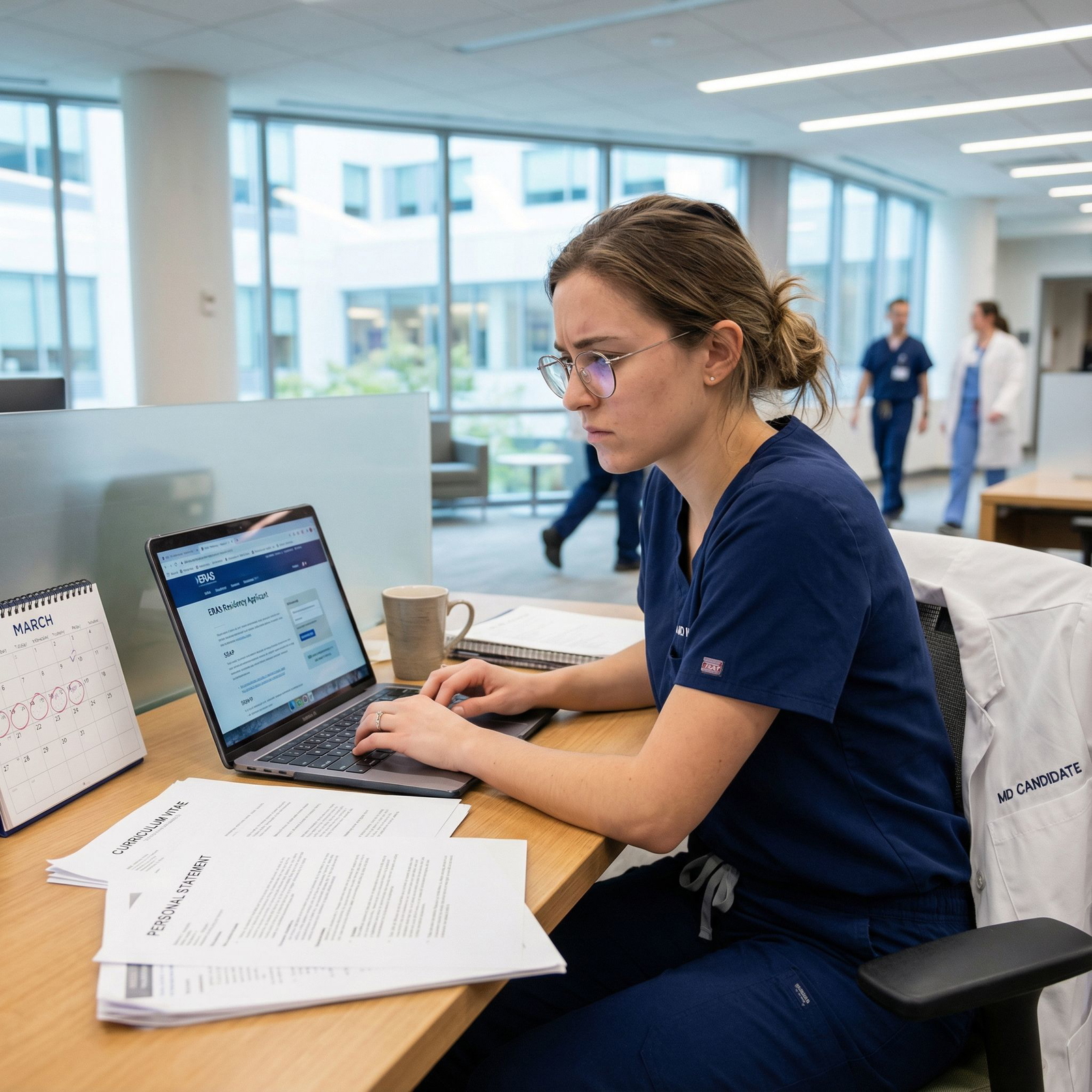
Effective SOAP preparation happens well before you discover your Match status. By the time “What is SOAP?” is trending in group chats during Match Week, you should already have the core of your application ready.
1. Personal statements tailored for SOAP and prelim surgery
You should have at least two versions of your personal statement:
General SOAP personal statement
- Explains your journey, strengths, and why you will be an excellent intern.
- Addresses previous setbacks in a professional, forward-looking way.
- Emphasizes resilience, teachability, and teamwork.
Preliminary surgery–focused personal statement
- Articulates clearly:
- Why a prelim surgery residency is the right next step,
- How it fits your long-term goals (categorical GS, subspecialty, etc.),
- What you will contribute specifically as a prelim intern.
- Avoids language that sounds like you view prelim as a consolation prize.
- Balances honesty about not yet being categorical with enthusiasm to train in surgery.
- Articulates clearly:
Actionable tip:
Pre-draft 1–2 additional short paragraphs that can be swapped in, depending on the type of program (e.g., community vs. large academic center). During SOAP, you can quickly customize.

2. Update and SOAP-optimize your CV/ERAS application
Your ERAS application is the backbone of your SOAP file. Before Match Week:
Update all experiences
- Include recent sub-internships, acting internships, and away rotations.
- Clearly highlight any surgery-related rotations and responsibilities.
- Add any new research, posters, or QI projects—even “in progress” items (clearly labeled).
Refine descriptions
- Use action verbs: “managed,” “coordinated,” “assisted,” “performed.”
- Emphasize teamwork, systems-based practice, and patient safety.
- For surgical experiences, note familiarity with:
- Preoperative assessment,
- Postoperative care,
- Basic procedural exposure, if applicable.
Highlight adaptability and resilience
- Include leadership during challenging circumstances (COVID, personal adversity).
- Note time management roles (schedule coordination, team leadership, etc.).
3. Secure and prepare your letters of recommendation (LORs)
By the time SOAP begins, you will not realistically be able to obtain new letters. So:
Aim for at least two LORs from surgeons, ideally:
- From a sub-internship or away rotation in general surgery.
- From faculty who can speak to your clinical judgment, work ethic, and teamwork.
Include a third letter from:
- An ICU or medicine rotation director, or
- A research mentor who can validate your academic potential.
Ask letter writers explicitly to comment on:
- How you handle long hours and high workload,
- Your reliability and accountability,
- Whether they would want you as an intern on their team.
4. Build a “SOAP packet” on your computer
Create a dedicated folder with:
- Current CV (non-ERAS version),
- PDF of your personal statements,
- Bullet list of key talking points (strengths, challenges, growth),
- One-page summary of your application “story” (helpful for mock interviews).
This will let you respond quickly to any opportunities (e.g., pre-SOAP advising sessions, quick email introductions allowed by your institution).
Step 3: Strategic SOAP Preparation for Preliminary Surgery
Once you know what SOAP is and you’ve organized your materials, turn to strategy: how to approach SOAP week for maximum impact.
Understand the SOAP timeline and rules
Key features (specific times vary by year—always verify NRMP’s official schedule):
Monday of Match Week
- You learn if you are matched, partially matched, or unmatched.
- If eligible, you gain access to the list of unfilled programs.
Monday–Thursday
- You submit applications to unfilled programs via ERAS (up to a set maximum).
- Programs review applications, potentially conduct brief interviews.
- Formal offer rounds occur in defined windows.
Offer rounds (Tuesday–Thursday)
- You may receive electronic offers from programs.
- You must accept or reject within a specific, short time window.
- Once you accept a position, you are removed from further SOAP rounds.
Strict rules govern communication:
- You cannot cold contact programs to lobby or solicit interviews.
- Programs must initiate any contact within the allowed times and formats.
- Violating these rules can jeopardize your current and future Match eligibility.
SOAP preparation task:
Before Match Week, review NRMP and ERAS SOAP guidelines with your dean’s office or advising team. Ensure you understand:
- Application caps,
- Communication restrictions,
- Offer acceptance rules.
Research and pre-rank your prelim surgery targets
You won’t know which programs will be unfilled, but you can pre-research and categorize likely target types:
Large academic medical centers
- Often have several prelim spots.
- May offer robust didactics, research, and exposure to subspecialties.
- May be more competitive even in SOAP.
University-affiliated community programs
- Strong clinical load with moderate operative exposure.
- Good for those who want hands-on experience and closer attending contact.
Pure community programs
- Heavy service, potentially high volume, variable educational structure.
- Can be excellent for those seeking intense clinical exposure, but burnout risk may be higher.
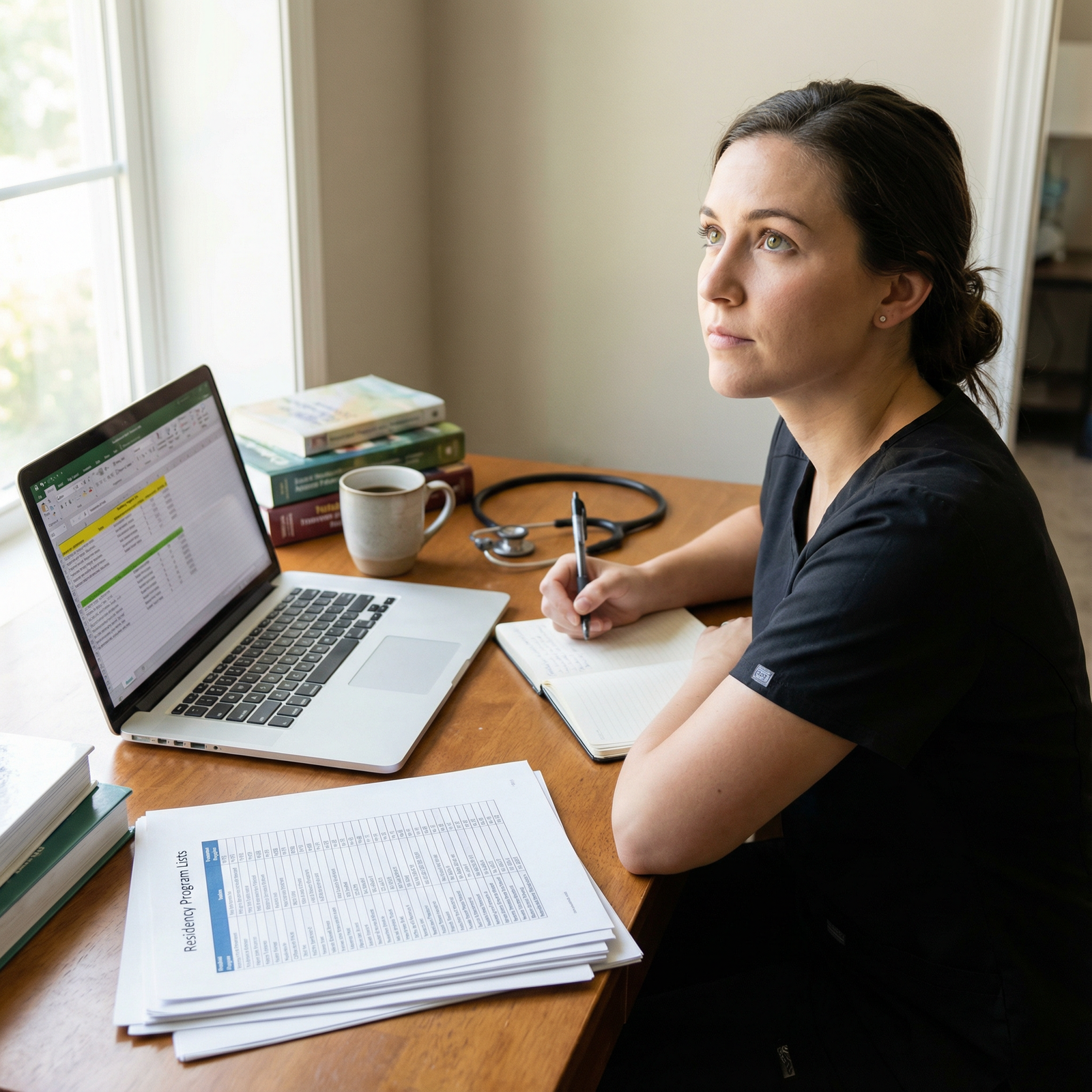
Make a spreadsheet that includes:
- Program name, location, and type (academic vs community),
- Known culture, call schedule, and prelim-to-categorical history (from websites, forums, or alumni),
- Research opportunities,
- Your personal interest level (e.g., A/B/C priority).
During SOAP, when the unfilled list is released, you can map those programs to your pre-work and rapidly decide where to apply.
Be realistic—but do not undersell yourself
Many strong applicants end up in SOAP for reasons unrelated to their potential:
- Overly aggressive initial rank list,
- Limited interviews in their specialty,
- Application misalignment (e.g., switching late to surgery).
When preparing for SOAP:
- Acknowledge reality of your record (scores, failures, gaps, visa needs).
- Apply broadly enough to maximize opportunities.
- Still prioritize fit within your allowed number of applications—especially programs likely to support your long-term goals.
Step 4: Interview and Communication Strategies During SOAP
SOAP interviews are compressed: many are 10–20 minutes, often by phone or video, and may happen back-to-back. Your preparation needs to be as systematic as your written materials.
Core narrative: Your 60–90 second “story”
Develop a concise, confident answer to:
“Tell me about yourself and how you ended up here in SOAP pursuing a preliminary surgery year.”
Include:
- Brief background
- Medical school, any prior degree or unique experiences.
- Connection to surgery
- Why you value a surgical environment, key experiences that shaped this.
- Explanation of your current situation
- Without self-pity or defensiveness, e.g.:
- “I applied primarily to categorical general surgery. I received X interviews and ranked programs I felt were the best fit. I did not match, but I remain highly motivated to train in a rigorous surgical environment, and I see a preliminary surgery year as the best route to grow clinically and strengthen my application.”
- Without self-pity or defensiveness, e.g.:
- Forward-looking focus
- What you hope to accomplish during a prelim year and how that benefits their program.
Practice this out loud with a mentor or advisor.
Anticipate and rehearse common SOAP prelim surgery questions
Typical questions include:
- “Why are you interested in a preliminary surgery residency rather than another SOAP option?”
- “What are your long-term career goals?”
- “What did you learn from your Match outcome?”
- “How do you handle high workload and overnight calls?”
- “Tell me about a time you received critical feedback and how you responded.”
- “If you don’t secure a categorical surgery spot eventually, what would you do?”
Strategy for answering:
- Be honest but not fatalistic.
- Emphasize adaptability and growth.
- Show that you have reflected on your application and are actively improving.
Addressing red flags (USMLE failures, gaps, etc.)
SOAP interviews often directly address concerns that kept you from matching initially. Prepare structured responses:
- Own the problem briefly and clearly.
- Contextualize without making excuses.
- Describe concrete changes you made (study strategies, wellness, time management).
- Highlight recent evidence of success (solid Step 2, strong clinical reviews, improved evaluations).
For example:
“I failed Step 1 on the first attempt. At that time, I underestimated the breadth of content and didn’t utilize question banks effectively. Since then, I worked with my school’s learning specialists, adopted a more structured study plan, and focused on active learning. I passed on the second attempt with a significantly higher score, and my Step 2 performance and clinical evaluations reflect that I’ve internalized those changes.”
Presenting yourself as a high-yield prelim
Program directors know prelims can be variable. Make it easy for them to see you as low risk and high value:
Emphasize:
- Reliability (“I don’t disappear from the floor.”)
- Teamwork, especially with other interns and nursing staff.
- Comfort with high volume and rapid task switching.
- Professionalism and teachability.
Give concrete examples:
- “On my surgery sub-I, I consistently arrived early to pre-round, updated shared lists, and stayed late to help the cross-cover intern with sign-outs. I became the go-to person for tracking post-op labs and imaging, which helped the team run more smoothly.”
Keep your tone confident but humble.

Step 5: Evaluating and Selecting SOAP Offers in Preliminary Surgery
When offers start to appear, time pressure can cloud judgment. SOAP preparation should include predefined criteria for evaluating prelim surgery offers.
Key factors to consider for a prelim surgery residency
Educational culture
- Are there structured didactics, M&M conferences, and skills labs?
- Do prelims attend the same educational sessions as categorical interns?
- What is the program’s attitude toward prelims—integrated or peripheral?
Workload and support
- Typical hours and call schedule.
- Number of interns per service; presence of physician extenders (PAs/NPs).
- Access to senior resident and attending support overnight.
Prelim outcomes
- Do prelims often:
- Transition to categorical spots in that program or elsewhere?
- Match into another specialty the following year?
- Is there any published data or word-of-mouth from alumni?
- Do prelims often:
Rotational mix
- Balance between:
- Floor months,
- ICU,
- Trauma,
- Electives (if any),
- Off-service rotations (e.g., anesthesia, radiology).
- If you’re targeting a subspecialty, are there rotations or mentors related to that field?
- Balance between:
Location and personal sustainability
- Cost of living, proximity to support systems.
- Commute and housing feasibility.
- Your ability to realistically perform at your best under these conditions.
Balancing urgency with discernment
During SOAP, it is tempting to accept the first prelim surgery position you receive. Sometimes that is appropriate. But if you have more than one option or have reason to believe others are likely:
- Revisit your pre-defined priorities.
- Ask concise clarifying questions (if allowed and time permits) about:
- Integration of prelims into educational activities,
- Recent prelim outcomes,
- Typical call schedule.
However, be careful not to over-negotiate or delay. Loss of an offer during SOAP can mean ending Match Week without any position.
Practical approach:
- Before SOAP, decide:
- “These types of programs are automatic yes.”
- “These are case-by-case.”
- “These are likely no unless I have no other offers.”
This structure reduces last-minute panic.
Step 6: Planning Beyond SOAP—Maximizing Your Preliminary Surgery Year
SOAP ends with an offer, but your strategic planning should extend through and beyond your prelim year.
Early months: set yourself up for success
Once you start your preliminary surgery residency:
Meet with leadership early
- Schedule a brief meeting with the program director or associate PD.
- Clarify expectations, your career goals, and ask for guidance on rotations, projects, and potential mentors.
Identify mentors
- A chief resident who understands the program’s dynamics.
- A faculty member with interest in resident development, ideally aligned with your career path.
Excel on day-to-day tasks
- Be the intern who:
- Knows every patient thoroughly,
- Anticipates orders and discharges,
- Communicates effectively with nurses and senior residents.
- Be the intern who:
Programs often evaluate prelims heavily based on:
- Reliability,
- Work ethic,
- Professionalism under pressure.
Build a narrative for your next application cycle (if needed)
If you intend to reapply:
Plan research or QI work that can reasonably produce:
- A poster or presentation within the year,
- At least one new letter of recommendation from a surgeon.
Keep an updated list of:
- Cases you’ve been involved with,
- Clinical highlights (e.g., leading a difficult resuscitation),
- Feedback themes (areas of growth and strengths).
This will feed directly into:
- Future ERAS updates,
- New personal statements,
- Interview stories and examples.
Protect your health and sustainability
Prelim surgery can be grueling. To function well:
- Establish:
- A simple exercise routine,
- Sleep hygiene when off call,
- Mental health support if needed (many residencies have confidential resources).
Burnout during your prelim year will undermine both performance and future applications. Your long-term success is built on a foundation of physical and mental resilience.
Frequently Asked Questions (FAQ)
1. What is SOAP and how is it different from the old “scramble”?
SOAP (Supplemental Offer and Acceptance Program) is a structured, rule-based process during Match Week that allows eligible unmatched or partially matched applicants to apply to unfilled residency positions through ERAS and receive formal electronic offers in several timed rounds.
The old “scramble” was a chaotic, largely unregulated telephone rush. SOAP replaces that with a regulated system that emphasizes fairness and transparency—but also imposes strict communication rules and application caps.
2. Is a preliminary surgery year a good idea if I ultimately want a categorical surgery position?
It can be, but it depends on your situation and the specific program. A preliminary surgery residency can help you:
- Gain strong clinical experience and evaluations,
- Build relationships with surgeons,
- Strengthen your CV with research or quality improvement,
- Demonstrate you can thrive in a surgical environment.
However, not all programs frequently convert prelims to categorical spots, and competition for those transitions can be significant. Go into a prelim year with clear goals, a realistic plan for reapplying if needed, and an understanding of each program’s track record.
3. How many programs should I apply to during SOAP for preliminary surgery?
ERAS and NRMP set a maximum number of SOAP applications. Within that cap, most advisors recommend:
- Applying broadly across preliminary surgery programs for which you would genuinely be willing to train,
- Including a mix of academic and community sites,
- Considering geographic and visa-related limitations.
Your exact number should be guided by your competitiveness and goals, but in SOAP, under-applying can be risky. Use your pre-research to prioritize where prelim surgery positions are most aligned with your long-term plans.
4. How can I improve my chances in SOAP if I know I’m at risk of going unmatched?
The most impactful steps you can take before Match Week include:
SOAP preparation of materials
- Have a polished, preliminary surgery–focused personal statement ready.
- Update your ERAS application and CV with all recent experiences.
- Secure strong letters from surgeons and other clinical supervisors.
Seek honest advising
- Meet with your dean’s office or a trusted faculty advisor early.
- Discuss backup strategies and program tiers for SOAP.
Rehearse your narrative
- Be ready to explain your interest in a preliminary surgery year, your Match outcome, and how you’ve grown from challenges.
Stay organized and calm during Match Week
- Use your pre-made program list and criteria.
- Respond promptly and professionally to any SOAP residency outreach.
- Make offer decisions based on your pre-defined priorities, not panic.
With thorough SOAP preparation and a clear-eyed strategy, many applicants successfully turn a stressful week into a meaningful, career-building preliminary surgery opportunity.