Understanding SOAP and Why It Matters for Caribbean IMGs in ENT
For a Caribbean medical school graduate aiming for an otolaryngology (ENT) residency, the Supplemental Offer and Acceptance Program (SOAP) is your structured second chance if you go unmatched or partially matched on Monday of Match Week. To prepare effectively, you need to understand both the process and the strategy—especially because ENT is a small, competitive specialty and Caribbean IMGs face additional hurdles.
What Is SOAP?
SOAP (Supplemental Offer and Acceptance Program) is a four-day, tightly regulated process run by the NRMP for eligible unmatched or partially matched applicants. It allows programs with unfilled positions to offer spots to unmatched candidates through multiple offer “rounds.”
Key points:
- Who is eligible?
- You registered for the Main Match.
- You are fully or partially unmatched at the start of Match Week.
- You are SOAP-eligible per NRMP (no violations, passing exams as required, etc.).
- What SOAP is not:
- It is not a second full application cycle.
- It is not open season emailing or calling programs; strict communication rules apply.
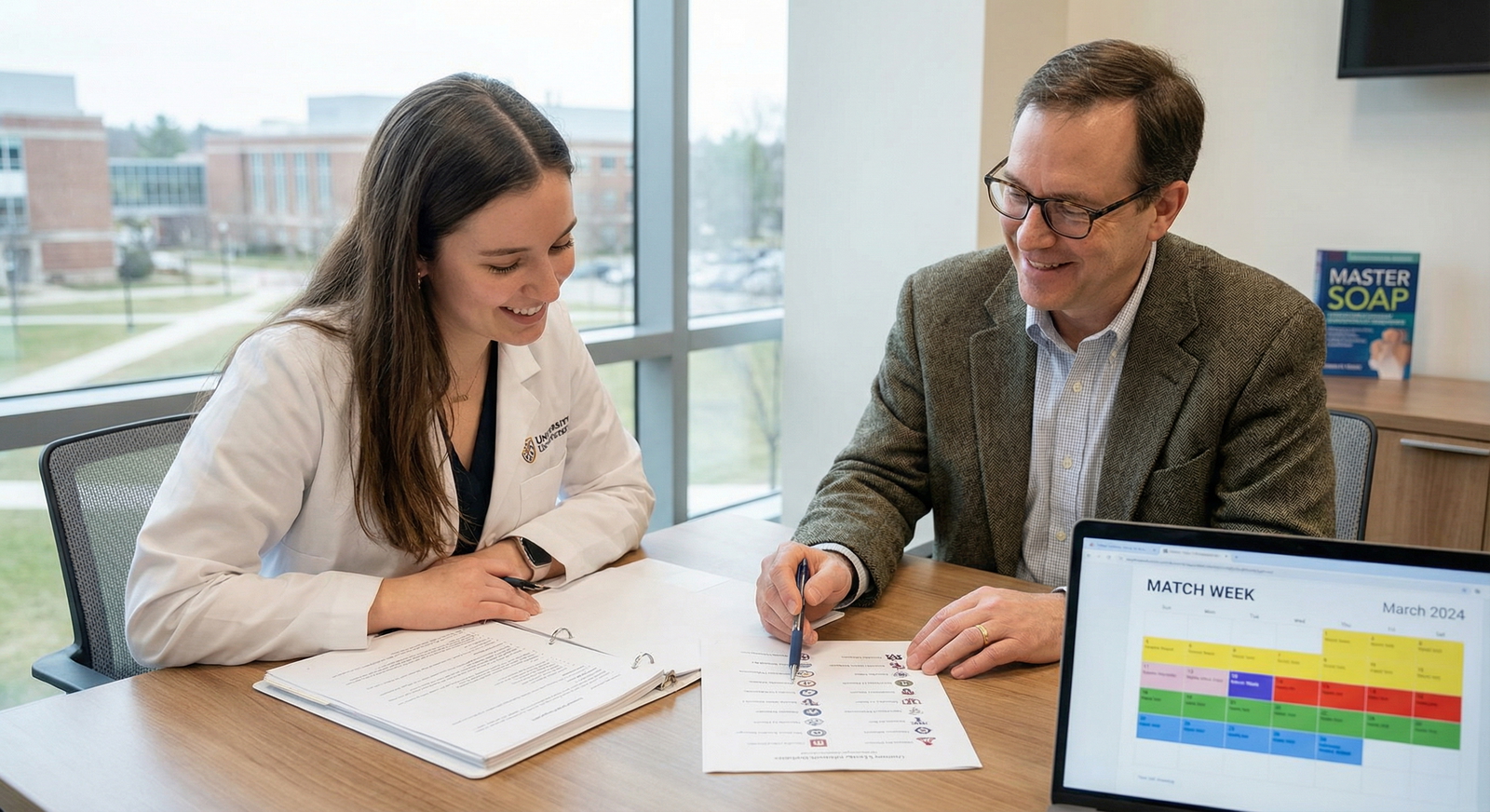
- Where SOAP fits in the calendar:
- Monday of Match Week: You learn whether you matched (but not where).
- Monday–Thursday: SOAP residency process (applications via ERAS, offer rounds via NRMP).
- Friday: Match Day is for those who matched in the Main Match.
As a Caribbean IMG, you must assume that SOAP is a real possibility—even if your application to ENT is strong. Building a SOAP preparation plan in advance is one of the best insurance policies you can have.
Why Caribbean IMGs in ENT Must Prepare Early for SOAP
The Reality of an Otolaryngology Match as a Caribbean IMG
Otolaryngology (ENT) remains one of the most competitive specialties in the NRMP Match. As a graduate of a Caribbean medical school, you’re competing not only with U.S. MD seniors but also with highly credentialed DO and IMG applicants.
Common hurdles:
- Fewer ENT programs willing to rank IMGs.
- Heavy emphasis on USMLE performance, research, and strong home/away rotations.
- Smaller number of total positions compared with large-core specialties like IM or FM.
Even if you carefully targeted programs friendly to Caribbean IMGs, statistical probability alone means you must have a backup plan.
How SOAP Intersects with ENT Aspirations
The harsh truth: ENT rarely appears in SOAP. When it does, it’s usually a tiny number of positions with extremely high competition. Therefore, your SOAP preparation plan must:
- Acknowledge reality: You probably will not see an otolaryngology match position open in SOAP.
- Protect your long-term ENT goal: Choose SOAP options that keep you as close as possible to your dream—through strong clinical training, subspecialty exposure, and research opportunities.
- Prioritize U.S. residency entry: Matching into some ACGME-accredited residency is often better than going unmatched and reapplying from scratch as a re-applicant.
This means your SOAP strategy is not just “what if I don’t match?”, but “if I don’t match ENT, what is the smartest step that keeps ENT or a sustainable career path open?”
Pre–Match Week SOAP Preparation: What to Do Months in Advance
Preparation for SOAP should start before you even submit your ERAS application and continue through interview season. Think of this as an insurance policy you hope not to use.

1. Clarify Your Backup Specialties Strategically
If you don’t match into an otolaryngology residency, what is your Plan B or Plan C?
For many Caribbean IMGs aiming for ENT, common SOAP backup options include:
Preliminary General Surgery
- Pros: OR exposure, head and neck cases, strong operative skills, networking with ENT departments.
- Cons: 1-year position; must reapply to a categorical spot later; competitive in SOAP.
Preliminary or Categorical Internal Medicine (IM)
- Pros: High volume of SOAP positions; can lead to subspecialties with ENT overlap (e.g., allergy/immunology, rheumatology for systemic ENT-related diseases).
- Cons: More medical and less procedural; might take you further from operative ENT.
Family Medicine (FM)
- Pros: Often IMG-friendly; frequent SOAP availability; can build a career with significant outpatient ENT-related care (otitis, sinusitis, allergies, basic procedures).
- Cons: Limited operative exposure; transition to ENT later is difficult but not impossible abroad or in specific niche practices.
Transitional Year (TY)
- Pros: Broad exposure; time to reapply to ENT or another specialty.
- Cons: Competitive and limited; if unmatched after TY, you still need a next step.
Choose at least two tiers:
- Tier 1: Ideal backup (e.g., prelim surgery, TY).
- Tier 2: Higher-likelihood options (e.g., IM, FM, internal medicine-prelim).
Align them with your long-term vision:
- If you are absolutely committed to ENT in the U.S., prelim surgery + strong research may help you re-apply.
- If you aim broadly for a stable U.S. medical career with ENT-related exposure, IM or FM may be sensible.
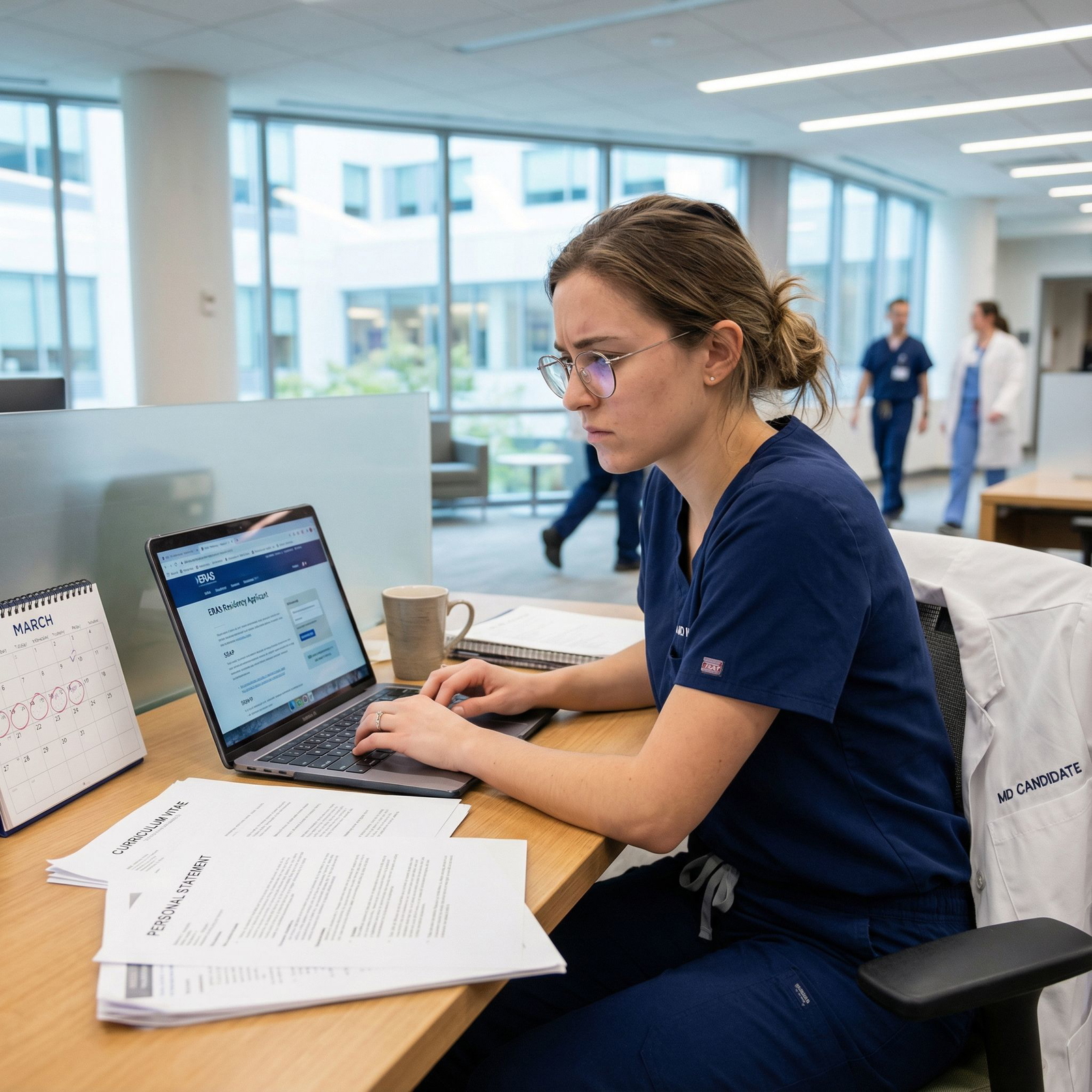
2. Build SOAP-Ready Application Materials Early
Your “normal” ENT ERAS application is not automatically optimized for SOAP.
Well before Match Week (ideally in the late fall / early winter), prepare:
- Multiple Personal Statements
- 1 ENT-focused PS (already submitted for the main match).
- 1–2 backup specialty PSs (e.g., prelim surgery, IM, FM).
- 1 generic “transitional year / preliminary” PS.
- CV and ERAS content that’s flexible
- Emphasize surgical and procedural experiences for prelim surgery.
- Highlight continuity of care, communication skills, and broad medicine for IM / FM.
- Letters of Recommendation planning
- ENT letters are valuable but have limited impact if you pivot to, say, internal medicine.
- Try to secure at least one non-ENT letter from a core specialty (IM, surgery) early in 4th year.
- Ask letter writers if they can speak to transferable qualities (work ethic, clinical judgment, teamwork) useful across specialties.
You can’t upload new letters during SOAP, but you can reassign existing letters to specific programs. Plan your letter combinations in advance for each potential SOAP specialty.
3. Understand SGU Residency Match Data and Other Caribbean Outcomes
Many Caribbean IMGs are from schools like St. George’s University (SGU), Ross, AUC, Saba, etc. Whether or not you personally attended SGU, you should study outcomes for Caribbean graduates:
- Look at SGU residency match and other Caribbean match lists:
- How often do Caribbean IMGs match ENT directly?
- Where do unmatched Caribbean IMGs successfully SOAP into?
- Which prelim or TY programs have a track record of taking Caribbean grads?
This data helps you understand:
- The realistic odds of ENT vs. needing SOAP.
- Which program types are historically open to Caribbean IMGs.
- How prior unmatched graduates from Caribbean schools have navigated SOAP residency options.
4. Technical Preparation: Accounts, Documentation, and Logistics
Ensure that all technical pieces are ready before Match Week:
- ERAS
- Maintain updated program lists for potential SOAP targets (you can’t see which programs will have unfilled spots yet, but you can create templates).
- Double-check all documents are uploaded and assigned flexibly.
- NRMP
- Confirm your SOAP eligibility and that you understand what is SOAP in detail through NRMP guides.
- Review the SOAP residency schedule and rules each year (they can change).
- Certifications
- USMLE/COMLEX scores reported and verified.
- ECFMG certification status (if applicable) in order.
- Technology
- Reliable laptop, stable internet, backup hotspot.
- Quiet space arranged for last-minute video or phone interviews during SOAP.
Match Week Strategy: Executing SOAP Under Pressure
Match Week is emotionally intense. Having a written SOAP preparation plan is critical so you act strategically rather than react impulsively.

1. Monday Morning: You Learn You’re Unmatched or Partially Matched
At 10:00 AM ET on Monday, you find out whether you:
- Matched fully (no SOAP participation).
- Partially matched (e.g., advanced position but no prelim, or vice versa).
- Did not match.
If you are fully unmatched or partially matched needing a preliminary/PGY-1 spot, and you are NRMP SOAP-eligible, you will gain access to the List of Unfilled Programs at the start of SOAP.
Ent-related reality check:
- ENT positions are rare on this list.
- If an otolaryngology match position appears, consider applying, but widen your net immediately.
2. Reviewing the Unfilled Program List: ENT and Beyond
When the list becomes available:
Immediately search “Otolaryngology” and “ENT”
- If no positions: accept that you must pivot to your backup specialties.
- If a few positions: apply, but do not limit yourself only to them.
Filter by:
- Specialty (prelims, TY, IM, FM, surgery).
- Program type (categorical vs preliminary).
- IMG-friendliness proxies (community vs university, geographic regions historically IMG-friendly).
As a Caribbean IMG, prioritize:
- Programs that have taken IMGs or Caribbean graduates previously.
- Smaller community or university-affiliated hospitals with a reputation for being open to IMGs.
3. Submitting SOAP Applications Strategically
NRMP typically allows up to 45 SOAP applications. Your goal is quality and breadth, not just hitting the maximum.
For a Caribbean IMG with ENT aspirations, an example distribution might be:
- If any ENT spots exist:
- 3–5 ENT SOAP residency applications (if available).
- Preliminary Surgery / TY:
- 10–15 applications focused on programs where you might gain ENT/head & neck exposure, strong OR training, or research linkage.
- Internal Medicine / Family Medicine / Others:
- 20–30 applications to IMG-friendly categorical or preliminary programs.
When assigning personal statements and letters:
- Prelim surgery/TY:
- Use a PS emphasizing operative interests, teamwork, and procedural skills.
- Include at least one strong surgery or ENT letter if possible.
- IM/FMs:
- Use a PS that stresses communication, continuity of care, holistic approach.
- Include letters from medicine/family med if available, plus one ENT or surgery letter that speaks to your clinical abilities.
Avoid “shotgunning” applications to every available program without thought. Instead, apply to:
- Locations where you can realistically thrive (visa friendliness, support, mentorship).
- Programs that fit your long-term plan, whether that is reapplying to ENT or building a different but satisfying career.
4. Interviewing During SOAP: Professionalism and Message Control
Programs may reach out for rapid interviews (video or phone). Time can be as short as hours between invitation and discussion.
Key principles:
- Always be ready (professional attire, quiet background, stable internet) during Match Week days.
- Craft your story:
- Why ENT originally?
- Why this backup pathway now?
- How will you use this year (or categorical program) to grow?
- Do NOT criticize your Caribbean medical school or the match system.
- Balance honesty with practicality:
- You can acknowledge your passion for ENT.
- You must convincingly express genuine interest in the backup specialty or role you’re applying to now.
Sample narrative for a prelim surgery position:
“I pursued otolaryngology because I’m drawn to operative work and complex head and neck anatomy. While I didn’t match this year, I see a preliminary general surgery year as the best way to strengthen my operative skills, deepen my understanding of perioperative care, and become the strongest possible applicant for a surgical field. I’m committed to giving my full effort to your team and to the patients we serve, regardless of my long-term path.”
Sample narrative for IM/FMs:
“I applied to ENT because I’m fascinated by the interface of anatomy, physiology, and patient-centered care. But throughout medical school, I’ve also enjoyed the breadth of medicine and longitudinal patient relationships. I see your program as a place where I can grow as a well-rounded physician and still maintain my interest in ENT-related conditions through electives, research, and specialized clinics.”
5. Navigating Offer Rounds
SOAP has multiple offer rounds from Tuesday–Thursday. You’ll receive offers via NRMP’s system and must respond within a short window.
- If you receive an offer from a program aligned with your Plan B (e.g., prelim surgery at a solid hospital):
- Strongly consider accepting; declining may mean no further offers.
- If the offer is not ideal (e.g., location you dislike, less known program):
- Evaluate objectively: Will this program:
- Give you accredited U.S. training?
- Provide environment to grow, get letters, maybe do research?
- For most Caribbean IMGs, some residency is usually better than no residency.
- Evaluate objectively: Will this program:
Once you accept an offer, you exit SOAP and are committed to that program.
Long-Term ENT Strategy After SOAP: Making the Most of Your Match Outcome
Whether you match via the main match, SGU residency match–style outcomes from Caribbean schools, or SOAP into another specialty, your ENT ambitions don’t necessarily end there. But they will need to be reframed realistically.
1. If You SOAP into a Preliminary Surgery or TY Program
This is the closest bridge to ENT if you remain determined.
Action steps:
- Excel clinically; be the hardest working intern.
- Seek out ENT rotations or elective time.
- Connect with ENT faculty for:
- Mentorship.
- Research projects (especially in head & neck oncology, otology, sinus surgery).
- New letters of recommendation written from the vantage point of your performance as a PGY-1.
- Begin planning early if you intend to reapply to ENT:
- Update ERAS with PGY-1 achievements and research.
- Apply broadly, including programs that are historically IMG-friendly.
Be aware: re-matching into ENT from a prelim or TY remains difficult, especially for Caribbean IMGs. Have a parallel plan:
- Transitioning to categorical general surgery.
- Or pivoting to another competitive but more accessible specialty (e.g., anesthesia, radiology, if you can secure opportunities and have strong scores).
2. If You SOAP into Internal Medicine or Family Medicine
For many Caribbean IMGs, this becomes the foundation of a strong, sustainable career.
ENT-related ways to shape your practice:
- Choose electives in:
- Allergy/immunology clinics.
- Rheumatology or infectious disease (systemic diseases with ENT manifestations).
- Pulmonology or sleep medicine.
- Develop outpatient skills in:
- Managing chronic sinusitis, allergic rhinitis, otitis media/externa.
- Basic procedures within your scope.
- Engage in research or QI projects related to ENT-adjacent pathologies (e.g., chronic otitis outcomes, antibiotic stewardship in sinusitis).
Transitioning from categorical IM/FM directly into ENT is extremely rare, but you may cultivate a niche practice heavily overlapping with ENT in outpatient settings or consider ENT-focused fellowships or practice opportunities abroad.
3. If You Go Completely Unmatched (No SOAP Offer)
This is challenging but not catastrophic if managed systematically.
Possible next steps:
- Structured gap year:
- Research in ENT or related fields.
- Clinical observerships or sub-internships (where allowed).
- Strengthening exam scores (if Step 3 remains).
- Improve your application profile:
- Additional publications or presentations in ENT or your backup fields.
- New U.S. clinical experiences with strong letters.
- Reassess your target specialty mix:
- Consider whether ENT remains realistic given your scores, IMG status, and prior application cycle.
- Expand to more IMG-friendly specialties in the next cycle.
Use the year to understand your strengths and the objective feedback from programs or mentors. Then re-enter the match with a more evidence-based strategy.
FAQs: SOAP Preparation for Caribbean IMGs in Otolaryngology (ENT)
1. As a Caribbean IMG interested in ENT, should I apply to ENT only or include backup specialties in my initial ERAS list?
It is usually safer to apply to ENT plus select backup specialties in your initial ERAS submissions, particularly if your USMLE scores or research portfolio are not in the top tier. You can prioritize ENT while still applying to a limited number of more IMG-friendly specialties (e.g., prelim surgery, IM, FM) to increase your odds of matching in the main match and to reduce reliance on SOAP residency outcomes.
2. Can I realistically match into ENT through SOAP as a Caribbean IMG?
It is rare but not impossible. ENT offers in SOAP are uncommon, and competition for them is fierce. You should certainly apply to any ENT SOAP positions you’re eligible for, but you must not rely on SOAP to secure an otolaryngology match. Prepare robust backup plans in more available specialties and think of SOAP primarily as your route into U.S. residency generally, not specifically ENT.
3. How should I explain my ENT interest when SOAPing into Internal Medicine or Family Medicine?
Frame ENT as one expression of your broader professional interests rather than your only goal. For example, say that you’re driven by complex problem-solving, longitudinal care, or disease processes that often involve the head and neck—but that you now see IM or FM as a place where you can apply these interests more broadly. Emphasize your genuine commitment to the SOAP specialty you are interviewing for and make it clear you will be fully invested in their program.
4. What is the single most important aspect of SOAP preparation for a Caribbean IMG?
The most important element is a well-thought-out, realistic backup plan that you create months before Match Week. This includes:
- Identifying backup specialties and program types.
- Preparing multiple personal statements and flexible letters.
- Understanding what is SOAP, its timeline, and rules.
- Ensuring your documents and logistics are ready so that if you become SOAP-eligible, you can respond quickly and strategically rather than in a panic.
By preparing early and thoughtfully, you turn SOAP from a desperate last resort into a structured, strategic second chance—one that can still lead to a meaningful career and, in some cases, keep the door to otolaryngology ajar.