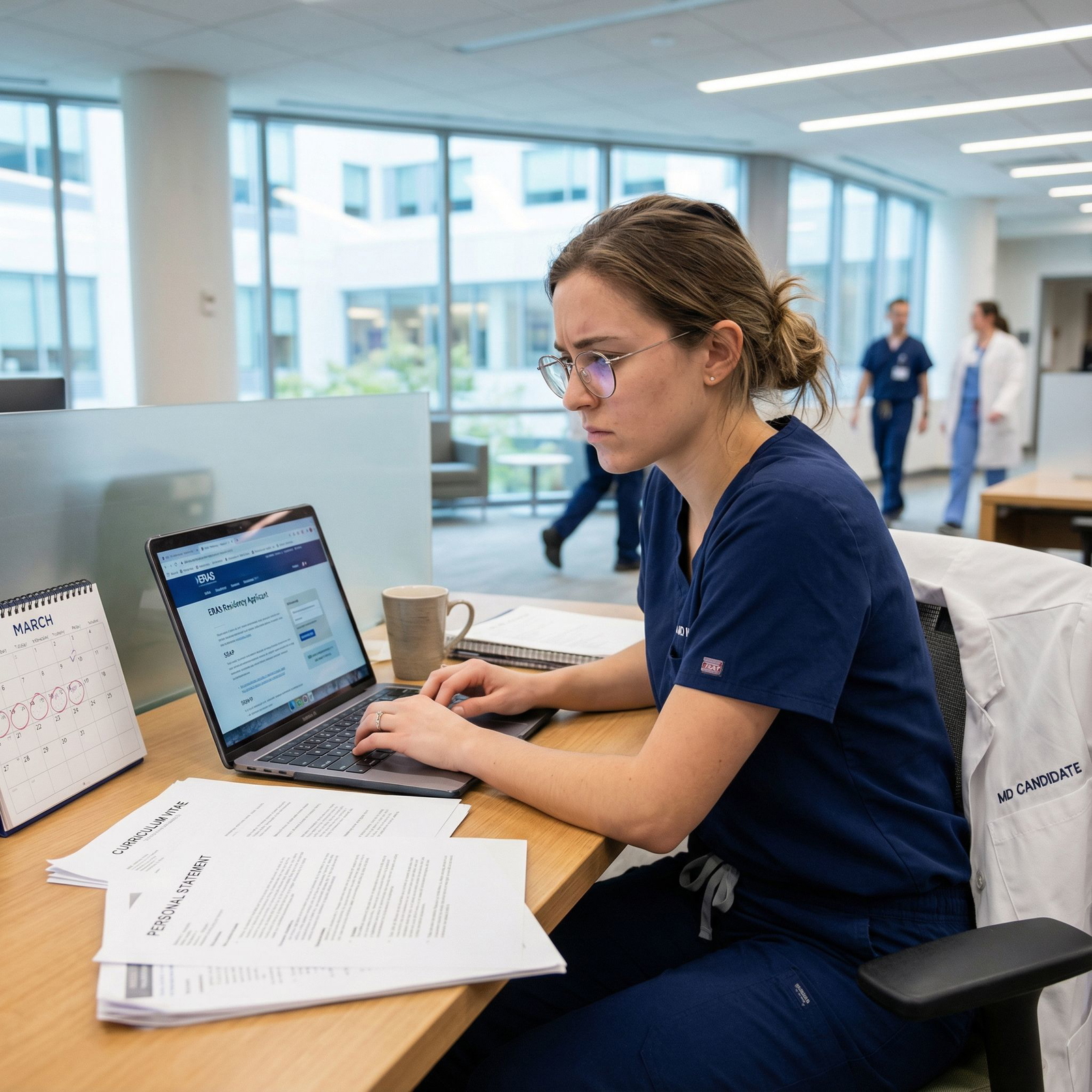
Dermatology is one of the most competitive specialties in the residency match. Even strong applicants sometimes find themselves unmatched on Monday of Match Week. In that moment, understanding what is SOAP, how it works, and how to execute strong SOAP preparation that is tailored to dermatology residency can make the difference between securing a position (in dermatology or a strategic alternative) and going another year without training.
This guide walks you step-by-step through dermatology-focused SOAP preparation, from pre-Match planning to real-time strategy during Match Week, and post-SOAP decisions that protect your long-term dermatology career goals.
Understanding SOAP in the Context of Dermatology
What is SOAP?
The Supplemental Offer and Acceptance Program (SOAP) is the structured, time-limited process NRMP uses during Match Week to place unmatched or partially matched applicants into unfilled residency positions. It runs from Monday (Match Week) through Thursday and includes:
- Identification of SOAP-eligible unmatched applicants
- Release of the List of Unfilled Programs
- Application phase via ERAS
- Multiple offer rounds from programs to applicants
Your ability to act quickly, strategically, and calmly during these 72 hours is critical.
Where Dermatology Fits into SOAP
Dermatology has very few unfilled positions in SOAP in most years. It is common for there to be:
- 0–3 categorical dermatology positions in SOAP (sometimes none)
- Occasional off-cycle or unexpectedly unfilled spots, but these are rare
Because of this, applicants pursuing dermatology must approach SOAP with two parallel realities in mind:
Derm Match Possibility
- You might secure a late, unexpected opening in dermatology (rare, but not impossible).
- You must be ready to apply to any derm openings within minutes of the list going live.
Strategic Alternative Pathway
- You may need to SOAP into a preliminary year or another specialty that positions you well for a future dermatology application (e.g., internal medicine, transitional year).
- Your SOAP strategy should not be “derm or nothing”; it should be “derm if possible, otherwise the best alternative that keeps derm viable.”
SOAP Eligibility Essentials
You are generally SOAP-eligible if:
- You registered for the NRMP Main Residency Match.
- You are unmatched or partially matched (e.g., matched to an advanced spot but not a prelim year).
- You are not withdrawn from the Match.
- You meet ERAS and ECFMG (for IMGs) requirements for the current year.
If you are a derm applicant in one of these situations:
- Applied derm only and received no match email → SOAP-eligible.
- Matched advanced dermatology but no prelim year (less common) → SOAP-eligible for prelim only.
- Matched prelim but not derm advanced program → Typically not SOAP-eligible since you are “fully matched.”
Confirm your exact status with your dean’s office or NRMP if you’re unsure.
Pre-Match SOAP Preparation: Setting Up a Dermatology-Smart Backup
The best SOAP strategy starts well before Match Week. This is especially true in dermatology, where options may be limited and decisions must be made quickly.
1. Clarify Your Long-Term Dermatology Strategy
Before SOAP, be honest with yourself about your priorities:
- Is becoming a dermatologist your non-negotiable long-term goal?
- Are you open to a different specialty if derm does not work out, even after a couple of attempts?
- How many years are you realistically willing to spend reapplying?
This clarity will drive your SOAP choices:
- If derm is non-negotiable, you’ll prioritize prelim/TY/IM years and experiences that strengthen a re-application.
- If you’re more flexible, you might SOAP into another field that also appeals to you now.
2. Build a SOAP-Ready Portfolio Before Match Week
You must assume that you might need to participate in SOAP, even if you feel confident about your derm match. By late January/February, you should have:
Updated CV and ERAS Content
- Up-to-date CV, including any new:
- Publications, posters, or derm-related manuscripts (even in progress).
- Dermatology electives, away rotations, or observerships.
- Quality improvement projects, teaching, leadership roles.
- Polished Personal Statement(s):
- One strong derm statement (already submitted).
- A second, more general specialty-neutral PS that emphasizes:
- Your clinical skills.
- Commitment to patient care and learning.
- Adaptability and resilience.
- Optionally, a medicine- or prelim-focused PS if you suspect that’s your most likely SOAP target.
Letters of Recommendation (LoRs)
You cannot upload new LoRs during SOAP, but you can decide in advance:
- Which LoRs best support:
- A prelim year or transitional year.
- Internal medicine or another backup specialty.
- Ask key letter writers (especially non-derm clinicians) to:
- Emphasize your clinical reliability, teamwork, and work ethic.
- Use language that applies beyond dermatology so their letters remain flexible.
3. Identify Realistic SOAP Target Specialties and Programs
Because derm SOAP positions are scarce, you should pre-identify:
- Preliminary Internal Medicine programs
- Transitional Year (TY) programs
- Occasionally prelim surgery or other structured intern-year options
Focus on programs that:
- Historically take strong academic applicants and are “re-application friendly.”
- Have faculty or alumni with dermatology connections (where possible).
- Are in regions with multiple derm programs where you may:
- Build relationships.
- Do electives.
- Join research projects.
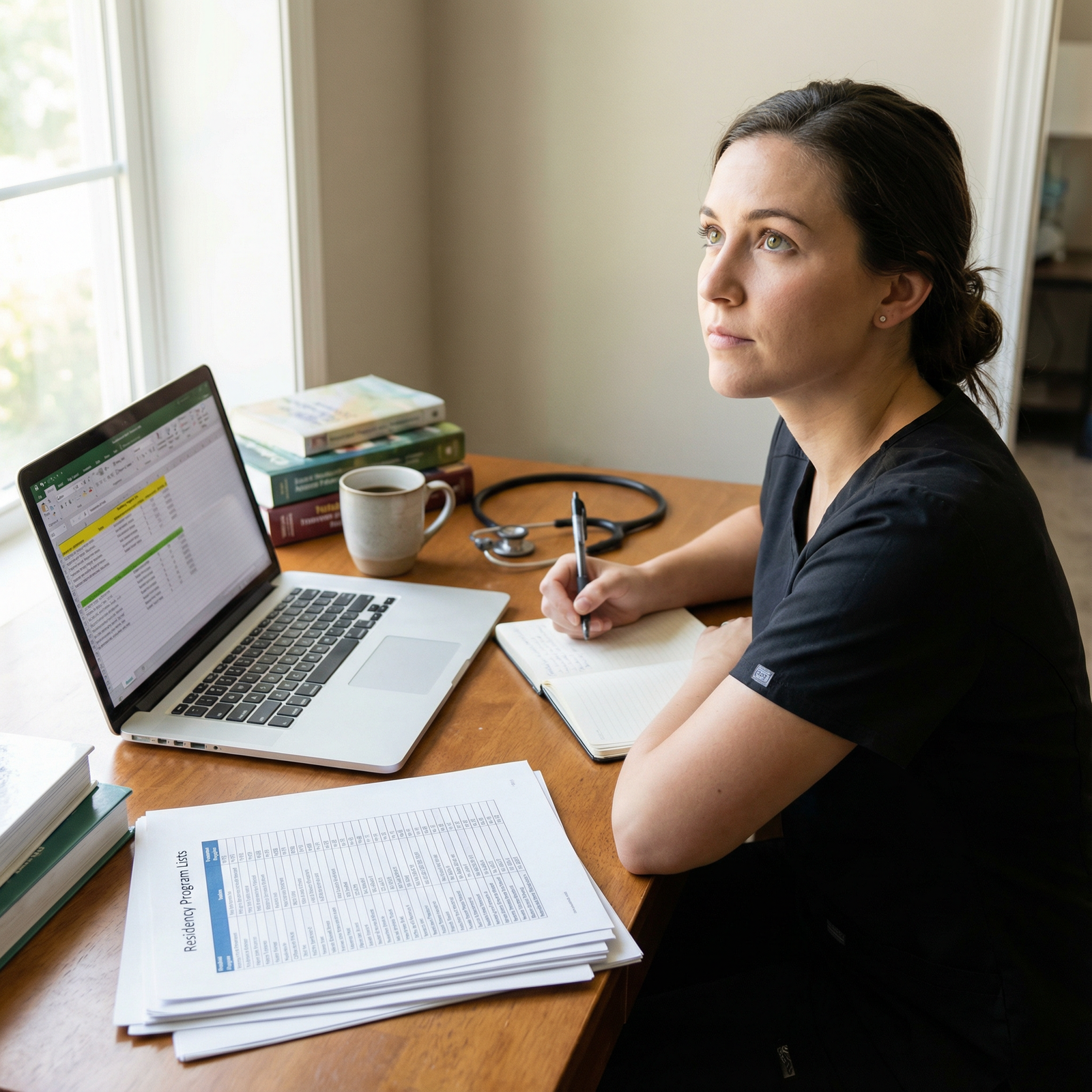
Create a SOAP target list (a private spreadsheet) that includes:
- Program name and ACGME code
- Location and setting (academic vs community)
- Reputation for supporting subspecialty aspirations
- Any known derm faculty, derm departments, or research nearby
- Key notes (e.g., “Strong research culture,” “Historically supportive of derm-bound residents”)
You won’t know which programs will be unfilled, but when the Unfilled List appears, you can quickly cross-reference it against your pre-built list.
4. Mental and Logistical Preparation
SOAP Week is emotionally intense. Prepare by:
- Clearing your schedule for Match Week:
- Minimize clinical responsibilities, travel, or major events.
- Inform family that you may need quiet, focused time.
- Setting up your workspace:
- Reliable internet, laptop, headphones, and a private space.
- Access to Zoom/Teams for interviews with proper lighting and background.
- Planning emotional support:
- Identify 1–2 people (mentor, advisor, friend) you can speak openly with.
- Normalize for yourself the possibility of SOAP—this reduces shock and paralysis if it happens.

Match Week: Executing a Strong SOAP Strategy as a Derm Applicant
When you receive the Monday morning email stating that you did not match (or only partially matched), your SOAP preparation shifts into real-time execution.
Step 1: Process the News Quickly and Ground Yourself
You will likely feel shock, disappointment, or confusion. Give yourself 30–60 minutes to:
- Acknowledge your emotions.
- Talk briefly with a trusted person.
- Remind yourself:
- Many excellent dermatologists didn’t match on their first try.
- SOAP is a window of opportunity, not a verdict on your value.
Then shift into action mode.
Step 2: Confirm SOAP Eligibility and Coordinate with Your School
Immediately:
- Check your NRMP/ERAS dashboards to confirm SOAP-eligibility.
- Contact your dean’s office or residency advising office:
- They often have real-time data and can help strategize.
- They may connect you with faculty who understand derm and can help tailor your plan.
Step 3: Analyze the Unfilled Program List with a Derm Lens
Once the List of Unfilled Programs is released:
Scan for Dermatology:
- Look for any categorical dermatology or derm prelim + advanced combos.
- If present:
- Prioritize these programs immediately.
- Customize your ERAS selections and personal statement to them.
- Understand: these positions will be extremely competitive, even in SOAP.
Identify Prelim and Transitional Year Options:
- Filter for:
- Preliminary internal medicine, transitional year, or relevant prelims.
- Academic centers, derm departments nearby, or research-active institutions.
- Cross-reference with your pre-made target list.
- Filter for:
Step 4: Tailor Your Application Materials Quickly
During the initial SOAP application period, you can apply to a limited number of programs (NRMP sets a cap—verify current year’s number). Prioritize carefully:
For Rare Dermatology SOAP Positions
- Use your dermatology personal statement with minor updates, emphasizing:
- Maturity, resilience, and reflection on the application cycle.
- Clear, specific interest in their program (if possible within time constraints).
- Ensure your derm-focused LoRs are included.
- Highlight in ERAS experiences:
- Derm research, derm electives, derm mentorship.
- Any derm-related teaching, quality improvement, or leadership.
For Prelim/TY and Other Backups
- Consider using:
- A broad personal statement that focuses on being an outstanding intern.
- Or a medicine-focused PS, if you’re mainly targeting internal medicine prelims.
- Emphasize universally valued traits:
- Reliability, work ethic, communication, teamwork.
- Clinical acumen and patient-centered care.
- Explain derm interest carefully if asked or in your PS:
- Avoid sounding like you see the prelim year “only as a stepping stone.”
- Instead: “I am deeply committed to providing excellent patient care and being an outstanding intern, while also maintaining a long-term interest in dermatology.”
Step 5: Prepare for SOAP Interviews
Interviews during SOAP are often:
- Short (10–20 minutes).
- Scheduled rapidly, sometimes with minimal notice.
- Focused on fit, professionalism, and readiness to work hard.
Common questions for a derm-heavy applicant:
- “You applied dermatology. Why are you now interested in our program/specialty?”
- “If you don’t get dermatology after this, what is your plan?”
- “How will you approach this year if it’s not in your original specialty?”
- “What have you learned from this experience of not matching?”
Strong response strategies:
- Be honest but balanced:
- Acknowledge your original derm focus.
- Emphasize your genuine respect for the specialty you’re SOAPing into.
- Signal commitment:
- Assure them that you will fully engage as a resident, regardless of your long-term plans.
- Show reflection and resilience:
- Highlight growth from the setback—improved insight, humility, and determination.
Example response:
“Dermatology has been my long-term goal because of the blend of visual diagnosis, procedural work, and long-term patient relationships. At the same time, I’ve really enjoyed and valued my internal medicine rotations. If I have the opportunity to train here, I will give this year my full energy and commitment—my priority would be to become an excellent intern who contributes to the team and provides high-quality care. I also see strong value in the internal medicine foundation for any future path, including dermatology.”
Step 6: Manage Offers Strategically Over Rounds
SOAP has multiple offer rounds. When an offer is extended, you have a short time window to accept or reject. Important principles:
- Never hold out for a hypothetical dermatology offer if you have no realistic indication that one is coming.
- Accepting an offer ends your participation in SOAP—you cannot keep shopping. So:
- If the offer matches your backup strategy (e.g., a strong prelim IM year at an academic center), it is usually wise to accept.
- Declining an offer because you’re hoping for a better one is risky in a competitive environment like derm.
Work closely with your dean/advisors as offers appear. They may provide:
- Historical context about programs.
- Insight into which options are best for positioned derm re-application.

After SOAP: Optimizing Your Path Back to Dermatology
Regardless of your SOAP outcome, you must think ahead to your dermatology career trajectory.
Scenario 1: You SOAP Into a Dermatology Position
This is rare but ideal. Once secured:
- Clarify expectations with your new program:
- Start date, orientation, and visa/logistical details if applicable.
- Reflect briefly on the journey:
- Use your experience to become a more resilient and appreciative trainee.
- Consider reaching out to:
- Future mentors at the program.
- Residents, to learn how best to prepare for intern year and dermatology.
The SOAP experience may be emotionally draining—but you have achieved your primary goal.
Scenario 2: You SOAP Into a Prelim, TY, or Another Specialty
This is the most common path for unmatched derm applicants who SOAP successfully.
Your focus then shifts to:
Becoming an Outstanding Intern
- Show up early, work diligently, be reliable.
- Build a reputation that makes your attendings enthusiastic advocates.
- Many dermatology PDs value strong endorsements from intern-year supervisors.
Maintaining and Strengthening Ties to Dermatology
- Keep in touch with:
- Prior derm mentors.
- Research collaborators.
- Faculty at nearby derm departments.
- Continue derm-related scholarly work if possible:
- Case reports, reviews, retrospective studies.
- Clinical electives in dermatology during elective blocks.
- Keep in touch with:
Planning a Thoughtful Reapplication (If Desired)
- Conduct a post-mortem of your initial derm application:
- Step scores or failures?
- Limited derm exposure or lack of away rotations?
- Few publications or weak derm LORs?
- Late letters or a misaligned personal statement?
- Work with mentors to:
- Address each weak point.
- Decide on timing—some candidates reapply for derm during intern year; others wait an extra year with dedicated research.
- Conduct a post-mortem of your initial derm application:
Keeping Alternate Futures in Mind
- Some residents discover they genuinely enjoy the specialty they SOAP’d into.
- It is acceptable to pivot if your interests evolve.
- The key is intentional, well-informed decision-making rather than passive default.
Scenario 3: You Remain Unmatched After SOAP
If you do not secure a position, you still have options:
- Research or fellowship-style positions in dermatology:
- Many academic derm departments offer 1–2-year research fellowships.
- These can dramatically improve your CV for the next derm match cycle.
- Additional clinical experience:
- Clinical research coordinator roles.
- Non-ACGME fellowships or observer positions (be cautious about licensing/visa issues).
- Rebuilding your application:
- Address academic gaps (e.g., failed exams, low scores).
- Engage deeply in derm projects that add tangible value.
Work closely with your school and derm mentors to develop a structured one- to two-year plan aimed at making you a stronger candidate.
Practical Tips and Common Pitfalls in Dermatology SOAP Preparation
High-Yield Tips
- Begin SOAP preparation early (January/February), not during Match Week crisis.
- Know your numbers:
- Competitiveness of derm.
- Realistic backup options based on your exam scores, clinical performance, and citizenship/visa status.
- Leverage mentorship:
- Dermatology faculty.
- Program directors.
- Resident alumni who have navigated SOAP or reapplications.
- Communicate clearly and professionally:
- With programs, do not send mass, generic emails.
- With mentors, be honest about your goals and fears.
Common Mistakes Derm Applicants Make in SOAP
- All-or-nothing thinking: Refusing to consider any non-derm options and ending up with no position and no structured plan.
- Poor messaging in interviews:
- Saying you will leave as soon as you get derm.
- Minimizing the value of the prelim or other specialty.
- Last-minute scrambling:
- No backup personal statement.
- No idea which specialties or program types to target.
- Underestimating emotional impact:
- Ignoring the need for support and perspective.
- Making impulsive decisions out of panic instead of strategy.
FAQs: SOAP Preparation in Dermatology
1. Is it realistic to expect a dermatology position through SOAP?
In most years, derm positions in SOAP are extremely rare, and competition for them remains intense. You should:
- Apply aggressively to any derm SOAP openings if eligible.
- Simultaneously build a robust backup strategy (prelim/TY/IM) to avoid leaving SOAP without a position.
Treat a derm SOAP spot as a welcome surprise, not a primary plan.
2. If I SOAP into a prelim or TY, will that hurt my future derm match chances?
No—if anything, it often helps:
- Strong evaluations and letters from your intern year can greatly strengthen your application.
- Many dermatology programs expect that some successful applicants have completed another year of training (often IM) first.
- The key is:
- Excel clinically, not just in derm-related research.
- Maintain active engagement with the derm community.
3. How should I explain my dermatology interest during SOAP interviews for other specialties?
Use a transparent but respectful approach:
- Acknowledge your derm interest and original application honestly.
- Emphasize your genuine respect for the specialty you’re interviewing for.
- Reassure the program that:
- You will fully commit to being an excellent resident.
- You understand the importance of their training and patient care, regardless of future plans.
Avoid language suggesting you see the program purely as a stepping stone.
4. What can I do right now, months before Match Week, to be ready for SOAP?
Concrete SOAP preparation steps you can take immediately:
- Update your CV and ERAS experiences.
- Draft:
- A broad personal statement suitable for prelim/TY/IM.
- Any specialty-specific backup PS (if you have a clear secondary interest).
- Create a spreadsheet of potential backup programs and specialties.
- Schedule a meeting with:
- Your dean’s office advisor.
- At least one dermatology mentor to discuss realistic scenarios.
- Set up:
- A quiet workspace and appropriate technology for possible SOAP interviews.
By addressing these now, you position yourself to adapt quickly and strategically if SOAP becomes necessary.
Thoughtful, early SOAP preparation is a mark of maturity, not pessimism. As a dermatology applicant, recognizing the competitiveness of the field and building a deliberate backup pathway—while keeping your long-term goals intact—is one of the most professional and self-compassionate steps you can take.