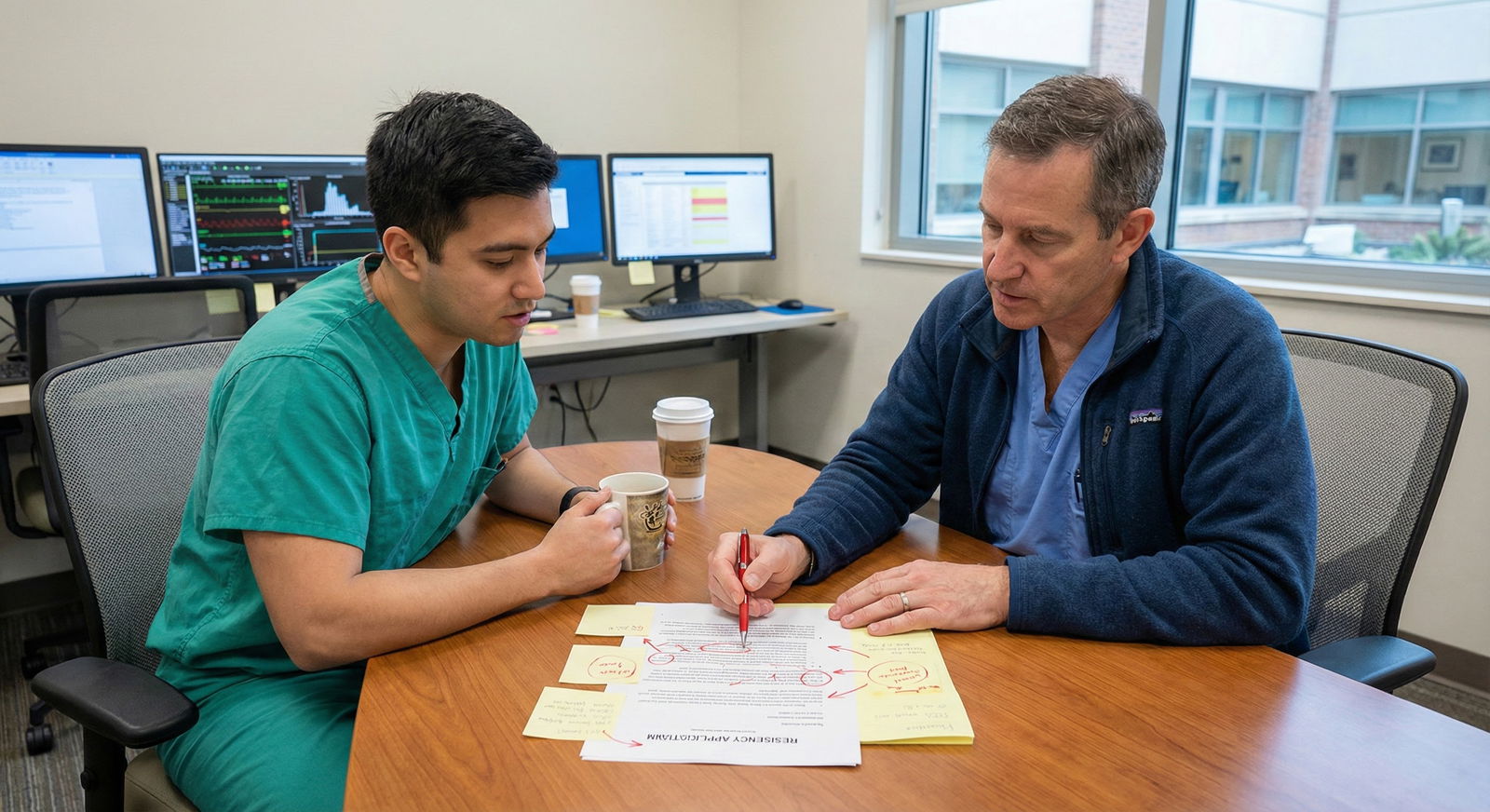
Most people waste the week after SOAP. That is a mistake you cannot afford.
Post‑SOAP week feels surreal. Half elated, half shell‑shocked, some people quietly devastated. And yet this is when future trajectories really separate. Not Match Day. The 30 days after.
I am going to walk you through a day‑by‑day and week‑by‑week plan for the first month after SOAP, with two clearly marked tracks:
- Track A – You matched (main Match or SOAP).
- Track B – You did not match.
You will see some shared steps. But the priorities and urgency differ. Follow the parts that apply to your status.
Day 0–3: Immediately After SOAP Week
These first 72 hours set the tone. People either disappear into emotional free fall. Or they start executing.

| Step | Description |
|---|---|
| Step 1 | End of SOAP Week |
| Step 2 | Confirm position |
| Step 3 | Stabilize and assess |
| Step 4 | Start onboarding prep |
| Step 5 | Debrief and options list |
| Step 6 | Matched? |
Track A – Matched: Days 0–3
At this point you should lock in your position and eliminate surprises.
Day 0–1: Confirm and document
Save every official document
- NRMP confirmation.
- Program email offering the position.
- Any SOAP communication through ERAS/NRMP.
Reply to the program the same day
- Thank them.
- Confirm acceptance and enthusiasm.
- Ask for:
- Start date
- Orientation dates
- GME / HR contact
- Onboarding checklist (if available)
Screenshot and file everything
- Create a folder:
Residency_ProgramName_PGY1. - Subfolders:
Contracts,Onboarding,Licensing,Housing.
- Create a folder:
Day 2–3: Get your life logistics on paper
You are not doing anything fancy yet. Just avoiding chaos.
- Make a rough calendar from now to July 1.
- Block these:
- Licensing / training modules
- Moving window
- Final exams / graduation events
- Write down key unknowns to clarify:
- Housing
- Visa (if applicable)
- State license / training permit
- Vaccination documentation
- Background check / drug screen timing
At this point you should have:
A confirmed spot, email thread with GME, and a basic timeline skeleton.
Track B – Did Not Match: Days 0–3
You do not need motivational posters. You need structure.
Day 0: Contain the damage
- Tell only the people who must know today:
- Immediate family / partner
- Trusted mentor or advisor
- Do not:
- Post anything public.
- Start “explaining” yourself to everyone from your class.
Day 1: Short, focused debrief
Pick one or two people who actually understand the Match (advisor, PD you know, dean). Schedule:
- A 30–45 minute hard debrief, not a therapy session.
- Bring:
- ERAS application PDF
- Score report(s)
- Program list (where you applied, interviews, rejections)
- SOAP participation details
Ask directly:
- What were my 2–3 biggest weaknesses?
- Did I under‑apply? Wrong mix of programs?
- Am I realistically competitive for this specialty next cycle?
- If not, what alternative specialties make sense?
Day 2–3: Decide your provisional track
You are not locking your entire future. Just choosing a working plan for the next 30 days.
At this point you should be able to say one of these sentences out loud:
- “I will reapply to the same specialty, stronger, next cycle.”
- “I will switch to a different specialty next cycle.”
- “I will step away from clinical medicine (PhD, industry, etc.) and stop chasing Match.”
If you cannot say one clearly by Day 3, you are stalling. Push the debrief harder.
Week 1 (Days 4–7): Stabilize and Gather Information
This week is about information, not heroics.

Track A – Matched: Week 1
At this point you should turn the vague offer into a concrete onboarding roadmap.
Day 4–5: Clarify onboarding
Email or call the program coordinator / GME office:
Ask specifically about:
- Contract timeline
- Required items:
- Immunization records (MMR, Hep B, Varicella, Tdap, TB)
- Background check, drug screen
- BLS/ACLS renewal
- NPI and state training license process
- I‑9 / work authorization documentation
Start a checklist doc. Example categories:
- HR / employment
- Occupational health
- Licensure / NPI
- Housing / moving
- Technology / credentials (EMR training, email)
Day 6–7: Housing and budget basics
You do not need to find the perfect apartment this week, but you must stop pretending money and geography are “future you” problems.
- Map the hospital and surrounding neighborhoods.
- Decide:
- Car vs no car
- Commute tolerance (in minutes)
- Max rent you can reasonably pay.
Build a basic PGY‑1 budget:
- Income: program stipend.
- Main outflows: rent, utilities, loans, food, transport.
You are not optimizing, you are preventing panic later.
Track B – Did Not Match: Week 1
Now you get strategic. No more “maybe it will work out.” You build a year plan.
Day 4–5: Clean and update your application
You will not reapply tomorrow, but you need a clean baseline.
- Update CV:
- Include SOAP participation (briefly, neutrally).
- Add any ongoing research, QI, teaching, leadership.
- Fix obvious ERAS issues:
- Typos.
- Bloated, unfocused experiences.
- Weak personal statement that reads like a diary.
You are not perfecting. You are removing the most embarrassing problems.
Day 6–7: Decide your “gap year job structure”
At this point you should define what the next 12 months look like at a high level.
Your goal is not “stay busy.” It is:
Increase your probability of matching to a specific target.
Common productive structures:
- Research year with a known PI in your target specialty.
- Clinical job (scribe, assistant, prelim year, transitional year) with recent US clinical exposure.
- Combination: 3–4 days clinical + 1–2 days research.
Create a short list of 5–10 target institutions where:
- You have some connection (alumni, prior rotation, PI, family region), and
- Your stats are at least plausibly competitive.
You will use this list heavily in Weeks 2–4.
Week 2 (Days 8–14): Concrete Action and Communication
Now we get operational. No more generic “networking.”
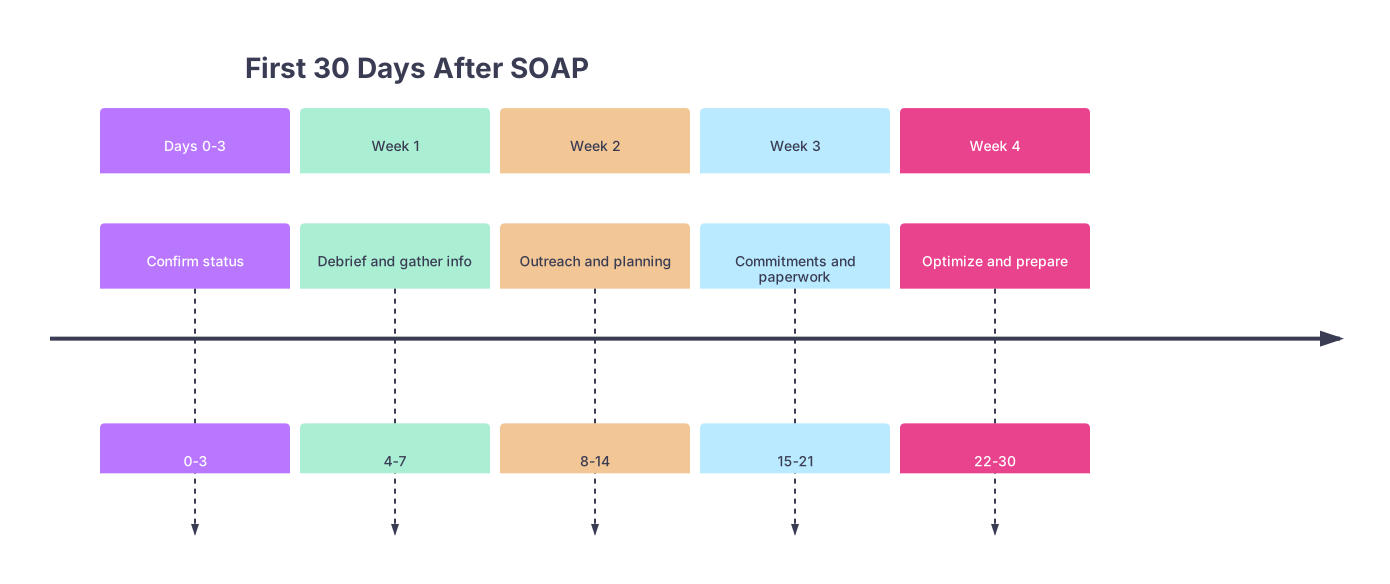
| Period | Event |
|---|---|
| Days 0-3 - Confirm status | 0-3 |
| Week 1 - Debrief and gather info | 4-7 |
| Week 2 - Outreach and planning | 8-14 |
| Week 3 - Commitments and paperwork | 15-21 |
| Week 4 - Optimize and prepare | 22-30 |
Track A – Matched: Week 2
At this point you should start acting like an incoming resident, not a student drifting to July.
Days 8–10: Formal communication and relationships
- Write a short, professional email to:
- Program Director
- Associate PD
- Chief residents
Template idea:
- Thank them for the opportunity.
- Express specific reasons you are excited about this program.
- Ask if there is any recommended reading or prep for incoming interns.
Connect with co‑interns:
- Join program group chats / Slack / WhatsApp if invited.
- If nothing exists yet, offer to help the chiefs set it up.
Days 11–14: Knock out early paperwork
You want to be the person the coordinator never has to chase.
- Complete any:
- HR packets
- Occupational health forms
- Background check authorizations
- Schedule:
- Drug screen
- TB test
- Required physicals
Start a simple tracker:
| Task | Status |
|---|---|
| Contract signed | Not started |
| Drug screen | Scheduled |
| Employee health clearance | Not started |
| State license application | In progress |
| Housing secured | Not started |
At this point you should have:
Active email communication with the program, initial paperwork moving, and a sense of being “in the system.”
Track B – Did Not Match: Week 2
This is your outreach and positioning week.
Days 8–10: Targeted outreach, not mass emails
For each of your 5–10 target institutions:
Identify:
- Relevant faculty in your desired specialty.
- Program coordinators.
- Research directors.
Send custom, concise emails. Content:
- Brief introduction (school, graduation year, visa status if relevant).
- Honest statement that you did not match and plan to reapply.
- Specific ask:
- Research position?
- Observer / extern role?
- Categorical / prelim off‑cycle openings?
- Attached CV (not full ERAS).
Your subject line matters:
- “Graduating 2026 MD seeking research year in [Specialty]”
- “Unmatched 2026 graduate – interested in [Institution] research opportunity”
Expect a low response rate. That is normal. Ten targeted, high‑quality emails beat 100 generic ones.
Days 11–14: Decide on fallback and parallel tracks
You need a Plan A and Plan B, both actionable.
Example:
- Plan A: Reapply to Internal Medicine with 1‑year research fellowship at University X.
- Plan B: If no research role, work as a hospitalist scribe + local research with community attending + reapply broadly, including FM and prelim IM.
Write this down. Literally. One page with:
- Target specialty / specialties
- Planned activities (job, research, observerships)
- Geographic focus
- Concrete milestones for the next 3 months
This page becomes your roadmap.
Week 3 (Days 15–21): Commitments and Systems
By now, momentum should be visible. Offers, paperwork, early structure.
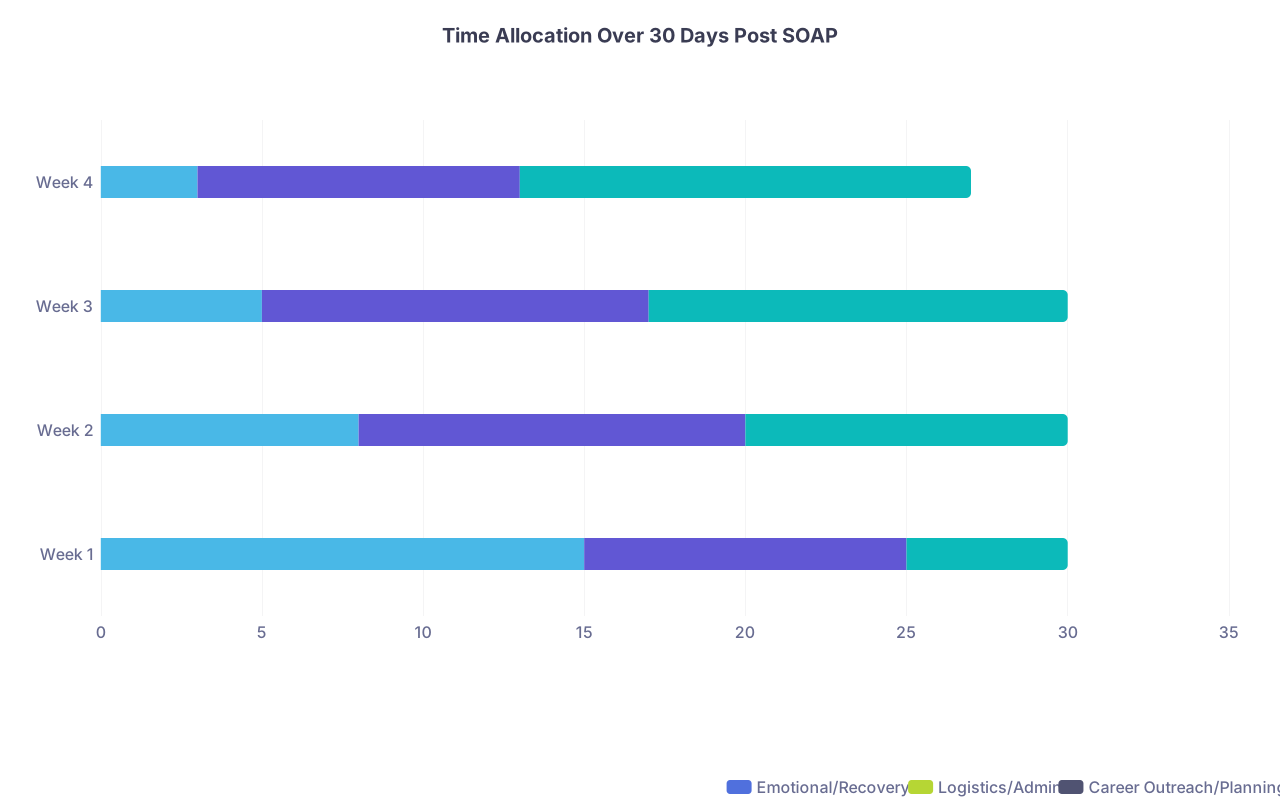
| Category | Emotional/Recovery | Logistics/Admin | Career Outreach/Planning |
|---|---|---|---|
| Week 1 | 15 | 10 | 5 |
| Week 2 | 8 | 12 | 10 |
| Week 3 | 5 | 12 | 13 |
| Week 4 | 3 | 10 | 14 |
Track A – Matched: Week 3
Now you start building pre‑intern habits and knowledge.
Days 15–17: Academic preparation (light but focused)
Focus on high‑yield basics for your field. Do not try to become an expert.
Examples:
- IM: “Pocket Medicine”, basic ward flows, orders, cross‑cover issues.
- Surgery: Pre‑op / post‑op orders, fluids, common consults.
- Pediatrics: Immunization schedule, common admission orders.
Set a modest target:
- 30–45 minutes per day of reading or questions.
- Aim for consistency, not intensity.
Days 18–21: Life systems
At this point you should address the things that explode during intern year if ignored.
- Health:
- Schedule your own PCP / dental / eye visits before July.
- Refill any chronic medications with enough buffer.
- Finances:
- Set up loan repayment planning (IDR, deferment, forbearance).
- Automate minimum payments where appropriate.
- Personal:
- Discuss expectations with partner/family about:
- Call schedules
- Holidays
- Visits / travel
- Discuss expectations with partner/family about:
You are building a life that can survive 80‑hour weeks.
Track B – Did Not Match: Week 3
Week 3 is where many people either secure something real or drift into unstructured limbo. Do not drift.
Days 15–17: Lock at least one concrete commitment
You need one of these, minimum:
- Formal research commitment (email acknowledgment, start date).
- Job offer (scribe, MA, research coordinator, etc.).
- Confirmed observership / externship start.
If nothing has landed:
- Follow up on previous emails.
- Expand your list:
- Community programs
- Less glamorous locations
- Non‑university hospitals
Call program coordinators directly where culturally appropriate. Many unmatched applicants hide behind email. The ones who pick up the phone stand out.
Days 18–21: Build your “Match 2.0” project list
You are designing the story you will tell next cycle.
Choose 2–3 concrete projects that:
- Generate tangible output (poster, abstract, QI project, publication).
- Show commitment to your chosen specialty.
- Can realistically be completed or at least significantly advanced within 6–9 months.
Document them:
- Working titles.
- Supervising faculty.
- Rough timeline.
At this point you should be able to answer, if a PD asks tomorrow:
“What have you been doing since not matching?”
With a crisp, confident 2–3 sentence answer that is already true, not aspirational.
Week 4 (Days 22–30): Optimize, Anticipate, and Tighten
The last week of your 30‑day plan is when you shift from emergency mode to structured forward motion.

Track A – Matched: Week 4
By now your onboarding should be well underway. Time to refine.
Days 22–25: Scenario planning for intern year
Write out short checklists for the first 2 weeks of residency:
“First day in hospital” list:
- Badge
- EMR access
- Pager / phone
- Scrubs access
- Parking / transport
“First on‑call” prep:
- Who is my backup?
- Where are important numbers stored?
- Typical cross‑cover calls and standard responses.
Ask a current PGY‑2 or PGY‑3 in your program:
- “What do you wish you had done in the month before starting?”
- “What tripped you up that could have been avoided?”
Adjust your prep based on real program‑specific intel, not generic online advice.
Days 26–30: Tighten loose ends
At this point you should:
Have:
- Signed contract (or at least a clear timeline).
- Housing plan (signed lease or solid short‑term).
- Completed or scheduled major onboarding items.
Confirm:
- Graduation requirements and dates.
- ACLS/BLS certification valid past start date.
- Any visa steps underway if relevant.
Then pull your 30‑day work together into a single document:
- Key contacts (PD, chiefs, coordinator, GME).
- Important dates.
- Logins and account information.
- Personal schedule (moves, ceremonies, final trips).
You are turning chaos into a command center.
Track B – Did Not Match: Week 4
This week you convert scattered efforts into a coherent, written reapplication plan.
Days 22–25: Formal reapplication strategy document
Write a 2–3 page private document (for yourself and close mentors) with:
Autopsy of last cycle
- Stats (USMLE/COMLEX, attempts).
- Number and type of programs applied to.
- Number of interviews.
- SOAP participation details.
Key weaknesses and how you will address them
- Example: Limited US clinical experience → 6‑month USCE plan.
- Example: Low Step 1/2 → targeted Step retake or strong Step 3 if allowed.
Plan for this coming year
- Job / role.
- Projects and outputs.
- Timeline for:
- ERAS updates
- LOR deadlines
- Any exam retakes.
Share this with 1–2 trusted mentors. Ask them to critique it aggressively.
Days 26–30: Communication reset and support
You need to control your narrative.
- Draft your “update email” template for:
- Letter writers.
- Prior interviewers (if appropriate).
- Deans / advisors.
Keep it:
- Honest.
- Brief.
- Forward‑looking.
Structure:
- Acknowledge not matching (one sentence, no drama).
- State your plan for the upcoming year.
- Specify what you are asking for (new LOR, mentorship, feedback, position).
Also, build some psychological scaffolding:
- Identify 2–3 people you can talk to when the next cycle gets ugly.
- Clarify your non‑negotiables (sleep, basic health, some off‑time).
You are not just prepping another application. You are prepping yourself to survive another year of high‑stakes uncertainty.
FAQ (4 Questions)
1. I matched in SOAP to a “backup” specialty. Should I start planning to reapply to my dream specialty next year?
Not in the first 30 days. For now, commit fully to the program that picked you. You need to become a competent, reliable intern. Once you have real experience and a sense of whether the specialty truly does not fit, then you can quietly discuss future options with trusted faculty. Immediate talk of reapplying elsewhere will only signal lack of commitment and can poison relationships before you even start.
2. I did not match and my scores are below average. Is it even realistic to try again?
Sometimes yes, sometimes no. The key variables are: exam attempts, citizenship/visa status, and prior clinical performance issues. A single lower score with solid clinical work and strong recommendations can be overcome with a smart plan. Multiple failures, professionalism red flags, or major gaps are much harder to recover from. This is where a blunt conversation with an experienced PD or dean matters; do not make this call alone.
3. How soon after not matching should I start emailing programs or faculty?
Within the first 10–14 days. You need a short period to regroup and understand what went wrong, but waiting months is a common error. Early outreach gets you on people’s radar before positions and research spots are fully committed. The key is targeted, respectful communication, not desperation blasts.
4. What is the biggest mistake people make in the 30 days after SOAP?
They either freeze or flail. Freezing looks like doing nothing, not reaching out, not planning, convincing themselves they will “figure it out later.” Flailing looks like 200 generic emails, vague plans, and no concrete commitments. The right path is in between: deliberate, targeted action tied to a clear 1‑year plan, reviewed with someone who has actually sat on the other side of the application screen.
Key points: The 30 days after SOAP are not a buffer; they are the foundation of your next phase. Whether you matched or not, you need a written plan with specific actions by week. And you should not do this in isolation—get at least one experienced person to critique your plan before you charge forward.