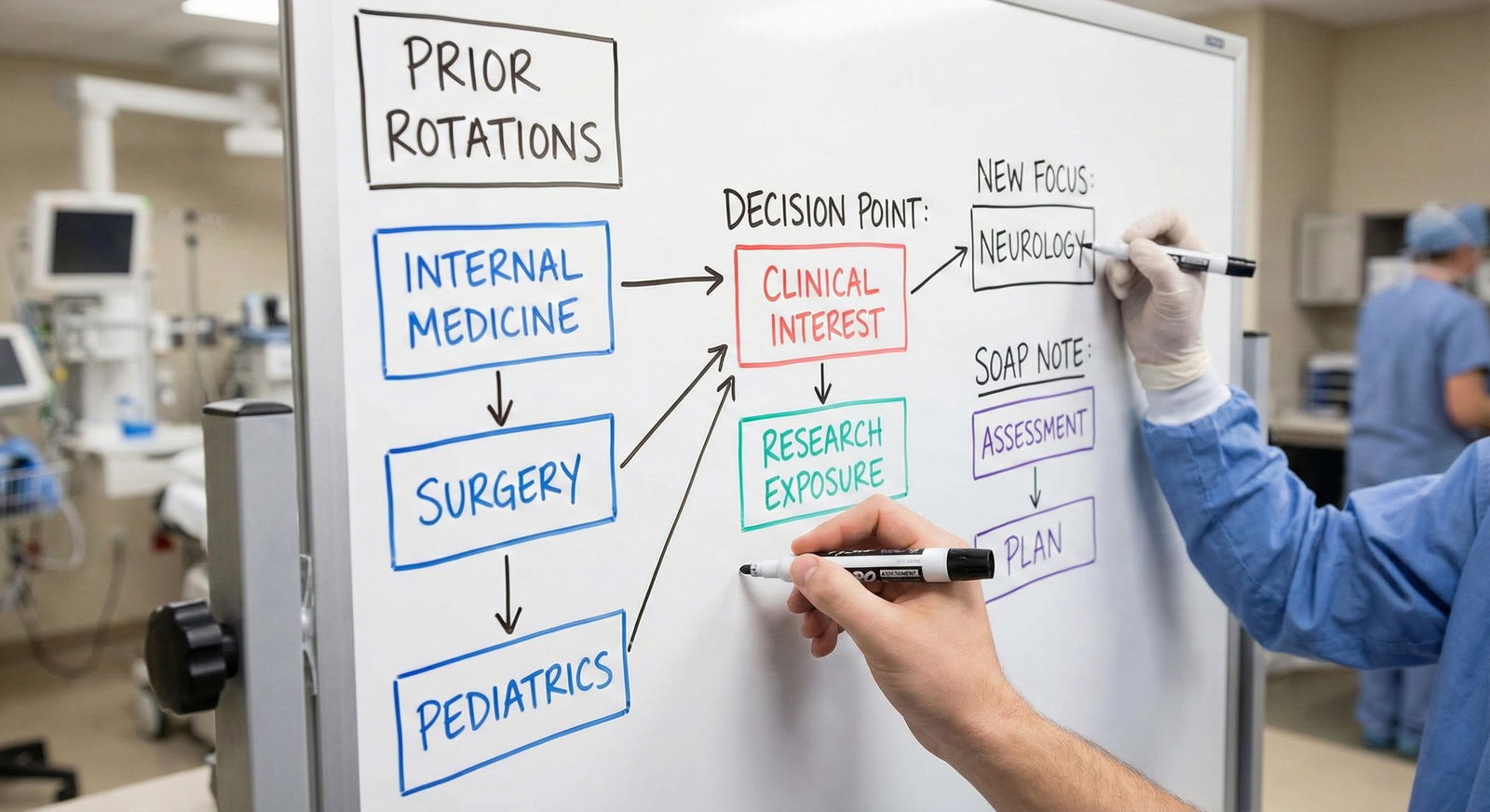
It is 10:59 a.m. ET on Monday of Match Week. You are staring at your phone, refreshing your email. The NRMP message hits:
“You did not match to any position.”
Your heart drops. You have exactly one hour before the SOAP-eligible list appears. At this point, what you do—and who you pull in with you—matters more than any single interview you did all season.
This is the playbook for coordinating your advisors, faculty, and dean’s office through SOAP. Time-based. Stepwise. No fluff.
One Week Before Match Week: Build Your SOAP Command Structure
If you are reading this before Match Week, good. You have time to build your team.
At this point you should be:
Identifying your three core roles
- Primary advisor – Usually your specialty advisor or a trusted faculty member who knows your file in detail.
- Dean’s office point person – The person who actually pushes your documents in ERAS and can vouch for you to programs.
- Scheduling/logistics partner – Could be a partner, friend, classmate, or your own second brain. Someone to watch the clock, manage spreadsheets, and keep you from missing deadlines.
Clarifying responsibilities up front
Create a simple division of labor so you are not assigning tasks in the middle of a crisis.
| Role | Primary Tasks |
|---|---|
| Primary Advisor | Strategy, program list, messaging |
| Dean’s Office | Documents, MSPE, transcripts, calls |
| Faculty Advocates | Targeted emails/phone calls to PDs |
| Logistics Partner | Tracking programs, deadlines, Zoom |
By the end of the week before Match:
- You should know exactly who you will text the second you learn your status.
- They should know they are on-call for you Monday–Thursday of Match Week.
- Dry-run the communication plan
Send an email to your small “SOAP team”:
- Subject: “If I SOAP – Plan and Roles”
- Include:
- Your specialty(ies) of interest and backup options
- A brief summary of your file (Step scores, AOA, red flags)
- Any geographic or visa limitations
- Cell number and preferred group-chat method (text, WhatsApp, Slack)
You want everyone to know the basic story before emotions are high.
Monday, 10:45–11:00 a.m. ET: Pre-Result Positioning
Fifteen minutes before the email, you are not “hoping.” You are staging.
At this point you should:
- Be physically in a quiet, private place with:
- Laptop (plugged in)
- Phone charged
- Headset or earbuds
- Have:
- ERAS open and logged in
- NRMP R3 login ready
- Email open
- Your advisors’ contact info pulled up
Decide right now:
- If you are unmatched → you will send one message to a pre-created group thread with:
- Primary advisor
- Dean’s office contact
- One key faculty mentor (if they agreed ahead of time)
Keep the message template ready:
“I did not match. I plan to participate in SOAP. I am available on Zoom/phone immediately. Can we meet as a group in the next 30 minutes?”
Do not try to coordinate everyone individually after the email hits. You will lose 20–30 minutes, which is absurdly expensive time.
Monday, 11:00–11:30 a.m.: Shock, Confirmation, First Meeting
The email comes. You did not match. You breathe once, then move.
11:00–11:10 – Confirm SOAP eligibility and notify your team
- Log into NRMP:
- Check if you are SOAP-eligible.
- If eligible:
- Fire off that pre-written text to your group.
- Ask the dean’s office: “Should I come in person or connect virtually now?”
Your dean’s office often has a prebuilt SOAP infrastructure. Use it. I have seen students try to “just handle it” solo at home. Outcomes are predictably worse.
11:10–11:30 – Immediate triage Zoom/meeting
This is not a therapy session. This is a war-room.
At this point you should:
- Get everyone on the same call:
- You
- Dean’s office representative
- Primary advisor
- Optional: extra faculty if they are truly useful, not just “supportive”
- Do a 5-minute factual summary of your situation:
- Original specialty + number of interviews
- Any red flags (Step 1 fail, professionalism issues, late exam scores)
- Your preferences if possible (e.g., “I am open to IM, FM, psych, prelim surgery”)
Your dean’s office should:
- Confirm:
- You are fully certified in ERAS
- All documents are uploaded and ready
- MSPE and transcript are accurate and final
Your advisor should:
- Start sketching “Plan A” and “Plan B”:
- Plan A: Try to SOAP into same specialty (if realistic)
- Plan B: Broader net to categorical positions in less competitive specialties or prelim years
You are not picking exact programs yet. You are deciding philosophy:
- Are we going to aggressively pivot to a different field?
- Or first exhaust all possible spots in your original specialty?
Monday, 11:30 a.m.–2:59 p.m.: Constructing Your SOAP Target List
The SOAP-eligible list appears at 12:00 p.m. ET.
11:30–12:00 – Set up your tools
You want a shared working environment. Not 17 email chains.
At this point you should:
- Create a shared Google Sheet (or equivalent) with columns:
- Program name
- Specialty
- State
- Categorical vs prelim
- Priority (1–3)
- Faculty contact? (Y/N + name)
- Dean approval
- Applied round (1–4)
- Status (applied, interview offer, rejected, pending)
Share it with:
- Yourself
- Primary advisor
- Dean’s office contact
- Any faculty who will be making advocacy calls
Set up one shared communication channel:
- Group text / WhatsApp for quick updates
- Zoom for strategy sessions
12:00–1:00 – First pass at the SOAP list
At noon, the list goes live. This hour is pure triage.
Roles at this point:
- You:
- Filter by:
- Specialty(ies) you will consider
- State/region you can realistically go to
- Star or mark every potentially acceptable program.
- Filter by:
- Advisor:
- Rapid sanity check on specialty choices.
- Flag unrealistic options (e.g., super-competitive academic programs for a marginal file).
- Dean’s office:
- Identify programs where your school has:
- Alumni
- Existing relationships
- Prior SOAP success
- Identify programs where your school has:
- Faculty advocates:
- Start scanning for programs they know personally.
You want a long list first, then prioritize.
Aim by 1:00 p.m. to have:
- 40–80 potential programs flagged (depending on how broad you are going)
- A clear sense of:
- Top-priority specialties
- “Acceptable but not ideal” backups
1:00–2:00 – Prioritization and program assignment
You only get 30 applications per SOAP round. This is not “apply everywhere and hope.”
At this point you should:
- With your advisor:
- Rank-order programs by priority (1 = top).
- Decide which specialties get how many of your 30 apps in Round 1.
- With dean’s office:
- Confirm they can quickly:
- Customize your MSPE addendum if needed.
- Add targeted notes or send emails for specific programs.
- Confirm they can quickly:
Your faculty advocates should:
- Claim programs they can personally contact:
- “I know the PD at X”
- “We sent a resident to Y last year”
- Note these in your spreadsheet. Mark them clearly.
2:00–2:59 – Final review before applications open
Last hour before you can submit.
Checklist:
- Confirm:
- All letters of recommendation are uploaded and assigned appropriately.
- There are no missing exam scores that will auto-exclude you.
- With your advisor:
- Review your personal statement strategy:
- One generic statement for the specialty.
- Optional modified version for a different specialty if you are applying to more than one field.
- Review your personal statement strategy:
If you are cross-applying (e.g., EM and IM, or Ortho and prelim surgery):
- Your dean’s office should help you weigh:
- Is it better to SOAP into a categorical backup now?
- Or push hard for a prelim with a realistic chance of reapplying?
Do not do this solo. This is where experience matters.
Monday, 3:00–5:00 p.m.: Round 1 Applications Go Live
3:00 p.m. ET: SOAP application submissions open.
At this point you should:
- Submit your first 30 applications within the first 30–60 minutes. Drifting to 5 p.m. is a mistake.
- Focus Round 1 on:
- Programs where you are a realistic fit.
- Programs where your school/faculty have connections.
- Not just “dream” programs.
Your dean’s office:
- Should be ready to:
- Push any last-minute document changes.
- Send structured, short advocacy emails to highest-priority programs:
- “We highly recommend [Your Name], who is an excellent candidate for your [specialty] program and very interested.”
Your faculty:
- Make their targeted calls/emails now:
- PDs
- APDs
- Core faculty at those programs
- They should mention:
- Your specific strengths
- That you are actively applying via SOAP
- That you would rank the program highly if offered
You:
- Keep the spreadsheet current.
- Log every:
- Program you applied to
- Advocate contact made
- Any responses
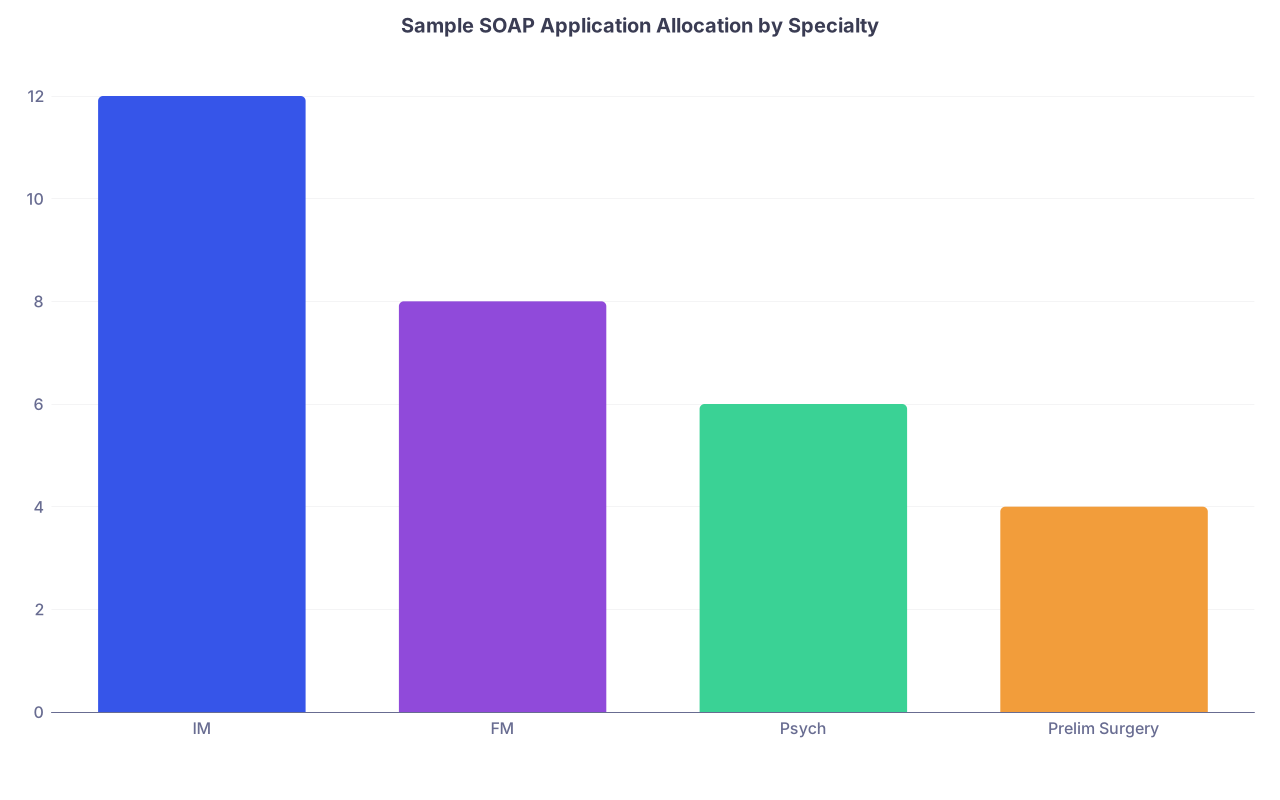
| Category | Value |
|---|---|
| IM | 12 |
| FM | 8 |
| Psych | 6 |
| Prelim Surgery | 4 |
By 5:00 p.m.:
- Your team should regroup briefly:
- Confirm all 30 applications are in.
- Make sure no high-yield program was accidentally missed.
Tuesday: Interview Day Coordination
SOAP interviews usually start early Tuesday and move fast.
Early morning (before 9:00 a.m.)
At this point you should:
- Be reachable at all times:
- Ringer on
- Email notifications on
- Share your live availability with your dean’s office:
- When you are in interviews
- When you are free for quick debriefs
Set roles:
- You: Interview, then immediately jot down:
- Who you spoke with
- Program vibe
- How interested you are (1–3)
- Logistics partner (or advisor):
- Update the spreadsheet in real time.
- Mark programs where you interviewed.
During the day
SOAP interviews are often:
- Brief
- Variable quality
- Chaotic
Your job, in coordination with your team:
Before each interview
- Quickly review:
- Program basics
- Any notes faculty or dean’s office provided about that program.
- If your dean’s office or faculty made a call for you to that program:
- Thank them explicitly in any follow-up email.
- Quickly review:
After each interview
- Send a tight thank-you email:
- Reinforce interest.
- Clarify any geographic/family reasons to be there.
- Tell your advisor:
- “Program X – I would be very happy there” or “Last-resort option.”
- Your advisor and dean’s office:
- Adjust your internal rank sense accordingly.
- Send a tight thank-you email:
Faculty and dean’s office advocacy
- Once you have a strong positive impression of a program:
- Ask your advisor or dean:
- “Would you be willing to reach out to [Program] and express my strong interest?”
- Ask your advisor or dean:
- They can:
- Confirm you are a serious, reliable candidate.
- Highlight any context (late switch in specialty, single poor test score, etc.).
- Once you have a strong positive impression of a program:

| Step | Description |
|---|---|
| Step 1 | Interview Invite |
| Step 2 | Student Preps |
| Step 3 | Interview Completed |
| Step 4 | Student Debrief to Advisor |
| Step 5 | Dean or Faculty Advocacy |
| Step 6 | No Further Action |
| Step 7 | Program Ranks Candidate |
| Step 8 | High Interest? |
By end of Tuesday:
- You should have:
- A clear idea of which programs you actually want.
- Your team should:
- Know your internal “rankings” even though there is no official rank list in SOAP.
Wednesday: Round 2 and Reassessment
If you do not have a strong interview that feels like it could land you a spot, you must be brutally honest now.
Morning: Reality check meeting
At this point you should:
- Meet again (short Zoom is fine) with:
- Advisor
- Dean’s office
- Review:
- Number of interviews
- Quality and seriousness of those interviews
- Any feedback (direct or indirect)
Your advisor may say what you do not want to hear:
- “We should pivot more aggressively to prelim positions.”
- “We need to open to additional specialties.”
Trust experience here. I have seen students cling to a sinking specialty and end the week without any position when a prelim or different categorical spot was very possible.
Before Round 2 applications reopen
Depending on the cycle, you may have additional application “slots” as other rounds open.
At this point you should:
- With your advisor:
- Identify:
- New programs (if available)
- Programs you did not include in Round 1 that now move up in priority.
- Identify:
- With dean’s office:
- Confirm they can still turn documents around quickly.
- Make sure any updated narratives (e.g., addendum statements) are loaded.
Then:
- Use your remaining application slots strategically:
- Do not reapply to the same program.
- Spread across realistic, open positions.
Thursday Morning: Offers and Final Coordination
If you are going to get a SOAP offer, this is when it usually happens.
Before offers release
At this point you should:
- Review with your advisor and dean:
- Which programs you would definitely accept.
- Which programs would be:
- Acceptable
- Borderline
- Decide your non-negotiables:
- Visa limitations
- Severe geographic constraints (e.g., caregiving responsibilities)
- Fields you absolutely will not enter
You need this clarity because SOAP offers expire quickly. There is no time for lengthy reflection.
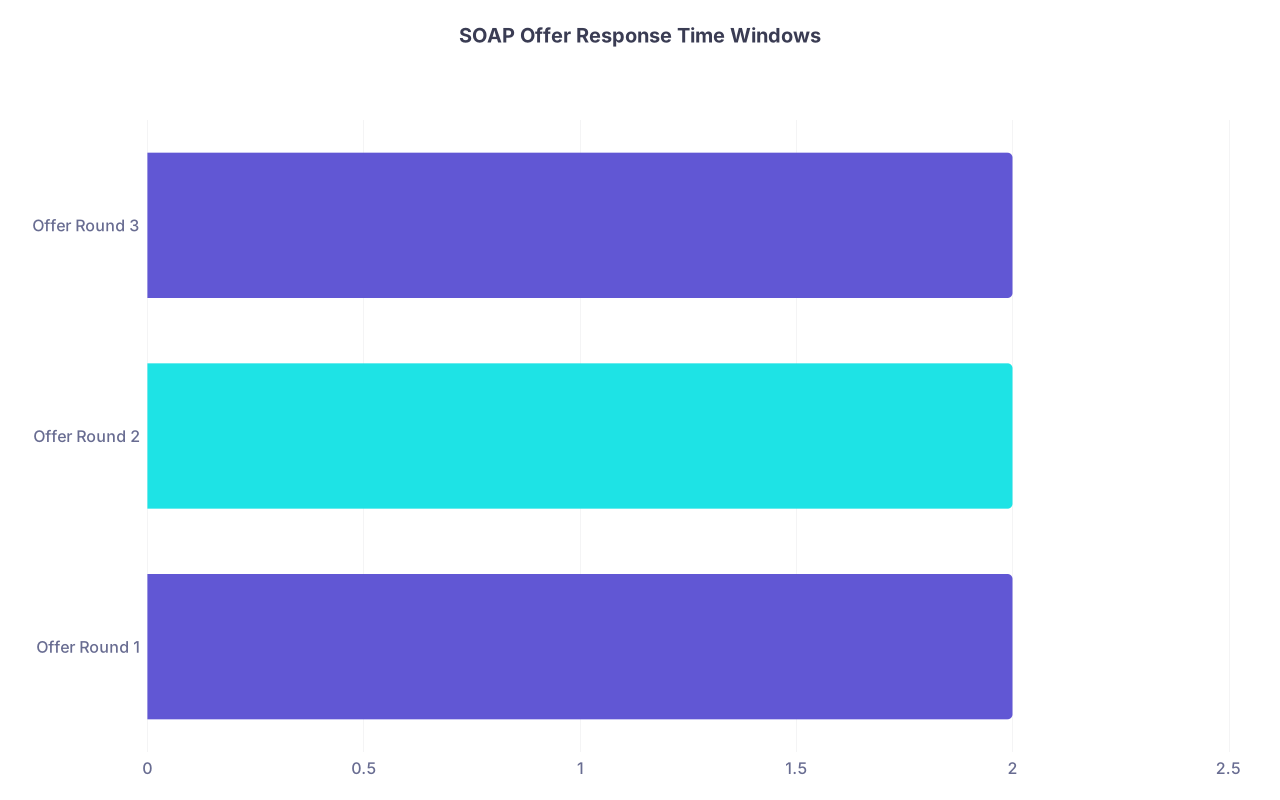
| Category | Value |
|---|---|
| Offer Round 1 | 2 |
| Offer Round 2 | 2 |
| Offer Round 3 | 2 |
(Values representing typical hours to respond.)
When offers come
As soon as an offer hits:
- You:
- Inform your advisor and dean (quick text is enough).
- If it is a program you previously marked as “yes,” accept it.
- Your dean’s office:
- Helps you confirm:
- Contract basics
- Any major red flags
- Helps you confirm:
- Your advisor:
- Only steps in to re-discuss if it is a borderline option.
Do not overthink a legitimate, reasonable categorical offer. Once you accept, SOAP ends for you.
If You Exit SOAP Without a Position
Unpleasant, but it happens.
At this point you should:
- Immediately schedule a longer post-mortem meeting with:
- Advisor
- Dean’s office
- Review:
- Where your application failed (numbers, red flags, specialty choice, geographic constraints).
- Whether a supplemental offer process or off-cycle positions are realistic.
Your dean’s office:
- Can:
- Identify:
- Programs that historically take late positions.
- Research or prelim options that set you up for reapplication.
- Help structure:
- A gap year plan
- An official “SOAP outcome” record for future applications.
- Identify:
Your faculty:
- May:
- Connect you with research mentors or departments willing to bring you on.
- Advocate for future cycles.
It is not where you wanted to be. But coordinated support still matters deeply here.
Visual: Example Week-Of SOAP Coordination Timeline
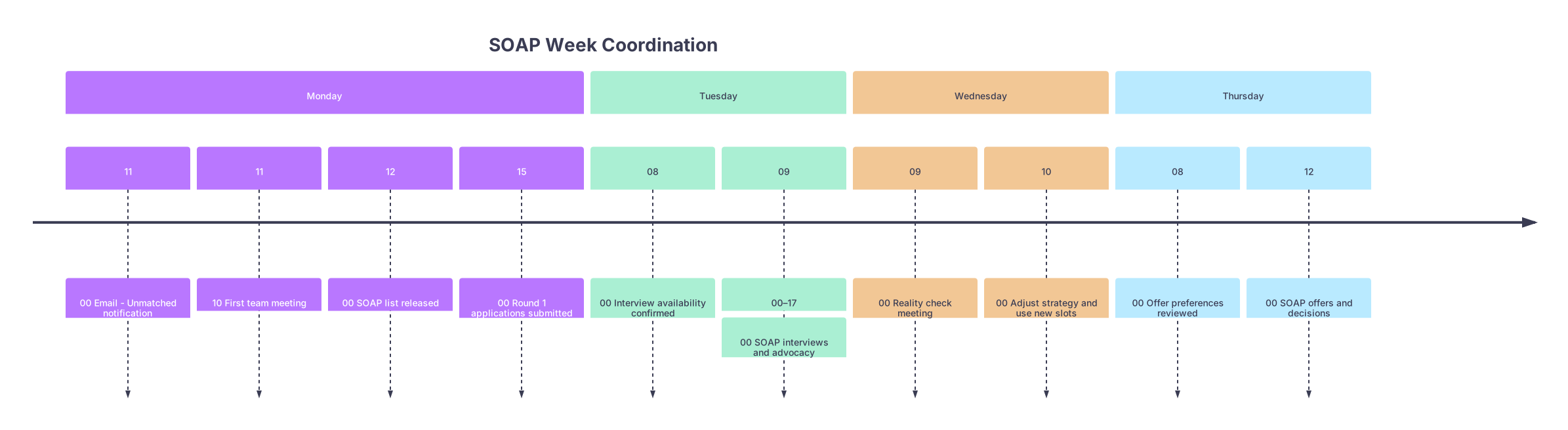
| Period | Event |
|---|---|
| Monday - 11 | 00 Email - Unmatched notification |
| Monday - 11 | 10 First team meeting |
| Monday - 12 | 00 SOAP list released |
| Monday - 15 | 00 Round 1 applications submitted |
| Tuesday - 08 | 00 Interview availability confirmed |
| Tuesday - 09 | 00–17 |
| Wednesday - 09 | 00 Reality check meeting |
| Wednesday - 10 | 00 Adjust strategy and use new slots |
| Thursday - 08 | 00 Offer preferences reviewed |
| Thursday - 12 | 00 SOAP offers and decisions |
Final Key Points
- Do not SOAP alone. You need a coordinated triad: advisor, dean’s office, and at least one active faculty advocate.
- Time is the currency. Pre-plan communication channels and roles so you are not improvising once the unmatched email lands.
- Be flexible but decisive. Adjust strategy with your team as real interview data comes in, and accept a solid offer quickly when it appears.