
Opening: The Board-Exam Myth That Eats Up Too Much Study Time
Let me say this plainly: trying to memorize every surgical classification is a bad board strategy.
Not suboptimal. Bad.
I have watched residents lose entire weekends stuffing their brains with obscure staging variants, historical grading systems, and five-layer subclassifications that have not changed a management decision since the Bush administration. Then they sit for questions that ask something much simpler: Is this patient sick enough for the OR? Is this wound clean-contaminated? Does this complication require intervention? What is the next best step?
That is how boards are written. Not as a museum tour of surgical nomenclature. As a decision test.
The myth persists because surgery is detail-heavy and hierarchy-heavy. Every disease seems to come with a named scale, a severity grade, a subtype table, and one attending who swears that if you do not know every branch point of some classification from memory, civilization will collapse. Add test anxiety and residents start overstudying the wrong material. They confuse volume with rigor. They think more lists means more mastery.
It does not.
The real goal of board prep is much narrower and much smarter: identify the few classifications that repeatedly drive management, prognosis, perioperative risk, or question interpretation. Learn those well. Deeply. Cold. Then recognize the rest well enough not to be rattled when they appear in a stem.
That distinction matters. A lot.
You do need to know the classifications that change what you do next. ASA class before surgery. Wound class and infection risk. Clavien-Dindo when a postoperative complication appears. Burn depth and TBSA when triage and fluids are on the line. Basic trauma severity frameworks. Action-linked cancer staging. Those are worth your time.
But the endless tail of low-yield subclassifications? Most of that is academic clutter. Recognition level only.
If you study as if every classification deserves equal attention, you will end up excellent at trivia and worse at boards. I have seen this happen repeatedly. Smart residents. Hardworking. Buried under lists. Missing the point.
What Actually Gets Tested: The Board Writers Care About Decisions, Not Memorization Hoarding
Board questions are built around decisions. That is the organizing principle. Once you understand that, the panic around classifications drops fast.
Here is the usual anatomy of a surgical board question:
- A vignette establishes the diagnosis.
- A severity grade, stage, or classification is implied or stated.
- The answer depends on what that severity means for management, prognosis, or urgency.
That is it. The classification is often a tool, not the endpoint.
What boards actually ask
Common patterns include:
- Next best step
- Example: stable appendicitis versus perforation with diffuse peritonitis.
- Need for operative versus nonoperative management
- Example: blunt solid organ injury in a stable patient.
- Need for ICU-level care or escalation
- Example: major burns, severe pancreatitis, high perioperative risk.
- Complication severity
- Example: does this postoperative issue require bedside treatment, pharmacologic therapy, procedure, or reoperation?
- Prognosis or risk communication
- Example: staging systems that correlate with survival or recurrence.
The key difference: action-linked versus academic
A classification is high yield if knowing it changes one of these:
- whether to operate
- how urgently to operate
- which service level the patient needs
- how to risk-stratify
- how to stage prognosis
- how to interpret a stem’s severity language
A classification is low yield if it mainly exists to:
- describe morphology in excessive detail
- distinguish rare subtypes with no management consequences in general boards
- preserve historical language
- satisfy subspecialty niche debates
That is where residents waste time. They memorize every subtype equally, as if boards are an oral exam with a particularly grumpy professor from 1987. They are not.
How classifications usually appear on exam day
Most of the time, the exam does not require total recall of every level. It uses the framework as an anchor.
For example:
- You may need to know that Clavien-Dindo III means a complication requiring intervention, not the full philosophical history of the system.
- You may need to know that ASA IV reflects severe systemic disease that is a constant threat to life, because that affects perioperative risk, not because the exam wants your autobiographical relationship with the ASA manual.
- You may need broad TNM implications tied to resectability or adjuvant therapy, not every obscure subcategory suffix.
- You may need to recognize a partial-thickness burn and estimate TBSA, because fluids and transfer decisions depend on it.
Board writers want to know whether you can translate a classification into clinical action. If you can do that, you are answering the real question. If you can only recite categories, you are memorizing labels without owning the concept.
That is a trap. A very common one.
The High-Yield Surgical Classifications Worth Mastering
Here is where I would actually spend time. Not all at once. But repeatedly, with active recall.
1) ASA Physical Status
This one matters because it shows up everywhere perioperatively.
What it is: a preoperative assessment of overall systemic illness burden.
What to know cold:
- ASA I: healthy patient
- ASA II: mild systemic disease
- ASA III: severe systemic disease
- ASA IV: severe systemic disease that is a constant threat to life
- ASA V: moribund, not expected to survive without the operation
- ASA VI: brain-dead organ donor
- E suffix: emergency operation
What changes clinically: perioperative risk framing. Not by itself the sole determinant of management, but highly testable in operative risk discussions.
Common trap: confusing ASA III and IV. Controlled CHF history versus active decompensated heart failure. Severe disease is not automatically “constant threat to life.”
2) Surgical wound classification
Simple. Old. Tested constantly because it predicts infection risk and often appears in perioperative antibiotic questions.
Core classes:
- Clean
- Clean-contaminated
- Contaminated
- Dirty/infected
What to know cold:
- Entering the respiratory, GI, GU tract under controlled conditions generally means clean-contaminated.
- Gross spillage, major break in sterile technique, fresh traumatic wounds usually push toward contaminated.
- Existing infection, perforated viscus, devitalized tissue: dirty/infected.
What changes clinically: expected infection risk, interpretation of operative cases, prophylactic antibiotic logic.
Common trap: calling elective colon surgery “contaminated.” In standard controlled entry, it is usually clean-contaminated, not automatically contaminated just because bowel is involved.
3) Clavien-Dindo classification of postoperative complications
This is one of the rare classifications that is both elegant and useful.
What it is: grades complications by the therapy required to treat them.
High-yield structure:
- Grade I: minor deviation, no major pharmacologic/procedural treatment
- Grade II: pharmacologic treatment required
- Grade III: surgical, endoscopic, or radiologic intervention required
- IIIa without general anesthesia
- IIIb under general anesthesia
- Grade IV: life-threatening, ICU management
- Grade V: death
What changes clinically: helps interpret severity. Board stems love this because it links directly to escalation.
Common trap: calling a complication “major” because it sounds scary, when the formal grade is based on treatment required. A postoperative abscess treated with IR drainage is Grade III, even if the patient looks decent.
4) Burn depth and TBSA
This is not optional.
What to know cold:
- Superficial: epidermis only
- Partial-thickness: dermis involved
- Full-thickness: entire dermis destroyed
- TBSA estimation: adult Rule of Nines basics
- Which burns count toward resuscitation calculations: generally partial- and full-thickness burns, not simple superficial sunburn-type injury
What changes clinically:
- fluid resuscitation
- transfer to burn center
- airway concern
- need for grafting versus healing by re-epithelialization
Common trap: overcounting superficial burns in TBSA or underrecognizing circumferential/full-thickness injury.
5) Appendicitis/peritonitis severity frameworks
You do not need to memorize every obscure named appendicitis score. You do need to know how severity changes management.
What to know conceptually:
- uncomplicated appendicitis versus
- perforated/gangrenous appendicitis versus
- diffuse peritonitis/abscess/sepsis
What changes clinically: antibiotics alone versus appendectomy versus drainage versus urgent operation depending on scenario.
Common trap: getting seduced by score names rather than reading the stem. Generalized peritonitis drives the decision, not your ability to quote every grading nuance.
6) Trauma scoring basics: GCS and practical trauma severity concepts
For general boards, Glasgow Coma Scale is far more important than a long list of trauma scores nobody uses outside protocol discussions.
Know cold:
- eye opening, verbal response, motor response
- practical interpretation of severe neurologic injury
- how mental status affects airway decisions
What changes clinically: airway protection, TBI severity framing, prognosis discussions.
Common trap: arithmetic errors. Under pressure, people miscalculate the sum. Practice it until it is automatic.
Also know broad trauma principles linked to hemodynamic stability, injury grade, and operative need. For many organ injury grading systems, the exact grade matters less than this pattern: stable patient + no peritonitis = often nonoperative; unstable patient or peritonitis = operative pathway.
7) Pancreatitis severity tools: know the concept, not every point
This is a middle-category topic.
Ranson criteria and similar tools are classic. You should recognize them and know they stratify severity and prognosis. But modern questions often care more about identifying severe pancreatitis, organ failure, necrosis, or cholangitis-related indications for intervention than reciting every individual criterion.
What changes clinically: ICU monitoring, aggressive supportive care, recognizing severe disease.
Common trap: wasting hours memorizing every threshold when the exam is asking whether the patient has worsening organ dysfunction and needs escalation.
8) Cancer staging systems tied to action
This is where nuance matters. Do not memorize all of oncology. Do master common cancers where stage drives the immediate next step.
Examples:
- colon cancer
- breast cancer
- gastric cancer
- pancreatic cancer
- melanoma
- thyroid, depending on your board blueprint
What to know:
- broad TNM logic
- local versus nodal versus distant disease
- stage features that change resectability, neoadjuvant therapy, adjuvant therapy, or prognosis
What changes clinically: huge management implications.
Common trap: drowning in substage minutiae while missing the real fork in the road. The exam usually cares whether disease is localized, node-positive, locally advanced, or metastatic. That is the decision spine.
A useful rule
If a classification answers, “What do I do now?” learn it deeply.
If it merely answers, “What is the fancy name for this subtype?” be suspicious.
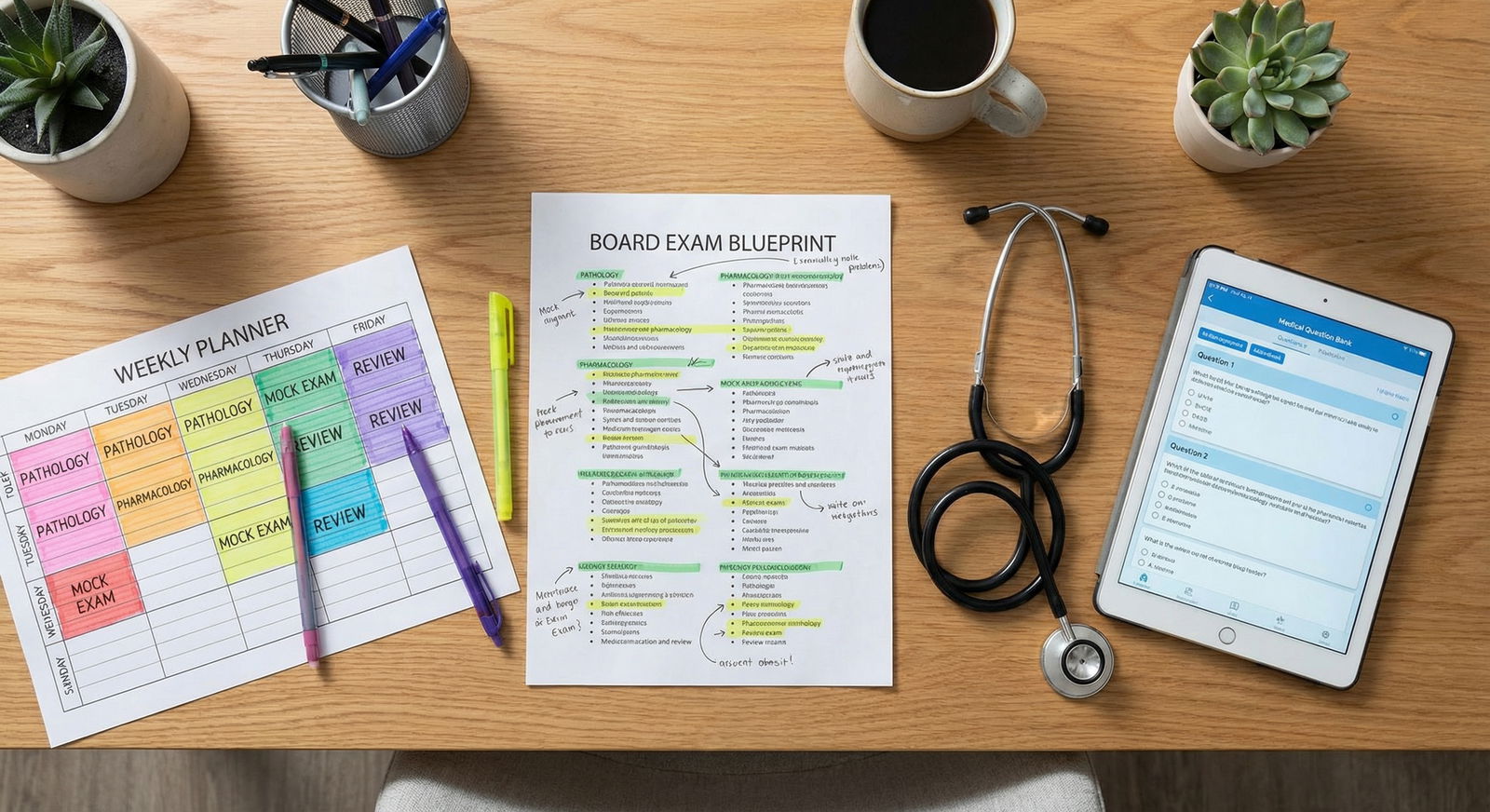
The Low-Yield Trap: Classifications You Can Recognize Without Memorizing Every Subtype
This is where disciplined residents separate themselves from anxious residents.
You do not get extra points for suffering.
A low-yield classification is not useless. It is just not worth exhaustive memorization for general board prep unless your program, question bank, or exam blueprint repeatedly proves otherwise.
How to triage a classification quickly
Ask four questions:
- Does it change management directly?
- Does it repeatedly appear in question banks?
- Do answer choices hinge on exact subtype recall?
- Would missing a category change the next best step?
If the answers are mostly no, that system goes into recognition-only territory.
Common overlearned categories
These vary by specialty, but the usual offenders include:
- historical eponym-heavy fracture subclassifications beyond the broad unstable/stable or operative/nonoperative implications
- rare hepatobiliary or pancreatic anatomic variants with excessive subtypes
- older pancreatitis scoring details memorized line by line when the test is really asking severity
- exhaustive hernia, fistula, or soft tissue tumor subclassifications that barely affect the general surgery decision in broad board questions
- highly specialized transplant, vascular, or endocrine grading schemas outside core management pivots
- obsolete staging systems that have largely been replaced clinically
I have seen residents build 200-card decks on classifications they encountered in one lecture slide and never again. That is not diligence. That is poor triage.
Flashcards versus one-line note
Here is the practical rule I use:
Make flashcards when the system has:
- discrete cutoffs
- management thresholds
- repeated board appearances
- common trap distinctions
Make a one-line note when the system only requires:
- broad recognition
- awareness of severity direction
- a reminder that “higher grade = worse prognosis” without specific actions attached
Examples:
- Flashcard-worthy: ASA, wound classes, Clavien-Dindo, GCS basics, burn depth/TBSA, common action-based TNM principles.
- One-line note-worthy: obscure subclassifications where the take-home is simply “advanced stage predicts worse outcomes.”
A lot of classification studying is really an issue of ego. People like the feeling of “covering everything.” It feels safe. It is not. It is an expensive way to avoid the discomfort of prioritization.
Boards punish that mistake quietly. Not because they ask impossible trivia, but because while you were memorizing category 4b(ii), you did not practice enough operative decision questions.
How to Study Surgical Classifications Efficiently for Boards
You need a system. Otherwise every named scale starts looking equally important, and that is how your review turns into list-hoarding.
Here is the method I recommend.
Step 1: Ask what the classification measures
Is it measuring:
- operative risk?
- complication severity?
- injury burden?
- cancer spread?
- burn extent?
- physiologic instability?
If you cannot answer that in one sentence, you do not know the system yet.
Step 2: Identify the key cutoffs or categories
Not every detail. Just the parts that separate one action from another.
Examples:
- ASA III versus IV
- clean-contaminated versus contaminated
- Clavien-Dindo II versus III
- superficial versus partial-thickness burn
- localized versus metastatic disease
Step 3: Tie each level to a clinical consequence
This is the whole game.
For each category, write:
- what it means
- what changes because of it
- what the board is likely to ask
If no management or prognosis changes, demote the classification.
Step 4: Practice through vignettes, not naked lists
Do not reread tables ten times. That is how people become fluent in shapes and terrible at application.
Use:
- mini-comparison grids
- self-made two-column tables
- one-sentence memory hooks
- question-bank stems
- verbal recall during commute or post-call walk
Step 5: Watch for the two classic errors
Error one: memorizing empty lists.
This is the resident who can recite categories but misses the answer because they cannot connect the grade to treatment.
Error two: ignoring the recurring systems.
This is the resident who says, “I will just reason it out,” then gets burned by the same high-yield frameworks showing up over and over.
The fix is balance. Learn a small number deeply. Recognize the rest lightly.
Summary
You do not need to memorize every surgical classification for boards. You need to know the classifications that actually move the needle: the ones that change diagnosis, severity assessment, prognosis, perioperative risk, or management.
That is the reality.
Boards reward decision-making. They reward the ability to read a vignette, identify the clinically important grade or stage, and choose the correct next step. They do not reward classification hoarding for its own sake.
So cut ruthlessly:
- Master ASA.
- Master wound classes.
- Master Clavien-Dindo.
- Master burn depth and TBSA.
- Master GCS and practical trauma severity logic.
- Know action-linked cancer staging principles.
- Treat many other systems as recognition-level unless your board blueprint proves otherwise.
That approach is not lazy. It is mature. It is how good residents study once they stop mistaking exhaustive memorization for expertise.
If a classification changes what you do, learn it cold.
If it does not, stop worshipping the table.