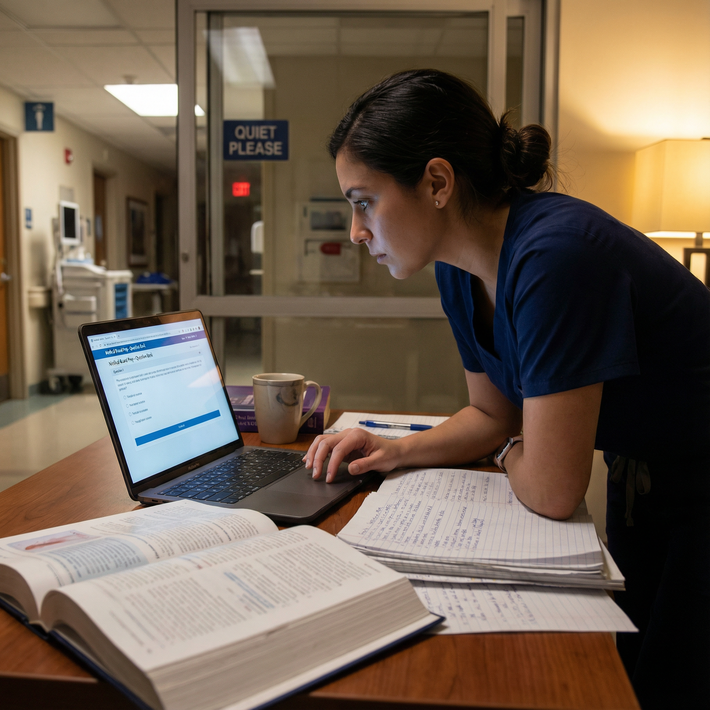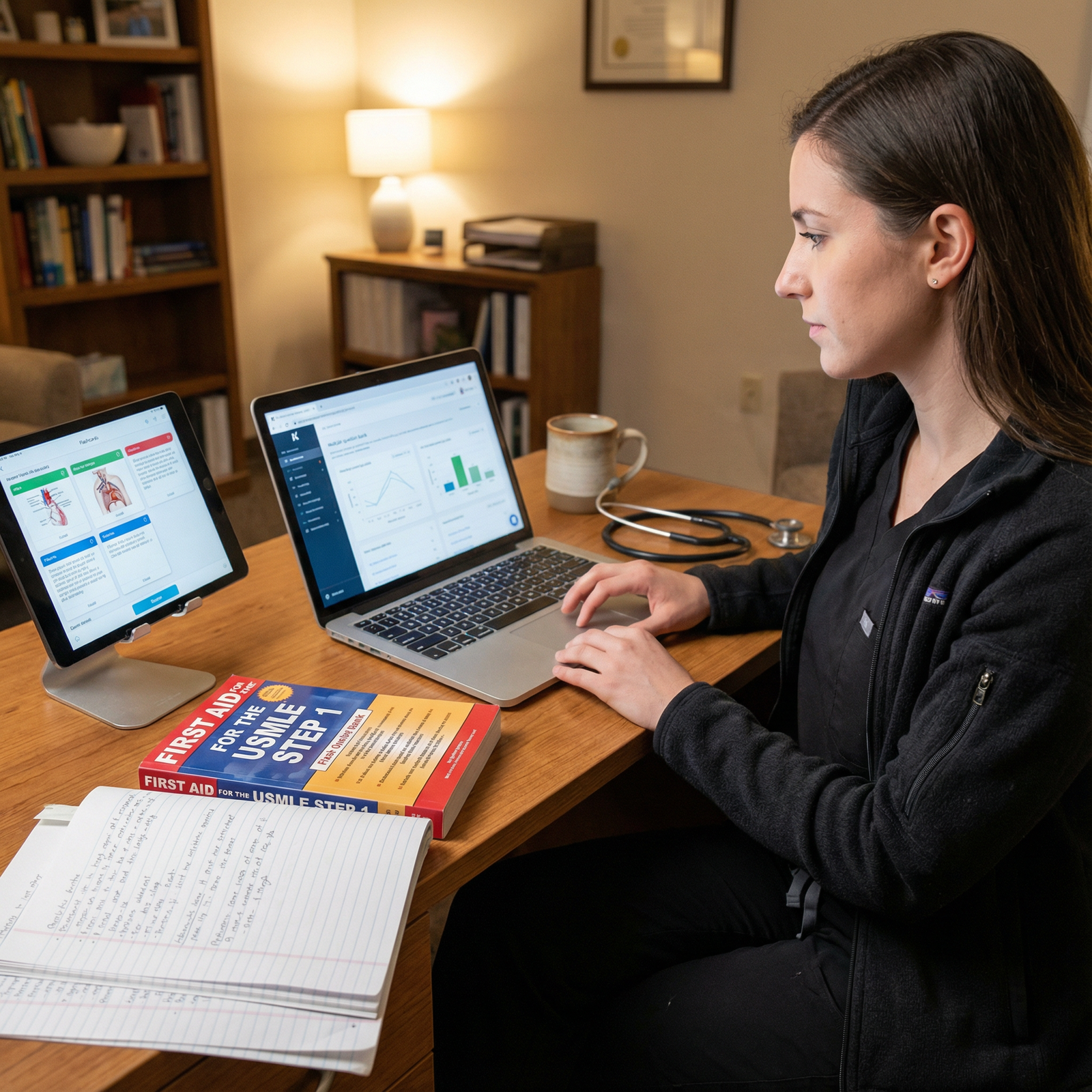
Studying for board exams is a defining part of medical training and one of the most stressful phases of residency life and medical school. Whether you’re tackling the USMLE, COMLEX, or specialty boards, you’re not just battling the difficulty of the content—you’re also trying to navigate an overwhelming jungle of Medical Resources, conflicting advice, and endless Study Techniques.
Choosing the right tools for Board Exam Prep can make the difference between spinning your wheels and making steady, targeted progress. This guide will help you strategically select and use resources so your prep is efficient, high-yield, and sustainable.
Understanding the Board Exam Landscape and What’s Really Being Tested
Before you can choose the best study materials, you need to understand what these exams are actually designed to measure and how that shapes your study strategy.
Board Exam Objectives: Beyond Memorization
USMLE, COMLEX, and specialty boards aim to assess whether you can function as a safe, competent physician, not just a walking textbook. Across exams, common goals include:
Testing core medical knowledge
Foundational sciences, clinical medicine, pathophysiology, pharmacology, and diagnostic reasoning.Evaluating clinical decision-making
How you interpret clinical vignettes, prioritize differential diagnoses, and choose next steps in management.Ensuring patient safety and professionalism
Knowledge of guidelines, ethics, risk stratification, and avoiding harmful choices.Assessing readiness for the next phase
Step 1/Level 1: foundational science and basic mechanisms.
Step 2 CK/Level 2 CE: clinical diagnosis, management, next best step.
Specialty boards: advanced, practice-specific knowledge and judgment.
Understanding this helps you pick resources that mirror exam style and complexity, not just raw content.
Why Strategic Preparation Matters
Because your time and energy are limited—especially during residency—you need a prep plan that maximizes return on effort:
Reduces anxiety and burnout
A clear plan and curated set of Medical Resources lowers decision fatigue and improves confidence.Improves recall under pressure
Repeated exposure to exam-style questions and explanations trains your brain for the exact task you’ll face on test day.Prevents “false mastery”
Reading a lot isn’t the same as being exam-ready. Active resources (Q-Banks, flashcards, practice exams) help reveal what you don’t know.Protects overall residency performance
A streamlined Board Exam Prep strategy allows you to balance clinical duties, wellness, and studying without constantly feeling behind.
Overview of Major Board Exam Study Resources
There is no single “best” resource for everyone. The right mix depends on your exam (USMLE vs COMLEX vs specialty), your baseline knowledge, and your learning style. Below is a structured breakdown of commonly used tools, with practical tips.
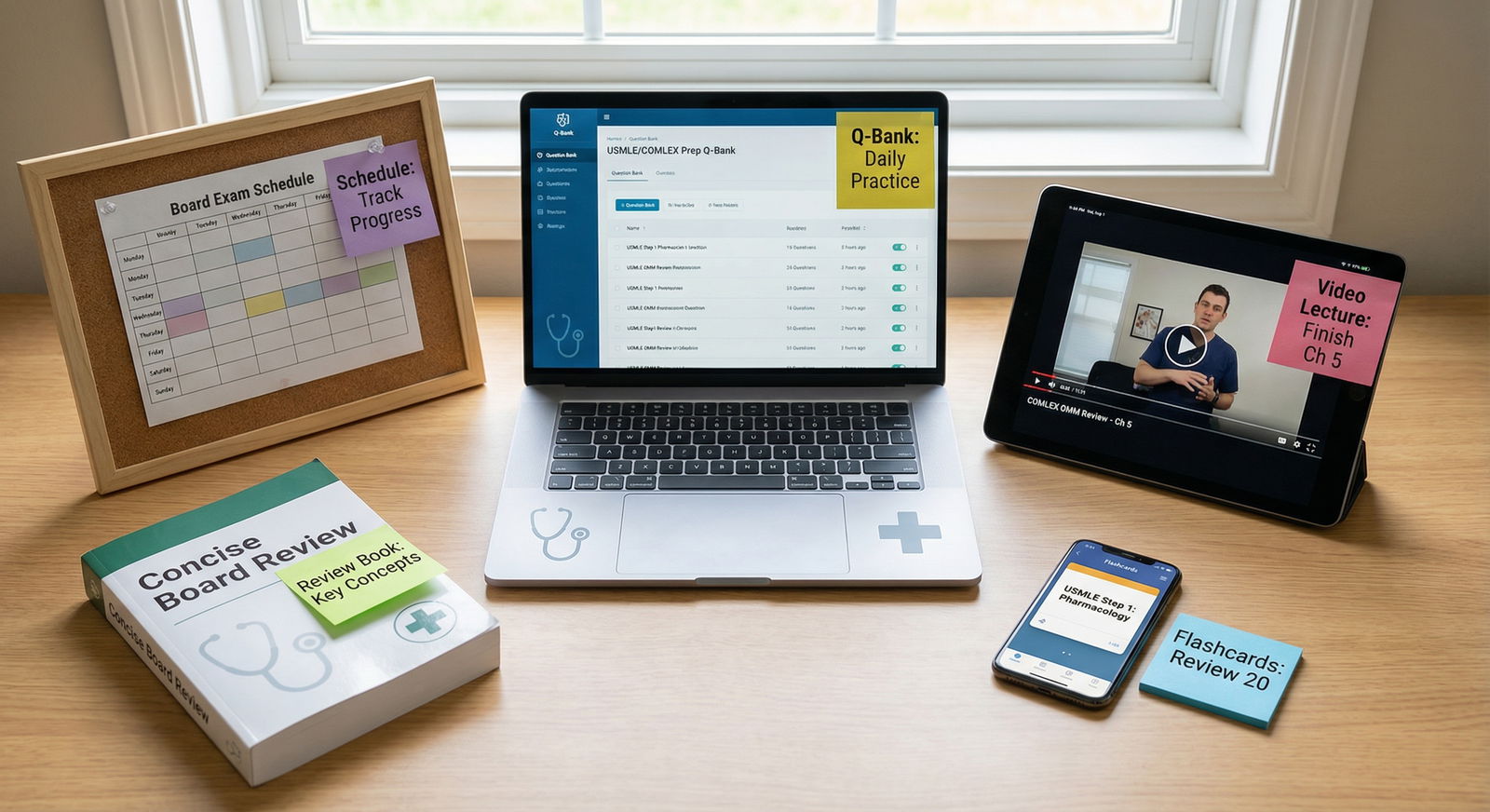
1. Textbooks and Review Books: Depth vs Efficiency
Textbooks and concise review books remain foundational Medical Resources, but they must be used strategically.
Pros
- Comprehensive coverage of core concepts and mechanisms.
- Authoritative and peer-reviewed, often aligned with guidelines.
- Helpful for building or repairing weak foundations, especially for early USMLE or COMLEX stages.
Cons
- Full textbooks are time-consuming and dense, often beyond what you can realistically cover before an exam.
- Some may be slow to reflect updated guidelines or exam trends.
- Easy to fall into passive reading without retention.
How to Use Them Effectively
- Prioritize exam-oriented review books over full, detailed texts once you’re in dedicated prep mode.
- Use comprehensive texts selectively:
- When you repeatedly miss a concept in Q-Banks.
- For topics you know are weak (e.g., renal physiology, biostatistics).
- Examples:
- First Aid for the USMLE Step 1 – classic high-yield outline for foundational sciences.
- Subject-specific review books (e.g., for pathology, internal medicine boards, pediatrics).
Tip: If you’re closer to your exam (≤8–12 weeks), your primary effort should shift toward questions and active learning, with books serving as reference, not the main event.
2. Online Question Banks (Q-Banks): The Core of Modern Board Exam Prep
For most exam-takers, Q-Banks are the single most important resource.
Pros
- Simulate the format and difficulty of USMLE, COMLEX, and specialty boards.
- Provide detailed explanations that teach both correct and incorrect answer choices.
- Offer performance analytics by subject and system, helping you target weaknesses.
- Foster active recall and spaced repetition naturally.
Cons
- Can be expensive, especially if you subscribe to multiple Q-Banks.
- Questions might not cover every niche topic.
- Risk of passively reading explanations without reflection.
Popular Q-Banks and When to Use Them
- UWorld – Often considered the gold standard for USMLE and many specialty boards due to vignette style and high-yield explanations.
- AMBOSS – Strong explanations, integrated library, and helpful “Attending Tips;” popular for both USMLE and clinical rotations.
- Kaplan Q-Bank – Good for building foundational understanding earlier in prep.
- For COMLEX: COMLEX-specific banks or dedicated modes with OMT/osteopathic content.
Practical Strategies
- Aim to complete at least one full pass of a primary Q-Bank; many aim for 1.5–2 passes for high-stakes steps.
- Use timed, random tutor mode once you’re out of content learning mode to simulate test conditions.
- Create a review workflow:
- Answer the block (timed or tutor).
- Review all questions, not just incorrect ones.
- Summarize key lessons in a separate notebook/Anki deck.
- Don’t obsess over Q-Bank percentages alone—trend over time and official practice exams are more predictive.
3. Video Lectures: Visual and Auditory Reinforcement
Video platforms can be transformative for visual or auditory learners and for complex topics that benefit from guided explanation.
Pros
- Condense large topics into digestible, high-yield chunks.
- Great for visual explanations (e.g., anatomy, EKGs, radiology, microbiology pathways).
- Useful for reinforcing concepts during commutes or after long shifts when reading feels impossible.
Cons
- Easy to become passive—watching without active engagement.
- Time-consuming if you try to watch entire courses without prioritization.
- Subscription-based access can add cost.
Recommended Use Cases
- Early in prep: to build a conceptual framework (e.g., core pathophysiology series).
- Targeted refreshers: when Q-Bank performance reveals weak topics.
- During high-fatigue periods: videos may be more tolerable than dense reading.
Practical Tips
- Always pair videos with active learning:
- Pause to answer your own “what happens next?” questions.
- Take brief, structured notes or create flashcards.
- Speed up or slow down playback to match understanding (1.25–1.5x for review, 1.0x for challenging topics).
4. Apps and Flashcards: Harnessing Spaced Repetition
Digital flashcards and mobile apps are indispensable tools for long-term retention, especially for fact-heavy subjects.
Pros
- On-the-go practice during short breaks, commutes, or downtime on the wards.
- Built-in spaced repetition algorithms (like Anki) maximize retention.
- Good for memorizing:
- Pharmacology
- Microbiology
- Diagnostic criteria
- Classic presentations and buzzwords
Cons
- Variable quality across decks and apps.
- Can encourage shallow memorization if not integrated with deeper understanding.
- Large decks can feel overwhelming without curation.
High-Yield Options
- Anki with curated decks (e.g., Zanki, Brosencephalon-style, or board-specific decks).
- Quizlet and similar platforms for quick review.
- Q-Bank apps (e.g., UWorld mobile) to work through questions on the go.
Best Practices
- Treat flashcards as part of your daily non-negotiable routine (e.g., 30–60 minutes/day).
- Suspend/delete cards that are:
- Low-yield
- Overly detailed
- Redundant with more efficient resources
- Use flashcards to reinforce information you’ve already learned via Q-Banks or lectures, not as your only exposure.
5. Study Groups and Online Discussion Communities
Peer support can help sustain motivation and clarify difficult concepts—if used wisely.
Pros
- Teach-back learning improves retention; explaining concepts to others reveals your own understanding gaps.
- Exposure to different perspectives and strategies.
- Emotional support and accountability, especially during intense prep periods.
Cons
- Can drift into unstructured chatter and time-wasting.
- Risk of comparison anxiety if group members share scores or progress obsessively.
- Misinformation can spread if there’s no commitment to verify facts.
How to Make Groups Productive
- Keep groups small and focused (2–4 people).
- Set clear goals for each meeting:
- Discuss 1–2 tricky topics.
- Review a practice exam block.
- Quiz each other on high-yield lists.
- Use online communities (e.g., Reddit, dedicated Facebook groups, Discord servers) for:
- Resource reviews and study techniques.
- Explanations of confusing topics.
Always cross-check with reputable sources.
6. Practice Exams and Official Self-Assessments
Practice exams are among the most powerful tools for Board Exam Prep because they closely mimic actual exam conditions.
Pros
- Provide realistic stamina training for long testing days.
- Give objective metrics to track progress and predict performance.
- Expose you to test-taking rhythm, time pressure, and mental fatigue management.
Cons
- Often require additional purchase.
- Poor performance can be emotionally discouraging if not framed constructively.
- Limited number of official forms means you must plan their timing carefully.
Strategic Use
- Use official practice exams whenever possible:
- USMLE: NBME practice forms, UWSA (UWorld Self-Assessment).
- COMLEX: COMSAE and official practice resources from NBOME.
- Specialty boards: official practice cases/questions from specialty boards or societies.
- Plan multiple checkpoints:
- Baseline: early in dedicated period to set your starting point.
- Midpoint: to adjust your plan.
- Final: 1–3 weeks before exam to gauge readiness.
- Thoroughly review:
- All questions and explanations.
- Timing issues (too slow? rushing?).
- Patterns in missed questions (topic-, system-, or reasoning-related).
How to Choose the Right Mix of Study Materials for You
Instead of copying someone else’s exact resource list, build a personalized prep toolkit.
1. Start with an Honest Learning Style Assessment
Reflect on how you’ve learned best in the past:
- Do you remember more from reading and outlining, watching and listening, or doing and teaching?
- Did you succeed in prior exams by question-heavy prep, structured notes, or group discussions?
Then match resources accordingly:
- Visual learner → prioritize videos, diagrams, and high-yield review books.
- Kinesthetic/active learner → prioritize Q-Banks, flashcards, teaching peers.
- Verbal/reading learner → prioritize structured reading plus questions.
2. Factor in Time Until the Exam
Your timeline strongly dictates your resource choices:
>6 months out:
- Focus on building strong foundations with textbooks, targeted videos, and starting a Q-Bank slowly.
- Integrate light flashcards early to build long-term retention.
3–6 months out:
- Shift steadily toward Q-Bank dominance with review books and videos as supplements.
- Start practicing with timed question blocks; introduce practice exams.
≤2–3 months out (dedicated period):
- Q-Banks and practice exams should be front and center.
- Use videos and textbooks selectively for patching identified weaknesses.
- Rely on flashcards for quick, daily reinforcement.
3. Account for Background Knowledge and Prior Performance
Use prior exams, clerkship feedback, or In-Training Exam scores to identify:
- Strong areas: maintain with light review/questions.
- Weak areas: allocate disproportionate study time and more robust resources.
Example:
- If you consistently struggle with biostatistics and epidemiology, choose:
- A focused review book or module.
- Dedicated Q-Bank sections and flashcards with calculations and interpretation.
For COMLEX takers, ensure you have osteopathic-focused materials and practice for OMT reasoning questions, not just USMLE-style vignettes.
4. Budget and Accessibility Considerations
Board exam resources can be expensive, so be strategic:
- Check institutional subscriptions (many programs provide free access to certain Q-Banks, video platforms, or review books).
- Share costs ethically:
- Group subscriptions if allowed by terms of service.
- Use institutional library access for e-books and online question resources.
- Prioritize one high-quality primary Q-Bank over multiple mediocre ones.
Practical Study Techniques to Maximize Your Resources
Choosing the right resources is only half the battle; you must also use them efficiently.
1. Build a Realistic, Structured Study Schedule
- Map out study blocks by system/topic, aligning your chosen resources:
- Example: “Week 1—Cardiology: 200 Q-Bank questions, 3 targeted video lectures, daily Anki review, 1 group session.”
- Protect non-negotiable time windows for studying, especially if you’re in residency with unpredictable hours.
- Schedule regular rest days to prevent burnout; rest improves long-term performance.
2. Set SMART Goals Aligned with Your Resources
- Specific: “Complete 40 Q-Bank questions per day in timed mode.”
- Measurable: Track blocks done, percent correct, and flashcards reviewed.
- Achievable: Balance against your rotation schedule.
- Relevant: Tie goals to upcoming topics or weak areas.
- Time-bound: Daily, weekly, and monthly milestones.
3. Use Active Learning Techniques Consistently
- Active recall: Try to answer questions and recall facts before looking at the answer or explanation.
- Teach-back: Explain tough topics to a colleague, family member, or even to yourself out loud.
- Error analysis: For missed questions, ask:
- Was it a knowledge gap?
- Misreading the question?
- Poor test-taking strategy?
Document patterns and adjust your approach accordingly.
4. Monitor Progress and Adjust Tactically
- Use your Q-Bank’s analytics dashboards to:
- Identify weakest systems and disciplines.
- Compare your performance to peers (without obsessing over percentiles).
- After each practice exam:
- Update your study schedule based on performance.
- Shift more time to underperforming areas while maintaining strengths.
5. Protect Your Mental and Physical Health
Board prep is demanding, but you are not a machine:
- Preserve sleep as a non-negotiable study resource—memory consolidation depends on it.
- Incorporate short movement breaks, even 5–10 minutes, between study blocks.
- Guard against social comparison:
- Resource lists and scores shared on social media rarely tell the full story.
- Reach out early for support (co-residents, mentors, mental health professionals) if anxiety, burnout, or depression appear.

FAQs: Common Questions About Board Exam Study Materials and Strategies
1. How do I decide which Q-Bank to use for my exam?
Start by identifying your exam (USMLE, COMLEX, or specific specialty boards) and your budget. For USMLE-style exams, UWorld is often the primary choice due to its realistic questions and high-yield explanations. AMBOSS is an excellent complement, especially for integrated learning and quick reference. For COMLEX, look for Q-Banks that either have a COMLEX-specific mode or dedicated osteopathic content, and consider combining one USMLE-style bank with an osteopathic-focused resource.
If possible, try out short trials or ask seniors in your program which Q-Banks most closely matched their actual exam experience.
2. Is it better to focus mainly on textbooks or question banks?
Beyond your earliest preparation phase, most exam-takers benefit from being question-bank-centric, with textbooks and review books used as references. Q-Banks simulate the exam’s format and train your reasoning under pressure, which reading alone cannot do. Use review books for structured overviews and clarification; use Q-Banks for application, integration, and self-assessment. As you near your exam, the balance should tilt increasingly toward questions and practice exams.
3. Can I prepare effectively using mostly video lectures?
Video lectures can be highly effective if you learn visually or auditorily, but they should rarely be your only tool. To convert watching into genuine learning, you need to:
- Take notes or create flashcards from the content.
- Reinforce material with Q-Bank practice.
- Periodically test yourself without the support of the video.
Think of video lectures as scaffolding for understanding; questions and active recall are what solidify that understanding into exam-ready knowledge.
4. How do I know if a study resource is actually working for me?
Look at objective data and subjective experience:
- Objective:
- Are your Q-Bank and practice exam scores improving over time?
- Are your weak areas shrinking in number and severity?
- Subjective:
- Do explanations and presentations from that resource make concepts feel clearer?
- Do you remember and apply what you learn from it days or weeks later?
If a resource consistently consumes time without measurable gain, consider:
- Using it more strategically (selective topics instead of complete coverage).
- Replacing it with a different tool that better fits your learning style.
5. How should I manage the emotional stress and burnout risk during board prep?
Have a stress-management plan as deliberately as you have a study plan:
- Build in downtime: at least one partial or full rest block per week.
- Maintain basic routines: sleep, regular meals, light exercise.
- Use simple stress-reduction tools (deep breathing, mindfulness apps, short walks).
- Stay connected to people who support you—co-residents, friends, family.
- Normalize seeking professional help: burnout and anxiety are common in residency and exam prep; getting support is a sign of professionalism, not weakness.
By intentionally selecting your Board Exam Prep tools and using them with structured Study Techniques, you can cut through the study materials jungle and create a focused, efficient path to success. The goal isn’t to use every resource—it’s to build the right combination of Medical Resources that fits your exam, your learning style, and your life as a student or resident, so you can walk into test day prepared, confident, and ready to practice safe, thoughtful medicine.