
Every September, thousands of brilliant International Medical Graduates (IMGs) submit their ERAS applications with high hopes, clean suits in their closets, and a quiet prayer.
By January, half of them are staring at dead silence. No interview invites. No rejections. Just ghost town inbox status.
The single biggest reason for this isn't a low score or a foreign medical degree. It's blind optimism. Too many applicants treat the NRMP Match like a raffle ticket: buy enough applications, throw them into the wind, and hope your number comes up.
It doesn't work that way.
Program directors do not read every application that hits their system. They use ruthless, automated filters to thin out thousands of files within seconds. If your profile hits a hidden red flag, your multi-thousand-dollar ERAS submission gets swept straight into the digital trash before a human eye ever sees your name.
You are not competing in a vacuum. You are competing against US seniors who have institutional networks, familiar grading systems, and home-field advantage. Sentimentality in this process gets you unmatched.
Before you spend a single dollar on ERAS fees, you need to audit your profile against brutal, cold-hard numbers. If your credentials don't clear the baseline stats for your target specialty, you aren't being brave by applying anyway. You're just burning your money and risking your medical career.
This article is for educational purposes only. It is not financial advice, not legal advice, and not tax advice. Figures vary by individual circumstances, so consult a qualified professional before acting.
Mistake #1: Gambling on Step 2 CK Without Checking Specialty Averages
Now that Step 1 is Pass/Fail, Step 2 CK isn't just a component of your file, it is your primary numeric filter. Treating your Step 2 CK score like a vanity metric instead of a hard gatekeeper is the fastest way to get filtered out of the cycle.
I've seen applicants with a 228 apply to top-tier Internal Medicine programs because they "really loved the hospital's reputation." Let me break the delusion right now: the program director never even knew they applied. The software filter was set to 235. The application was discarded at 9:01 AM on opening day.
Stop comparing your score to what you hoped to get, or what your classmate got three years ago. Compare it directly to the median matched IMG score for that specific specialty in the latest Charting Outcomes data.
The Hidden Score Cut-Offs
Programs rely heavily on automated screen filters to handle the sheer volume of IMG applications. Here is how they protect their time:
- Hard Score Filters: Set at specific boundaries (e.g., 230, 235, 240). If you fall one point short, you are out.
- Attempt Filters: A single failed attempt on any Step exam immediately triggers automated filters at 70%+ of competitive university programs.
- Graduation Year Filters: Many programs set hard limits at 3 to 5 years post-graduation.
If your score falls below the 25th percentile for matched IMGs in your target field, playing offense is reckless. You must play defense. That means shifting targets to fields where your score sits comfortably above the median, or building an air-tight list of community programs known for giving lower scores a fair review.
Mistake #2: Submitting Applications With Weak or Missing US Clinical Experience
Let's kill a common myth: US Clinical Experience (USCE) is not a check-box requirement to show you visited America. It is risk mitigation for the Program Director.
Program directors are terrified of hiring an IMG who struggles with electronic health records (EHR), stumbles through US patient interactions, or doesn't understand the complex interprofessional dynamics of a US hospital floor. If you lack hands-on experience, their default assumption is simple: this applicant will require too much hand-holding.
Observerships Are Not Real USCE
Shadowing an attending while standing in the corner with your hands in your pockets is a vanity metric. It looks decent on a resume to an untrained eye, but it yields weak, useless Letters of Recommendation (LoRs).
Program committees spot these instantly. A letter that says, "Dr. Candidate observed my clinic for four weeks and was very polite and punctual" is a silent killer. It tells the reader absolutely nothing about your clinical acumen.
The LoR Requirements You Can't Ignore
To pass muster, your letters must come from hands-on clinical rotations, such as clinical electives or sub-internships, where you directly evaluated patients, presented cases on rounds, and wrote progress notes.
Your letter writer must be able to state explicitly:
- "I directly supervised this applicant as they managed patient care."
- "Their clinical skills, communication, and speed match those of an incoming US PGY-1 resident."
If your writer didn't watch you manage a decompensating patient or present a complex case under pressure, their letter adds zero value. Worse, it signals poor planning.
Mistake #3: Chasing Lifestyle Over Fit and Wasting Limited Interview Spots
Every year, IMGs burn half their application budget applying to Dermatology, Ophthalmology, or Orthopedic Surgery because they want a great lifestyle or high pay.
Let's look at the cold reality: these specialties rarely match non-US IMGs without green cards, top-tier US research fellowships, or elite insider connections.
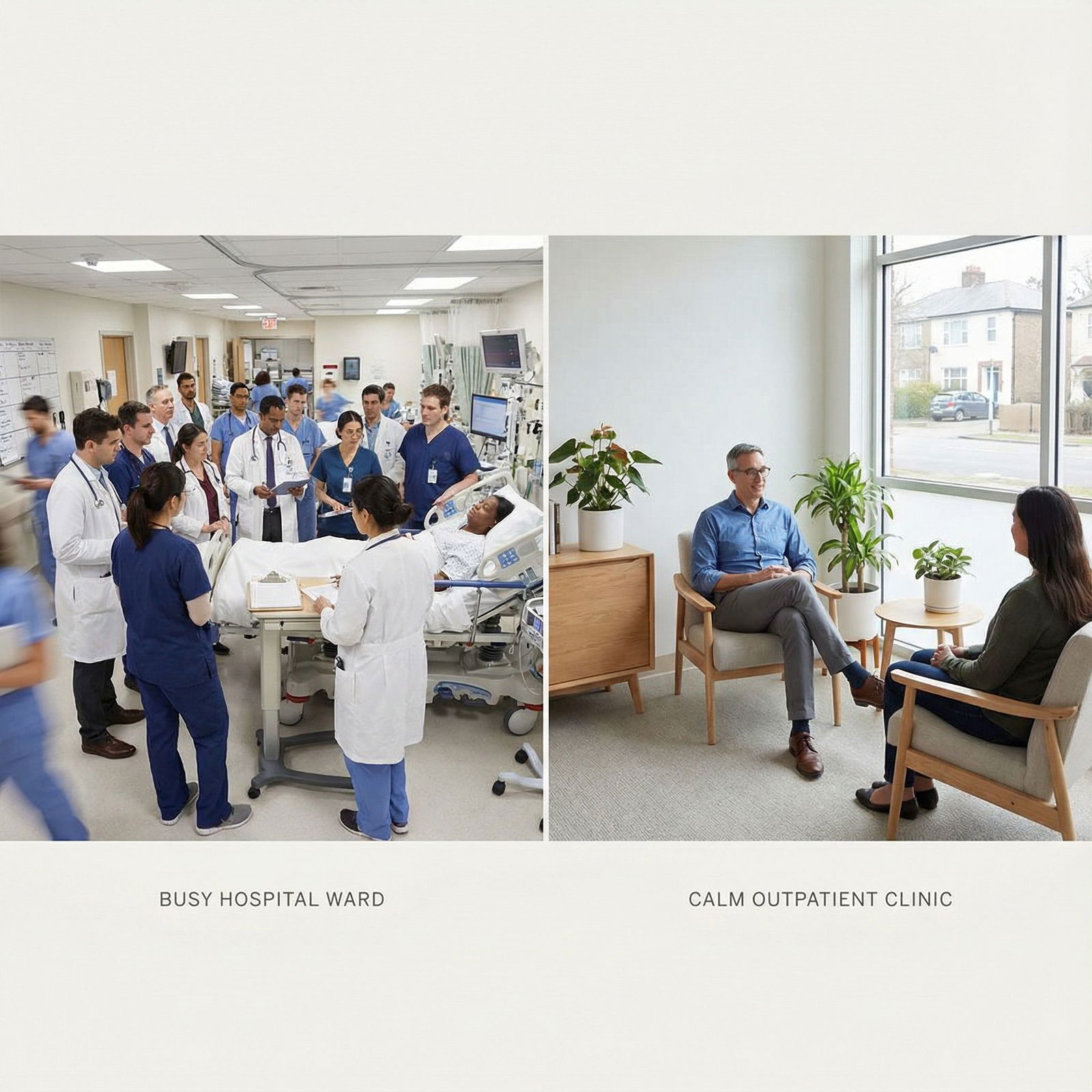
Pride is an expensive luxury in the Match. When you waste 30 application slots on ultra-competitive fields where your odds are functionally zero, you aren't just losing money. You are stealing application slots from realistic specialties where those same resources could have secured you real, actionable interviews.
Specialty Selection Reality Matrix
| Specialty | IMG Match Rate Realism | Mandatory Credentials Needed |
|---|---|---|
| Internal Medicine / Family Medicine | High | Solid Step 2, Hands-on USCE, 3 Strong LoRs |
| Pathology / Neurology | Moderate-High | Interest alignment, clear specialty commitment |
| General Surgery (Categorical) | Low-Moderate | High Step 2 (245+), dedicated US research years |
| Dermatology / Orthopedics | Extremely Low | Multi-year US post-doc research, elite networking |
Focus your strategy where international graduates are actively recruited and welcomed. Fields like Family Medicine, Internal Medicine, Pediatrics, Psychiatry, Neurology, and Physical Medicine & Rehabilitation (PM&R) consistently offer viable pathways for qualified IMGs.
Ignore the outliers who claim they matched Derm with no US research. That is survivorship bias talking. Build your strategy on the rule, not the exception.
Stop Panicking: The 7-Step Defense Plan to Save Your Match
If you recognized your own plan in the mistakes above, do not panic. Panic leads to reckless decisions. Strategy saves careers.
Implement this step-by-step defense plan immediately to stabilize your application strategy before hitting submit.
1. Conduct a Brutal Audit
Sit down with the most recent NRMP Charting Outcomes for IMGs document. Cross-reference your exact stats:
- Step 2 CK numeric score
- Years since graduation (YOG)
- Visa requirement status (J-1 vs. H-1B vs. Green Card/Citizen)
If a program's website states "YOG < 3 years" and you are at year 4, remove them. Do not hope they will make an exception for you. They won't.
2. Construct a Tiered Application Strategy
Distribute your applications smartly across three risk tiers:
- 20% Reach: Programs where your stats sit at or slightly below the mean, but you have a strong geographic or personal connection.
- 60% Target: Programs where your stats match their historical averages and IMG percentage is documented above 15%.
- 20% Safety: IMG-heavy community programs where your stats exceed their average criteria.
3. Secure Hands-On USCE Immediately
If your application currently relies on observerships, pause and secure clinical externships or hands-on electives in the US. Three months of real patient care experience outweights twelve months of passive shadowing every single time.
4. Upgrade Your Letters of Recommendation
Reach out to your letter writers today. Ask them point-blank: "Do you feel comfortable writing me a strong, detail-rich Letter of Recommendation that confirms I am ready to function as a PGY-1 resident in a US hospital?" If they hesitate, find another writer. A faint praise letter is as bad as a bad letter.
5. Fix the "Elephant in the Room"
Address your profile weaknesses head-on in your personal statement:
- Low score or attempt? Don't make excuses. Briefly explain what went wrong, focus heavily on what you learned, and highlight how you remediated the issue.
- Graduation gap? Account for every month. Show continuous clinical practice, active clinical research, or advanced training. Unexplained gaps invite rejection.
6. Target IMG-Friendly Geographical Regions
Geographic preference matters. Certain states and regions are historically far more open to sponsoring visas and training foreign medical graduates (e.g., New York, New Jersey, Pennsylvania, Ohio, Michigan). Research regional IMG trends on FREIDA or Texas STAR before selecting programs.
7. Track Program Filters Daily
Requirements change mid-cycle. Keep a running spreadsheet tracking program updates, visa sponsorship changes, and deadline shifts. Staying hyper-organized ensures you don't miss sudden openings or waste money on programs that silently altered their criteria.