
Most medical students completely misunderstand how much ultrasound and procedures actually define day-to-day life in different specialties.
You are not choosing “medicine vs surgery.” You are choosing:
- How often you live with a probe in your hand
- How often your primary tool is a CT/MRI read
- How often you’re physically doing something to a body versus thinking and talking about it
Let me break this down specialty by specialty, the way residents talk about it at 2 a.m. in the workroom, not how glossy brochures describe it.
Big Picture: Where Imaging and Procedures Dominate
Before we dive into each field, here is the basic landscape you are choosing among:
| Specialty | Ultrasound Use | Other Imaging Reliance | Procedural Intensity |
|---|---|---|---|
| Emergency Med | High | High | High |
| Internal Med | Low–Moderate | High | Low–Moderate |
| Cardiology | Very High | Moderate | Moderate–High |
| General Surgery | Moderate | Moderate | Very High |
| Radiology | Moderate | Very High | Moderate–High |
| Anesthesiology | High | Low–Moderate | High |
| OB/GYN | High | Low–Moderate | High |
| Neurology | Low | High | Low–Moderate |
You should be asking yourself three questions as you read:
- Do I want hands on probe/needle every day, or mostly cognitive work?
- Do I want to generate images (scan), interpret images, or both?
- Do I want urgent, immediate feedback or slow, longitudinal decision-making?
Let us go specialty by specialty.
Emergency Medicine: Ultrasound as a Stethoscope, Procedures as Reflex
If you like toys, chaos, and sticking needles into things at 3 a.m., emergency medicine is the benchmark.
Daily reality in a busy ED:
- You perform point-of-care ultrasound (POCUS) constantly.
- You order and interpret tons of CTs, X-rays, and sometimes MRIs.
- You do procedures across almost every body system.
How EM Uses Ultrasound Daily
This is the field where ultrasound is basically part of vital signs.
Typical EM POCUS uses per shift:
- RUQ ultrasound for gallbladder in RUQ pain
- Renal ultrasound for hydronephrosis in flank pain
- FAST/eFAST exam for trauma (RUQ, LUQ, pelvis, +/- lungs)
- Cardiac ultrasound for hypotension, dyspnea, chest pain
- Lung ultrasound for CHF vs COPD vs pneumonia vs pneumothorax
- First-trimester pregnancy scans for IUP vs ectopic concern
- Vascular ultrasound for difficult IVs and central lines
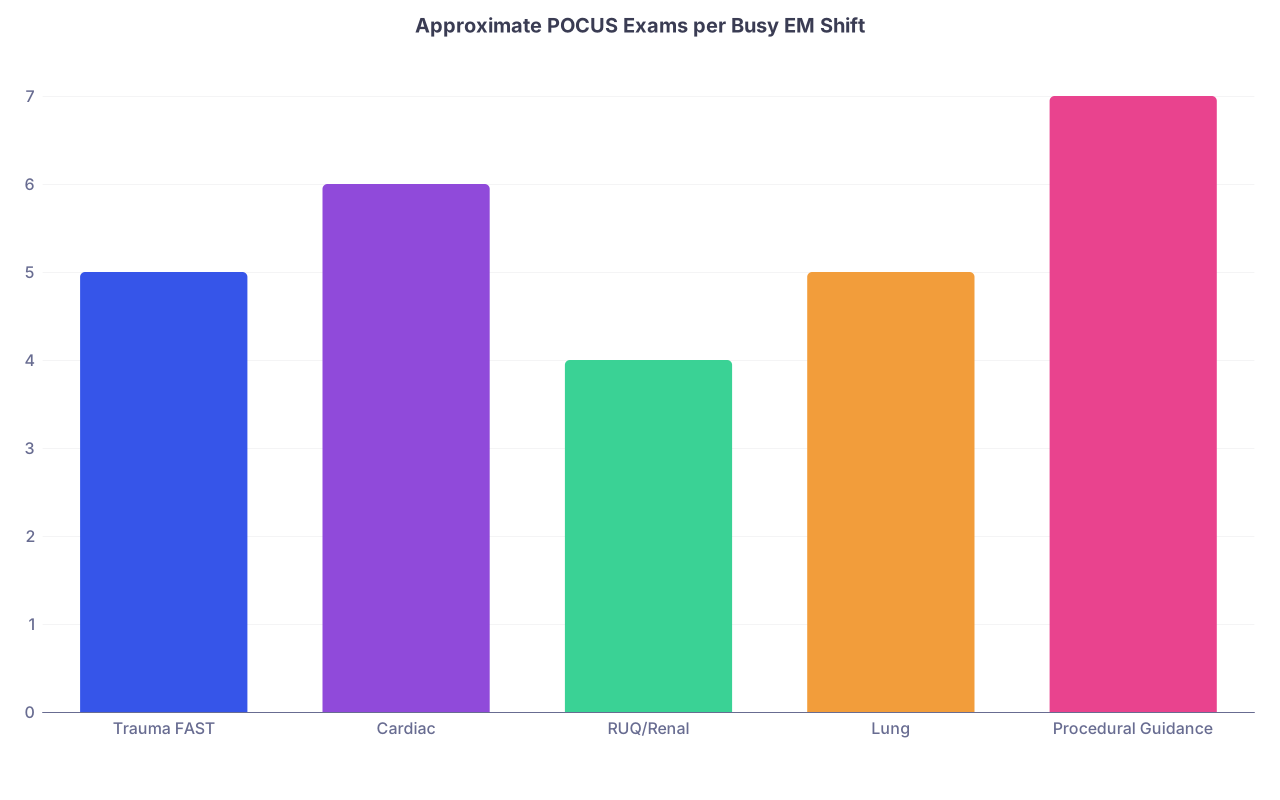
| Category | Value |
|---|---|
| Trauma FAST | 5 |
| Cardiac | 6 |
| RUQ/Renal | 4 |
| Lung | 5 |
| Procedural Guidance | 7 |
You are not just “ordering” ultrasound. You are performing it at the bedside and making immediate decisions: Is there tamponade? Is this a wet lung? Is that gallbladder wall thickened enough that surgery needs to see this tonight?
Formal radiology studies support you, but a lot of early decisions happen based on your view of the screen.
How EM Uses Other Imaging
EM is glued to the CT scanner. Daily:
- CT head for headache, trauma, neuro changes
- CT chest PE protocol for shortness of breath + risk factors
- CT abdomen/pelvis for undifferentiated abdominal pain
- Plain X-rays for fractures, pneumonia, bowel obstruction
You will get very good at:
- Identifying intracranial bleeds, midline shifts on CT
- Spotting obvious free air, obstruction patterns
- Reading X-rays well enough before radiology has a chance
You are not a radiologist. But the ED cannot wait 45 minutes for a formal read on a crashing patient.
Procedures in EM
This is a procedure-heavy field, especially in training. Daily or near-daily:
- Laceration repairs (simple to complex)
- Incision and drainage of abscesses
- Peripheral IVs, external jugular lines, ultrasound-guided IVs
- Splinting and basic fracture care
- Bedside reductions (shoulder, elbow, hip in some settings)
Less frequent but common in many EDs:
- Central venous lines (often ultrasound-guided)
- Lumbar punctures
- Intubations and airway management
- Chest tubes and pigtails
- Procedural sedations for reductions, cardioversions
- Paracentesis, thoracentesis in ED boarding patients
If you want daily mixture: talk–scan–cut–stitch–interpret, EM is close to ideal.
Internal Medicine and Hospitalist Work: Imaging-Heavy, Procedures Optional
Most internal medicine (IM) residents discover some harsh truth early: the culture of procedures varies wildly by institution.
At many academic centers:
- Ultrasound: growing but still underused by attendings; residents use it more.
- Procedures: often offloaded to IR, anesthesia, or procedure teams.
- Imaging: absolutely central to patient care.
Ultrasound in Internal Medicine
There is a huge spread here.
At a “classic” academic IM department from 10 years ago:
- Almost no POCUS by attendings.
- Residents occasionally use portable machines for IVC/volume status.
Modern trend (and where the field is going):
- Focused cardiac ultrasound for LV function, effusion, gross RV strain.
- Lung ultrasound for B-lines, pleural effusions, pneumothorax.
- Abdominal scans for ascites pockets for paracentesis.
- Vascular guidance for difficult IVs or lines when procedure team unavailable.
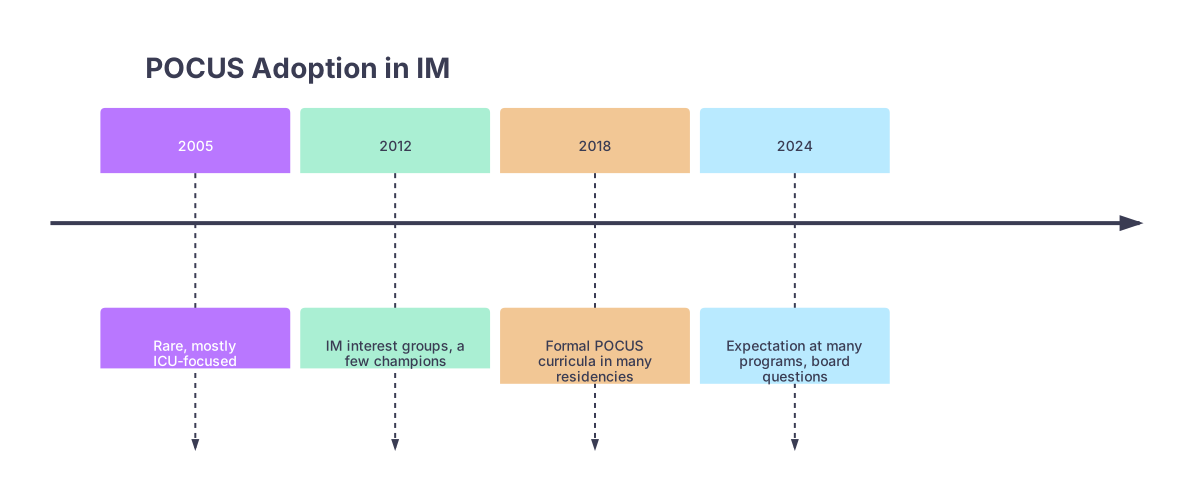
| Period | Event |
|---|---|
| 2005 | Rare, mostly ICU-focused |
| 2012 | IM interest groups, a few champions |
| 2018 | Formal POCUS curricula in many residencies |
| 2024 | Expectation at many programs, board questions |
If you want ultrasound to be a core identity, IM alone will probably frustrate you unless you are in a POCUS-heavy residency or go into a subspecialty like critical care or cardiology.
Imaging in Internal Medicine
This is where IM is heavy.
You live in:
- CT chest/abdomen/pelvis for most undifferentiated problems
- MRI brain/spine for neuro complaints that land on your service
- Echocardiography (read by cardiology but heavily used)
- Nuclear imaging (V/Q scans, stress tests)
- Daily chest X-rays in ICUs
You need to be very comfortable correlating image findings with clinical reality. Example: patient with “CT showing possible pneumonia vs atelectasis” – you decide if they get antibiotics.
Procedures: Highly Program-Dependent
Common on a procedure-heavy IM service or ICU rotation:
- Paracentesis
- Thoracentesis
- Central venous catheter placement
- Arterial line placement
- Lumbar puncture
- Bedside temporary dialysis catheters in some centers
On a procedure-lite hospitalist service:
- You do almost none of these.
- Everything goes to IR, anesthesia, or a dedicated procedure team.
So IM is imaging-heavy, ultrasound-moderate (and growing), procedures-optional depending heavily on setting.
Cardiology: Living in Echo, Cath Labs, and Devices
Cardiology is one of the clearest examples of a field where imaging and procedures define your week.
Ultrasound in Cardiology
Echo is the backbone of modern cardiology.
Daily:
- You interpret transthoracic echos (TTE) and possibly transesophageal (TEE).
- You look at function (EF), valves, wall motion, pericardial effusions.
- You perform focused bedside echo in CCU/ICU settings.
Cardiology fellows and attendings:
- Often sit at echo reading stations for hours.
- Use echo to guide nearly every major decision: valve interventions, cardiomyopathy management, shock states.
If you enjoy the visual logic of: “abnormal wall motion here, consider LAD lesion,” you will probably like this part.
Other Imaging in Cardiology
Heavy use of:
- Coronary angiography (invasive imaging, cath lab)
- Cardiac CT for coronary anatomy, TAVR planning
- Cardiac MRI for cardiomyopathies, myocarditis, viability, infiltrative disease
- Nuclear stress imaging and PET perfusion studies
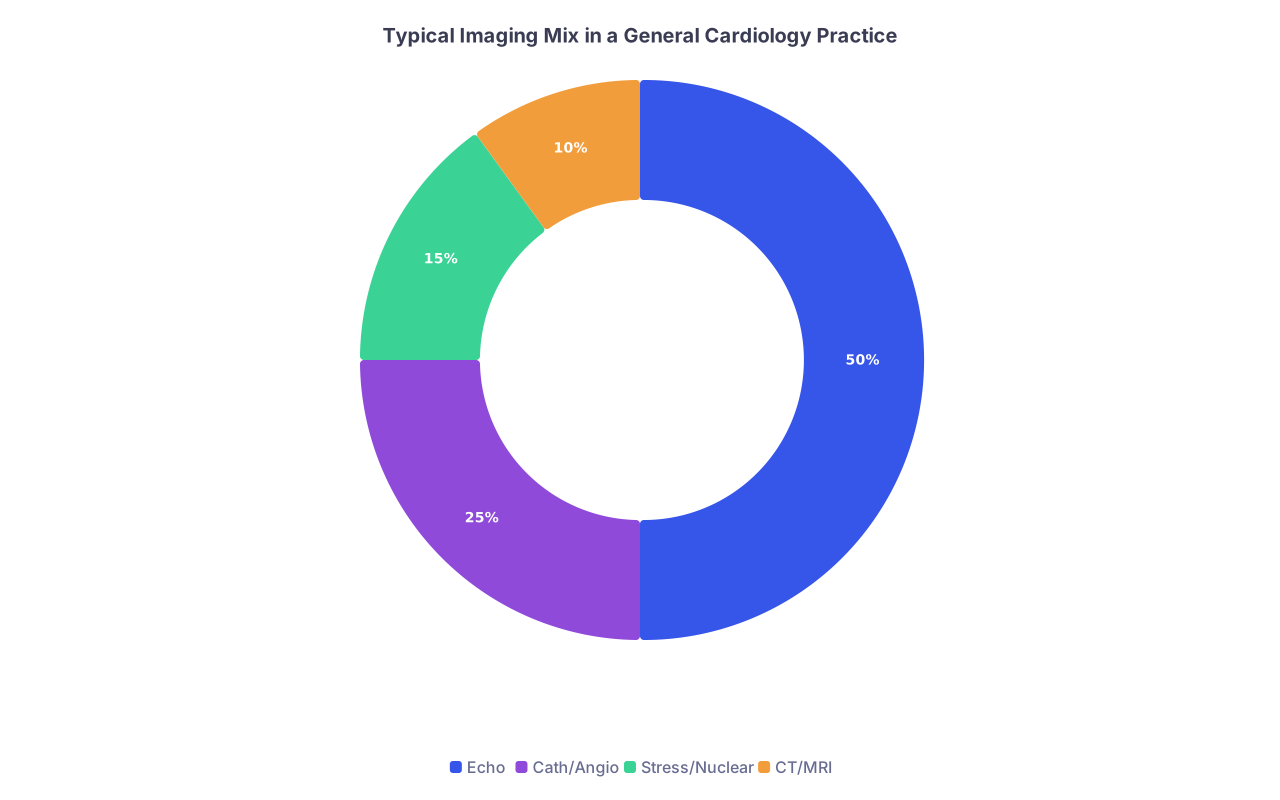
| Category | Value |
|---|---|
| Echo | 50 |
| Cath/Angio | 25 |
| Stress/Nuclear | 15 |
| CT/MRI | 10 |
The exact numbers vary, but echo dominates.
Procedures in Cardiology
If you choose interventional or EP (electrophysiology), you will live in procedure land.
Interventional:
- Coronary angiograms and PCI (stents)
- Structural work: TAVR, MitraClip, ASD/PFO closures
- Some mechanical support device placements
EP:
- Cardiac ablations (AFib, SVT, VT)
- Device implantation: pacemakers, ICDs, CRT devices
- Device revisions and extractions
Even non-interventional cardiologists will:
- Perform TEEs
- Do cardioversions
- Place temporary pacing wires occasionally
If you want a tight marriage of imaging + invasive work with high acuity, cardiology is a strong candidate.
Radiology: Pure Imaging, Procedures If You Want Them
Radiology is the obvious imaging kingdom, but there is nuance in how procedures figure into daily life.
Core Radiology: Reading, Not Scanning
As a diagnostic radiologist:
- You interpret studies, you do not generally operate the machines.
- Ultrasound techs, CT/MRI techs acquire images, you read them.
Daily stack:
- CT of almost every body part
- MRI brain/spine/joints/liver/heart depending on subspecialty
- Ultrasound (abdomen, OB, vascular, thyroid, scrotal)
- Plain films (LOTS of chest X-rays)
- Nuclear medicine (bone scans, PET/CT)
Ultrasound is a big part of your day but as an interpreter. Not with a probe in your own hand most of the time.
Interventional Radiology (IR): The Procedure-Heavy Side
If you are procedure-obsessed but also love imaging, IR is extremely attractive.
Daily IR practice:
- Image-guided biopsies (liver, lung, lymph node, bone)
- Central venous catheters, ports, PICCs
- Drainage procedures (abscess, biliary, nephrostomy, pleural)
- Vascular interventions (angioplasty, stents, embolizations)
- Tumor ablations (RFA, microwave, cryo)
- Uterine fibroid embolizations, prostate artery embolizations
All of this under fluoroscopy, CT, and ultrasound guidance. You live inside imaging while doing procedures.
Anesthesiology and Critical Care: Real-Time Ultrasound and Lines
Anesthesiology is quietly one of the most procedure-heavy specialties, and modern practice is deeply tied to ultrasound.
Ultrasound in Anesthesia
Common daily uses:
- Ultrasound-guided peripheral nerve blocks (in regional-heavy practices, this is constant)
- Vascular access: internal jugular, subclavian, femoral central lines
- Arterial lines in difficult anatomy
- Transthoracic or transesophageal echo in cardiac anesthesia
- Lung ultrasound in ICU for fluid status, pneumothorax, effusions
If you like real-time needle visualization and sonoanatomy, anesthesia and critical care offer that every day.
Imaging and Procedures
Imaging outside ultrasound is less central to anesthesia, but:
- You interpret basic portable chest X-rays in ICUs.
- You correlate ABGs, ventilator waveforms, and X-rays regularly.
Procedures are nonstop:
- Endotracheal intubations
- LMA placement
- Arterial lines
- Central lines
- Epidurals and spinals
- Peripheral nerve blocks
- Bronchoscopies in some practices
Critical care anesthesiologists also do:
- Percutaneous tracheostomies
- Bedside ultrasound-guided drainage (thoracentesis, paracentesis in some units)
If you want your “imaging” to be almost entirely ultrasound in-your-own-hands, anesthesia/CCM is a strong fit.
General Surgery and Surgical Subspecialties: Imaging to Plan, Hands to Fix
Surgery lives on the other end of the spectrum: you use imaging to decide what to cut, then you cut. And you use intraoperative imaging more than you think.
Ultrasound in Surgery
General surgery:
- Intraoperative ultrasound during hepatobiliary cases (liver resections, cholecystectomies with concern for CBD stones).
- Bedside ultrasound in trauma (FAST/eFAST), although EM often leads this.
Vascular surgery:
- Heavy duplex ultrasound use to evaluate arterial and venous disease.
- Intraoperative ultrasound to assess grafts, stents, flow.
Breast surgery:
- Ultrasound for lesion localization, biopsies, and wire placement.
Orthopedics:
- Less ultrasound, more X-ray and intraoperative fluoroscopy.
- Some sports surgeons use ultrasound in clinic for injections.
Neurosurgery:
- Limited ultrasound; heavy CT/MRI reliance.
- Intraoperative ultrasound in some tumor resections.
Other Imaging for Surgeons
You live in the radiology report.
- CT abdomen/pelvis for appendicitis, SBO, diverticulitis, perforation.
- CT angiography for vascular pathologies.
- MRI for soft tissue, spine, joint, and brain pathologies.
- Fluoroscopy intraoperatively for ortho, spine, vascular.
Procedures? The whole job is procedures. Outpatient, inpatient, OR. Lines and drains are a side note.
Everyday Surgical Procedures (Outside the OR)
- Bedside I&Ds
- Chest tubes
- Central lines (if not taken by ICU or anesthesia)
- J-tube/G-tube management
- Wound vac changes, bedside debridements
If you crave imaging but only as a tool to sharpen your scalpel decisions, surgery matches that mentality.
OB/GYN: Ultrasound and Procedures from Clinic to OR
OB/GYN is one of the most ultrasound-heavy clinical fields, and it blends clinic procedures, L&D, and OR work.
Ultrasound in OB/GYN
OB side:
- First-trimester viability scans
- Dating scans
- Anatomy scans (usually done by techs but interpreted by MFM/OBs)
- Bedside ultrasound on L&D: fetal position, AFI estimates, BPPs
GYN side:
- Pelvic ultrasound for fibroids, ovarian masses, IUD checks, abnormal bleeding
- In fertility practices, transvaginal ultrasound is constant.
Many OB/GYNs are capable of doing basic scanning themselves. In high-resource settings, techs do most formal scans, but bedside scans on L&D still happen frequently.
Procedures
- IUD insertions and removals
- Endometrial biopsies
- Colposcopy with biopsies
- Hysteroscopies (office or OR depending on practice)
L&D procedures:
- Vaginal deliveries (yes, repetitive but technically demanding)
- Operative vaginal deliveries (vacuum, forceps in some practices)
- C-sections (a major surgical procedure, often daily)
GYN surgery:
- Laparoscopic hysterectomies, oophorectomies, salpingectomies
- Hysteroscopic polypectomies, myomectomies
- Open surgery for large masses or malignancy (more in Gyn Onc)
OB/GYN is an excellent fit if you want ultrasound to be omnipresent and you enjoy a lot of hands-on procedures with a women’s health focus.
Neurology and Neurosurgery: MRI Kingdom, Procedures Split
You already know neurology is MRI-heavy. What many students misjudge is how procedure-light regular neurology is versus how invasive neurosurgery becomes.
Neurology
Ultrasound:
- Limited but present: carotid duplex interpretation, transcranial Doppler in some stroke centers.
- Not core to daily practice in most general neurology clinics.
Imaging:
- MRI brain/spine dominates.
- CT head for acute presentations.
- CTA/MRA for vascular imaging.
Procedures:
- Lumbar punctures (often done by neurology residents).
- EMG/NCS (electrodiagnostic studies) – technical and very hands-on but not “invasive” in a surgical sense.
- Botulinum toxin injections for movement disorders, spasticity, chronic migraine (procedural, but needles rather than scalpels).
If you want heavy imaging interpretation but minimal invasive procedures, general neurology fits.
Neurosurgery
Different beast entirely.
- CT/MRI used constantly to plan and assess surgical interventions.
- Intraoperative neuronavigation uses these images in 3D.
Procedures: the entire specialty.
- Craniotomies, spine decompressions, fusions, tumor resections, aneurysm clippings or endovascular work (if in hybrid practices).
- External ventricular drain placement, ICP monitors, bedside procedures in the neuro-ICU.
Ultrasound does not dominate here – it is the CT/MRI that runs your world.
Primary Care, Pediatrics, and “Low-Procedure” Fields
You will also want clarity on areas that are relatively lighter in imaging/procedures, because some of you simply do not enjoy needles and machines.
Outpatient Adult Primary Care
Ultrasound:
- Minimal in most traditional practices.
- Growing field: primary care POCUS for MSK injections, abdominal exams, DVT checks, but still niche.
Imaging:
- You order lots of imaging, but you do not perform or interpret in depth.
- Chest X-rays for cough, CT for persistent symptoms, mammograms ordered, not read.
Procedures:
- Joint injections (knees, shoulders) in some practices.
- Skin biopsies, cryotherapy.
- Pap smears, IUDs if you choose to do women’s health.
You can make your practice more procedural-heavy, but it is optional.
Pediatrics
Ultrasound:
- Very limited in general outpatient pediatrics.
- In pediatric emergency or PICU, POCUS is gaining ground.
Imaging:
- You interpret many X-rays at a basic level: pneumonia, fractures, constipation.
- Complex imaging read by radiology.
Procedures:
- Vaccines (yes, they count technically but not what people worry about)
- LPs in inpatient settings
- Simple I&Ds, splinting, foreign body removal in ED or urgent care.
Peds is cognitively and developmentally rich, but imaging and procedures are generally lower intensity unless you subspecialize (e.g., peds cardiology, peds IR, peds surgery).
Matching Your Personality to Imaging and Procedure Profiles
Here is the part that matters for your specialty choice.
Ask yourself honestly:
- Do I enjoy the feeling of holding a needle / probe / scalpel and seeing immediate physical change?
- Do I enjoy staring at a screen of grayscale images and deducing a diagnosis?
- Do I want more of my day in dark rooms or bright wards?
- Do I want my “wins” to be: “the CT showed exactly what I thought,” or “I fixed this with my hands,” or “I reoriented the whole care plan with my reasoning”?
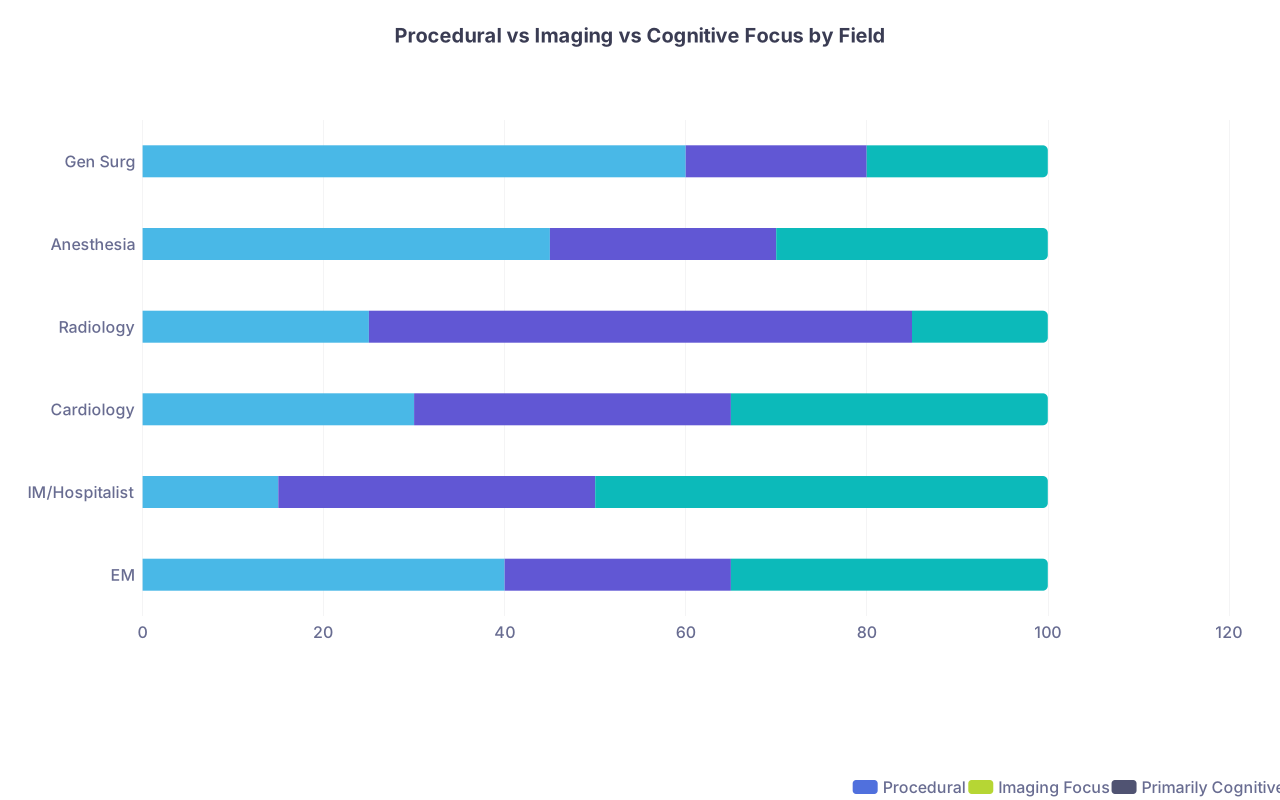
| Category | Procedural | Imaging Focus | Primarily Cognitive |
|---|---|---|---|
| EM | 40 | 25 | 35 |
| IM/Hospitalist | 15 | 35 | 50 |
| Cardiology | 30 | 35 | 35 |
| Radiology | 25 | 60 | 15 |
| Anesthesia | 45 | 25 | 30 |
| Gen Surg | 60 | 20 | 20 |
If you want:
- Maximal ultrasound + procedures: EM, anesthesia/critical care, OB/GYN, interventional radiology, some cardiology tracks.
- Maximal imaging, minimal “blood and guts” procedures: diagnostic radiology, neurology, non-interventional cardiology, some hospitalist roles.
- Procedures but imaging just as a planning tool: surgery and its subspecialties, neurosurgery, ortho.
- Mostly cognitive with optional minor procedures: outpatient IM, primary care, pediatrics, psychiatry.
Your clerkships can lie to you. The IM attending who loves POCUS is not the national average. The surgeon who never touches the ultrasound machine is also not the full story. So look at patterns across institutions.
Practical Tips for Medical Students on Rotations
A few concrete things you can do now:
Track what you actually enjoy doing. Make a quick note on your phone:
- “Liked: doing FAST exam in trauma, doing paracentesis, reading CTs with senior.”
- “Disliked: sitting through 45 minutes of unfiltered MRI reads, doing 10th Pap of the day.”
Ask residents blunt questions:
- “How many procedures did you personally do this week?”
- “How often do you hold the ultrasound probe versus a tech?”
- “Which imaging studies do you feel comfortable interpreting on your own?”
Spend elective time in radiology and ICU. They are imaging and procedure hubs that give you a clearer signal of what you like.
During Step and shelf studying, pay attention to what pulls you in.
- Echo diagrams excite you? Cardiology or anesthesia.
- CT patterns and subtle findings excite you? Radiology or EM.
- OR anatomy and procedural steps excite you? Surgery or OB/GYN.

Quick Visual: Who Actually Holds the Probe?

| Step | Description |
|---|---|
| Step 1 | Emergency Medicine |
| Step 2 | Internal Medicine |
| Step 3 | Cardiology |
| Step 4 | Anesthesiology |
| Step 5 | OB/GYN |
| Step 6 | Diagnostic Radiology |
| Step 7 | Interventional Radiology |
| Step 8 | (POCUS |
| Step 9 | (POCUS |
| Step 10 | (Echo |
| Step 11 | (Blocks & Lines |
| Step 12 | (OB Ultrasound |
| Step 13 | (US Images |
| Step 14 | (US/Fluoro Guided |
It is very different to be the one physically moving the probe versus being the one in the dark room reading 50 ultrasounds in a row. Decide which you actually want.
FAQs
1. If I love ultrasound specifically, which specialties give me the most hands-on probe time?
Emergency medicine, anesthesiology/critical care, OB/GYN (especially on L&D), and interventional radiology give you the most consistent hands-on ultrasound use. Cardiology is ultrasound-heavy, but a lot of the scanning is done by techs; you interpret and occasionally perform focused studies. Internal medicine is catching up, especially in ICU and hospitalist POCUS-focused practices, but it is not yet universally probe-heavy.
2. I like imaging a lot but do not want much blood or invasive procedures. What should I look at?
Diagnostic radiology is the clear choice if you want imaging to be your core and procedures to be limited or mostly minimally invasive. Neurology and non-interventional cardiology also rely heavily on imaging but involve relatively few invasive procedures. Outpatient IM and pediatrics will have you ordering and discussing imaging constantly but only doing minor procedures if you choose.
3. Will I get enough exposure to procedures and ultrasound during core clerkships to make a good decision?
Usually not. Core clerkships often underexpose you to the real procedural volume of fields like anesthesiology, radiology/IR, and critical care. You see a skewed version of IM (floor months with few procedures) and surgery (OR but not clinic). Use electives, ICU rotations, ED shifts, and radiology rotations very deliberately during MS3–MS4 to sample the true day-to-day of imaging and procedures in those fields.
4. How much do imaging and procedures matter for long-term job satisfaction?
A lot. I have seen residents in IM who thought they were “medicine people” burn out because they missed hands-on procedures they loved in EM. I have also seen surgery juniors realize they hate spending all day scrubbed in and would rather interpret CTs and guide care. Your tolerance for screens vs scalpels, probes vs paperwork, and acute procedures vs longitudinal thinking will shape how drained or energized you feel a decade from now. Treat this as a core decision variable, not a footnote.
Key takeaways:
- Different specialties do not just “use imaging”; they have completely different relationships to ultrasound, CT/MRI, and procedures—decide whether you want to generate, interpret, or act on images.
- If you want daily hands-on work with probes, needles, and devices, lean toward EM, anesthesia/critical care, OB/GYN, IR, and procedural cardiology or surgery; if you prefer cognitive and interpretive work, radiology, neurology, IM, and outpatient fields fit better.
- Do not rely on one rotation’s culture—use electives and honest resident conversations to calibrate how ultrasound, imaging, and procedures actually show up in the real version of each specialty.