

The biggest mistake MS4s make is treating early electives like “bonus” time instead of the thing that makes or breaks their application.
You are not just filling your schedule. You’re locking in letters, sub-internships, and proof that you actually belong in the field you say you love.
Here’s how to time it so you do not get burned.
Big-Picture Timeline: When Early Electives Matter
At this point (late MS3 moving into MS4), you should think in seasons, not random months. Programs read your application on a very specific rhythm.
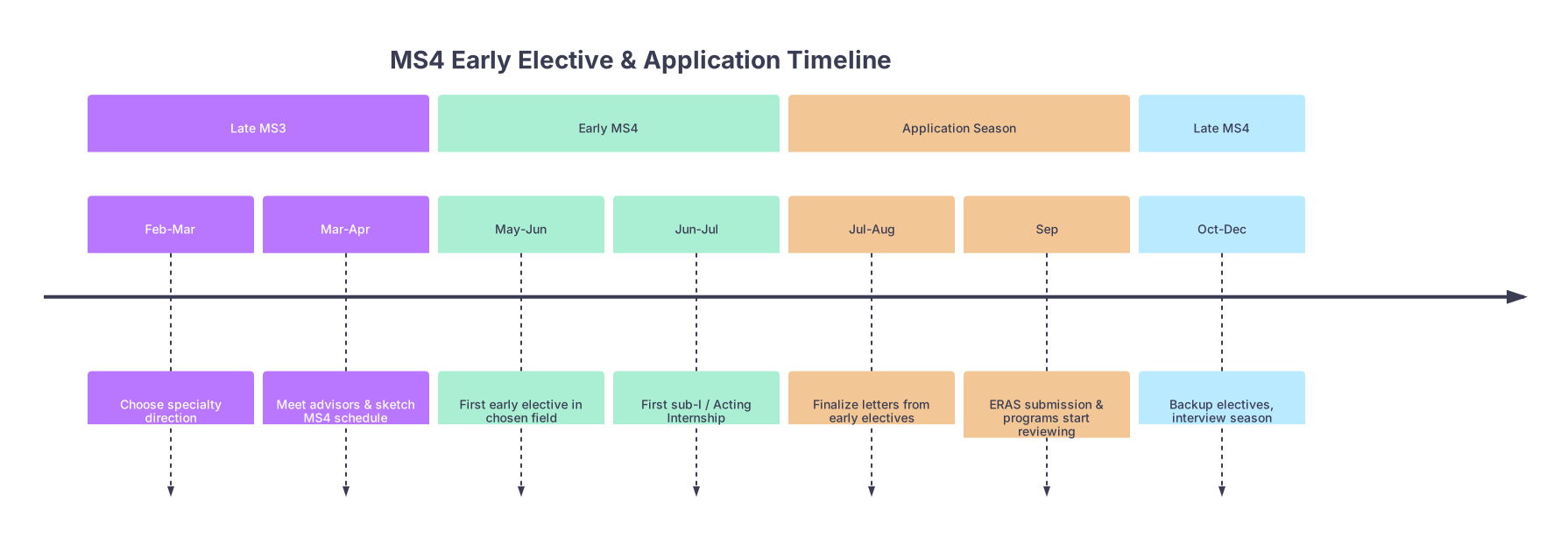
| Period | Event |
|---|---|
| Late MS3 - Feb-Mar | Choose specialty direction |
| Late MS3 - Mar-Apr | Meet advisors & sketch MS4 schedule |
| Early MS4 - May-Jun | First early elective in chosen field |
| Early MS4 - Jun-Jul | First sub-I / Acting Internship |
| Application Season - Jul-Aug | Finalize letters from early electives |
| Application Season - Sep | ERAS submission & programs start reviewing |
| Late MS4 - Oct-Dec | Backup electives, interview season |
Rough structure:
- Late MS3 (Feb–Apr): Decide likely specialty, meet advisors, build your MS4 calendar.
- Early MS4 (May–July): Front-load electives and at least one sub-I in your chosen field.
- Application window (Aug–Sep): Have your letters in, ERAS ready, sub-I comments flowing into your MSPE.
- After apps (Oct+): Finish requirements, do backup/interest electives, interview.
If you’re still undecided, that’s fine. But the calendar will not wait for you. So we’ll run this as a timeline with branches for “I’m sure” vs “I’m not sure.”
Late MS3: 3–6 Months Before MS4 Starts
At this point you should stop pretending you have unlimited time and start committing.
1. Month-by-Month: Feb–Apr of MS3
February (or ~6 months before MS4 starts)
You should:
- Narrow to 1–2 realistic specialties.
- Pull your school’s match list for the last 3–5 years in each field.
- Book a meeting with:
- Your dean’s office / academic advising
- At least one faculty in each potential specialty
What you’re trying to answer:
- Am I competitive on paper?
- How “letter hungry” is this field?
- How many sub-Is are expected?
Some rough expectations:
| Specialty Type | Early Electives | Sub-I / Acting Internships | Home vs Away Priority |
|---|---|---|---|
| Surgical (Gen Surg, Ortho) | 1–2 | 2 (home + 1 away typical) | Strong away preference |
| Road specialties (Derm, Rad, Optho) | 1–2 | 1–2 focused rotations | Away helpful, not always required |
| Core fields (IM, Peds, FM) | 1–2 | 1–2 (usually home first) | Away optional |
| Competitive subs (ENT, Plastics) | 2+ | 2+ (often multiple away) | Away very important |
March
You should:
- Decide your “primary” specialty for planning purposes, even if you keep a quiet backup.
- Draft your MS4 schedule with:
- 1 early elective in your chosen field in the first 2 blocks of MS4
- 1 sub-I in that field by July/August
- Space for away rotations if needed (Aug–Oct)
- Confirm graduation requirements: medicine sub-I, ICU, ambulatory, etc.
This is when I see people do something incredibly dumb: they stack vacation in May/June “because it’s the last break before life gets crazy.” Then they’re shocked when August hits and they have zero letters.
Don’t do that.
April
You should:
- Finalize rotation requests in your school system.
- Reach out to the department coordinator for your chosen field and say (politely):
“I’m interested in applying to [specialty]. I’d like to do an early elective and sub-I on your service before ERAS. What’s the best way to set that up?” - Identify 3–5 potential letter writers in that department and write their names down.
You’re not asking for letters yet. You’re lining up face time.
Early MS4: First 2–3 Blocks – Where Early Electives Actually Count
This is where people either set themselves up or quietly sabotage their own application.
Block 1 of MS4 (often May/June): First Early Elective
At this point you should be in your chosen field. Not just “something vaguely related.”
Your goals on this rotation:
- Prove you actually like the day-to-day of this specialty.
- Get on the radar of at least one letter-writer-quality attending.
- Learn the workflow so you’re not lost when your sub-I starts.
Week 1 checklist:
Identify the most involved attending or APD on your service.
Say this, out loud, by day 2–3:
“I’m an MS4 planning to apply in [specialty] this cycle. I’d really appreciate feedback on how I’m doing and how I can get to the level of a strong applicant from this program.”
That exact sentence does two things:
- Tells them you’re serious.
- Gives them permission to critique you early.
By the end of week 2 you should:
- Be independently pre-rounding and writing drafts of notes (if allowed).
- Know how handoff, consults, and key procedures work.
- Have identified 1–2 attendings who actually notice you.
This is when you start auditioning for a letter, even if you don’t formally ask yet.

Block 2 of MS4 (June/July): First Sub-I / Acting Internship
Now the training wheels come off.
Why your first sub-I must be early:
- Programs want at least one “this student functioned like an intern” letter.
- Your school’s MSPE often pulls heavy comments from early MS4 rotations.
- You want time to pivot if your first sub-I is a disaster.
At this point you should:
- Treat this as a multi-week interview.
- Show up before the interns. Leave with them, not before them.
- Ask to take primary responsibility for a reasonable patient load.
Week-by-week on your first sub-I:
Week 1:
- Learn the attending’s style and the team culture.
- Take on 2–3 patients and own them completely.
- Ask your resident: “What does a rockstar sub-I look like on this team?”
Week 2:
- Increase to a near-intern workload (within safety and policy).
- Start doing the thinking before the resident: plans, orders, consults (proposed, not executed without supervision).
- Ask for mid-rotation feedback from both resident and attending.
Week 3–4:
- Solidify your reputation: dependable, no drama, no excuses.
- Volunteer for new admissions when reasonable.
- Help other students without neglecting your own work.
When to ask for a letter from a sub-I:
- End of week 3 or early week 4, once you’ve proven consistency.
- Use something like:
“I’ve really valued working with you and I’m applying into [specialty] this year. If you feel you know my clinical work well enough, I’d be honored if you could write a strong letter of recommendation for my application.”
If they hesitate or say something vague? Thank them and do not use them as your primary letter.
Letter Strategy: Timing and Who Should Write
You do not need 10 letters. You need the right 3–4.
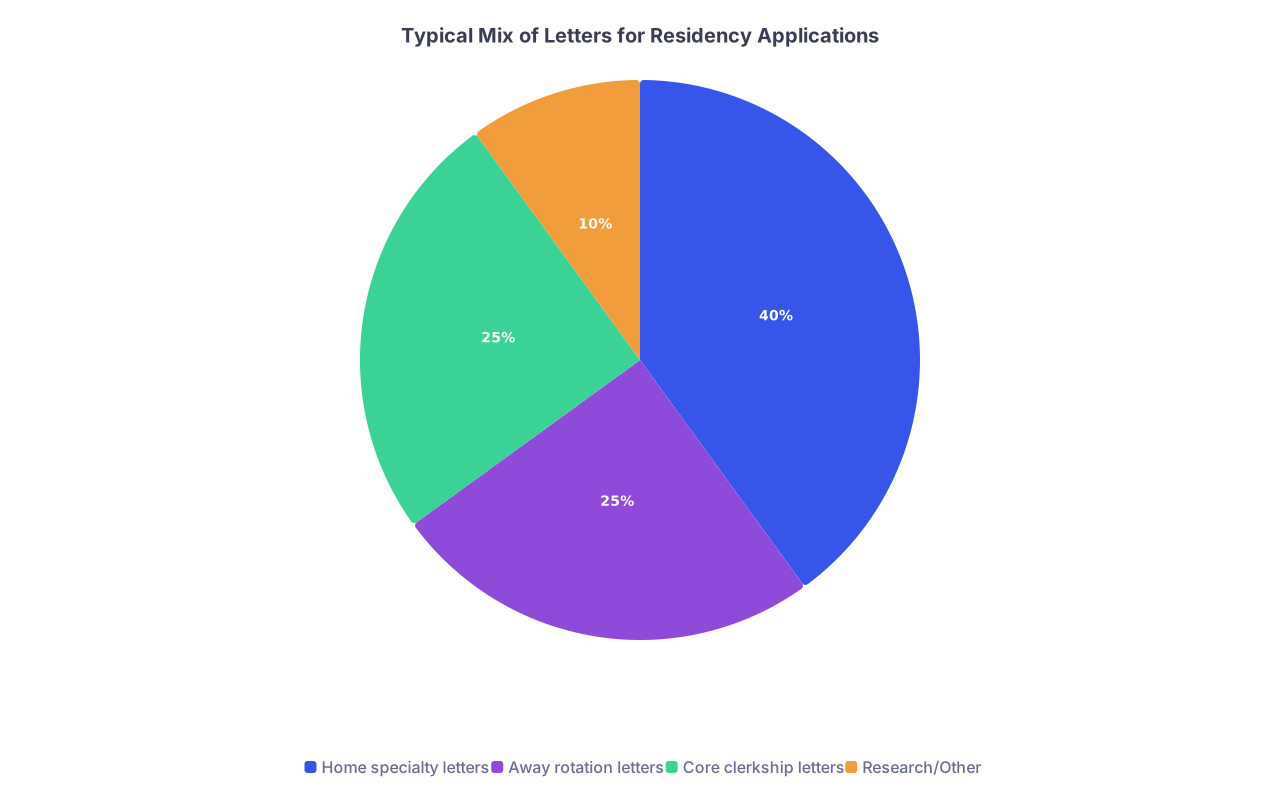
| Category | Value |
|---|---|
| Home specialty letters | 40 |
| Away rotation letters | 25 |
| Core clerkship letters | 25 |
| Research/Other | 10 |
At this point (mid-summer MS4) you should have:
- 1 strong letter from your sub-I in your chosen field.
- 1 letter from another attending in that field (early elective or later sub-I).
- 1 “core” letter (e.g., IM or Surgery) or research letter if it really adds value.
Who actually moves the needle:
- Department chair or PD who knows you (gold).
- APD or well-known faculty you’ve worked closely with.
- Longitudinal mentor in the field (even if not from your home institution).
- For some fields (IM, Peds), a strong IM or Peds letter from a core rotation still matters.
Who usually does not help much:
- A big-name chair who barely remembers you.
- Non-clinical letters unless your research is a major part of your story.
- Random “character” letters from outside medicine.
Timing the letter requests
At this point you should be thinking backward from ERAS submission:
- ERAS opens for entry: usually June.
- Programs see your application: usually mid-September.
You want all key letters requested by mid-August at the latest.
Working backward:
- First sub-I: June/July → ask in July.
- Early elective: May/June → ask at the end of the block if they’ve seen enough of you.
- Later away or second sub-I: July/August → ask before you leave.
If someone says they’re happy to write but busy, send:
- A short CV
- Step scores
- Brief paragraph on your career goals
- Bullet list of specific patients or situations where you worked together (this jogs their memory and makes your letter more detailed).
Choosing and Timing Sub-Is: Home vs Away
This is where the specialty you choose really shifts the calendar.
| Specialty Goal | First Sub-I (Jun–Jul) | Second Sub-I (Aug–Sep) | Optional Third |
|---|---|---|---|
| Internal Medicine | Home IM | Home or Away IM | ICU |
| Pediatrics | Home Peds | Away or NICU/PICU | Ambulatory |
| General Surgery | Home Surg | Away Surg | Another Away |
| Ortho/ENT/Neurosurg | Home if possible | Away at target program | Second Away |
| EM | Home EM | Away EM | Third EM or ICU |
At this point you should follow this rule:
- First sub-I: almost always at your home program in your chosen field or in a very related core (IM for heme/onc, surgery for surg subspecialties).
- Second sub-I / away: at a realistic target program, after you already know how to function like a near-intern.
Why? Because you do not want to figure out how to write orders or preround on your first day at a dream away rotation. That’s how you end up “fine” instead of “we must interview this person.”
Weekly Focus: How to Make Early Electives Letter-Worthy
You’re not just there to survive. You’re there to be memorable in the right way.
Week 1 of any early elective
At this point you should:
- Know every team member’s name and role by day 2.
- Ask this to your resident:
“What makes students stand out in good and bad ways on this service?”
Then shut up and listen.
Avoid classic early-elective mistakes:
- Acting like a passive observer because “it’s an elective.”
- Peacing out early because “I’m not being graded like a core clerkship.”
- Spending more time on UpToDate than on your patients’ orders and notes.
Week 2–3
You should be:
- Presenting succinctly and with a clear plan.
- Anticipating questions: labs, imaging, discharge needs.
- Doing 1 short, high-yield teaching point per day at most. Not showing off.
Ask for feedback again: “What 1–2 things would move me from ‘good’ to ‘great’ in your eyes by the end of this month?”
Final week
You should:
- Confirm that they’re comfortable writing a strong letter.
- Ask if there’s anything they’d like from you (CV, scores, etc.).
- Thank them specifically for something they taught you.
People remember that.
If You’re Still Undecided on Specialty
Plenty of MS3s hit March with zero clue. That’s not fatal, but you lose the luxury of drifting.
At this point you should:
Admit you’re undecided to your advisor.
Choose two specialties you could actually live with.
Build May–August like this:
- Block 1: Elective in Option A
- Block 2: Elective or sub-I in Option B
- Block 3: Sub-I in the one you’re leaning toward
- Block 4: ICU or general sub-I (IM or Surgery) that helps both options
Why this works:
- You get real experience in both fields early enough to still commit.
- You still have time for at least one sub-I and one elective in the final choice before ERAS.
If you’re still paralyzed by July? You’re now up against the calendar. At that point, prioritize:
- Competitiveness: are you realistically matching into the more competitive field?
- Letters: where can you get stronger letters by August?
- Lifestyle: yes, it matters, but the match algorithm doesn’t care about your vibe. It cares about your paperwork.
Pick. Then go all in on early MS4.
Common Pitfalls and How to Avoid Them
Pitfall 1: Late sub-Is
Doing your first sub-I in September? You’re late. Programs are already sorting interview offers.
Fix:
- Move at least one sub-I to June–August.
- Use later sub-Is to strengthen your skills, not as your first impression.
Pitfall 2: Passive early electives
If you treat your May/June elective like a vacation, you lose your chance at a strong letter when you had the most time to shine.
Fix:
- Treat any early elective in your chosen field like a graded core.
- Ask explicitly: “I’m hoping to earn a strong letter if things go well—what would that take on this service?”
Pitfall 3: Letter collection chaos
You wait until September to realize you only have one decent letter and one very generic core letter.
Fix:
- Keep a simple tracker: rotation, attending, did you ask, did they accept, did they upload.
- Ping letter writers (politely) about 3–4 weeks after request if not uploaded.
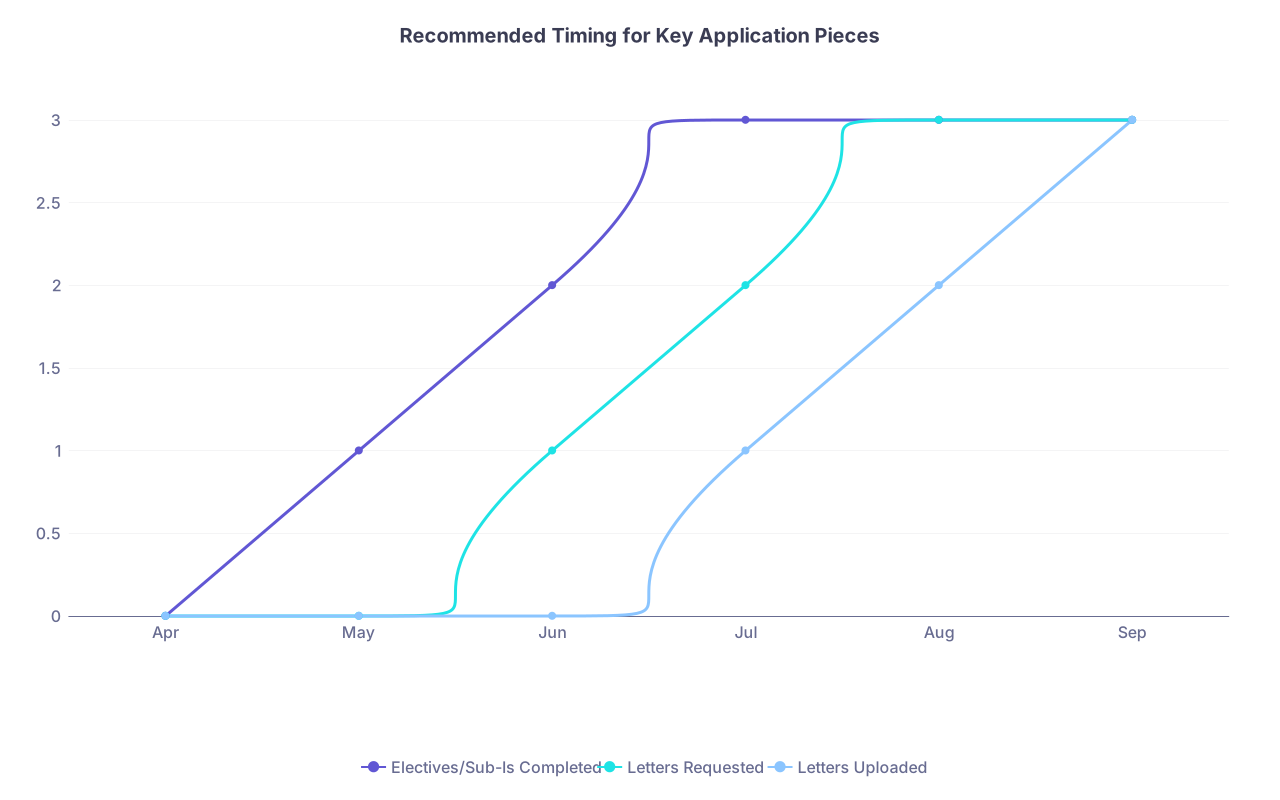
| Category | Electives/Sub-Is Completed | Letters Requested | Letters Uploaded |
|---|---|---|---|
| Apr | 0 | 0 | 0 |
| May | 1 | 0 | 0 |
| Jun | 2 | 1 | 0 |
| Jul | 3 | 2 | 1 |
| Aug | 3 | 3 | 2 |
| Sep | 3 | 3 | 3 |
Last 4–6 Weeks Before ERAS Submission
At this point you should stop adding chaos and start consolidating.
Your checklist:
- All key letters requested and ideally uploaded.
- At least:
- 1 sub-I in your chosen field (or relevant core)
- 1 additional elective/sub-I in that field
- A clear narrative:
- Which rotations convinced you of this field
- Which mentors will back you up
Use August wisely:
- Tighten your personal statement around real cases from your early electives.
- Ask your letter writers if they need reminders of specific patients or projects you worked on.
- Confirm with your dean’s office that your MSPE will include your early sub-I comments.
The Core Playbook, Boiled Down
By the time you hit “submit” on ERAS, you want three things from your early electives and sub-Is:
Proof of commitment to the field
You showed up early, you did real work in that specialty during the first half of MS4, and your schedule reflects you weren’t dabbling.At least one “this is basically an intern already” letter
From a sub-I or intensive elective where you owned patients, took call if offered, and behaved like part of the team.Enough time to pivot if something goes wrong
That’s why you front-load: problems in June/July can be fixed. Problems in October just become part of your story.
If you build your MS4 around those three goals—starting in late MS3 and locking in early electives and sub-Is by June—you give yourself margin. And in residency applications, margin is what separates the stressed from the screwed.


