
The mythology around “everyone subspecializes now” is wrong. The data show that fellowship rates vary wildly by core specialty, and in several fields, the true majority never go on to fellowship at all.
Let’s walk through who actually subspecializes, using real numbers instead of hallway gossip.
The Big Picture: How Many Residents Actually Do Fellowships?
Across all core specialties, the pattern is clear: some fields are fellowship-default; others are fellowship-optional; a few are essentially fellowship-mandatory if you want certain practice settings.
The best high-level signal comes from combining ACGME and NRMP data with ABMS certification stats and workforce reports. Exact percentages vary by year and dataset, but the hierarchy is consistent.
Here is an approximate ranking of fellowship propensity by core specialty for U.S. graduates (broad ranges, not exact point estimates):
| Core Specialty | Estimated % Doing Fellowship | Fellowship Culture Tier |
|---|---|---|
| Internal Medicine | 70–80% | Fellowship-default |
| Pediatrics | 55–65% | Fellowship-leaning |
| General Surgery | 70–85% | Fellowship-default |
| OB/GYN | 35–45% | Mixed |
| Emergency Medicine | 10–20% | Fellowship-optional |
| Family Medicine | 10–15% | Fellowship-rare |
Is this precise to the decimal? No. But directionally it is solid and matches what PDs, specialty boards, and workforce data all say.
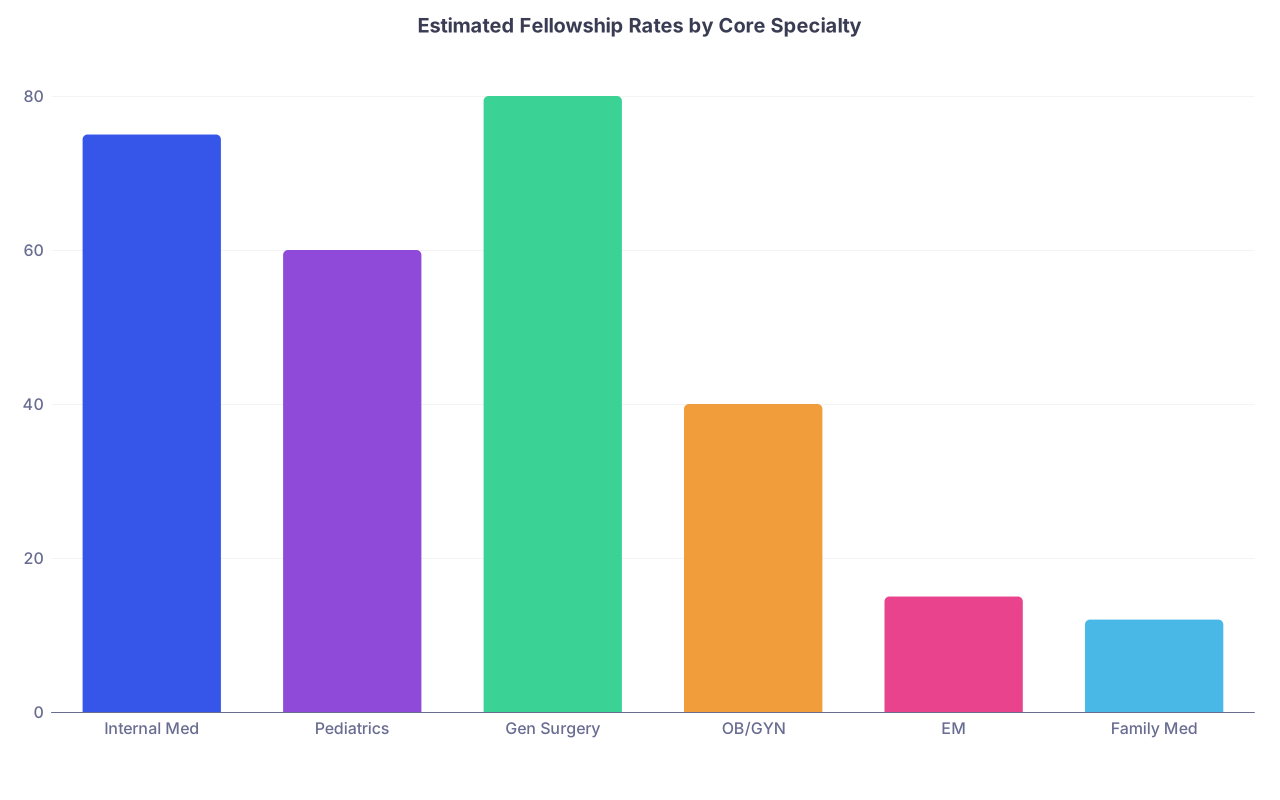
To visualize the contrast:
| Category | Value |
|---|---|
| Internal Med | 75 |
| Pediatrics | 60 |
| Gen Surgery | 80 |
| OB/GYN | 40 |
| EM | 15 |
| Family Med | 12 |
Read that again: Internal Medicine and General Surgery are very heavily fellowship-driven. Emergency Medicine and Family Medicine? Completely different world.
Let’s go specialty by specialty.
Internal Medicine: The Fellowship Factory
Internal Medicine (categorical) is probably the most misunderstood here. A lot of MS2s still think “IM = outpatient primary care.” The data absolutely do not support that.
Multiple sources (NRMP, ABIM, workforce reports) converge on the same story: the majority of IM residents go on to subspecialty training.
Reasonable aggregated estimate for IM categorical residents in the U.S.:
- Roughly 70–80% pursue some form of fellowship (traditional subspecialty or hospitalist-focused year)
- Only 20–30% stop after three years and practice as general internists (and a fraction of those are true outpatient primary care)
Why so high?
Because IM is the gateway to a huge menu of subspecialties:
- Cardiovascular disease
- Gastroenterology
- Pulmonary/critical care
- Hematology/Oncology
- Rheumatology
- Endocrinology
- Nephrology
- Infectious Diseases
- Geriatrics, Allergy/Immunology, etc.
Many big-name internal medicine programs explicitly market themselves on fellowship placement, not on primary care output. I have seen program slides that proudly list “95% fellowship match rate over 5 years” in cardiology, GI, heme/onc, etc. That is the selling point.
Within IM, the fellowship culture is not uniform. The data show:
- At large academic IM residencies, fellowship rates easily push 85–90%.
- At smaller community-focused programs, generalist output is higher, but even there, fellowship interest creeps up over time as residents see their peers matching in cardiology, PCCM, or heme/onc.
If you match categorical IM at an academic center, assume your peer group will mostly subspecialize. If you are dead set on primary care only, you are swimming upstream in many IM programs.
Pediatrics: More Subspecialization Than You Think
Pediatrics lives in the middle. People think of peds as clinic, vaccines, and growth charts. The data tell a different story: over half of pediatric residents go on to fellowship.
Recent trends and multiple workforce reports put:
- Roughly 55–65% of pediatrics graduates pursuing fellowship.
- 35–45% remaining general pediatricians (clinic, hospitalist, urgent care).
Popular pediatric fellowships include:
- Neonatology
- Pediatric Critical Care
- Pediatric Cardiology
- Pediatric Hem/Onc
- Pediatric Emergency Medicine
- Pediatric GI, Endocrinology, Pulmonology, etc.
One big driver: hospital systems and children’s hospitals increasingly carve out pathology into subspecialty services. The “generalist does everything” model is not as dominant in large academic pediatric centers. That drives demand for subspecialists and makes fellowship training the norm if you want those roles.
The dynamic within pediatrics is also stratified:
- Community-oriented peds programs send a larger fraction directly into outpatient general pediatrics.
- Academic children’s hospitals push strongly toward subspecialties, particularly intensive care, NICU, heme/onc, and complex care.
If you like kids but do not want fellowship, you can absolutely do outpatient pediatrics. But if you match at a big-name peds program, you should expect a fellowship-heavy environment where doing NICU, PICU, or subspecialty clinic is the aspirational path for many of your co-residents.
General Surgery: Fellowship Is the Default, Not the Exception
If you are thinking general surgery equals “finish residency, do bread-and-butter hernias and cholecystectomies,” you are about 20 years behind the curve.
The data from ABS and NRMP trends show:
- Roughly 70–85% of categorical general surgery residents pursue fellowship.
- In many large academic programs, that number is north of 90%.
Common fellowships:
- Surgical oncology
- Minimally invasive / foregut
- Colorectal
- Trauma / critical care
- Vascular surgery (for those who did not enter integrated)
- Breast surgery
- Transplant
- Pediatric surgery (highly competitive, small numbers)
So who does not do fellowship out of general surgery?
Mostly surgeons in rural or community settings where a general practice is still viable and in demand. But the default in major programs is: finish five years, then take one or two more (or more) in subspecialty training.
Watch an ABS data slide deck sometime. The trend line is unmistakable: pure “general surgeon without fellowship” is shrinking steadily, while fellowships in MIS, colorectal, trauma/CC, and surg onc grow.
If you choose general surgery, you are effectively choosing to be in training for 7+ years in the modern era, not 5. That is not opinion. That is what residents actually do.
OB/GYN: Mixed Culture, Real Variation
OB/GYN sits in an interesting middle ground.
The data and PD surveys roughly support:
- About 35–45% of OB/GYN residents go on to pursue a fellowship.
- The rest practice as “generalist” OB/GYNs, which still involves surgery, prenatal care, deliveries, and gynecologic procedures.
Major OB/GYN fellowships:
- Maternal-Fetal Medicine (MFM)
- Gynecologic Oncology
- Reproductive Endocrinology and Infertility (REI)
- Female Pelvic Medicine and Reconstructive Surgery (urogynecology)
- Minimally Invasive Gynecologic Surgery (often non-ACGME or emerging tracks)
The fellowship push is strongest in:
- Academic centers
- Residents interested in complex surgery, cancer care, or high-risk obstetrics
- Those who want a more procedurally intense or referral-based niche
But unlike surgery and IM, you still see a robust, stable cohort of generalist OB/GYNs, especially in:
- Community hospitals
- Private practices
- Smaller cities and rural areas
So if you want a discrete, identifiable core specialty where fellowship is available but not expected, OB/GYN is very much in that tier. You will not be an outlier if you just practice after residency.
Emergency Medicine: Fellowship Is Optional, Not Standard
Emergency Medicine has a loud online culture around tox, ultrasound, and critical care. That can trick you into thinking EM is heavily fellowship-oriented. The actual numbers say otherwise.
Most estimates and EM-specific data sources suggest:
- Roughly 10–20% of EM grads complete fellowships.
- 80–90% practice directly after residency without additional formal fellowship training.
Common EM fellowships:
- Emergency Ultrasound
- Critical Care
- Toxicology
- EMS / Prehospital
- Pediatric EM
- Global EM
- Administration / operations-focused programs
In many community EDs, a BC/BE emergency physician without fellowship is the norm. Certifications like ultrasound or admin skill sets are often acquired via job experience and short courses, not necessarily 1–2 year fellowships.
There is a subtle shift in academic EM: competitive urban centers are increasingly staffed by fellowship-trained faculty in ultrasound, tox, or critical care. But that remains a niche within the overall EM workforce.
If you choose EM, the data show a high probability that you will be done with training after residency. Fellowship is a differentiator, not a base requirement.
Family Medicine: Fellowship Is the Exception
Family Medicine has the lowest formal fellowship rate of the core primary care specialties, and the numbers are not even close.
Realistic estimates:
- Roughly 10–15% of FM graduates do some form of fellowship or formal post-residency training.
- 85–90% go straight into practice.
Common FM fellowships:
- Sports Medicine
- Geriatrics
- Palliative Care
- Obstetrics / maternal-child health tracks
- Addiction medicine
- Academic medicine / health services research (small numbers)
The key difference: the FM market does not structurally require fellowship for most jobs. Community outpatient FP offices, rural health systems, and FQHCs want board-certified family physicians. Period.
There are regional pockets where OB-heavy rural jobs strongly prefer extra training, or where procedural FM roles require some focused training, but that is not the standard in most urban and suburban outpatient FM roles.
So if you are allergic to extra years of training and you want broad-spectrum outpatient work, Family Medicine is statistically the most fellowship-averse of the core specialties listed.
Comparing the Cultures: Who “Has” to Subspecialize?
Let’s reframe the data in a more intuitive way. If you grabbed 100 graduating residents from each specialty and asked how many did fellowships, here is the approximate breakdown:
| Core Specialty | Approx # Doing Fellowship (out of 100) | Culture Summary |
|---|---|---|
| Internal Med | 70–80 | Fellowship is the norm |
| General Surgery | 70–85 | Fellowship is the norm |
| Pediatrics | 55–65 | Slight majority subspecialize |
| OB/GYN | 35–45 | Mixed, both paths common |
| Emergency Med | 10–20 | Majority stop at residency |
| Family Med | 10–15 | Almost all stop at residency |
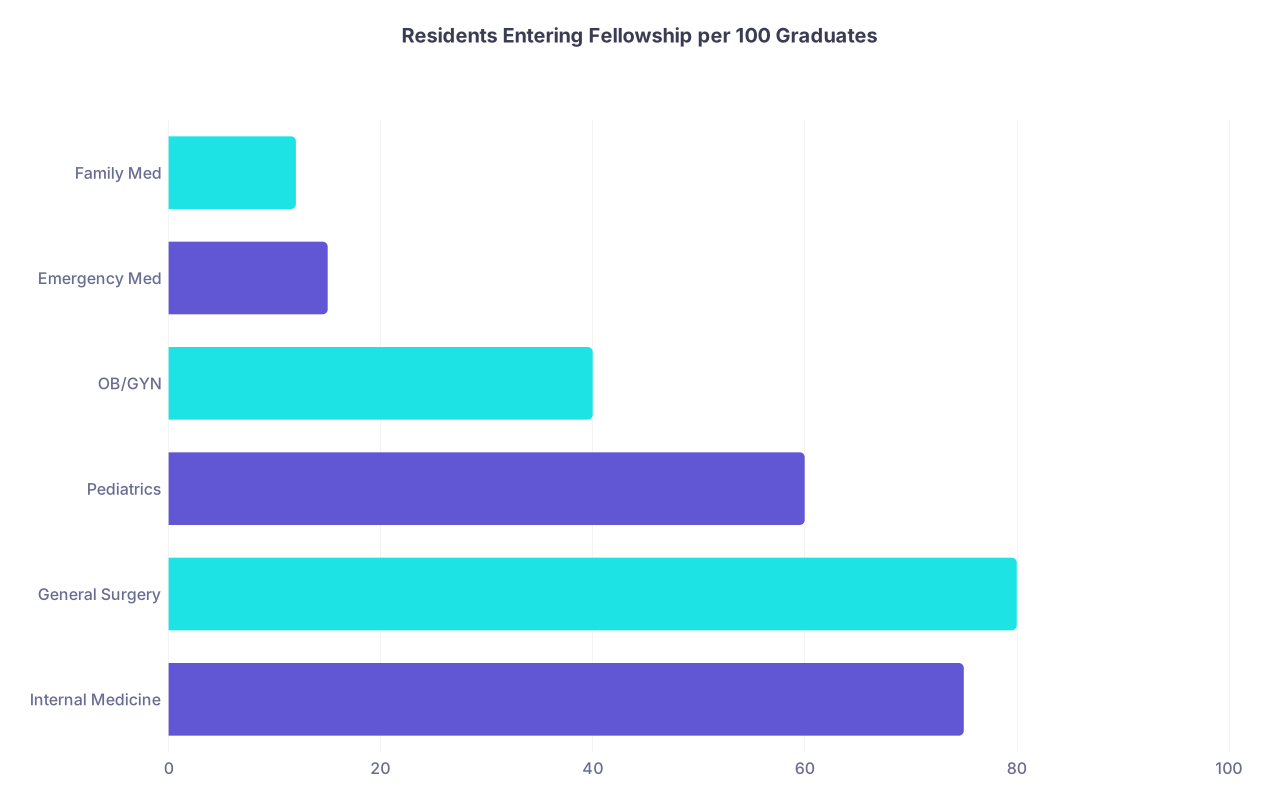
And visually:
| Category | Value |
|---|---|
| Internal Medicine | 75 |
| General Surgery | 80 |
| Pediatrics | 60 |
| OB/GYN | 40 |
| Emergency Med | 15 |
| Family Med | 12 |
The pattern is clear:
- Fellowship-default: Internal Medicine, General Surgery
- Fellowship-leaning: Pediatrics
- Mixed: OB/GYN
- Fellowship-optional: Emergency Medicine
- Fellowship-rare: Family Medicine
If you are in medical school trying to forecast your actual time in training, those tiers matter more than any single anecdote.
Hidden Angles: Academic vs Community, US vs IMGs, and Lifestyle
Raw percentages are useful, but context changes how these numbers hit your life.
Academic vs Community Programs
At academic-heavy programs in IM, peds, and surgery, the fellowship rate is often inflated relative to the national average. I have seen:
- Big-name IM programs: >90% fellowship entry
- Tertiary pediatric programs: nearly every resident pushes toward NICU, PICU, or a subspecialty
- Major surgery programs: essentially everyone does a fellowship
By contrast, residents at smaller community programs are more likely to enter general practice. Not because they are less capable, but because they see different role models and career incentives.
If you know you want to avoid fellowship, pay attention to where graduates of your target programs actually end up. Not what they say in the brochure. What the graduates do.
US Grads vs IMGs
International medical graduates are overrepresented in certain subspecialties, particularly within Internal Medicine (e.g., nephrology, infectious disease, some academic hospitalist tracks). Fellowship rates can differ by visa status and job market constraints.
But for your decision in medical school, the big takeaway is simpler: if you enter IM, you will be surrounded by peers—both US and international—who are trying very hard to match into fellowships. That environment shapes your trajectory.
Lifestyle and Market Pressures
One uncomfortable reality: the market often values subspecialty training differently. Examples:
- Cardiologists, gastroenterologists, and heme/onc physicians generally earn significantly more than general internists.
- Surgical subspecialists often have higher RVU generation potential than “pure” general surgeons, depending on case mix.
- In some urban markets, general pediatricians and general internists face tighter competition than subspecialists.
So it is not just curiosity driving fellowships. It is income, job control, and competitive positioning.
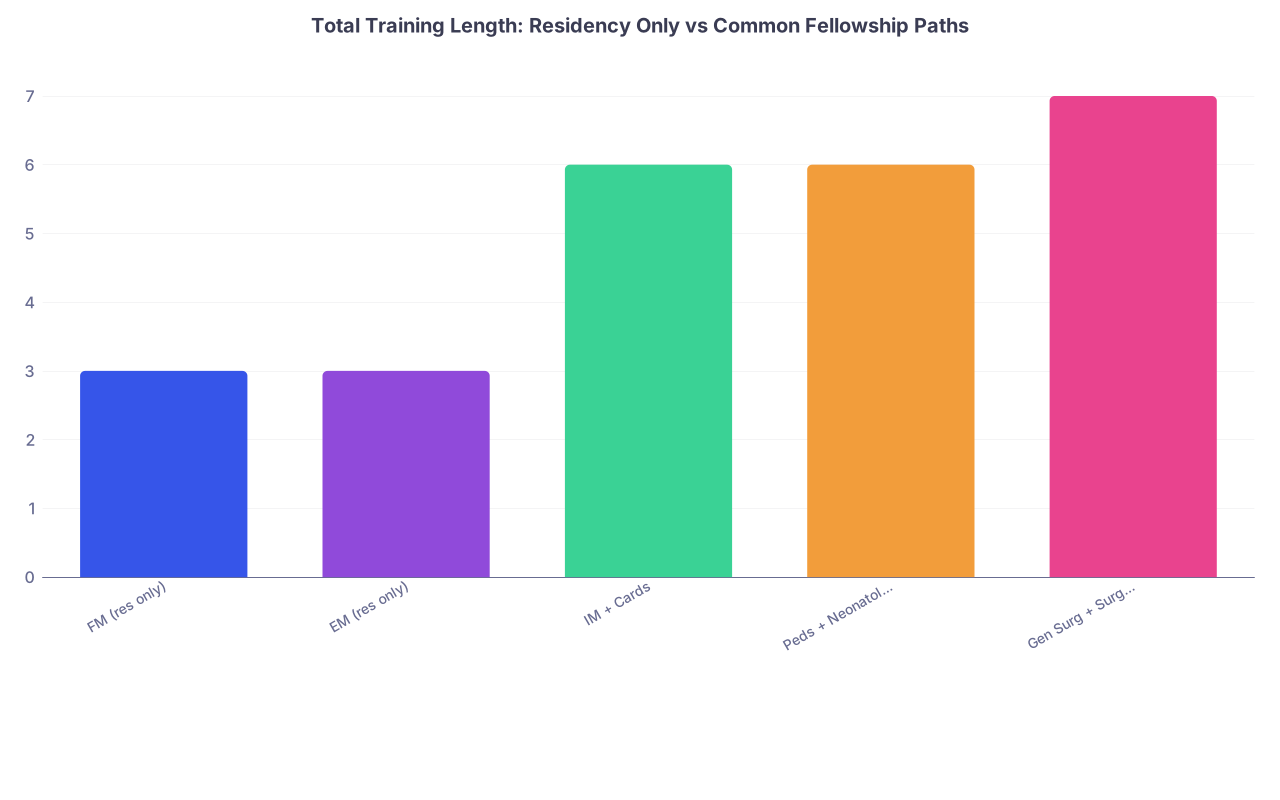
To illustrate the training length tradeoff:
| Category | Value |
|---|---|
| FM (res only) | 3 |
| EM (res only) | 3 |
| IM + Cards | 6 |
| Peds + Neonatology | 6 |
| Gen Surg + Surg Onc | 7 |
Three years vs six or seven. That is the delta you are signing up for in some of these fields if you follow the dominant fellowship path.
How to Use This Data When Choosing a Specialty
You do not pick a specialty just by counting fellowship percentages, but ignoring them is naive. Use the data deliberately.
If you want a short, contained training path with high odds of being “done” after residency:
- Family Medicine and Emergency Medicine are statistically your safest bets.
- Generalist OB/GYN is also viable, but you will be in a mixed fellowship culture.
If you are open to or excited by subspecialization:
- Internal Medicine and Pediatrics give you enormous flexibility with many fellowship options.
- General Surgery leads almost inevitably to fellowship if you are in a competitive or academic trajectory.
If you hate uncertainty about “what you will ultimately be”:
- Be honest with yourself in IM or Surgery: you are probably not “just” an internist or a general surgeon in the long run. The probability distribution is skewed toward subspecialty roles.
- In EM and FM, identity is relatively stable—most people practice in the role they trained for.
Always verify at the program level:
- Look at recent graduates’ outcomes for specific residencies you are considering. Ask: “What percent of your last 5 classes did fellowships, and which ones?”
- The local culture can push you off the national average in either direction by a lot.
Key Takeaways
- Fellowship rates are not uniform: Internal Medicine and General Surgery are fellowship-default; Pediatrics is fellowship-leaning; OB/GYN is mixed; EM and FM are overwhelmingly residency-only.
- Your training length and career shape depend heavily on these cultures; in some fields, “finishing in three years” is realistic, while in others it is almost fantasy.
- Do not rely on myths or isolated anecdotes—look at where graduates from your target specialty and programs actually end up, and choose based on the real distribution, not the brochure version.