
Clinic Pace and Panel Size: How Different Specialties Actually See Patients
It is 3:45 p.m. on your internal medicine clerkship. You have seen two follow‑ups and one new patient. Your attending has seen twelve. The pediatric resident across the hall has already “wrapped” their entire afternoon session and is finishing notes. Meanwhile, your classmate on psych clinic texted you at 2:30 p.m. that they were done with their two scheduled patients and are “reading” for the rest of the day.
You are starting to realize: “Outpatient medicine” is not one thing. The pace, panel size, and visit volume are completely different worlds depending on specialty. If you ignore this now and just chase “I liked my third‑year attending,” you may end up trapped in a clinic rhythm you hate.
Let me break this down specifically.
First: What Do “Pace” and “Panel Size” Actually Mean?
People throw these words around loosely. I am not going to.
- Pace: How many patients a clinician actually sees in a clinic day, how fast those visits turn over, and how much “hidden work” (inbox, refills, messages) is packed around them.
- Panel size: The number of active patients formally assigned to that clinician for ongoing care. Not “patients in the EMR,” but people who realistically consider you “my doctor” and may be scheduled in your clinic.
Most med students confuse three separate things:
- Visit length – the scheduled time per patient (15‑min return, 40‑min new, etc.).
- Daily volume – number of patients actually seen per day.
- Population size – how many unique patients you are longitudinally responsible for.
Different specialties play with these three knobs in very different ways.
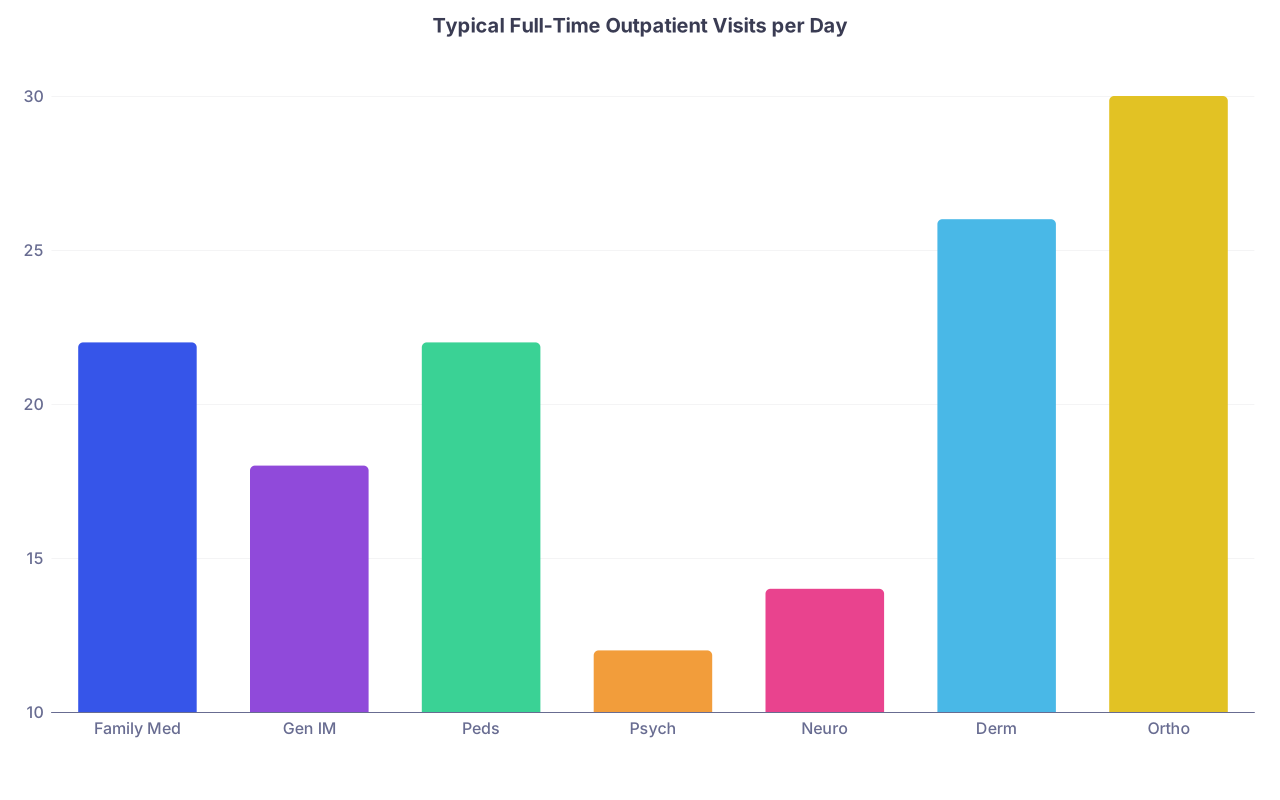
Let’s put some numbers on it first, then walk through specialties.
| Specialty | Visits/Day (Attending) | Typical Panel Size | Common Return Visit Length |
|---|---|---|---|
| Family Medicine | 20–24 | 1500–2200 | 15–20 minutes |
| General IM (PCP) | 16–22 | 1200–1800 | 20 minutes |
| Pediatrics (PCP) | 18–24 | 1500–2500 | 15–20 minutes |
| Psychiatry (OP) | 8–14 | 300–800 | 20–30 minutes |
| Neurology (OP) | 10–16 | 800–1500 | 20–30 minutes |
| Ortho Clinic | 24–36 | Procedure-focused | 10–15 minutes |
Are these exact? No. Are they directionally correct across multiple health systems I have seen? Yes.
Primary Care: Where “Panel” Really Rules Your Life
If you are thinking family medicine, general internal medicine, or outpatient pediatrics, panel size and clinic pace are the air you breathe. Let’s separate them.
Family Medicine: Maximal Breadth, High Churn
Typical full‑time FM attending, community clinic:
- 20–24 patients per day, sometimes 26+ in aggressive systems.
- Mix of 15‑min follow‑ups, 30‑min chronic care, 40‑min new patients, and a few same‑day/urgent slots.
- Panel size often 1800–2200 in large systems. Smaller in academic clinics, maybe 1200–1600.
What that feels like in real life:
- Morning huddle at 7:45. First patient 8:00. You are double‑booked at 8:45 “because he just really needed to be seen.”
- You run 15 minutes behind by 10:00, 30 minutes behind by 11:30 unless your MAs are excellent and you are ruthless about scope: “One problem today; we will schedule a separate visit for the rest.”
- Lunch is 12:30 to 1:00 “on paper.” In reality, you are finishing three notes, signing refills, and responding to 25 MyChart messages.
- Afternoon 1:00–5:00, 10–12 more patients. You are done with face‑to‑face visits at 5:10, still charting at 5:45–6:15.
Panel size in FM is inflated by:
- Infants and kids who “count” as panel members but are relatively quick visits (well‑child checks, acute otitis).
- Some patients you only see once a year who still belong to you on paper.
- High preventive care load—vaccines, screenings—that generates lots of “quick” visits that never stay quick.
If you enjoy rapid‑fire encounters, like switching gears constantly (HTN, then prenatal, then ADHD refill, then diabetic foot check), FM clinic pace may actually feel fun. If you want more time to think and talk, this pace will exhaust you unless you are in a boutique or concierge setting.
General Internal Medicine (Adult PCP): Slightly Slower, More Complex
Academic or hospital‑owned IM primary care clinic:
- 16–20 patients a day is common. Some push to 22+ with more 15‑min slots.
- Visit lengths: 20‑min established, 40‑min new, 30‑min chronic disease visits in some models.
- Panels: typically 1200–1800, depending on complexity and how loudly the physicians complain.
Differences from FM:
- Fewer kids, fewer OB visits. More chronic multi‑morbid adults.
- The average visit feels “heavier” – three or four meds to reconcile, multiple consultants, labs to parse.
- Same inbox monster (refills, messages, results) but more of it is about chronic disease minutiae and specialists’ recommendations.
Daily experience:
- Less raw volume than FM sometimes, but more cognitive fatigue per patient.
- A “simple” 20‑min HTN follow‑up becomes: BP high today, med change, discuss side effects, interpret nephrology lab note, adjust diabetes regimen, refill statin, screen for depression. All while the patient asks: “Did you get my cardiology visit notes?”
Panel size matters more than most students realize. A PCP with 2200 high‑complexity adult patients is on fire all year. 1400 is still busy but survivable. If you think you want IM primary care, you must pay attention to how your attendings talk about “my panel” and “visit templates.” That is your future.
Pediatrics (Outpatient Primary Care): High Volume, Seasonally Chaotic
Outpatient general pediatrics clinic, typical:
- 18–24 patients per day, sometimes 26–30 during sick season.
- Panel sizes 1500–2500. Many are low‑utilizers until they get a viral infection.
- Visits: 15‑min sick visits, 20‑ to 30‑min well‑child checks, 30‑40 new patients or behavioral visits.
Key features:
- Seasonality is brutal. Winter respiratory season and August/September “school physicals” will break you if the clinic is poorly managed.
- Pace can be even faster than FM because many routine sick visits end up being short (viral URI reassurance, ear exam, parent education), but the emotional intensity with anxious parents compensates for the shorter duration.
- The panel is huge because a healthy 8‑year‑old counts the same as a medically complex child on paper, but uses fewer visits.
Real day:
- Morning: back‑to‑back fevers, coughs, ear pain. Some literally 8‑minute encounters if everything is straightforward.
- Multiple “roomed siblings”: 3 kids, 2 parents, 1 time slot that becomes 45 minutes right away.
- Hidden work: a ridiculous amount of school forms, camp forms, vaccination forms, 504/IEP letters.
If you want a high‑energy clinic, like kids, and do not mind that the work is often repetitive but high‑stakes for parents, peds clinic pace can be satisfying. If you hate unpredictability, the winter surge will feel like punishment.
| Category | Value |
|---|---|
| Family Med | 22 |
| Gen IM | 18 |
| Peds | 22 |
| Psych | 12 |
| Neuro | 14 |
| Derm | 26 |
| Ortho | 30 |
Cognitive Subspecialties: Slower Pace, Smaller Panels, Denser Brains
Now to the specialties students love on rotation because “clinic was so chill.” Let me puncture that myth properly.
Psychiatry: Fewer Patients, But The Day Is Not “Easy”
Outpatient adult psychiatry, non‑community‑mental‑health setting:
- 8–12 patients per day if a lot of 60‑min intake visits.
- 12–16 per day if doing mostly 20‑ to 30‑minute med management follow‑ups.
- Panels: 300–800 active patients, depending on visit frequency and severity.
The pace feels slower for three reasons:
- Visits are longer blocks (30–60 minutes).
- There is minimal physical exam and less “quick vitals, then exam” shuffling.
- You rarely get triple‑booked for five‑minute “urgent BP check” type things.
But: the cognitive and emotional load is not slow.
- You are holding suicide risk assessments in your head.
- You are tracking multiple med trials, cross‑tapers, interactions.
- Every visit can unexpectedly blow up into a crisis that takes double its scheduled time.
The panel is smaller, but each patient is “high touch.” Many are seen every 1–3 months for years. When they no‑show, you still worry. When they message, it often requires real thought, not just “refill lisinopril.”
If you want a clinic rhythm with longer, deeper visits and fewer total people in and out of the room, psychiatry wins. If you get impatient with talking for 45 minutes about nuances of mood and behavior, you will be miserable.
Neurology: Long New Visits, Moderate Return Pace
Subspecialty that tricks a lot of students. You see one neurology attending with 60‑minute new visits and think: “This is so civilized.”
Standard ambulatory neurology practice:
- New patients: 40–60 minutes.
- Follow‑ups: 20–30 minutes.
- Total patients per day: often 10–16, depending on how procedure‑heavy (EMGs, Botox, etc.) the practice is.
- Panels: 800–1500. Very heterogeneous—migraines you see twice a year vs. MS patients you see every 3 months.
Clinic realities:
- New visits are long for a reason: neurologic H&P is time‑consuming when done properly. You do not have 7‑minute “quick follow‑up” visits packed around them.
- Many patients are chronic, complex, and anxious. Each visit spawns referrals, imaging orders, and long MyChart messages.
- Admin time (prior auths for anticonvulsants, biologics, botulinum toxin) is real and eats into your so‑called “free time.”
So yes, neurology clinic is slower per body through the door than FM. But the “extra slack” gets filled with reading imaging, return calls, and team messages.
Endocrinology, Rheumatology, GI, Allergy, etc.
You can group many internal medicine subspecialties into this pattern:
- New visit slots: 40–60 minutes.
- Return visits: 20–30 minutes.
- Patients per day: 10–18, often 12–16 in academic settings.
- Panel sizes: 500–1500 depending on disease mix and tertiary vs community practice.
Example: outpatient endocrinology.
- Thyroid clinic mornings – a string of 20‑min hypothyroid/hyperthyroid follow‑ups, relatively straightforward.
- Diabetes clinic afternoons – more chaotic, 30‑min visits full of CGM downloads, insulin adjustments, social issues.
Or outpatient rheumatology:
- Initial workups often 60 minutes, heavy on history and exam.
- Follow‑ups every 3–6 months once stable; large but slow‑cycling panel.
These specialties trade visit volume for complexity. From the outside as a student, the clinic may look slower and more relaxed. What you do not see: inbox loads of labs, imaging, prior auth, second‑opinion requests, and multi‑paragraph emails from patients.
High-Volume Procedural Clinics: Fast, Focused, and Repetitive
If you shadow ortho, derm, ENT, or ophthalmology in a busy private or hospital‑employed practice, you see a different beast entirely.
Orthopedics: Short Visits, Big Throughput
Adult ortho clinic (sports, joints, or general), typical day:
- 24–40 patients depending on NP/PA support and how procedure‑heavy the day is.
- Visit length: many 10–15‑minute follow‑ups, 20‑30 new consults.
- No meaningful “panel” in the primary care sense. You follow postop patients and some chronic issues but you are not their everything.
It feels like this:
- Multiple rooms running at once. MA or PA rooms the patient, gets X‑rays, you walk room‑to‑room.
- Quick focused H&P: “Knee pain, 4 weeks, X‑ray normal, exam consistent with meniscal pathology.”
- Heavy use of imaging and procedures to move the visit forward: injection, brace, PT order, surgical consent.
- Charting is relatively simple: focused problems, less sprawling medication lists or social issues.
Pace is fast. You may see 30 patients and not feel the same type of cognitive exhaustion as an IM doc seeing 18, but physically and logistically you are sprinting. If you like fast decisions and hands‑on work, it works. If you want deep longitudinal relationships, this will feel shallow.
Dermatology: Many Faces, Short Encounters
Derm clinic in private practice:
- 25–35 patients per day is very normal, sometimes more.
- Visit length: 10‑min established visits, 20–30 new, plus a chunk of procedure slots for biopsies, excisions.
- Panel notion is looser; you follow chronic conditions (psoriasis, acne, atopic dermatitis) over time, but many patients are annual skin checks and acute rashes.
The day:
- You move quickly, often with several rooms going at once.
- The visit itself: focused history, very targeted exam, often a fairly standard treatment algorithm.
- Procedures break up the day and pay the bills.
The work is narrower but high‑volume. If you liked the cognitive variety of FM, derm may actually feel too repetitive. If you love pattern recognition, quick diagnoses, and minor procedures, the pace will feel excellent.
Ophthalmology, ENT, Urology: Similar Pattern
All have this in common:
- Heavy use of tech (scopes, imaging, ultrasound, visual fields, etc.).
- Many shorter visits per day—20–30+—with focused concerns.
- “Panel” is more like “referred recurring patients” than true population management.
There is less inbox hell about blood pressure goals or colonoscopy screening. More about operative decisions, postop concerns, and specific symptom recurrences.

Hospital-Based Outpatient vs Private Clinic: Same Specialty, Different Life
One mistake students make: generalizing from one clinic model. A cardiologist at a large academic center does not live the same schedule as one in private practice in the suburbs. Same for GI, rheum, or even primary care.
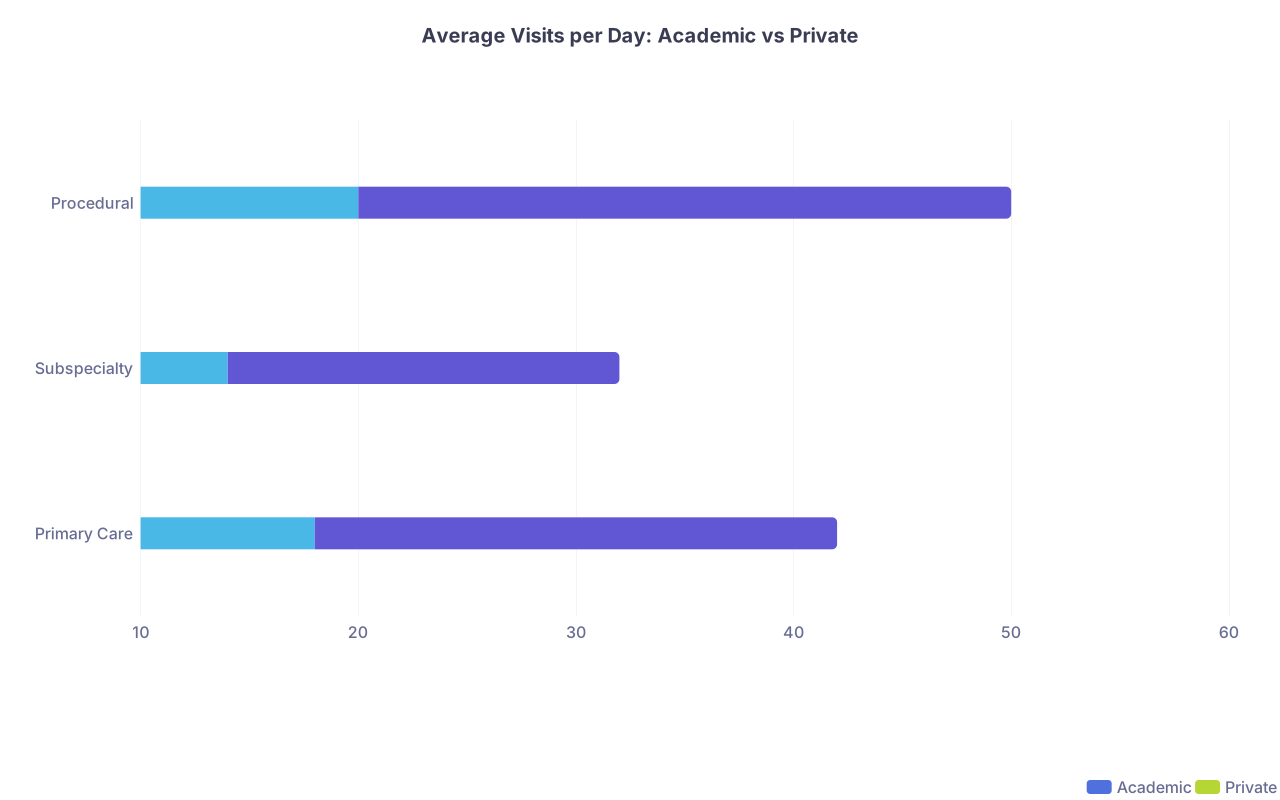
Academic / Hospital-Owned Clinics
Typical features:
- Slightly longer scheduled visit times (20‑min return instead of 15, 40‑min new instead of 30).
- Fewer total patients per day: 10–18 for subspecialists, 14–22 for primary care.
- Often more complex patients, referred from far away, with multi‑system disease.
- Non‑clinic time reserved for teaching, research, or admin.
Pace feels more “paced,” but complexity and documentation requirements are higher.
Private Practice / Productivity-Driven Clinics
Common traits:
- Shorter standard visit times.
- Higher daily volumes. I have seen FM docs booked at 28–30/day, derm >35, ortho >40 in aggressive models.
- Greater emphasis on RVUs, patient satisfaction scores, and access metrics.
The same specialty can feel like two different jobs.
So when you are on rotation, do not just observe “I saw 14 patients with my attending.” Ask:
- How many half‑days of clinic does this attending have per week?
- What are their templates? (15, 20, 30 minutes?)
- Do they feel pushed, or do they feel they control their pace?
| Category | Academic | Private |
|---|---|---|
| Primary Care | 18 | 24 |
| Subspecialty | 14 | 18 |
| Procedural | 20 | 30 |
Hidden Variable: The Inbox and “Between Visit” Work
You will underestimate this until you are the one responsible. The number of patients on your panel directly drives your non‑face‑to‑face workload.
Primary Care Inbox Reality
For a PCP with a 1800‑patient panel, on a typical weekday you may have:
- 30–60 MyChart messages.
- 20–40 refill requests.
- 10–20 lab results to review.
- 3–5 imaging results.
- Miscellaneous forms and admin tasks.
You do not “see” these people that day, but they consume an hour or more of your time. Every day.
This is why panel size matters more than you think. An over‑paneled PCP is working two jobs: in‑person clinic and virtual clinic.
Specialists are not immune:
- Endocrinologists get endless questions about blood sugars and dose adjustments.
- Rheumatologists get specialty lab results and med toxicity messages.
- Neurologists get “new symptom” messages from MS or seizure patients.
By contrast, orthopedics or derm may have relatively less chronic message flow for many patients, because the problems are more episodic, not ongoing daily management issues for years.
How to Actually Judge Clinic Pace and Fit as a Student
You are not powerless here. If you pay attention during rotations, you can get a reasonably accurate sense of what your life would be like.
Step 1: Count and Time
On a clinic day, quietly track:
- How many scheduled slots are on your attending’s schedule?
- How many are double‑booked or squeezed in?
- What is the scheduled length of new vs follow‑up visits?
- How late do they run relative to the schedule?
If you are seeing 8–10 per half day (16–20/day) in IM or FM, that is a mainstream pace. If you are seeing 24+ in derm, that is normal. If a psych clinic is doing 6 or fewer patients in a full day, that is unusually slow, not the standard.
Step 2: Ask Specific Questions
Skip vague “How is your work‑life balance?” Ask targeted things:
- “How many patients do you usually see in a full day of clinic?”
- “What is your panel size, roughly?”
- “How many inbox messages do you get on a typical day?”
- “How often do you do notes after going home?”
The answers will be half‑resentful, half‑proud. Listen to the tone.

| Step | Description |
|---|---|
| Step 1 | Start: Considering Specialty |
| Step 2 | Family Med / Gen IM / Peds |
| Step 3 | Psych / Neuro / Endocrine |
| Step 4 | Ortho / ENT / Ophtho / Urology |
| Step 5 | Consultative Subspecialties |
| Step 6 | Prefer Long-Term Panels? |
| Step 7 | Comfortable with Fast Pace? |
| Step 8 | Prefer Procedures? |
Step 3: Watch the End of the Day
I pay more attention to 4:30–6:00 p.m. than to 9:00 a.m.
- Who is still charting at 6:15?
- Who is obviously exhausted vs. steady?
- Who complains about “tomorrow’s schedule” being packed?
- Who is doing inbox work at lunch?
Patterns repeat. If everyone in that specialty looks fried at 5:30 in multiple clinics, that is data.

A Few Specialty-Specific Snapshots
Let me give you concrete “day in clinic” vignettes, because those stick better than abstract numbers.
Snapshot: FM Community Clinic, Full Day
- 8:00–12:00: 11 scheduled patients (8 follow‑ups at 20 minutes, 3 new at 40 minutes) plus 2 same‑day acute double‑booked.
- 12:00–12:30: Lunch on paper. Actually finish three notes, respond to 15 messages, wolf down yogurt.
- 1:00–5:00: 10 more patients, including two complex multi‑morbid 30‑min visits that actually take 45 minutes.
- 5:00–5:30: Finish notes in room when possible, finish last two notes and 10 inbox items after patients leave.
- Panel: 1900 patients. No‑shows dampen actual volume, but acute add‑ons replace them.
You have a broad panel, high pace, constant interruptions. Some love it. Some burn out.
Snapshot: Outpatient Psych, Mix of New and Follow-up
- 8:30–9:30: New patient intake, MDD and GAD. Full history, rating scales, initial med choice.
- 9:30–10:00: Follow‑up bipolar II patient, med adjustment, risk assessment.
- 10:00–10:30: ADHD follow‑up, stimulant titration.
- 10:30–11:00: Documentation catch‑up and inbox.
- 11:00–12:00: Another 60‑min intake.
Afternoon similar, maybe 3 more 30‑min follow‑ups and one new. You saw 7–9 patients. You need emotional energy more than physical stamina.
Snapshot: Ortho Private Practice, Heavy Clinic Day
- 8:00–12:00: 16–20 patients. Mix of postop checks, new knee pain consults, injections. Each room: quick focused exam, order imaging, inject, or discuss surgery.
- Lunch: sort of. Usually 20–30 minutes, but work in one extra urgent consult.
- 1:00–5:00: Another 15–20 patients. Staff does much of the prep; you move room to room, dictate or click quick templates.
- Inbox: relatively manageable. Many issues handled by PAs.
You may touch 30+ patients. But you are not managing their diabetes, anxiety, and social security disability forms. Completely different clinic feel.

How To Match YOUR Personality To Clinic Pace
Now the part that matters to you.
If you dislike:
- Constant interruptions.
- Switching from one completely different problem to another every 15 minutes.
- Having a huge panel whose crises you never fully control.
Then high‑volume primary care is going to hurt, no matter how much you like “general medicine” or “continuity.”
You may be more comfortable in:
- Psychiatry, where you see fewer patients per day and go deeper with each.
- Neurology, rheum, endocrine, or allergy, where complexity is high but pace is moderate.
- Hospitalist medicine (different article entirely) with chunks of inpatient days and no outpatient panel.
If you get bored with:
- Long visits about one issue.
- Narrow scopes of practice (just one organ system).
- Seeing “the same thing” repeatedly (e.g., acne, knee pain, depression).
Then slow, focused clinics will bore you. You may genuinely thrive with:
- Family medicine or general peds – constant variety, high energy.
- Emergency medicine outpatient follow‑up clinics.
- Sports medicine or urgent care style clinics, with lots of quick issues.
One more hard truth: there is no free lunch. Slower pace per day usually means:
- Lower income compared with high‑RVU specialties or private practice.
- More chronic, emotionally heavy diseases.
- More complex documentation and coordination.
Faster pace usually means:
- Less time for nuance and long conversations.
- More pressure from administrators about productivity.
- More physical and cognitive switching fatigue.
| Category | Value |
|---|---|
| FM | 9,9 |
| Gen IM | 8,8 |
| Peds | 9,9 |
| Psych | 4,4 |
| Neuro | 5,6 |
| Derm | 8,3 |
| Ortho | 9,2 |
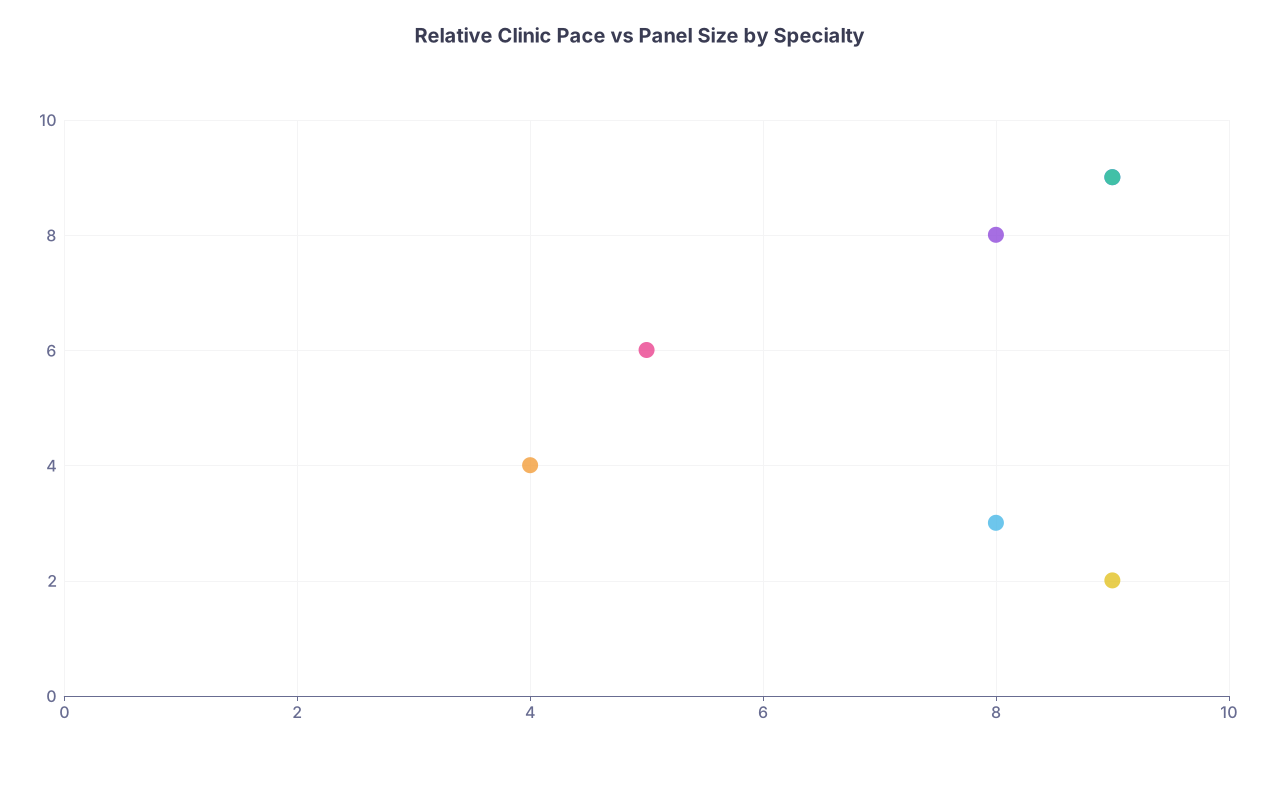
(X-axis approx daily pace 1–10, Y-axis panel size 1–10; you get the point.)
Two Things Students Consistently Misjudge
I have watched this pattern for years.
They confuse “I liked this attending” with “I like this clinic model.”
You can have a fantastic FM attending in an unsustainable 26‑patient‑per‑day schedule that will break you. You can have a grouchy neurologist whose 12‑patient day you would actually love.They underestimate how much panel size dominates home life.
Residents and students see the face‑to‑face clinic. They go home when clinic ends. The attending goes home with 40 open MyChart messages and three prior auths. If you are going into a panel‑heavy specialty, you are signing up for that invisible second job.
Key Takeaways
- “Clinic pace” has three moving parts: visit length, daily volume, and panel size. Different specialties set those knobs very differently.
- Primary care and some subspecialties live and die by panel size and inbox load; procedural and surgical clinics trade depth for speed and volume.
- Do not choose a specialty off the vibe of one rotation. Count patients, watch the end of the day, and ask blunt questions about schedules, panels, and inboxes. That is the job you are signing up for.