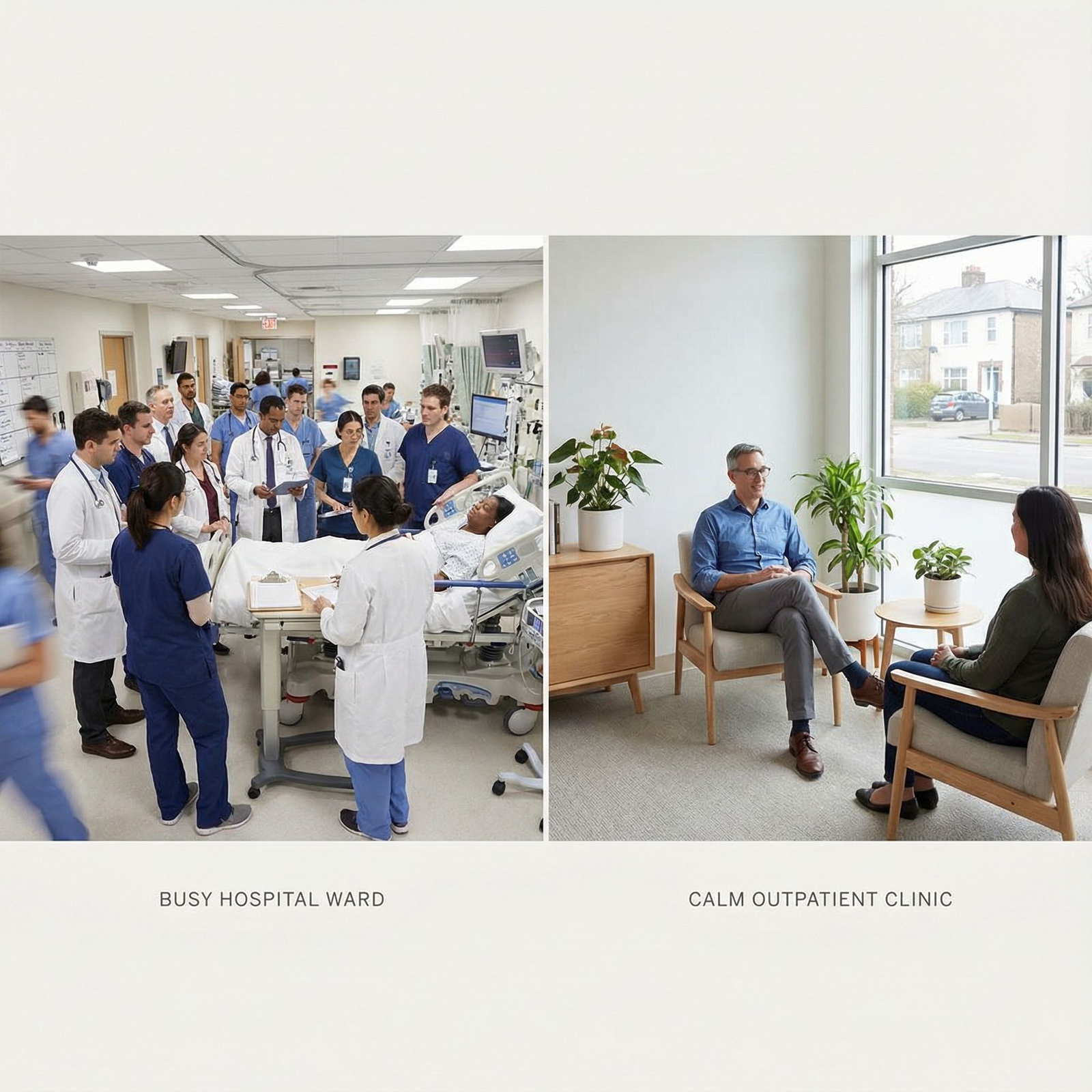
How to Shadow Effectively: Gaining Insight into Your Specialty Interests
Choosing a medical specialty is one of the most consequential decisions in your medical education and early career. With more than 120 medical specialties and subspecialties—from emergency medicine to dermatology, psychiatry to orthopedic surgery—the options can feel both exciting and overwhelming.
Shadowing experiences are one of the most powerful ways to cut through the uncertainty. By observing physicians in real-world settings, you gain an authentic look at daily workflow, patient populations, team dynamics, and lifestyle realities that no brochure or lecture can fully capture.
This guide will walk you through how to shadow effectively—before, during, and after your experience—so that each shadowing opportunity becomes a meaningful step in your specialty exploration and career guidance process.
Why Shadowing Matters in Choosing a Medical Specialty
Shadowing isn’t just about collecting hours for applications. When done intentionally, it becomes a structured way to explore your interests, test assumptions, and build physician mentorship relationships that can influence your trajectory for years.
The Unique Value of Shadowing Experiences
Shadowing exposes you to aspects of medicine that are hard to grasp from lectures or reading:
- Real clinical workflow: You see how physicians juggle documentation, patient care, interprofessional communication, and teaching.
- Authentic patient interactions: You witness how different specialties handle sensitive topics, complex decision-making, and longitudinal vs. episodic care.
- Specialty-specific culture: You get a feel for the “personality” of the specialty—pace, intensity, teamwork, and communication style.
Shadowing experiences are especially valuable early in medical school, but they remain informative even later, when you’re narrowing down your residency choices.
Key Benefits of Shadowing for Career Exploration
Clarifying your interests
- You may discover new medical specialties you hadn’t seriously considered (e.g., PM&R, pathology, anesthesiology).
- You may confirm or challenge preconceived ideas—for example, that surgery is “all cutting” or psychiatry is “all talking.”
- You start to see which patient populations energize you (children, older adults, acutely ill, chronically ill, underserved communities).
Understanding lifestyle and workload
- You can observe call schedules, clinic volumes, OR start times, and how frequently urgent issues arise.
- You see how much time is spent with patients vs. documentation vs. procedures.
- You get a sense of burnout risk, work-life boundaries, and how physicians manage their personal lives.
Building physician mentorship and networking connections
- A well-executed shadowing experience can naturally evolve into a long-term mentoring relationship.
- Mentors can provide career guidance, letters of recommendation, research connections, and honest feedback about your fit for specific specialties.
- Early relationships can help you secure later opportunities such as sub-internships, electives, and research projects.
Strengthening your applications
- Shadowing allows you to speak concretely in personal statements and interviews about why you’re drawn to a specialty.
- You gain stories and examples that show insight into the field’s realities—not just abstract enthusiasm.
Preparing for Your Shadowing Experience
Thoughtful preparation transforms shadowing from passive observation into an intentional learning and career guidance exercise.
1. Clarify Your Goals and Questions Before You Shadow
Before you step into the clinic, take 20–30 minutes to think through what you want from this specific experience.
Ask yourself:
- What am I hoping to learn about this specialty?
- The daily routine?
- Types of patients?
- Procedures vs. cognitive work?
- Lifestyle and burnout?
- Where am I in my decision process?
- Just exploring broadly?
- Narrowing down 2–3 top choices?
- Confirming a specialty I already think I’ll choose?
Write down 3–5 focused questions you want answered, such as:
- “How much of your time is spent on direct patient care vs. documentation or admin tasks?”
- “What are the most challenging parts of this specialty that students often don’t appreciate?”
- “How flexible is your schedule, and how does that change at different career stages?”
- “If you could choose your specialty again, would you make the same decision?”
Bringing these questions with you will keep your observation purposeful and your conversations with physicians more meaningful.
2. Finding and Arranging Shadowing Opportunities
You can access shadowing opportunities through multiple routes:
Use your existing networks
- Medical school faculty: Ask course directors, advisors, and clerkship coordinators to recommend physicians open to student observers.
- Upper-level students or residents: They often know which attendings are good teachers and mentors—and which environments are most student-friendly.
- Student interest groups: Specialty interest groups (e.g., Internal Medicine, Surgery, Emergency Medicine) often host shadowing programs or can connect you to faculty leads.
Professional and cold outreach
If your current network is limited:
- Hospital websites: Search by department, then email physicians whose clinical or research interests align with yours.
- Community clinics and private practices: Especially helpful if you want to see outpatient-heavy specialties like family medicine, pediatrics, or dermatology.
- Craft a concise, professional email that includes:
- Who you are (school, year, brief background)
- Why you’re interested in their specialty specifically
- What you’re hoping to observe and learn
- Proposed timeframe and your flexibility
- Appreciation for their time regardless of availability
Example opening:
“My name is [Name], and I’m a second-year medical student at [Institution] exploring potential medical specialties. I’m particularly interested in [Specialty] because of [brief, specific reason]. I was wondering if you might be open to having a student shadow you for a half- or full-day clinic/OR session.”
Be prepared for some non-responses—that’s normal. Cast a reasonably wide net while staying professional.
Be flexible and open-minded
- If your top-choice specialty is hard to access, consider related fields (e.g., if neurosurgery isn’t available, try neurology, orthopedic spine, or neuroradiology).
- Shadowing across related specialties often deepens your understanding of what truly differentiates them.
3. Understand Logistics, Protocols, and Expectations
Once a physician agrees to let you shadow:
Clarify the details
- Date, time, and location (specific department, clinic, or OR)
- Dress code: Scrubs vs. business casual; white coat vs. no white coat
- Identification: Whether you need a hospital ID, visitor badge, or student badge
- HIPAA and hospital requirements: Some institutions require:
- Proof of vaccination or TB testing
- HIPAA/confidentiality training modules
- Liability or student status documentation
Know your role and boundaries
Ask explicitly:
- “Will I be primarily observing, or are there moments where I may ask questions between patients?”
- “Is there any time you prefer I not be in the room (e.g., certain sensitive exams or conversations)?”
Expect to be primarily an observer, especially in early training. However, some physicians will involve you more actively by:
- Asking for your differential for a case
- Having you present a brief summary of a patient after the visit
- Letting you observe procedures or OR cases from a closer vantage point
Always defer to patient comfort and the physician’s judgment. If a patient declines your presence, step out gracefully without showing disappointment.

Maximizing Learning During Shadowing
Once you arrive, your goal is to be fully present, professional, and engaged—without disrupting care or workflow.
1. Show Up Prepared and Professional
Arrive early
- Aim to arrive 10–15 minutes before the agreed time.
- Use the extra time to:
- Locate the correct office, clinic, OR, or conference room.
- Check in with front desk staff or nurses (being courteous to staff goes a long way).
- Introduce yourself briefly and clearly.
Present yourself professionally
- Dress according to expectations; when in doubt:
- Business casual + white coat for clinic
- Clean scrubs + hospital-appropriate footwear for OR
- Keep your phone silent and out of sight.
- Introduce yourself to patients as a medical student/observer (never as “doctor”).
Example introduction to a patient:
“Hello, I’m [Name], a medical student shadowing Dr. [Last Name] today. Is it okay if I stay in the room and observe your visit?”
Always respect the answer.
2. Be an Active, Thoughtful Observer
Shadowing is far more than “standing in the corner.” Train yourself to observe with intention.
What to pay attention to
Communication style:
- How does the physician explain diagnoses and treatment options?
- How do they handle uncertainty or bad news?
- How do they adjust language for different ages, education levels, or cultural backgrounds?
Clinical reasoning in action:
- What questions do they ask early in the visit?
- How do they narrow down the differential based on history and exam?
- How do they balance guidelines with patient preferences?
Team and system dynamics:
- How do physicians collaborate with nurses, advanced practice providers, pharmacists, and other specialists?
- What non-physician team members play key roles in this specialty?
Workflow and pace:
- How long are visits or cases?
- How much time is spent documenting vs. face-to-face with patients?
- How often do urgent issues interrupt the day?
Asking good questions at the right time
- Save most questions for between patients, at natural breaks, or at the end of a session.
- Prioritize thoughtful, open-ended questions over yes/no questions, such as:
- “What types of patients or cases do you find most rewarding in this specialty?”
- “What do you think are the biggest misconceptions students have about your field?”
- “How has your work changed over the past 5–10 years, and where do you think it’s headed?”
If the clinic or OR is extremely busy, be sensitive to time. You might say:
“I know clinic is very full today—could I email you a few questions afterward?”
3. Explore Different Dimensions of the Specialty
To really understand whether you might thrive in a field, observe more than just the highlight moments.
Patient interactions and emotional tone
- Are the conversations long and relationship-focused (e.g., primary care, psychiatry) or brief and procedure-focused (e.g., radiology, anesthesiology)?
- How often do difficult emotional topics (end-of-life care, chronic pain, addiction) arise?
- Does the overall emotional tone of the day match your temperament?
Procedural vs. cognitive balance
- How much of the day is spent performing procedures or in the OR vs. thinking, planning, and talking?
- Do you feel energized or drained by prolonged procedures?
- Does the intensity of the OR or procedural suite feel exciting, stressful, or somewhere in between?
Setting and scope of practice
- Is the work mostly inpatient, outpatient, or a mix?
- How often do you see continuity of care vs. one-time encounters?
- How broad or narrow does the scope of practice feel?
Comparing these across specialties can be eye-opening. For example:
- Internal medicine vs. family medicine outpatient clinics
- General surgery vs. orthopedic surgery OR days
- Emergency medicine vs. urgent care or hospitalist medicine
Reflecting After Shadowing: Turning Observation into Insight
The most valuable part of shadowing often happens afterward—when you synthesize what you saw into meaningful conclusions about your fit and interests.
1. Debrief While It’s Fresh
Within 24 hours, take 15–30 minutes to jot down:
- Key observations (what stood out about the workflow, patients, team, or environment)
- Memorable patient encounters and why they affected you
- Answers to your pre-shadowing questions
- New questions that arose during the day
Consider using a simple structure:
- What did I see? (objective)
- How did I feel? (emotional response)
- What surprised me? (misconceptions challenged)
- Could I see myself doing this long term? Why or why not? (career reflection)
A dedicated shadowing journal or digital document can help you track patterns over time as you explore multiple specialties.
2. Evaluate Specialty “Fit” More Deeply
Reflect on both interest and fit:
Interest:
- Did the clinical problems and patient population genuinely intrigue you?
- Did you find yourself wanting to learn more, even when things got complex or messy?
Fit:
- Did the pace of work feel aligned with your personality—fast and unpredictable vs. steady and scheduled?
- How did the emotional intensity and stress level feel?
- Could you imagine sustaining this work over decades?
Consider also career stages:
- Ask yourself: “Would I enjoy this both as a resident and as an attending?”
- Some specialties are resident-heavy in acute care and nights but attending-heavy in outpatient or elective work.
3. Follow Up and Maintain Mentorship Connections
Within 24–48 hours, send a concise thank-you email:
- Express appreciation for their time and teaching.
- Mention 1–2 specific things you learned or found insightful.
- If appropriate, ask if they’d be open to future career guidance or answering occasional questions.
Example:
“Thank you again for allowing me to shadow you in clinic on Monday. Watching how you explained complex treatment options to patients with chronic disease gave me a much clearer sense of the communication skills required in internal medicine. I’m still exploring medical specialties, and this experience was incredibly valuable for my career guidance. If you’d be open to it, I would greatly appreciate staying in touch as I continue to explore this field.”
Over time, a few of these relationships can evolve into meaningful physician mentorship that supports your growth across medical school and residency applications.

Common Pitfalls in Shadowing (and How to Avoid Them)
Even well-intentioned students sometimes underutilize or mishandle shadowing opportunities. Being aware of common pitfalls can help you avoid them.
1. Being Too Passive
Pitfall: Standing silently in the corner without engaging, asking questions, or reflecting.
Solution:
- Prepare questions in advance.
- Ask for clarification between patients or at the end of the session.
- Briefly share your interests so the physician can tailor teaching (“I’m especially curious about how you approach diagnostic uncertainty in this field.”).
2. Treating Shadowing as a Checkbox Activity
Pitfall: Accumulating hours simply to list on your CV or ERAS, without genuine exploration.
Solution:
- Approach each experience as a serious data-gathering exercise for your future.
- Shadow multiple specialties and settings rather than racking up many hours in one area without reflection.
- Revisit your shadowing journal periodically to reassess your evolving interests.
3. Lack of Professionalism
Pitfall: Arriving late, dressing inappropriately, checking your phone, or breaching confidentiality.
Solution:
- Treat shadowing as you would a clinical rotation.
- Protect patient privacy rigorously—don’t record identifying details or discuss cases outside appropriate settings.
- When in doubt, err on the side of formality and discretion.
4. Not Respecting Patient Autonomy
Pitfall: Remaining in the room when a patient appears uncomfortable or unsure about your presence.
Solution:
- Always ask for permission and accept “no” gracefully.
- If a patient hesitates, you can gently say, “I’m happy to step out if you’d prefer privacy.”
- Remember that patient comfort and trust are the priorities.
5. Failing to Connect the Dots
Pitfall: Treating each shadowing experience as an isolated event without integrating what you learn.
Solution:
- After several shadowing experiences, compare specialties explicitly:
- Which days made you feel most energized at the end?
- Which environments felt draining or misaligned with your personality?
- Which physician mentors’ careers you might want to emulate?
Use these comparisons to guide future elective choices, research projects, and ultimately residency applications.
Frequently Asked Questions About Shadowing and Specialty Exploration
Q1: How many physicians or specialties should I shadow before choosing a field?
There’s no strict number, but shadowing 3–6 different specialties—for at least a half-day each—usually provides a solid foundation. Aim for diversity:
- At least one primary care field (e.g., internal medicine, family medicine, pediatrics)
- At least one surgical or procedural specialty
- At least one field with a unique workflow (e.g., emergency medicine, anesthesiology, radiology, psychiatry)
Quality and reflection matter more than raw hours. A few well-chosen, thoughtfully processed shadowing experiences can be more valuable than dozens of unfocused ones.
Q2: How long should each shadowing session last to be meaningful?
If possible, aim for:
- Half-day (4–5 hours) minimum to see a representative slice of workflow.
- Full day (8+ hours) when you can, especially for OR days or emergency department shifts.
If you enjoy the environment and the physician is receptive, ask whether you might return for a second day or a different type of clinic (e.g., follow-up vs. new patient clinic, OR vs. clinic).
Q3: Can virtual shadowing or telehealth observation still be valuable?
Yes—while virtual shadowing is different from in-person observation, it can still offer:
- Insight into physician–patient communication and counseling
- Exposure to how telemedicine is integrated into modern practice
- Flexibility if in-person access is limited (e.g., geographic or institutional restrictions)
To maximize virtual shadowing:
- Treat it with the same professionalism (punctuality, attire from the waist up, attention).
- Ask if you may observe a mix of new and follow-up patients.
- Debrief afterward with the physician about how telehealth changes their workflow and specialty practice.
Q4: What should I do if I realize I don’t like the specialty I shadowed?
That realization is highly valuable. Shadowing is as much about ruling out poor fits as it is about confirming good ones.
- Reflect on what specifically didn’t resonate: pace, patient population, emotional tone, type of work (procedural vs. cognitive).
- Use those insights to refine your search:
- If you disliked the OR environment, you might lean toward non-surgical fields.
- If you found brief, episodic care unsatisfying, you might prefer specialties with strong continuity.
- Share your reflections with an advisor or mentor to brainstorm better-aligned specialties to explore next.
Q5: How can I turn a one-time shadowing experience into a long-term mentoring relationship?
Focus on genuine connection and professionalism:
- Send a thoughtful thank-you note highlighting specific lessons.
- Ask for occasional career guidance, not constant attention—e.g., “Would it be okay if I reached out once in a while as I’m exploring specialties?”
- Update them periodically (a brief email every few months) on:
- Your progress in medical school
- How their advice influenced your decisions
- Any major milestones (e.g., choosing a specialty, research involvement)
- If the relationship grows, they may naturally become a trusted mentor and possibly a future letter writer.
Effective shadowing is far more than standing beside a physician for a few hours. With preparation, engagement, and reflection, each shadowing experience becomes a powerful tool in your medical education—clarifying your interests, sharpening your understanding of medical specialties, and building the physician mentorship and career guidance you’ll rely on as you move toward residency and beyond.