
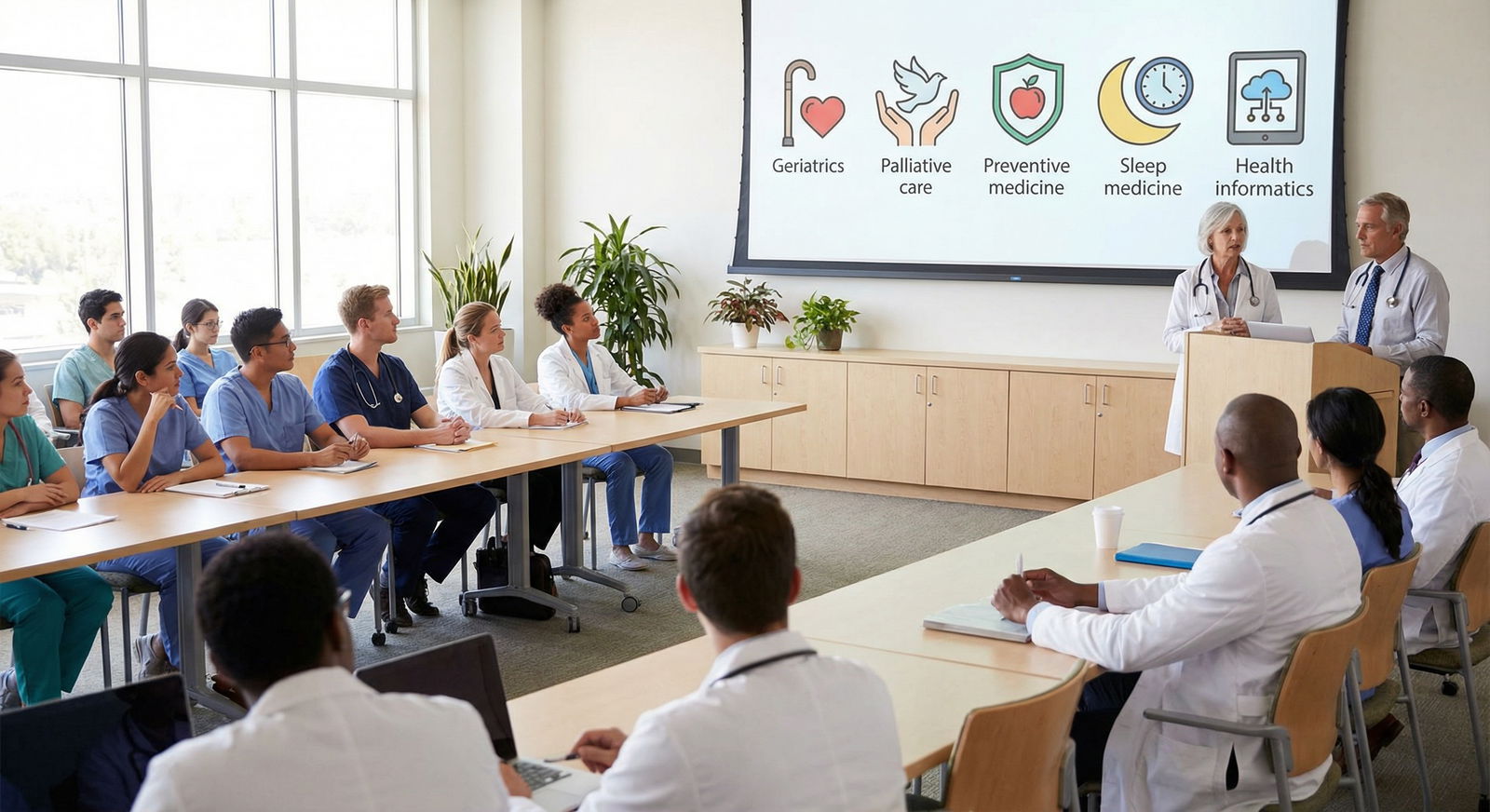
Introduction: Looking Beyond the “Big Name” Medical Specialties
Choosing a medical specialty can feel like the defining decision of your training. During medical school, you’re constantly exposed to conversations about the most competitive or prestigious paths—orthopedics, dermatology, plastic surgery, interventional cardiology. These are important and rewarding fields, but they represent only a fraction of what medicine has to offer.
Hidden in plain sight are medical specialties that:
- Deliver high levels of career satisfaction
- Offer strong work-life balance
- Provide meaningful, longitudinal relationships with patients
- Are in growing demand and need passionate, skilled physicians
This guide highlights several of these “hidden gem” specialties—specifically Geriatrics, Palliative Care, Preventive Medicine, Sleep Medicine, and Health Informatics—and helps you understand why they’re underrated, what the day-to-day really looks like, and how to explore them during medical school.
Whether you’re early in pre-clinicals or finalizing your residency rank list, expanding your view beyond the most publicized fields can dramatically improve your chances of finding a specialty that truly fits your values, strengths, and vision for your life.
Why Exploring Underrated Specialties Matters in Medical School
Many medical students unconsciously narrow their specialty options early on, driven by reputation, peer pressure, or limited exposure. Yet your satisfaction as a physician is more closely tied to fit than to prestige or salary alone.
Key Advantages of Considering “Hidden Gem” Specialties
1. High Job Satisfaction and Meaningful Relationships
Underrated specialties often involve:
- Longitudinal care rather than episodic encounters
- Deep conversations about goals, preferences, and quality of life
- Team-based care with nurses, social workers, pharmacists, and therapists
For example, a geriatrician following a patient over many years may witness clinically meaningful improvements in function, safety, and independence—rewards that are difficult to quantify but deeply fulfilling.
2. Better Work-Life Balance and Schedule Predictability
While every specialty can be demanding, many of these fields:
- Have more outpatient-focused practice
- Involve fewer overnight emergencies
- Offer flexible or part-time options
This can be appealing if you value time for family, research, advocacy, or non-clinical interests.
3. Strong and Growing Workforce Demand
Demographic and system-level trends are increasing the need for many less popular specialties:
- Aging populations driving demand for Geriatrics and Palliative Care
- Public health crises (obesity, chronic disease, pandemics) amplifying the role of Preventive Medicine
- Technology integration and data-driven care expanding jobs in Health Informatics
- Rising awareness of sleep’s impact on health fueling growth in Sleep Medicine
This often translates into:
- More job openings in desirable locations
- Negotiating power for schedule, salary, and academic time
- Opportunities to shape how these fields grow and innovate
4. Diverse, Non-Monotonous Practice Patterns
Many of these specialties allow you to:
- Combine inpatient and outpatient work
- Balance direct patient care with teaching, research, policy, or administration
- Work in academic centers, community hospitals, VA systems, public health departments, or industry
This variety can reduce burnout and keep your career intellectually stimulating over decades.

Geriatrics: Medicine for a Rapidly Aging Population
What Is Geriatrics?
Geriatrics is the branch of medicine focused on the care of older adults, typically those over 65, though the emphasis is on physiologic age and functional status, not just a number. Geriatricians manage:
- Multiple chronic conditions
- Polypharmacy and medication safety
- Functional decline, falls, and frailty
- Cognitive impairment and dementia
- Social determinants like isolation, caregiver burden, and access to care
Why Geriatrics Is an Underrated Powerhouse
Holistic, Person-Centered Approach
Geriatrics goes beyond organ systems to ask:
- What matters most to this patient right now?
- How can we maximize function and independence?
- Which tests and treatments are truly beneficial vs. burdensome?
This values-based approach is increasingly recognized as essential across all Medical Specialties.
High Demand and Workforce Shortage
With global populations aging, demand for geriatricians dramatically outstrips supply. This creates:
- Excellent job security
- Opportunities to build or lead programs (falls clinics, memory clinics, home-based care, SNF coverage)
- Academic roles in curriculum development and resident education
Deep, Long-Term Patient and Family Relationships
You often follow patients over years, working closely with family and caregivers. Many geriatricians cite the privilege of guiding families through complex decisions as a core source of meaning.
Real-World Geriatrics: What a Day Might Look Like
- Morning: Outpatient clinic—reviewing medications to deprescribe high-risk drugs, screening for fall risk, adjusting diabetes goals to prioritize safety over tight control.
- Midday: Interdisciplinary team meeting with PT, OT, social work, and pharmacy to coordinate care for a frail older adult recently discharged from the hospital.
- Afternoon: Rounding in a skilled nursing facility or on a geriatric consult service, evaluating delirium, cognitive changes, and transitions of care.
How to Explore Geriatrics in Medical School
- Ask for a geriatrics elective or consult service rotation
- Join a geriatrics interest group or American Geriatrics Society (AGS) student chapter
- Seek mentors in Internal Medicine or Family Medicine with geriatric focus
- Participate in quality improvement projects related to falls, polypharmacy, or delirium screening
Palliative Care: Serious Illness, Communication, and Quality of Life
What Is Palliative Care?
Palliative Care is specialized medical care for people living with serious illness, at any stage of disease. It focuses on:
- Symptom management (pain, dyspnea, nausea, anxiety, depression)
- Clarifying patient goals, values, and preferences
- Supporting families and caregivers
- Coordinating care across settings
It is not limited to end-of-life care, though hospice is one subset of palliative practice.
Why Palliative Care Deserves Your Attention
Exceptional Emphasis on Communication and Ethics
Palliative care physicians become experts in:
- Delivering serious news
- Leading family meetings
- Navigating conflict between families and medical teams
- Aligning treatment plans with patients’ values
These skills are transferrable to nearly every specialty and are critically needed in modern healthcare.
Interdisciplinary and Collaborative Culture
You work alongside:
- Nurses, social workers, and chaplains
- Psychologists and psychiatrists
- Oncologists, intensivists, surgeons, and hospitalists
For students who enjoy team-based care and complex problem-solving that combines medicine, ethics, and psychology, palliative care is a natural fit.
Direct, Measurable Impact on Suffering
Examples of real-world impact:
- Optimizing pain control in a patient with metastatic cancer, allowing them to attend a family wedding
- Helping a patient with advanced heart failure articulate their priorities, avoiding repeated, non-beneficial ICU admissions
- Supporting a family through anticipatory grief, improving their bereavement outcomes
A Snapshot of Palliative Care Practice
- Inpatient consults: ICU, oncology, heart failure, and multi-organ failure cases
- Outpatient clinics: Follow-up for patients with chronic serious illness (e.g., advanced COPD, ALS, metastatic cancer)
- Hospice collaboration: Home hospice, inpatient hospice units, and long-term care facilities
How to Explore Palliative Care in Training
- Request a palliative care elective (often offered in 3rd or 4th year)
- Attend family meetings or goals-of-care discussions when on inpatient rotations
- Join palliative care interest groups or national societies (e.g., AAHPM)
- Take electives in ethics, communication skills, or spirituality in healthcare
Preventive Medicine: Population Health, Policy, and Systems-Level Impact
What Is Preventive Medicine?
Preventive Medicine sits at the intersection of clinical medicine, public health, and policy. It focuses on:
- Disease prevention (primary, secondary, tertiary)
- Health promotion and lifestyle medicine
- Population health management
- Environmental and occupational health
- Epidemiology and biostatistics
Physicians in Preventive Medicine may work in:
- Public health departments
- Federal agencies (e.g., CDC, NIH)
- Hospital systems and accountable care organizations
- Academia, NGOs, or global health organizations
Why Consider a Career in Preventive Medicine?
Broad Impact Beyond the Individual Patient
Rather than treating one patient at a time, you might:
- Design vaccination campaigns for an entire region
- Develop policies to reduce smoking or opioid misuse
- Analyze data to identify high-risk populations and allocate resources
Alignment With Emerging Healthcare Models
As value-based care and population health management grow, expertise in:
- Data-driven decision-making
- Quality improvement
- Community-based interventions
becomes increasingly valuable.
Flexible and Diverse Career Paths
You can blend:
- Part-time clinical practice in Internal Medicine, Family Medicine, or Pediatrics
- Part-time roles in epidemiology, administration, research, or informatics
This makes Preventive Medicine a powerful option if you want both clinical care and systems-level influence.
Real-World Preventive Medicine Examples
- Leading a program to reduce hospital readmissions by improving post-discharge follow-up and community support
- Designing workplace safety protocols to minimize occupational injuries
- Running a chronic disease management initiative to reduce diabetes complications in underserved populations
How to Explore Preventive Medicine as a Student
- Take electives in public health, epidemiology, or global health
- Work on quality improvement or population health projects within your hospital or clinic
- Consider an MD/MPH pathway or a research year in population health
- Attend grand rounds or lectures from preventive medicine or public health faculty
Sleep Medicine: The Crossroads of Neurology, Pulmonology, and Psychiatry
What Is Sleep Medicine?
Sleep Medicine focuses on the diagnosis and management of sleep disorders, including:
- Obstructive sleep apnea (OSA)
- Insomnia
- Restless legs syndrome (RLS)
- Narcolepsy and other hypersomnias
- Parasomnias and circadian rhythm disorders
Sleep Medicine is typically a fellowship pursued after:
- Internal Medicine
- Neurology
- Psychiatry
- Pediatrics
- Otolaryngology (in some cases)
Why Sleep Medicine Is a Growing, Underrated Field
Massive Unmet Need and Rising Awareness
Poor sleep is linked to:
- Cardiovascular disease
- Diabetes and obesity
- Mood disorders and cognitive decline
- Motor vehicle accidents and workplace injuries
As both clinicians and the public become more aware of these connections, demand for Sleep Medicine specialists continues to grow.
Interdisciplinary and Technologically Oriented
Sleep physicians:
- Interpret sleep studies (polysomnography)
- Work with CPAP/BiPAP and other device-based therapies
- Collaborate with ENT surgeons, dentists, psychologists, and primary care physicians
For students who enjoy physiology, diagnostics, and technology-enhanced care, this field is especially appealing.
A Typical Sleep Medicine Practice
- Clinic: Evaluating patients with snoring, daytime sleepiness, insomnia, or unusual movements during sleep; creating individualized treatment plans that often combine behavioral therapy, lifestyle changes, and devices or medications.
- Sleep lab supervision: Overseeing polysomnography, titrating CPAP, diagnosing complex disorders.
- Interdisciplinary care: Coordinating with cardiology, psychiatry, neurology, or bariatric surgery for shared patients.
How to Explore Sleep Medicine in Medical School
- Ask to shadow in a sleep clinic or overnight sleep lab
- Choose an elective with a pulmonologist or neurologist who practices Sleep Medicine
- Read up on the fundamentals of sleep physiology and common disorders
- Consider research on sleep and cardiovascular disease, mental health, or academic performance
Health Informatics: Data, Technology, and the Future of Medicine
What Is Health Informatics?
Health Informatics is the specialty at the intersection of clinical care, data science, and information technology. It focuses on:
- Designing and optimizing electronic health record (EHR) systems
- Integrating clinical decision support tools
- Using data analytics to improve quality, safety, and efficiency
- Managing health information exchange and interoperability
Physicians in Health Informatics may work as:
- Chief Medical Information Officers (CMIOs)
- Clinical informaticists within health systems
- Consultants for EHR vendors or health-tech startups
- Researchers in digital health and AI applications
Why Health Informatics Is a Strategic Career Choice
Central to Modern Healthcare Delivery
Every specialty now interacts with EHRs and digital tools. Experts in Health Informatics:
- Reduce clinician burnout by improving EHR usability
- Ensure patient safety through better order sets, alerts, and documentation workflows
- Lead transitions to new systems or telehealth platforms
Diverse Career Options and Flexibility
You can blend:
- Clinical roles in your base specialty (e.g., Internal Medicine, Pediatrics, Emergency Medicine)
- Non-clinical informatics positions
- Academic research in digital health, big data, or AI applications
Impact at the System Level
Example contributions:
- Using data to identify gaps in care (e.g., missed cancer screenings)
- Developing dashboards to monitor outcomes and disparities
- Implementing predictive models for readmissions or sepsis alerts
Pathways Into Health Informatics
- Pursue a clinical specialty you enjoy, then complete a Clinical Informatics fellowship or master’s degree (e.g., MS in Biomedical Informatics)
- Get involved early in quality improvement and EHR optimization projects as a student or resident
- Learn the basics of data analytics, SQL, or even beginner-level coding if interested

Practical Tips: How to Explore Underrated Specialties During Medical School
1. Be Intentional With Electives and Selectives
- Use 3rd- or 4th-year electives to explore at least one “hidden gem” specialty
- If no formal rotation exists, ask about shadowing or designing an individual study elective
- Pair a rotation in a popular field (e.g., cardiology) with one in Palliative Care or Preventive Medicine to compare experiences
2. Seek Mentors Early
- Attend departmental conferences, grand rounds, or interest group meetings
- Email faculty in these fields expressing genuine curiosity and ask for a brief meeting
- Ask about their daily work, career trajectory, and what they wish they’d known as students
3. Participate in Research or Quality Improvement
Projects related to:
- Falls prevention (Geriatrics)
- Symptom management or communication (Palliative Care)
- Vaccination rates or chronic disease outcomes (Preventive Medicine)
- Sleep and mental health (Sleep Medicine)
- EHR optimization or data analytics (Health Informatics)
These experiences not only clarify your interest but also strengthen your residency and fellowship applications.
4. Reflect on Your Strengths and Values
Ask yourself:
- Do I value continuity of care and long-term relationships? (Geriatrics, Palliative Care)
- Am I drawn to population-level problems and policy? (Preventive Medicine)
- Do I enjoy physiology, diagnostics, and technology? (Sleep Medicine, Health Informatics)
- How important are schedule predictability and lifestyle to me?
Use structured reflection—journaling, career counseling, or discussions with mentors—to process your experiences.
FAQs: Choosing and Understanding Underrated Medical Specialties
Q1: Are these specialties less competitive because they are less desirable?
Not necessarily. Many are less competitive because:
- They are newer (e.g., Palliative Care, Health Informatics)
- They receive less exposure in the core medical school curriculum
- Few students truly understand what the day-to-day work looks like
In practice, job satisfaction can be very high, and these fields are critical to modern healthcare.
Q2: How do salaries in these “hidden gem” specialties compare to more popular fields?
Income varies by location, setting, and workload, but many of these specialties offer:
- Competitive salaries, often comparable to general Internal Medicine or Family Medicine
- Strong job security and benefits
- Flexibility to mix clinical and non-clinical roles (e.g., administration, informatics, public health), which can influence total compensation
While they may not typically match the highest-earning procedural fields, the trade-off often includes better lifestyle and lower burnout.
Q3: Can I switch into one of these fields later if I start in a different specialty?
Yes. Many physicians:
- Start in Internal Medicine, Family Medicine, Pediatrics, Neurology, or Psychiatry
- Then pursue fellowships in Geriatrics, Palliative Care, Sleep Medicine, or Preventive Medicine
- Or add training or certification in Health Informatics mid-career
Planning ahead helps, but these fields are relatively flexible for mid-career transitions.
Q4: What if my school doesn’t offer formal rotations in these areas?
You still have options:
- Arrange away rotations or visiting student electives at other institutions
- Shadow local clinicians in these specialties
- Engage in research, QI projects, or longitudinal electives with interested faculty
- Attend national conferences or virtual webinars hosted by specialty societies
Proactivity is often rewarded—faculty in underrated specialties are frequently excited to mentor interested students.
Q5: How do I know if one of these specialties is the right fit for me?
Look for alignment between:
- What energizes you (acute crisis vs. relationship-based care vs. system-level impact)
- Your preferred pace and environment (ICU vs. clinic vs. office/administrative settings)
- Your long-term life goals (family plans, research, teaching, leadership, policy)
Combine:
- Direct clinical exposure
- Conversations with mentors
- Honest self-reflection
to gain clarity. It’s normal for your preferences to evolve during training.
Exploring underrated specialties like Geriatrics, Palliative Care, Preventive Medicine, Sleep Medicine, and Health Informatics can open doors to fulfilling careers that align more closely with your values, strengths, and lifestyle goals. As you move through medical school life and exams, keep your mind open—you may discover that your ideal path lies not in the loudest, most talked-about fields, but in these quietly essential corners of medicine.


