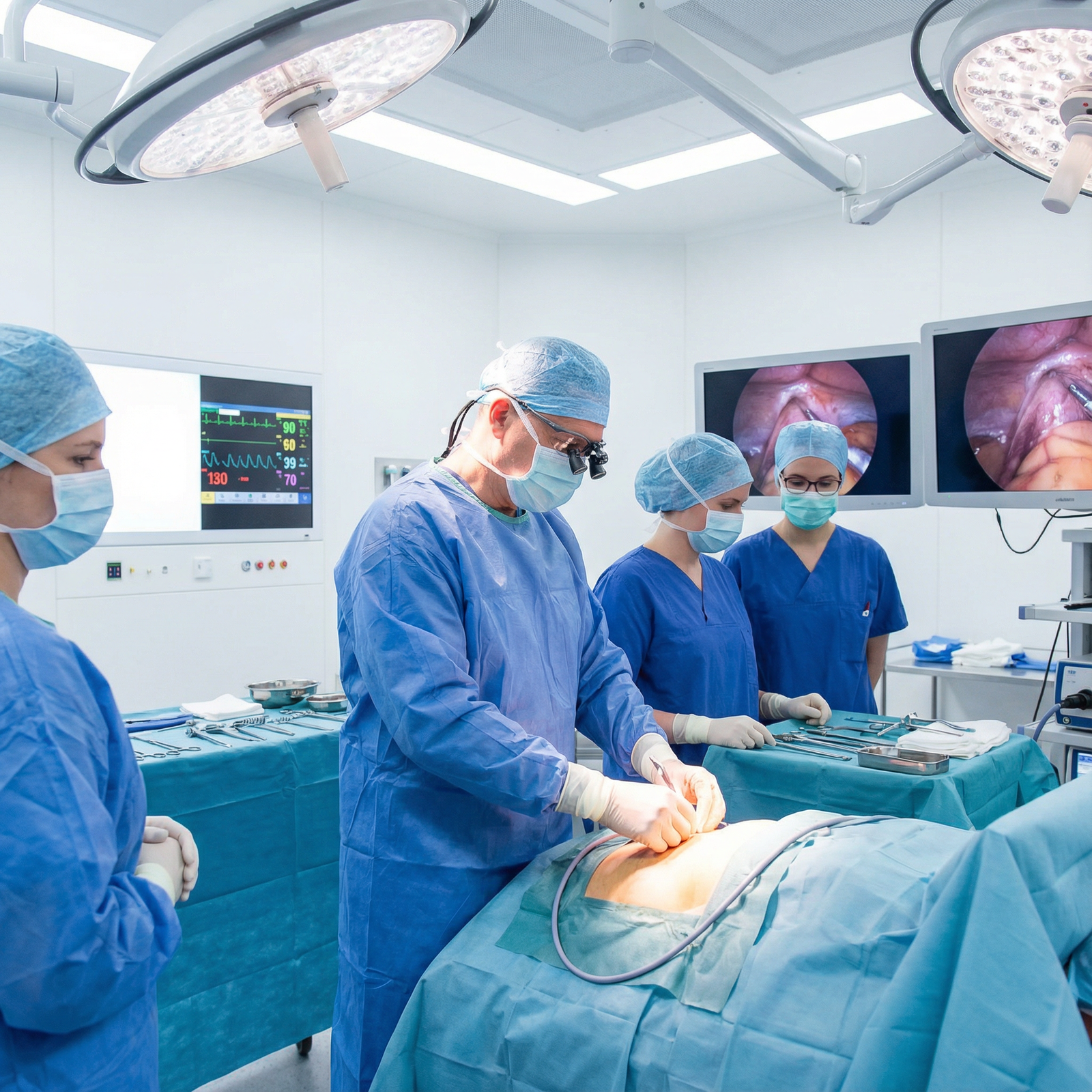
Seventy‑two percent of third‑year medical students say they “know” whether they want a hospital‑based or clinic‑heavy career—yet over half of them later pick a specialty that does not match that initial preference.
That disconnect happens because most students are comparing vibes, not realities. “Clinic seems chill.” “Hospital feels intense.” Vague impressions from a couple of rotations. Not an actual map of what days, weeks, and nights look like across specialties.
Let me fix that.
You are in the phase of training where Step 2, shelves, and clinical grades are screaming for attention. But in the background, a bigger decision is forming: what kind of life do you actually want to live for the next 30+ years?
To answer that, you need more than “inpatient vs outpatient.” You need to see:
- What time people really wake up
- How often they touch the computer vs the patient
- How much of their work bleeds into nights and weekends
- How predictable their days are—and what blows that up
We will walk through specific, concrete day‑in‑the‑life patterns for hospital‑based and clinic‑heavy specialties, with a few hybrids in between. I will be blunt where culture and lifestyle are very different from what the brochure says.
Big Picture: What “Hospital‑Based” vs “Clinic‑Heavy” Actually Means
Forget the official definitions. From the perspective of your actual daily life, here is the real distinction:
Hospital‑based specialties
Your anchor environment is the acute care hospital. Your workday is carved around:- Rounds
- Procedures or OR time
- Admissions/consults
- Cross‑cover or call Examples: Internal Medicine (ward‑heavy jobs), General Surgery, ICU, Emergency Medicine, Anesthesia, Neurology inpatient jobs, OB hospitalist, many subspecialists.
Clinic‑heavy specialties
Your anchor environment is the ambulatory clinic. Your day is templated:- Scheduled patients every 15–40 minutes
- Limited same‑day add‑ons
- More predictable start/stop times Examples: Outpatient primary care (IM, FM, Peds), Dermatology, Outpatient Psych, Sports Med, Allergy/Immunology, Endocrinology in private practice, Rheumatology.
There are also hybrids: hospital + clinic with different weights:
- Cardiology (clinic, inpatient consults, cath lab)
- GI (clinic + endoscopy + inpatient)
- Heme/Onc (clinic‑dominant, but frequent inpatient)
- OB/GYN (clinic + L&D + OR)
To get out of abstraction, look at the time structure.
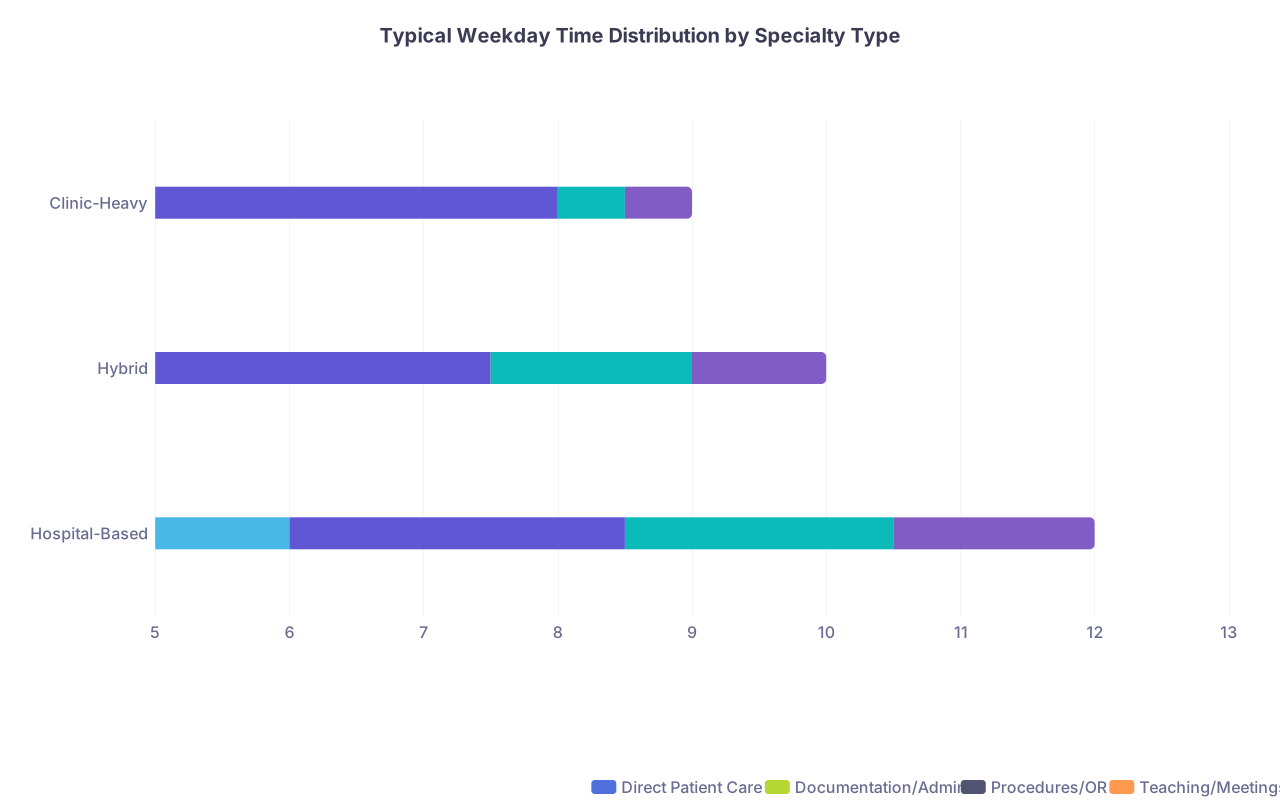
| Category | Direct Patient Care | Documentation/Admin | Procedures/OR | Teaching/Meetings |
|---|---|---|---|---|
| Hospital-Based | 6 | 2.5 | 2 | 1.5 |
| Hybrid | 5 | 2.5 | 1.5 | 1 |
| Clinic-Heavy | 5 | 3 | 0.5 | 0.5 |
This is an oversimplification, but it captures the flavor. Hospital‑based work shifts more toward procedures and acute care blocks; clinic‑heavy work shifts toward scheduled visits and documentation.
Now let’s walk through actual days.
A True Hospital‑Based Day: General Surgery vs ICU vs EM
Hospital‑based is not one thing. But there is a family resemblance: early starts, block‑like days, real or pseudo‑shift work, call.
1. General Surgery Resident – Ward/OR Day
Think: 5:00 alarm. Dark outside. Coffee that tastes like regret.
04:45–05:30 – Wake, commute, pre‑chart
You scroll through overnight notes and labs on your phone on the way in. You already know which patient is going to blow up your day: the one with rising lactate and soft blood pressure.
05:30–06:30 – Pre‑rounds
You and a couple of interns race:
- “I will see 4, you see 5, we meet back at the board.”
- Vital checks, drain outputs, when was the last BM, dressing peeks.
- You tap out 8–10 notes in the hallway, half templated, half free‑typed, while someone asks you where the 3‑0 Vicryl lives.
This is classic hospital‑based: front‑loaded, time‑compressed data gathering.
06:30–07:15 – Team rounds
Attending joins. Progress notes become final. Consults are assigned. OR plan is confirmed. The attending wants to see the CT for the SBO case “right now” on a WOW that barely connects to Wi‑Fi.
07:30–12:00 – OR block
If you are lucky, you are scrubbed and doing:
- Skin to skin on an appendectomy
- Closure on a colectomy
- First assist on a laparoscopic cholecystectomy
If you are not lucky, you are:
- Chasing consents
- Calling CT about STAT scans
- Answering “can we advance diet?” pages
Lunch is whatever you can swallow in 5 minutes between cases.
12:00–16:30 – OR + floor chaos
Middle of the day is never clean:
- Add‑on ex lap for perforation
- A post‑op patient desaturating on the floor
- Bed control asking you to “discharge three patients by 2 PM if possible”
You round again mid‑afternoon on anyone unstable. You re‑write a dozen orders. You reconcile meds on discharges.
16:30–18:30 – Sign‑out prep and handoff
You try to:
- See all your patients again
- Clean up orders
- Update sign‑out lists with “if X, then Y” instructions
Then you hand over to the night float or on‑call resident. Sometimes you leave. Sometimes you are the night float.
18:30–? – Call (q4, q5, night float…)
Different programs do it differently, but on real call you might:
- Admit 5–10 new patients
- Take consults from the ED nonstop
- Go to emergency cases: bowel ischemia, trauma lap, necrotizing fasciitis
Sleep is optional. You wake up with OR hair and 40 unread pages.
This is peak hospital‑based life: unpredictable, physically tiring, but with high‑adrenaline peaks.
2. MICU Resident – Intensivist Track Feel
Now a pure ICU month. You live where the alarms never stop.
06:00–07:00 – Pre‑rounding on critically ill
You scan vent settings, vasopressor doses, overnight blood gases. You already know who is circling the drain.
07:00–08:30 – Work rounds with full multidisciplinary team
This is structured:
- Fellow, attending, RT, pharmacist, nurse
- Major decisions: intubate or not, pressors up or down, dialysis today, start or stop antibiotics
Notes are detailed, orders complex. It is cognitively dense in a way clinic almost never is.
08:30–12:00 – Procedures and acute issues
Lines, intubations, chest tubes, bronchoscopies. While you are doing a central line, another patient’s blood pressure tanks. You triage in real time.
12:00–13:00 – Brief lunch, calls with families
Family meetings can be harder than any procedure you do. Prognosis talks, goals of care, code status.
13:00–17:00 – New admissions, follow‑ups
Transfers from ED, post‑op transfers, codes on the floor. The tempo rises most afternoons.
17:00–19:00 – Evening rounds and handoff
You stabilize what you can, hand over the rest.
Call nights in the ICU mean you are the last line. Codes, arrhythmias, multi‑organ failure. This is hospital‑based life when it is “pure acute.”
3. Emergency Medicine Physician – Real Shift Work
Different from the surgical or ICU model, but still deeply hospital‑rooted.
Shift example: 15:00–23:00
- 14:30: Arrive, plug in, log into everything.
- 15:00–18:00: Wave 1: minor trauma, chest pain, abdominal pain, psych holds.
- 18:00–21:00: Peak chaos: kids get sick after school, people finish work and decide to come in.
- 21:00–23:00: Boarding hell: admitted patients filling ED beds, you are seeing new patients in hallway stretchers.
You leave near 23:30 if your last patient is stable and handoff is clean. The upside: you are truly done when you leave. The downside: your schedule is a checkerboard of day, evening, and night shifts.
Hospital‑based, but in discrete shifts, not the endlessly stretching ward day.
A Clinic‑Heavy Day: Outpatient IM, Derm, Psych
Now flip the script. Same M.D., different universe.
1. Outpatient Internal Medicine – 8 to 5, Template Life
This is often what students picture when they say “clinic seems nice.” Sometimes accurate, sometimes fantasy.
07:30–08:00 – Arrive, pre‑chart
You scan the day:
- 8:00: 3‑month diabetes follow‑up
- 8:20: New patient, “fatigue”
- 8:40: Hospital follow‑up after CHF admission
- …and so on, every 20 minutes until 11:40
You check labs, refill requests, MyChart messages. Inbox is never empty.
08:00–12:00 – Morning clinic session
The day runs on a template:
- Mix of routine chronic disease visits, acute complaints, and annual physicals
- You live on the EMR: clicking boxes, refilling meds, generating referrals
The pressure is different from the hospital. Less acute danger, more volume and time pressure. If every visit runs 5 minutes over, you are 45 minutes behind by 11 AM.
12:00–13:00 – Lunch + documentation + calls
You eat at your desk while:
- Calling a patient with critical lab results
- Answering a prior auth call
- Finishing notes from the morning session
If you are efficient and your clinic is well‑run, you might actually get 20 minutes off.
13:00–17:00 – Afternoon clinic session
More of the same, plus:
- Same‑day urgent slots (UTI, URI, rash)
- A couple of “I scheduled a 15‑minute visit but I actually have 6 problems” encounters
Hospitals do not run on 15‑minute blocks. Clinics do. That shapes your whole cognitive rhythm.
17:00–18:30 – Inbox, callbacks, clean‑up notes
Most outpatient physicians do not leave at 5. Because after the last patient:
- Lab result review
- Imaging review
- Messaging patients and specialists
- Pre‑charting for the next morning
This is the hidden part of clinic: electronic after‑hours work. Less dramatic than a code blue, but it piles up.
2. Dermatology – High Clinic Density, Procedural Flavor
Derm is clinic‑heavy but with a strong procedural component and better boundaries in many practices.
08:00–08:30 – Pre‑clinic review
You scan:
- Follow‑ups: acne, psoriasis, skin checks
- Procedures: biopsies, excisions, cosmetic consults (in certain practices)
08:30–12:00 – Morning clinic
Visit cadence can be brisk: 10–20 minutes per slot, sometimes double‑booked for simple follow‑ups. Biopsies and minor procedures baked into visits.
The big distinction vs primary care:
- Narrow scope, deeper repetition
- Less med reconciliation chaos
- Fewer hospital follow‑ups, more “I have a thing on my skin”
12:00–13:00 – Lunch, path review
Many derms spend part of this hour looking at dermpath reports, coordinating with pathologists.
13:00–16:30 – Procedures + clinic
Excisions, more biopsies, laser sessions if they do cosmetics, plus routine follow‑ups.
Call? Minimal. EMR after hours? Present, but less brutal than high‑volume primary care.
Clinic‑heavy, but with a strong sense of control over schedule in many jobs.
3. Outpatient Psychiatry – Fewer Patients, Intense Conversations
Psych in a community clinic or private practice is often template‑driven but with longer visits.
08:30–09:00 – Prep
You scan:
- New patient evaluations (60 minutes)
- Medication management follow‑ups (20–30 minutes)
09:00–12:00 – Morning visits
Each visit is conversational, but the cognitive work is heavy:
- Risk assessments
- Medication adjustments
- Therapy overlaps and coordination
Volume is lower (10–14 patients a day is common). But the emotional load can be high.
13:00–16:30 – Afternoon visits
Similar cadence. Occasional emergency add‑ons for acute suicidality or severe decompensation.
Inbox work is present but manageable compared with primary care. Nights and weekends can be actually off.
Hybrids: Where Hospital and Clinic Collide
Most subspecialists live in the space between pure hospital and pure clinic.
Example 1: Cardiology – The Three‑Zone Life
A typical academic or large‑group cardiologist might have:
- 2 days clinic
- 1–1.5 days cath lab / imaging
- 1–2 days inpatient consults or service (in blocks)
A clinic day looks like other outpatient specialties: scheduled visits, stress tests, echo reviews, medication adjustments.
An inpatient consult day is all hospital: rounds on stepdown and ICU patients, echo reviews, cath decisions, constant pages, sometimes procedures.
And then there is call: middle‑of‑the‑night STEMIs to the cath lab, post‑op arrhythmias, ICU support.
Are they hospital‑based or clinic‑heavy? Depends which part of the week you catch them in.
Example 2: GI – Clinic + Procedures + Inpatient Call
GI has three distinct “modes”:
- Clinic mornings: chronic liver disease, IBD, GERD, IBS, anemia
- Procedure blocks: colonoscopies, EGDs, ERCP in some centers
- Inpatient consults: GI bleeds, acute liver failure, pancreatitis
This is worth emphasizing: many students say “I like clinic and procedures” and then discover subspecialties like GI, pulm, rheum, endocrinology, sports med that offer blended days. Not pure hospital, not pure clinic.
Work Hours, Call, and Predictability: Side‑by‑Side
You want numbers. Fair.
| Aspect | Hospital-Based (e.g., Gen Surg, ICU, EM) | Clinic-Heavy (e.g., Outpt IM, Derm, Psych) |
|---|---|---|
| Typical Start Time | 05:30–07:30 | 08:00–09:00 |
| Typical End Time | 17:00–19:00 (not counting call) | 16:30–18:30 |
| Nights | Common (call, nights, shifts) | Rare (mostly phone call only) |
| Weekends | Regular in many fields | Infrequent or limited |
| Hour Variability | High, depends on service | Moderate, tied to clinic template |
| Patient Volume/Day | Lower but more complex per encounter | Higher volume, shorter visits |
| B --> | Yes | C[Prioritize ICU, EM, Surgery electives] |
| B --> | No | D[Prioritize clinic-heavy electives] |
| E --> | Yes | F[Consider EM, ICU, Surgery] |
| E --> | No | G[Consider daytime hospitalist, procedures] |
| H --> | Yes | I[Consider IM/FM clinic, Rheum, Endo] |
| H --> | No | J[Consider Derm, Psych, lighter clinic] |
Mentally run yourself through this.
Then:
Choose at least one extra sub‑I or elective in a field that is the opposite of your current bias.
- If you are convinced you are “clinic only,” do an ICU or EM month.
- If you are gung‑ho OR, do a real outpatient month with a busy internist.
During each month, keep a simple log:
- Hours in: when you actually arrived/left
- How tired you felt at 10 AM, 3 PM, and 8 PM
- One thing that felt rewarding, one thing that felt draining
Look at the pattern over 3–4 months. Do not rely on memory; it lies.
The Real Question: What Do You Want Your Bad Days to Look Like?
Everyone likes their good days:
- The smooth clinic where patients are kind, on time, and grateful.
- The OR day with clean cases, minimal complications, and a teaching attending.
- The ED shift where everything lines up and you leave on time.
You choose a specialty by accepting its worst‑case routine, not its best.
Bad day in the hospital:
- Code blue that does not end well
- 14 new patients and 6 cross‑cover fires
- Surgical complication that keeps you up all night
Bad day in clinic:
- Triple‑booked morning, 90 minutes behind by noon
- Angry patient over a denied medication
- 60 lab results and a full inbox waiting after you finish seeing patients
Ask yourself honestly: which flavor of “bad” are you willing to live with?
Because you will. Often.
With this map of hospital‑based, clinic‑heavy, and hybrid lives in your head, you are better equipped than most students who just “liked” or “did not like” a rotation. Next comes the real work: lining this up with competitiveness, your Step scores, and where you want to train. That is the next phase of your journey—and a different strategy conversation entirely.