
42% of U.S. MD seniors did not match into their first-choice specialty in the most recent NRMP Main Residency Match.
That usually surprises students. Because on the wards you mostly hear: “If you work hard and get decent scores, you’ll be fine.” The data says otherwise.
Below I am going to walk through how competitive different specialties will likely be heading into the 2025 Match, using recent NRMP, AAMC, and program fill data as the backbone. I will quantify, compare, and rank—because hand‑waving about “competitive” vs “non‑competitive” is how people end up scrambling into a backup plan they never actually wanted.
1. The Numbers That Actually Matter
Most students fixate on one metric: overall match rate. That is not enough.
For specialty competitiveness, the data that matters most are:
- Fill rate by U.S. MD seniors
- Overall fill rate (all applicants)
- Proportion of positions filled by U.S. MDs vs DO vs IMGs
- USMLE Step 2 CK score distributions (now that Step 1 is pass/fail)
- Applicant-to-position ratios
Those are the levers programs pull. Not vibes.
Let me anchor this with a compact comparison across a few major specialties using recent NRMP patterns and reasonable projections for 2025.
| Specialty | U.S. MD Fill Rate | Overall Fill Rate | Approx. Step 2 Mean (Matched) | Applicants per Position* |
|---|---|---|---|---|
| Dermatology | 98–99% | ~100% | 255–260 | 1.6–1.8 |
| Orthopedic Surgery | 97–98% | ~100% | 252–256 | 1.7–1.9 |
| Internal Medicine | 45–50% | ~100% | 238–242 | 1.1–1.2 |
| Pediatrics | 60–65% | 95–98% | 235–240 | 1.0–1.1 |
| Family Medicine | 35–40% | 90–95% | 230–235 | 0.9–1.0 |
*Applicants per position is residency applicants to categorical positions in that specialty, not total ERAS submissions.
What the table shows:
- “Competitive” is not “high Step 2 alone.” It is consistently high U.S. MD fill, near‑total overall fill, and more applicants than slots.
- Some fields are struggling to fill (family medicine, certain pediatrics programs). That creates opportunity, but also risk if funding or spots shrink over time.
Let’s break fields down more precisely.
2. Top-Tier Competitive Specialties (You Cannot Wing These)
These are the specialties where the data shows: if you are not deliberate from MS1–MS3, you are volunteering to be a reapplicant.
Top-tier competitive (2025) includes:
- Dermatology
- Plastic surgery (integrated)
- Orthopedic surgery
- Neurosurgery
- Otolaryngology (ENT)
- Interventional radiology (integrated)
- Radiation oncology (slightly cooled but still selective)
Match Rates and Fill Patterns
For these specialties, U.S. MD senior match rates typically run in the 65–80% range, but that headline hides what is happening under the hood: self‑selection. Many weaker applicants never apply.
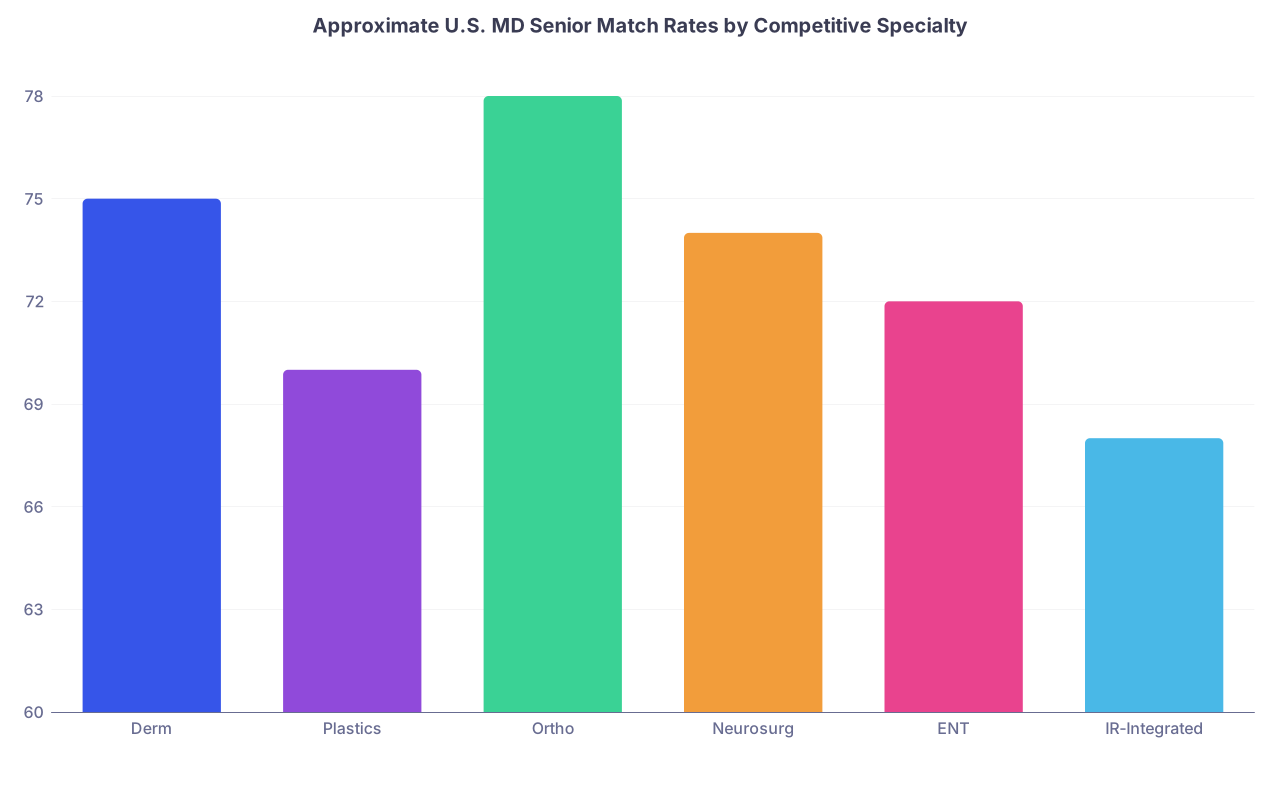
| Category | Value |
|---|---|
| Derm | 75 |
| Plastics | 70 |
| Ortho | 78 |
| Neurosurg | 74 |
| ENT | 72 |
| IR-Integrated | 68 |
Interpretation:
- Every one of these specialties fills 97–100% of positions.
- U.S. MD seniors take the overwhelming majority of those positions.
- Reapplicants, DOs, and IMGs have a very narrow window unless they are statistically exceptional or bring something rare (major research, unique niche skills).
Step 2 CK Expectations (Realistic Ranges)
The data from recent NRMP Charting Outcomes and program surveys places matched applicants in these rough Step 2 CK brackets:
- Dermatology, plastics, neurosurgery, ortho, ENT, IR-integrated: medians clustering around 252–260, with many programs quietly expecting 250+ for serious consideration.
- Radiation oncology has cooled somewhat, with medians closer to the high 240s–low 250s, but because the field shrank after the oversupply panic, it is still not “easy.”
The point is not that a 248 locks you out. It is that the distribution of matched applicants is skewed up. If you are sitting at 240–245, the data says you must compensate with research productivity, strong letters, and home/away rotations where you perform at the absolute top of the group.
Applicant-to-Position Ratios
High applicant interest + little expansion of positions = structural competitiveness.
For example, recent cycles show ratios like:
- Dermatology, ortho, plastics, neurosurg: ~1.6–1.9 applicants per categorical spot.
- ENT, IR-integrated: ~1.5–1.7 per spot.
Those numbers are conservative. They also undercount because ERAS “applicants” already excludes many students counseled away from applying.
3. Mid-Tier Competitive Specialties (Selective, But Rational)
Mid‑tier competitive specialties are where strong students can absolutely match, but you cannot be sloppy. Modest red flags start to matter.
These include:
- Emergency medicine (currently in flux)
- Anesthesiology
- OB/GYN
- General surgery (categorical)
- Diagnostic radiology
- Neurology
- PM&R (physical medicine & rehabilitation)
- Some Internal Medicine subspecialty‑linked pathways (preliminary + advanced tracks)
Match Rates and Fill
Recent trend data:
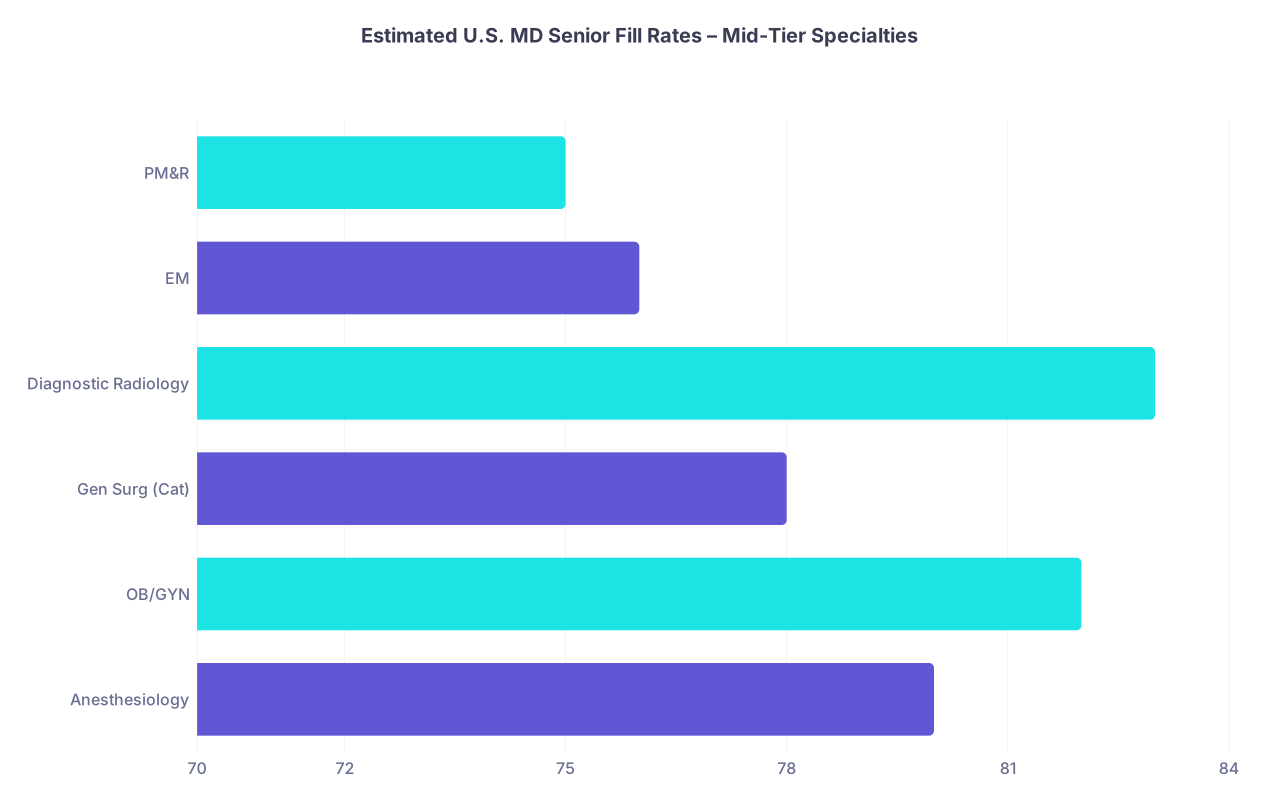
| Category | Value |
|---|---|
| Anesthesiology | 80 |
| OB/GYN | 82 |
| Gen Surg (Cat) | 78 |
| Diagnostic Radiology | 83 |
| EM | 76 |
| PM&R | 75 |
Takeaways:
- These specialties largely fill all positions overall, but a notable percentage of seats go to DOs and IMGs in some fields.
- U.S. MD seniors have a reasonably high match rate if their application is coherent: appropriate scores, some research or at least scholarly activity, meaningful letters.
Step 2 CK Ranges
Post-Step 1 pass/fail, Step 2 has become the tie‑breaker.
Typical matched ranges:
- Anesthesiology, OB/GYN, diagnostic radiology, general surgery: medians in the 245–250 range.
- Emergency medicine, PM&R, neurology: medians closer to 240–245.
If you are below ~235 in this group, the probabilistic risk starts to climb, especially in general surgery and radiology. You can still match, but your program list needs to shift down in prestige and up in volume.
EM: The Special Case
Emergency medicine is in a strange equilibrium right now.
The data over the last few years:
- Underfilled in 2022 and 2023 with hundreds of open positions.
- Programs reacted by cutting spots and consolidating.
- Interest has started to stabilize as lifestyle and burnout conversations mature and salaries adjust.
The net effect for 2025:
- Less absurd undersubscription than 2022–23, but still more room than in pre‑COVID years.
- A solid but not stellar student can match EM with a rational list and adequate SLOEs (standardized letters).
If you want a field where the competitiveness “bubble” deflated and has not fully reinflated, EM is the clearest example.
4. Historically Less Competitive Specialties (But Not “Easy”)
Call these the workforce‑shortage specialties. They are foundational to the system and chronically under‑filled in certain regions or program tiers.
Includes:
- Family medicine
- Internal medicine (categorical, non‑prestige programs)
- Pediatrics
- Psychiatry
- Pathology
- Some community hospital transitional years
- Combined medicine/pediatrics (Med‑Peds) – slightly more competitive than either IM or Peds alone, but not extreme
Fill and Match Rates
These fields are where unfilled spots cluster on Match Day.
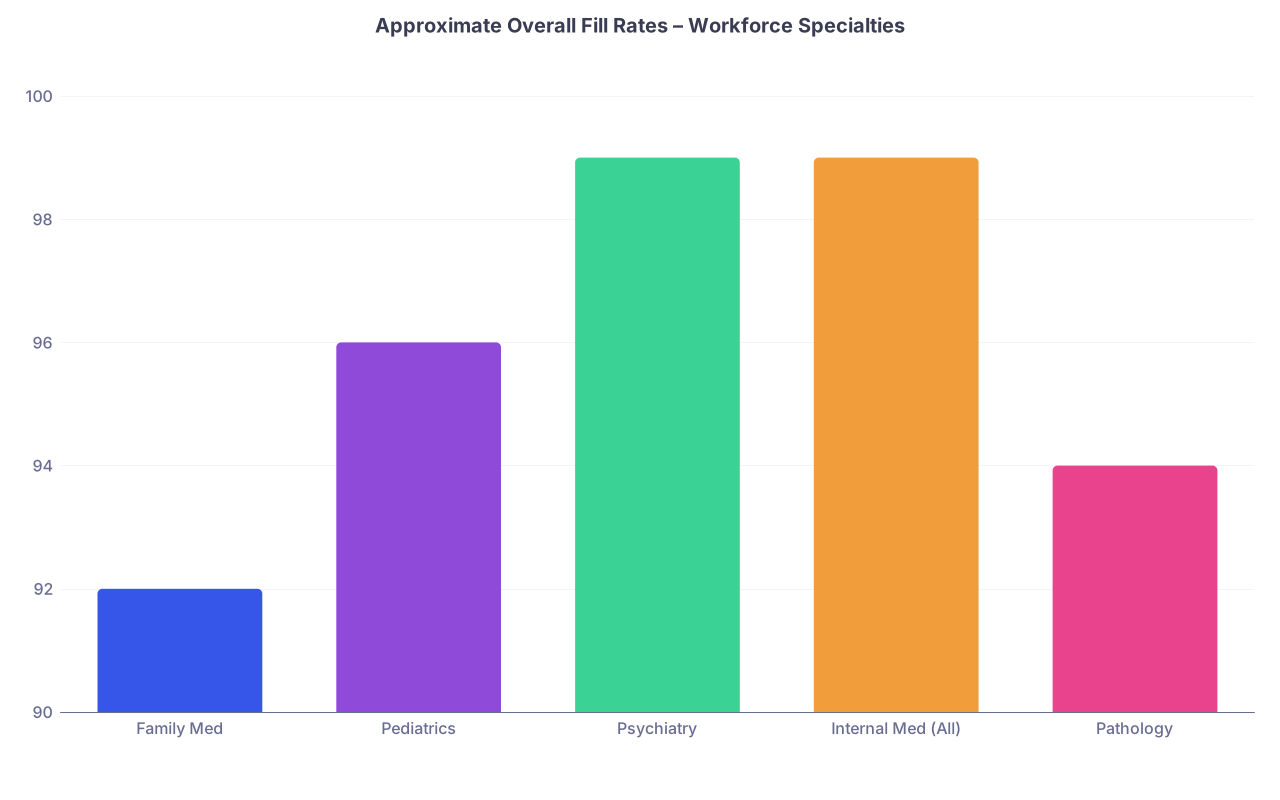
| Category | Value |
|---|---|
| Family Med | 92 |
| Pediatrics | 96 |
| Psychiatry | 99 |
| Internal Med (All) | 99 |
| Pathology | 94 |
What the data suggests:
- Internal medicine overall is effectively fully filled. The “less competitive” perception comes from the wide range of program tiers. Matching IM at a top academic center (e.g., MGH, UCSF) is extremely competitive; matching community IM in a mid‑sized city is not.
- Family medicine, pediatrics, and pathology consistently carry some unfilled slots, heavily clustered in less desirable locations or smaller programs.
- Psychiatry has moved from “moderately chill” to “quietly competitive” in urban academic centers because student interest spiked; overall it still fills almost completely, but more of those seats now go to fairly strong applicants.
Score Expectations
The distribution here is much wider. A rough guide:
- Family medicine, psychiatry, pediatrics: matched medians ~230–238, but with many successful applicants below 230, especially at community programs.
- IM broad range: from >250 at elite academic IM programs down to low‑230s at less selective ones.
- Pathology: often in the 235–242 median band, with substantial leeway for lower scores if other metrics are strong.
The main point: Step 2 CK is not the gatekeeper in these fields the way it is for derm or ortho. Geography, “fit,” and genuine interest weigh more.
5. Trends Heading Into the 2025 Match
If you look at multi‑year data, a few sharp trends stand out that matter for a 2025 applicant.
5.1 Step 1 Pass/Fail → Step 2 Inflation
Before Step 1 went pass/fail, the bottleneck filter was Step 1. Now programs have shifted the entire signaling load to Step 2 CK.
Program directors’ surveys show an increasing percentage listing Step 2 as “very important” or “critical” in interview offers and ranking.
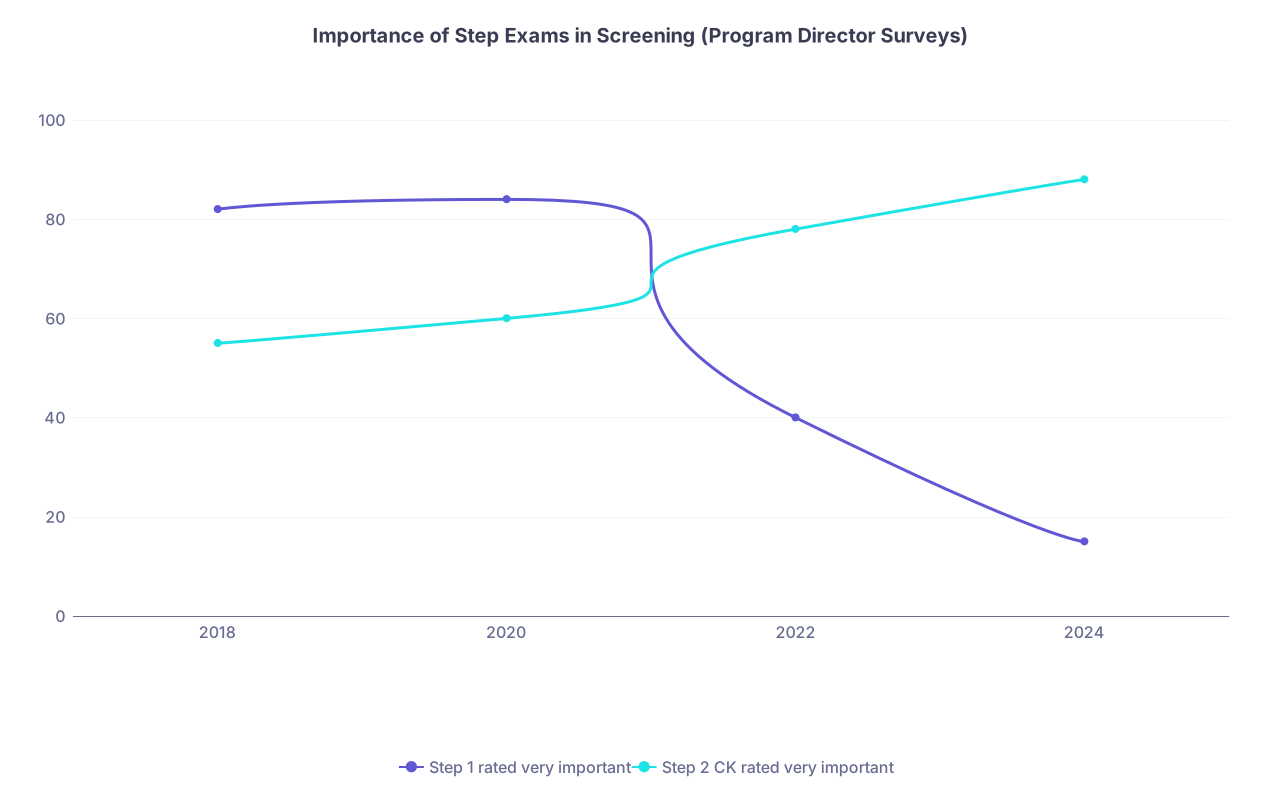
| Category | Step 1 rated very important | Step 2 CK rated very important |
|---|---|---|
| 2018 | 82 | 55 |
| 2020 | 84 | 60 |
| 2022 | 40 | 78 |
| 2024 | 15 | 88 |
The pattern is obvious:
- Step 1 used to dominate; its importance collapsed after pass/fail.
- Step 2 CK escalated into the primary quantitative signal.
Implication for you: taking Step 2 late or scoring below specialty norms now carries more risk than it did five years ago, especially in competitive fields.
5.2 Fellowship-Driven Career Planning
Another subtle but real shift: students increasingly think “target fellowship” first, then “residency” as a path. For example:
- “I want to be a cardiologist” → aim for strong internal medicine with cardiology pipeline.
- “I want interventional pain” → consider PM&R vs anesthesiology, quantifying fellowship match rates from each route.
- “I want to do GI” → push for higher‑tier IM where GI fellowship matches are concentrated.
A typical pattern if you look at fellowship match rosters in GI, cards, heme/onc:
- Majority of fellows come from a subset of internal medicine programs.
- Those IM programs are significantly more competitive than the IM average.
So even in a “less competitive” base specialty, your competitiveness target may be much higher if you are aiming for a specific subspecialty.
5.3 Location Premiums
The data shows that program location magnifies or dampens competitiveness almost as much as specialty name.
A simple way to think about it:
- “Big coastal urban academic” (Boston, NYC, SF, LA, Seattle, Chicago) adds a competitiveness premium of roughly one tier.
- “Desirable mid‑size city” (Denver, Austin, Raleigh) adds a smaller but real bump.
- Rural and Rust Belt programs often run below national competitiveness for the same specialty.
So “IM in NYC” may resemble “mid‑tier competitive” in practice, while “EM in rural Midwest” may look closer to “less competitive, but underapplied.”
6. How to Use This Data to Choose and Apply Intelligently
You are not just collecting trivia here. The entire point of comparing match rates by specialty is to optimize your risk–reward curve.
6.1 Honest Self‑Assessment Using Numbers
First step is brutally numerical. Create a small table for yourself:
| Metric | Your Data | Target Specialty Band (Example) |
|---|---|---|
| Step 2 CK | 250+ for derm/ortho | |
| Class percentile | Top 25% preferred | |
| Research products (#) | 3–5+ for top fields | |
| Honors in clerkships | Honors in core rotation related | |
| Home program in field? | Yes = advantage |
Fill that in honestly. If your numbers sit below the observed medians for your dream specialty, do not immediately abandon it—but recognize you are in the lower‑probability tail. You will need:
- More programs on your rank list
- Strategic away rotations
- Strong, targeted letters from credible faculty in that field
6.2 Dual-Apply or Not?
Statistically, dual‑applying (e.g., Ortho + categorical general surgery backup) can either save or wreck your cycle depending on how it is executed.
Data pattern I keep seeing:
- Applicants who dual‑apply but clearly prioritize the more competitive field sometimes get filtered by the backup programs (“They’ll just leave after an intern year”).
- Those who commit fully to one field with a realistic program list generally match at higher rates than similar‑profile dual‑applicants.
Quantitatively:
- If your Step 2 and application are 0.5–1 SD below the mean of matched applicants in your target competitive field, a backup field is rational.
- If you are near or above the mean, adding a backup often dilutes your narrative more than it adds safety.
6.3 Program List Size and Tiering
The data on interview yield and match probability is clear: below about 10 interviews, your risk rises sharply in nearly every specialty; above 12–14, match probability climbs rapidly.
A rough data‑driven rule for 2025:
- Highly competitive specialties: aim to secure 12–15+ interviews. That might mean applying to 50–80+ programs, depending on stats and connections.
- Mid‑tier: 10–12 interviews is usually enough, with 30–40 applications.
- Less competitive: 8–10 interviews often still yields very high match probability, but if you have red flags, you should still apply widely.
Do not guess. Track how many interviews your peers with similar metrics received in the last 1–2 cycles, and calibrate.
7. Visual: Competitiveness Spectrum at a Glance
To put all of this in one frame, here is a ranked look at approximate “competitiveness index” by specialty—combining fill rates, U.S. MD proportions, score expectations, and applicant pressure.
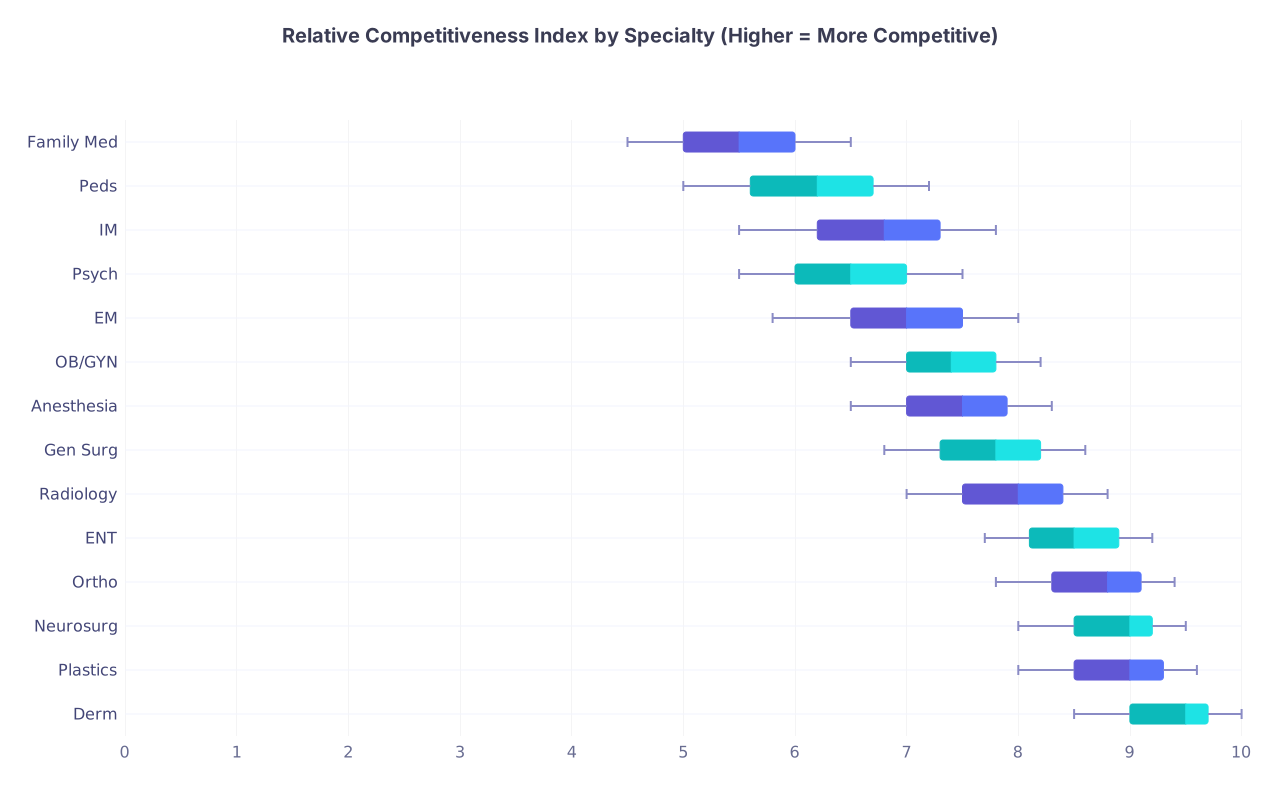
| Category | Min | Q1 | Median | Q3 | Max |
|---|---|---|---|---|---|
| Derm | 8.5 | 9 | 9.5 | 9.7 | 10 |
| Plastics | 8 | 8.5 | 9 | 9.3 | 9.6 |
| Neurosurg | 8 | 8.5 | 9 | 9.2 | 9.5 |
| Ortho | 7.8 | 8.3 | 8.8 | 9.1 | 9.4 |
| ENT | 7.7 | 8.1 | 8.5 | 8.9 | 9.2 |
| Radiology | 7 | 7.5 | 8 | 8.4 | 8.8 |
| Gen Surg | 6.8 | 7.3 | 7.8 | 8.2 | 8.6 |
| Anesthesia | 6.5 | 7 | 7.5 | 7.9 | 8.3 |
| OB/GYN | 6.5 | 7 | 7.4 | 7.8 | 8.2 |
| EM | 5.8 | 6.5 | 7 | 7.5 | 8 |
| Psych | 5.5 | 6 | 6.5 | 7 | 7.5 |
| IM | 5.5 | 6.2 | 6.8 | 7.3 | 7.8 |
| Peds | 5 | 5.6 | 6.2 | 6.7 | 7.2 |
| Family Med | 4.5 | 5 | 5.5 | 6 | 6.5 |
Interpret this like a risk index:
- Dermatology and plastics sit at the top; family medicine and pediatrics at the bottom.
- The box width shows variability within each specialty by program tier and location. Radiology, for example, overlaps with general surgery and anesthesia at higher tiers.
This is what you are actually competing against: distributions, not stereotypes.
FAQ (3 Questions)
1. If my Step 2 CK is below 230, do I have any realistic shot at a competitive specialty?
Yes, but the probability is low and very context‑dependent. The data shows that matched applicants in derm/ortho/neurosurg almost all cluster above 245, with medians in the 250s. A sub‑230 score in those fields usually only succeeds if offset by extreme strengths: unusually strong research portfolio (multiple first‑author papers in the specialty), national‑level connections, exceptional away rotation performance with champions on the selection committee. Statistically, you are much more likely to match in mid‑tier or workforce‑shortage specialties with that score band, assuming the rest of your application is coherent.
2. How much does research output really matter outside the ultra‑competitive fields?
The data from NRMP Charting Outcomes is clear: research “products” (abstracts, posters, publications) correlate with match success most strongly in derm, plastics, neurosurgery, radiation oncology, and to a lesser extent ENT and ortho. In internal medicine, radiology, and academic general surgery, research still moves the needle, especially if it is high‑quality and specialty‑specific. In family medicine, psychiatry, and many community‑based specialties, research is a weaker signal; strong letters and genuine longitudinal clinical engagement matter more. Put simply: if you aim top‑tier competitive or elite academic programs in any field, you should care about research counts; if you aim community IM or FM, it is nice, not essential.
3. Is it safer to pick a “less competitive” specialty just to guarantee a match?
The data says “safer,” yes, but that framing is incomplete. Long‑term satisfaction and burnout rates do not strictly follow competitiveness lines. You will see burned‑out dermatologists and very happy family docs. From a numbers standpoint, moving from derm → IM or FM massively increases your match probability, but you are trading a preferred career identity for security. A better approach: map your actual competitiveness (scores, class rank, research, letters) against two or three specialties you would genuinely be willing to practice, spanning different competitiveness tiers. Then choose an application strategy that keeps your risk acceptably low without forcing you into a field you already dislike. The worst outcome statistically is not “failing to match derm”; it is “matching something you resent for 30 years.”
Key points: specialty competitiveness in 2025 is not a mystery; the data already outlines the hierarchy. Step 2 CK has become the central screen, and location/program tier can change the competitiveness of a field by an entire level. Use actual numbers—fill rates, score distributions, applicant‑to‑position ratios—to choose smartly, not just what attendings on your current rotation say is “doable.”