
The Real Talk on Night Float: What Program Directors Never Say Out Loud
Night float is where residency wellness goes to die. Not in the conference room with the wellness committee. Not in the burnout surveys that get filed and forgotten. It dies at 3 AM when you're the only one awake in a 600-bed hospital and the rapid response pager goes off for the fourth time in an hour.
Let me tell you what program directors won't say out loud during your interview dinner. Night float exists because hospitals need bodies in the building 24/7, and residents are cheaper than nocturnists. That's the unvarnished truth. When a PD stands up at the recruitment presentation and talks about their "innovative nocturnal curriculum" and "manageable nighttime workflows," what they're really describing is a staffing model designed to maximize service coverage at minimum cost. The educational value of night float is an afterthought, a retrofit bolted onto a system built for billing and bed turnover.
I've sat in faculty meetings where night float scheduling gets discussed. I've never once heard someone say, "How do we make this educational for the intern?" I have heard, "We need to make sure floors are covered for the new fiscal year." I've heard, "Can we extend night float to six days to avoid the transition day problem?" The conversation is about coverage. Your growth as a physician is not on the agenda.
The recruitment brochure will tell you about "dedicated night float teams" and "structured hand-off protocols." These phrases are designed to make you feel comfortable. They are not designed to be accurate. A dedicated night float team might mean one intern, one senior, and a moonlighting attending who's at home asleep. A structured hand-off protocol might mean a Word document that nobody follows after the first week of July.
Here's the insider reality: the quality of night float at a program tells you everything about that program's culture. If they protect their night float residents, real attending backup, genuine circadian transition time, reasonable cross-coverage ratios, they respect residents as learners. If they don't, you're cheap labor in a white coat. And most programs don't. The question is whether they'll admit it before you sign your rank list.
The good news? You can find the truth during interview season if you know where to look and what to ask. The program directors will show you their best slides. The current residents will tell you their worst nights. Your job is to get past the slides and into the stories.
Trap 1: The Phantom 'Peer-to-Peer' Hand-Off and Communication Breakdowns
Every program will tell you they have a "structured sign-out process." Here's what that actually means at the majority of institutions: there's a sign-out template that was created five years ago, uploaded to a shared drive that half the residents can't access, and used inconsistently by every team in the hospital.
During your interview, you'll hear about "standardized hand-offs using I-PASS methodology." I-PASS is great, when it's actually implemented. But ask the current residents what their sign-out actually looks like at 6 PM when the day team is desperate to leave and the night float is arriving late because their last admission ran over. That's where the system breaks.
Here's the secret metric: ask whether sign-out is truly standardized or whether every senior resident does their own version. If you get a rehearsed answer about "a shared template that we've adapted to our needs," that means there's no standardization. If a resident says, "Honestly, it depends on who's signing out," you've found someone telling the truth.
I've been in morbidity and mortality conferences where the root cause analysis traces back to a night float sign-out failure every single time. A pending lactate that wasn't mentioned. A patient who "looked fine" at sign-out but was compensating for septic physiology. A critical medication that was held during the day and never flagged for overnight follow-up. Attings know this. They whisper about it in quality improvement meetings. But it rarely changes the sign-out infrastructure because fixing it requires faculty effort, and faculty effort costs money.
The question that exposes this instantly: "Can you walk me through the last time a sign-out failure led to a patient safety event on night float, and what changed afterwards?" If the answer is vague or defensive, the program hasn't addressed it. If they can give you a specific example and a specific systems-level change, you've found a program that takes hand-offs seriously.
Trap 2: The Covert Violation of Duty Hours Masquerading as 'Education'
Let me pull back the curtain on duty hour reporting. ACGME rules say 80 hours per week, averaged over four weeks. Programs know this. Programs also know how to make scheduling software show compliance even when residents are working 90 hours.
Here's how the trick works. Night float residents are often scheduled for "educational time" that is actually spent catching up on notes, writing discharge summaries, or managing pages from the day team that didn't finish their work. That time gets logged as non-clinical. In reality, it's work. Another favorite: pre-rounding time that isn't counted because it happens before the official start of the shift. Or the "transition period" where you're signing out to the day team but the clock has already stopped because your shift technically ended.
The post-call day is the other dirty secret. Programs will tell you that residents get a full "golden weekend" after their night float block. What they don't tell you is that the first day of that weekend is spent in a circadian no-man's land, waking at noon, unable to sleep, catching up on Epic inbasket messages that piled up, finishing QI project deliverables, and preparing for the next day's conference. That's not recovery. That's administrative labor disguised as rest.
The insider cross-examination technique: don't ask residents about their hours. They'll give you the ACGME-compliant answer they've been trained to give. Instead, ask this: "What time did you actually leave the hospital on your last night float shift, and what time did you get home?" Then ask: "What did you do the next day?" If the answer involves "catching up on notes" or "answering messages from the day team," you've found a program that's stealing your recovery time and not counting it.
Trap 3: The Isolated Ranger, Zero Attending Backup at 4 AM
This is the one that keeps me up at night, and I'm not even on nights anymore.
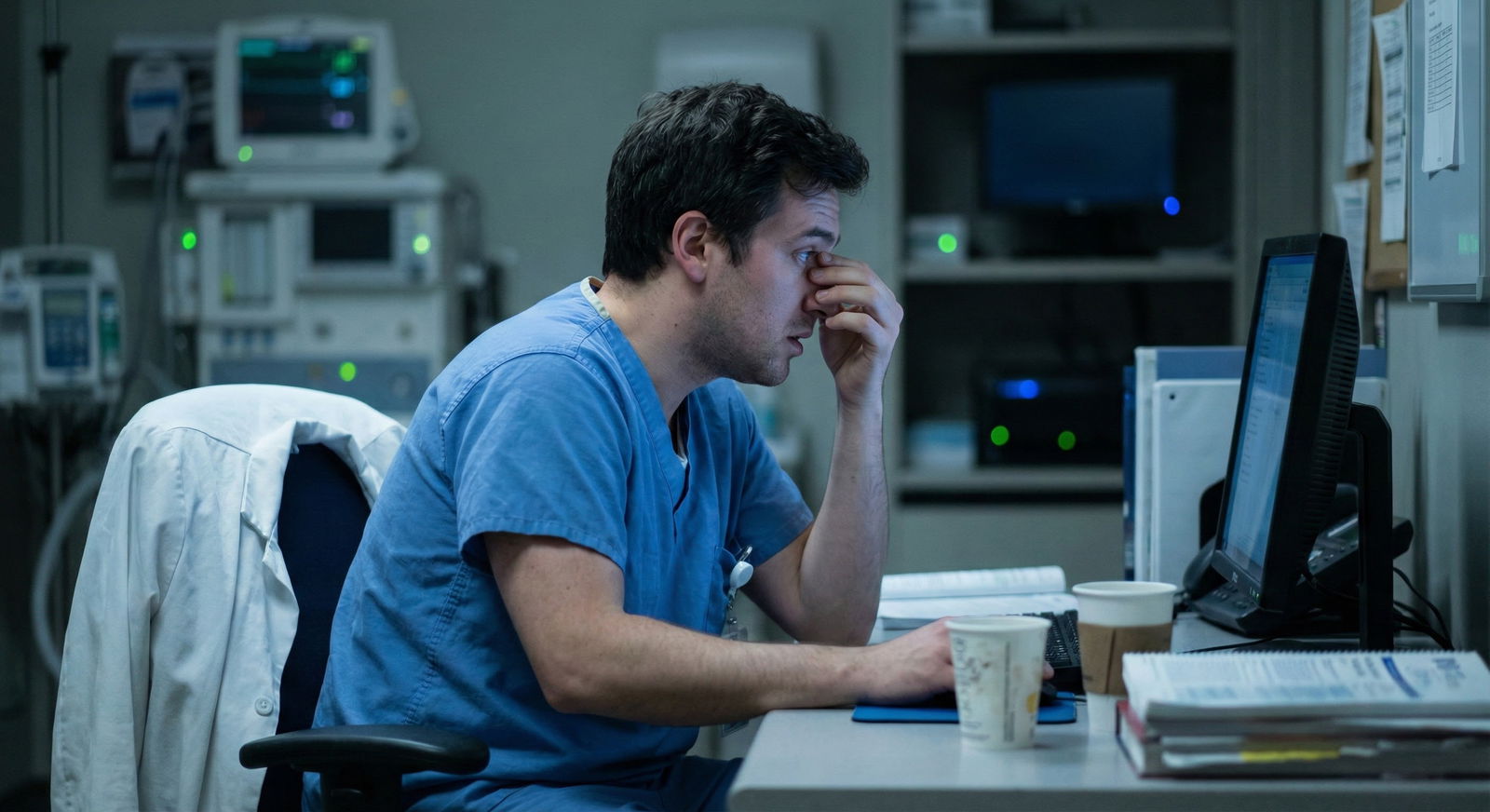
There are programs in this country where the night float intern admits critically ill patients with zero in-house attending support. The attending is at home. Asleep. You call them, and maybe they answer. Maybe they don't. Maybe they answer after the patient is already intubated and on pressors. I've seen it happen. An intern alone in the ED at 4 AM, running a code on a patient they met three minutes ago, while the senior resident is upstairs managing a different floor. The attending is on the phone giving verbal orders from bed. This is legal in many states. It is also a disaster waiting to happen.
The emotional reality is worse than the legal reality. As an intern, you're learning medicine. You cannot learn medicine by being thrown into unstable admissions alone with telephone backup. You will make decisions that haunt you. You will develop coping mechanisms that are unhealthy. You will either become numb or you will burn out. There is no third option when you're abandoned overnight.
The question that exposes this immediately: "When I'm on night float as an intern and I have an unstable admission, who is physically in the hospital with me?" If the answer is "the senior resident," ask where the attending is. If the attending is at home, ask how quickly they can get to the bedside. If the answer is "within 30 minutes," ask what happens in the first 30 minutes.
Ask this question to the residents without faculty present. The residents know the truth. The faculty think they know the truth, but they haven't been in the hospital at 4 AM in years.
Trap 4: The Silent Killer, Chronic Post-Call Recovery Debt
The transition between nights and days is where programs quietly destroy their residents' health. And faculty don't care because the census gets covered either way.
Here's what happens at a churn-and-burn program: you finish your last night shift at 7 AM on a Saturday. You're expected to be at morning report at 8 AM on Monday. That gives you roughly 49 hours to flip your circadian rhythm from nocturnal back to diurnal. Physiologically, that's impossible for most people. The average circadian reset takes 3 to 5 days. So you show up Monday morning having slept maybe four hours on Sunday night, you're expected to function at full capacity, and nobody acknowledges that you're essentially impaired.
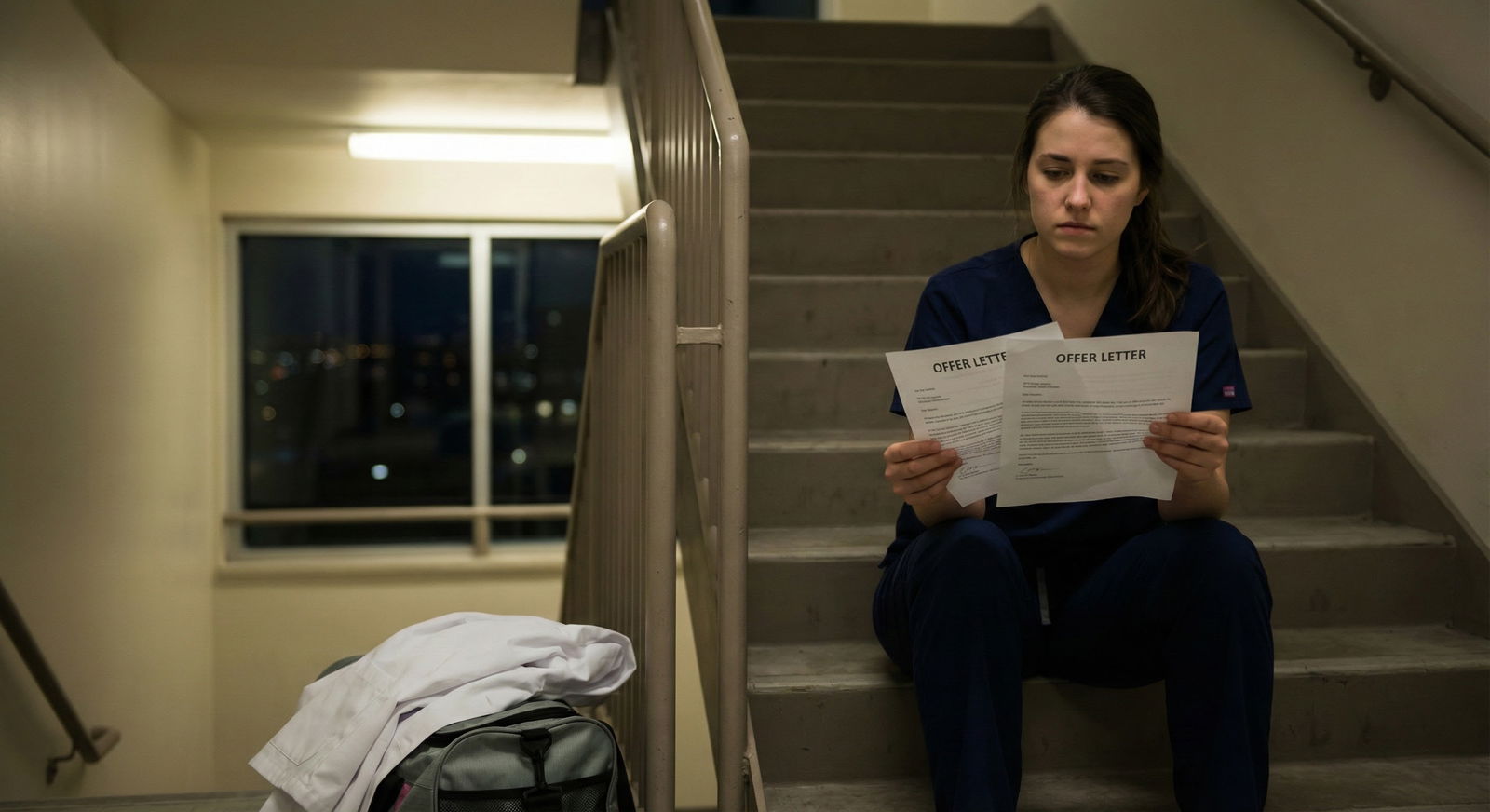
A humane program builds in transition days. A humane program doesn't schedule you for a full day of conference immediately after your last night. A humane program recognizes that circadian physiology is real and doesn't bend to scheduling convenience. These programs exist. They're rare. You need to find them.
The tell: ask current residents what their schedule looks like for the week after their night float block ends. Specifically ask: "How many days off do you get between your last night and your first day shift?" If it's less than 48 hours, the program is stealing your sleep and calling it education. If residents describe feeling "jet-lagged for a week" after nights, you've found the truth.
Also ask about the transition into nights. Do programs give residents a day to adjust before starting the block? Or do they expect you to go from a day shift ending at 5 PM to a night shift starting at 7 PM the same day? That's not a transition. That's punishment.
Traps 5, 6, and 7: Cross-Coverage Madness, Ancillary Staff Deserts, and Educational Black Holes
Three traps for the price of one, because they tend to cluster together at the same programs.
Cross-coverage madness. At poorly staffed programs, one night float resident covers multiple floors, sometimes four or more. I've seen a single intern cross-cover 60 patients across three different services. That's not medicine. That's firefighting. You're not learning pathophysiology or developing diagnostic reasoning. You're triaging pages and praying nothing crashes simultaneously. Ask the specific question: "What is the patient-to-resident ratio for cross-coverage on a typical night float shift?" If the resident can't answer or gives you a number above 30, run.
The ancillary staff desert. During the day, phlebotomy draws labs. Transport moves patients. Techs do EKGs. At night, at many hospitals, all of that disappears. The night float resident becomes the phlebotomist, transporter, EKG tech, and sometimes the respiratory therapist. I know residents who have pushed patients on stretchers to CT scan at 2 AM because there was no transport staff. I know residents who have drawn their own blood cultures on every septic workup because the night phlebotomy service was eliminated in the last budget cut. This isn't medicine. This is dangerous, and it's a direct reflection of hospital priorities. Ask: "What tasks do you find yourself doing overnight that would normally be done by ancillary staff during the day?" The answer tells you everything about how the hospital values its residents.
The educational black hole. Night float is supposedly educational because you get "unbiased clinical decision-making experience." That's a lie told by people who have never worked nights. Unbiased clinical decision-making without supervision isn't education. It's trial by fire with no safety net. Real educational night float programs have protected teaching time. They have nocturnist attendings who round with the team at 2 AM. They have case-based discussions built into the shift. They have simulation sessions during night float orientation. If a program has none of these, night float is pure labor extraction. Ask: "What formal educational activities happen during night float?" If the answer is "we learn from the patients we admit," that's code for "you're on your own."
Here's what I want you to take away from all of this. Night float is not going away. You will do it at every program. The question isn't whether it exists but whether the program has built guardrails to keep you safe, rested, and learning, or whether they've left you to fend for yourself while telling recruitment slides about their "robust nocturnal curriculum."
Trust the residents over the program directors. Trust specific questions over general assurances. And trust your gut when a resident answers your question about night float with a long pause and a sigh before saying, "It's... manageable."
"Manageable" is what we say when the truth is too painful to share with someone who hasn't signed a contract yet.