
This article is for educational purposes only. It is not financial advice, not legal advice, and not tax advice. Figures vary by individual circumstances, so consult a qualified professional before acting.
The False Security of 'I'll Just Learn on the Job': A Cautionary Opening
Picture this. It's October of your PGY-2 year. You're pulling your fourth 80-hour week in a row. You're managing a full patient panel, writing flawless notes, and your attendings tell you that you're "doing great." So, you push your board prep to the back burner. You tell yourself the most dangerous lie in medical training: I'll just learn on the job.
Big mistake.
I have watched brilliant, hardworking residents crash and burn because they assumed clinical hours automatically replace dedicated board study. They conflate the sheer volume of patients they see with the mastery of board-tested concepts. But seeing fifty cases of community-acquired pneumonia doesn't mean you understand the obscure, high-yield immunodeficiencies the board examiners love to test.
This is the trap of clinical tunnel vision. When you rely solely on your daily clinical exposure, your knowledge base becomes entirely dependent on the random lottery of who gets admitted to your service. You get incredibly good at managing the common, the routine, and the mundane. But the boards don't just test the mundane. They test the rare, the high-stakes, and the easily missed. If your hospital doesn't see a lot of rare rheumatologic conditions, and you aren't studying them in a structured way, you will fail those questions. Period.
Self-directed learning in the vacuum of a busy residency creates dangerous, invisible knowledge gaps. You don't know what you don't know. By the time you realize you have a massive blind spot in nephrology or biostatistics, you are three months away from your exam, exhausted, and out of time. Don't make this mistake. Clinical competence and board mastery are two distinct skill sets. One keeps your patients alive today; the other ensures you actually get to be an attending tomorrow.
The Anatomy of a Failed Study Strategy: Why Self-Directed Often Fails
Let's talk about the psychology of failure. The Dunning-Kruger effect is alive and well in residency. When you are successfully managing routine admissions, discharging patients smoothly, and getting praise from your seniors, your brain tricks you. You overestimate your baseline medical knowledge because you feel clinically competent.
Before you rank, evaluate the clinical vs research-heavy programs: fine-tuning your rank priorities to ensure the training environment aligns with your long-term career goals.
But reading clinical notes and formulating daily treatment plans is not the same as mastering deep pathophysiology. It's the illusion of competence. You know what to do for a heart failure exacerbation, but do you know the exact hemodynamic profiles and receptor pharmacology the boards will ask about? Probably not.
Here are the glaring red flags that your self-directed strategy is failing:
- You have no set, non-negotiable calendar for board review.
- You rely solely on daily rounds and morning report for your learning.
- You tell yourself you'll "read up on it later" but never do.
- Your question bank completion rate is sitting at a dismal 15% in March of your PGY-2 year.
The hidden cost of this casual approach is brutal. I've sat in on remediation meetings. The shame is palpable. When you fail your boards, you face delayed graduation, extended residency at a resident's salary, and a permanent mark on your record. Some programs will even dismiss you. You are risking hundreds of thousands of dollars in future attending wages because you didn't want to wake up an hour early to do practice questions.
Always keep in mind that academic vs community: which residency actually teaches risk management? can be a critical factor in your overall training experience.
The Structured Advantage: Protecting Your Professional Future
So, what is the alternative? Structured prep.
High-volume, high-acuity programs that actually care about their residents' futures demand intentional, protected study time. They don't just hand you a UWorld subscription and wish you luck. They build a curriculum. They integrate board review into the weekly schedule. They track your progress.
When evaluating programs, you need to identify the difference between those that "spoon-feed" board prep and those that abandon you to sink or swim. A program that spoon-feeds you isn't doing your work for you; they are providing the scaffolding so you can build your knowledge efficiently. They offer dedicated didactic sessions that map directly to board content, regular in-service exams with mandatory review sessions, and most importantly, protected time where you are not expected to carry a pager.
Look at the data. Programs with rigorous, structured board-prep infrastructure consistently boast pass rates in the high 90s. Unstructured programs, where residents are left to self-direct amidst 80-hour work weeks, hover in the low 80s or worse.
Here is your 'Safety Net' Protocol to verify a program's infrastructure before you rank them:
- Demand the data: Ask the program coordinator for the first-time board pass rates for the last three years.
- Audit the schedule: Look at the weekly didactic schedule. Is it protected? Are residents actually released from clinical duties to attend?
- Check the resources: Do they provide institutional access to premium question banks, board review courses, and mock exams?
Do not make the mistake of prioritizing program prestige over board-pass infrastructure. I've seen residents at Ivy-adjacent, highly prestigious programs fail their boards because the program treated them like cheap clinical labor instead of learners. A fancy name on your jacket doesn't matter if you can't pass the exam to practice.
Red Flags in Residency Interviews: What Programs Are Hiding
Interview season is a masterclass in obfuscation. Programs are selling you a product, and they will hide the flaws. You need to know how to spot the red flags.

The most common trap is the vague answer. When you ask about board prep, a defensive Program Director might say, "We have a strong culture of lifelong learning here," or "Our residents are very self-motivated." Translation: We have zero infrastructure, and if you fail, we will blame your lack of motivation. If they cannot cite a specific study curriculum, assume it doesn't exist.
Beware the 'Zero-Infrastructure' tell. If they offer no dedicated board prep materials, no mock exams, and no protected time, they are essentially telling you that your board success is entirely your own problem.
How do you probe for the truth without sounding like a nuisance or a slacker? You don't ask the PD. You ask the residents. During the resident-only dinner or the post-interview social, pull a PGY-2 or PGY-3 aside. Ask them directly:
- "When you do your question banks, are you doing them at home on Sunday, or does the program actually give you time during the week?"
- "What happens if someone fails an in-service exam? Is there a formal remediation track, or are you just told to study harder?"
- "Do the attendings actually respect the protected didactic time, or do they guilt you into staying on the floor?"
Their body language will tell you everything. If they look around nervously or give a rehearsed, robotic answer, you have your answer.
Finally, you must ignore the "we are like a family" pitch. In residency, "family" often means "we will exploit your guilt to make you work extra shifts and skip your study time." Look past the warm smiles and the free dinners. Look at the shelf-exam metrics, the board pass rates, and the attrition rates. Data doesn't lie.
The Final Verdict: Protecting Your License
Your medical license is the most valuable asset you will ever own. Protecting it requires treating your residency not just as a job, but as a high-stakes, multi-year exam prep phase.
Before you finalize your decisions, run this checklist on your top-choice programs:
- Does the program have a formal, written board-review timeline?
- Is there explicitly protected, pager-free time for didactics?
- Are the first-time board pass rates consistently above 90%?
- Do current residents confirm that the culture supports studying over unnecessary clinical scut-work?
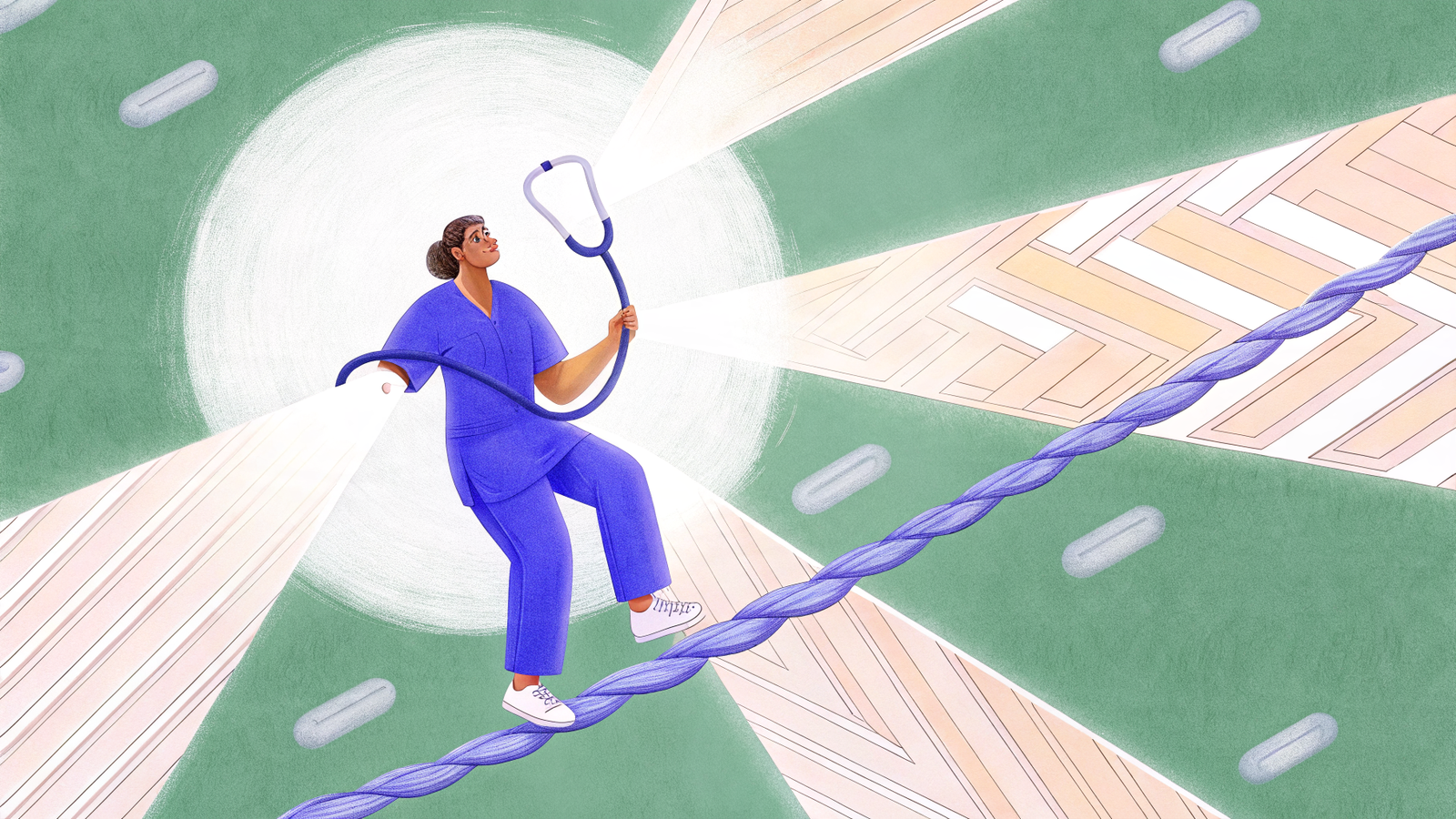
You have to balance patient safety with your personal board-prep requirements. Being a good doctor means knowing your limits, and knowing when you need to step off the floor to hit the books. You cannot pour from an empty cup, and you cannot pass the boards on zero sleep and pure clinical osmosis.
Here is my final call to action: Pull up your Rank Order List right now. Look at it through the lens of board-prep safety. If your number one spot is a program that expects you to sink or swim, move them down. Rank the programs that will actually protect your future. Don't gamble your career on the false hope that you'll "figure it out." Structure your success, or risk your failure.
Core Takeaways to Remember
- Never mistake clinical volume for board readiness; they are distinct skill sets.
- If a program lacks a structured curriculum, they are essentially forcing you to risk your board eligibility on your own time.
- Verify board pass statistics explicitly; vague promises of 'mentorship' are not a substitute for hard data.
- A self-directed approach is a luxury that becomes a massive liability when your patient workload increases in later years.