
Prestige vs Training Quality: Why Top-Name Residencies Aren’t Always Best
The obsession with big-name residency programs is hurting applicants more than it’s helping them.
I’ve watched smart, capable students contort their applications, torture themselves on test scores, and rank lists based almost entirely on brand name. Then three years later, some of those same people quietly admit: “Honestly, I would’ve learned more and been happier at that ‘lesser’ program I interviewed at.”
The dirty secret: prestige and actual training quality only partially overlap. Past a certain threshold, the correlation is weak. Very weak.
You’re told to chase Harvard, Hopkins, MGH, UCSF, Mayo, whatever the “top” names are in your specialty. You’re rarely told to ask: will I actually become a better, more independent clinician there than at a mid-tier or strong community program?
Let’s pull this apart.
Myth #1: “Top-name residencies always produce better clinicians”
No, they don’t. They often produce more impressive-sounding CVs. That’s not the same thing.
Look at how practicing physicians are evaluated in real life: patient outcomes, clinical judgment, efficiency, teamwork, complication rates, readmissions. Almost none of that shows up in the “Top Hospitals” list that pre-meds and MS4s drool over.
Plenty of mid-tier and community programs train residents who are:
- More comfortable managing bread-and-butter pathology without calling five consults
- Faster and more efficient on the wards and in clinic
- More procedurally adept because they actually do the cases, not watch fellows do them
I’ve seen this play out in fellowship and attending-level jobs. The stereotype is almost cliché:
- Resident from Big Name U: Brilliant on powerpoints, strong research game, but needs time to get comfortable making independent calls because their training environment was hyper-subspecialized and fellow-heavy.
- Resident from “random” community program: Less buzzy CV, but absolutely rock-solid on the floor. Can run a code, stabilize sick patients, and manage common conditions with confidence.
Not always. But often enough that you should stop pretending the name alone predicts competence.
Here’s the kicker: studies looking at resident performance and attending evaluations usually find small differences associated with program type once you control for things like board scores and selection bias. Translation: the applicant pool is different, not necessarily the training magic.
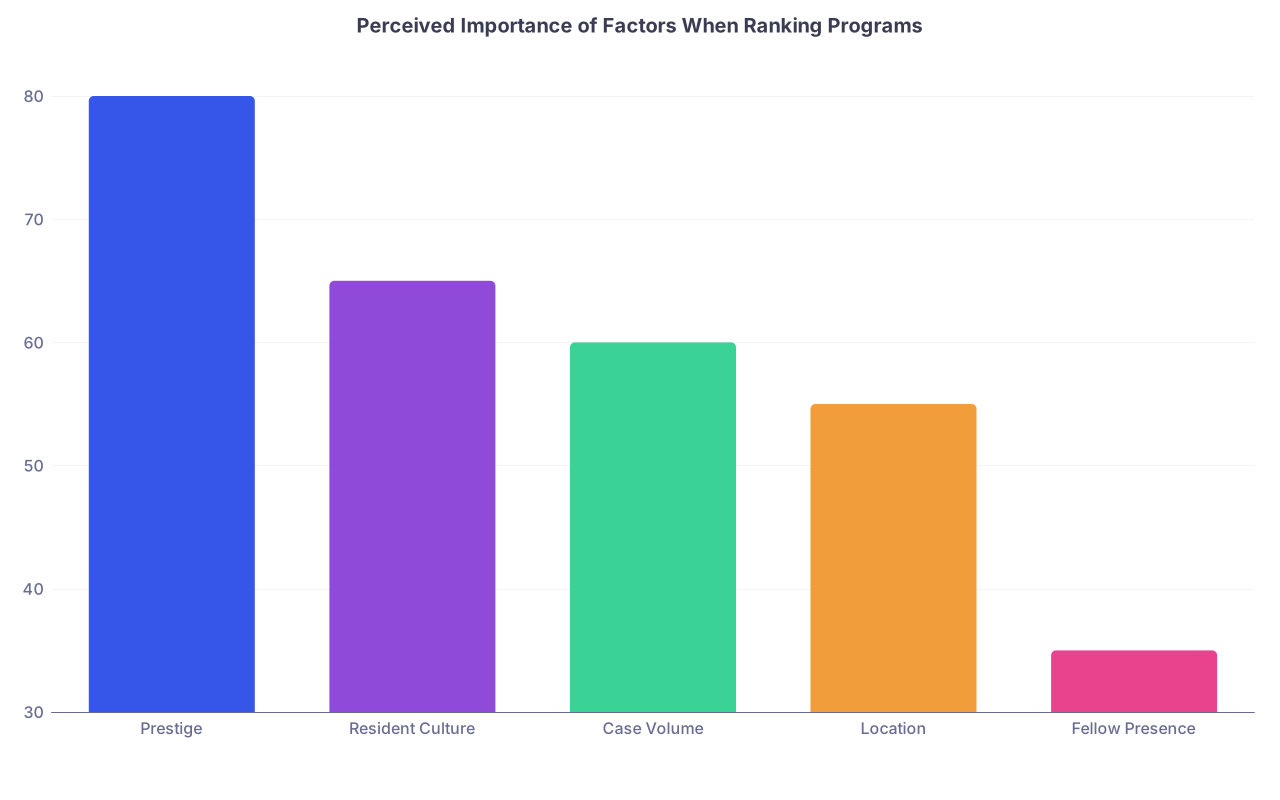
| Category | Value |
|---|---|
| Prestige | 80 |
| Resident Culture | 65 |
| Case Volume | 60 |
| Location | 55 |
| Fellow Presence | 35 |
Applicants massively overweight “prestige,” even when attendings quietly tell them to prioritize case volume and culture.
The Prestige Trap: What big-name programs actually optimize for
Let’s be blunt. Many “top” residencies are optimized for:
- NIH funding
- Publications and grants
- National reputation
- Subspecialty pipelines
They are not primarily optimized for “create the most independent, practice-ready general clinician in 3–4 years.”
That doesn’t mean they’re bad programs. Some are phenomenal at both. But there’s a structural conflict:
If a department’s primary currency is R01s, impact factor, and national talks, resident education can quietly slide into second place. You see it in a few predictable ways:
Fellow-heavy services
You rotate on a cardiac ICU or subspecialty service where three fellows stand between you and the procedure. You “see” a ton of advanced pathology, but your hands never touch the line, the scope, the bronchoscope. Great for exposure, bad for muscle memory.Clinic fragmentation
Clinics broken into 14 subspecialty silos: “You’ll see diabetic neuropathy with Dr. X, but not general primary care.” Looks impressive. Feels sophisticated. But you graduate weaker at managing common, unfiltered outpatient medicine.Research pressure masquerading as opportunity
You’re promised “amazing research options.” Translation: 3–4 extra nights a week and weekends entering data for a senior faculty member’s project so you can maybe be third author on a paper that helps them more than it helps your training.
Again, not universal. Some powerhouse places genuinely protect resident education. But the idea that prestige = superior training across the board is fantasy.
What actually matters for training quality
You want a brutally simple rule? At the end of residency you should be able to independently manage the common problems of your specialty safely and efficiently.
That depends on a few concrete things. Notice what’s missing: glossy rankings.
1. Case volume and resident ownership
If you’re in surgery and you’re second-assisting on Whipple #27 that month but barely doing appendectomies yourself, you’re not training. You’re spectating.
If you’re in IM and every interesting cardiac case is hoovered up by cardiology fellows, you’re not the doctor; you’re the messenger.
At a strong non-name-brand program, you might be the one:
- Putting in central lines at 2 a.m., not paging a fellow
- Doing bread-and-butter laparoscopic cases as primary surgeon
- Running the MICU codes without six layers of supervision slowing everything down
That’s how you grow.
2. Autonomy with backup
Too much autonomy is dangerous. Too little, and you graduate timid and slow.
The sweet spot is: you’re allowed to make initial decisions, write orders, staff plans, and then get corrected or fine-tuned by attendings who actually care to teach. Many community and mid-tier academic programs hit that balance better than mega-prestige institutions with rigid hierarchies.
Residents constantly tell me some variation of: “At Big Name Hospital, I always felt like the least important person in the room. At this smaller place, I actually feel like a doctor.”
3. Culture: how residents talk when leadership isn’t listening
Ignore the PowerPoints on interview day. Listen in hallways, pre-rounds, call rooms. Ask blunt questions on second looks.
Are residents:
- Throwing each other under the bus?
- Terrified of making minor mistakes because evaluation culture is punitive?
- Working “silent extra hours” to meet impossible expectations?
I’ve heard residents at glamour programs say things like: “Look, the name opens doors. Just survive three years and then it gets better.” That’s not a training philosophy; that’s hazing with branding.
Contrast that with a mid-tier program where residents say: “Our PD goes to bat for us. We’re tired, but we’re supported. We feel like a team.” Which one do you think produces better long-term clinicians?
The research obsession: when you actually need a big name
Let’s talk careers. Because this is where prestige actually starts to matter—and where people wildly misapply it.
If your genuine goal is:
- NIH-funded research PI
- Chair of a major academic department
- Ultra-competitive subspecialty at a top academic center
Fine. A top-name residency can grease those wheels. You’ll get easier access to:
- High-impact mentors
- Big data sets and trials
- National conference visibility
- Letters from “names” that search committees recognize instantly
But here’s the myth: that everyone needs that to have a great career.
If your realistic career plan is:
- Solid community practice
- Regional academic job with some teaching
- Hospitalist or generalist in a non-coastal metropolis
- Even many fellowships outside of the ultra-elite tier
Then the marginal benefit of “#3 program vs #35 program” is dramatically smaller than you think.
| Goal | Prestige Impact | Notes |
|---|---|---|
| NIH-funded research career | High | Big-name mentors help a lot |
| Ultra-elite fellowship (e.g. Derm) | Moderate-High | Name + scores + research |
| Academic hospitalist/generalist | Low-Moderate | Competence and fit matter more |
| Community practice | Low | Reputation local, not national |
The worst mismatch I see: students who think they want heavy research because “that’s what top people do,” then spend three miserable years chasing papers at a prestige program when they would’ve been far happier and better trained at a solid clinical shop.
Hidden downsides of big-name programs nobody advertises
Some of these you only really hear at 2 a.m. post-call, when residents drop the PR script.
1. Being at the bottom of a very tall ladder
Massive academic centers have:
- Medical students
- Rotating students from other schools
- Interns
- Juniors
- Seniors
- Fellows (sometimes multiple layers)
- Advanced practitioners
- Attendings
If you’re an intern or junior resident, half your job becomes clerical and logistical rather than clinical. Orders, notes, paging, documentation clean-up. Yes, that happens everywhere. But the dilution can be worse where there are too many trainees.
At a smaller or less “famous” program, you may move up the ladder of responsibility faster simply because there are fewer bodies between you and the patient.
2. Narrow case mix and referral bias
Prestige centers often see:
- The weirdest zebras
- Transferred trainwrecks
- Niche tertiary and quaternary referrals
Great for your cocktail stories and case reports. Less great if you never really learn to manage ordinary primary or secondary care that you’ll see 90% of the time in practice.
I’ve watched fellows from huge-name hospitals struggle when they move to community settings where there’s no ECMO, no ten-subspecialty backup, no NIH-funded everything. They know how to manage ARDS with all the toys, but not COPD in a resource-limited, real-world clinic.
3. Geographic and lifestyle tradeoffs
A lot of big names are in insanely expensive, high-burnout cities. Boston, SF, NYC, LA.
You might convince yourself that $80k on paper is “good” until you realize your rent eats half of it, you’re commuting an hour each way, and you can’t afford basic stress relief. Chronic financial stress plus residency hours? That erodes learning fast.
Instead of asking “What’s the most prestigious place I can match?”, a better question is: “Where can I learn the most while not completely destroying my mental health and bank account?”
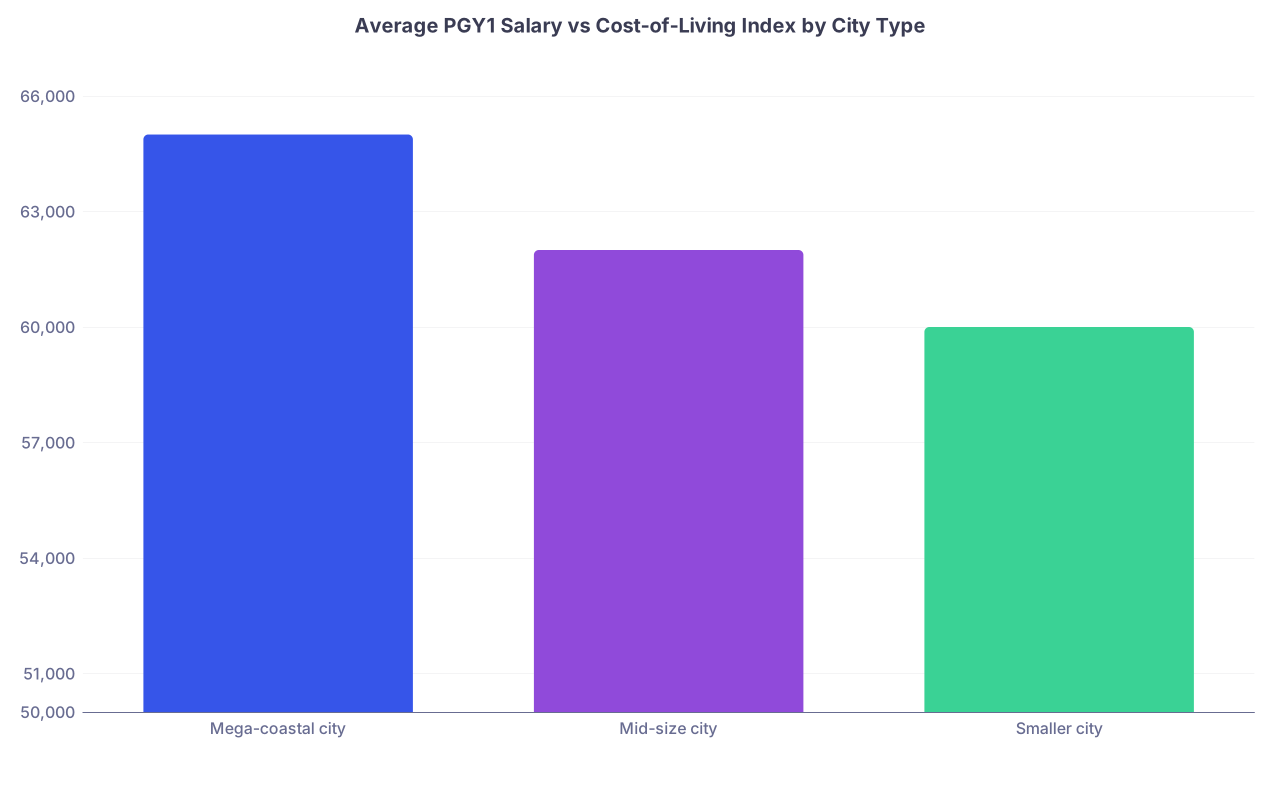
| Category | Value |
|---|---|
| Mega-coastal city | 65000 |
| Mid-size city | 62000 |
| Smaller city | 60000 |
The salaries barely move. The cost of living does.
How to compare programs without being blinded by the name
Here’s where you actually need to do some work. Not on Instagram. On the ground.
Watch who actually does the work
On interview or second look:
- In the OR, who’s driving: resident or fellow?
- On rounds, who presents plans with real ownership: residents or attendings?
- In clinic, are residents seeing unfiltered patients or just “interesting” referral cases?
If you consistently see residents doing real doctor work at a “no-name” place and mostly data entry or observer work at a brand-name place, believe your eyes.
Ask residents the questions they’re not prepared for
They all have scripted answers for “What’s your favorite thing about this program?”
Try these instead:
- “If you could redo your rank list knowing what you know now, would you put this program first again?”
- “Who actually runs codes at night?”
- “What happens when you’re struggling on a rotation? Who steps in, specifically?”
- “How many procedures have you personally done this year?”
And then shut up and watch their faces more than their words.

Look at where graduates actually go
Not what the brochure says. The real list.
Do graduates:
- Consistently match into the fellowships you care about?
- Get jobs in the type of practice you want?
- Stay in the region, suggesting they’re valued locally?
Some “lesser” programs are absolute pipelines into fantastic regional jobs and good fellowships. That’s far more relevant to your future than whether their hospital shows up on a consumer magazine ranking.
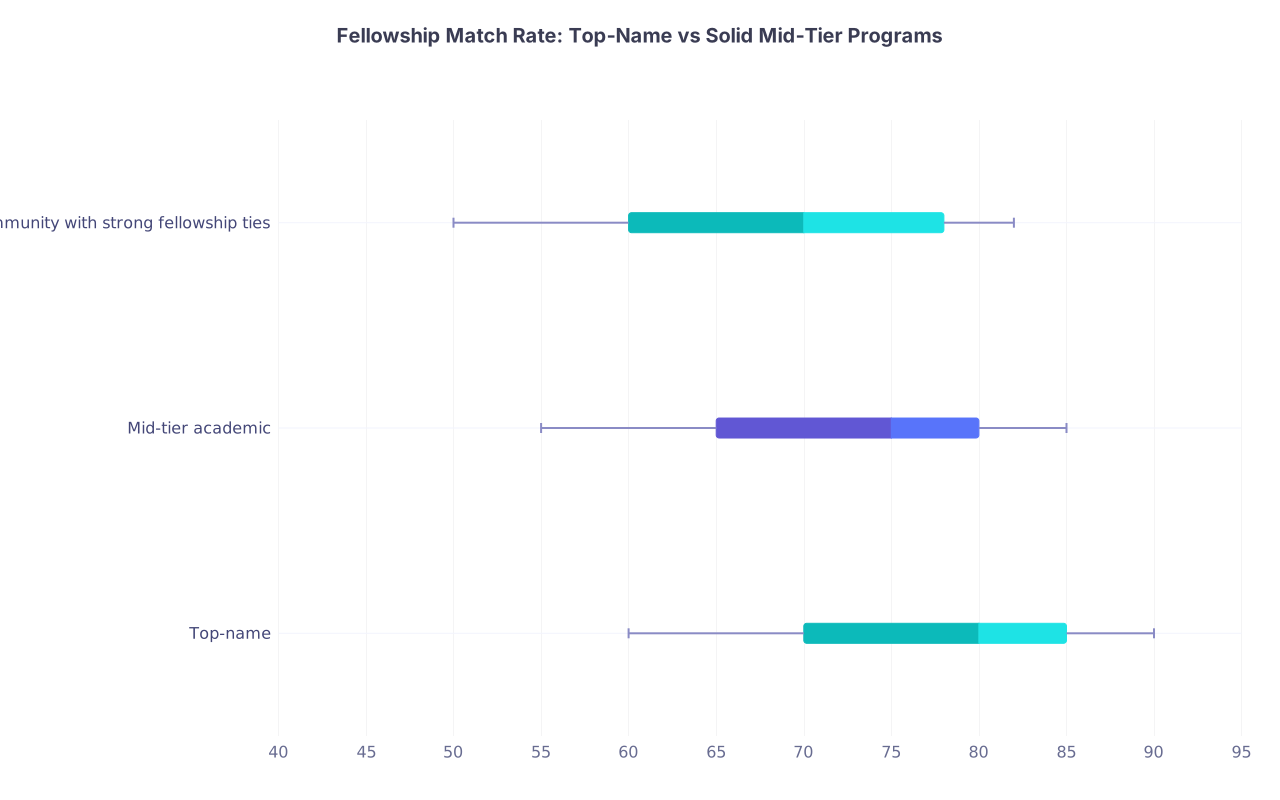
| Category | Min | Q1 | Median | Q3 | Max |
|---|---|---|---|---|---|
| Top-name | 60 | 70 | 80 | 85 | 90 |
| Mid-tier academic | 55 | 65 | 75 | 80 | 85 |
| Community with strong fellowship ties | 50 | 60 | 70 | 78 | 82 |
Notice the overlap. The idea that only the top-name places “get you a fellowship” is just wrong.
When prestige does break a tie
I’m not anti-prestige. I’m anti-brain-dead prestige.
If you have:
- Two programs with similar case volume
- Similar autonomy
- Similar resident culture and support
- Both in locations you can tolerate
Then sure, pick the one with the slightly stronger name. It may give you a small bump in flexibility later if you change your mind about career direction.
But that’s the order of operations: training quality and fit first. Prestige as a tie-breaker, not the steering wheel.

The uncomfortable truth: you’re the biggest variable
One last myth to kill: that the right program will magically make you a great doctor. It won’t.
I’ve met residents from world-famous hospitals who coasted, avoided hard feedback, and graduated mediocre. I’ve met residents from small community programs who read constantly, chased feedback, did extra cases, and became absolutely outstanding.
Program choice matters. A lot. But once you’re above a certain floor of quality—and there are many, many solid programs in every specialty—your effort, curiosity, resilience, and willingness to own your learning will dwarf the prestige factor.

| Step | Description |
|---|---|
| Step 1 | Program Name |
| Step 2 | Career |
| Step 3 | Training Quality |
| Step 4 | Resident Effort |
| Step 5 | Clinical Skill |
| Step 6 | CV Shine |
Name shines your CV. Training quality and your effort build your skill. Employers and patients care a lot more about that last part once the ink on your diploma dries.
Bottom line
Three points to keep straight:
- Prestige and training quality are not the same thing, and beyond a basic threshold, the correlation is weak.
- Case volume, autonomy, resident culture, and graduate outcomes matter more for your real skill than the logo on your badge.
- Use prestige as a tie-breaker between good fits, not as the primary driver of your rank list.