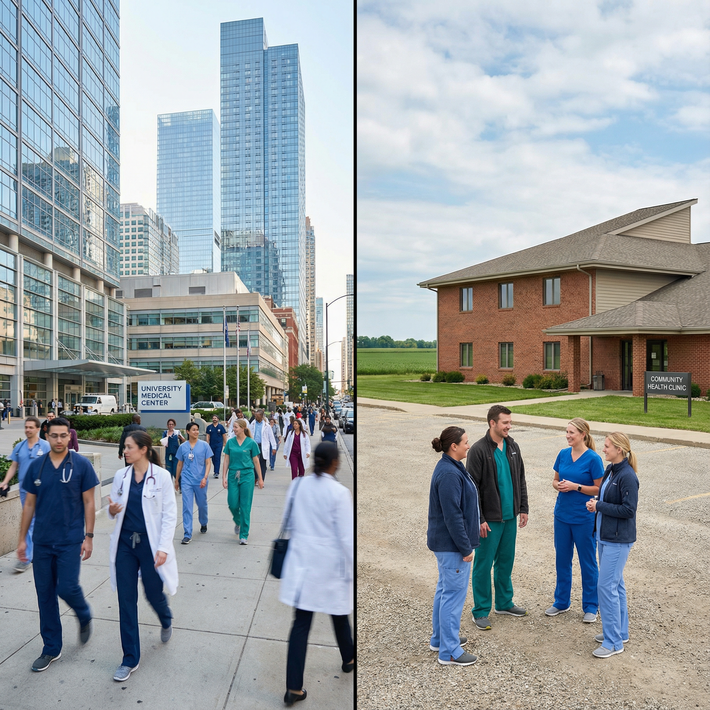
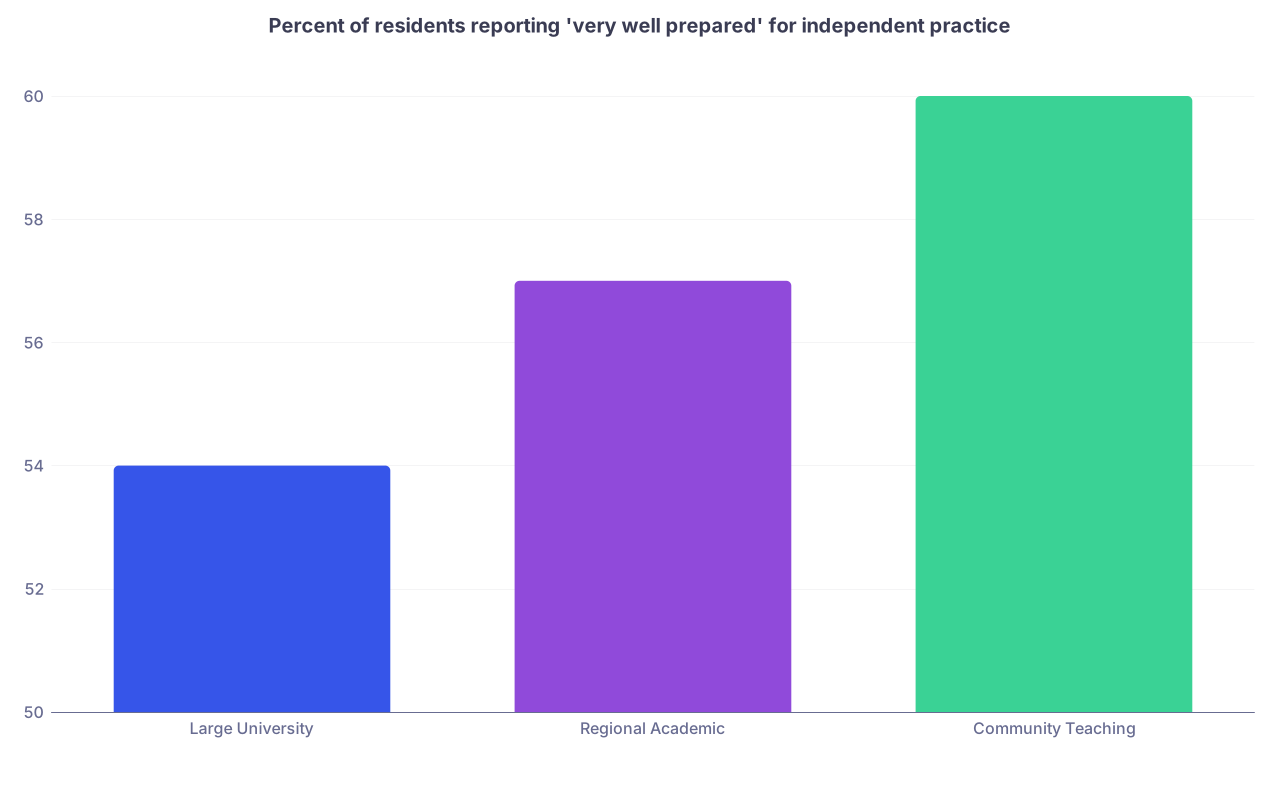
Only 54% of residents at large academic centers feel their program prepares them “very well” for independent practice, despite those places being everyone’s dream on interview day.
So no, “university hospital” does not automatically equal “better residency training.” That belief is one of the lazier myths in medical education, and it quietly wrecks a lot of rank lists.
Let’s pull this apart.
The Myth: Academic Center = Better Training
You hear the same script every interview season.
“I want a big university program for the volume and pathology.”
“I need a big-name academic center for fellowship.”
“They see the sickest patients.”
There’s a kernel of truth under all three. But residents do not train on slogans. They train in systems. With actual humans. Under constraints that look very different on the ground than they do in the glossy recruitment brochure.
Programs push the university-hospital-equals-better narrative because it’s easy marketing. But if you look at what actually predicts resident competence, satisfaction, and career outcomes, the picture is messier.
Let me be blunt: I’ve seen residents at mid-sized community programs who can run a code, manage a crashing septic patient, and staff a busy clinic with less backup—and more confidence—than some “elite” university trainees who’ve spent years in the fellowship-and-ancillary-care bubble.
You do not train on brand. You train on reps, feedback, responsibility, and culture.
What the Data Actually Shows (Not the Brochure Version)
We do not have a single perfect “training quality” metric. But we do have several decent proxies:
- In‑training exam scores and board pass rates
- Graduates’ self‑reported preparedness for independent practice
- Procedure logs and case volumes
- Fellowship match outcomes
- Burnout / well‑being measures
When you sort by “university vs non‑university,” the differences are smaller than most applicants imagine and often vanish once you adjust for selection bias (stronger students tending to cluster at big academic places).
| Category | Value |
|---|---|
| Large University | 54 |
| Regional Academic | 57 |
| Community Teaching | 60 |
That pattern shows up repeatedly: community and regional academic programs are not the training wasteland Reddit makes them out to be. In some domains, they outperform the flagship giants.
Why? Because the factors that actually matter day-to-day are not “university” or “non‑university.” They’re things like supervision, autonomy, educational structure, and workload. And those do not correlate cleanly with the building logo.
What University Hospitals Really Give You (And What They Don’t)
Let’s separate the real strengths of a university hospital from the mythology.
The Real Advantages
You do get some genuine upsides at most large academic centers.
First, subspecialty exposure. You’re more likely to rotate on heme/onc, transplant ID, EP, advanced heart failure, etc., with robust consult services and faculty who live in that world. If you’re angling hard for a competitive fellowship, that ecosystem matters.
Second, research infrastructure. IRB machinery, statisticians, existing databases, faculty with ongoing projects. You can absolutely do research at a strong community program, but the path of least resistance is almost always at a big university center.
Third, rare pathology. Tertiary/quaternary centers hoover up zebras. CNS vasculitis, LVAD disasters, weird inborn errors—if you want to see it, it will roll through at 3 a.m.
Fourth, academic reputation. Fair or not, some fellowships and niche academic careers still care about where you trained, especially in ultra-competitive fields.
Those are all real. I’m not dismissing them. I’m saying: that list is shorter than people think.
The Hidden Costs
The part that gets ignored on interview day: those same centers can be brutal for actual resident learning.
You get hyper‑subspecialized services where no one owns the patient. Medicine team, three consults, two fellow services, plus a hospitalist quietly fixing the mess at 2 a.m. You “follow” the patient, but the fellow writes the plan, the attending debates the trial, and you hold the orders.
You get attendings whose promotions depend on RVUs and publications, not the quality of bedside teaching. The best teachers at some places are essentially doing it as a side hobby.
You get massive teams: attending, fellow, senior, intern, students, NP/PA, pharmacist. Your hands-on time with each patient shrinks.
You get a “too sick to touch” effect: ICU, IR, CT surgery, transplant—everyone swoops in. You can easily graduate having learned to coordinate and communicate without ever becoming dangerous with your own hands.
That’s the part almost no one tells MS4s when they drool over the shiny academic name.
The Community Program You’re Underestimating
On the flipside, there’s the solid community or regional academic hospital that looks “less impressive” on paper.
I’ve watched residents at these places run codes without five layers of backup. They place lines because there is no night fellow. They learn to triage in an ED that’s not buffered by three resident layers and an observation unit for every edge case.
Their attendings? Often career clinicians who actually like teaching because it breaks up service, not because they have to pad a CV. Morning report is not an afterthought tacked onto an already overstuffed schedule to “check a box.”
Does that mean every community program is a gem? Obviously not. Some are malignant and under‑resourced. Some use residents as cheap labor with minimal teaching.
But that’s the point: “university” vs “community” is a lousy filter. You’re better off asking targeted questions about the training environment itself.
Where University Hospitals Truly Win: Fellowship and Niche Careers
Let’s tackle the most common justification straight on: “I need a university hospital for fellowship.”
Here’s the non‑sugar‑coated version.
If you want a hyper‑competitive subspecialty at a top‑tier academic center (Derm, Ortho, ENT, Rad Onc, certain fellowships like advanced IBD GI or structural heart), being at a big‑name residency absolutely makes your path easier. Not impossible from elsewhere. Easier.
You’ll have:
- Local mentors with pull in that niche
- Built-in research pipelines
- Letter writers whose names the selection committee recognizes
Fellowship directors will not say this publicly, but behind closed doors they speak a very specific dialect: “She’s from Program X, we know their residents are strong,” or “I’m not sure what kind of volume that smaller place sees.”
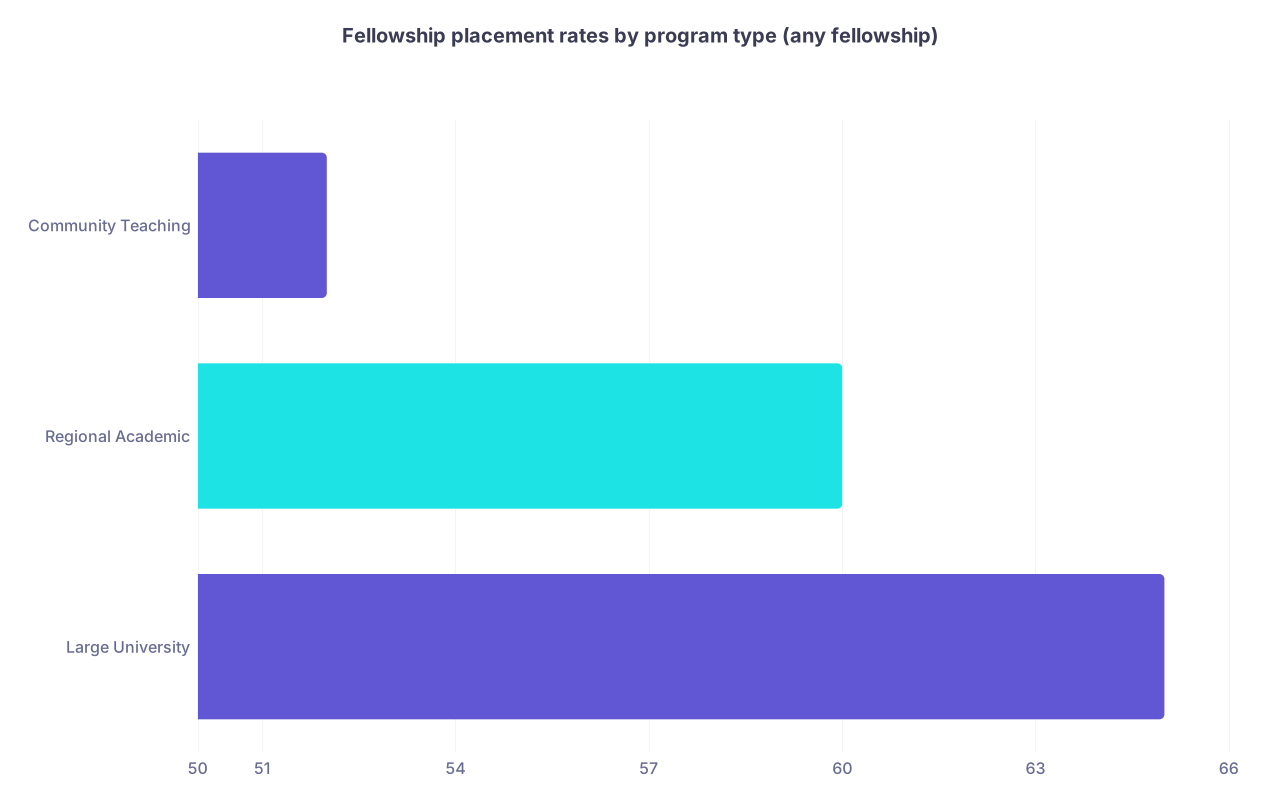
But the data cuts both ways.
| Category | Value |
|---|---|
| Large University | 65 |
| Regional Academic | 60 |
| Community Teaching | 52 |
Yes, academic programs place more residents into some fellowships. But a motivated resident with strong letters and actual competence coming from a mid‑sized program still matches well. The “you can’t get a good fellowship without a big university name” line is lazy and false.
Crucially: if you want generalist practice—hospitalist, outpatient IM, general peds, EM at a community site, primary care—then the university brand helps far less than people assume. In some markets, the community-trained resident who knows exactly how that system runs is the more attractive hire.
The Four Things That Actually Predict Good Training
If you strip away marketing and focus on what turns PGY‑1s into capable attendings, you keep seeing the same four pillars.
1. Autonomy with Backup
Not fake autonomy where you pre-chart an assessment and then watch the fellow and attending re‑write the plan. Real, graded responsibility.
You want an environment where:
- Interns write the first draft of the plan
- Seniors actually run the list, triage admits, manage nights
- Attendings give feedback rather than silently overriding everything in Epic
Too much autonomy without guardrails is unsafe. Too little and you graduate as a glorified scribe. Both university and community programs can land on either extreme. You have to ask:
- “On call nights, who is actually making the decisions?”
- “By PGY‑3, what are you allowed to sign off on before attending co‑sign?”
- “Do fellows write the initial plan, or do residents?”
If programs dodge those questions with vague “team based” answers, that’s a red flag.
2. Case Mix and Volume That Match Your Goals
You do need enough volume and variety. But more is not always better.
There’s a saturation point where sheer patient numbers just turn into note bloat and sleep deprivation, not learning. Residents doing 18–20 patients each with six daily notes, five discharge summaries, and six admissions after 5 p.m. are not “training harder.” They’re just drowning.
At the same time, a boutique, low-volume service with tons of hand-holding does not prepare you for the reality of most jobs.
The sweet spot looks like this: strong bread‑and‑butter exposure, a healthy number of sick patients you manage directly, and enough zebras to keep you sharp. You’ll find that at:
- Some university hospitals
- Some community teaching hospitals
- Some hybrid systems with both
Which is the point: the sign over the door doesn’t tell you.
3. Teaching Culture, Not Just “Educational Offerings”
Every program will tell you they have morning report, noon conference, grand rounds, and simulation.
That’s not the question.
The question is whether anyone protects it. Whether attendings show up on time. Whether residents actually present real, messy cases and get pushed—not humiliated—to think better.
I was at a “top” academic center where noon conference was a running joke. “Paging all residents to the ED for admits” every day at 11:58. Slides were recycled. People charted through the entire hour.
I’ve also seen a mid‑sized regional academic program where morning report was sacred. Pages diverted, attendings present, real teaching on real cases. You could feel the difference in residents’ clinical reasoning.
Don’t ask programs, “Do you have protected didactics?”
Ask, “How often are didactics interrupted? How often do attendings attend?” and then verify with residents off-script.
4. Culture and Wellness That Aren’t Performative
You’re going to spend 60–80 hours a week in this place. Glittery wellness committees with pizza and yoga do not fix malignant culture.
Again, this is not a university vs community divide. I’ve seen some of the worst cultures at high‑prestige academic centers where the implicit rule was “be grateful you’re here, we’re replaceable, you’re not.” Residents disappeared into leave or quietly transferred.
Ask current residents, off to the side:
- “If you were applying again, would you rank this place first?”
- “Do you feel safe admitting when you don’t know something?”
- “What happens when someone is struggling?”
Watch their faces, not just their words.
How to Actually Compare a University and Non‑University Program
You’re trying to decide between, say, “Big Name University Hospital” and “Boring‑Sounding Community Teaching Hospital.” Everyone in your class tells you this is obvious. It is not.
Lay out the real variables.
| Factor | University Hospital | Community Teaching |
|---|---|---|
| Subspecialty exposure | High | Moderate |
| Research support | High | Variable |
| Autonomy early on | Often lower | Often higher |
| Fellow presence | Heavy | Light/None |
| Rare pathology | High | Lower |
| Bread-and-butter mix | Variable | High |
Now map that to what you actually want to be able to do on day one as an attending. Not what sounds impressive on social media.
If you’re dead set on transplant ID or interventional cards and you want to be at an R1 university long‑term? Sure, that tilts you heavier toward a flagship academic center.
If you want to be a broadly competent hospitalist or general EM doc in a community setting, there is a strong argument that three years in a high‑volume, resident‑driven community or regional academic program will serve you better.
And if your gut is telling you “I’d be miserable here” at the shiny name place, listen to that.
A More Honest Way to Think About “Prestige”
Here’s the uncomfortable truth: “prestige” is mostly about external signaling, not internal training quality.
Prestige helps:
- Open doors with people who judge by name
- Smooth fellowship applications in specific niches
- Impress people who don’t know how to evaluate competence
Prestige does not:
- Guarantee you’ll know what to do when the attending isn’t around
- Guarantee decent attendings, fair scheduling, or humane culture
- Protect you from burnout, gaslighting, or being treated as a cog
What matters ten years out is whether you can take care of patients safely, think clearly when things go sideways, and have enough left in the tank to keep doing it.
I’ve seen community‑trained physicians out‑perform “top program” graduates on every dimension that matters, and I’ve also seen the reverse. The dividing line wasn’t the hospital category. It was how seriously the program took training over optics.
| Category | Value |
|---|---|
| Reputation | 30 |
| Location | 25 |
| Training quality | 20 |
| Fellowship potential | 15 |
| Culture/wellness | 10 |
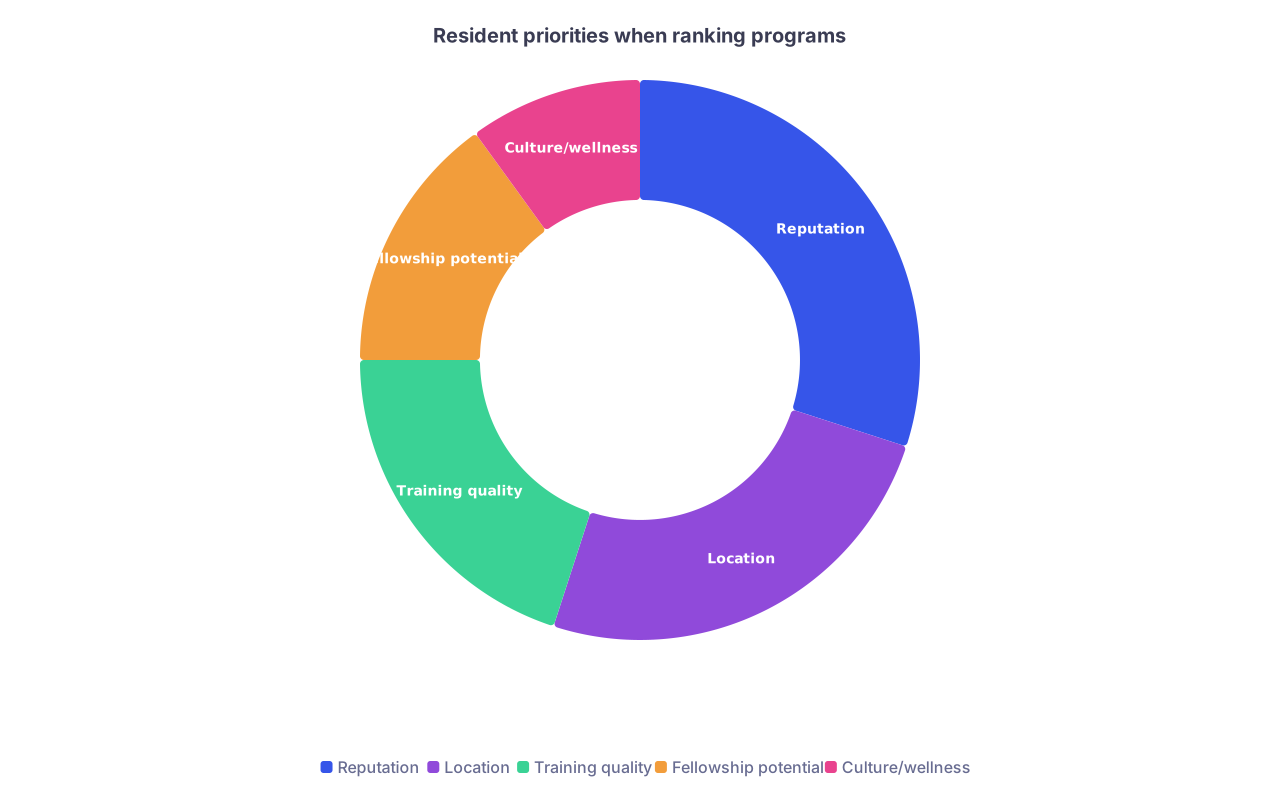
That’s the tragedy: applicants over‑weight reputation and location, under‑weight the things that will actually define their competence and sanity.
So, Does a University Hospital Automatically Mean Better Training?
No. Sometimes it means better branding, more subspecialty exposure, and better research resources. Sometimes it means you’re one of 100 residents in a system that needs your labor more than it cares about your growth.
Sometimes the best training for you—given what you want to do and how you learn—is at a university hospital. Sometimes it’s not.
If you strip it all down, three truths are left:
- “University vs community” is a crude, often misleading shortcut; the real predictors of training quality are autonomy with backup, case mix, teaching culture, and program culture.
- Big academic centers are fantastic for subspecialty exposure and research but can dilute hands‑on experience; strong community and regional academic programs often provide earlier responsibility and more practical preparation.
- Prestige is a noisy signal; your fit with a program’s reality—not its brand—is what will determine how good of a physician you actually become.