
The internet hysteria about “malignant” residency programs is wildly overstated—and often misdirected.
You’ve seen the threads. “Avoid at all costs.” “Everyone is miserable.” “Total malignant hellhole.” Usually posted by someone who rotated there for two weeks and talked to exactly one bitter PGY-3.
Let me be blunt: some programs are truly toxic and will wreck your mental health. They deserve the malignant label and worse. But lumping every “hard” or “old-school” program under “malignant” is lazy thinking—and can hurt your training and career more than it helps.
You’re about to rank programs and play God with your next 3–7 years. Time to separate real red flags from loud complaints.
What People Call “Malignant” vs What’s Actually Dangerous
Most students use “malignant” as a catch-all for: “People here work hard and don’t seem thrilled.” That’s not a diagnostic criterion. That’s residency.
When residents whisper “malignant,” they usually mean some combination of:
- Long hours, brutal call, high patient volume
- Attendings who yell, humiliate, or “pimp” aggressively
- Little schedule flexibility, hard to get time off
- Weak wellness lip service
- Not “supportive” when people struggle
Now compare that to what actually correlates with burnout, depression, and people leaving medicine entirely:
- Chronic sleep deprivation without control or recovery
- Unpredictable, chaotic schedules with zero autonomy
- Persistent harassment or discrimination that goes unaddressed
- Systemic retaliation when residents speak up
- Consistently unsafe staffing that endangers patients
Those are different categories. One is “this is demanding and sometimes unpleasant.” The other is “this is psychologically and ethically corrosive.”
The problem? Online discussions rarely distinguish between the two.
You’ll hear, “That surgery program is malignant—they work 80 hours a week.” That’s not malignant. That’s surgery…following the ACGME rules.
What the Data Actually Shows About Hard vs Toxic
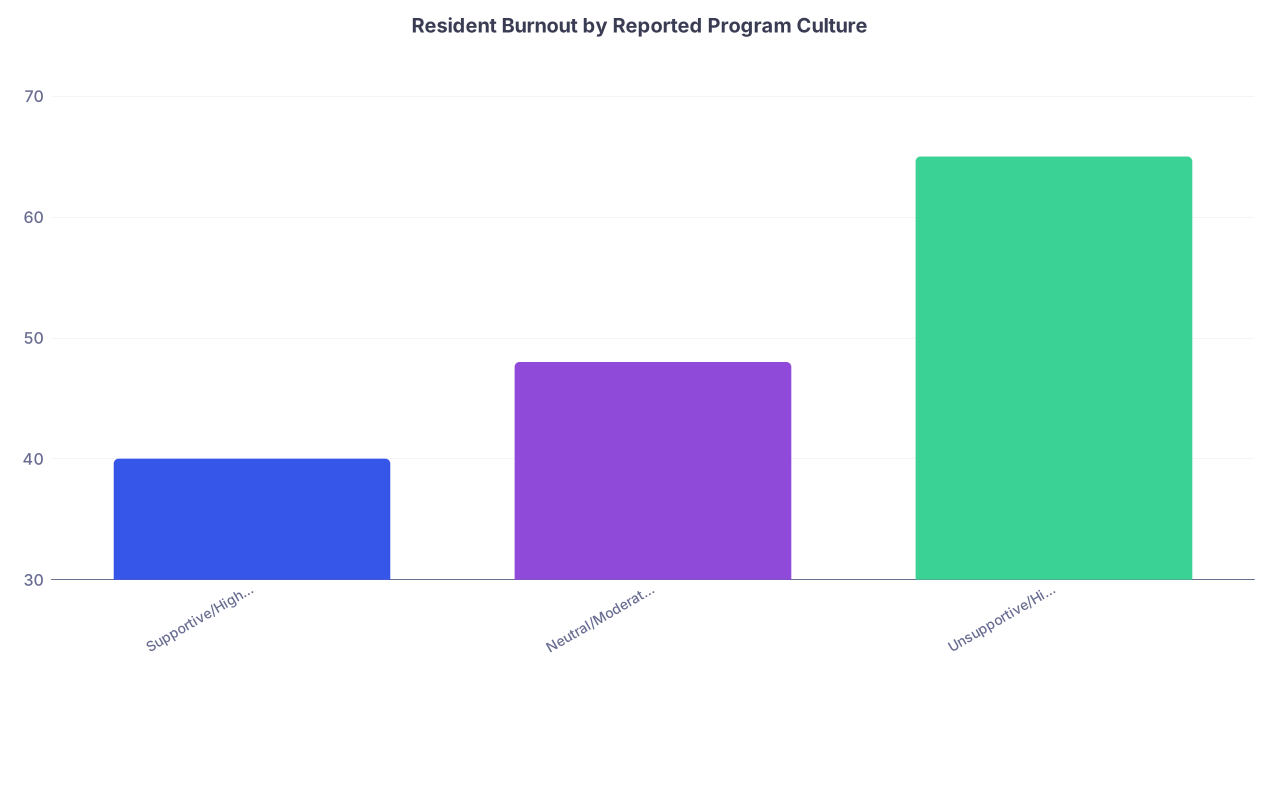
| Category | Value |
|---|---|
| Supportive/High Workload | 40 |
| Neutral/Moderate Workload | 48 |
| Unsupportive/High Workload | 65 |
Several large surveys of residents (AMA, Medscape, specialty-specific studies) show the pattern above:
- Programs that are supportive but demanding have plenty of burnout—but not dramatically worse than “average” places.
- Programs that are unsupportive and demanding—the truly malignant ones—are where you see the highest burnout, depression, and intent to leave medicine.
In other words: workload alone is not the villain. Culture plus workload is.
I’ve seen residents in “easy” low-volume programs with lighter call who were every bit as burned out as the “malignant” tertiary center folks. Why? Because their program:
- Gave them no ownership of patients
- Micromanaged every decision
- Dismissed feedback about bullying
- Blocked them from changing rotations to pursue interests
They weren’t malignant by Reddit standards. But they were soul-crushing.
Hard work in a psychologically safe environment is often more sustainable than mediocre work in a chronically disrespectful environment.
The Career Reality: Reputation, Volume, and Outcomes
Let’s talk career impact, since that’s the subtext behind “are malignant programs always bad?”
No, they’re not. Some of the most “malignant” reputations online belong to programs that send residents to the best fellowships in the country. Year after year.
Here’s the uncomfortable truth: some programs are “malignant” on SDN mostly because they are high-volume, intense, and not particularly cuddly—but they produce extremely competent graduates who have:
- Massive procedure logs
- Letters from nationally known attendings
- Comfort handling very sick patients
- Strong fellowship match rates
| Program Type | Online Reputation | Workload | Patient Complexity | Fellowship Match (Top 20) |
|---|---|---|---|---|
| A - Big academic “malignant” | Often called malignant | High | Very high | 40–50% of class |
| B - Mid-tier “chill” | Called laid-back/supportive | Moderate | Moderate | 10–20% of class |
| C - Community, low drama | Rarely discussed | Moderate/Low | Variable | 5–15% of class |
Those numbers are representative, not exact, but they reflect what you’ll see if you actually dig into program websites, fellowship lists, and alumni CVs.
You can absolutely land top fellowships from a non-malignant, mid-volume program. But the notion that every “malignant” program is some career dead end is just wrong. Often it’s the opposite: highly competitive, high-output academic centers get accused of malignancy because people are tired and the bar is high.
The real question isn’t “Is it malignant?”
It’s: “Is the trade-off between intensity and opportunity worth it for me?”
Where the “Malignant” Label Comes From (And Why You Should Be Skeptical)
The loudest opinions you’ll see online usually come from three groups:
- A couple of residents in truly toxic environments
- A few bitter seniors in tough-but-not-toxic programs who want to warn juniors
- Medical students who heard secondhand stories on audition rotations
You almost never see balanced commentary from:
- Residents who are satisfied but busy
- People who left a malignant program quietly and matched elsewhere
- Graduates 3–5 years out reflecting on what mattered and what didn’t
So you get selection bias. The most extreme experiences are the ones you read.
On top of that, the “malignant” label is sticky. Once a program gets that reputation online, every negative story confirms it, and every positive story is dismissed as “Stockholm syndrome” or “program leadership watching.”
I remember a big-name academic IM program that got brutalized on forums for years. “Do not rank,” “Residents hate their lives,” etc. I asked two fellows at a top cardiology program where they trained. That exact place.
Their take: “Yeah, it was rough, we worked our asses off. But I left feeling ready for anything, and my co-residents were some of the smartest people I’ve ever met. Would I do it again? Probably yes. But it’s not for everyone.”
Is that malignant? Depends what you value. It’s not a simple yes/no.
How to Tell High-Expectations from Truly Malignant
You aren’t choosing between “easy vs malignant.” You’re choosing along several axes: workload, support, autonomy, educational quality, and culture. You need to separate high-intensity-but-functional from high-intensity-and-poisonous.
Here’s a practical way to do it.
Look for consistent patterns, not one angry voice
On your interview days and virtual Q&As, pay attention to what multiple residents say when pressed, not just one loud person online.
Questions that actually expose culture:
- “What happens when people struggle—academically or personally?”
- “Has anyone left the program in the past 3 years? Why?”
- “How does leadership respond when residents raise concerns?”
- “Have there been any big changes after the last ACGME survey?”
Red flag: residents hesitate, look at each other, then give vague “we’re working on it” answers. Or they clearly censor themselves with leadership hovering.
Green-ish flag: residents admit what’s hard but also say, specifically, how the program has adapted. “We were getting crushed on nights, so they added an extra resident and hospitalist support. Still busy, but less brutal.”
Distinguish stress from disrespect
High volume and acuity will stress everyone. That’s not malignancy. What crosses the line is persistent, unaddressed mistreatment.
Examples I’ve heard directly from residents in truly malignant places:
- “Our PD told a resident with postpartum depression that maybe she ‘wasn’t cut out for medicine’ when she asked for schedule accommodations.”
- “Every time someone reports an attending for screaming on rounds, they mysteriously end up with worse rotations the next block.”
- “We had a racist attending. Everyone knew. Leadership’s solution was: ‘Just avoid working with him if you can.’ That was it for 3 years.”
That’s not just “tough love.” That’s structural rot.
On the other hand, “Attending X is old school and sometimes says harsh stuff in the OR, but is fair and will go to bat for you” is annoying—but survivable for many.
The Hidden Risks of Over-Avoiding “Malignant” Programs
There’s a downside to running from anything that smells malignant: you can easily over-optimize for comfort and under-optimize for training.
I’ve seen this pattern:
- Student terrified of “malignant” labels
- Ranks smaller, “chill” programs higher
- Ends up undertrained for the career they actually want
Soft signs this might happen to you:
- You’re aiming for a very competitive fellowship but avoiding the places that send most graduates there because they “seem intense”
- You want surgical or procedural mastery but choose the lowest-volume program that told you, “We really prioritize wellness”
- You’re okay with working hard but let anonymous comments scare you away from programs that, on paper, match your goals perfectly
You do not get extra credit from future employers for “self-care during residency.” They care about: competence, references, fellowship pedigree (for some fields), and what you can do on day one.
There’s a sweet spot: enough volume and expectations to make you good, enough support not to break you. But it’s not purely online-reputation dependent.
The Other Myth: “Malignant is a Badge of Honor”
Let’s flip the coin. There’s also bravado from some residents and attendings:
“We’re malignant, but that’s how you learn.”
“If you’re not suffering, you’re not training.”
“Back in my day, we did 120 hours a week and liked it.”
This is just as stupid as “never touch anything malignant.”
There’s solid evidence that:
- Chronic sleep deprivation impairs learning and performance
- Bullying and harassment increase medical errors and turnover
- Residents in toxic environments are more likely to leave medicine or avoid academia/leadership roles later
In one study of surgery residents, those in programs with high reported mistreatment had significantly higher rates of burnout and suicidal ideation—regardless of case volume. The abuse was the toxic variable, not the work itself.
Put bluntly: there’s no magical educational benefit to being humiliated on rounds or having your vacation “lost” because you annoyed the wrong attending. That’s sadism dressed up as rigor.
So no, a malignant program is not “better” training just because everyone is miserable. Being relentlessly ground down does not make you a better doctor. It just makes you exhausted.
How to Actually Evaluate Programs (Beyond the Malignancy Hysteria)
Strip away the label and ask four direct questions about every program you’re considering:
Will I be clinically competent—maybe even excellent—when I finish?
Look at case logs, procedural numbers, inpatient census, independent decision-making. Talk to graduates if you can.Do residents feel basically safe bringing up concerns?
You’re looking for psychological safety, not fake wellness pizza parties.Does leadership respond to problems with action or PR?
Specific changes > vague “we take this seriously” lines.Is the misery/complaint level proportional to the reality, or amplified by culture?
Some places have a culture of constant complaining. They may be intense but not structurally malignant.
If a program checks #1–3 reasonably well and fails only on “people here are tired and sometimes grumpy,” that’s not necessarily a dealbreaker—especially if it opens doors down the line.
If a program looks “chill” but fails #2–3? I’d be more worried about that than an 80-hour week.
What I’d Tell You If We Were Ranking Your List Together
Imagine you and I are sitting with your rank list and Starbucks cups.
You point at a big academic program with a scary online reputation. Residents you met said: “Yeah, we work hard, but leadership listens. We’ve gotten schedule changes. People match well.”
Then you point at a small community program everyone calls “supportive,” but the residents quietly admitted: “We don’t get much autonomy, and trying to switch electives is like pulling teeth. Two people left in the last three years.”
And you ask: “Which one is better for my career?”
If you want strong clinical skills, maybe a competitive fellowship, and you’re reasonably resilient, I’d probably say: rank the big “malignant” one higher. Because the malignancy label here is mostly workload and demand, not true toxicity.
If instead the story at the big place was: “PD retaliates, sexism is rampant, everyone is looking for a way out,” I’d tell you to drop it way down your list. Even if the fellowship match list is glittering. You’re not a martyr.
That’s the distinction you need to learn to make.
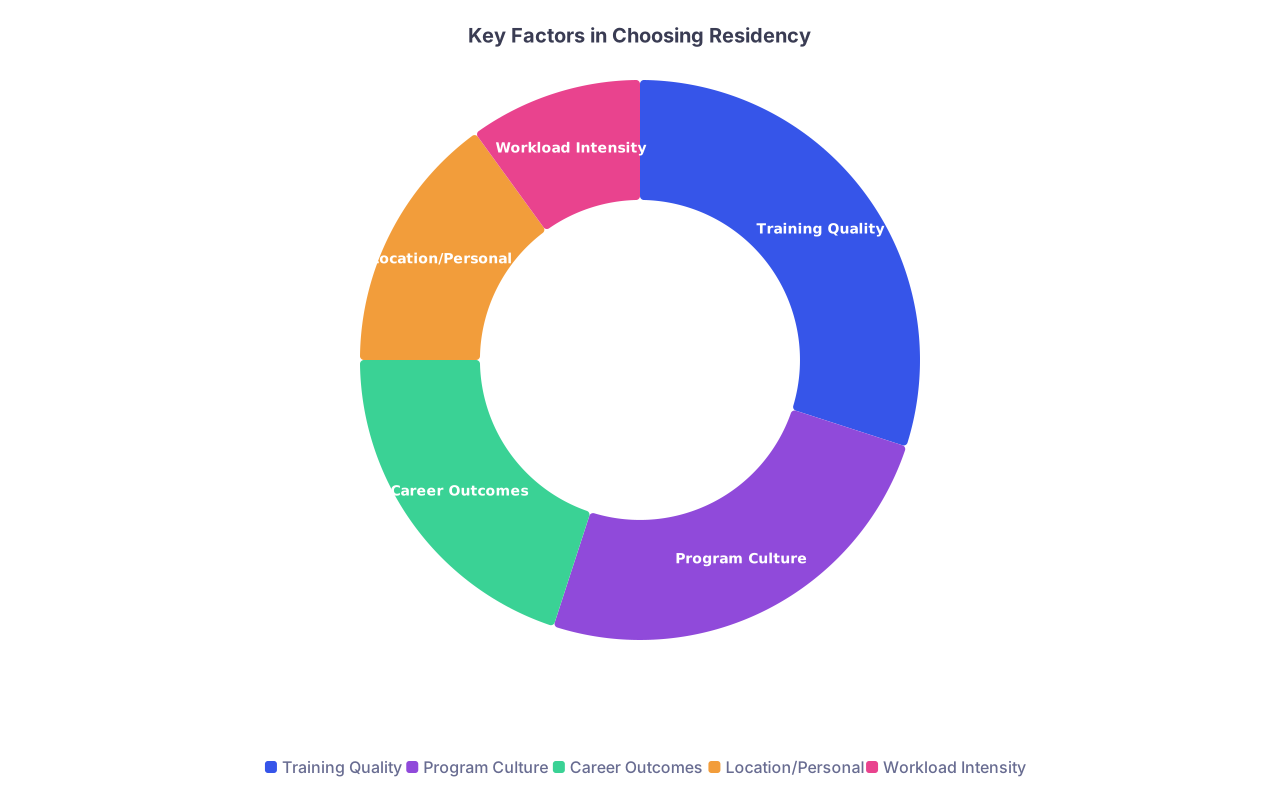
| Category | Value |
|---|---|
| Training Quality | 30 |
| Program Culture | 25 |
| Career Outcomes | 20 |
| Location/Personal | 15 |
| Workload Intensity | 10 |
And yes, location and your life matter too. You aren’t just a training machine.
The Bottom Line
“Malignant” is a lazy, overloaded word. Stop letting it make your decisions.
The reality:
- Many programs called “malignant” online are simply demanding but functional and can be excellent for your career—if the culture is basically respectful and responsive.
- True malignancy isn’t about hours; it’s about unfixed abuse, retaliation, and unsafe systems. Those programs are bad for your health and, often, bad for your long-term career.
- Your job isn’t to flee all discomfort. It’s to find a program where the intensity-to-support ratio fits who you are and where you want to go.
If you treat “malignant” as a binary label, you’ll make bad choices. Treat it as a prompt to ask sharper questions instead.