
Let me tell you something that could directly decide how many cases you log as a resident. A gleaming simulation center does not equal protected operating room time. It's the quiet, often fatal assumption that lures applicants into programs where the sims are marketing theater and your scalpel stays idle. I've watched good trainees get burned by believing the hype. Let's break this myth wide open.
This article is for educational purposes only. It is not financial advice, not legal advice, and not tax advice. Figures vary by individual circumstances, so consult a qualified professional before acting.
Don't Make the "Simulation = OR Time Protection" Assumption
Simulation centers can absolutely sharpen your skills before you ever touch a patient. They can standardize your basic laparoscopy, reduce early procedural fumbling, and give you a safe space to fail. What they cannot do, ever, is rewrite the administrative machinery that decides whether you actually enter the OR and how many minutes you get inside.
The mistake I see over and over: an applicant tours a multimillion-dollar simulation suite, watches residents suturing on high-fidelity mannequins, and mentally converts that investment into a guarantee of abundant operative exposure. That's myth. The reality is that OR time is governed by room availability, staffing, case mix, turnover discipline, and a cultural willingness to get residents in front of the table. Simulation is an educational input, not a scheduling contract. It tells you nothing about whether the board runner will pull you from a case because a scrub tech called in sick or because two add-ons blew up the block. When you evaluate a residency, treat simulation as one piece of the training infrastructure, never as a surrogate for hard OR throughput data. If the program pitches simulators as the answer to "Will I get enough cases?" you're already hearing a red flag.
Myth: "If They Have a Simulation Center, They'll Protect Your OR Time."
This single assumption has cost more residents operative volume than any single attending's teaching style. Applicants see a high-tech setup and unconsciously map it onto logistical stability: fewer delays, faster turnover, predictable first-case starts. It's a logical leap that simply doesn't hold.
Here's what simulation can realistically do: help you internalize procedural steps, reduce fumbling during your first real appendectomy, and maybe decrease the number of times an attending has to stop and re-teach a basic skill. That's real value. But notice, none of that touches the institutional mechanics that steal your OR minutes. OR time bleeds from room availability conflicts, pre-op clearance delays, late anesthesia starts, missing instrument trays, documentation bottlenecks, and the classic "we didn't have a runner to bring the patient down." Those aren't simulation-solvable problems. They're system failures.
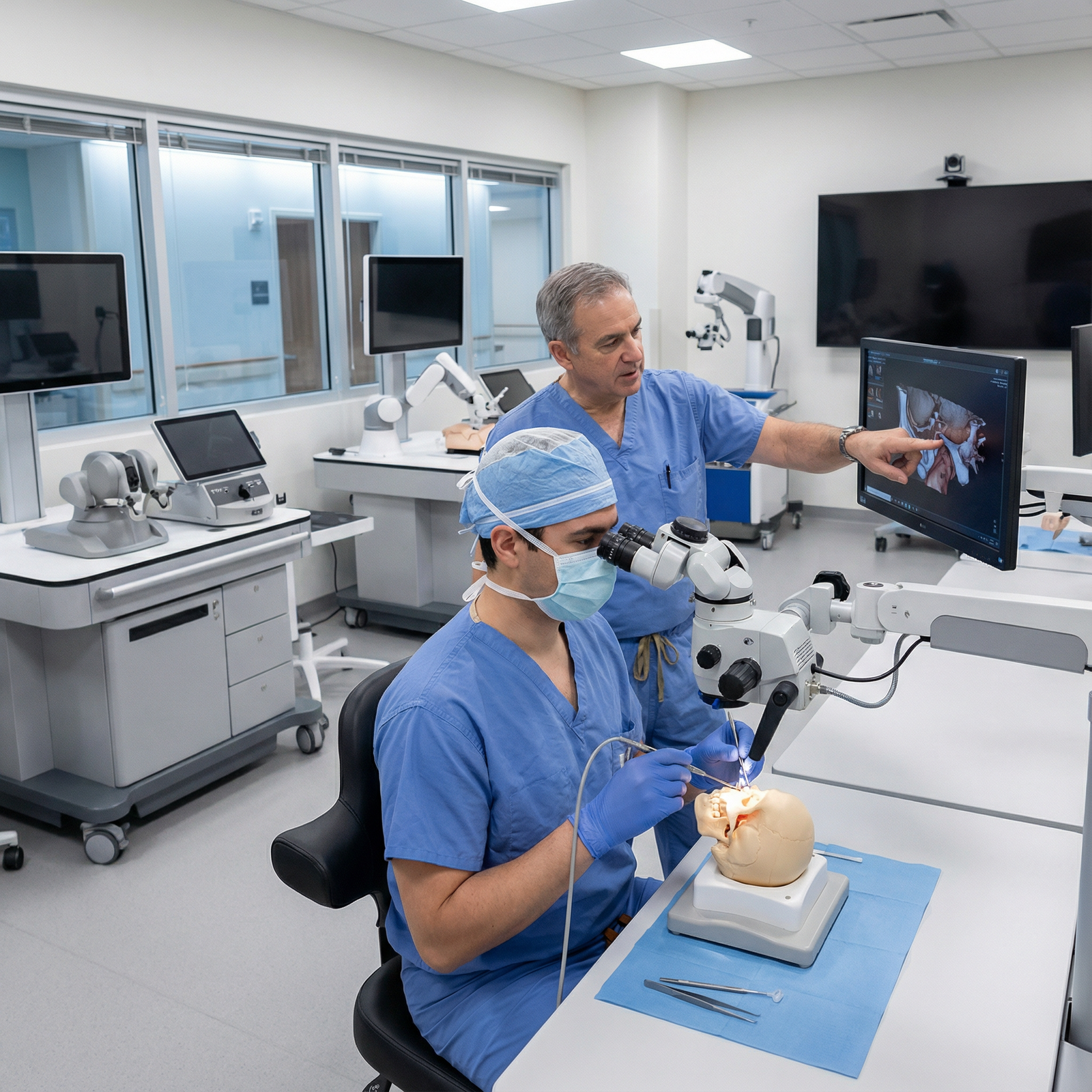
Don't confuse capability-building with resource allocation. A simulation center may make you a more competent surgeon, but it won't force a hospital to staff a fourth OR room, speed up a lazy turnover nurse, or stop a scheduler from double-booking attendings in overlapping rooms. I've been in programs where the sim lab was pristine and the OR schedule was a disaster, and the residents paid the price in case logs. The protective message: when someone tells you "We have an amazing sim center," your next question must be about start-time compliance, not the mannequin's brand.
Reality: OR Throughput Is a Systems Problem, Simulation Is Only One Input
Think of the operating room as a production pipeline. You've got scheduling, room assignment, block use, case length estimation, turnover discipline, add-on logic, and cancellation drivers. Simulation improves your personal readiness, it makes you faster and less error-prone once you're in the case. But it doesn't add a circulator. It doesn't fix a broken autoclave. It doesn't force anesthesia to hustle.
Here's the brutal truth: no amount of laparoscopic box training will shave fifteen minutes off a turnover if the cleaning crew is understaffed. Simulation won't prevent a 7:30 case from starting at 8:10 because the consent form wasn't signed properly in pre-op. These are logistics, not learning curves.
The "time protection" misconception runs deep. Some applicants think: if I'm more proficient in sim, the attending will let me do more, and that somehow expands total OR minutes. It can, marginally, by reducing the coaching chatter during a case. But if the room is chronically understaffed and turnover always drags, your efficiency gain gets swallowed by the system's waste. And if the attending can't get block time bumped because of administrative politics, your new skill doesn't matter.
Red flag: a program that markets its simulation palace but can't show you concrete OR metrics, first-case on-time start, average turnover time, cancellation rates by service, or resident case log trends. If they can't provide those numbers, it's usually because they're not good. And simulation won't fix them.
What to Ask (and What to Watch For) When Evaluating Simulation Programs
Don't let a flashy center disarm your skepticism. Here's your defensive checklist, stuff you absolutely must investigate before you rank.
First, demand OR exposure data. Ask for actual case logs by PGY level, not just ACGME minimums. Request first-case start percentages and average turnover times. If they hem and haw, that's your signal. Then, only then, ask how simulation is woven into the preparation workflow. A good program will tell you exactly which milestones or check-offs must be cleared on the simulator before you scrub a particular case. They'll map it to your progression: PGY-1 focus on basic skills, PGY-3 on laparoscopic suturing and bowel anastomosis practice, PGY-5 on advanced endoscopy or robotic dry labs.
Next, ask if simulation time is protected. I mean literally on the schedule. Not "whenever you can squeeze it in between cases," because that squeeze never happens. If simulation is constantly bumped by clinical duties, it's decorative. Probe whether sim sessions are integrated into a weekly curriculum with faculty-led feedback, or if it's an unsupervised free-for-all that residents ignore.
Watch for alignment with competency-based assessments. Does the program use simulation to verify readiness, or is it just an attendance checkbox? If no one can tell you how simulation performance changes intraoperative teaching, that's a gap. And the biggest red flag: any suggestion that simulation is a substitute for operative volume. If you hear phrases like "Our sim center is so good, you won't miss a case," walk away mentally. You will miss cases. I've seen it happen.
The Mistake Avoider's Framework: Measure Competence, Not Marketing
You need a way to cut through the noise. Here's the framework I've developed after watching too many residents get shortchanged: separate competence outcomes from operational outcomes, verify each independently, and never substitute one for the other.
A program can show high simulation use, residents logging hours, completing modules, and still fail to deliver smooth OR experiences. The missing link is measurable impact: do residents who pass simulation milestones actually need less intra-op coaching? Do attendings report reduced teaching overhead? Are pre-op readiness check-offs correlated with faster hands-on time? Those are competence indicators. They matter. But they don't replace operational performance.
What "success" looks like: residents demonstrate milestone competencies before they scrub, so the attending can hand over more autonomy sooner. Meanwhile, case flow stays stable, first starts are reliable, turnover is disciplined, and cancellations are managed well. That's the combination you want.
During interviews, bring scenario-based questions: "Suppose I've passed all required simulator check-offs for a lap chole, but the OR board is backed up and turnover is slow. How does your program ensure I still get my cases that day?" If the answer is vague, that program's simulation is an island. Your operative exposure will be, too.
How Simulation Can Help (When It's Built to Protect Training Time)
I don't want to sound like simulation is useless. It's not. When it's built thoughtfully, with protected blocks, staffing alignment, and a clear pipeline into the OR, it can genuinely shield your training time. But that requires deliberate design.
The best programs schedule dedicated simulation blocks during onboarding weeks and before major clinical rotations. They don't treat lab time as filler; they treat it as a prerequisite for being in the room. At one program I respect, PGY-2s must complete a standardized laparoscopic skills assessment before they can operate as the primary surgeon in a lap chole. The assessment is proctored, graded, and tied to a specific scheduling policy: if you don't pass, you do more simulation until you do, and your OR assignment reflects that readiness. That's a system that protects your experience, because it ensures you're prepared, which reduces intra-op delays, which in turn makes attendings more willing to hand over the instruments.
Simulation can also reduce avoidable delays when it's used for team rehearsals. Running a trauma activation drill or a complex multi-step procedure in the sim lab with the whole team, nursing, scrub tech, anesthesia, tightens coordination and eliminates confusion during real cases. Fewer fumbles, faster starts, less time wasted on set-up errors. But that only happens if the program deliberately links simulation to operational planning, not just to resident education.
Seek out programs where simulation isn't a separate universe. It should be a pre-operative pipeline, with clear handoff from skill acquisition to intra-op performance, and with faculty who can speak to how the lab changed their teaching patterns. If you can't see that thread, the sim center is just expensive wallpaper.
Red Flags That Simulation Won't Save Your OR Time
Here's the list I mentally tick through whenever I evaluate a program's simulation pitch.
- OR turnover metrics are ignored or never shared. If they can't tell you what their average turnover is, they're not managing it. And you'll be the one waiting.
- Case volume expectations sound fuzzy. "You'll get enough" without a defined minimum per rotation or a process for flagging deficiencies. Trust me, "enough" often means "barely."
- Sim center access evaporates during peak clinical months. If the sim lab hours shrink just when you need practice, say, during a heavy general surgery block, it's a scheduling convenience, not a training commitment.
- "We'll make room for you" without a policy. A program that doesn't block out time for simulation in the weekly schedule is already telling you it's non-essential.
- Residents treated as service labor while simulation is a marketing bullet point. If the sim center appears in the recruitment brochure but the residents you talk to can't remember the last time they used it, run.
- Faculty can't articulate how simulation is scheduled relative to OR blocks. If they stumble, it means it's not integrated. Their confusion will become your frustration.
- Simulation assessments exist but don't gate anything. If a skills test is administered but nobody changes assignments based on it, the tool is collecting dust. And your preparedness won't accelerate your autonomy.
If you spot two or more of these, treat the program as high-risk. It's not that simulation is worthless there, it's that they've severed it from the operational reality you need to thrive.
Closing Summary: Protect Your OR Time by Validating Outcomes, Not Assumptions
I'll say it again: a simulation center can help you become a better surgeon, but it won't automatically protect your OR time. Make that mistake and your case logs could suffer quietly while you're busy "doing sim."
Your path as an applicant now includes a clear, protective sequence: verify that simulation is woven into milestones and scheduling (not just floating around), then independently confirm OR throughput metrics and actual resident operative exposure. Ask the direct questions I've outlined, request data, and test the program's logistics in interviews. Your training is too long and too expensive to leave to assumptions. Competence is built through deliberate practice, but it's only expressed in the OR if the system lets you in. Don't let a shiny sim lab distract you from that fact.