Hidden Red Flags in Surgical Residency Culture Applicants Often Miss
What are you supposed to think when every resident on your interview day says, “We’re a family here,” but no one makes eye contact and everyone looks exhausted?
That’s the trap. Surgical residency culture is where people get burned—not by lack of skill or intelligence, but by walking blindly into toxic environments that were actually screaming red flags all along.
You’re not just choosing a training program. You’re choosing who is going to shape your habits, your self-worth, your sleep, your marriage, and your sanity for 5–7 years. If you get the culture wrong, nothing else—prestige, case numbers, research—will save you.
Let’s talk about the red flags everyone glosses over on interview day and away rotations. The stuff you will absolutely regret ignoring.
1. The “We Work Hard and Play Hard” Lie
This phrase is almost always code for: “We normalize abuse and cope with alcohol.”
If you hear “work hard, play hard” or “it’s a grind, but we have fun,” your next move should be to dig ruthlessly.
Ask yourself:
- Does “play hard” mean:
- Occasional group dinners, hiking, low-key hangouts?
- Or blackout-level post-call drinking, residents disappearing for months with no explanation, and a weird pressure to join in?
On a tour or dinner, watch patterns:
- Are the seniors visibly drunk while PGY-1s laugh nervously?
- Do people tell “funny” stories about:
- Residents puking in the bathroom then scrubbing back in
- Someone getting a DUI and it being brushed off as “legendary”
- Post-call benders that sound like self-destruction, not celebration
I’ve seen programs where “bonding” is basically trauma-bonding at the bar. The red flag isn’t that they go out. It’s:
- When every story of “fun” is really about:
- Numbing stress, not genuine connection
- Mocking the weakest person in the group
- Competition and humiliation dressed up as jokes
If you hear “we don’t track hours, we just do what needs to get done,” understand what that actually means. It usually means:
- Under-reporting work hours
- Calls to “fix” duty logs
- Pressure to pretend your life is fine when it isn’t
Do not romanticize this. Surgical culture has a long history of glorifying misery. Programs that still lean into that are telling you who they are.
2. The Way They Talk About Weak Residents
If you want the truth about a culture, listen to how they talk about their most vulnerable people.
You’re looking for one thing: How do they describe the resident who is struggling?
Examples you should treat as bright-red warning flares:
- “We had a couple people who just couldn’t hack it.”
- “One resident had to go on leave… yeah, they just weren’t a good fit.”
- “We hold a high bar. It’s not for everyone.” (said with a smirk)
- “We don’t really have people take time for mental health; surgery is tough, you just push through.”
Residents will try to be vague, but the tone will give it away. Listen for:
- Contempt vs compassion
- Blame vs support
- “They were weak” vs “We tried to help them”
A healthier answer sounds more like:
- “We have had residents struggle. We got GME and wellness involved, adjusted their schedule, and helped them get the support they needed.”
- “One resident switched specialties. We helped them find a better fit.”
You’re not just evaluating how they’ll treat you when you’re at your best. You’re evaluating how they’ll treat you:
- On your worst rotation
- When you’re depressed
- When your parent gets cancer
- When you’re 28 hours into call and make a mistake
If they have zero empathy for residents who’ve failed, been remediated, or taken leave, they will have zero empathy for you when the time comes.
And it will come.
3. Residents Who Look Half-Dead (And Think That’s Normal)
Yes, surgery is hard. Yes, everyone is tired. But there’s a difference between “busy” and “broken.”
Pay close attention to faces, posture, and micro-reactions.
Red flags you should not talk yourself out of:
- Dark circles and flat affect on everyone, including chiefs
- Forced laughter at every question about “wellness”
- Residents making constant jokes about:
- Divorce
- Weight gain, hair loss, health issues
- “I haven’t seen my kid in three days”
And then saying, “But it’s fine. I love it.”
No. That’s coping.
On away rotations, there’s an especially telling pattern:
When someone asks, “How are the hours really?”, everybody looks at the most senior resident before answering. That glance means there’s a “correct” answer.
Watch for:
- Long pauses before residents answer culture questions
- People starting to answer honestly, then abruptly course-correct:
- “It can be rough… I mean, it’s good, we learn a lot.”
- Residents who say, “You’ll be fine if you’re not lazy,” as if that’s comforting
You shouldn’t expect a cushy lifestyle in general surgery. But if you don’t see at least some people who look stable, functional, and reasonably human, believe that.
It will not magically be better for you.
4. Attending Behavior in the OR: The Hidden Interview
The real program tour isn’t the catered lunch. It’s how attendings act in the OR when they don’t realize you’re evaluating them.
If you rotate there, treat every case as a culture exposure.
Big red flags:
- Attendings openly screaming or berating staff or residents
- Throwing instruments, slamming things, storming out
- “Teaching” by humiliation:
- “How do you not know that? Did you even go to med school?”
- “You’re going to kill someone if you keep doing that.”
- Nurses or techs flinching when a specific attending walks in
You will be told, “Oh, that’s just Dr. X. Old-school.”
Translation: “We’ve decided we’d rather protect this person’s ego than your psychological safety.”
Don’t overcomplicate this. If you’d be embarrassed to have your family watch how an attending speaks to a resident, why are you okay with you being on the receiving end?
Also pay attention to:
- Whether attendings ever apologize when they’re out of line
- Whether seniors defend interns or throw them under the bus
Programs where abuse is normalized will always tell you, “We produce excellent surgeons.”
But there are plenty of places that train good surgeons without destroying people.
5. “We’re a Big Family” With Zero Specifics
“We’re a family” is the most overused, meaningless line in residency recruitment.
Don’t fall for it. Force people to show you what that actually looks like.
If you ask, “How do residents support each other?” and you get:
- “We just really have each other’s backs.”
- “We hang out a lot.”
- “We’re very close.”
That’s fluff, not data.
Push for specifics:
- “Can you tell me the last time residents helped each other out when someone was in crisis?”
- “How would your co-residents respond if you needed time off for a family emergency?”
- “How often do residents actually get together outside the hospital? What did you do last month?”
You want concrete examples, like:
- “When someone’s family member was dying, we all swapped calls to cover them.”
- “We do Sunday dinners and short hikes post-call on some weekends.”
- “Two of us live together, three others down the block. We genuinely see each other outside work.”
If they can’t give you at least one specific situation where the “family” showed up, it’s probably marketing.
6. The Way They Talk About Other Specialties & Staff
This one separates quietly malignant programs from actually decent ones.
Listen to how they talk about:
- Anesthesia
- Nursing
- Internal medicine
- Emergency medicine
- Scrub techs
If you hear:
- “Anesthesia here is useless.”
- “Medicine always dumps their mess on us.”
- “Nurses complain too much.”
- “ED docs are lazy; they just turf to us.”
That’s not just venting. It’s a philosophy.
A culture that constantly blames and belittles others will eventually:
- Blame and belittle you
- Teach you to practice medicine with anger instead of collaboration
- Poison your reputation with colleagues you need on your side
Also watch how they talk about staff when staff are not around. That gap (or lack of gap) between their public and private behavior tells you everything.
A healthier environment sounds more like:
- “We have good relationships with anesthesia. We disagree sometimes, but we work it out.”
- “Our nurses are strong. They’ll call you on stuff if you miss something, and that makes us better.”
If you only hear contempt, you’re walking into a war zone disguised as a residency.
7. Turnover, Transfers, and “We Don’t Really Talk About That”
Interrupted careers are the smoking gun of a bad culture, and yet applicants almost never push on this.
You must ask, directly:
- “How many residents have left or transferred out in the last 5 years?”
- “Where did they go?”
- “What were the reasons?”
Red flags:
- Vague responses: “Not many… I’m not really sure.”
- Shifting eyes, awkward silence, changing the subject
- Blaming all who leave: “They couldn’t handle surgery” or “they weren’t a good fit”
You’re not looking for zero attrition. People change their minds, people have life events. But you’re absolutely looking for:
- Patterns of exits
- Whether people left this program for another surgery program
- Whether there’s a trail of people stepping away due to “personal reasons” that no one will explain
If you pull NRMP data, program websites, or word-of-mouth and notice a pattern of:
- Lots of PGY-2s gone
- Cohorts shrinking year over year
- People going prelim-only then vanishing
Do not brush that off. That’s often the most honest cultural metric you’ll get.
8. How They Treat Medical Students and Off-Service Residents
On your away rotation or interview day, you’re probably focused on how you are treated.
You should be more interested in how they treat people who have nothing to offer them.
Watch:
- How they talk to medical students:
- Are they teaching or just pimping to embarrass them?
- Do they ignore them entirely unless they can retract?
- How they treat off-service residents (EM, IM, OB, etc.) on the trauma or consult service:
- Do they roll their eyes, talk down, belittle behind their backs?
- Are they patient when someone is clearly inexperienced?
Programs that are decent to powerless people are much more likely to be humane when you’re the intern at the bottom of the hierarchy.
If students look terrified or useless, if no one explains anything, if every interaction feels like a test—you’re seeing the operating system of that program.
You don’t fix that by “being tough.” You just become part of it.
9. Duty Hours: The Quiet Culture Test
Everyone lies a little about duty hours. The question is how systemic the lying is.
You’re looking for how they respond when you try to get specific.
Better question than “Do you follow duty hours?” is:
- “How does your program handle duty hour violations?”
- “What happens if you’re at risk of going over?”
- “How often are people at or near the 80-hour limit?”
Red flag answers:
- “We’re surgical residents. We work until the work is done.”
- “We’re expected to be honest, but we also understand the attendings need help.”
- “You just learn to log smart.”
Translation: “We break the rules and we expect you to help us cover it up.”
Also watch for:
- Residents joking about 100+ hour weeks as if they’re a badge of honor
- Logging systems being dismissed as a joke
- Everyone insisting “duty hours are fine” but then telling horror stories of never seeing daylight
You don’t need a lifestyle program. But if duty hours are treated as an obstacle rather than a safety standard, the culture is warped. And you’re going to feel it in your brain and your body.
10. Red Flags Hidden in the “Wellness” Talk
Every program now has a wellness slide. Most of them are garbage.
You’re not interested in what they say about wellness. You’re interested in:
- Do residents believe it?
- Is there evidence that people are actually allowed to use those resources?
Ask specific, uncomfortable questions:
- “When’s the last time someone took a real vacation? How long and what rotation?”
- “Has anyone actually used mental health services? How did the program respond?”
- “What happens if a resident says they’re burned out and need help?”
If the answers sound like:
- “We have free Headspace and yoga.”
- “We had a wellness day once… yeah that was nice.”
- “We have a wellness committee that plans events, but it’s hard to go.”
That’s superficial. That’s decoration on a burning building.
You want to hear things like:
- “We adjust schedules when people are struggling.”
- “We have back-up coverage that’s actually used.”
- “Our PD has met with residents privately to support them through rough patches.”
Also note: if wellness always sounds performative (“we care so much about wellness”) but nobody can name one resident who got protected when life exploded, that’s a red flag.
11. Data That Should Make You Pause
Sometimes you need to see the culture indirectly—through actual numbers.
Here are a few structural things that often correlate with deeper problems:
| Indicator | Concerning Pattern |
|---|---|
| Board Pass Rates | Below national average, inconsistent |
| Resident Attrition | >1 resident/5 years leaving per class |
| Case Distribution | Chiefs hoard complex cases |
| Fellowship Placement | Weak or limited from a “big” program |
| Research Expectations | Unclear, shifting, or exploitative |
None of these alone prove toxicity. But if you’re already seeing cultural red flags and these numbers look off, stop telling yourself it’s fine because “it’s a big-name program.”
To make this concrete, here’s how often applicants actually weight culture (vs what they say they care about):
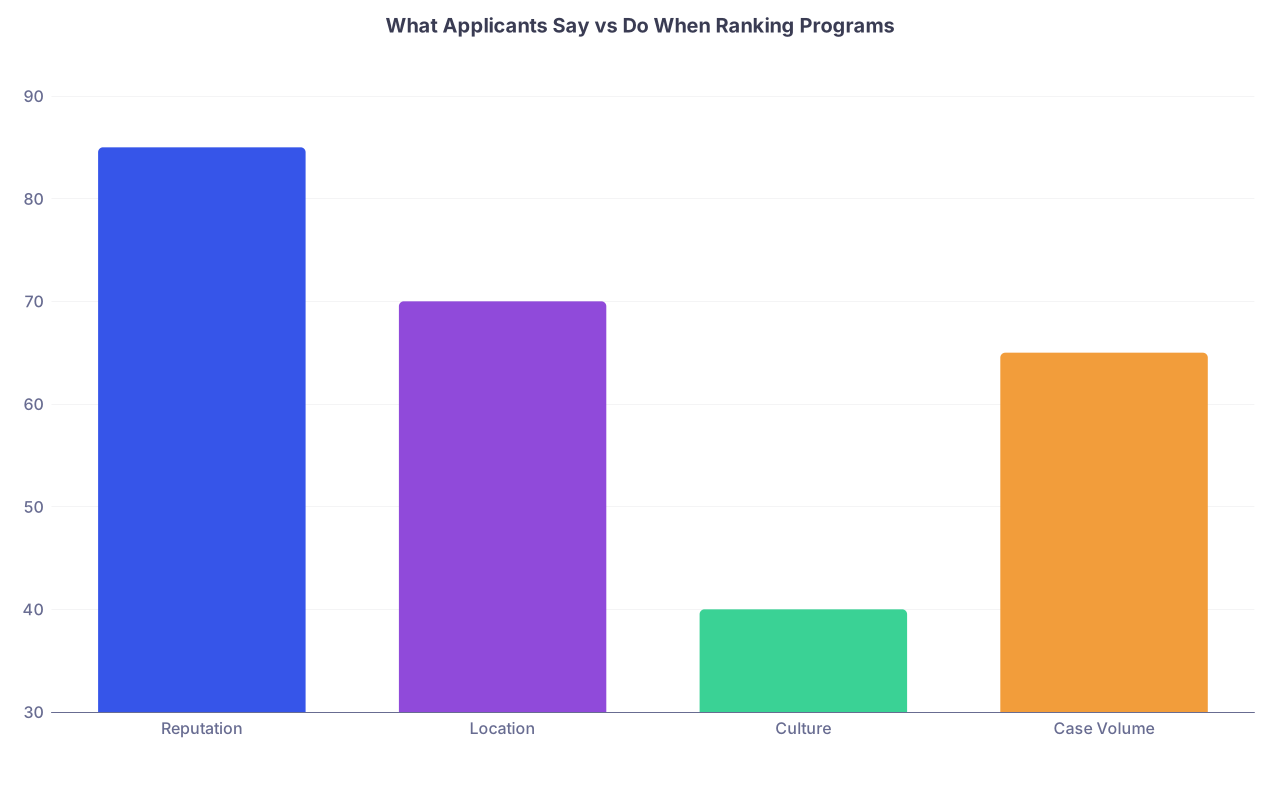
| Category | Value |
|---|---|
| Reputation | 85 |
| Location | 70 |
| Culture | 40 |
| Case Volume | 65 |
Everyone says culture matters. Then they rank prestige first anyway. That’s how people end up miserable.
12. How to Actually Test Culture (Without Getting Snowed)
You can’t fully know a program before you start. But you can stop being naïve.
Here’s a simple process I recommend applicants use:

| Step | Description |
|---|---|
| Step 1 | Pre-Interview Research |
| Step 2 | Away Rotation or Shadowing |
| Step 3 | Resident-Only Conversations |
| Step 4 | Hard Questions on Interview Day |
| Step 5 | Compare Stories to Data |
| Step 6 | Gut Check and Rank |
Some practical moves:
Pre-interview
- Talk to alumni from your med school who trained there. Ask:
- “Would you choose it again?”
- “Who struggles there?”
- Pay attention if answers are heavy with, “It’s great… but…”
- Talk to alumni from your med school who trained there. Ask:
On rotation
- Arrive early, stay late, be helpful—but also observe.
- Notice who is scared of whom.
- Watch how often people apologize vs get defensive.
Resident-only sessions
- Ask one or two direct questions, not twenty vague ones:
- “What do you wish you had known before you matched here?”
- “If your sibling wanted surgery, would you tell them to come here?”
- Ask one or two direct questions, not twenty vague ones:
After the interview
- Write down exact phrases that made you uneasy. Don’t smooth them out later.
- Ask yourself:
- “If nothing about this culture changed in 5 years, would I still be okay training here?”
If your gut keeps nagging, it’s not being dramatic. It’s trying to protect you.

13. Things You’re Overrating (That Won’t Save You From Bad Culture)
Let me be blunt. These things will not compensate for a malignant environment:
- The “name” of the hospital
- The city being cool
- A famous chair or department head
- Insane case volume
- Having a research machine that churns out publications
Plenty of miserable surgeons were produced at “elite” programs.
I’ve seen people cling to:
- “But the trauma exposure is incredible.”
- “The fellowship match is strong.”
- “I’ll just suck it up—it’s only 5 years.”
And then flame out in PGY-2, or stay and carry permanent scars.
High volume, big reputation, strong research—fantastic if the culture is at least survivable. Utterly worthless if your mental health collapses or you’re chronically unsafe because no one will teach you without shaming you.

14. The Mistake You Must Not Make
Here’s the error that wrecks people:
Assuming you’re the exception.
- “Other people might struggle here, but I’m tough.”
- “I don’t need touchy-feely support; I just want to operate.”
- “If it’s toxic, I’ll rise above it.”
No, you won’t. Culture is stronger than individual willpower. It will shape how you:
- Talk to nurses
- Teach students
- Handle complications
- Treat yourself when you make mistakes
You’re not choosing where you’ll spend 5–7 years.
You’re choosing who you’ll become over 5–7 years.
If you ignore the red flags now because the name is shiny or the ORs are new, you’re betting your future self on the hope that all the warning signs are wrong.
They usually aren’t.

Final Takeaways
Keep it simple:
- Believe behavior, not branding. How they treat weak residents, students, and staff is who they are.
- Push for specifics. Vague “we’re a family” and “we work hard” lines are useless without examples.
- Don’t trade your sanity for prestige. A solid program with a decent culture beats a famous name with quiet horror stories—every single time.