
Ranking surgical programs by name alone is a lazy shortcut that will cost you years of your life.
Let me be blunt: choosing a surgical residency based on “brand name” is one of the most expensive mistakes you can make in your entire career. You will pay for it in sleep, in sanity, in stalled careers, and in burnout rates nobody advertises on their glossy website.
Everyone talks about prestige. Almost nobody tells you what it actually feels like to be a PGY‑2 at 2 a.m. in a “top‑tier” program that does not support its residents, versus a so‑called “no‑name” place where the chiefs know your kids’ names and the attendings actually let you operate.
This is the gap that gets people hurt.
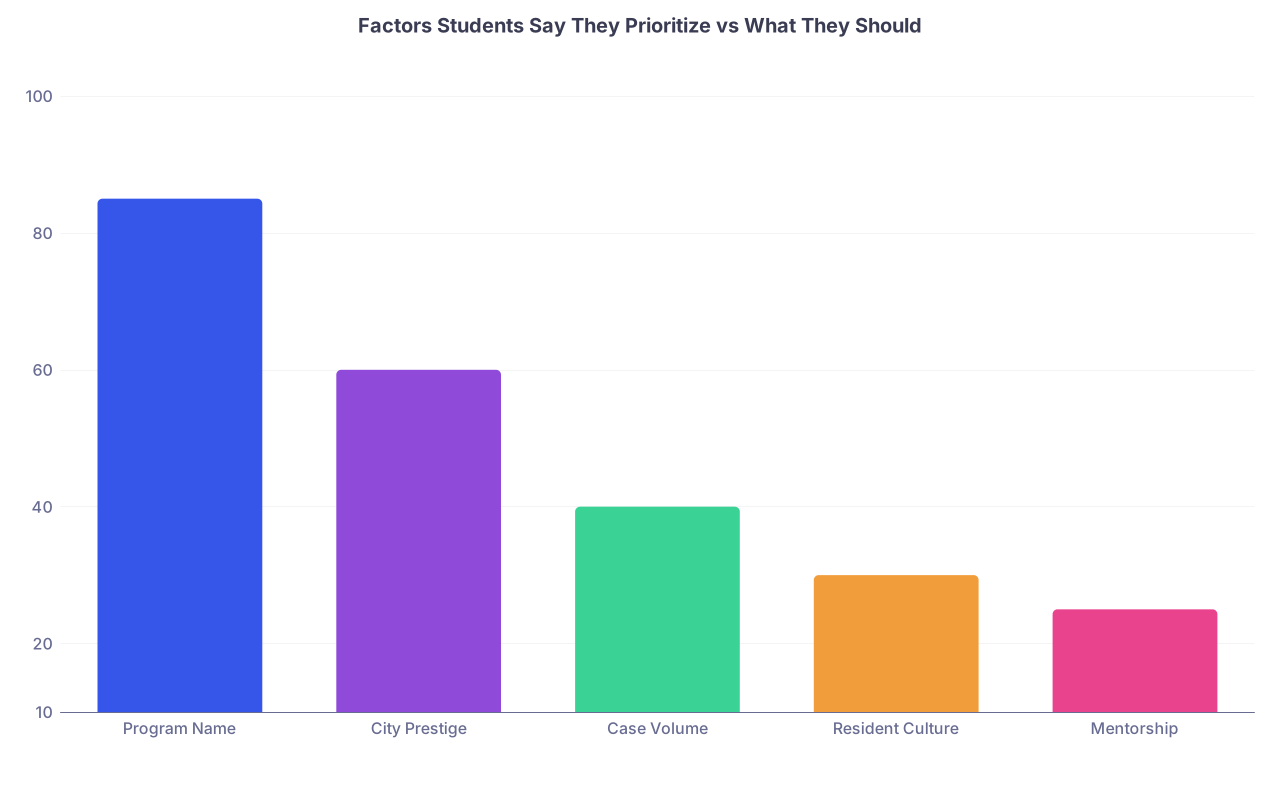
| Category | Value |
|---|---|
| Program Name | 85 |
| City Prestige | 60 |
| Case Volume | 40 |
| Resident Culture | 30 |
| Mentorship | 25 |
The Prestige Trap: How Applicants Fool Themselves
Here is the pattern I have watched play out every single cycle.
A student with a solid application pulls up a list of “Top General Surgery Programs” from some random blog, Doximity, or rumor mill. They see the usual suspects: MGH, Hopkins, UCSF, Brigham, Mayo, Columbia, etc. They then build their rank list like this:
- Famous coastal academic giant
- Famous coastal academic giant #2
- Random “name” they have heard once
- Actual program they loved on interview day
- Solid community‑academic hybrid with great vibes
They tell themselves:
- “If I can get into a big‑name program, I have to put it first.”
- “Reputation will open every door.”
- “I can handle any work environment; I did fine in med school.”
Then PGY‑1 starts. Suddenly those comforting slogans collapse under:
- Malignant culture that everybody alluded to in vague terms but no one said outright.
- Micromanaging attendings who “teach” by humiliation.
- Call schedules that turn you into a triage clerk, not a surgeon.
- Zero interest in your career goals unless they align perfectly with “high‑impact research” in two or three favored labs.
Meanwhile, the classmate who ranked that “mid‑tier” state program first is getting real cases early, has program leadership who actually knows her name, and is getting strong letters in PGY‑2.
Which one is really ahead?
Why Name‑Brand Ranking Backfires So Hard
The big mistake: assuming the market values all “prestige” the same way you do as a student. It does not.
There are at least five ways name‑obsessed ranking backfires.
1. You Ignore Fit, Then Blame Yourself For Being Miserable
You know this on some level, but applicants pretend otherwise: surgery residency is brutal everywhere. So the differentiator is not “hard vs easy.” It is hard vs impossible and supported vs abandoned.
When you rank by name, you ignore:
- Your own learning style
- The kind of feedback you tolerate
- How much autonomy you actually want early
- How you respond to public criticism, sarcasm, or “old‑school” culture
Then when you are miserable you do something dangerous: you assume you are the problem. Not the environment.
“I guess I am just not cut out for surgery.”
No. You might simply have picked a program whose culture is toxic for you. A famous badge does not make that less toxic.
2. You Confuse “Big Name Hospital” With “Strong Surgical Training”
This one is common and embarrassing, but fixable.
Students hear “Top 10 hospital” and assume the surgery residency must also be elite. Reality: different departments inside the same institution can vary wildly in quality.
You can have:
- A world‑class medicine department
- A good but not spectacular surgery department
- A legendary cardiology service
- A struggling trauma service
Yet the hospital’s overall brand muddies all that, so students lump it into “prestigious = excellent at everything.”
That is how people end up in surgical programs with:
- Chronic case log deficits in key index procedures
- Weak subspecialty exposure (e.g., zero hepatobiliary, limited thoracic)
- Minimal operative autonomy until late PGY‑4
All while bragging about doing “research at [Brand Name].”

3. You Underestimate How Much Program Culture Affects Training
I remember a PGY‑3 who lateraled from a “top 5” university program to what applicants would call “mid‑tier.” His words: “I am doing more meaningful operating in three months here than I did in three years there.”
What changed? Not his intelligence. Not his grit. The culture.
Bad cultures share a few traits:
- Residents are interchangeable cogs, not people with careers.
- Chiefs “eat their young” because that is how they were trained.
- Feedback is mostly public shaming.
- Wellness is a buzzword for ACGME surveys, not policy.
Ranking by name hides these red flags. Interview days are polished. Faculty are on their best behavior. The residents you meet might be self‑selected optimists or too scared to be honest.
You have to work to see through the stage lighting. Students who idolize prestige names rarely do that work.
4. You Misread How Surgical Subspecialties Value Reputation
Here is the nasty secret: the value of your program’s “name” is not uniform across subspecialties.
Transplant surgery cares about different pipelines than plastics. Trauma cares about different programs than colorectal. A well‑known transplant program might barely move the needle if you later decide on ortho.
Yet applicants will rank Program X high “because it is big in [field I think I might want].” Then in PGY‑3 they fall in love with another subspecialty that the program barely supports.
Now they are stuck.
| Scenario | Brand Name Helps Strongly | Brand Name Helps Mildly |
|---|---|---|
| Elite research academic career | Yes | — |
| Competitive fellowships at same institution | Yes | — |
| Private practice in most cities | Mild | Yes |
| Changing region post‑residency | Mild | Yes |
| Burnout recovery and mental health | No | No |
You know what always has leverage? Strong advocate mentors who know you well and will pick up the phone. Those exist at big‑name places and at hospitals you have never heard of. You lose them when you chase name over fit.
5. You Forget That You Actually Need Case Volume And Autonomy
You cannot operate your way out of a bad case log.
Surgery is a craft specialty. You need:
- Repetition
- Graduated responsibility
- The psychological safety to make small mistakes, get feedback, and adjust
Some prestige‑heavy programs are so subspecialized, so fellow‑heavy, and so protected by reputation that juniors function like perpetual interns. Impressive morbidity and mortality conferences, glossy research portfolios, but PGY‑4s who have never truly led a big case skin‑to‑skin.
Students rank them high because “everyone knows [Program].”
Residency graduates get into the OR alone and realize they are not ready. At all.
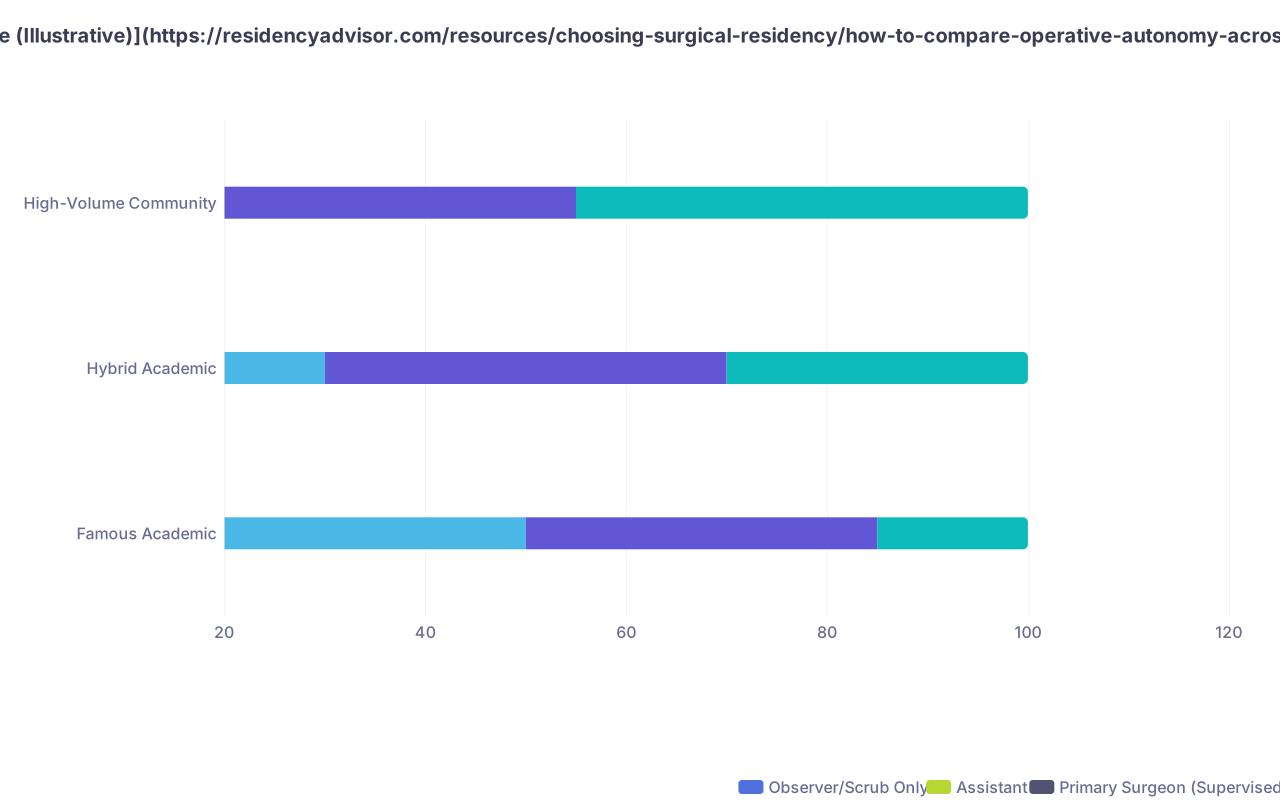
| Category | Observer/Scrub Only | Assistant | Primary Surgeon (Supervised) |
|---|---|---|---|
| Famous Academic | 50 | 35 | 15 |
| Hybrid Academic | 30 | 40 | 30 |
| High-Volume Community | 20 | 35 | 45 |
What Actually Matters More Than Name
If you want to avoid the prestige trap, you need a different ranking algorithm. Not perfect, but sane.
These factors consistently matter more than the logo on your white coat.
1. Case Volume And Breadth
Do not just ask “high volume?” Everyone says yes. Drill down.
Ask residents privately:
- “Are there any index cases people struggle to complete?”
- “Do juniors get to staple anastomoses? Do you ever drive the camera in lap cases?”
- “Are there cases routinely double‑scrubbed by fellows and chiefs, leaving juniors watching?”
Red flag: PGY‑3s who smirk and say, “It depends who you are on service with,” then change the subject.
2. Resident Culture And Turnover
You want a simple data point: are people leaving?
If a program has had:
- Multiple residents resign in the last 3–4 years
- Several switches to different specialties
- Silent “gap years” that nobody can explain
Do not brush that aside because “it is a famous place.” That is exactly how name‑blind ranking hurts you.
Talk to off‑cycle residents. Ask, “How many residents from your class are still here?” If the answer is not “all of us,” you need clarity.

| Step | Description |
|---|---|
| Step 1 | Consider Program |
| Step 2 | Check Culture and Volume |
| Step 3 | Dig Into Autonomy and Mentors |
| Step 4 | Lower on Rank List |
| Step 5 | Consider Ranking Higher |
| Step 6 | Impressed by Name |
| Step 7 | Residents Seem Supported |
| Step 8 | Still Only Draw is Name |
3. Faculty Behavior When Nobody Is Watching
Watch the attendings. Not in the interview room. In the hallway. On Zoom before grand rounds starts.
Little tells:
- Do they greet residents by name? Or ignore them until presentations start?
- Do residents look relaxed around them? Or perched, anxious?
- Does anyone ever admit they made a mistake in front of trainees? That one is rare, and gold when you see it.
Programs with humble, engaged faculty and average “name recognition” usually produce better surgeons than programs with famous attendings who treat residents like necessary infrastructure.
4. How The Program Handles Its Strugglers
You will struggle at some point. With a skill, with a rotation, with your mental health. If the only success stories you hear are “superstars who crushed it,” pay attention to what is missing.
Ask senior residents:
- “How does the program support residents who are behind on milestones?”
- “Has anyone successfully remediated and graduated recently?”
If the answers are vague, defensive, or all framed as “bad fits who left,” understand what that means: if you falter, you are disposable.
Programs like that are especially dangerous when combined with the prestige lure. Students ignore the pattern because the logo is big.
5. Alignment With Your Actual Life
You are not just picking a brand. You are picking:
- A city or town
- A cost of living
- Proximity to people who can help you when you hit a wall
I have seen residents at huge‑name coastal programs living in tiny apartments, commuting 60–90 minutes, with no family around, barely seeing daylight. When you strip the prestige away, they hate their life.
Then I see residents at a “no‑name” Midwestern academic center who can afford a small house, drive 10 minutes to work, have grandparents down the street, and still match into competitive fellowships.
No contest.

How To Protect Yourself From Name‑Blind Ranking
Let us get tactical. Here is how you avoid getting burned.
1. Force Yourself To Justify Every Rank Without Using The Word “Prestige”
You want a brutal but telling exercise.
For each program on your tentative rank list, write 2–3 reasons you would be happy training there. Banned words:
- prestigious
- big‑name
- famous
- top tier
- “everyone knows it”
If you struggle to come up with reasons without those crutches, that program is riding entirely on reputation in your mind. Dangerous.
2. Weigh Resident Gut Reactions More Than Website Copy
Residents tell you almost everything you need to know, often without meaning to.
Patterns that should make you cautious:
- Residents look physically wrecked on Zoom, even on “easy” days.
- They dodge direct questions about culture with jokes.
- You hear, “You get great training, but…” more than once. That “but” is doing a lot of work.
On the flip side, residents at quieter programs may apologize for “not being as famous,” then talk enthusiastically about their cases, mentors, and day‑to‑day life. Believe them.
3. Separate Hospital Name From Department Quality
Do a quick, focused research pass on the department itself:
- What are the surgery chair and PD known for?
- What is the fellowship placement pattern for graduates in fields you might like?
- Are there ongoing ACGME citations? Publicly available, by the way.
A massive hospital system can absolutely house a mediocre surgery program. Or a phenomenal one in a less brand‑obsessed market. If you treat all “big hospitals” like equivalent badges, you will miss that nuance.
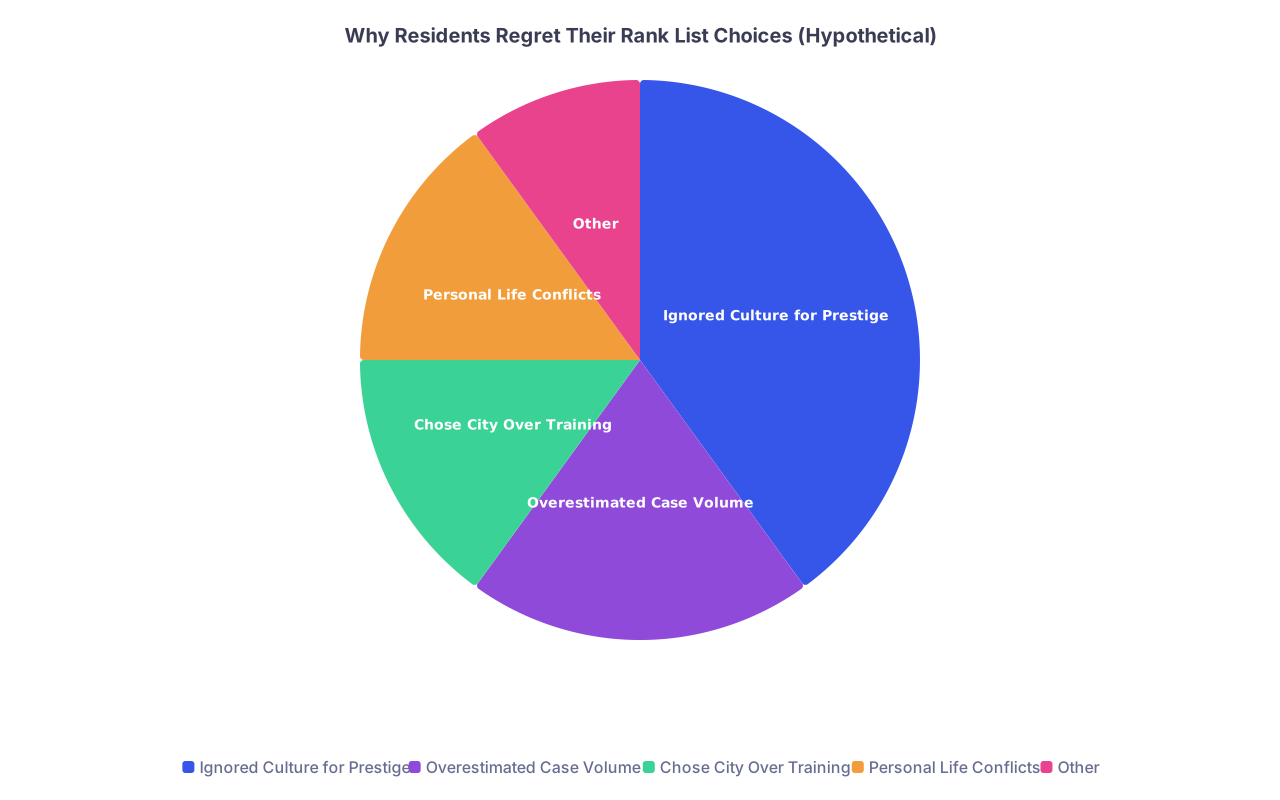
| Category | Value |
|---|---|
| Ignored Culture for Prestige | 40 |
| Overestimated Case Volume | 20 |
| Chose City Over Training | 15 |
| Personal Life Conflicts | 15 |
| Other | 10 |
4. Listen To Subtle Warnings During Interviews
People actually try to warn you. They just cannot say it outright.
Common warning lines:
- “We work hard here.” (Everywhere works hard. That phrase usually means we work unreasonably hard, and some people break.)
- “You need a thick skin to thrive here.” (Translation: we tolerate inappropriate behavior and call it ‘old‑school’.)
- “Not every resident is happy, but everyone graduates strong.” (Some of your colleagues are miserable, and leadership accepts that.)
Students enamored with the name shrug these off. Then they become the next “not happy but graduating strong” statistic.
5. Talk To Graduates, Not Just Current Residents
If you can, find alumni 2–5 years out:
- Fellows at your home institution
- People you meet at conferences
- Friends of friends
Ask one question: “If you were ranking again, would you put that program first?” Then stay quiet.
Alumni are rarely as cautious as current residents. They will tell you who had careers launched, who burned out, who switched tracks entirely. And whether the brand name actually helped.

When A Big Name Does Matter (And How Not To Overrate It)
I am not going to pretend reputation never matters. It does. But only in certain lanes, and never as much as students think.
Legitimate reasons to value a big‑name program:
- You are committed to a highly academic career where NIH funding and high‑impact publications are non‑negotiable.
- You already have strong, specific mentorship ties at that institution from med school research.
- The program has a documented pipeline into the exact subspecialty and institutions you want.
Even then, the calculus is not “name at all costs.” It is “name plus solid culture plus real operative training.”
If you are not dead‑set academic, overweighting brand is a rookie mistake. Plenty of community‑heavy or regional academic programs quietly send residents into excellent fellowships across the country. With less burnout and better technical readiness.
| Goal | Name Weight | Non-Name Factors That Matter More |
|---|---|---|
| NIH-funded academic surgeon | High | Mentors, research time, culture |
| Competitive fellowship, any region | Moderate | Case log, letters, performance |
| Community practice in home state | Low | Local connections, fit, geography |
| Unsure of subspecialty | Moderate | Breadth of training, mentorship |
| High risk of burnout/mental health issues | Very Low | Support systems, culture |
The Core Mistake To Avoid
Do not outsource your judgment to the prestige hierarchy.
If your honest inner voice tells you:
- “I felt small and invisible there.”
- “Residents looked afraid of attendings.”
- “No one asked what I wanted long‑term; they only flaunted their research numbers.”
Believe that. Even if the institution makes your parents beam when they hear the name.
On the other hand, if at a lesser‑known place you felt:
- Seen as an individual
- Envisioned actually holding the knife, not just retractors
- Able to imagine surviving five years without losing yourself
That is not weakness. That is situational awareness.
Residency is not a LinkedIn headline. It is five of the hardest years of your adult life. Do not gamble those years on a logo.
FAQ
1. Is it ever reasonable to rank a “prestigious” program first even if I had some hesitations?
Yes, but only if your hesitations are minor (e.g., colder weather, slightly higher cost of living) and the program also checks the big boxes: healthy culture, strong case volume, responsive leadership, good mentorship. If the main hesitations are about toxicity, burnout, or lack of autonomy, prestige is not enough to compensate.
2. How can I realistically assess program culture from virtual interviews?
You will not get perfect insight, but you can still pick up patterns. Pay close attention to resident‑only sessions, the consistency of their answers, and their body language. Ask concrete questions: “When is the last time you felt supported by leadership?” and “What changes have residents successfully pushed through in the past 2 years?” Programs with bad culture either dodge, generalize, or give obviously rehearsed lines.
3. Do fellowship directors really care where I did residency?
They care, but not the way students assume. They care whether they trust your training and your mentors. A strong letter from a known, respected surgeon at a mid‑tier program beats a generic letter from a superstar at a top‑tier place who barely knows you. Fellowship directors also care about your case experience, demeanor, and performance in interviews, not just the brand on your CV.
4. Is a “no‑name” program going to hurt me if I want academics later?
Not automatically. It is harder if the program has no research infrastructure or academic culture at all, but many “no‑name” programs have hidden academic strength, local collaborations, and faculty involved in societies. If you are proactive, build a research niche, and get strong mentors, you can absolutely go academic from a less flashy program. What kills people is low volume and poor mentorship, not lack of Instagram fame.
5. What if my family and mentors are pushing me toward the biggest name I matched at?
Listen, then decide for yourself. They often overvalue reputation because that is what they understand from the outside. Explain what you saw: the culture, the residents’ attitudes, the operative autonomy differences. Make it clear you are optimizing for a career that lasts, not dinner‑party bragging rights. At the end of the day, you are the one taking 3 a.m. trauma call there, not them. Rank programs for the surgeon you want to become, not the story other people want to tell.