It’s 2:15 a.m. on a “q3” trauma call. You’re a PGY-2 now, standing in a dim hallway outside the OR, trying to remember when you last peed. Your watch buzzes: 17,000 steps. Your pager goes off again: new Level 1 in the trauma bay. You’ve already been here since 5:30 a.m. yesterday. You’re post-post-call tomorrow. The chief just told you, “Yeah, this is a pretty light week.”
Here’s the part that stings: you ranked this program high. You came here. And if you’re honest with yourself, you barely looked at the call schedule before you did.
You focused on reputation. On “great operative experience.” On fellowships. You heard “we work hard, but we’re a family” on interview day and nodded. You saw a sample schedule slide flash by in a 15-minute PowerPoint, didn’t ask a single follow-up question, and moved on.
This is the quiet mistake a lot of surgical applicants make: treating call schedules like fine print instead of the contract.
Call structure is not a footnote. It is the spine of your life for 5–7 years. Get it wrong, and you’re signing up for burnout with your eyes half closed.
Let’s walk through where people screw this up—and how you can avoid being one of them.
The Core Lie: “All Surgery Programs Are Brutal Anyway”
The most damaging assumption I see: “It’s surgery, it’s all terrible. No point obsessing over call.”
Wrong. Categorically wrong.
Yes, surgical residency is hard everywhere. But there is an enormous difference between:
- q2 in-house trauma call with no real post-call day
- Home call where you get 4–6 hours of sleep most nights
- Night float with honest, protected post-nights and real days off
These are not minor variations. These are completely different lives.
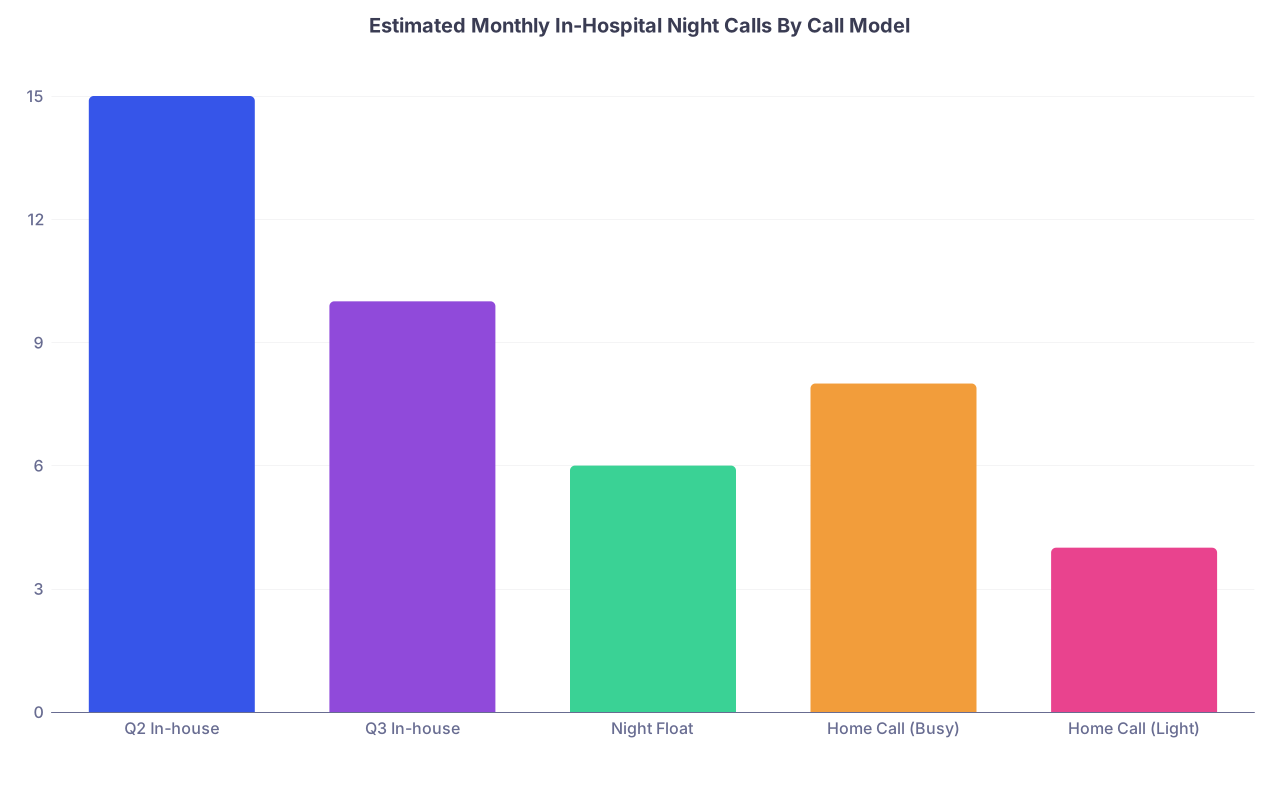
| Category | Value |
|---|---|
| Q2 In-house | 15 |
| Q3 In-house | 10 |
| Night Float | 6 |
| Home Call (Busy) | 8 |
| Home Call (Light) | 4 |
You should not lump all surgical programs into one “they’re all bad” bucket. That’s how applicants end up ignoring red flags that were right in front of them.
The real mistake: using “surgery is hard” as an excuse not to do due diligence.
How Applicants Underestimate Burnout Risk
Here’s the pattern I see every single year.
- Applicant is obsessed with case numbers and prestige.
- They glance at the call slide. They hear “q4–q5” and assume that’s the whole story.
- They don’t ask how “q4–q5” actually looks on the ground.
- They show up Day 1 and discover that “q5” includes “5 days straight of nights,” “short-call every other day,” and “we sometimes stay until 3 p.m. post-call because… coverage.”
You’re smart enough to not fall for obvious lies. But residency burnout doesn’t come from one big lie. It comes from a bunch of half-truths you never pressed on.
Common ways programs “soften” reality that applicants swallow:
- “We average about q4” – but PGY-2s are actually q2–3 on certain rotations.
- “We respect work-hours” – but they document creatively so you don’t go over on paper.
- “We have post-call days” – which means you leave at noon if the service is quiet and you’re not scrubbed.
- “We have night float” – plus mandatory Saturday coverage that stretches your so-called day off into another 14-hour shift.
If you only remember one thing from this section, let it be this: vague language about call always hides something. Always.
The Parts of Call That Quietly Destroy You
Not all call pain is obvious on a calendar template. These are the pieces applicants routinely ignore.
1. The False “Post-Call Day”
The biggest scam in some surgical programs is the “post-call day” that lasts until mid-afternoon.
You think: “At least I’ll get to sleep after 24 hours.”
Reality in some places:
- You sign out at 6–7 a.m.
- “But we really need you to stay for this add-on case.”
- “Just help round, then you can go.”
- “We’re short today—can you hang around until noon?”
- One consult shows up at 11:45 a.m. “Can you just see this before you leave?”
Congratulations. You’re now leaving the hospital 30 hours after you started. Sure, EMR says you left at 12:01 p.m., so you’re under 30 hours and “compliant.” Your body doesn’t care.
Programs that do this never put it on the slide. You find out when you’re already trapped.
You must explicitly ask: “On a typical post-call day, what time do juniors actually leave the hospital?”
If they hesitate, you have your answer.
2. The “Short Call” That’s Never Short
Short call sounds harmless. You cover until 7 p.m. Someone else comes in for nights. In theory.
In practice, I’ve watched this play out:
- “Short call” until 7 p.m.
- Add-on cases booked until 9–10 p.m.
- No one wants to hand off a fresh post-op to night float because they’re slammed.
- So the short-call resident “just stays to tuck them in.”
Short call mutates into “you’re still here at 10 p.m. but technically you’re not on call.” Which means you might be back at 5 or 6 a.m. the next day. That’s not short. That’s a 16–18-hour day.
Ask for specifics:
- “What time do you actually get home on short call?”
- “Is there pressure to stay late for cases or certain attendings?”
- “Does short call affect your next day start time at all?”
Programs that respect you will have a clear, enforced structure. Programs that see you as a body will just say, “Eh, it depends.”
3. Night Float: Balanced System or Dumping Ground?
Night float can be fantastic or absolutely miserable. People assume “night float” is automatically better than 24-hour call. Not necessarily.
Bad night float setups often include:
- No consistent post-night day off (you “flip” directly back to days)
- Nights plus mandatory weekend day coverage
- Being the cross-cover for four different services simultaneously
- No senior in-house, so you’re managing chaos with minimal backup
- Add-on cases that keep you in the OR all night, then you still round
Good night float looks different:
- Predictable schedule (e.g., 5 nights on, 2 off)
- Clear, protected post-nights or transition days
- Reasonable number of services to cover
- Senior accessible and present, not “at home if you really need something”
You need to find out which version exists before you rank.
4. PGY-2: The Year That Breaks People
Lots of applicants obsess about PGY-1 schedules. That’s not the year that usually wrecks you. PGY-2 is the real inflection point in many surgical programs.
Typical pattern:
- PGY-1: Shared call. More off-service rotations. A little protected. People still check on you.
- PGY-2: Suddenly solo on consults. Heavier call load. ICU, trauma, subspecialty rotations. Everyone assumes you’re functional.
If PGY-2 call is brutal and poorly supported, that’s when you see:
- Residents pulling 100-hour weeks “unofficially”
- Real mental health crises
- Residents seriously considering switching specialties or quitting altogether
You do not ask, “What’s intern call like?” and stop there. You ask, “What’s the hardest call year in this program and why? How many calls per month does a typical PGY-2 take on X rotation?”
If they all say “PGY-2” and then laugh nervously, pay attention.
Where Applicants Fail on Interview Day
You get limited face time with people who will tell you the truth. You cannot afford to waste it on fluff questions.
The standard useless questions I hear on interview days:
- “What kind of cases do residents get?”
- “How is the fellowship match?”
- “What do you like best about the program?”
They’re not bad questions. They’re just questions you could answer yourself with Google and program websites. Meanwhile, the thing you can’t see online—the lived reality of call—is what you ignore.
Here’s the real mistake: not asking about call specificity, and not asking the right people.
Residents will usually be honest if you ask real, concrete questions. Attendings will often give you policy. Policy is not practice.
You want to pin down:
- Call frequency by PGY and by key rotation
- Expectations for “post-call” in practice, not on paper
- How violations are handled: quietly discouraged or actively fixed
- What the worst month looks like, not the best
You’re not interviewing for a brochure. You’re interviewing for your daily life.
What You Should Actually Ask About Call
Here’s where I’ll break my own “avoid lists” rule because you need this one.
Ask different groups different questions.

Questions for Residents (Ask 1:1, Not in Big Groups)
- “Walk me through a typical 24-hour call for you. When do you usually arrive and leave?”
- “When you’re post-call, what time do you actually get home most days?”
- “Which rotations have the heaviest call, and how many times per month do you take call there?”
- “Have you ever felt unsafe driving home because of post-call fatigue?”
- “Has anyone in your class left or taken extended leave because of burnout? What happened?”
Look at their faces when they answer. Watch for the “this is fine… it’s fine… we’re fine” laugh.
Questions for Program Leadership
- “How has your call structure changed over the last five years?”
- “Do you track work-hours proactively or only if residents report issues?”
- “What’s your policy if a resident is clearly too fatigued to safely continue working?”
- “How often do residents hit or exceed duty hour limits on trauma/ICU?”
You’re listening for whether they treat hours as a compliance box or a patient-safety-and-resident-safety issue.
If the PD gets defensive when you ask about burnout, I’d be very careful with that rank.
Hidden Call-Related Red Flags in Surgical Programs
Some warning signs are obvious. Some are subtle. Both matter.
| Area | Red Flag Example | Safer Sign Example |
|---|---|---|
| Post-Call Policy | "You leave once work is done" | "Specific times when post-call must leave" |
| Resident Turnover | "A few people left for personal reasons" (vague) | Stable classes, clear explanations if someone left |
| Work-Hour Culture | "We always make it work on paper" | "We adjust schedules when violations occur" |
| Resident Demeanor | Flat affect, dark humor about suffering only | Tired but still engaged and candid |
| Call Transparency | No detailed schedule shown, “it varies” answers | Sample monthly schedules, clear patterns |
If you see more than two of those red flags at a single program, do not wave it off because “the name is big” or “fellowship match is great.” You are not magical. You will not be immune.
How Call Schedules Interact With Everything Else You Care About
Residents try to balance three things:
- Training quality / operative experience
- Well-being / burnout risk
- Life outside the hospital (family, finances, sanity)
Call is the lever that tilts all three. People underestimate just how much.
Examples:
- Want great operative experience? Good. But if it’s built on drowning juniors in call with no meaningful teaching, you’re not learning; you’re surviving.
- Want a life partner, kids, or just non-med friends? A malignant call setup makes that nearly impossible unless your partner is superhumanly patient.
- Want to avoid becoming “that bitter surgeon” by PGY-5? You need spare emotional capacity. Crushing call schedules strip that first.
I’ve seen residents at big-name programs with fantastic case logs who cannot wait to leave surgery altogether. When you dig, it’s not the cases. It’s the relentless, poorly structured call that never lets their nervous system stand down.
Prestige is seductive. But prestige does not hug you when you’re crying in your car at 3:30 a.m. debating whether to drive home or just sleep in the parking garage.
Don’t Forget Your Own Red Lines
You’re allowed to have limits. You should have limits.
But most applicants never actually define their red lines before they rank. So they end up bending them on the fly when a big-name logo is dangled in front of them.
Examples of red lines you should consider before your rank list:
- Maximum number of 24-hour (or 28-hour) calls per month you’re willing to do regularly
- Whether you’re okay with q2 call on any rotation
- Whether you can tolerate programs that regularly “stretch” post-call days
- Whether heavy night float during certain life phases (e.g., pregnancy, infants at home) would be non-negotiable for you
Write these down. Literally. On paper. Because in February, when you’re ranking, your brain will start telling you, “Well, maybe I can handle more call if the program is strong.”
That’s how people talk themselves into burnout factories.
What a Reasonable but Hard Call Setup Can Look Like
No surgical residency is easy. I’m not selling fantasy. But there’s a difference between hard and abusive.
A program that is intense but not soul-destroying often looks like this:
- Clear, enforced post-call departure times (written and culturally respected)
- Night float with true days off and real transitions back to days
- One or two infamously bad rotations—but leadership acknowledges this and tries to mitigate, not gaslight
- Seniors who help shield juniors when the service explodes
- Work-hour violations treated as signals to fix the system, not to “document better”
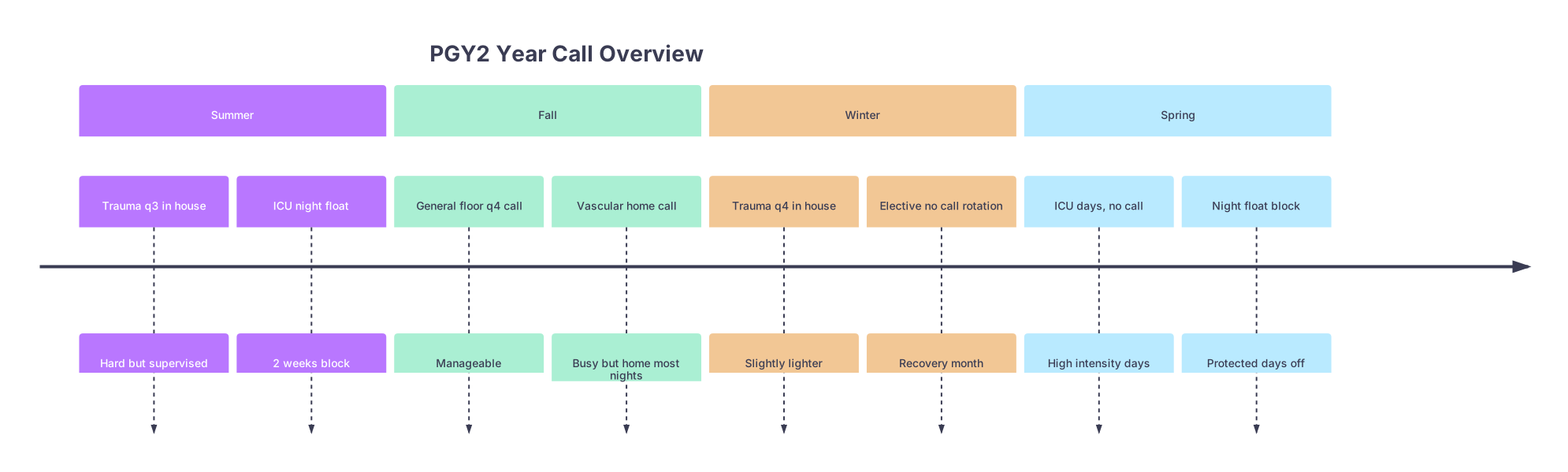
| Period | Event |
|---|---|
| Summer - Trauma q3 in house | Hard but supervised |
| Summer - ICU night float | 2 weeks block |
| Fall - General floor q4 call | Manageable |
| Fall - Vascular home call | Busy but home most nights |
| Winter - Trauma q4 in house | Slightly lighter |
| Winter - Elective no call rotation | Recovery month |
| Spring - ICU days, no call | High intensity days |
| Spring - Night float block | Protected days off |
This is still demanding. It will still hurt. But it won’t systematically grind you into powder.
A Quick Reality Check Tool
If you’re down to a few surgical programs and trying to compare burnout risk, force yourself to quantify it. Don’t rely on vibes.
Make a simple table for each program:
- Approximate number of 24-hr calls/month by PGY
- Number of pure night float months per year
- Post-call policy (real vs theoretical)
- Culture of work-hours (honest vs “creative”)
Then look at them side by side.
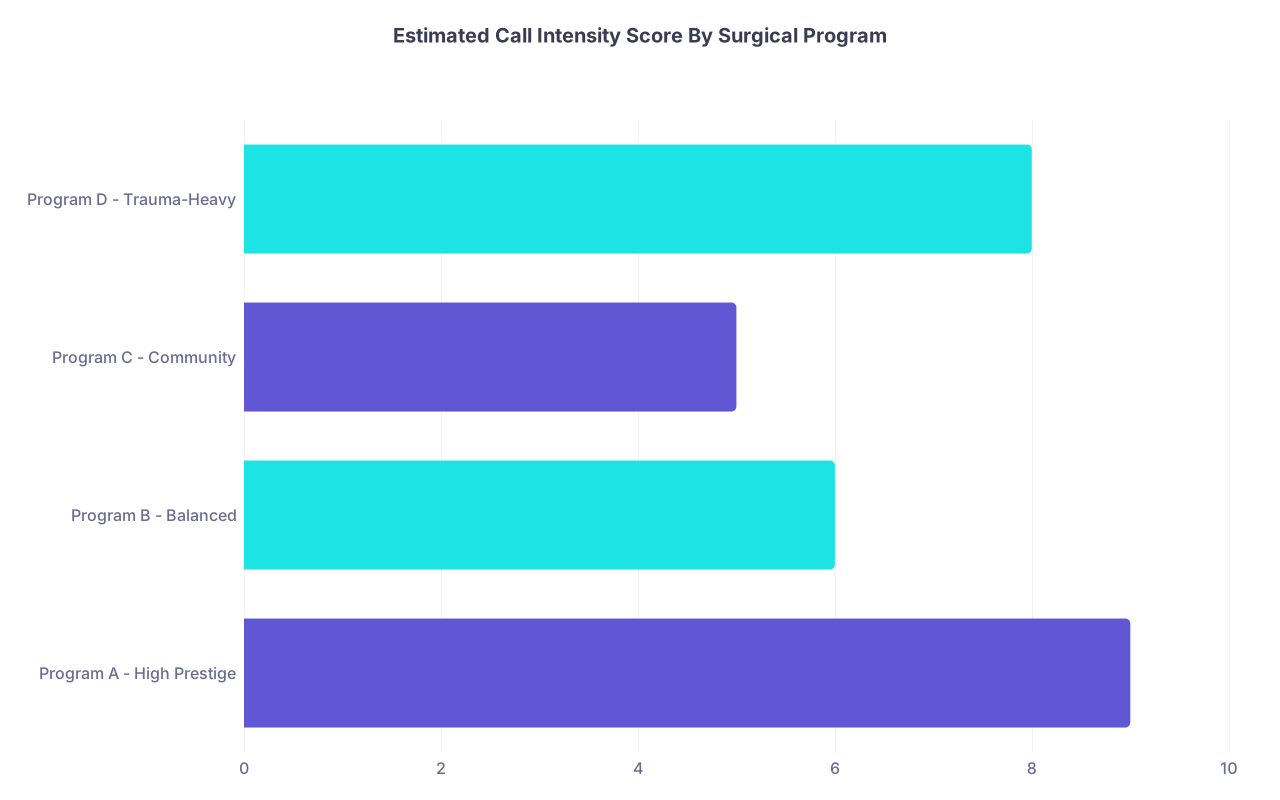
| Category | Value |
|---|---|
| Program A - High Prestige | 9 |
| Program B - Balanced | 6 |
| Program C - Community | 5 |
| Program D - Trauma-Heavy | 8 |
If one program is obviously more intense, you have to ask yourself honestly: “Am I picking this for the right reasons or just ego?”
Sometimes the answer is still, “Yes, it’s worth it to me.” Fine. At least you went in with your eyes open.
The mistake is pretending the differences don’t exist.
Last Thing: Call Schedules Change, Culture Doesn’t Overnight
Programs can (and do) change call structures. New PD, new service lines, new hospitals joining the system. What’s true this year may shift by your PGY-3.
But culture—how they treat residents when things get busy—changes slowly.
Pay more attention to:
- How residents talk about leadership when leadership isn’t in the room
- Whether the PD acknowledges current problems openly
- How they handled call/coverage during crises (e.g., COVID surges, major faculty departures)
Because when the schedule inevitably needs to flex, that culture is what determines whether they protect you or sacrifice you.
FAQ (Exactly 5 Questions)
1. Isn’t it normal to be exhausted in surgical residency? How do I tell normal tired from dangerous burnout?
Yes, being tired is normal. Falling asleep in conference sometimes? Normal. Needing your post-call day to exist? Normal.
Red flags for dangerous burnout: you dread every shift, you feel numb with patients, you have no interest in things you used to enjoy, you catch yourself having passive thoughts like “If I got in a minor car accident, at least I’d get a break.” If that last one sounds familiar, that’s not “just residency,” that’s your brain waving a giant warning flag.
2. Programs said they’re ACGME-compliant. Doesn’t that mean call can’t be that bad?
Compliance on paper doesn’t equal humane in reality. I’ve seen programs meticulously “stack” hours so on paper residents never cross 80, while in practice they’re giving free work: pre-rounding before the clock, “staying late” without logging it. ACGME rules are the floor, not the ceiling. You want a program that treats those rules as minimum safety standards, not as a game.
3. How do I ask about call without sounding weak or lazy?
You’re not asking, “Will I have to work hard?” You’re asking, “How is the work structured so I can be safe and learn effectively?” Frame it that way: “I know surgery is demanding. I want to make sure I can perform at my best. Can you walk me through how call is set up and how you prevent fatigue from compromising care?” That’s not weakness. That’s professionalism.
4. What if I love a program but the call sounds brutal? Should I still rank it high?
That depends on whether the brutality is structural or temporary. If residents say, “This one rotation is awful but leadership is working on it,” that’s one thing. If they say, “This is how it’s always been, and people just survive it,” that’s different. If your gut is already clenched reading their schedule as a student, imagine living it at 3 a.m. covered in blood and bile. Be honest with yourself.
5. I already matched into a program and now I’m realizing the call is worse than I thought. Did I blow it?
You didn’t blow it, but you do need to be proactive. Learn the “escape hatches”: exactly when you can go home post-call, how to log hours accurately, which seniors/attendings actually respect limits. Build alliances early with co-residents who care about work-hours. And if the culture is truly malignant, transfer and specialty change are not fantasies; people do it. Your career is long. Do not sacrifice the next 40 years of your life to protect the ego of a program that doesn’t protect you.
Open the websites of your top three surgical programs right now. Find whatever sample schedules, block diagrams, or call descriptions they have. Then write down three specific questions about call you still don’t have clear answers to for each program. Those are the questions you ask residents at the next chance you get—before you lock in that rank list.