
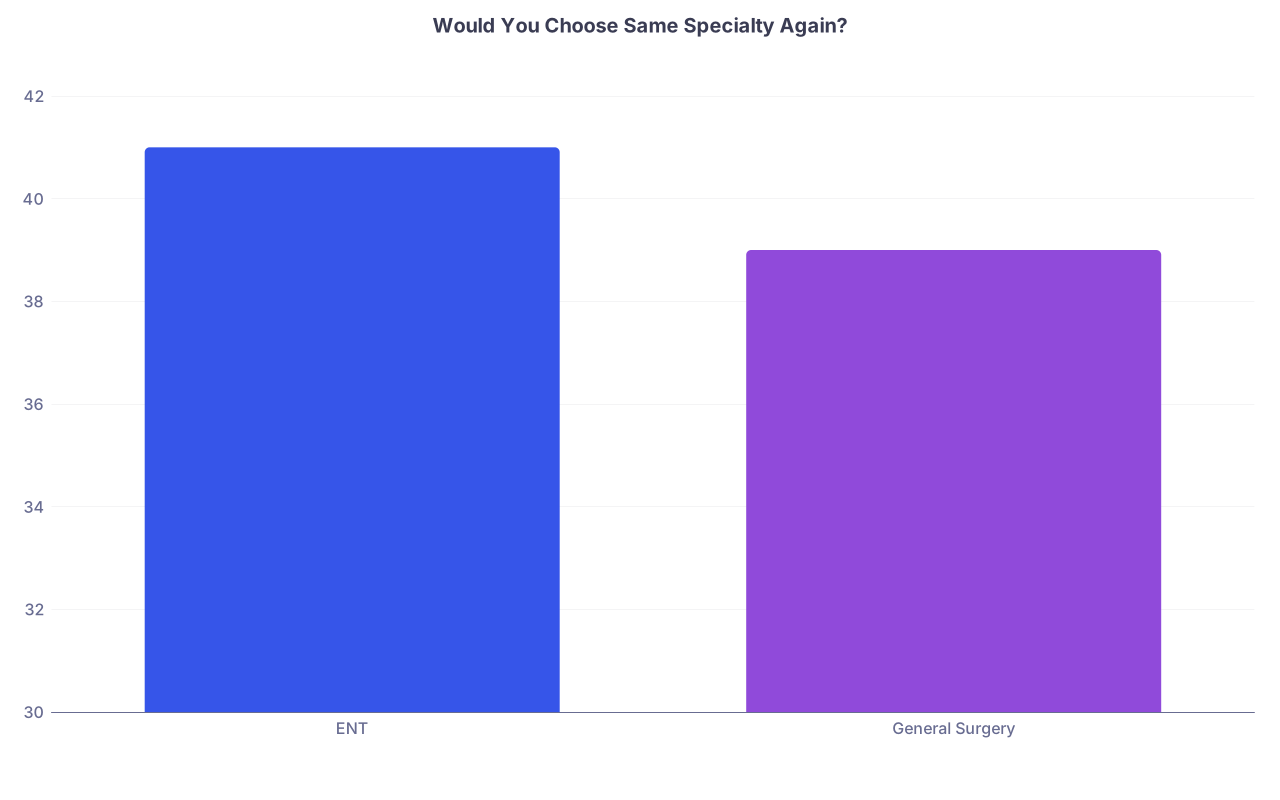
Only 39% of general surgery graduates and 41% of ENT graduates say they’d definitely choose the same specialty again. So much for “everyone in ENT loves their lifestyle” and “general surgeons are all burnt out martyrs.”
Let’s tear this apart using data instead of hallway folklore.
I’m going to lean heavily on actual graduate surveys (especially the AAMC GQ-style and specialty society data where available), compensation reports, and what program directors quietly admit on interview days when the PowerPoint is off and the door is closed.
You’re choosing between ENT (otolaryngology) and general surgery. You’ve probably heard:
- “ENT is cushy, 8–5, no emergencies.”
- “General surgery is malignant, brutal hours, terrible lifestyle forever.”
- “ENT is smart surg but with derm hours.”
- “General surgery opens more doors, but you’ll have no life.”
Most of that is garbage, at least in the way it’s usually thrown around. The reality is more boring, more nuanced, and way more useful if you actually want to make a sane decision.
Myth #1: ENT Has a “Good” Lifestyle and General Surgery Has a “Bad” Lifestyle
| Category | Value |
|---|---|
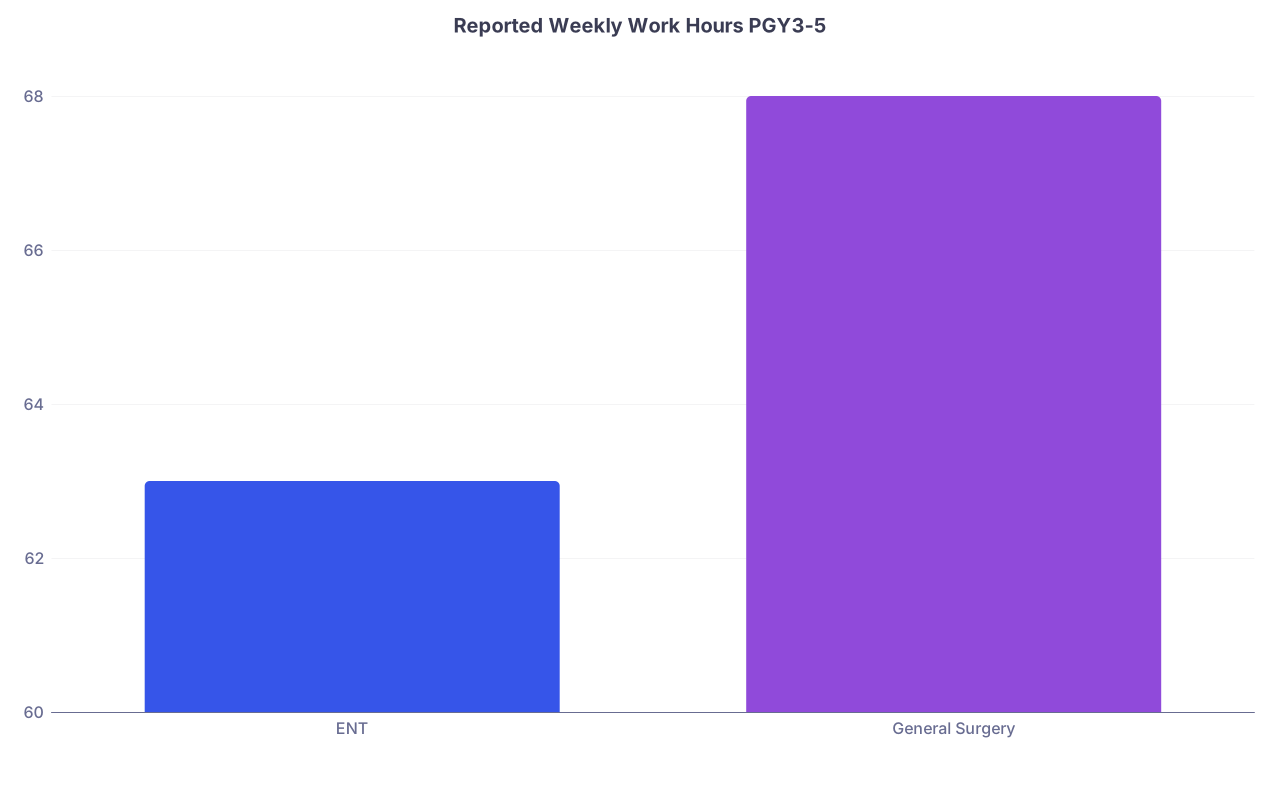
| ENT | 63 |
| General Surgery | 68 |
The cartoon version goes like this: ENT is golf by 3 p.m., general surgery is crying in the stairwell at 2 a.m.
Reality: both are surgical. Both are demanding. The difference is relative, not absolute.
Survey data of residents near graduation (various ACGME and specialty society reports, plus what gets echoed in the AAMC Graduate Questionnaire) generally cluster like this:
- ENT senior residents: around 60–65 hours/week on average.
- General surgery senior residents: around 65–75 hours/week, with some programs living closer to the 80-hour line than ENT.
Does that mean ENT is “lifestyle friendly”? Only compared to other surgery. You’re still in the hospital a lot, still on call, still managing post-ops, airway emergencies, bleeds, and clinic.
The pattern you actually see:
- General surgery has more non-negotiable acute bread-and-butter: ruptured appy, perforated ulcer, SBO, trauma, GI bleeds. Stuff that drops whenever it wants.
- ENT has fewer middle-of-the-night emergencies overall, but the ones that do show up (airway obstruction, neck abscess, post-tonsillectomy hemorrhage, post-op neck hematoma) are absolutely not optional.
The lifestyle difference is more about spike frequency than total suffering. Gen surg has more “this could be anything from appendicitis to a gunshot abdomen” at 2 a.m. ENT has fewer pages, but when something blows up, it’s immediately high-stakes and urgent.
So yes, ENT generally has a slightly better average schedule. No, that does not magically turn it into outpatient pediatrics.
Myth #2: Call in ENT Is “Chill” Compared to General Surgery

| Step | Description |
|---|---|
| Step 1 | Call Night Start |
| Step 2 | Trauma alerts |
| Step 3 | Acute abdomen |
| Step 4 | ICU issues |
| Step 5 | Airway emergency |
| Step 6 | Post op bleed |
| Step 7 | Facial trauma consult |
| Step 8 | General Surgery |
| Step 9 | ENT |
Walk through a real call night.
General surgery resident at a busy level I trauma center:
- Trauma alert hits at 19:30. Motorcycle vs truck. You get paged.
- While placing orders, ED calls with a suspected appendicitis and a SBO who’s vomiting.
- SICU wants you to re-evaluate a hypotensive post-op.
- Floor nurse pages for a fresh colectomy patient with tachycardia and low urine output.
- By midnight, you’ve already rounded on 20+ patients, seen 4 consults, and are staring at 3 OR cases before dawn.
Now ENT at a mid-to-high volume center:
- It’s quiet until 21:00 when ED calls: child with suspected peritonsillar abscess, can’t open mouth, drooling.
- While you’re assessing the child, anesthesia calls from the OR about a difficult airway tomorrow — wants a plan.
- Just as you sit down, there’s a page: post-tonsillectomy hemorrhage, actively bleeding.
- Later, ICU wants help with a patient who keeps desatting, known head and neck cancer, challenging airway. You’re being asked for the trach.
The number of events is usually lower in ENT, but the percentage that are “if I screw this up someone dies in front of me” can actually be higher per call.
Also, the ENT call experience is massively shaped by:
- Whether your hospital is a trauma center that sends all facial/airway trauma to ENT.
- Whether you’re the only ENT service in a huge radius.
- How much general surgery, trauma surgeons, or oral-maxillofacial surgery offload or share the load.
General surgery’s pain is mostly volume. ENT’s pain is acuity + the emotional weight of airway and pediatric emergencies.
Anyone selling you “ENT call is chill” either doesn’t work at a real center or is trying to recruit you.
Myth #3: ENT Has Way Better Burnout and Job Satisfaction
| Category | Value |
|---|---|
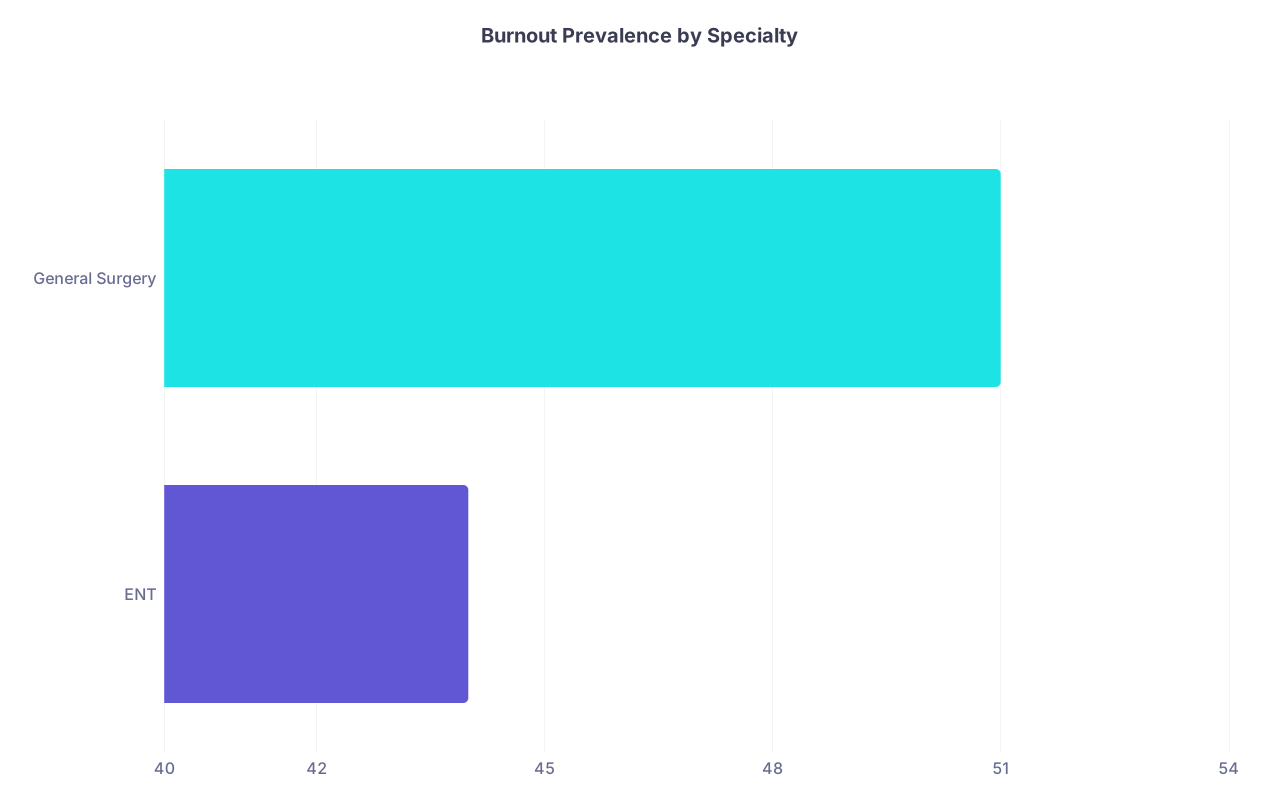
| ENT | 44 |
| General Surgery | 51 |
Look at physician burnout studies and you’ll see ENT slightly better off than general surgery. Typical ranges:
- ENT: around 40–45% reporting burnout.
- General surgery: around 50–60%, often worse in academic or high-acuity centers.
So yes, ENT tends to be marginally better. But let’s not romanticize it. “Only 44% of people feel burnt out” is not what I’d call a fine lifestyle.
Where ENT does often edge out general surgery is in a few specific areas:
- Higher average compensation for a similar or slightly lower number of hours, especially in private practice otology, facial plastics, and high-volume community setups.
- More predictable clinic and OR blocks once in practice, with fewer late-night ex-laps and trauma.
- More sub-specializable niches with fairly controlled hours (like pure sleep surgery, office-based rhinology, laryngology with heavy clinic).
Meanwhile, general surgery has:
- More residents who never actually want to be broad general surgeons, but are grinding for fellowship (vascular, colorectal, surgical oncology, MIS, trauma/critical care). That “I’m suffering now for some hypothetical better job later” mindset is a pretty good recipe for burnout.
- More small or rural jobs where you’re the de facto everything: bread-and-butter gen surg, endoscopy, traumas, emergencies. Lifestyle here can be fantastic or brutal depending on backup.
But the killer point: on “would choose again” surveys, ENT does not blow general surgery out of the water. They’re both in that 35–45% “definitely yes” zone, heavily influenced by practice setting, group dynamics, and personal expectations, not the letters on your fellowship certificate.
So no, ENT is not the magical burnout-proof surgical specialty. It’s just marginally less bad on average.
Myth #4: Income Differences Make ENT Automatically the Smarter Move

Let’s talk money, because everyone pretends not to care and then obsesses over it in Reddit DMs.
Typical ballpark attending income ranges from major compensation surveys (MGMA-style, large multispecialty practice reports, and what residents actually gossip about):
| Specialty | Common Range (USD) |
|---|---|
| Academic ENT | 350k–500k |
| Community ENT | 450k–800k+ |
| Academic Gen Surg | 325k–475k |
| Community Gen Surg | 400k–700k+ |
| Rural Bread-and-Butter Gen Surg | 450k–900k+ |
ENT often wins the median-paying-for-hours-worked contest, especially in private practice or single-specialty groups.
But income alone is a garbage way to choose between these two for a few reasons:
- Location warps everything. A rural general surgeon doing scopes, bread-and-butter cases, and some trauma coverage can out-earn many ENTs in saturated markets.
- ENT is becoming competitive in big metro areas. More ENTs, more fellowship-trained subspecialists, lower reimbursement for some procedures, ENT groups merging with hospital systems. That mythical “ENT always prints money” era is softening in some regions.
- Case mix matters. The ENT who hates clinic but ends up in a practice that’s 70% allergy/sinus/congestion returns complains just as loudly as the general surgeon stuck doing endless hernias and ports.
Money is a tie-breaker, not a compass. Both can provide very high incomes. Neither is a guaranteed golden ticket.
Myth #5: ENT Is Basically “Head-and-Neck with Clinic,” General Surgery Is “Everything Else”
This one’s lifestyle-relevant because the type of work you do affects how drained you feel at the end of the day.
Patterns:
- ENT clinic is heavy on complaints that sound trivial but matter a lot to patients: hoarseness, congestion, ear fullness, dizziness, snoring, hearing loss, recurrent tonsillitis. You’re scoping noses and larynges constantly. A lot of your “work” is nuanced: deciding who needs surgery vs. who needs reassurance and allergy treatment.
- Gen surg clinic is usually shorter and more easily “finalizable”: hernia evals, gallbladder pain, follow-ups, post-ops. You quickly decide: OR, no OR, or refer elsewhere.
If you hate clinic and love the high-drama, big-case vibes, there’s a nasty surprise no matter what you pick: surgical life in 2026 and beyond involves a ton of outpatient time. ENT arguably more so.
Surgeons who love procedures but tolerate clinic will do better in ENT. Surgeons who like feeling like the “internist of the OR” and managing sick abdomens and ICU complexity often feel more at home in general surgery.
Lifestyle is not just hours. It’s how your brain is being used.
ENT: brain fatigue from a million small, nuanced complaints, plus high-stress airway moments.
Gen surg: physical fatigue from long cases and volume, plus high-stress ex-laps and traumas.
Pick your poison.
Myth #6: General Surgery Residency Is Uniquely Miserable, ENT Residency Is Hard but “Fine”
| Category | Value |
|---|---|
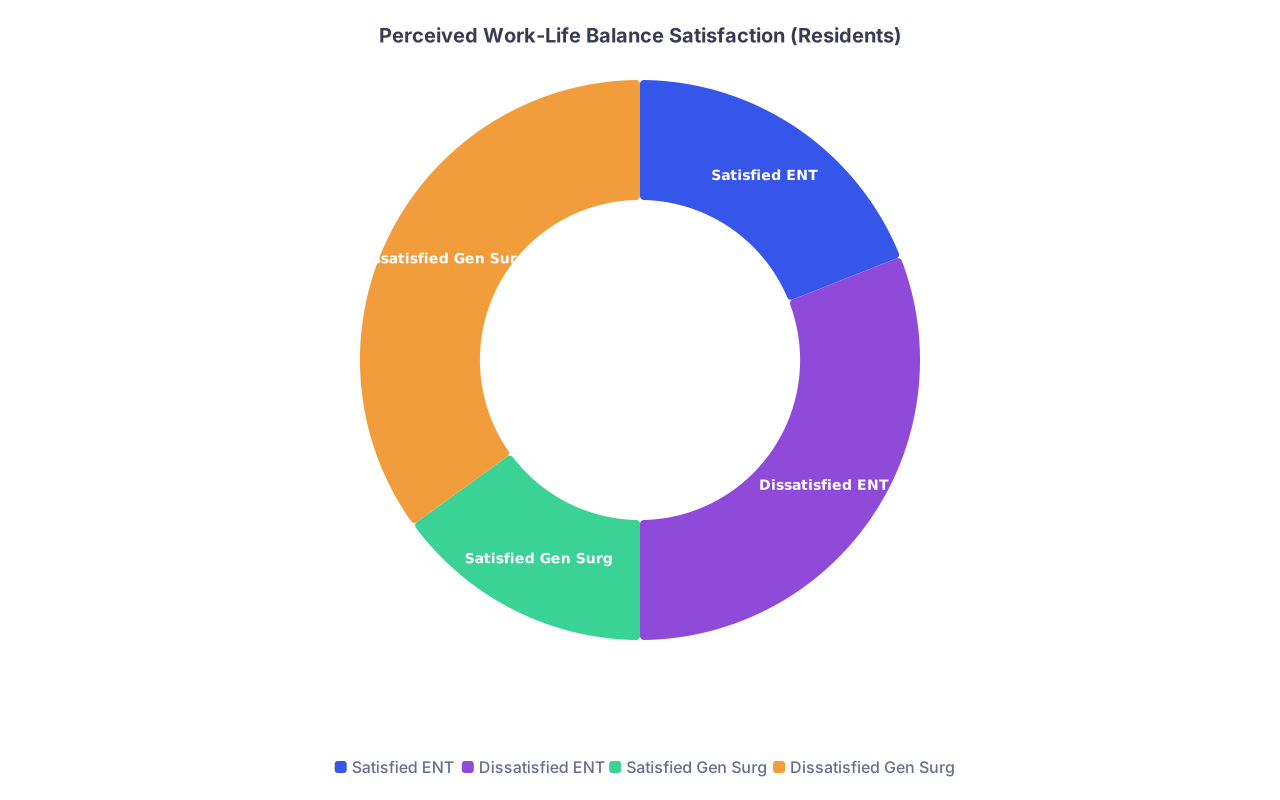
| Satisfied ENT | 38 |
| Dissatisfied ENT | 62 |
| Satisfied Gen Surg | 30 |
| Dissatisfied Gen Surg | 70 |
Surveys of residents nearing graduation across specialties show a pattern:
- Both ENT and general surgery residents rate their work-life balance poorly compared with fields like anesthesia, radiology, or even internal medicine subspecialties.
- ENT tends to be slightly better on average but still solidly in “this is rough” territory.
I’ve heard versions of this from both sides:
From a PGY-4 ENT at a large academic center:
“I knew surgery would be hard. What I didn’t realize was the emotional toll of airway calls and the feeling of never being truly ‘off’ when I’m on backup.”
From a PGY-5 gen surg resident:
“It’s not just the hours. It’s the constant cognitive load of 20 critically ill patients who can tank at any moment plus the ORs plus consults. It’s like your nervous system never gets out of fight-or-flight.”
The “ENT residency is chill” narrative is pushed hardest by:
- People in low-volume or heavily fellow-run programs.
- Attendings who trained before duty-hour enforcement.
- Students who rotated on the one magical ENT month where everything lined up.
Where ENT really differs from general surgery in residency:
- Slightly fewer overnight calls and fewer total hospital hours in many programs.
- Slightly more subspecialty fellow involvement, which can either smooth your schedule or steal your cases.
- Earlier and heavier exposure to clinic — which some love and others loathe.
But again: in both, you’re going to wake up multiple times a month questioning your life choices. That’s not a sign you picked the wrong surgical specialty. That’s surgery.
Myth #7: You Can “Fix” a Bad Fit in Either Field With the Right Job

You’ll hear people say, “Just get through residency, you can always find a good lifestyle job later.” That’s partially true and partially dangerous.
Yes, job type dramatically modifies your lifestyle:
- Outpatient-heavy ENT group with blocked OR time, no trauma coverage, and shared call among 6+ partners? Pretty controlled.
- Small-town ENT who’s the only one in a 200-mile radius? You own every airway, every kid with a coin in their esophagus, every nosebleed that scares the ED.
- Hospital-employed general surgeon in a group of 8 with protected clinic days and reasonable call? Very livable.
- Solo-ish general surgeon in a town with limited backup and a hospital that depends on you for everything surgical? Very much not 9–5.
But here’s the myth: that you can hate the core content of a specialty and just patch it with the right job.
If you hate:
- Airway drama, vertigo, dizziness workups, sinus issues, voice disorders, pediatric ENT → there is no amount of “good lifestyle ENT job” that will fix that long-term.
- Abdominal catastrophes, ICU management, trauma, complex oncology, endoscopy → no gentle general surgery job will make you love the bread-and-butter reality.
Graduates who are actually satisfied years later almost always share one thing: they fundamentally like the problems they’re solving, and the people they operate on, even when the system and the hours are miserable.
Job can refine your lifestyle. It cannot rescue you from a mismatch in core work.
Myth #8: Competitiveness Equals Better Lifestyle
ENT is more competitive on paper: higher Step scores, stronger class ranks, heavier research expectations in many programs.
Students then leap to, “Because it’s harder to get into, it must be better — including lifestyle.”
No.
Competitiveness mostly tracks with:
- Procedure intensity.
- Perceived pay-to-hours ratio.
- “Prestige” among students who rank each other by exam scores.
It does not magically change the stress of performing high-stakes surgery inside someone’s airway, or dealing with deafness, disfigurement, and cancer of the face and neck.
If anything, more competitive fields can create their own pressure cooker: everyone is hyper-achieving, everyone is fellowship-trained, and baseline expectations creep up.
Meanwhile, general surgery sits in this weird spot: widely available, big range in program cultures, and huge variability in how malignant or humane your experience is.
The right general surgery program can give you a more sustainable lifestyle than the wrong ENT program. People hate hearing that, but graduates quietly confirm it all the time.
What Graduates Actually Report — And What You Should Do With It
| Category | Value |
|---|---|
| ENT | 41 |
| General Surgery | 39 |
Pull together the whole picture:
- Both ENT and general surgery residents report heavy workloads, real burnout, and plenty of regret among a sizable minority.
- ENT grads, on average, report slightly better work-life balance and slightly lower burnout than general surgery — but nowhere close to the fantasy version you hear on applicant tours.
- Long-term satisfaction has more to do with whether you like the type of problems and patient populations than with any generic “lifestyle” storyline.
So how do you actually use this?
Shadow like your life depends on it. Not just one “good” ENT attending and one charismatic trauma surgeon. Watch:
- ENT in clinic on a soul-sucking allergy Monday.
- ENT in the OR for a long neck dissection or ear case.
- General surgery on trauma call.
- General surgery on a routine elective day of hernias and choles and scopes.
Then be brutally honest:
When you imagine a bad day in each field — the nightmare call, the exhausting clinic — which misery feels more acceptable to you?
That’s your answer. Not which one Reddit says has better hours. Not which one has the higher mean salary.
Because the data say this clearly: neither path is lifestyle nirvana. They’re both hard. They’re both high-acuity, high-responsibility surgical careers with slightly different flavors of suffering and slightly different odds of long-term burnout.
Choose the kind of hard you can stand.
Key points:
- ENT does have a modest lifestyle edge over general surgery on average, but both are high-burnout, high-hour surgical fields; the gap is smaller than the myths suggest.
- Call, burnout, and income vary more by practice setting and hospital than by “ENT vs general surgery” alone. Don’t expect the specialty label to rescue you from a bad environment.
- The single best predictor of long-term satisfaction is whether you genuinely like the core clinical problems of the field — not its perceived competitiveness, salary, or secondhand lifestyle reputation.