Introduction: Why Research Matters for Your Surgical Career
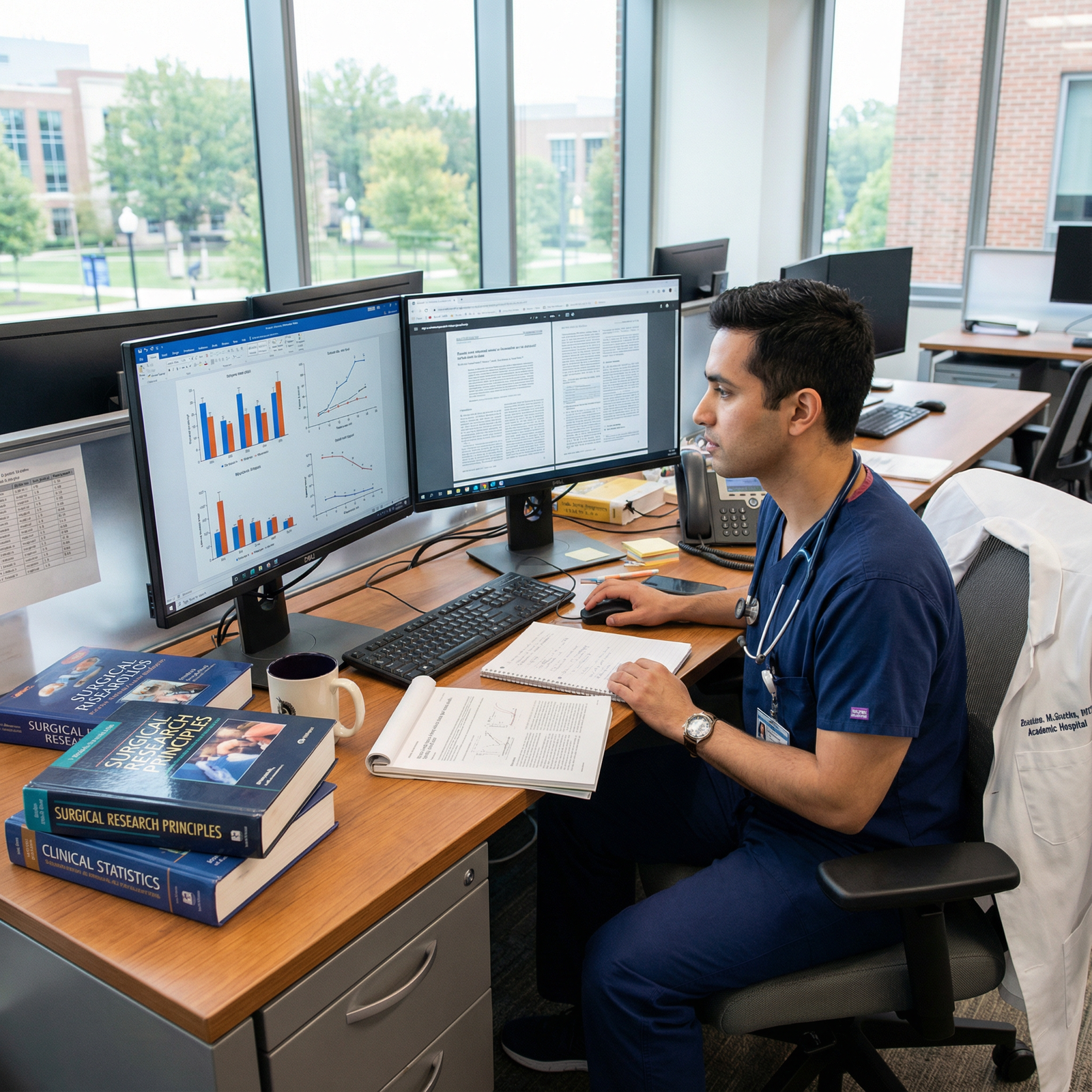
During surgical residency, you are building far more than your operative skillset. You are also shaping your professional identity, reputation, and long-term career trajectory. In a competitive environment where many applicants share strong test scores, solid letters, and robust clinical evaluations, Medical Research often becomes a key differentiator—especially in Surgical Residency and fellowship selection.
Engaging in research does more than “pad” your Curriculum Vitae (CV). It helps you:
- Think critically about evidence and outcomes
- Understand how surgical innovations are developed and validated
- Contribute to your department’s academic mission
- Clarify your own career development goals and subspecialty interests
This article explores the role of research in Surgery Education, why it matters for your residency and beyond, how to get involved effectively, and how to showcase your work strategically on your CV and in interviews.
The Strategic Role of Research in Surgical Residency
Research as a Core Component of Modern Surgical Practice
Surgery has evolved from an apprenticeship-based craft to a rigorously evidence-driven specialty. Surgeons are now expected to:
- Interpret new evidence and guidelines
- Critically appraise clinical studies and meta-analyses
- Contribute to quality improvement (QI) and patient safety initiatives
- Adopt and evaluate new technologies such as robotics, navigation, and AI tools
Participating in research during residency trains you in these skills. Whether you pursue academic surgery, private practice, or a hybrid role, an understanding of research methodology, clinical trial design, and data interpretation will improve your decision-making at the bedside and in the operating room.
Examples of how research translates to better surgical practice:
- Designing ERAS (Enhanced Recovery After Surgery) protocols that reduce length of stay and readmissions
- Evaluating new minimally invasive techniques versus open procedures for specific patient populations
- Analyzing complication data to identify system-level changes that improve outcomes
Enhancing Your Curriculum Vitae: How Research Strengthens Your Profile
A strong research portfolio does not mean you must have dozens of first-author publications. It means you have meaningful, relevant, and well-presented scholarly work. Here are key ways that research enhances your CV:
Validation of Expertise and Intellectual Curiosity
Publications, abstracts, and presentations show that you can move beyond passive learning. For instance:- A retrospective study on laparoscopic appendectomy outcomes in obese patients
- A systematic review on mesh choices in abdominal wall reconstruction
These signal to fellowship directors and employers that you understand current questions in your field and can engage with them thoughtfully.
Demonstration of Commitment to the Field of Surgery
Longitudinal involvement in one or two focused areas (e.g., trauma outcomes, robotic colorectal surgery, pediatric airway anomalies) indicates depth, not just checkbox activity. It tells selection committees:- You are invested in advancing surgical knowledge
- You are likely to keep contributing academically over your career
Development of High-Value Transferable Skills
Through research, you build capabilities that matter for both academic and community surgeons:- Critical appraisal of literature
- Data management and statistical analysis
- Scientific writing and clear communication
- Project management, from IRB submission to final manuscript
Expansion of Your Professional Network
Research connects you with:- Faculty mentors and potential letter writers
- Residents and fellows in your area of interest
- National and international experts when you present at meetings
These relationships can help with:
- Fellowship matching
- Early career job prospects
- Collaborative research and multi-center trials down the road
Research and Residency Match: A Competitive Edge
In many surgical specialties, especially highly competitive ones like neurosurgery, plastic surgery, cardiothoracic surgery, and surgical oncology, a strong research background is often a major factor in interview selection and ranking.
How research influences match prospects:
Volume and quality of scholarly output:
Not just the number of projects, but the impact, relevance, and your role in them (e.g., first author, presenter).Alignment with specialty goals:
Research that aligns with your stated career interests (e.g., vascular outcomes research when applying to vascular surgery) reinforces the credibility of your narrative.Evidence of persistence and completion:
Committees like to see projects carried through from idea to publication or presentation. Even a small case series that becomes a poster or short communication shows follow-through.
Even if you are not targeting a hyper-competitive field, solid research experience can separate you from other candidates and show that you bring added value to a residency program’s academic mission.
Types of Research Opportunities in Surgical Residency

Clinical Research: The Most Accessible Starting Point
For most residents, clinical research is the most feasible and impactful entry point. Examples include:
- Retrospective chart reviews (e.g., outcomes after implementing a new protocol)
- Prospective observational studies (e.g., complications tracking after a new technique)
- Quality improvement (QI) or patient safety projects with publishable results
Advantages:
- Utilizes existing patient data
- Often quicker to complete than basic science
- Directly relevant to patient care and system improvement
Basic Science and Translational Research
If your institution has strong basic science programs, you may engage in:
- Animal models of disease or injury
- Molecular or genetic studies of cancer, wound healing, or transplant rejection
- Biomaterials research (e.g., novel implants or mesh)
These projects are more time- and resource-intensive but can be highly valuable if you plan an academic or physician-scientist career.
Outcomes, Education, and Health Services Research
Surgical research is not limited to the OR or the lab. High-impact areas include:
- Outcomes research: Cost-effectiveness, hospital readmissions, long-term functional outcomes
- Surgical education research: Simulation training, assessment tools, competency-based curricula
- Health services research: Disparities in surgical care, access to specialized surgery, telehealth in pre-op/post-op care
Such projects allow you to contribute to broad systemic improvements and may fit well with residents interested in leadership, policy, or medical education.
Case Reports and Case Series
Case reports and small case series are often undervalued but can be powerful early steps in building your portfolio:
- Unique or rare presentations
- Novel or modified surgical techniques
- Unexpected complications and lessons learned
They help you learn:
- How to structure a manuscript
- The basics of submission and peer review
- Academic writing and figure preparation
Practical Strategies to Get Involved in Surgical Research
1. Identify Mentors and Align with Their Work
Mentorship is the cornerstone of successful research during residency.
How to find mentors:
- Review faculty profiles and publication lists on your department website
- Attend grand rounds, morbidity and mortality (M&M) conferences, and research meetings
- Ask senior residents who is productive and supportive with trainees
Approach strategy:
- Email a brief, focused message: who you are, your level of training, your interests, and your availability
- Express willingness to contribute to ongoing projects rather than demanding your own immediately
- Ask for a short meeting to discuss possibilities
2. Engage with Departmental Research Infrastructure
Most departments of surgery have some form of research structure:
- A Vice Chair or Director of Research
- A research coordinator or data manager
- Ongoing registries (e.g., trauma, bariatric, transplant)
- Regular research meetings or works-in-progress sessions
Practical steps:
- Attend research meetings even before you have your own project
- Ask about databases that residents can use for retrospective studies
- Inquire about projects “stuck” at data analysis or manuscript stages—these are often high-yield for residents
3. Start with Feasible, Well-Scoped Projects
Avoid the pitfall of overly ambitious projects that cannot realistically be completed during a busy rotation schedule.
Examples of manageable starter projects:
- Single-institution retrospective review with clearly defined inclusion criteria
- A case report or small series with strong teaching points
- A QI project tied to existing institutional priorities (e.g., CLABSI reduction, VTE prophylaxis adherence)
Clear, narrow research questions are more likely to result in publishable work and will build your confidence and track record.
4. Use Conferences and Societies Strategically
Professional societies and meetings are critical for both dissemination and networking:
- Abstracts and posters at ACS, SAGES, EAST, AAST, AAOS, or specialty-specific meetings
- Resident paper competitions and travel grants
- Workshops on statistics, study design, and career development
Benefits:
- Feedback from experts outside your institution
- Opportunities to meet potential fellowship mentors
- Visible evidence for your CV that you can complete projects and present them nationally
5. Leverage Online Platforms and Collaboration Tools
While care must be taken with patient privacy and professionalism, certain platforms can help:
- PubMed, Google Scholar: To identify gaps in the literature and avoid duplicating work
- Reference managers (e.g., Zotero, EndNote, Mendeley): For efficient citation management
- REDCap or similar software: For secure data collection and management
- Statistical software (e.g., R, Stata, SPSS): Learning basic stats will set you apart
Avoid posting any identifiable patient details or unpublished data on social media, and follow your institution’s policies strictly.
6. Consider a Dedicated Research Year or Block
Some Surgical Residency programs offer:
- One- or two-year dedicated research fellowships embedded in residency
- Shorter research blocks during PGY-2 or PGY-3 years
- Funded positions in basic, clinical, or outcomes research labs
Pros:
- Time to complete higher-impact projects and multiple manuscripts
- Strong preparation for academic careers or competitive fellowships
Cons:
- Extends total training time
- Requires careful planning with program leadership and financial considerations
If you are contemplating a research year, start exploring options early (often PGY-1 or early PGY-2) and discuss with both your program director and research mentors.
Mastering the Publication and Presentation Process
Understanding how to take a project from idea to publication is essential.
From Idea to IRB: Study Design and Ethics
Key steps:
- Refine the research question: Use frameworks like PICO (Patient, Intervention, Comparison, Outcome)
- Choose the right design: Retrospective review, cohort, randomized trial, survey, etc.
- Obtain IRB approval: Required for most human subjects research, including chart reviews in many institutions
- Plan data collection: Define variables, create standardized data collection forms, and establish clear inclusion/exclusion criteria
Data Analysis and Interpretation
- Collaborate with a biostatistician early in your project
- Learn basic statistical concepts: p-values, confidence intervals, regression models, survival analysis
- Focus not only on statistical significance but also on clinical significance and limitations
Writing the Manuscript
General structure:
- Introduction: Clinical problem and gap in knowledge
- Methods: Transparent and reproducible description
- Results: Clear reporting of findings, using tables and figures effectively
- Discussion: Interpretation, comparison with existing literature, limitations, and implications
Tips:
- Use journal article templates and author guidelines
- Start with an abstract and outline to clarify structure
- Request feedback from co-authors early and often
Presenting at Conferences
- Practice a concise, well-structured oral or poster presentation
- Anticipate common questions (limitations, generalizability, next steps)
- Use these presentations as rehearsal for residency and fellowship interviews, where you will be asked to discuss your research in depth
Showcasing Research Effectively on Your Curriculum Vitae
Structuring the Research Section of Your CV
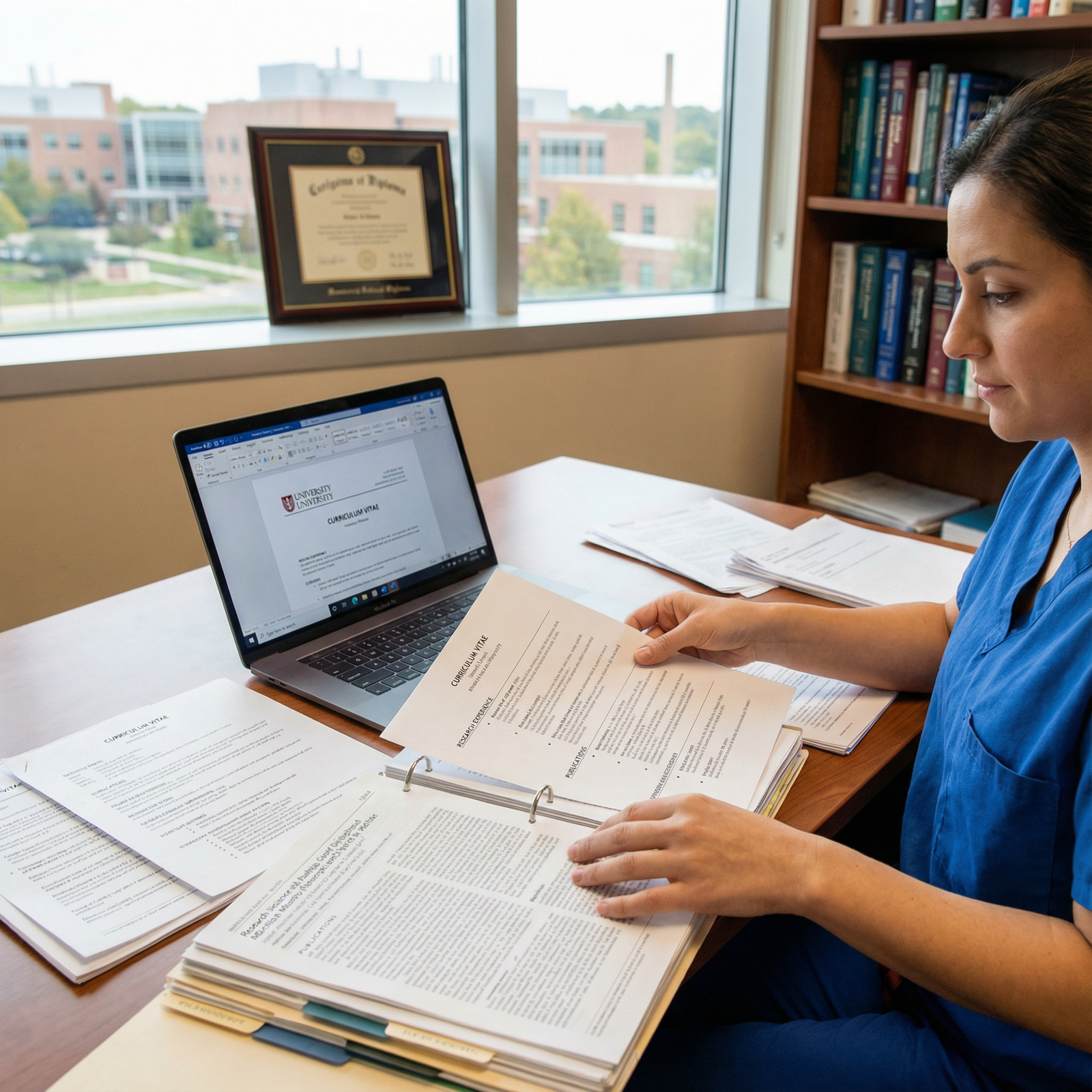
To maximize impact, create clear, organized sections:
Research Experience
- List projects with title, mentor, institution, and dates
- Briefly describe your role (e.g., “Designed data collection tools and performed statistical analysis”)
Publications
- Separate peer-reviewed journal articles, book chapters, and other scholarly work
- Use consistent citation style (AMA is typical in surgery)
- Indicate authorship position (first author, co-author)
Abstracts, Posters, and Oral Presentations
- Include meeting name, location, and date
- Indicate if it was an invited talk or if you received an award
Grants and Funding (if applicable)
- Mention resident research awards, society grants, institutional funding
Using Action-Oriented Language and Outcomes
When describing research roles or experiences, use strong action verbs and highlight measurable outcomes:
- “Led a retrospective cohort study of 250 patients…”
- “Developed a database and performed multivariable regression analysis…”
- “Presented findings at [conference], contributing to updates in departmental protocols…”
If your research led to tangible changes (e.g., new protocol, education curriculum, or QI project adoption), state it explicitly. This demonstrates real-world impact, not just academic output.
Tailoring Your CV and Application to Your Career Goals
Align your research narrative with your broader career development trajectory:
- Applying to trauma/critical care? Emphasize outcomes, resuscitation, ICU, or QI research.
- Aiming for pediatric surgery? Highlight neonatal or pediatric outcomes, congenital anomaly work, or multicenter collaborative projects.
- Interested in academic surgery and education? Feature studies on simulation, competency-based training, or assessment tools.
This coherence between your CV, personal statement, and interview responses strengthens your application.
Conclusion: Research as an Investment in Your Future as a Surgeon
Research in Surgical Residency is not just an optional add-on for “academic types.” It is a powerful tool to:
- Enhance your Curriculum Vitae in a meaningful, credible way
- Develop skills that directly improve patient care and decision-making
- Clarify and strengthen your subspecialty interests and career development path
- Build a professional network that will support you well beyond residency
You do not need to become a full-time scientist to reap the benefits. Even a modest but well-executed portfolio of projects—planned strategically, completed reliably, and presented clearly—can significantly elevate your profile and your capabilities as a surgeon.
By engaging with research thoughtfully, you contribute not only to your own success but to the evolution of surgical practice and the care of future patients.
Frequently Asked Questions (FAQ)
1. Do I need prior research experience before starting a Surgical Residency?
No. Prior research experience is helpful, but not mandatory. Many residents begin serious research during PGY-1 or PGY-2. Programs understand that opportunities vary across medical schools and countries. What matters most is:
- Your willingness to learn research methods
- Your reliability and follow-through on assigned tasks
- Your ability to reflect on what you learned from each project
If you lack prior experience, start with smaller, well-defined projects under close mentorship and build from there.
2. How much research do I need for a competitive surgical specialty?
There is no universal number, but competitive specialties (e.g., neurosurgery, plastic surgery, cardiothoracic, some fellowships) tend to favor candidates with:
- Multiple publications or accepted abstracts
- At least one or two first-author projects
- A coherent research theme aligned with their specialty interest
Quality and completion are more important than raw quantity. A few strong, relevant, and clearly described projects will help you more than many unfinished or marginally involved efforts.
3. How can I realistically balance research with heavy clinical duties?
Balancing call, OR time, and research is challenging but possible with structure:
- Set small, weekly goals (e.g., “write methods section,” “extract data for 10 patients”)
- Use protected blocks of time where available (research days, lighter rotations)
- Communicate transparently with your mentors about your schedule
- Work in teams—sharing data collection or writing responsibilities among residents and students
Many residents find that consistent, incremental progress is more sustainable than trying to do everything in a short burst.
4. What if I do not have a publication by the time I apply for residency or fellowship?
Lack of a formal publication is not automatically disqualifying, especially if your school or program has limited opportunities. Focus on:
- Clearly listing ongoing projects, with your role and expected outcomes
- Highlighting completed abstracts, posters, or oral presentations
- Explaining what you learned from these activities in your personal statement or interviews
If you are still early in training, target at least one complete project with a realistic chance of submission to a journal or conference within your application timeline.
5. How do I find and maintain good research mentorship in surgery?
To find a mentor:
- Talk to senior residents about which attendings are supportive and productive
- Attend research meetings and stay after to introduce yourself
- Approach faculty whose work genuinely interests you
To maintain a good mentoring relationship:
- Be organized and reliable—meet deadlines and communicate proactively
- Come to meetings prepared with updates and specific questions
- Be honest about your bandwidth and clinical constraints
- Show appreciation and give proper credit to mentors in presentations and manuscripts
Strong mentorship is one of the most valuable assets you can gain during Surgical Residency—not only for research success, but for long-term career development and support.