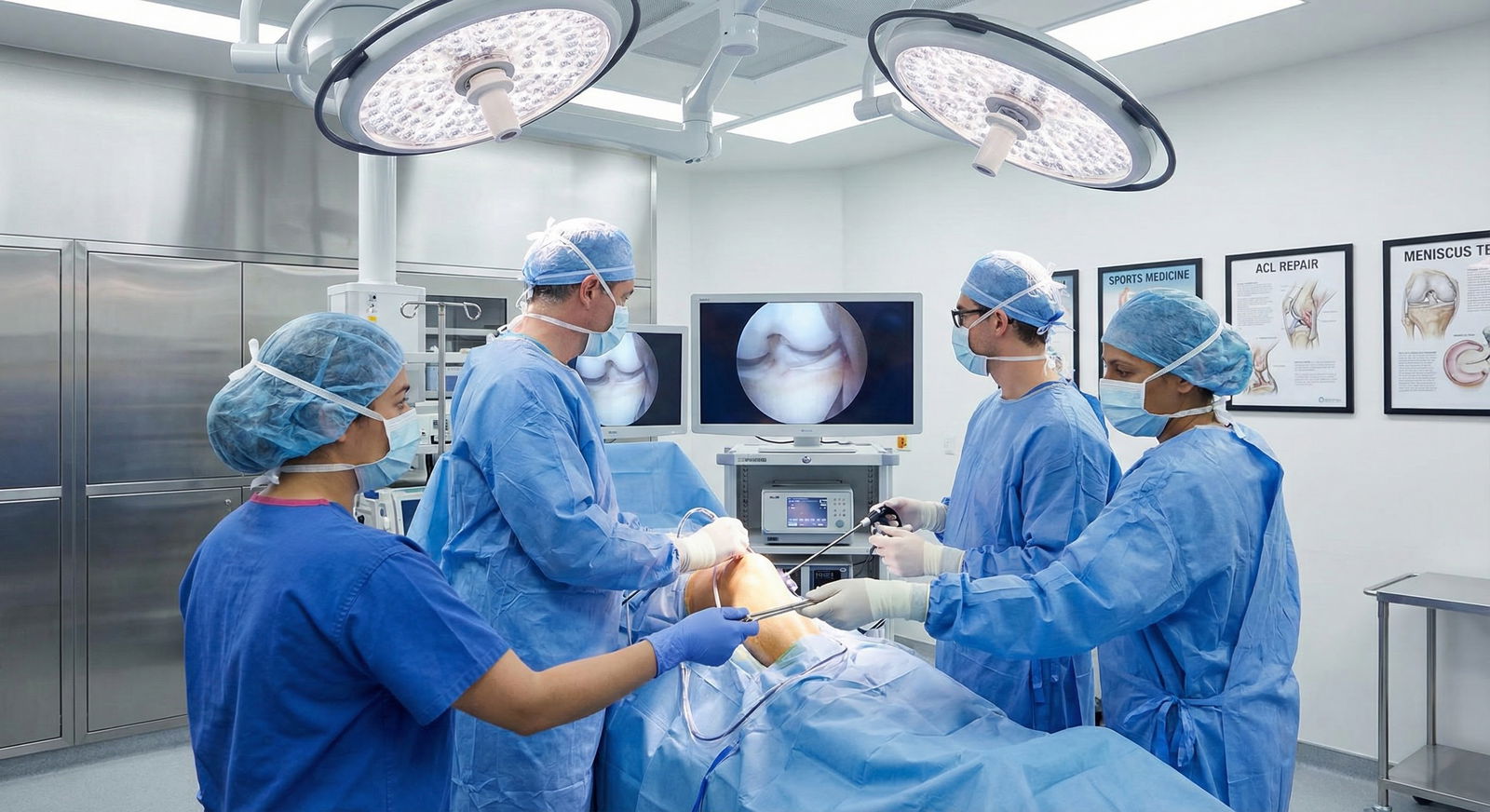
It’s January. You are halfway through your away rotations. You just scrubbed your fourth total hip of the week at Program A… but you came to this rotation for sports. Meanwhile, your phone buzzes with a co-resident’s text: “At Program B we did 6 knee scopes and 3 shoulder stabilizations in one day. This place is ridiculous for sports.”
On paper, both programs advertise “robust sports medicine exposure” and “high-volume arthroscopy.” Their websites are essentially copy‑paste jobs. Their Instagram has the same ACL rehab videos and sideline pics. But you know the truth lives in exactly one place:
The case logs.
If you know how to read them.
Let me break down how to extract the real sports medicine signal from orthopedic residency case logs, and how to tell which ortho programs are genuinely sports-heavy versus those that just have one alum who did a sports fellowship ten years ago.
First principle: stop reading marketing, start reading numbers
Most orthopaedic residencies use the same stock phrases:
- “High-volume Level 1 trauma center”
- “Extensive arthroscopy experience”
- “Graduates competitive for all fellowships including sports, joints, trauma”
Those are useless without context.
The only semi-standardized, comparable data you have for surgical exposure:
- ACGME case log reports (resident-level and occasionally aggregate)
- Program summaries in FREIDA or ACGME public reports
- Historical case log printouts shared during interviews or on program websites
You are not going to see nice, pretty “sports vs. non-sports” breakdowns. The CPT buckets were not built for your fellowship dreams. But if you understand which codes and categories are proxies for sports medicine volume, you can reverse-engineer the program’s true character.
How orthopedic case logs actually encode “sports”
Before we talk strategy, you need a mental map of where sports cases live in the ACGME/ABOS structure.
Sports medicine is not a single category; it is scattered across:
- Arthroscopy codes (knee, shoulder, hip, elbow, ankle)
- Ligament reconstructions (ACL, PCL, MCL, LCL, MPFL, collateral ligaments)
- Instability procedures (Bankart, Latarjet, capsulorrhaphy)
- Meniscus work (repair vs. meniscectomy, root repairs)
- Tendon repairs around joints (distal biceps, patellar tendon, quad tendon, rotator cuff)
- Cartilage procedures (microfracture, OATS, ACI)
Where do these show up?
Arthroscopy
- Knee scope with meniscectomy / meniscal repair
- ACL reconstruction (sometimes separate code but still under sports/arthroscopy umbrella)
- Shoulder arthroscopy for rotator cuff, labral repair, instability
- Hip arthroscopy (femoroacetabular impingement, labral repair)
- Elbow and ankle arthroscopy (lower volume but very sports‑flavored)
Ligament / instability work
Often categorized under:- “Knee – Ligamentous reconstructions”
- “Shoulder – Instability procedures”
- Sometimes just shoulder/knee “reconstruction” without obvious “sports” label
Tendon and cuff
- Rotator cuff repair, open or arthroscopic
- Distal biceps repair
- Patellar and quadriceps tendon repair
Cartilage / osteochondral
- Osteochondral autograft/allograft (OATS)
- Cartilage restoration procedures
- Often buried inside “knee reconstruction” or “other”
Sports volume is inferred by pattern, not a single row called “Sports cases”.
The big four sports signals in case logs
When I have residents or applicants ask, “Is Program X good for sports?” I look for four major signals in their case logs. No single one is enough; the pattern matters.
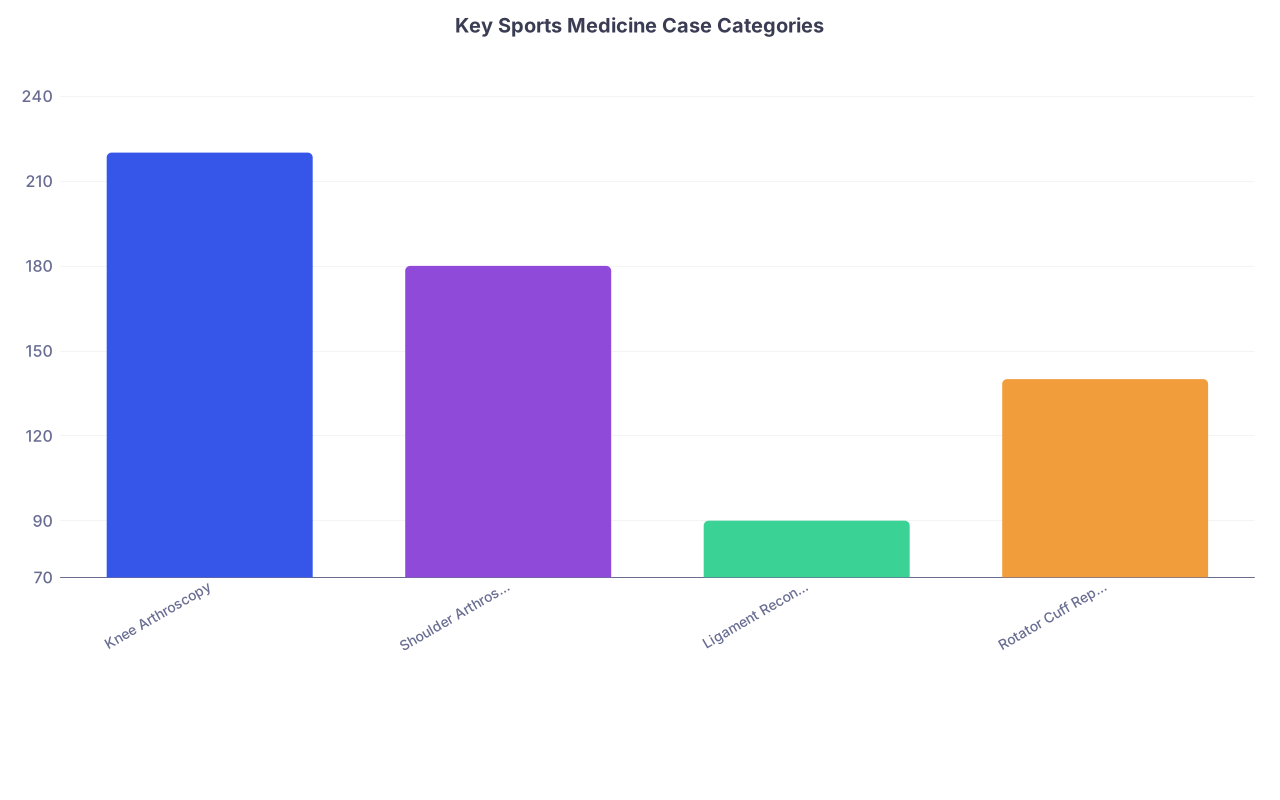
| Category | Value |
|---|---|
| Knee Arthroscopy | 220 |
| Shoulder Arthroscopy | 180 |
| Ligament Reconstructions | 90 |
| Rotator Cuff Repairs | 140 |
1. Knee arthroscopy volume and complexity
This is the workhorse of sports medicine. Every real sports-heavy program will have residents drowning in knee scopes.
What you want to see in graduating chief numbers (for a sports-heavy program):
- Total knee arthroscopies (all indications) >200 per resident
- Meniscal procedures (repair + meniscectomy) >120–150
- ACL reconstructions (primary + revisions) >40–60
A program where graduating residents have 80 knee scopes and 15 ACLs? That is not a sports program. That is a general community arthroscopy exposure.
Deeper signal: meniscus repair vs. meniscectomy
If you can get granular logs or a recent grad to show you their breakdown, look at ratio:
- Sports-heavy programs:
Higher proportion of repairs (root repairs, ramp lesions, complex tears) and fewer “shave everything” meniscectomies. - Arthroscopy-light programs:
Mostly simple meniscectomies, very few repairs. You are learning how to cut, not preserve.
2. Shoulder arthroscopy and instability work
Second pillar. Many programs brag about “a ton of rotator cuff” but that can be old-school open work in elderly patients, not young athlete sports cases.
Sports-heavy shoulder pattern:
- Shoulder arthroscopy total >120–150 per resident
- Instability procedures (Bankart, Latarjet, posterior stabilizations) >30–40
- Significant arthroscopic Latarjet or open Latarjet with a sports faculty, not just trauma doing a few glenoid fractures
Pay attention to the mix:
- Program A: 150 shoulder arthroscopies, but 110 are subacromial decompressions + debridements in 70-year-olds → not a sports flavor, more general shoulder.
- Program B: 150 arthroscopies, 50+ labral repairs, 20+ instability, SLAP, biceps work in younger patients → sports‑dense shoulder training.
3. Anterior cruciate ligament (ACL) and multi-ligament work
ACL numbers are the closest thing to a sports “currency” you will see. They are concrete and not easily faked.
For a truly sports-heavy residency, I expect:
- Primary ACL reconstructions ≥40–50 as surgeon (not just assistant)
- Some exposure to:
- Revision ACL
- Multiligament knee reconstructions
- Complex extra-articular augmentation procedures (LET, ALL, etc.)
Programs with 15–20 ACLs by graduation are teaching you the concept of ACL reconstruction. Programs with 60+ ACLs are teaching you how to handle everything from a high school soccer tear to a revision after tunnel malposition, with different graft choices.
4. Rotator cuff, hip arthroscopy, and niche sports procedures
These are “refinement” signals. Once the big knee and basic shoulder arthroscopy numbers are solid, I look at:
- Rotator cuff repairs (arthroscopic + mini/open) >80–100 as surgeon
- Hip arthroscopy cases at all (many programs will have 0–5)
- Distal biceps, pectoralis major, quad tendon, patellar tendon repairs
- Cartilage work (OATS, ACI, mosaicplasty)
A program with meaningful hip scope numbers (10–20+ per resident) almost always has at least one serious sports arthroscopist on faculty. That usually correlates with better overall sports culture and exposure.
Interpreting aggregate vs individual case logs
Here is where applicants get tripped up. A program shows you a single beautiful case log slide in their pre-interview talk. “Our 2023 graduating chiefs averaged 280 sports cases.”
You need to ask yourself: Whose numbers are those? And how are they distributed?
There are three main scenarios.
| Pattern Type | Resident Experience | Sports Culture Signal |
|---|---|---|
| One Super Sports Resident | 1 resident very high | Weak |
| Evenly High Across Class | All residents high | Strong |
| One Weak, Rest Moderate | Variable | Mixed |
Scenario 1: One super sports-heavy resident
In a class of 4–6, one resident has:
- 120 ACLs
- 300+ knee scopes
- 180 shoulder arthroscopies
Everyone else has bland numbers: 25 ACLs, 80 knee scopes, etc.
Interpretation: there is likely one sports faculty who took a personal project resident, or the resident gamed the schedule and OR assignments. This is not a reliable system; you would be gambling on being the “chosen one.”
Scenario 2: Evenly high sports across the class
All 4–6 chiefs show:
- Knee arthroscopy: 200–250
- ACL: 40–60
- Shoulder arthroscopy: 120–180
- RCR: 80–120
Now you are looking at a real sports-heavy environment. This means:
- Multiple sports faculty
- Protected sports rotations
- Blocked time at sports surgery centers
- Culture that drives arthroscopy cases to residents, not away from them
Scenario 3: One weak outlier, rest moderate
If five residents have 35–40 ACLs and one has 20, that is not concerning. Someone may have been more adult recon focused, did research time, or had legitimate personal reasons.
The pattern you want to avoid is “peaks and valleys” where one or two residents hoard the sports exposure.
Hidden clues outside the obvious arthroscopy counts
A smart applicant looks at more than just “ACGME arthroscopy totals.” Several underappreciated signals tell you if a program is structurally sports-heavy or just sprinkles in scopes for marketing.
1. Pediatric sports exposure
It is not enough to do scopes on arthritic knees. Real sports programs feed you:
- Tibial spine avulsions
- Adolescent ACL reconstructions (physeal-sparing, partial transphyseal)
- Patellar instability in skeletally immature patients
- OCD lesions and cartilage work in teens
Case log hint: a chunk of sports cases logged in pediatric age group. If all your arthroscopy and ligament reconstruction codes are on 50–70‑year-olds, that is not a robust sports program.
2. On-field and training room work (not in case logs, but correlates)
Case logs will not show the hours you spend on sidelines or in training rooms. But programs that genuinely support sports will have:
- Formal roles as team physicians for collegiate programs (D1 if you are lucky)
- Sideline coverage for football, basketball, soccer, maybe hockey
- Structured sports clinics with high-throughput young athlete volume
Ask residents: “How often are you in the training room or on sidelines? As a junior? As a senior?” Programs where residents never leave the OR for games or practices usually are joints/trauma dominant with “sports on the website” only.
3. Case timing and where the scopes live
Another thing you will not see directly in the logs, but can piece together from conversations:
- Are the majority of arthroscopy cases done at:
- The main hospital OR
- An ambulatory surgery center heavily used by sports faculty
- A private partner hospital where residents may or may not go
If most arthroscopy lives in a separate ASC where residents only scrub occasionally, that inflates faculty sports volume but does not help you.
How to reverse‑engineer sports intensity from partial data
Often you will not get access to full class-level case logs. You will see fragments: an ABOS-style summary page, a couple of screenshots on a slide, or a single representative chief’s numbers.
Here is how I dissect that, step by step.

| Step | Description |
|---|---|
| Step 1 | Get Case Log Snapshot |
| Step 2 | Check Knee Arthroscopy Totals |
| Step 3 | Ask for Specific Sports Examples |
| Step 4 | Evaluate ACL and Instability Cases |
| Step 5 | Compare Across Residents if Possible |
| Step 6 | Sports Heavy Program |
| Step 7 | Selective or Marketing Only |
| Step 8 | Arthroscopy Numbers? |
| Step 9 | Consistently High Across Class? |
Step 1: Pull out the four key columns
From any chief log, focus on:
- Knee arthroscopy – total
- Knee ligament reconstruction – ACL specifically if available
- Shoulder arthroscopy – total
- Shoulder instability / RCR – broken out if you can see it
Ignore the global “total procedures” number for now. A resident can have 2500 cases and still be starved of arthroscopy if they live in the trauma and joints rooms.
Step 2: Calculate ratios
Look at proportions:
- What percent of knee procedures are arthroscopic vs open?
- What percent of shoulder procedures are arthroscopic vs open?
- How much of the arthroscopy work is “diagnostic” or “simple decompression” versus reconstructions and repairs?
Example:
- Resident 1:
- Total knee procedures: 350
- Knee arthroscopy: 220 (63%)
- ACL: 55
You are staring at a sports‑forward program.
- Resident 2 (different program):
- Total knee procedures: 350
- Knee arthroscopy: 80 (23%)
- ACL: 18
This is more arthro‑light. Trauma, joints, and tumor probably dominating.
Step 3: Cross-check with other domains
Sports-heavy programs usually show secondary phenomena:
- Slightly lower complex trauma compared to hardcore trauma programs
- Moderate to high shoulder, knee, and hip case density
- Younger inpatient population on average
You can confirm this by asking residents: “On your call nights, what are the bread-and-butter admissions? Mostly hips and ankles from falls, or a lot of athletic injuries and knee/shoulder issues?”
Programs that feel sports-heavy but are not (and vice versa)
I have seen this pattern many times:
Program X: located near a big D1 school, lots of branding with athletes, website filled with photos of sports surgeons. Case logs? 20–25 ACLs, low arthroscopy totals. The bulk of sports work goes to the fellows or faculty at a partner private hospital.
Program Y: mid-sized city, not a sports brand name, no pro teams. But they have three sports faculty who do massive arthroscopy volume and involve residents heavily. Their chiefs are graduating with 70 ACLs and 250 knee scopes. Quietly one of the best sports residencies in the region.
Your job is to separate marketing proximity to athletes from actual resident surgical volume on athletes with sports pathology.
Two specific traps:
Presence of sports fellowship =/= high resident sports volume
At some institutions, the sports fellowship cannibalizes the fun arthroscopy. Fellows get the challenging reconstructions, residents get assists and simpler work.Big-name sports surgeon =/= broad sports culture
One nationally famous ACL surgeon who hoards cases does not make a sports-heavy residency. Unless their colleagues are also high-volume and resident-focused, you can still graduate undercooked.
How to interrogate case logs without being annoying
You are a student. You cannot demand full PDF dumps of ACGME logs. But you can ask targeted, intelligent questions that reveal a lot.
Here is how I would approach it on an interview or away:
With residents:
“If you look at your own case log, about how many ACLs and knee scopes do you think you will finish with? And is that pretty similar among your co-residents?”With the PD or sports faculty:
“For someone interested in sports, what does a typical chief year look like in terms of arthroscopy volume? Do you track knee/shoulder scope and ligament reconstruction numbers for your grads?”With both:
“Do residents or fellows typically take the lead on complex sports reconstructions like revisions, multiligaments, or Latarjets?”
The key phrases you are listening for:
- “Everyone gets plenty of sports” vs. “If you are interested, we can tailor the schedule”
- “Our last few grads going into sports each logged around 50 ACLs and 200+ arthroscopies” vs. hand-wavy “robust” and “strong”
Any program truly proud of their sports training will have numbers at their fingertips. Or at least a consistent story.
Using case logs to predict your fellowship options
Let’s be blunt. For sports fellowships, PDs care about:
- Your letters (ideally from real sports surgeons)
- Your research and niche interest
- Your residency pedigree
- Your technical exposure and comfort with arthroscopy
Case logs feed that fourth piece.
High sports volume in residency gives you:
- A comfort level with portal placement, triangulation, and working in tight spaces that is obvious on day one of fellowship
- A large enough “mental library” of ACLs, shoulders, hips that you are not slowed by basic pattern recognition
- Credibility when you say “I want high-volume, complex sports in fellowship” — because you have already lived it
If your residency sports exposure by numbers looks like:
- Knee scopes: 80–100
- ACLs: 15–25
- Shoulder arthroscopy: 60–80
You will still match sports fellowship, but you will feel behind at the top-end programs. You will be catching up on basic reps while others are already working comfortably on more complex revisions and niche procedures.
On the other hand, if you are graduating with:
- Knee scopes: 200+
- ACLs: 50–70
- Shoulder arthroscopy: 130–180
- Cuff repairs: 80–120
You enter fellowship essentially as a junior sports attending who needs refinement, not basic practice. That is the position you want.
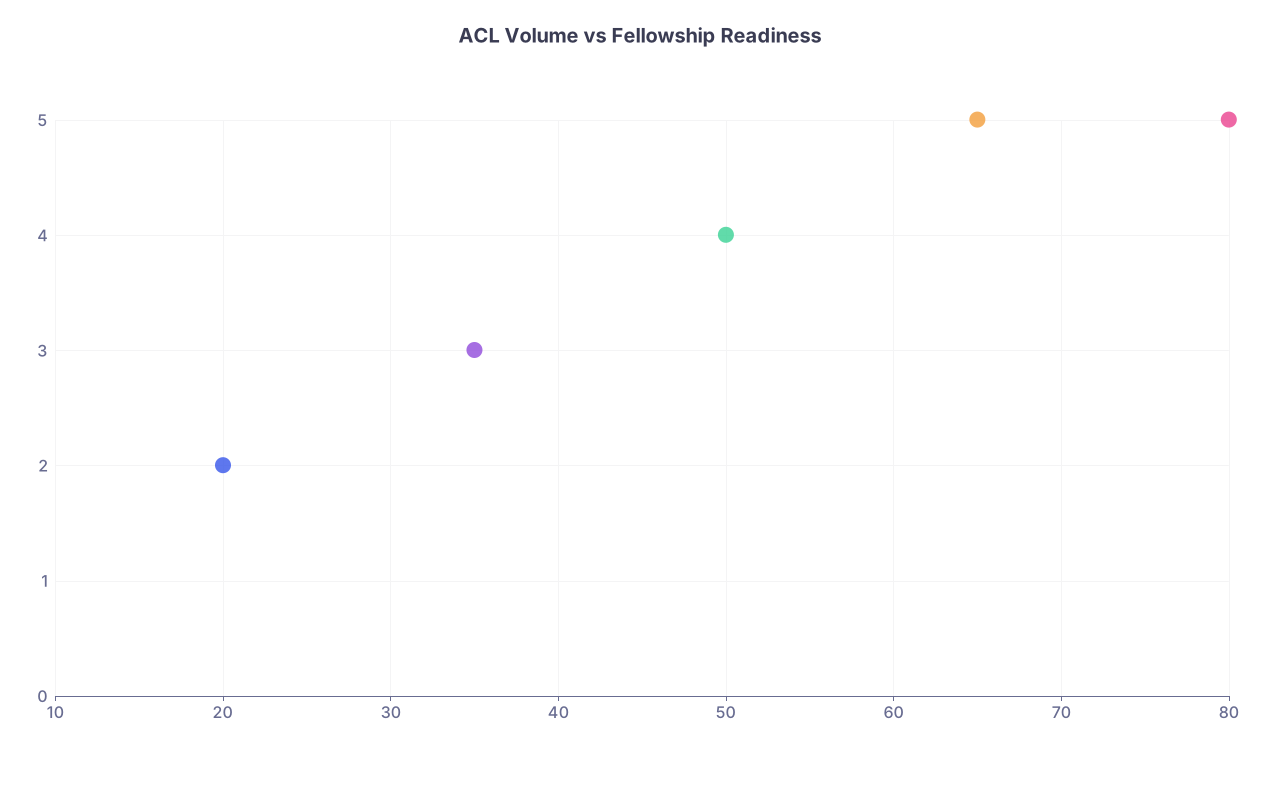
| Category | Value |
|---|---|
| Resident A | 20,2 |
| Resident B | 35,3 |
| Resident C | 50,4 |
| Resident D | 65,5 |
| Resident E | 80,5 |
(X-axis: number of ACLs at graduation. Y-axis: subjective readiness for high-end sports fellowship, 1–5 scale.)
What realistic sports numbers actually look like (ballpark ranges)
Let me anchor this with rough ranges. Do not obsess over exact cutoffs, but use these tiers to classify programs.
| Tier | Knee Scopes | ACLs | Shoulder Scopes | Rotator Cuff |
|---|---|---|---|---|
| Elite Sports-Heavy | 200–300+ | 50–80 | 150–200+ | 90–140 |
| Strong Sports | 150–220 | 35–55 | 120–160 | 70–110 |
| Moderate | 90–150 | 20–35 | 70–120 | 40–80 |
| Weak | <90 | <20 | <70 | <40 |
These are per‑resident by graduation, not per year.
Elite sports-heavy residencies are rare and often associated with:
- Dedicated sports rotations across multiple high-volume attendings
- Strong D1 or pro team coverage
- Residents who consistently match at name-brand sports fellowships and show up technically advanced
Strong sports residencies are more common and are absolutely sufficient to become an excellent sports surgeon. Moderate programs will require you to be more aggressive about seeking exposure. Weak programs will essentially force you to rely on fellowship for nearly all of your practical arthroscopy training.
Matching your risk tolerance to program sports signal
You need to be honest with yourself about how much you care about sports versus the rest of orthopaedics.
Let me be direct.
If your absolute top priority is becoming a high-volume sports surgeon who loves the scope more than the saw:
- Do not “trust the process” at a low-number program just because they are friendly or in your favorite city.
- Anchor your rank list heavily on programs with consistent, high arthroscopy and ligament numbers across graduating classes.
- Accept that you might trade a bit of insane polytrauma volume or rare tumor exposure for that.
If you like sports, but could be happy in joints or general:
- A strong or moderate program will be enough. You can do a sports fellowship later without being behind, if you are motivated.
- Consider the overall surgical breadth, not just the sports column.
If you have no interest in sports:
- Then looking at these numbers is still useful—but as a negative signal. Programs drowning in scopes might give you less complex revisions, tumor, or pelvic/acetabular work.
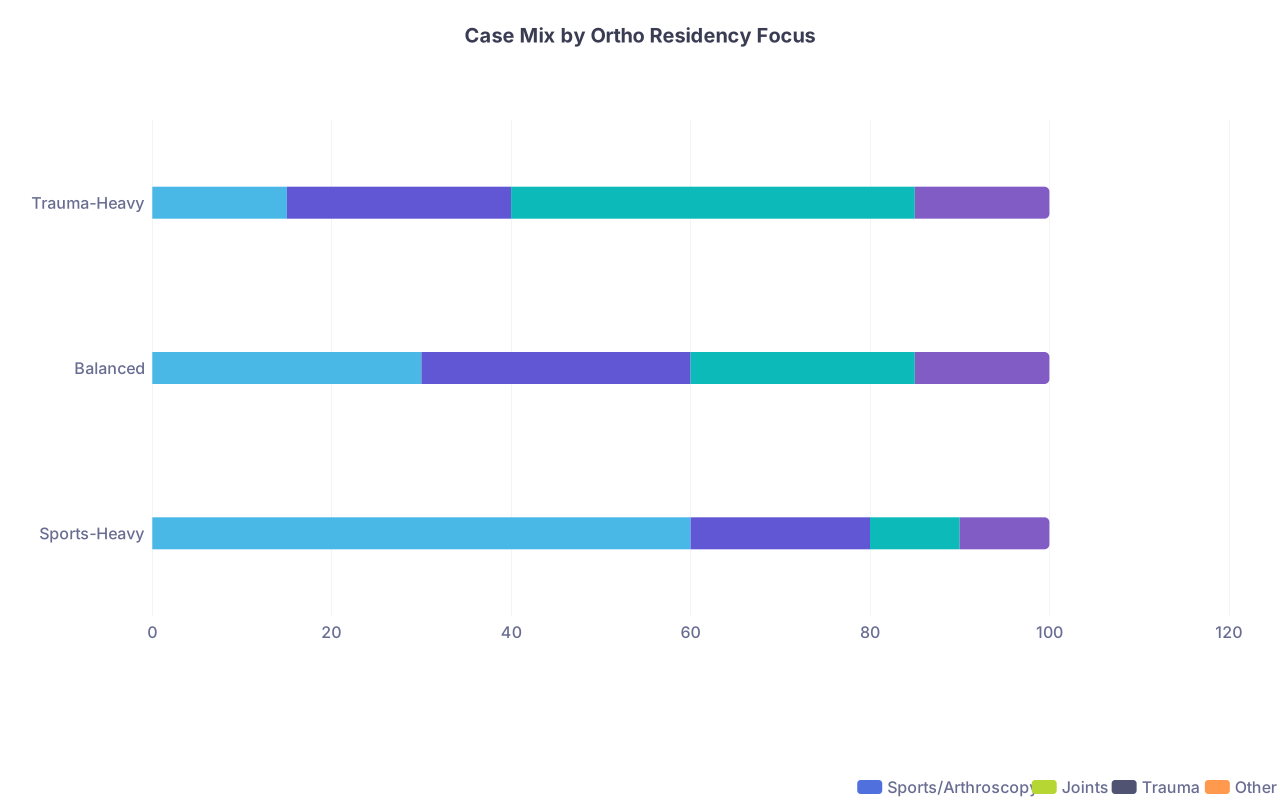
| Category | Sports/Arthroscopy | Joints | Trauma | Other |
|---|---|---|---|---|
| Sports-Heavy | 60 | 20 | 10 | 10 |
| Balanced | 30 | 30 | 25 | 15 |
| Trauma-Heavy | 15 | 25 | 45 | 15 |
Practical ranking strategy using sports case-log signals
When you build your rank list, stop overthinking vague impressions and do something like this:
For every program where you can find any case data (slides, website, PDFs, word-of-mouth from recent grads), assign them a sports tier: Elite, Strong, Moderate, Weak.
Cross-check that against:
- Number of sports faculty doing primarily sports, not 80% joints with the occasional scope
- Presence of sports fellows and how they interact with residents
- Actual resident comments on “how many ACLs / scopes will you graduate with”
Put programs into three buckets:
- “I must leave residency technically advanced in sports” → rank Elite and Strong tier programs at the top, even if the location or prestige is a bit lower.
- “I want sports, but not at the cost of everything else” → favor Balanced or Strong programs where arthroscopy is solid but not overwhelming.
- “Sports is low priority” → do not be seduced by marketing; base your ranking on joints, trauma, or whatever you care more about.
I have seen far too many residents hit PGY4 and suddenly realize: “I want to do sports.” At that point, changing your case log pattern drastically is very hard unless your program was already sports-heavy.
Two or three things to remember
Case logs are the only semi-objective window into how sports-heavy an ortho program truly is. Ignore website adjectives; focus on arthroscopy and ligament reconstruction numbers and how evenly they are distributed across residents.
A true sports-heavy program consistently produces chiefs with high volume in knee scopes, ACLs, shoulder arthroscopy, and rotator cuff work—across the entire class, not just one superstar.
If sports is your priority, rank accordingly. You cannot fix a fundamentally arthroscopy-light residency with enthusiasm alone. The signals are right there in the case logs; you just have to read them correctly.