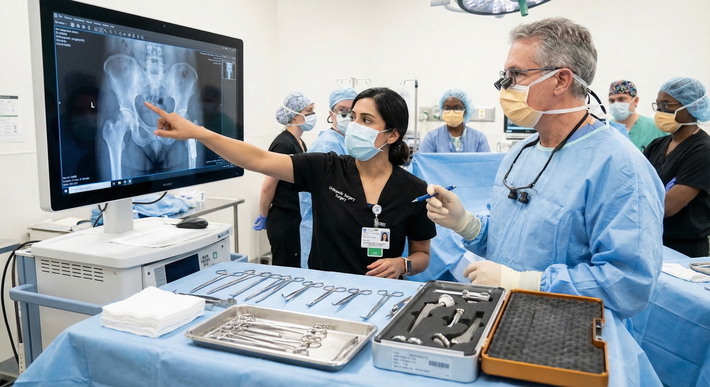
27% of graduating general surgery residents report feeling underprepared for independent practice because of inadequate operative exposure.
That is not a fringe problem. In a field where “see one, do one, teach one” has been the mythology for decades, more than a quarter of residents essentially say: I did not see or do enough.
This is where case volume benchmarks stop being an abstraction and start being the core variable in how you choose a surgical residency.
Why Case Volume Is the Hardest Number to Fake
Let me be direct. Websites glamorize research, NIH dollars, and fellowship match lists. They quietly bury the thing that most directly affects your hands: how many cases you actually do.
The data we do have are blunt:
- ACGME requires a minimum of 850 total major cases by graduation for general surgery.
- Many strong academic and high-volume community programs graduate residents with 1,000–1,500+ cases.
- The spread between programs is easily 30–60% in total volume, and often 100%+ in certain key categories (e.g., minimally invasive, complex biliary, thoracic).
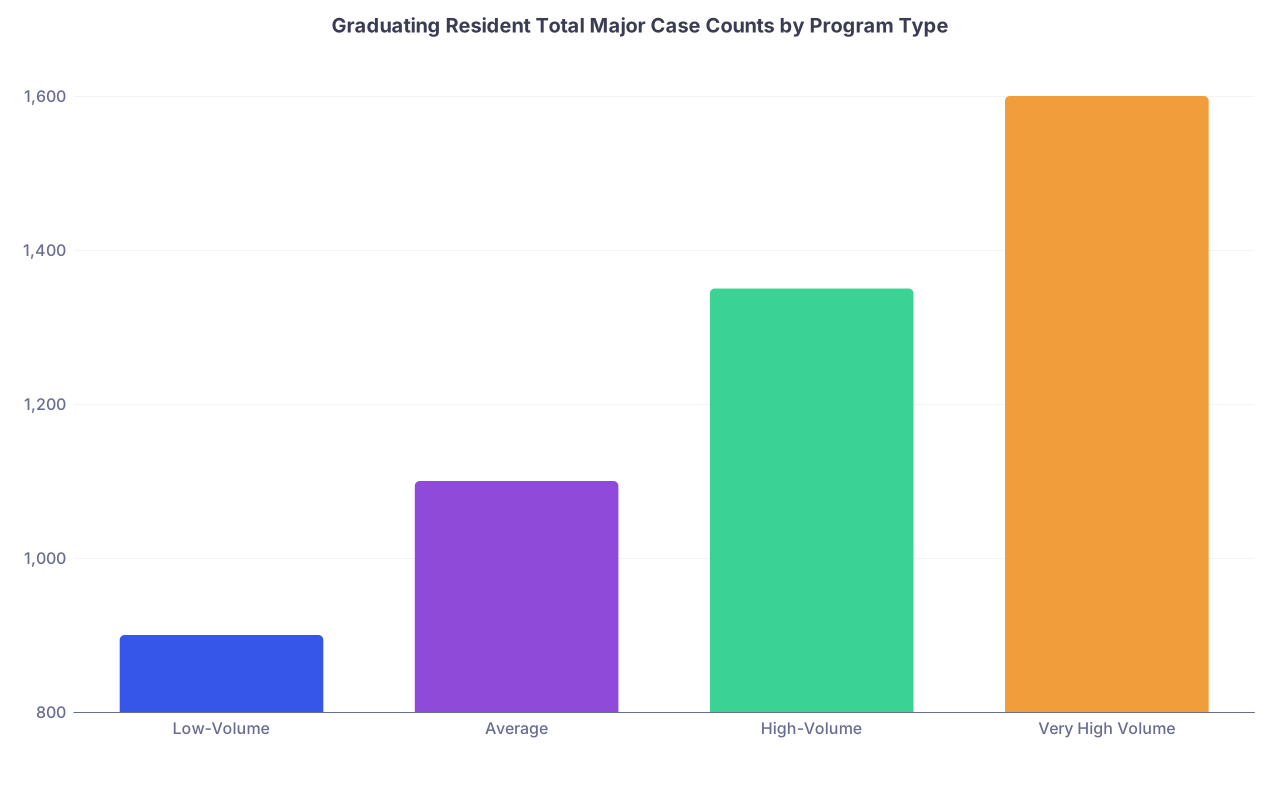
| Category | Value |
|---|---|
| Low-Volume | 900 |
| Average | 1100 |
| High-Volume | 1350 |
| Very High Volume | 1600 |
The data show something simple: meeting the ACGME minimum does not mean you are well trained. It means you hit the floor, not the ceiling.
So the core question when comparing programs is not “Do I get enough cases?” but rather “Where on the distribution of case volume does this program sit, and in which categories?”
The Core Benchmarks You Should Track
You cannot compare programs by one number. “Total case count” is a start, but it hides patterns that matter for your future practice and fellowship plans.
The ACGME general surgery case log system breaks operative experience into categories. The programs that consistently produce confident graduates all show strength across four broad dimensions:
- Total major cases
- Chief year (PGY-5) operative volume
- Balance of index cases across categories
- Early (PGY-1/2) hands-on experience rather than pure scut
Let us put some structure to this.
| Metric | Weak Training Program | Solid Program | High-End Program |
|---|---|---|---|
| Total major cases (by PGY-5) | 850–1,000 | 1,050–1,250 | 1,300–1,600+ |
| Chief year cases | 150–225 | 225–300 | 300–400+ |
| Laparoscopic basic (chole, appy) | 120–160 | 160–220 | 220–300+ |
| Endoscopy (EGD + colonoscopy) | 80–120 | 120–200 | 200–300+ |
| Breadth across categories | 1–2 weak areas | Mostly balanced | Broad, no glaring gaps |
Are these exact ACGME numbers? No. They are realistic thresholds built from actual resident case logs I have seen across a mix of university, county, and community programs.
If a program cannot or will not approximate where their residents fall on these metrics, that is already data: they probably sit at the lower end of the distribution.
How Different Program Types Actually Compare
The stereotype is simple: university programs = research, community programs = cases. Reality is more nuanced. Some university–county hybrids are absolute case machines. Some community-heavy programs undercut resident autonomy with fellowship-heavy services.
But there are recognizable volume patterns.

Academic Flagship Programs
Think of places like UCSF, Michigan, or Washington University.
Data patterns you typically see:
- Total cases: 1,000–1,300
- Strong complex cases: hepatobiliary, foregut, oncologic, transplant exposure
- Fellowship presence: high, which sometimes cannibalizes bread-and-butter cases
Risk: You may end up with stellar exposure to esophagectomies and Whipple procedures but weaker numbers in endoscopy or basic hernia if attendings and fellows protect their “easy” cases for junior fellows.
County / Safety-Net Heavy Programs
Examples: LA County, Cook County, big public hospitals attached to universities.
Common data signature:
- Total cases: often 1,300–1,600+
- Penetrating trauma, emergency general surgery, complex reoperative abdomens
- Tons of autonomy, especially overnight and on weekends
Gap: Sometimes less structured exposure to elective minimally invasive or robotic cases, and occasionally thinner subspecialty oncologic surgery (depends heavily on the site).
High-Volume Community Programs
These are places where residents run ORs from early PGY-2 onward and the staff still say, “We need someone who can handle the list.”
Numerically:
- Total cases: 1,200–1,500+
- Strong in bread-and-butter general surgery, basic laparoscopy, some advanced MIS
- Variable trauma & complex oncologic exposure
The data problem: these programs sometimes push volume without breadth. You might log 300 laparoscopic cholecystectomies but see relatively few pancreatic resections, esophagectomies, or complex HPB unless there is a linked tertiary center.
To make the contrast explicit:
| Category | Academic Flagship | County/Safety-Net | Community High-Volume |
|---|---|---|---|
| Total cases | 1000–1300 | 1300–1600+ | 1200–1500+ |
| Trauma | Moderate | Very high | Low–moderate |
| Complex oncologic/HPB | High | Moderate–high | Low–moderate |
| Bread-and-butter general | Moderate | High | Very high |
| Endoscopy | Variable | Moderate | Moderate–high |
You are not choosing “good” vs “bad” so much as choosing which skew you prefer and where the gaps are acceptable.
Index Cases: Where Programs Quietly Fail
Total case counts can lie. A resident with 1,400 cases where 700 are simple port removals and central lines is not well trained. That is why you need to at least think in terms of “index cases” and required minima.
ACGME defines several index groups. Let me focus on the ones that function as red flags when they are low:
- Laparoscopic basic (appendectomy, cholecystectomy)
- Endoscopy (EGD, colonoscopy)
- Complex GI (colectomy, gastrectomy, esophagectomy)
- Hernia (open and lap)
- Vascular exposure (even though vascular fellowships exist, you still need base competence)
- Trauma (operative, not just “exposure” consults)
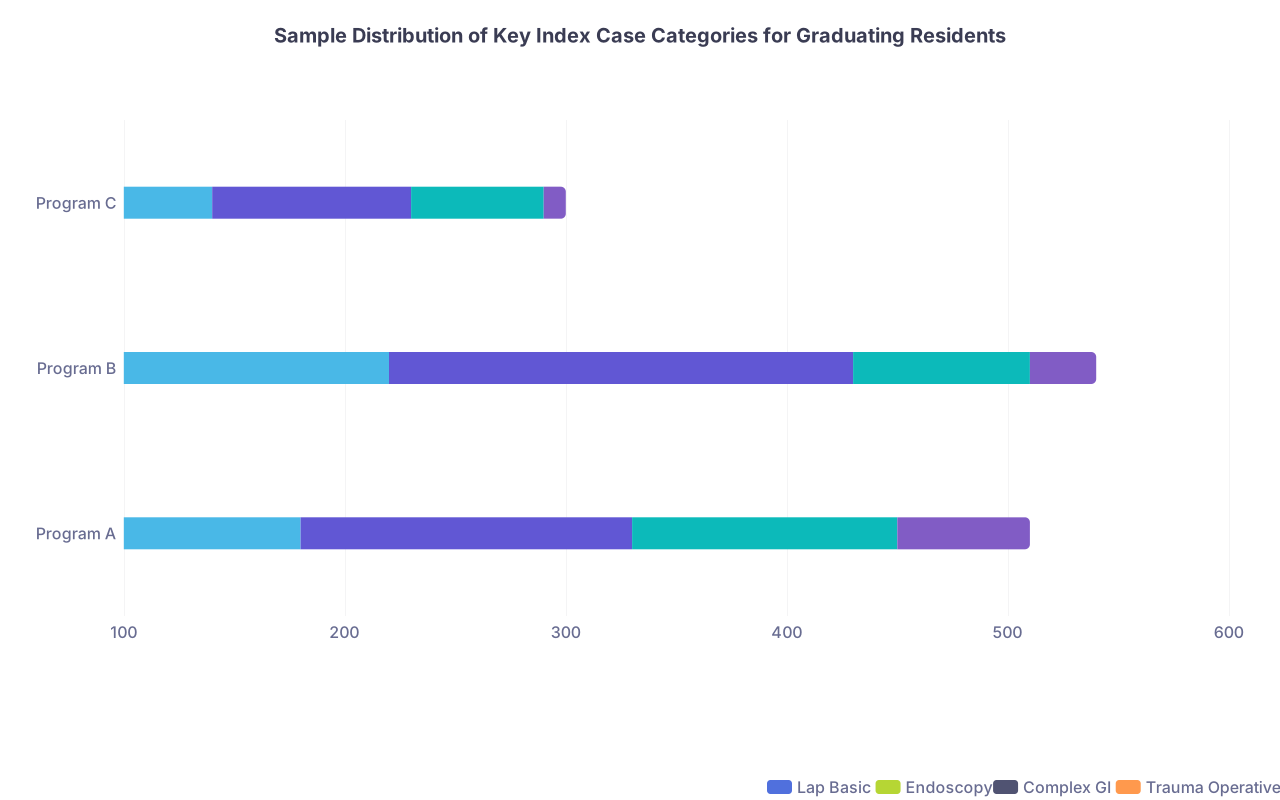
| Category | Lap Basic | Endoscopy | Complex GI | Trauma Operative |
|---|---|---|---|---|
| Program A | 180 | 150 | 120 | 60 |
| Program B | 220 | 210 | 80 | 30 |
| Program C | 140 | 90 | 60 | 10 |
Look at that synthetic data:
- Program B: heavy in laparoscopy and endoscopy, modest complex GI, some trauma. Reasonable spread.
- Program A: balanced but slightly lower everywhere. Solid but unspectacular.
- Program C: cramped across the board, especially trauma and endoscopy. This is the kind of profile that produces the 27% of residents who feel underprepared.
If you see or hear that graduating chiefs are “scrambling” to hit endoscopy or trauma minima, that is a major red flag. Programs with strong volume almost never need to “engineer” cases in the last 6–12 months.
Chief Year Volume: The Single Best Proxy for Autonomy
You can game early-year logs. A PGY-1 can scrub a case, hold the camera, and still be logged as “Assisting Surgeon” in many systems. That number inflates quickly and looks good on paper.
By PGY-5, there is no hiding. Either the resident is the surgeon for 250–350 cases a year, or they are not.
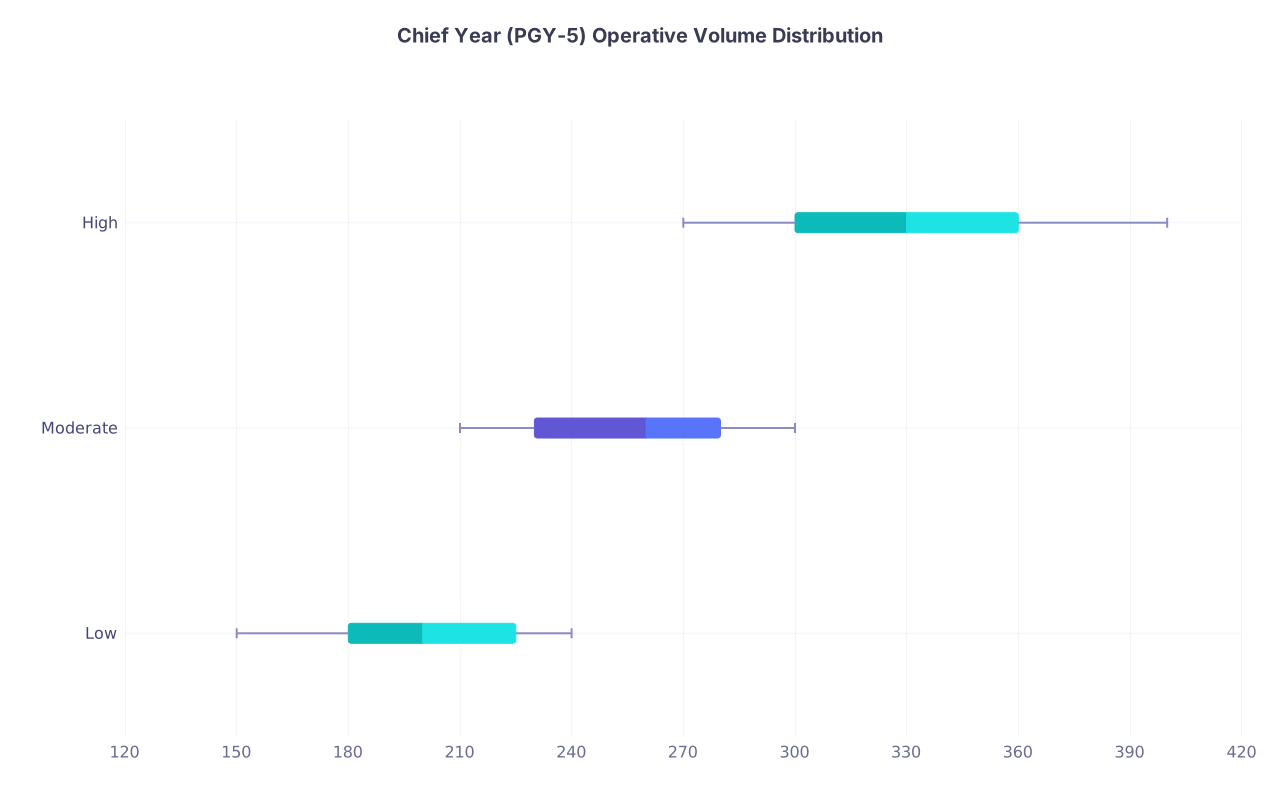
| Category | Min | Q1 | Median | Q3 | Max |
|---|---|---|---|---|---|
| Low | 150 | 180 | 200 | 225 | 240 |
| Moderate | 210 | 230 | 260 | 280 | 300 |
| High | 270 | 300 | 330 | 360 | 400 |
The data show a few things:
- Residents in low-autonomy programs graduate with ~200 chief cases.
- High-autonomy chiefs often sit around 300–350, sometimes higher.
- The higher-autonomy programs consistently produce chiefs who run multiple rooms, direct junior residents, and make more independent intraoperative decisions.
This is where you separate programs that talk about “autonomy” from those that structure it. When you ask residents, you want numbers, not vibes:
- “How many cases did your last graduating chiefs log as surgeon in PGY-5?”
- “Roughly how many rooms do chiefs run on a standard elective day?”
- “Are there fellow-heavy services where chiefs lose cases?” (HPB, foregut, colorectal, MIS)
If the answer is hand-waving—“Oh, plenty, you will get enough”—I do not buy it. Competent programs usually know, within ±50 cases, what their chiefs do.
How to Extract Real Numbers During Interviews
Public, standardized comparisons of case volume across programs basically do not exist in a usable form for applicants. The ACGME has data; you will not have direct access in a friendly spreadsheet.
So you have to behave like a data analyst on the trail.

| Step | Description |
|---|---|
| Step 1 | Identify target programs |
| Step 2 | Pre-interview research |
| Step 3 | Prepare focused questions |
| Step 4 | Ask residents on interview day |
| Step 5 | Cross check between PGY levels |
| Step 6 | Document numbers in spreadsheet |
| Step 7 | Compare programs post-interview |
Here is what I have seen actually work:
Before visits, build a simple spreadsheet with rows for each program and columns for:
- Estimated total major cases at graduation
- Chief year cases
- Endoscopy totals
- Trauma operative volume
- Notable strengths and gaps (qualitative but brief)
On interview day, ask senior residents, specifically PGY-4s and PGY-5s, questions that force a number:
- “How many cases are your chiefs graduating with now, approximately?”
- “Ballpark, how many endoscopies have you logged by this point in PGY-4?”
- “Does anyone struggle to meet ACGME minima in any category?”
Cross-check across residents:
- If one resident says “We graduate with 1,500 cases” and another says “About 1,100,” that discrepancy is data. At minimum, it means nobody tracks this carefully, or the exposure varies wildly by rotation sequence.
You do not need perfect precision. You need rough placement: is this program bottom quartile, middle, or top quartile for volume?
Volume vs. Competence: Where Numbers Mislead
Let me cut through a common misconception: more cases do not automatically equal better training. The data show diminishing returns.
If you have 100 laparoscopic cholecystectomies as surgeon, the 200th does not double your skill. The learning curve flattens. Same for simple inguinal hernias.
Where volume matters most is:
- Early in the learning curve (getting from 0 to 20–30 cases in a procedure).
- In complex, low-frequency operations where repetition is hard to obtain.
- For building decision-making fluency in acute care and trauma.
There is also the issue of “assist bloat.” Some programs log aggressively; residents are technically present for cases but not primary operator. When one resident quietly says, “My numbers look good but I only felt like I really operated on about two-thirds of them,” you should weight that heavily.
The more sophisticated way to think about this:
- Ask about operative independence: “At your institution, when does a resident usually first perform a laparoscopic cholecystectomy skin-to-skin?”
- Ask about graduated responsibility: “In PGY-2 vs PGY-3, what changes in the OR?”
- Ask if attendings routinely let senior residents run the room, including key steps, not just closure.
Volume is necessary but not sufficient. It is the base dataset. Autonomy is the modifier.
Using Case Volume to Align with Your Career Path
Your optimal volume profile depends heavily on where you think you are heading.
If you are aiming for:
- Acute care surgery / trauma: You want a program with outlier trauma and emergency general surgery numbers. County-heavy, Level I trauma-centered programs that log 200+ trauma laparotomies and lots of emergent bowel resections are ideal.
- Minimally invasive / foregut: Look for very high laparoscopy numbers, strong bariatric and foregut services, and meaningful exposure to advanced MIS, not just basic lap choles.
- Rural general surgery: You need breadth. High-volume appendectomies, colectomies, hernias, endoscopy, and some basic vascular. Avoid programs where subspecialists absorb all the interesting work.
- Surgical oncology or HPB: Complex GI and HPB volume at a tertiary center matters more than trauma count.
You cannot be everything. But you can pick a program where your likely path and the volume skew line up.
A Simple Scoring Framework You Can Actually Use
You do not have time to build a multivariate regression model on interview data. You can, however, score programs in a structured way.
For each program, give a 1–5 score (1 = weak, 5 = excellent) in these categories based on numbers you hear:
- Total major cases
- Chief year volume
- Endoscopy volume
- Trauma / acute care exposure
- Breadth of complex cases (HPB, oncologic, thoracic, etc.)
Then average, but also look for failure modes:
- Any category scored 1–2 is a potential future regret zone.
- Programs without any 4–5 scores are unlikely to make you enthusiastic later.
- A program with a skew you like (e.g., 5 in trauma and 5 in acute care, 3 in complex HPB) can beat a more balanced but less aligned one.
Even a crude system like that will outperform “I liked the vibe” when you sit with your rank list and realize three of your top five have suspiciously vague answers on case numbers.
The Bottom Line: What the Numbers Actually Tell You
Let me compress all this into the few data-driven truths that matter.
Programs cluster into clear volume tiers. Weak ones flirt with ACGME minima; strong ones overshoot by 30–60% across major categories, especially in chief year. You want to be in the upper half of that distribution, not scraping the floor.
Total case count alone is a blunt instrument. The breakdown across index categories, endoscopy, trauma, and chief year autonomy separates genuinely robust training from inflated log files.
You will not be handed transparent spreadsheets. You need to ask for numbers directly, cross-check between residents, and track them yourself. Programs that cannot speak concretely about their case volume usually do not look good on paper either.
If you treat case volume as a measurable, comparable variable instead of a vague reassurance, your rank list will get sharper, and your odds of graduating as one of the prepared 73% will go up.