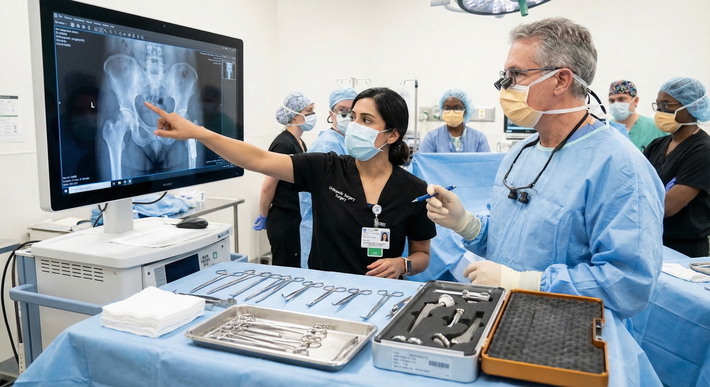
You are here
It’s 9:30 p.m. some random Tuesday in January. Your sub-internships are done. The last pre-interview thank-you email is long sent. You’ve replayed your interview answers in your head a hundred times.
And now you are imagining this: a bunch of surgical attendings, maybe a PD, maybe the chair, sitting around a table deciding if you are above or below “Applicant #47” on their rank list.
You’re asking the right question: what are they actually saying about you in that room?
I’ve been in those rooms. Rank meetings for general surgery, subspecialty fellowships, categorical vs prelim spots. The conversation is not what the official “Selection Criteria” blurb on the website would make you think.
Let me walk you through what really drives your spot on that list—after interview day is over.
How the rank meeting actually runs
First, you need to understand the mechanics, because the process shapes what matters.
Most surgical programs do some version of this:

| Step | Description |
|---|---|
| Step 1 | Interview season ends |
| Step 2 | Compile applicant files |
| Step 3 | Faculty score or tier applicants |
| Step 4 | Initial PD rank draft |
| Step 5 | Rank meeting discussion |
| Step 6 | Adjust tiers and order |
| Step 7 | Finalize rank list |
The faces in that room:
- Program Director (PD) – runs the meeting, owns the final list.
- Associate PDs – have a loud voice, especially about “fit”.
- A couple of heavily involved faculty – usually the ones who interview a lot or run key rotations.
- Sometimes the Chair – cares about prestige, future academics, and not matching disasters.
- Chief residents and maybe a senior or two – they represent what it’s actually like to work with you.
Everyone thinks they’re being objective. They’re not. They’re human and tired and trying to remember which “John” you were out of 30 Johns.
Here’s the brutal truth: by the time you get to the rank meeting, almost nobody goes back to your entire ERAS packet. They work off three things:
- Short faculty impressions.
- A crude scoring or tiering system.
- PD’s sense of “This one will be solid on call and not implode.”
That’s it. Now let’s deconstruct what’s actually weighted.
The unofficial scoring system: how you’re sorted before anyone talks
Most programs have some internal structure—numeric scores or tiers. But they use it more as a starting grid than a final answer.
| Factor | Real-World Weight After Interviews |
|---|---|
| Faculty & resident impressions | Very High |
| Sub-I performance at that site | Very High |
| Letters from known surgeons | High |
| Step scores (post interview) | Moderate |
| Research & CV sheen | Moderate |
| Personal statement | Low |
Here’s how it really works.
1. Tiers, not precise rankings
Many PDs don’t think in “Applicant #7 vs Applicant #8.” They think in bins:
- Tier 1: “We’d be thrilled to match them.”
- Tier 2: “We’d be fine with them.”
- Tier 3: “They’ll function, but we’re not excited.”
- Do Not Rank: “No. Just no.”
At the beginning of the meeting, the PD often has these tiers roughly formed based on:
- Interview scores
- Who rotated there
- Red flags (or green flags) from the file
The meeting then mostly adjusts within tiers and occasionally bumps people up or down a tier.
So your first job, long before that night, is to land yourself in Tier 1 or 2. Being #3 in Tier 2 usually beats being #1 in Tier 3.
What matters most: what people actually say about you in the room
The greatest lie of residency selection is that your fate is “your Step score plus your application.” That might get you the interview. It does not decide your rank.
What decides your rank is this: the 30 seconds someone in that room spends talking about you.
Let’s break down the big drivers.
Your sub-I or audition rotation: the biggest lever
If you did a sub-I at that program, they are not ranking your interview. They’re ranking your rotation.
I’ve watched this multiple times at big-name and mid-tier programs:
- An applicant with a 260, strong research, did not rotate there. Pleasant interview, no red flags. Ends up mid-high on the list.
- Another applicant with a 234, average research, but did a month there. Residents loved them, chiefs vouched for them, they carried the list on nights. Gets ranked above the 260.
Why? Because they’ve already seen you in your future job.
The conversation sounds like:
“US MD, Step’s fine. Did a sub-I with us in September.”
“Was on my service. Showed up early, stayed late, never complained.”
“Chief said they handled consults well, didn’t melt on overnight call.”
“Residents liked them?”
“Yeah, totally.”
“Okay, move them up.”
That’s gold.
If your sub-I went badly? Residents thought you were lazy or weird or checked out? That sticks harder than you think, even if people try to be “fair.”
Resident comments: surprisingly powerful
The residents don’t officially control the list. But their input heavily colors the conversation.
At many programs, after interview days, residents fill out quick notes. Actual phrases I’ve seen read out:
- “Would be great to work with.”
- “Quiet but solid; seems dependable.”
- “Came off arrogant, talked over others.”
- “Strange vibe – not sure they’d mesh with team.”
Those get remembered. Especially the negative ones. No one wants to bring in someone the residents hate on day one.
One PD I know literally skips half the application review if a senior resident has written something like: “Multiple people on the interview day felt they were rude to staff.” Straight to the bottom, if not Do Not Rank.
So when you’re on your interview day social? That’s not “optional.” That’s a data-gathering exercise.
The PD’s mental checklist: how they decide if you’re worth the risk
Program Directors think in risk management terms. They are not trying to find “the best human.” They are trying to avoid disaster and fill a roster with people who will survive.
A general surgery PD sitting with 10 spots has a few nightmare scenarios:
- The resident who can’t pass boards.
- The resident who blows up interpersonally and poisons the program.
- The resident who quits after PGY-1 and leaves them scrambling.
Every part of your file and your interview is filtered through: “Am I betting a 5-year contract on this person?”
Here’s the mental framework many PDs actually use, whether they articulate it or not.
1. Can this person handle the work?
This is not about “are they brilliant.” It’s: will they show up at 4:30, round on 25 patients, spend 14 hours getting hammered, then stay late to help with an add-on ex-lap without falling apart or becoming unsafe.
Things that feed this judgment:
- Sub-I evals: “Hard worker, took feedback, no drama.”
- Letter language: not flowery nonsense, but concrete statements like “was among the hardest working students I’ve supervised in 10 years.”
- Gaps or frequent switches: PDs are suspicious of people who bounce around with thin explanations.
- Step 2 CK, specifically: low or borderline scores trigger “can they pass ABSITE and Boards?”
2. Are they going to be a problem?
I’ve watched entire rooms cool on a candidate because of a single phrase:
“Honestly, I got a weird vibe. They complained a lot about their home program.”
Death sentence.
Red flag categories:
- Disrespect to staff mentioned in any eval.
- Lawsuits, professionalism issues, or vague “disciplinary” notes.
- Aggressive, entitled attitude during interview or social.
- Overly negative comments about other programs, locations, or specialties.
Here’s the part no one says aloud: if there’s even moderate concern that you might become a headache, you slide down the list. There are too many safe applicants.
3. Will they stay and finish?
Surgery PDs have long memories of the ones who left after PGY-1 for anesthesia, radiology, derm, or “taking time off.”
So they’re scanning your story for commitment:
- Did you “find surgery” last-minute in M4? That’s a yellow flag.
- Do you have 4 pubs in plastics but you’re applying gen surg with a vague “I love the OR”? Also a yellow flag.
- Did you answer, “Where do you see yourself in 10 years?” with “I’m keeping my options open”? That answer has tanked people.
What they want to hear and see is some version of: “I get what surgery really is, and I still want it.”
The myths: what you think matters vs what actually moves your rank
Let’s shred a few illusions.
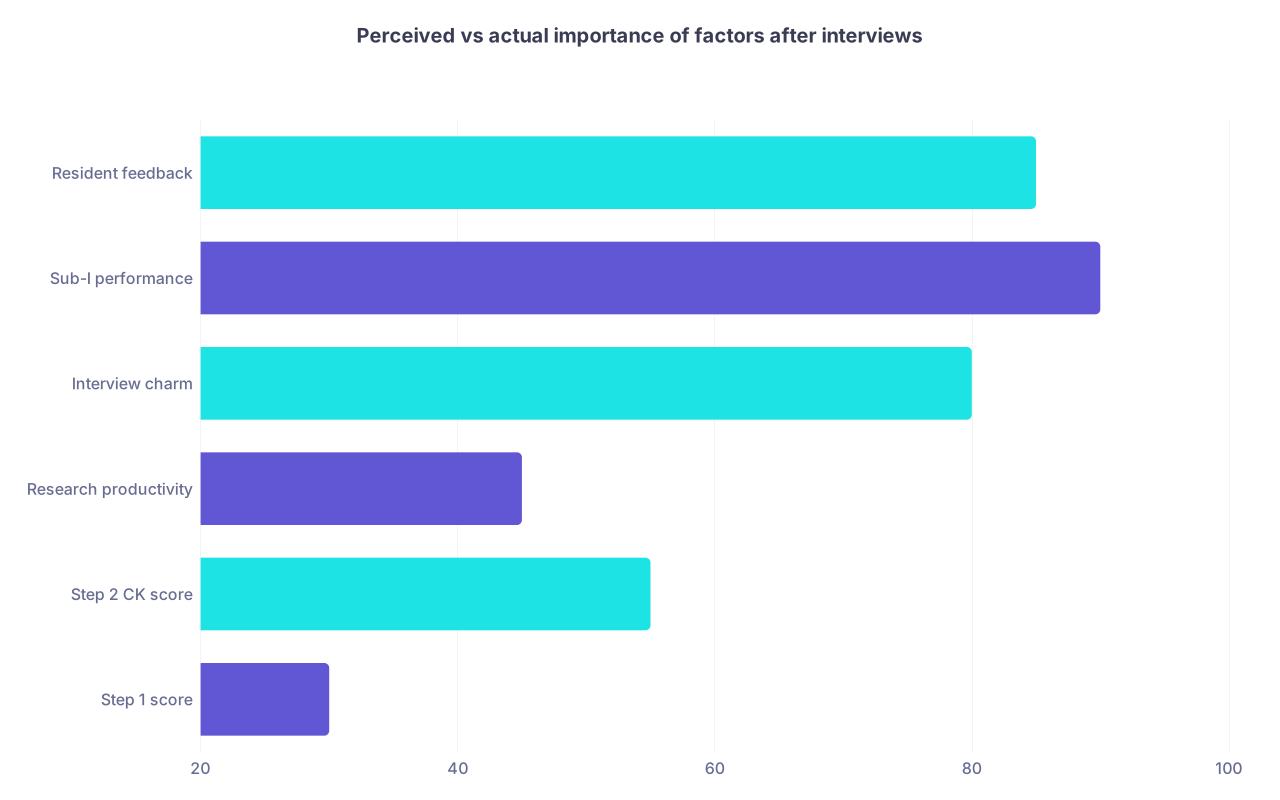
| Category | Value |
|---|---|
| Step 1 score | 30 |
| Step 2 CK score | 55 |
| Research productivity | 45 |
| Interview charm | 80 |
| Sub-I performance | 90 |
| Resident feedback | 85 |
Interpretation: what the committee actually leans on once you’re in the room.
Myth 1: “My Step score will carry me”
Step got you in the door. After that, PDs care mostly if you’re safe on boards, not if you’re a genius.
A 230 with stellar sub-I and glowing resident comments will beat a 260 who came off arrogant, nine times out of ten.
The exception: ultra-competitive places gunning for NIH funding and 100% board pass rates. Even there, past a threshold, the conversation shifts to “who will we enjoy watching operate at 3 a.m.?”
Myth 2: “My research is my main weapon”
No. Not after the interview.
Your research matters pre-interview, and it matters if the Chair is obsessed with academic output. But at the rank meeting, it gets reduced to: “Serious about academics?” and “Likely to produce papers for us?”
There is a huge difference between:
“They have 12 pubs, but no one here knows them.”
versus
“Fewer pubs, but Dr. X knows them well and says they are the real deal.”
Known quantity beats PubMed count more often than not.
Myth 3: “If the interview felt good, I’m golden”
You’re overestimating how much any single interaction is remembered. Faculty interview notes are often hilariously vague:
- “Pleasant. Good fit.”
- “Quiet but thoughtful.”
- “Strong interest in academics.”
That’s basically useless. So what actually sticks? Outliers.
- You crushed a difficult ethical question with a very grounded answer.
- You connected with a faculty on a specific project or niche interest.
- Or: you said something tone-deaf that three people independently mention.
Your goal is not to “be liked by everyone.” It’s to avoid giving anyone ammunition to argue against you, while giving at least one influential person a reason to speak for you.
What specific comments push you up or down
Here’s the real currency of rank meetings: specific, vivid phrases. Not generic praise. The sentences that make everyone look up.
Comments that move you up
These are the kinds of lines that bump you a tier:
- “Our chiefs asked if we could make sure we rank them high.”
- “They functioned at almost an intern level on their sub-I.”
- “Never flustered on call. Asked for help appropriately.”
- “Genuinely kind to nurses and staff. People noticed.”
- “They’re the kind of person you want next to you in a bad trauma.”
One case that stuck with me: candidate had decent stats, nothing flashy on paper. But a chief said, “If I were starting a new program from scratch, they’d be my first pick.” That applicant jumped 10+ spots immediately. No one argued.
Comments that drag you down
These kill you:
- “We had to keep reminding them to see consults. Seemed disinterested.”
- “Honestly gave off a ‘too good for us’ vibe.”
- “Great on paper, but multiple residents felt something was off.”
- “Strong technically, but had friction with nurses twice in one month.”
- “Said they’re also thinking about switching to another specialty.”
Nobody wants to defend those risks.
There was a candidate once who looked perfect: high scores, lots of research, top med school. But a nurse told a chief, “That student is rude and dismissive.” Didn’t matter if it was a misunderstanding. The PD’s response: “We have too many other options. Pass.” They dropped 30+ spots.
How ties are really broken: the “would I want to take call with you” test
At some point, especially in mid-to-upper tiers, you get clumps of similar applicants. Same scores, similar research, all pleasant.
The conversation stops being formal. It turns into something much simpler:
“Between these three, who do you want on your trauma service in July?”
This is where subtle impressions win.
Factors that break ties:
- You had a clear, grounded story for why this program. Not a generic script.
- Residents actually remembered you from the social as fun, humble, normal.
- You seemed resilient. That word comes up a lot. “They seem resilient.”
I remember a PD saying, “Between these two, one is shinier on paper. But I can actually picture the other one laughing at 2 a.m. while still getting things done. Put them higher.”
That’s not in any rubric. But it’s real.
How much your rank can move after the meeting starts
You’d be shocked how volatile the middle of the list is during that session.
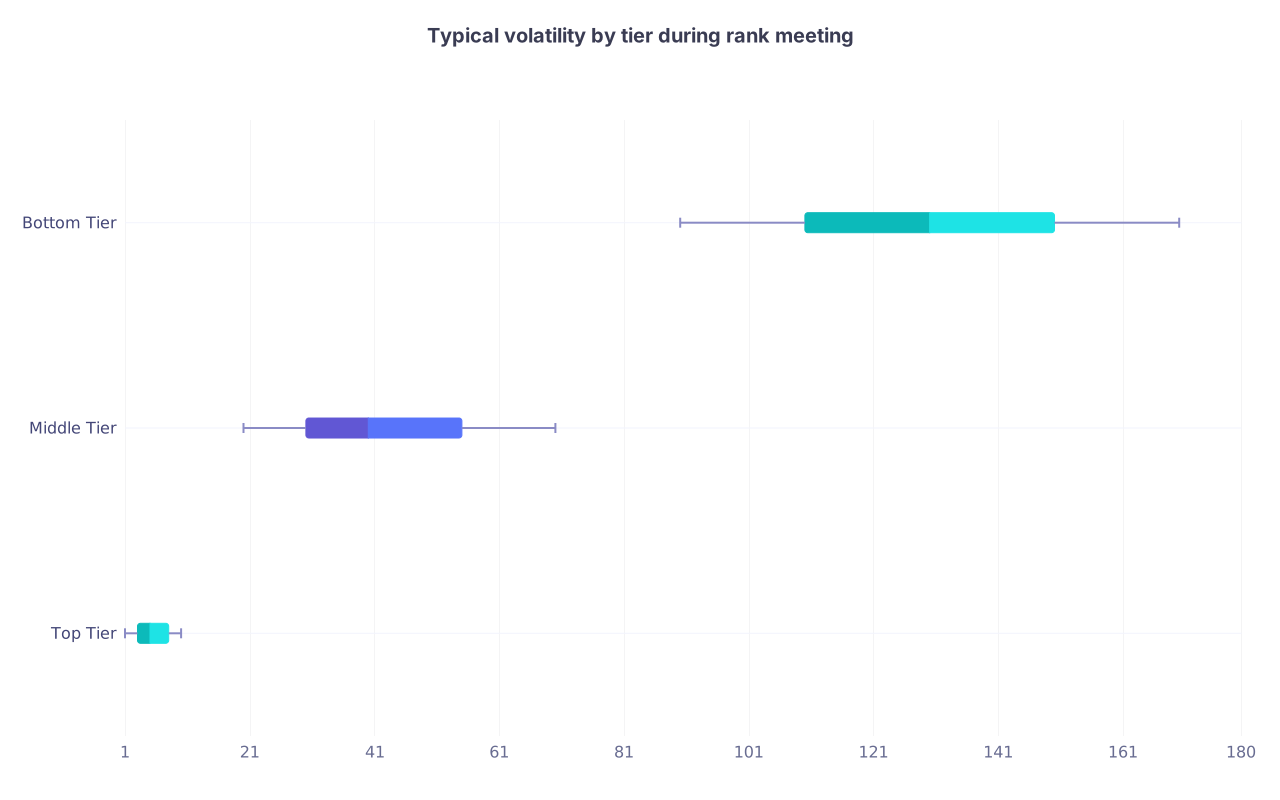
| Category | Min | Q1 | Median | Q3 | Max |
|---|---|---|---|---|---|
| Top Tier | 1 | 3 | 5 | 8 | 10 |
| Middle Tier | 20 | 30 | 40 | 55 | 70 |
| Bottom Tier | 90 | 110 | 130 | 150 | 170 |
Rough translation:
- Top 10–15: reasonably stable. They rarely crash unless someone drops a serious red flag at the last minute.
- Middle 30–60: chaos. People jump 20–30 positions up or down.
- Bottom: mostly irrelevant; small shifts, but they’re not getting to you unless the list runs very deep.
One strong endorsement in the room from a respected faculty can move you a lot. One “eh, I wasn’t impressed on service” can sink you.
Short anecdote: A candidate at a midwestern gen surg program was initially in the “solid but not exciting” cluster. During the meeting, the trauma director realized this was the same student who had run a smooth trauma bay during a horrible MVA case as a sub-I. He told the story, you could feel the room change, and the PD moved them into the “we really want them” tier. That’s how random—or human—this gets.
What you can still control vs what’s already set
By the time interview day is over, most of the data is fixed. But not all of it. Programs keep updating impressions until that list is submitted.
Here’s what’s basically locked:
- Your exam scores.
- Your official letters.
- Your sub-I formal evaluations.
Here’s what surprisingly still influences the subconscious:
- How you communicate post-interview. Needy, pushy, or strangely distant emails leave a mark.
- If you send a brief, thoughtful update that shows maturity, not desperation.
- If your home faculty quietly advocates for you to their friends at that program. You won’t see this, but it happens.
I’ve seen applicants slide down because of weird, overly aggressive “I will rank you #1 if you rank me high” type emails. PDs hate being cornered, and they talk to each other. Don’t be that person.
The unspoken hierarchy: home students, rotators, outsiders
You’re not all starting from the same baseline.
| Applicant Type | Baseline Advantage at That Program |
|---|---|
| Home med student | Very High |
| Sub-I / away rotator | High |
| No prior connection | Neutral |
Home students and rotators have known quantity status. That doesn’t guarantee a top rank, but it gives the PD more confidence.
I’ve heard this exact line: “I know the home student’s flaws already. I’d still rather have them than roll the dice on a stranger who might be worse.”
So if you’re an “outsider,” what do you do?
You have to be so consistent, so low-drama, so clearly committed to surgery that people feel comfortable elevating you despite not having watched you in the trenches.
That’s why your letters from known surgeons (national names or trusted faculty) matter far more than a dozen generic letters from people nobody in that room recognizes.
What all this means for you (and how to actually use it)
Let me make this practical.
You can’t time-travel and redo your Sub-I. But you can think like a PD when you prepare for future interviews, follow-ups, or even how you behave on current rotations.
Focus on things that create talking points for someone to use in that room.
- Give residents and attendings specific stories they can repeat: a time you stayed late, helped a struggling classmate, handled a rough cross-cover night without complaining.
- Be relentlessly decent to staff. Not performatively nice. Just consistently respectful.
- When you talk about surgery, sound like someone who has actually seen the ugly parts and signed up anyway. That alone separates you from the tourists.
And remember this: at that final meeting, you are not line 12 on a spreadsheet. You are a three-sentence narrative spoken out loud.
Your real goal in this whole process is to shape those three sentences.
Key takeaways
- After interview day, your rank is driven far more by human impressions—sub-I performance, resident input, a few specific stories—than by the numerical glitter on your CV.
- The PD is quietly solving one problem: “Can I trust this person to work hard, not implode, and actually finish surgery training here?” Anything that hints otherwise drops you.
- What gets said about you in that room comes from how you treated people, how you handled real work, and whether at least one influential person is willing to speak up and say, “We want this one.”