
What if you go through this entire hellish process and realize…you don’t actually have a dream surgical program at all?
That’s the fear, right? Everyone else seems obsessed with “Top 10 this” and “prestige that,” walking around with color-coded rank lists since August… and you’re sitting there thinking:
“Honestly? Every option looks… fine. Mid. Nothing makes me excited. Am I broken?”
Let’s talk about that.
Because I see this a lot. Especially in surgery. Everyone’s performing like they have this one magical program that’s their soulmate, but behind closed doors, a ton of applicants are whispering the same thing you’re thinking:
“What if I just… don’t care that much where I end up? And what if that means I chose the wrong specialty, or I’m not competitive, or I’ll be miserable wherever I match?”
You’re not the only one. You’re just the only one admitting it to yourself.
1. Why “everything feels mid” is freaking you out so much
Let me just name the core anxiety:
You’re scared that not having a dream program means:
- You’re not passionate enough
- You’ll never be truly happy in surgery
- You’re missing some obvious red flag
- You’re going to “settle” and regret it for the rest of your career
And on top of that, there’s the comparison spiral:
Your classmate: “OMG, if I don’t match at MGH I’ll die.”
You: “Honestly I could see myself at like… 10 different places and none stands out.”
You worry that their obsession equals dedication, and your ambivalence equals some sort of defect. Like you’re supposed to walk into an interview day, hear the PD talk, and feel a “this is The One” rom-com moment.
Reality check: most residents I’ve talked to did not have a dramatic lightning-bolt moment. A lot of them matched somewhere that was:
“Good. Solid. Not my #1 fantasy. But it worked.”
The myth of the “dream program” is kind of toxic, because it sets you up to feel like something is wrong with you if you’re not in love with a logo.
But your anxiety is still real. So let me break down what “everything feels mid” usually actually means under the surface.
What “mid” can secretly mean
“Mid” can mean a few different things:
- Your priorities are fuzzy
- You’re burned out and emotionally flat
- You’ve only seen surface-level differences
- You’re terrified of choosing “wrong,” so nothing feels safe enough to love
If you’re numb from Step 2, sub-Is, and 30+ interviews, yeah, of course nothing feels thrilling. Your nervous system has been on high alert for a year. It’s self-preservation at that point.
2. Brutal truth: most surgery programs are more similar than different
Here’s the part nobody says out loud because it doesn’t sound sexy on SDN:
A ton of general surgery programs are… structurally similar.
You’ll:
- Wake up too early
- Round forever
- Live in the OR
- Get worked hard
- Learn a lot
The top-line branding might scream “cutting-edge,” “they operate a ton,” “insane trauma,” “amazing research.” Underneath, it’s still: sign-outs, consults, notes, cases, call, repeat.
I don’t mean that in a depressing way. More like: you’re not crazy for feeling like the differences are subtle and abstract.
When you’re on a tour and someone says, “We do 3 months of night float PGY-2 vs 2 months PGY-3,” your brain just files it under: “Okay. Still tired. Still nights. Not life-changing.”
So yeah, everything feeling like slight variations of the same theme is… honestly pretty accurate.
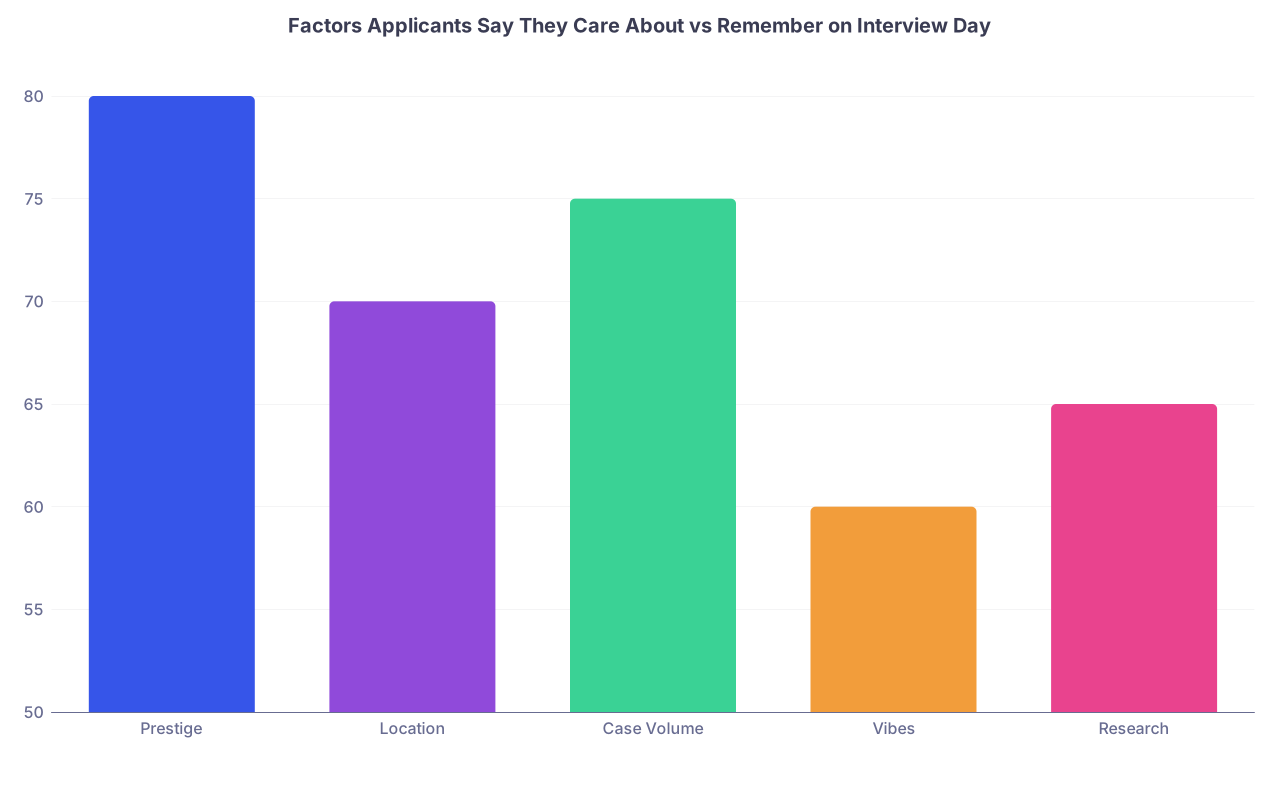
| Category | Value |
|---|---|
| Prestige | 80 |
| Location | 70 |
| Case Volume | 75 |
| Vibes | 60 |
| Research | 65 |
The problem: when everything looks similar, your brain interprets that as “there must be a ‘right’ answer I’m too dumb to see.” Cue anxiety.
But no — it often just means there are a lot of good-enough choices.
3. What actually matters when nothing feels special
If you don’t have a dream program, you need a default decision framework. Something that saves you from doom-scrolling websites at 2 a.m. trying to decode vague words like “collegial” and “busy service.”
Think less: “Where will I be ecstatic?”
More: “Where is it very hard to be truly miserable?”
That’s a lower but way more realistic bar.
Here’s what I’d ruthlessly focus on:
| High-Impact Daily Life | Overrated (But Hyped) |
|---|---|
| Malign vs supportive culture | USNWR hospital rank |
| Location support (family, partner) | Shiny website videos |
| Call schedule / night float | Number of Nobel laureates |
| Operative autonomy by senior years | “We’re like a family” clichés |
| How chiefs actually feel | Single “famous” faculty name |
1. Malign vs actually decent culture
If there’s any “non-mid” thing to obsess over, it’s this.
Not fake “we’re a family” talk. Actual behavior:
- Do residents throw each other under the bus?
- Do attendings humiliate people in the OR routinely?
- Do chiefs seem dead inside or just tired-but-proud?
You can be at a “mid” name program with a sane culture and be way happier than at a hyped name where people are crying in stairwells at 3 a.m.
2. Location you can survive
Not “dream city.” Just: can you survive this for 5–7 years?
- Do you have at least one friend/family in a 2–3 hour radius?
- Will your partner absolutely hate living there?
- Does the cost of living mean you’re signing up for constant financial stress?
You don’t need Paris. You need “I won’t go insane in winter” and “I can see my support system sometimes.”
3. How residents talk when the PD isn’t in the room
You already know this, but it’s everything.
When you’re in that little residents-only Q&A and someone quietly says, “Honestly, the hours suck but we know our chiefs have our backs” — that’s gold.
If they dodge every question with jokes? Or keep saying “we’re working on that”? Mid feeling might actually be a warning.
4. When “no dream program” is actually about burnout and fear
There’s another layer you probably don’t want to admit:
Sometimes “every program feels mid” is not about the programs. It’s about you being completely depleted.
You’ve spent:
- Years doing check-box activities
- Months on audition rotations
- Hundreds of hours writing and rewriting a personal statement that still sounds fake
- Way too much time on forums and Reddit watching everyone’s “A+ away rotation moved me to tears” posts
At some point, your brain just stops attaching. That’s not a character flaw. It’s exhaustion.
Signs it’s burnout talking, not insight
- You can’t imagine being excited about anything, not just programs
- Stuff you used to care about (sports, hobbies, friends) feels dull
- You’re doing the “what if I just quit and open a bakery” fantasy daily
- Any decision feels like too much, so “mid” is a way of opting out emotionally
If that sounds familiar, then your lack of a dream program is not a deep existential sign that you shouldn’t do surgery. It’s a sign your stress system is fried.
You don’t fix that by magically “finding a dream.” You fix it by lowering the stakes in your own mind.

5. How to actually cope day-to-day when nothing stands out
Let’s get concrete, because spiraling is a full-time job and you don’t need another one.
Step 1: Decide on 3 non-negotiables
Not 20. Not “ideal world.” Three.
Things like:
- “I refuse to be somewhere openly malignant”
- “I need to be within driving distance of X person”
- “I want at least moderate operative autonomy by PGY-3”
If a program fails two of your three? Don’t rank it high. That’s it.
Step 2: Accept that “good enough” is… enough
Tell yourself this bluntly:
“I am not choosing heaven versus hell. I am choosing between several flawed but workable paths that all train surgeons.”
You are not picking the one thread in the universe that leads to happiness. You’re picking one of multiple branches that all land you at “board-eligible surgeon who has stories about being exhausted but proud.”
Perfectionism wants a soulmate program. Adult reality accepts a reasonably decent one.
Step 3: Use residents as your tiebreaker
When every website blurs together, go with:
“Where did I feel least tense talking to the residents?”
If you can’t remember, go back through your notes/emails and literally write:
- “Residents felt real and chill”
- “Residents seemed guarded/weird/overly polished”
- “Residents low-key warned us about hours”
Your gut on people is usually more reliable than your memory of PD speeches.
Step 4: Put programs into buckets
You don’t need a perfect 1–20 ranking from day one. Start with buckets:
- “Would be happy/okay here”
- “Neutral but fine”
- “Only if I have to”
Then organize within those. Don’t obsess over micro-differences between rank #5 and #6. That’s fake precision.

| Step | Description |
|---|---|
| Step 1 | All Programs |
| Step 2 | Rank low or not at all |
| Step 3 | Bucket as Ok or Good |
| Step 4 | Fine tune rank within bucket |
| Step 5 | Malignant or dealbreaker? |
| Step 6 | Location survivable? |
| Step 7 | Residents tolerable? |
Step 5: Say the quiet part out loud
You’re allowed to say to yourself:
“I don’t have a dream program. I just want solid training and to not be destroyed as a person.”
That is a completely valid, mature goal. Honestly more grounded than chasing a name because you feel like you’re supposed to.
6. Will you regret not having a dream? What this looks like in residency
You know what residents talk about at 2 a.m. around the computer?
Not: “I wish I were at a top-5 place.”
Mostly:
- “I just want to sleep.”
- “My chief actually backed me up today, that helped.”
- “Our trauma cases are wild, I’m getting so much experience.”
- “Admin is making another dumb rule.”
The people who are truly miserable almost never say, “I hate it here because it’s not my dream brand.”
They say:
- “My attendings are jerks.”
- “We don’t get any autonomy.”
- “Everyone’s burned out and bitter.”
- “I feel unsafe asking for help.”
Those are culture and structure problems, not “I didn’t match my dream.”
And the flip side is also true: I’ve seen PGY-4s at medium-name programs who say, “I didn’t care much where I matched. This place is far from perfect, but I’m getting good training and my co-residents are my people. I’m okay.”
That’s the goal. Not butterflies on interview day. Stability by PGY-3.
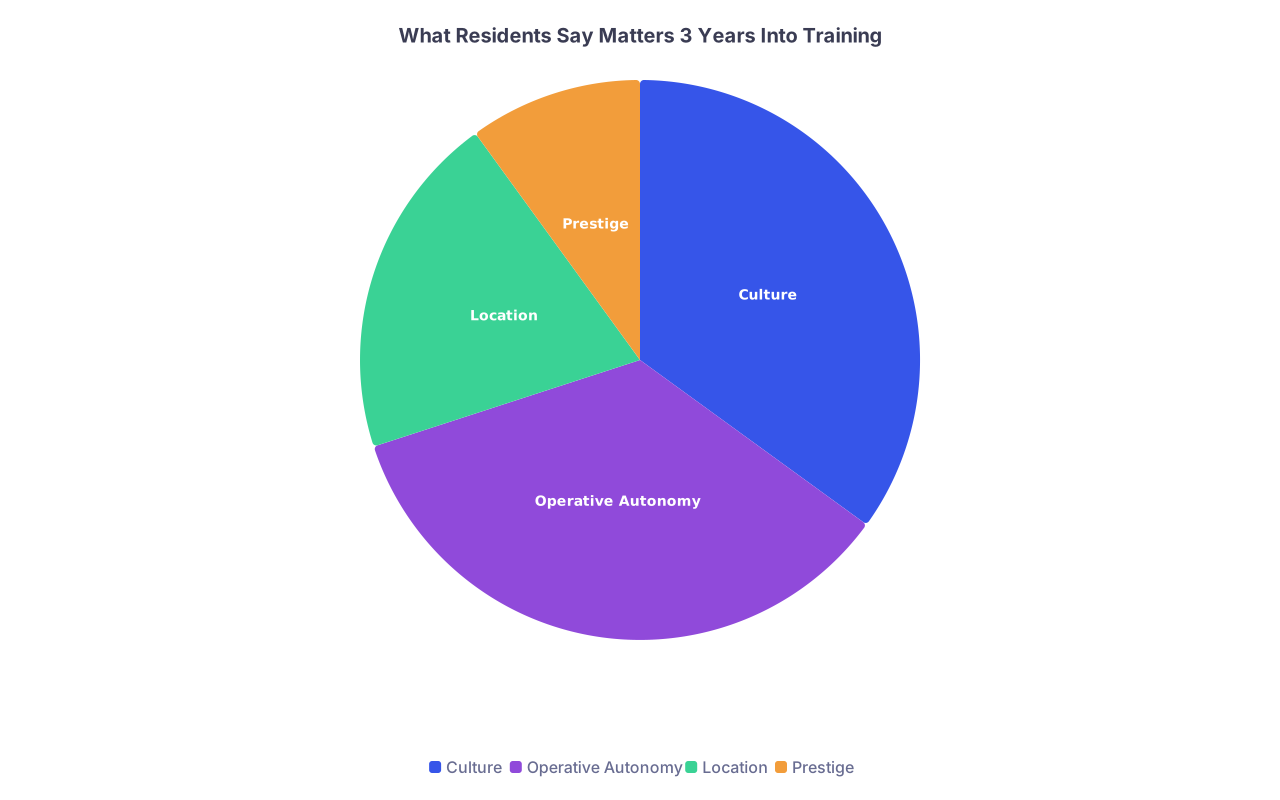
| Category | Value |
|---|---|
| Culture | 35 |
| Operative Autonomy | 35 |
| Location | 20 |
| Prestige | 10 |
7. When to actually worry that “everything is mid” signals a bigger problem
I’m not going to gaslight you and say lack of passion is never a red flag. Sometimes it is.
You should pause and really check in with yourself if:
- You feel nothing but dread when you picture your future as a surgeon
- Cases don’t excite you at all anymore — not even a little
- You mainly chose surgery because of ego (“hardest field,” “most respect”) and that’s fading
- You keep fantasizing about specific other paths (e.g., EM, anesthesia, radiology), not just “anything else”
If it’s just residency programs that feel mid, that’s one thing.
If the whole field feels mid, that’s different.
Late doubt doesn’t mean you’ve ruined your life. But it does deserve a real conversation with someone who isn’t invested in protecting your ego — a mentor, a therapist, or that brutally honest upper-level who will tell you, “You’ll hate this, don’t do it” if they mean it.

8. How to live with the uncertainty instead of trying to destroy it
Here’s the part that really sucks: you will not get 100% certainty.
You will rank, match, move, and then only months later really know what you signed up for.
That’s horrifying for an anxious brain. You want guarantees. You want some magical sign.
You’re not getting one.
So the real skill is tolerating “I chose with incomplete information, and I did my best.”
A few practical self-preservation moves:
- Stop poring over other people’s rank lists. Their priorities and insecurities aren’t yours.
- Limit doom-scrolling forums. Set an actual time cap (like 15 minutes max every other day).
- Write down your reasons for your top 5 programs in one sentence each. When you second-guess, re-read that instead of inventing new fears.
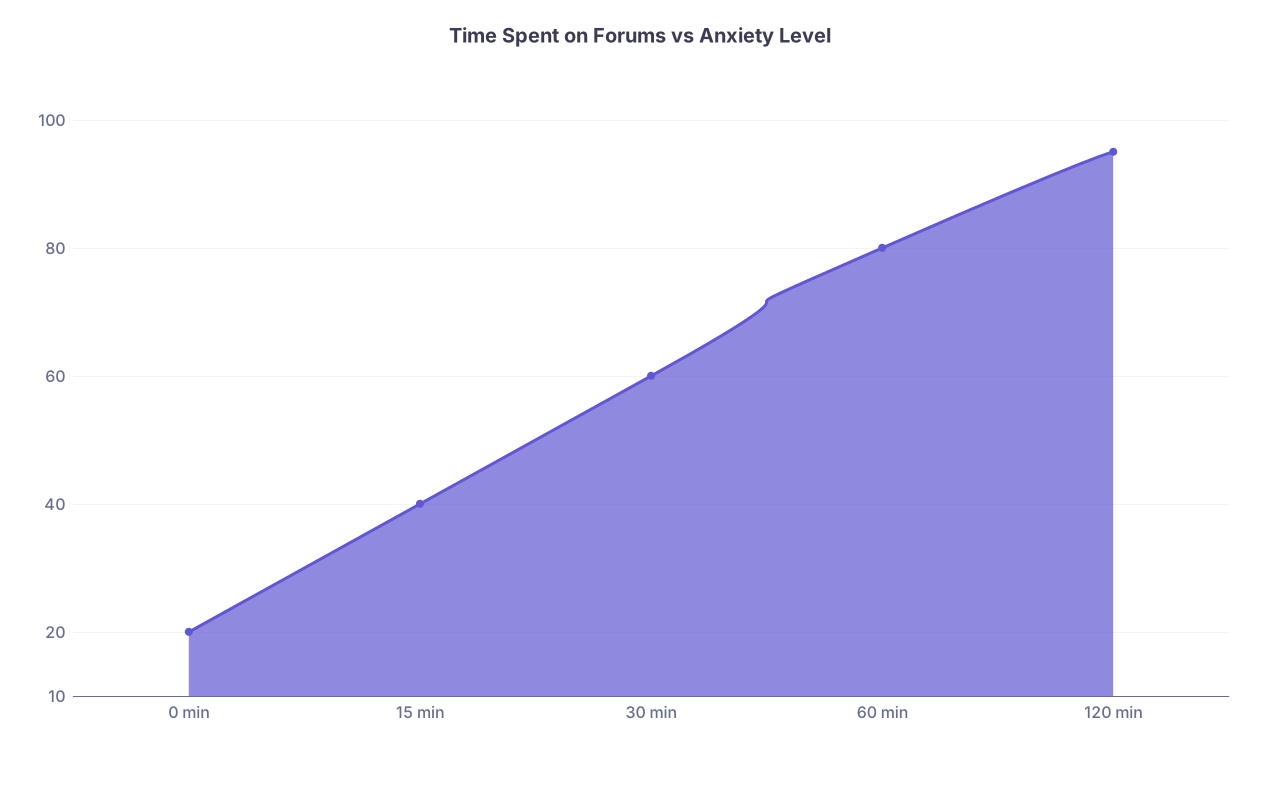
| Category | Value |
|---|---|
| 0 min | 20 |
| 15 min | 40 |
| 30 min | 60 |
| 60 min | 80 |
| 120 min | 95 |
Your brain will try to convince you that if you think about this hard enough, you’ll find the perfect answer. That’s a lie. There is no perfect answer — only a choice you can live with.
And “mid but functional” is a perfectly livable choice.
FAQ (5 questions)
1. Does not having a dream program mean I’m less competitive or less serious about surgery?
No. Competitiveness is about your scores, letters, performance, and reputation, not how emotionally attached you are to a logo. Some of the most solid applicants I’ve seen were very matter-of-fact: “I just want strong training and decent humans.” The ones loudly fixated on one “dream” place were often driven more by anxiety and prestige-chasing than anything truly thoughtful.
2. What if I rank a “mid” program high and later realize I hate it there?
There’s always that risk. But here’s the uncomfortable truth: you could do that with a “dream” program too. Plenty of people match their #1 and are miserable. Your best protection is not a fantasy match — it’s doing your due diligence on culture, resident happiness, and red flags. If you still end up unhappy, that’s not a personal failure; it’s a mismatch that many people survive and sometimes even transfer out of.
3. Should I only rank programs where I felt excited on interview day?
If you wait for excitement, you might end up with a very short list. Interview-day “excitement” is heavily influenced by sleep, nerves, who you happened to talk to, even the weather. You should absolutely consider how you felt, but don’t throw out solid programs just because you didn’t get butterflies. A quiet sense of “this seems reasonable and the people aren’t awful” is enough.
4. Is it bad that geography matters more to me than program prestige?
Not bad. Honest. For many people, location is the difference between having any support system vs. being totally isolated. That affects your mental health, your ability to survive bad rotations, and your overall burnout risk. It’s not shallow to care more about being near your partner or family than about a fancy hospital name you’ll barely mention after fellowship.
5. How do I stop obsessing over whether I’ll regret my rank list?
You probably won’t stop completely, but you can lower the volume. Do this: set a deadline for when your rank list is “final.” Before that, gather information, talk to residents, and adjust. After that date, your only job is to remind yourself: “I made this choice based on what I knew then. Future me doesn’t get to bully past me for not having a crystal ball.” Every surgeon you admire made imperfect decisions with incomplete info. You’re not special in that way — and that’s actually comforting.
Key takeaways:
- Not having a “dream” surgical program doesn’t mean you’re broken; it usually means the programs are more similar than the hype suggests and you’re burned out.
- Focus on culture, survivable location, and resident reality over prestige and glossy branding — your day-to-day life depends on those, not on a name.
- You’re choosing among multiple workable paths, not hunting for a single perfect one. “Mid but safe and sane” beats “famous and malignant” every single time.