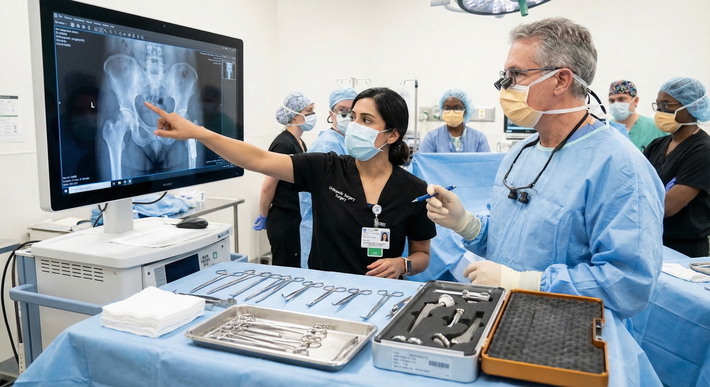
You’re midway through a surgery rotation. You love being in the OR, you like using your hands, but watching the trauma pager explode at 2 a.m. on general surgery call makes your stomach sink. You want procedures. You do not want your life run by ruptured aneurysms and gunshot wounds.
So you’re asking the right question: which surgical specialty lets you operate a lot, but minimizes middle-of-the-night, life-or-death emergencies?
Let me walk you through this like I would with a student sitting in the call room asking, “What should I actually pick if I like surgery but hate chaos?”
The Core Trade-Off: Procedures vs. Emergencies
Every procedural field sells you the same dream: high-impact interventions, technical mastery, instant gratification. What they often hide in the fine print is how much of that comes with “STAT page to the OR” energy.
You’re trying to find your spot on this spectrum:
- Highly procedural
- Predictable schedule
- Low true-emergency burden
You will not completely escape emergencies in any surgical field. But you can choose specialties where:
- Most cases are elective or semi-urgent
- True middle-of-the-night “come now or they crash” calls are rare
- A lot of “urgent” work gets batched into daytime add-on rooms
That rules out:
- Trauma-heavy general surgery
- Vascular surgery (ruptured AAAs, acute limb ischemia)
- Neurosurgery (ICH, SDH, herniation)
- OB/GYN with a heavy L&D component (emergent C-sections)
- Cardiothoracic (tamponade, dissections, ECMO cannulations)
So where should you actually look?
Best-Fit Surgical Fields For Procedures With Fewer Emergencies
1. Ophthalmology
If you like fine motor work and the idea of nearly every case being elective, ophthalmology is top tier.
What it gives you:
- Highly technical microsurgery (cataracts, retina, glaucoma, cornea)
- Almost entirely scheduled OR days
- Clinic-heavy but very procedural (injections, lasers, minor procedures)
- Patients are usually stable; emergencies exist but are uncommon
Emergencies you’ll see:
- Open globe injuries
- Retinal detachments
- Acute angle-closure glaucoma
- Orbital compartment syndrome
These are real emergencies, but they’re not nightly occurrences. In most community and private setups, call is home call, and you’re not getting dragged in every other night.
Who this fits:
- You like delicate, precise surgery more than big incisions
- You’re fine with lots of clinic in exchange for controlled OR time
- You want a long career where physical wear and tear is lower
2. Otolaryngology – Head & Neck Surgery (ENT)
ENT sits in a nice middle ground: lots of procedures, some emergencies, but not the constant trauma chaos of other fields.
Procedural upside:
- Tons of OR time: sinus surgery, thyroids, parotids, neck dissections, ear surgery, airway surgery
- Clinic with in-office procedures: scopes, biopsies, tubes, minor excisions
- Good mix of adults and kids, depending on your focus
Emergency reality:
- Airway emergencies (epiglottitis, obstructing tumors, post-tonsillectomy bleeding)
- Neck abscesses
- Facial trauma in some settings
But compared with general surgery or neurosurgery, the absolute volume of emergencies is lower, and long-term in practice, many ENTs structure their call to be reasonable. Trauma-heavy centers can be busier, but that’s a choice of practice, not baked-in like trauma surgery.
Who this fits:
- You enjoy anatomy-rich, head-and-neck focused work
- You like cancer surgery but also functioning-restoring procedures (sinus, voice, hearing)
- You’re okay with some airway emergencies but do not want a pager that never rests
3. Plastic Surgery (Especially Non–Trauma-Focused Practice)
Residency plastic surgery can be rough on call—hand injuries, facial trauma, dog bites at 3 a.m. But long-term, plastic surgeons have a ton of control over how “emergency-heavy” their lives are.
Procedural strengths:
- High-volume elective surgery: breast reconstruction, aesthetic work, body contouring, hand, microsurgery
- In private practice aesthetics, almost everything is scheduled
- Some of the highest degree of control over case mix once established
Emergency side:
- During residency: hand trauma, facial fractures, soft tissue coverage consults
- In academic practice: may cover complex reconstructions, post-op flap take-backs overnight
- In strictly cosmetic practices: true emergencies are rare (complications happen, but not like trauma pages)
So plastic surgery is a bit of a “front-load pain, back-end lifestyle control” field. If you end up in a reconstructive-heavy academic job, you’ll have more emergencies than if you go mostly elective cosmetic.
Who this fits:
- You like the idea of reconstruction and/or aesthetics
- You’re willing to tolerate more emergencies during residency knowing practice can be far mellower
- You want high procedural variety and creativity
4. Urology
Urology is underrated for students who want procedures + relative lifestyle sanity. It absolutely has emergencies—but they’re often not as frequent or chaotic as trauma or vascular.
Procedural pros:
- OR: TURPs, nephrectomies, prostatectomies, stone procedures, reconstructive urology
- Endoscopic-heavy, lots of minimally invasive work
- Many outpatient procedures and clinic-based interventions
Emergencies you’ll see:
- Obstructive uropathy with sepsis (needs drainage)
- Testicular torsion
- Fournier’s gangrene
- Clot retention, acute urinary retention
So yes, there are nights you’ll get called. But in most community setups, true “you must come now” emergencies are not nightly. Call is generally more tolerable than trauma/vascular/OB, and the rhythm is more predictable.
Who this fits:
- You like endoscopy, scopes, and laparoscopic/robotic surgery
- You’re okay with some genitals/urine humor as a lifelong theme (comes with the territory)
- You want a field combining clinic and OR with manageable emergency burden
5. Orthopedic Surgery – With the Right Focus
This is very practice-dependent.
Training reality:
- As a resident at a trauma center: you will see a ton of emergencies. Fractures, open injuries, septic joints, compartment syndromes.
- Call is busy, and nights can be long.
Practice differentiation:
- Trauma-focused ortho: constant emergencies, especially at level I centers
- Spine, joints, sports in elective-heavy settings: much more scheduled work
Procedures:
- Joint replacements, arthroscopy, spine fusions, fracture repair, tendon repairs
- In sports/joints practices, the majority of surgery is elective and scheduled months out
Emergency burden long-term:
- If you avoid trauma and major call pools, ortho can become mostly elective
- Still occasional infected joints or weekend on-calls, but far from trauma-general-surgery chaos
Who this fits:
- You like bones, biomechanics, and big tools
- You are okay with a rough residency in exchange for a more controllable private practice
- You’re willing to choose a non-trauma-focused pathway
6. Dermatology with Mohs Surgery (If You Stretch the Definition of “Surgical”)
If what you really want is procedures and you’re less attached to the “surgeon in the OR” identity, derm—especially Mohs—is the quiet killer app here.
Procedural profile:
- Tons of procedures: biopsies, excisions, Mohs surgery, reconstructions
- Very little true emergency work
- Clinic-based, business-hours schedule
Emergencies:
- Almost none in the traditional “rush to the hospital at 3 a.m.” sense
- Urgent cases are usually handled during the day
This is the opposite of adrenaline. Very controlled. High procedure volume. Great lifestyle. But you have to be okay giving up big-OR cases and living mostly in clinic procedure rooms.
Who this fits:
- You like cutaneous surgery, lesions, reconstruction on a smaller scale
- You want hands-on work but near-zero emergencies
- You’re okay fighting for a hypercompetitive spot if you can get the scores/research
Where Common Surgical Fields Fall on the “Emergency Intensity” Spectrum
Here’s a useful mental map. Left side = more emergencies. Right side = fewer emergencies.
| Specialty | Typical Emergency Burden |
|---|---|
| Trauma/Acute Care GS | Very high |
| Vascular Surgery | Very high |
| Neurosurgery | Very high |
| OB/GYN (L&D heavy) | High |
| Cardiothoracic | High |
| Orthopedic (trauma) | High |
| General Surgery (mixed) | Moderate to high |
| Urology | Moderate |
| ENT | Moderate |
| Plastics (mixed) | Moderate |
| Ophthalmology | Low |
| Derm/Mohs | Very low |
This is reality-based, not fantasy. Plenty of surgeons in the “moderate” zone structure low-call lives. Plenty in the “high” zone intentionally choose it because they like the action.
Key Questions To Ask Yourself (And Programs) Now
You’re not picking a specialty in a vacuum. You’re picking a lifestyle pattern.
Ask yourself:
- How much clinic are you willing to tolerate for fewer emergencies?
- Ophtho, ENT, urology, derm all mean significant clinic time.
- Do you want big OR cases or are minor/medium procedures enough?
- If you crave big open surgeries: ENT, ortho, urology, plastics (recon).
- If you like fine motor microsurgery: ophtho, plastics, derm/Mohs.
- How sensitive are you to nights/weekends?
- If “I never want my phone to ring at 2 a.m.” is a hard rule → derm/Mohs, carefully chosen ophtho/ENT practice are best.
- Are you okay front-loading pain in residency for better control later?
- Ortho, plastics, urology all get dramatically better after training if you choose elective-heavy jobs.
When visiting programs or talking with residents, ask very direct questions:
- “How many times per week are you actually called in from home?”
- “What was the last true middle-of-the-night emergency you had?”
- “In your attending jobs, what does call look like now?”
If people dance around those answers, you’ve learned something, even if they did not say it out loud.
A Simple Decision Flow
Use this quick mental flowchart to narrow down:

| Step | Description |
|---|---|
| Step 1 | Want a highly procedural career |
| Step 2 | Consider Ortho, GS, CT, Vasc - but more emergencies |
| Step 3 | Consider Derm with Mohs |
| Step 4 | Consider Ophthalmology or ENT |
| Step 5 | Consider Urology or Plastics |
| Step 6 | Okay with lots of clinic? |
| Step 7 | Need big OR cases? |
| Step 8 | Comfortable with some emergencies? |
It’s not perfect, but it matches reality more than most “lifestyle specialty” conversations.
How to Test-Drive These Fields as a Student
Do not pick based on blogs alone. You need first-hand exposure.
-
- Ophthalmology
- ENT
- Urology
- Plastics
- Ortho
Spend at least 1–2 weeks seeing both OR and call.
Pay attention on call, not just in the OR
- Who is getting paged constantly?
- Who’s actually coming in overnight vs handling things by phone?
- Which service looks burned out vs reasonably rested?
Ask junior attendings, not just chiefs
- Chiefs normalize suffering. Junior attendings remember the shock of transitioning to practice.
- Ask: “What surprised you about emergencies and lifestyle after training?”
Track your own energy
After a 24-hour call on urology vs ENT vs general surgery, which version of “tired” do you find tolerable? There’s no specialty with no fatigue. You’re choosing which kind you can live with.
FAQs
1. I like surgery but hate the idea of trauma. Is general surgery automatically a bad fit?
Not automatically, but you need to be honest. A lot of general surgery residencies have heavy trauma exposure. Even in practice, many general surgeons take unselected ER call, which means appendicitis at midnight, perforated ulcers, bowel obstructions, gallbladder attacks.
If you truly hate trauma and emergencies, you’d better choose a GS program with minimal trauma and plan an elective-heavy fellowship (breast, MIS, colorectal) or avoid general surgery altogether. Most students in your situation end up happier in ENT, ophtho, urology, or derm/Mohs.
2. Is ENT really that much better than general surgery for emergencies?
Yes, typically. You still have airway issues and some bleeding emergencies, but the volume is lower, and lots of ENT practices negotiate lighter call or share it across large groups. On the general surgery side, emergency laparotomies, perforations, and septic abdomens are relentless in many hospitals.
At a trauma-heavy center, ENT can be pulled into facial trauma and airway cases more. In many community settings, though, ENT’s night and weekend burden is substantially more tolerable than general surgery.
3. How does ophthalmology call actually feel in real life?
In a typical community or mixed practice: home call, relatively infrequent true callbacks. You’ll get calls about vision changes, flashes/floaters, corneal abrasions, and post-op concerns. Only a subset requires you to drive in immediately (open globes, some acute angle-closure, sudden vision loss with concerning findings).
Academic or tertiary centers can be busier, especially retina-heavy practices. But compared to anything trauma-based, ophthalmology call is generally gentler and far more predictable.
4. If I pick orthopedics but avoid trauma, will I still have many emergencies?
During residency: yes, you will see a lot of orthopaedic trauma and emergencies. That’s how training works. As an attending, it’s very practice dependent. If you build a sports, joints, or spine practice in an elective-focused group and limit ER call, your emergency load can drop dramatically.
If you join a level I trauma center or take heavy unfiltered ER call, you’ll have a lot of fractures and urgent cases at odd hours. You choose which version you want after residency.
5. What if I want almost no emergencies at all but still love procedures?
Then you’re squarely in derm/Mohs and possibly a very elective-focused ophtho or plastics practice, with careful job selection. Mohs is the closest to “procedural all day, almost zero 2 a.m. emergencies.” Ophthalmology and plastics can get pretty close if you deliberately avoid trauma-heavy or emergency-heavy settings.
Open your rotation planner or email right now and pick one specialty from this list—ophtho, ENT, urology, plastics, or ortho—to add as an early sub-I or elective. Commit to actually seeing their call life up close, not just the highlight reel in the OR.