
It’s the middle of interview season. You’re on yet another Zoom “social,” and a resident drops the line you’ve heard five times this week:
“We place really well into top fellowships.”
You nod. You smile. But in your head you’re thinking:
“How much should I actually care about fellowship reputation when I pick a residency? Is this hype, or does it really matter?”
Let me be direct: fellowship reputation does matter, but not in the simple “big name or bust” way people throw around on the trail. If you chase “fellowship placement” blindly, you can absolutely end up at the wrong residency for you.
Here’s how to think about it like an adult instead of like a spreadsheet.
Step 1: Understand What “Fellowship Reputation” Actually Means
People mix about four different ideas together and call all of it “fellowship reputation.” You need to split them out:
- How often residents match into top‑tier or competitive fellowships
- How strong the program’s connections are (faculty, alumni, national visibility)
- How the program is viewed inside the specialty, not just by med students
- How often residents get the type of fellowship they actually wanted
Those are not the same thing. Example:
- Program A: Sends 3 residents a year to “big‑name” national fellowships… but half of those people did not initially want that subspecialty. They pivoted because they had to.
- Program B: Sends residents to solid, mid‑tier fellowships… but the match rate into each resident’s first‑choice subspecialty/location is 90%.
Which has “better fellowship reputation”? Med students obsess over Program A. People actually in the field will quietly respect Program B.
Here’s the basic hierarchy of what matters for your future career:
| Factor | Approximate Importance |
|---|---|
| Your clinical skill and operative ability | Very high |
| Your work ethic / professionalism | Very high |
| Residency training quality | High |
| Your research / academic profile | Moderate–High |
| Fellowship **fit** and quality | Moderate–High |
| Fellowship **name brand alone** | Moderate |
Fellowship reputation is a piece of the puzzle. Important, yes. Determinative, no.
Step 2: Different Surgical Fields Care About Reputation Very Differently
How much fellowship reputation should drive your residency choice depends heavily on your specialty.
Let’s break it down.
Highly competitive, fellowship‑driven fields
These are specialties where fellowship is almost mandatory and the job market is tight:
- Plastic surgery (integrated or independent)
- Pediatric surgery
- Surgical oncology
- Complex GI/HPB
- CT surgery (adult and congenital)
- Vascular surgery (some regions)
- Transplant
In these fields, the fellowship program name can open doors, especially in academics or large hospital systems. It matters more if you want:
- A career in a major academic center
- NIH‑level research
- Niche or “super‑specialized” practice
But even here, people overestimate the brand label and underestimate the work behind it.
What actually moves the needle:
- Being the resident your attendings will fight for
- Strong letters from nationally known surgeons
- Consistent research productivity in your subspecialty area
- Presenting at big meetings (SSAT, SSO, STS, AAST, APSA, etc.)
A “less famous” fellowship with a powerhouse mentor in your niche will do more for your career than a top‑5 name where you’re anonymous.
General surgery → community practice or broad scope
If your likely end‑goal is:
- Community general surgery
- Trauma/critical care with broad general practice
- Rural surgery
- Acute care surgery with some elective
Then fellowship reputation should not dominate your residency decision. Honestly, in this path people care much more about:
- Are you safe and efficient in the OR?
- Can you handle call independently?
- Do your references say, “I’d hire this person tomorrow”?
You don’t need “Memorial Sloan Kettering or bust” to have a great trauma/CC job at a level I center. You need solid training and good people vouching for you.
Step 3: How Residency Reputation Influences Fellowship Opportunities
This is the part that gets twisted. Students think: “I must go to Big Name Residency → to get into Big Name Fellowship → to get Big Job.”
Reality is messier.
Here’s how residency reputation actually affects fellowship:
Network density
Residencies embedded in large academic ecosystems (e.g., UPMC, Michigan, WashU, UCSF, Mayo) have:- Faculty who trained everywhere
- Alumni in fellowships all over the country
- Easier email intros and phone calls
People know the “house grading curve”
Fellowship directors know what it means when:- You’re “top 10%” at a high‑volume, hard‑core program
- You’re “above average” at a more cushy place
They trust their friends who work with you, not your narrative.
Structure and support for fellowship matching
Strong programs:- Run formal fellowship advising
- Edit your personal statements
- Strategically time your away rotations and research years Weak ones leave you to figure it out alone.
Case volume and autonomy
A big‑name residency that doesn’t let you operate is a bad feeder for surgical fellowships. Programs notice when residents show up to fellowship with weak hands.
So yes, residency reputation and environment shape your fellowship options. But that’s not the same as “you must chase the biggest name on your interview list.”
Step 4: How Much Weight Should You Give Fellowship Reputation When Ranking?
Here’s a practical framework. Think about where you fall.
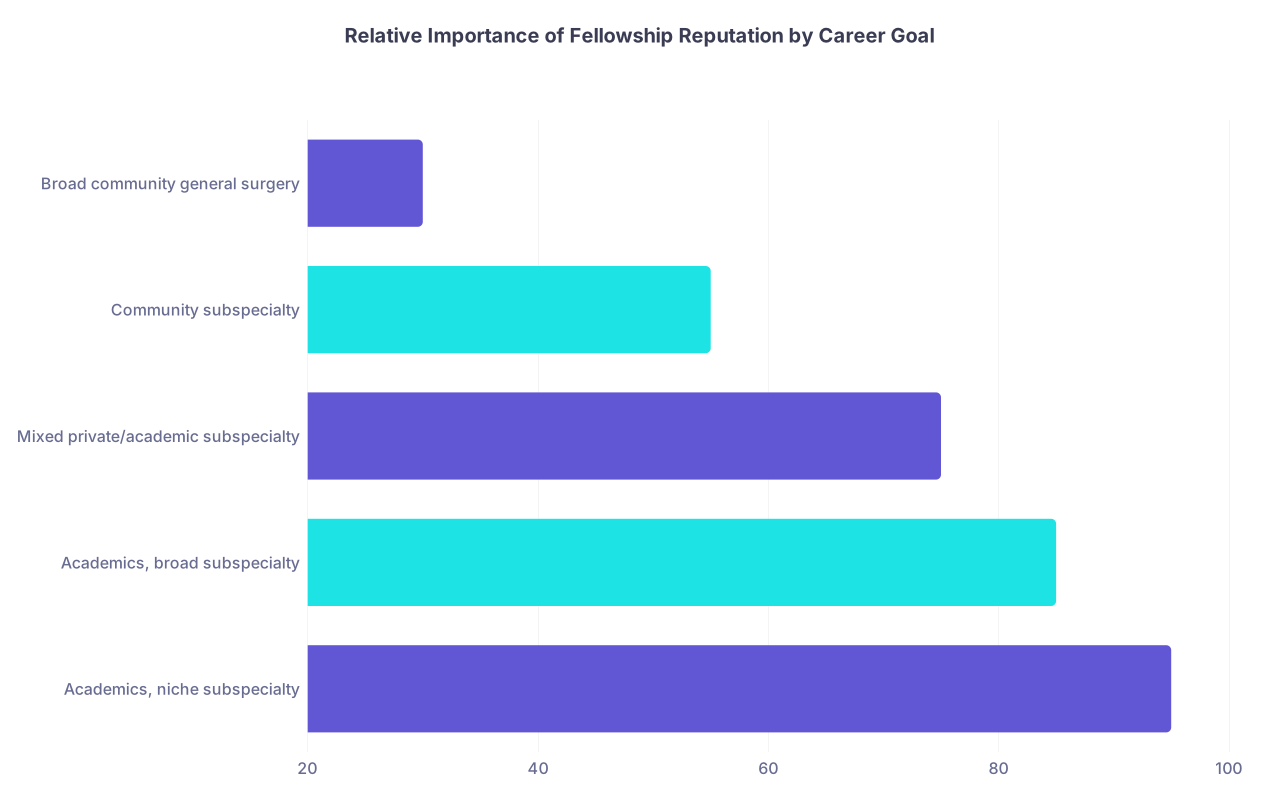
| Category | Value |
|---|---|
| Academics, niche subspecialty | 95 |
| Academics, broad subspecialty | 85 |
| Mixed private/academic subspecialty | 75 |
| Community subspecialty | 55 |
| Broad community general surgery | 30 |
If you’re 80–100% sure you want a competitive subspecialty in academics
Fellowship reputation should be a major factor. That means:
- Prefer residencies that consistently send people to strong fellowships in:
- The subspecialty you’re eyeing, and
- The type of institution you want (high‑end academic, research‑heavy)
- Look for:
- At least a few nationally recognized faculty in your potential subspecialty
- A track record of residents presenting at big national meetings
- A culture that actually supports research (not just lip service)
Here I’d absolutely let fellowship track record break a tie between similar programs.
If you’re unsure of your subspecialty or open to community practice
Fellowship reputation should be a secondary factor. Nice‑to‑have, not rank‑list‑defining.
Prioritize instead:
- Operative volume and autonomy
- Resident happiness and burnout level
- How you fit with the program’s culture
- Breadth of training (not just one narrow niche)
- Geographic and personal life realities
Having a strong fellowship track record is still good. But it shouldn’t override “I will be miserable here” or “I’m barely going to touch the patient as a junior.”
Step 5: How To Actually Judge a Program’s Fellowship Strength (Without Getting Snowed)
Programs love to cherry‑pick:
“We sent someone to MD Anderson last year!”
Okay. Cool. Out of how many graduates? Was that person a unicorn?
Here’s how you get real information.
Ask residents very specific questions
Don’t ask, “Do you place well into fellowships?” Everyone will say yes.
Ask:
- “In the last 5 years, where have people gone for [your interest: surgical oncology, vascular, CT, trauma, etc.]?”
- “How many people per year are trying to match [subspecialty], and how many get it?”
- “Have people ever struggled to match their first‑choice subspecialty from here? Why?”
- “Can I see a fellowship match list for the last 3–5 years?”
If they dodge, that’s data.
Look at consistency, not isolated wins
One superstar match to MSKCC doesn’t mean much. A pattern does.
You want to see something like:
- Every year, a couple of people go to:
- Solid academic fellowships
- Regional powerhouses
- Sometimes top‑tier nationals
- People match what they intended, not just “something.”
Check how people do coming out of fellowship
Tell‑tale question:
“Where did recent fellows from here end up for jobs?”
If fellows land at:
- Good academic centers
- Busy community practices they’re happy with
- Positions aligned with their goals
…then both residency and fellowship are doing their jobs.
If they’re consistently underemployed or bouncing between locums and one‑year contracts, that’s a warning.
Step 6: Situations Where Fellowship Reputation Is Overrated (And You Should Ignore the Noise)
There are some traps I see students fall into every year.
Trap 1: Choosing misery for a hypothetical future fellowship
You rank a malignant, punishing program higher because:
“They send people to top fellowships.”
Here’s the problem: people who thrive in those places are the ones who end up with the top fellowships. If the environment crushes you, your CV will show it.
You’re better off at:
- A slightly “less famous” program
- Where you’re protected enough to be productive
- Where you can do research, network, and not hate your life
Trap 2: Chasing a single name brand
“My dream is to do fellowship at Brigham/MD Anderson/UCSF, so I need an Ivy residency.”
No, you don’t. Those top fellowships pull from:
- Big academic powerhouses
- Strong regional programs
- Occasionally smaller places with a well‑connected mentor
You need:
- Excellent performance where you are
- Strong letters from recognized people
- A tight, coherent story in your field
The logo on your lab coat helps. It doesn’t replace the work.
Trap 3: Assuming “no fellowship” = bad
Some programs have residents who:
- Intentionally go straight into practice
- Do hospital‑employed general surgery
- Do acute care or trauma without formal fellowship
A low fellowship rate at those places may just mean the residents don’t want it, not that they can’t get it. Ask why, not just how many.
Step 7: Quick Checklist – How Much Should Fellowship Reputation Drive Your Rank List?
Here’s a blunt self‑audit. Answer honestly.
- Do you currently care a lot about doing a competitive fellowship?
- Do you want an academic career at a major center?
- Are you realistically willing to grind on research, posters, and networking for 5–7 years?
- Are you okay with deferring geographic control (i.e., willing to move for fellowship and early jobs)?
If you said “yes” to most of those, then:
- Fellowship reputation and subspecialty match history should be a top‑3 factor for you.
If you said “no” to most:
- Put fellowship reputation in the second tier of your priority list, behind day‑to‑day training quality and fit.
To keep it concrete, here’s a comparison of how I’d weigh factors:
| Factor | Academic subspecialist | Community / undecided |
|---|---|---|
| Fellowship placement record | Very high | Moderate |
| Overall residency reputation | High | Moderate |
| Operative volume/autonomy | Very high | Very high |
| Resident culture/well-being | High | Very high |
| Research infrastructure | Very high | Low–Moderate |
| Geography / family considerations | Moderate | High |
A Visual: The Real Sequence From Residency to Job

| Step | Description |
|---|---|
| Step 1 | Choose Residency |
| Step 2 | Residency Experience |
| Step 3 | Clinical Skill and Case Volume |
| Step 4 | Research and Networking |
| Step 5 | Fellowship Match Options |
| Step 6 | Fellowship Training and Mentors |
| Step 7 | First Job Opportunities |
| Step 8 | Long Term Career Path |
Look at that flow carefully. “Fellowship reputation” sits at E/F. Your residency experience at B, C, and D shapes whether E/F even goes your way.
So don’t sacrifice B (your day‑to‑day training environment) just to roll the dice on some hypothetical boost at F.
Bottom Line
Fellowship reputation matters more if:
- You’re aiming for a competitive surgical subspecialty
- You want a serious academic career
- You’re willing to work for it (research, meetings, networking)
It matters less if:
- You see yourself in broad general or trauma practice
- You’re unsure about subspecialization
- Personal fit, geography, and lifestyle weigh heavily for you
Use it as a tie‑breaker or major factor, not the only star you navigate by.
FAQs
1. If I know I want a super competitive fellowship (like peds surgery), should I pick the “biggest name” residency I match at?
Not automatically. You need three things: strong mentorship in that subspecialty, real research support, and a culture where top residents thrive instead of burn out and disappear. A slightly “smaller” program with a famous pediatric surgeon who takes you under their wing will beat a mega‑brand where you’re just another name on the call schedule.
2. Do fellowship directors really care where I did residency?
They care, but not in the cartoonish way students imagine. They care because residency place = a proxy for how hard your training was and who is writing your letters. If your letter writer is someone they know and trust, that outweighs your program’s overall ranking. “Top of the class at a solid, known‑quantity residency” reads well everywhere.
3. Can I still get a strong academic fellowship from a smaller or community‑heavy program?
Yes, but you’ll have to be more intentional. You’ll need:
- At least one plugged‑in mentor in your field
- Away rotations or research collaborations at bigger centers
- A clear track record of commitment to that subspecialty
It’s harder, but not impossible. I’ve seen residents from mid‑tier programs land serious fellowships because their mentors went to bat for them.
4. What’s a red flag when programs talk about fellowship placement?
Two big ones:
- They only quote one or two super‑elite matches but won’t show you a complete list.
- Residents seem vague about where recent grads went, or they say things like, “Well, people mostly get something” without specifics. If they can’t produce a 3–5 year fellowship/job list with names and places, be suspicious.
5. How do I balance my partner’s needs or geography with choosing a residency strong for fellowships?
You prioritize like an adult: list your non‑negotiables. If staying in one region is non‑negotiable, then look for the best fellowship‑supportive program in that region, not in the entire country. Strong regional programs can still launch you into excellent fellowships, especially if you’re willing to move just for those 1–3 fellowship years.
Open your rank list right now and mark each program with one letter: “H” (high fellowship priority for me) or “L” (lower fellowship priority). For every “H” program, go find their last 5 years of fellowship matches. If you can’t, or what you see doesn’t match your goals, adjust the rank list accordingly.