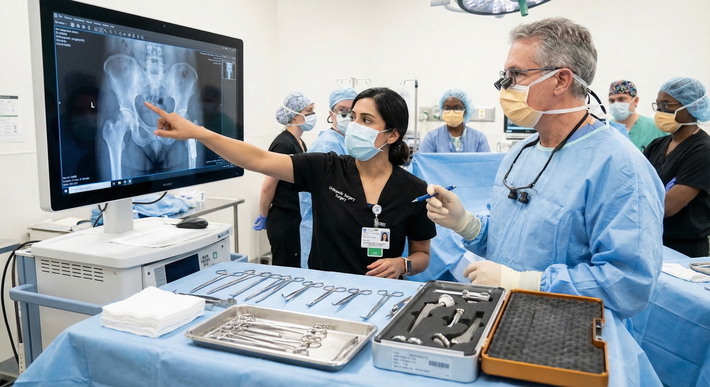
You are on a general surgery rotation. It is 5:45 a.m. You have pre-rounded on nine patients, your notes are half-done, and the senior just said, “We are not leaving this floor until everyone’s plan is airtight.” Anesthesia is paging because the first case is ready to go. You can literally hear the clink of instruments from the OR board.
And all you are thinking is: I did not sign up for this to stand at the foot of a bed discussing bowel function for 40 minutes.
You like surgery. You like operating. You do not like endless, meandering rounds, PowerPoint-level presentations on every lab value, and feeling like your entire existence is to adjust a Lasix dose by 10 mg.
You are trying to choose surgical residency programs and every website says the same thing: “Balanced operative and clinical experience. Strong didactics. Robust research.” Completely useless. You need a way to filter for programs where:
- You actually get into the OR.
- Rounds are efficient, not a religion.
- The culture does not glorify 3-hour “teaching rounds” about sodium corrections.
Let’s fix that.
Below is a very practical, very blunt system for screening surgical programs if you hate rounds but love the OR.
Step 1: Get Honest About What You Actually Want
If you are going to optimize your residency experience, you have to call your preferences by their real names.
Most people who “hate rounds” mean at least one of these:
They hate inefficiency.
Standing for two hours while people repeat information already in the chart, debate minutiae, and check boxes.They hate performative medicine.
Residents flexing knowledge. Attendings lecturing for 20 minutes per patient. Medicine-style “round table” discussions that never end.They hate feeling far from the work they care about.
You came to cut. You are stuck discussing outpatient follow-up that you will never see.
What you probably do NOT actually hate:
- Brief, focused bedside checks.
- Seeing your post-ops and making real decisions.
- Clear teaching that actually makes you a better surgeon.
So your target is not “no rounds.” That program does not exist. Your target is short, focused rounds + maximal OR time + culture that values action over performance.
Keep that as the filter:
“Does this program treat rounds as a tool, or as a performance?”
If rounds are a performance, you will be miserable.
Step 2: Understand Which Program Types Tend To Fit You
Certain program archetypes are far more likely to minimize performative rounds and maximize OR volume.
| Program Type | OR Volume (Typical) | Rounds Style | Good Fit For OR-Lovers? |
|---|---|---|---|
| Big-name academic (NCI etc.) | Moderate | Long, teaching-heavy | Often no |
| Mid-tier academic hybrid | Moderate–High | Mixed, team-dependent | Maybe |
| High-volume community | High | Efficient, pragmatic | Often yes |
| Community with fellowships | High but contested | Variable | Depends on culture |
| County/safety-net hospital | High (acute care) | Fast, problem-focused | Usually yes |
Rough pattern I have seen:
Big-name academic centers
Think MGH, Hopkins, UCSF, Mayo, MD Anderson. Fantastic training, but they often:- Have large teams.
- Do long “teaching rounds.”
- Protect attendings’ OR time, sometimes at the expense of junior resident autonomy.
- Are research-heavy; clinical efficiency is not always the first priority.
Some exceptions exist, but if you strongly despise lengthy discussions and love being in the OR, you should be skeptical and investigate carefully.
High-volume community and county programs
These are often brutally busy but practically oriented:- Short, to-the-point rounds.
- Tons of cases.
- Residents run the service and the ORs.
- Less research pressure, more “get patients taken care of and get to the OR.”
The downside: you can drown if you are disorganized. The upside: if you are functional, you operate. A lot.
Step 3: Read Between the Lines on Program Websites
You will not find “We do excessive, soul-crushing rounds” on any website. You have to decode.
Look for phrases that quietly signal a “rounds-first” vs “OR-first” culture.
Red flags if you hate rounds
When a site leans heavily on language like:
- “Robust, daily multi-disciplinary ward rounds”
- “Strong emphasis on complex perioperative medicine management”
- “Morning work rounds followed by comprehensive attending teaching rounds”
- “Residents present detailed case summaries and literature reviews on rounds”
That usually means:
- Long table rounds.
- Rigid expectations about presentation style.
- Attending presence on almost every round, every day.
- Early PGY years heavy on floor work.
None of that is inherently bad. It is just bad for someone who wants rounds quick and dirty and to get upstairs.
Green flags for OR-focused, efficient culture
Look for:
- “Chiefs run their own services and operating rooms”
- “High operative volume with graduated autonomy”
- “Early operative exposure starting intern year”
- “Efficiency and ownership emphasized”
- “Residents manage most inpatient issues independently with targeted attending supervision”
Those phrases usually show up on community-heavy or county-based programs, but some mid-tier academic programs quietly operate like this.
Step 4: Use Hard Data to Separate OR-Heavy from Round-Heavy Programs
You cannot rely only on vibes. You need numbers where you can get them.
A. Case logs and operative volume
Program-level case logs are not always published, but when they are, use them.
You care about:
- Total cases by PGY year
- Case distribution (bread and butter vs niche tumor reconstructions only seniors do)
- When residents start doing primary surgeon cases
If you see “most operative exposure occurs in PGY4–5,” that usually means your PGY1–2 life is floors, ED consults, ICU, and yes—rounds.
If you see “interns average 200–300 cases” with named categories (appendectomies, cholecystectomies, hernias), that is your language.
| Category | Value |
|---|---|
| Big-name academic | 700 |
| Mid-tier academic | 850 |
| Community | 1100 |
| County | 1000 |
Interpretation:
- 700–800 cases total by graduation is fine but not “live in the OR.”
- 1000+ cases with strong junior-year numbers? That is usually a service that runs to feed the ORs, not the other way around.
B. Rotation structure: follow the months
Go to the curriculum page. Do the math.
How many months of:
- ICU as PGY1–2?
- Dedicated “ward” or “acute care floor” blocks?
- Night float?
How many months explicitly labeled:
- “Acute care surgery / trauma”
- “Endoscopy”
- “Vascular / colorectal / MIS / HPB” with heavy operative components
- “Community general surgery” (usually high volume)
If your PGY1 year is:
- 4 months ICU
- 4 months floor
- 1–2 months trauma nights
- 1 month “research / admin”
You will not be in the OR as much as you want. PGY1s always do more scut. But there are programs where PGY1s still get booked cases.
Pro tip: Look for how many residents per team. A four-resident team on a 30-patient list usually means juniors get stuck on the floor while seniors claim more OR.
Step 5: Ask These Exact Questions on Interview Day
Do not ask, “How is the operative experience?” Everyone lies and says “Excellent.” You need questions that force specific answers.
Here is your toolkit. Use it verbatim.
For residents (away from faculty)
Ask the juniors first. They live the reality you are about to live.
“On a typical day on gen surg, what time do you finish rounds and what time do you get to the OR?”
- If they hesitate or laugh nervously, that is an answer.
- Good programs: “We pre-round early, table rounds are 20–30 minutes, we are in the OR by 7:15–7:30 most days.”
“Who actually runs rounds—attendings, chiefs, or seniors?”
- Attending-heavy rounds = longer, more formal, often more painful.
- Chief/senior-led rounds with attendings seeing select patients = generally faster.
“How long do rounds usually last on your busiest service?”
- If “2–3 hours” is said out loud, and said casually, you are at a rounds-centric place.
“As a PGY1, how many days in a typical week are you scrubbed into a case?”
- If the answer is “1–2 most weeks,” that is low.
- “Most days I either scrub or at least get some scopes/minor cases” is more what you want.
“What happens if cases are running while the team is still on rounds?”
- Best answer: “Whoever’s patient it is or whose room it is breaks off and goes. We do not hold cases for rounds.”
- Red flag: “We finish rounds together then we go to the OR.”
“Are there any services where you feel like a ‘rounding machine’ with minimal OR?”
- Every program has one or two. You just want to know whether that is 3 months per year or 10 months per year.
For faculty (careful but targeted)
You will phrase it more diplomatically with attendings but still get what you need.
“How do you balance educational bedside rounds with getting residents into the OR on time?”
- Listen for: “We keep rounds tight, focus on decision-making, and we try hard never to delay cases for rounds.”
“What is your expectation for PGY1 and PGY2 involvement in the OR during a busy inpatient month?”
- If they say, “Early years focus on learning inpatient management, then the OR comes later,” believe them. That is code for “you will live on the floors.”
“Can you describe a typical weekday schedule for your busiest general surgery service?”
- You want to hear OR start times competing with rounds, and how they resolve that.
Step 6: Decode Culture From How People Talk About Rounds
Culture leaks through in how residents describe their days.
Listen carefully to actual phrases used during interview dinners, tours, or on your away rotation.
Phrases that scream “rounds religion”
- “We really pride ourselves on detailed daily bedside rounds.”
- “Our PD loves being at rounds, so we see a lot of him/her.”
- “We present every lab and vital sign out loud for each patient.”
- “Rounds are where most of the teaching happens.”
Translation: OR is secondary during large blocks of your early residency.
Phrases that indicate efficient, OR-respecting culture
- “Rounds are quick. We save most of the teaching for the OR or conference.”
- “We use the EMR sign-out heavily; nobody reads labs aloud unless there is an issue.”
- “Goal is to be in the OR at start time; everything else works backward from that.”
- “We discuss big decisions on rounds, but not every detail.”
If you hate rounds, you want teaching that happens:
- In the OR.
- In short, focused sit-down conferences.
- During consults and case discussions.
Not a full performance for every patient.
Step 7: Use Ancillary Clues: Conferences, Research, and Call
Rounds-heavy cultures tend to have similar fingerprints in other areas.
Didactics and conferences
Look at the weekly schedule.
How many hours of mandatory conference per week?
3–5 hours is standard.
6–8+ hours, especially with mandatory pre-conference “prep,” means more time out of the OR.Is M&M a rigid, long production every week?
Fine, but often that same culture bleeds into rounds.
Research expectations
Programs that expect or require:
- Dedicated research years
- Multiple first-author publications
- Mandatory QI projects and presentations every year
tend to accept inefficiency as the cost of being “academic.” That often shows up as longer rounds because “teaching” justifies it.
Not always a deal-breaker, but a pattern.
Step 8: County vs Community vs Academic – What Actually Happens Day-to-Day
Let’s be more concrete. Here is what life can look like in each, from the perspective of someone who wants maximal OR, minimal wasted motion.
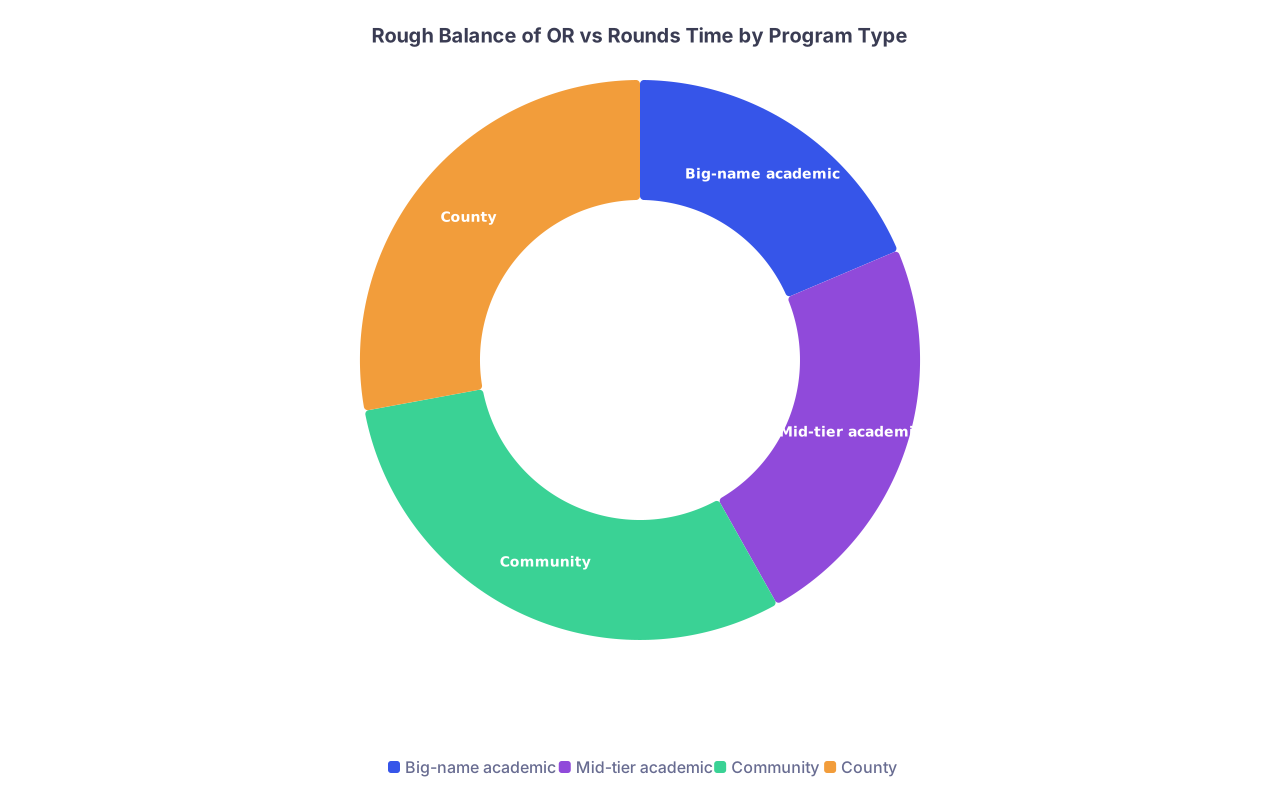
| Category | Value |
|---|---|
| Big-name academic | 40 |
| Mid-tier academic | 50 |
| Community | 65 |
| County | 60 |
Think of that value as “% of typical weekday spent in OR/procedures by PGY3–4.”
Big-name academic example
Rounds:
- 6:00–8:00 a.m., often with attendings joining.
- Discussions on every electrolyte. Long imaging reviews.
OR:
- OR start at 7:30, but juniors often bumped to stay on the floors.
- Complex cancer cases, but many done by senior + fellow.
You feel:
- Intellectually challenged, less hands-on early.
- Strong for fellowship applications later.
- If you hate rounds, you will feel them more here.
High-volume community example
Rounds:
- 5:30–6:30 a.m. Fast. Problem-focused. Often resident-run.
- Attending sees key patients independently later.
OR:
- OR start 7:00 or 7:30. Residents assigned cases by service.
- Huge volume of bread-and-butter: choles, hernias, appys, colon resections.
You feel:
- Tired but satisfied. You actually operate almost daily.
- Sometimes wish for more structured teaching, but not bored.
County/safety-net example
Rounds:
- Short and brutal. Lots of very sick patients.
- ICU heavy, trauma heavy, but still quick bedside checks.
OR:
- Unpredictable trauma, emergent ORs at odd hours.
- Autonomy often comes earlier due to staffing constraints.
You feel:
- Overwhelmed at first, then extremely capable.
- If you crave the OR and accept chaos, this is a good trade.
Step 9: Watch What Happens on Your Away Rotations
If you do a sub-I at a place you are considering:
Time the rounds. Literally.
Start timer at “first patient discussed,” stop when “team breaks.”
If that number is consistently >90 minutes on a 20–25 patient list, you are at a rounds-focused shop.Note who leaves for the OR and when.
- Are juniors allowed to break off to scrub?
- Does anybody say, “We can talk about that in the OR” or do they insist on finishing discussion before anyone leaves?
Track how much you learn in the OR vs on rounds.
If all the high-yield teaching you value is in the OR, but they seem to emotionally prioritize rounds, you will clash with the culture.Ask off-the-record:
“If you could cut your day in half, what would you remove?”
Residents who immediately say “rounds” are telling you the program overdoes it.
Step 10: Build Your Personal Filter List Before You Rank
Stop thinking in vague terms like “good operative experience.” Create a set of hard filters.
Example: if you hate rounds but love the OR, your must-haves might be:
- PGY1s scrub at least 3 days per week on average.
- Team rounds typically under 60 minutes on standard gen surg service.
- Chiefs clearly run the list and own the OR schedule.
- Total cases by graduation > 900 with significant junior cases.
- Culture: quotes from residents that sound more like “get things done” than “we love didactics.”
Your deal-breakers might be:
- Rounds routinely >2 hours with attendings always present.
- “Most of our operative experience is in the senior years.”
- Fellows on every major service who clearly do the big cases.
- Multiple residents independently bemoan “inefficient mornings.”
Write this down. Literally. Make a table for yourself with your interview programs.
| Program | OR Volume (1–5) | Rounds Length (1–5, shorter = higher) | Early Autonomy (1–5) | Overall Fit (1–5) |
|---|---|---|---|---|
| Program A | 3 | 2 | 2 | 2 |
| Program B | 5 | 4 | 4 | 5 |
| Program C | 4 | 3 | 3 | 3 |
You are not assigning scientific scores. You are forcing yourself to compare apples to apples.
Step 11: Protect Yourself From Two Common Traps
Two mistakes I see over and over.
Trap 1: Falling for prestige over daily reality
You match an elite, name-brand academic program. Your LinkedIn looks great. But then:
- You are rounding 2–3 hours every morning.
- PGY1 year is ICU-heavy and floor-heavy.
- Fellows dominate the OR.
- You do not seriously operate until PGY3.
If your core motivation is: I want to be in the OR as much as possible, you just sold that for a name. Think hard about whether you actually want an MD Anderson or a Mayo, or if you want to become the surgeon in your hometown who can handle anything.
For some, prestige is worth it. For OR-addicts, often not.
Trap 2: Ignoring warning signs because residents are friendly
Lots of programs have great, nice, supportive people. That does not shorten rounds.
If three different residents tell you:
- “Rounds can run a bit long, but it’s good teaching,”
and you hate didactic bedside teaching, that is not “a bit.” It is “too long for you.”
Believe them. They are softening the blow because they like the place overall. You have different priorities.
Step 12: Use a Simple Process Flow When Evaluating Any Program
Here is a quick mental flowchart you can run each time you consider ranking a program.

| Step | Description |
|---|---|
| Step 1 | Consider Program |
| Step 2 | Deprioritize |
| Step 3 | Keep on list with caution |
| Step 4 | High-priority rank |
| Step 5 | Total cases > 900? |
| Step 6 | Junior scrub time 3+ days per week? |
| Step 7 | Rounds usually < 90 min? |
| Step 8 | Prestige or other benefit worth it? |
| Step 9 | Residents describe culture as efficient? |
You will never have perfect data for each node. Use best approximations from interviews, websites, away rotations, and your gut.
Step 13: Remember: The Goal is Not To Eliminate Rounds
Rounds are where:
- You see complications.
- You watch how attendings decide whether someone goes back to the OR, stays in bed, or goes home.
- You learn postoperative management that actually keeps people alive.
If you completely avoid that, you become a technician, not a surgeon.
Your target is:
- Shorter, sharper rounds.
- Real teaching that feeds your OR work.
- A program that values action plus reflection, not endless discussion.
The OR is where you cut.
Rounds are where you learn whether what you did worked.
You just need the balance to lean heavily toward the former because that is who you are.
One Concrete Next Step
Right now, before you forget any of this:
Open your list of programs and do this:
For each program, write down:
- “OR appeal” (1–5)
- “Rounds pain risk” (1–5, higher = more painful)
Circle any program where:
- OR appeal ≤ 3 and rounds pain risk ≥ 4.
Those are the ones you need to interrogate harder with focused questions, emails to current residents, or targeted away rotations.
Do that pass today. Turn your vague “I hope I operate a lot” into a concrete, ruthless filter.