It's 6:47 AM. You've pre-rounded on your five patients. Your notes are done. You're feeling good. Then the night float resident pages you: "Hey, got a transfer coming in from Mercy General, septic workup, should be here in twenty minutes."
Your attending rounds at 7:30.
That's not a patient. That's a grenade with the pin half-pulled, and you're the one holding it.
Before you begin your chart review, establishing a systematic approach is essential (see our guide on how do efficient residents prepare for rounds the night before?).
I've watched residents and sub-interns freeze in this exact scenario. They panic, try to dig through two years of outside hospital records, and then get caught on rounds knowing nothing about the patient while their attending stares at them like they've never been to medical school. It's a disaster that's entirely preventable if you have a protocol. Here's the fix.
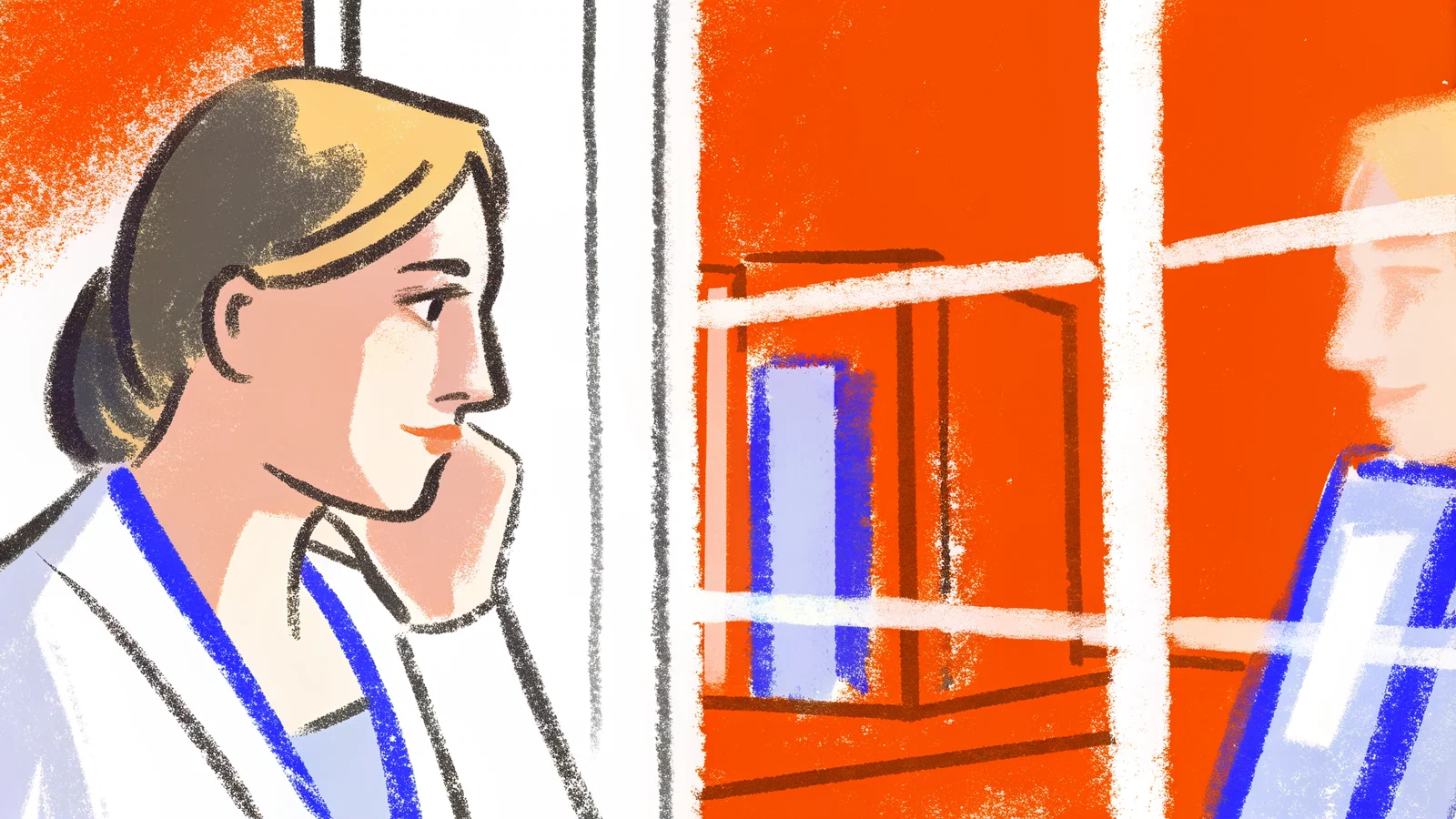
The 60-Second Triage: Securing the Safety Baseline
You don't need a full history right now. You need to know if this patient is going to crash on your watch during rounds. Everything else is secondary.
Step 1: Confirm code status and resuscitation posture. Open the chart. Find it immediately. If the patient is full code, move on. If they're DNR/DNI, note it. If it's unclear because the transferring facility used different terminology or the paperwork hasn't arrived, treat them as full code until proven otherwise. I've seen outside hospitals write "comfort measures" on a transfer face sheet without elaborating, leaving the receiving team guessing. Don't guess. Default to full resuscitation if there's ambiguity, and flag it for your attending.
Step 2: Pull the last three sets of vitals. Not the trend over three days. The last three. Are they trending up, stable, or cratering? Specifically look at mean arterial pressure, heart rate, and oxygen saturation. If MAP is under 65, someone should already be running fluids or pressing pressors, and if they're not, you need to escalate before rounds. A patient who arrives hypotensive and stays hypotensive through your pre-round is not a "stable transfer." That's a patient actively dying slowly.
Step 3: Verify every line, tube, and drip. Walk into the room. I don't care that rounds start in twelve minutes. Physical exam first, chart second when time is this short. Count the lines. Central line? Where's it going? What's running through it? Intubated? What are the vent settings? Foley in? Is it making urine? Continuous infusions are the biggest trap on transfers. The sending facility had norepinephrine at 0.1 mcg/kg/min in their pump. Your pharmacy sent up a bag with a different concentration. The pump is now running at the same rate but delivering a different dose. Check the concentration. Check the rate. Check the order. This kills people if you miss it.
Step 4: Confirm what the patient and family know. Quickly introduce yourself and ask: "Do you know why you're here?" You'd be amazed how often the patient has no idea they've been transferred to a different hospital. That tells you the handoff was chaotic, and you're going to be fielding questions all day. It also tells you the family is going to call at 8 AM asking why mom is at your facility instead of Mercy. Get ahead of it. Call them before they call you.
This entire triage should take sixty seconds. Maybe ninety if the patient is complex. The point is that you're establishing a floor, a minimum safety baseline, not mastery. You're answering one question: Is this patient safe right now? If yes, proceed. If no, you're not pre-rounding. You're resuscitating, and your attending needs to know immediately.
The 5-Minute Chart Mining Protocol
With the safety baseline secured, now you mine for actionable intelligence. Five minutes. No more. Set a timer if you have to.
Minutes 1-2: The transfer note and primary diagnosis. The transferring physician's note is your most valuable document. It should contain the chief complaint, working diagnosis, interventions performed, and the reason for transfer. Read it. Not the whole thing, the assessment and plan section. The HPI is nice but it's a luxury you can't afford right now. You need the bottom line: what's wrong with this patient, what's been done, and what's the plan?
If the transfer note is missing or thin, and it often is, look for the discharge summary from the sending facility. That's your backup. It'll have the primary diagnosis and pertinent history. If that's also missing, you're flying blind and you need to call the sending physician directly. More on that later.
Minute 3: Pending labs and imaging. Transfers lose labs. It's a fact of hospital medicine. Blood was drawn at Mercy General at 4 AM, results are in their system, but your EMR doesn't interface with theirs. The patient arrives, and you have no idea what the lactate was, what the white count showed, or whether the blood cultures are growing anything. Check your system first. If labs were resulted and transmitted, great. If not, redraw what's critical: CBC, BMP, lactate, and blood cultures if sepsis is on the table. Don't wait for outside records to arrive by carrier pigeon.
Imaging is the same problem. The chest CT they did at 2 AM might not be in your system. Check. If it's there, pull the read. If it's not, call radiology and ask if outside images were uploaded to PACS. They usually arrive before the report does.
Minute 4: Overnight nursing notes from your facility. If the patient has been in your ED or on your floor for a few hours before transfer to your team, the nursing notes are gold. They'll tell you what happened. Did the patient get morphine at 3 AM for pain? Did they spike a fever? Did they try to pull out their IV? Did family arrive and cause a scene? These are things the transfer note won't mention but that will absolutely come up on rounds when your attending asks, "How was their night?"
Minute 5: Medication reconciliation. This is the step everyone skips and it's the one that causes the most harm. The transfer medication list is a best-guess document. It's wrong more often than it's right. Home medications get dropped. New medications get added without clear stop dates. Anticoagulants get missed entirely, and nobody realizes until the patient's on the table for a line placement and starts bleeding from the site.
Spend the last minute scanning the med list. Flag anything that looks wrong: duplicate antihypertensives, missing anticoagulants, antibiotics with no indication listed. You don't need to fix everything now. You need to know what's broken so you can present it as an active issue on rounds.
That's five minutes. You now have a safety baseline, a working diagnosis, a list of pending items, overnight events, and a flagged medication list. You're not an expert on this patient, but you're not blind anymore either.

Structuring the Pre-Rounds Presentation for a New Patient
Here's where most people blow it. They try to present a patient they met three minutes ago as if they've been following them for three days. They stumble through old history, get dates wrong, and lose credibility fast. The attending figures out within thirty seconds that this is a performance, not knowledge.
Don't perform. Be honest.
Open with the disclaimer. It's not a weakness. It's a safety practice. Start with: "This patient was transferred from Mercy General at approximately 6:40 this morning. I've done a brief chart review and physical exam but my assessment is limited by the recency of arrival." Your attending won't be annoyed. They'll be grateful you're not pretending to know things you don't. And if they are annoyed, that's their problem, you're practicing safely.
Deliver a tight one-liner. Patient age, sex, relevant past medical history, and the primary reason for transfer. That's it. "65-year-old male with a history of type 2 diabetes, CKD stage 3, and hypertension transferred from Mercy General for management of urosepsis." Done. Don't elaborate. Don't start telling the story of how the fever started three days ago at home. You don't have time, and your attending doesn't need it right now.
Past medical history: relevant only. List the conditions that matter for this admission. Diabetes, CKD, and hypertension matter in a septic patient. The fact that they had a knee replacement in 2019 doesn't. Your job is to curate, not to be exhaustive. If the attending wants more, they'll ask.
Overnight events in three sentences or less. "Patient arrived hemodynamically stable. Received one liter of lactated Ringer's in the ED. Norepinephrine was briefly started at 0.05 mcg/kg/min but was weaned off before transfer. Current MAP is 72." That tells the attending everything they need: the patient was sick enough to need pressors, responded to fluids, and is currently stable. They can make decisions from there.
Physical exam: honest and focused. Don't fabricate a neuro exam you didn't do. Don't describe bowel sounds you didn't listen for. Report what you assessed and be clear about what you didn't. "I performed a focused exam. The patient is alert and oriented to self. Lungs are clear bilaterally. Abdomen is soft. I did not perform a full neurologic or extremity exam given time constraints." Your attending will respect that. If they want a full exam, they'll do it themselves or ask you to come back.
Assessment and plan: problem-based, not exhaustive. List the active problems. For our septic patient: sepsis secondary to UTI, acute kidney injury, and hyperglycemia. That's three problems. Each gets a plan. Antibiotics, fluids, renal dosing, insulin protocol. Don't invent problems you haven't investigated. Don't list "hypertension" as an active problem if the blood pressure is currently 90/50. Prioritize.
Flag the unknowns. This is the move that separates competent presenters from liabilities. Explicitly state what you don't know: "Pending labs include the CBC and lactate from the sending facility, which have not yet resulted in our system. Outside imaging is pending upload to PACS. I have not yet obtained outside hospital records beyond the transfer note." This tells your attending exactly where your information gaps are so they can adjust their expectations.
Post-Rounds Execution: Closing Information Gaps
Rounds are over. You survived. Your attending either commended your transparency or grumbled about incomplete data. Either way, now the real work begins. The gaps you identified during your presentation need to be filled, and they need to be filled today, not next week when the outside records finally arrive.
Immediately order missing labs. Don't wait for outside results to "show up eventually." They might. They might not. In the meantime, you're managing a septic patient blind. Redraw what you need. If the lactate from Mercy was 4.2 and you don't have it, draw a new one. If the creatinine was 2.1, get a new BMP. You need trendable data in your own system, not a number from six hours ago at a different lab. Order them STAT and follow up.
Call the transferring physician. This is the most underutilized tool in hospital medicine. The transfer note says "patient transferred for higher level of care." Great. What does that mean? What were you worried about? What's the plan you had in mind? Pick up the phone. Most transferring physicians are happy to talk, they want to know their patient is being taken care of, and a five-minute call saves you an hour of chart archaeology.
Ask specific questions: What was the working diagnosis? Were there any concerns that weren't documented? What follow-up imaging or consults were they planning? Is there a family member who has the full history? Get a cell number for the family if possible. Outside hospital records take days. A phone call takes five minutes.
Request outside records formally. Call medical records at the sending facility. Fill out the release form. Get it faxed. Do this within the first hour post-rounds because it takes time. Specify what you need: discharge summaries, most recent clinic notes, imaging reports, and the medication list from their pharmacy. Don't request everything, you'll drown in paper. Request targeted records that address your clinical questions.
Update the medication reconciliation. By now you've had a chance to look at the list more carefully. Cross-reference with the transfer note and any outpatient records you can find. Stop duplicate medications. Clarify anticoagulation status. Renal-dose everything that needs it. If the patient was on an antibiotic at the outside hospital, confirm it's still indicated and that the course duration is documented.
Touch the patient again. Go back. Do the full exam you didn't have time for earlier. Talk to them for five minutes. Ask about the history you couldn't pull from the chart. Patients know their own stories better than any outside record. You'll often get the most useful information directly from the source: "I started feeling sick Tuesday after my dialysis treatment." That's a clue no chart will give you.
Update your note by midday. Your morning note was necessarily thin. That's acceptable given the circumstances. But by noon, you should have enough data to write a real assessment. Update it. Add the labs, the imaging results, the family history you obtained, and the outside records that have trickled in. The attending's note will reference yours, so make sure yours reflects current knowledge, not 6 AM ignorance.
Key takeaways:
- Patient safety comes first, always. A rapid 60-second triage focused on vitals, lines, and code status is non-negotiable. Everything else is secondary when time is critical.
- Transparency with your attending is a strength, not a weakness. State clearly that you received the patient minutes before rounds. Trying to fake deeper knowledge than you have is how errors happen and trust dies.
- Systematize your chart review. A strict 5-minute protocol, transfer note, pending labs, overnight nursing notes, and medication reconciliation, gives you maximum usable information in minimum time. No rabbit holes. No archaeological digs. Just what you need to present safely and act decisively.
- Close the gaps aggressively post-rounds. Call the transferring physician. Request targeted outside records. Redraw critical labs. Go back and examine the patient fully. The morning rush is about survival; the afternoon is about competence. Both matter.