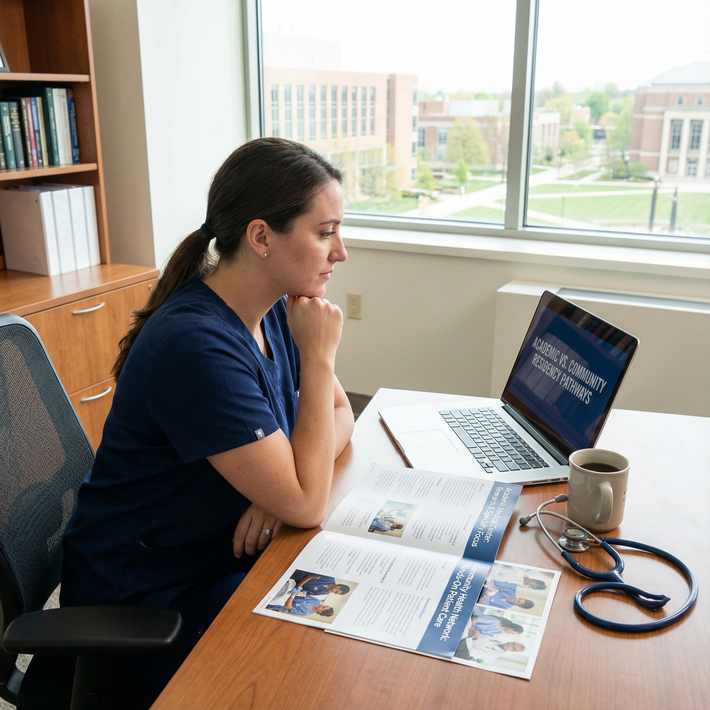
Are academic programs always better for teaching—or is that the mistake applicants keep making?
Are academic programs automatically better at teaching? No. And this is one of the dumbest, most expensive assumptions applicants keep making.
I’ve watched students light up the second they hear “university-affiliated,” as if that label alone guarantees polished lectures, engaged faculty, and protected teaching time. It doesn’t. Not even close. A famous name can coexist with mediocre conferences, chaotic schedules, and residents who are too paged, too scattered, or too exhausted to learn anything.
Let’s define the thing people are supposedly chasing. “Didactics” is not just grand rounds. It includes:
- Formal conferences
- Morning report
- Noon conference
- Bedside teaching
- Chalk talks on rounds
- Curriculum structure
- Faculty feedback
- Board-focused teaching
- Protected learning time
- Whether residents can actually attend any of it
That last part matters more than applicants think. A gorgeous curriculum on paper means nothing if half the sessions get interrupted, cancelled, or attended by six people inhaling lunch while answering pages.
Here’s the caution I want you to remember: the word academic can hide a lot. Weak teaching. Inconsistent conference attendance. Faculty who are brilliant researchers and terrific clinicians but flat-out bad educators. That mismatch is common. Don’t make the mistake of confusing institutional reputation with educational quality. They are not the same thing.
The myth: why applicants overrate the "academic" label
Prestige bias is powerful. It hijacks judgment fast.
Applicants hear “academic program” and mentally fill in the rest: better teaching, smarter faculty, stronger curriculum, more serious education. That mental shortcut feels efficient. It’s also how people end up ranking programs for the wrong reasons.
The academic label gets overrated because it comes bundled with impressive things:
- University branding
- Big-name faculty
- Subspecialty depth
- Research infrastructure
- Visiting professors
- Packed grand rounds calendars
All of that sounds educational. Some of it is. But don’t miss the trap: these are not the same as good resident-level teaching.
A department can be outstanding at publishing papers and still be lousy at explaining bread-and-butter clinical decisions to interns. A nationally known specialist can give a polished lecture once a month and still be unavailable, disorganized, or useless on the wards. I’ve seen residents at prestigious institutions sit through endless expert talks that were technically impressive and practically forgettable. Fancy slides. Minimal retention. No feedback. No follow-through.
That’s the part applicants miss.
Research reputation also creates a halo effect. If a place is famous for cardiology, oncology, transplant, or critical care, people assume the educational experience is superior across the board. Wrong. A strong division does not guarantee strong teaching for residents, especially in the day-to-day work that actually shapes training: admissions, rounds, sign-out, bedside exams, case discussions, and direct correction.
And let’s talk about conferences. Bigger isn’t better.
A huge auditorium with polished grand rounds can be intellectually stimulating, but that doesn’t mean it’s effective for residents. Learning sticks when it’s:
- Repeated
- Clinically relevant
- Interactive
- Tied to decisions you’re making right now
Not when you’re anonymous in row 14 checking your pager while a national speaker reviews niche data no PGY-1 will use this week.
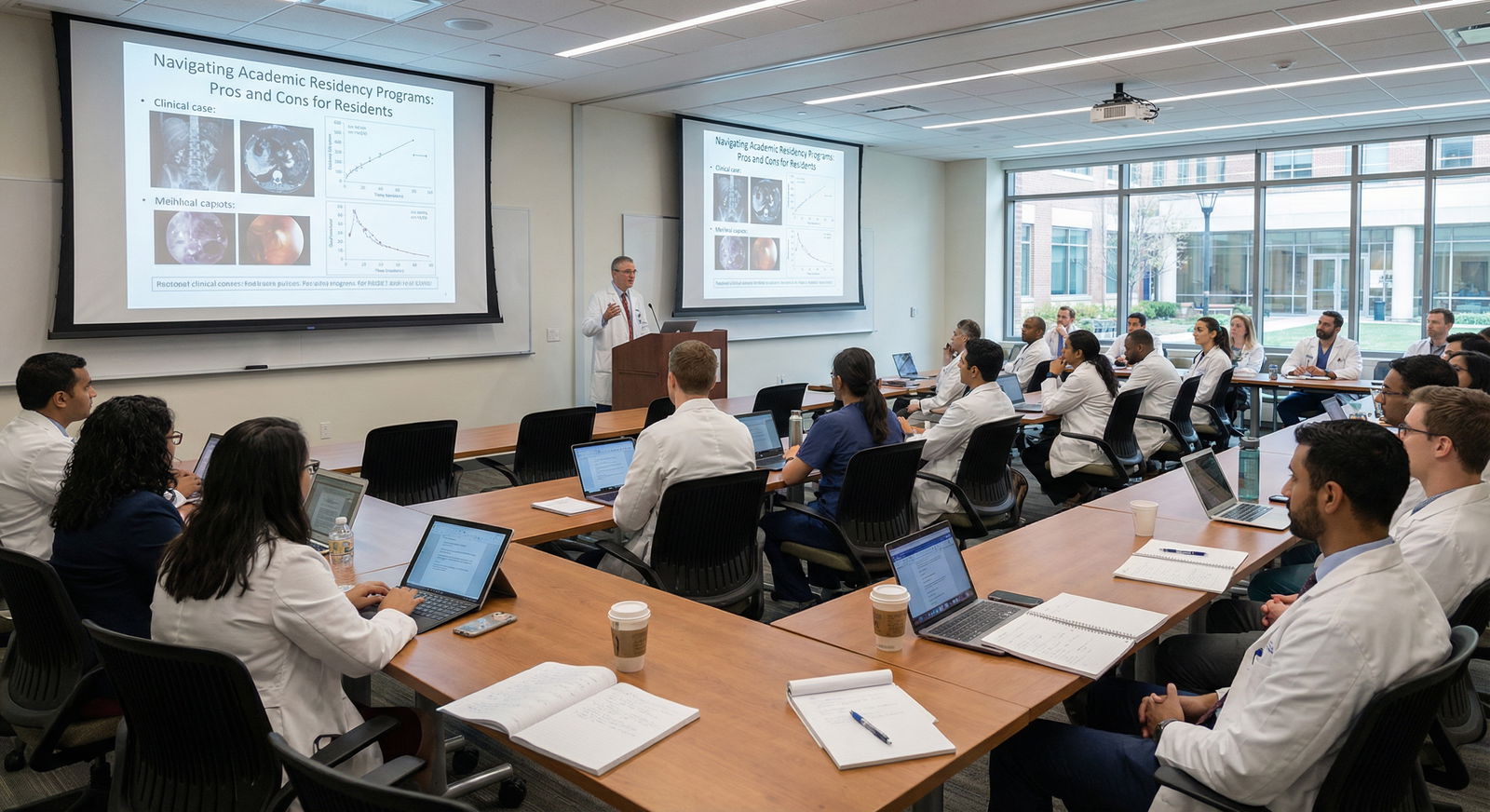
Reality check: what actually makes didactics strong
Strong didactics are not mysterious. They’re measurable. And they usually look less glamorous than applicants expect.
Here’s what actually matters:
A consistent schedule
Conferences happen when they’re supposed to happen. Not “usually.” Not “when the service isn’t too busy.” Actually consistently.Protected time
Residents are expected to attend, and the system supports that attendance. If everyone is still answering pages, covering discharges, and getting dragged back to the floor, teaching is not protected. It’s pretend.Reliable faculty engagement
The same core educators show up, prepare, and teach at the resident level. Not just expert-level monologues. Real teaching.Resident participation
Good didactics aren’t passive endurance events. Residents discuss cases, answer questions, work through decisions, and get corrected in real time.Clinically integrated teaching
The best sessions connect directly to patient care. You learn the topic, then use it that day or that week. That’s how knowledge sticks.Feedback and accountability
Residents know whether they’re improving. Faculty know what they’re responsible for teaching. Someone is paying attention.
This is where many community programs quietly outperform academic ones.
Yes, I said it.
Community programs can be better at bedside teaching, faculty accessibility, and resident-centered learning because the educational environment is smaller, less fragmented, and less distracted by competing academic priorities. You may get more direct attending contact. More practical teaching. More repetition of high-yield topics. More honest feedback. More “come look at this patient with me right now” teaching, which is often where real growth happens.
Meanwhile, some academic programs drown residents in volume without structure. Tons of conferences. Tons of speakers. Tons of subspecialty exposure. But weak continuity. Weak attendance. Weak ownership of the curriculum.
Quantity is not quality. A calendar packed with lectures is not proof of effective education. If sessions are generic, poorly attended, too advanced, constantly interrupted, or disconnected from resident needs, they’re educational wallpaper.
Use a simple filter: if the teaching is easy to miss, hard to apply, and nobody seems accountable for it, don’t overrate it.
Mistakes applicants make when comparing academic vs community programs
This is where people get burned. They compare programs using the wrong signals, then act surprised later.
Mistake #1: Using reputation as a substitute for investigation
If your evaluation stops at “It’s academic, so the teaching must be better,” you’re not evaluating. You’re outsourcing your judgment to branding.
Ask residents bluntly:
- How often do conferences actually happen?
- Are they useful or just obligatory?
- Can you reliably attend?
- What gets cancelled?
- Who teaches the interns?
- Is feedback routine or random?
You need specifics. “We have a strong curriculum” is meaningless. Every program says that.
Mistake #2: Confusing volume of lectures with quality of teaching
A packed conference calendar impresses applicants. It shouldn’t.
What matters is not how many sessions exist. What matters is:
- Are they high-yield?
- Are they level-appropriate?
- Do residents participate?
- Are the same key topics reinforced?
- Does teaching change behavior on the wards?
I’ve seen programs advertise daily lectures, but residents quietly admit they miss half of them, multitask through the rest, and remember almost none. That is not a strong educational culture. That is noise.
Mistake #3: Ignoring obvious red flags because the name sounds good
Don’t talk yourself out of what you’re seeing.
Red flags include:
- Conferences that are frequently cancelled
- Residents who laugh when you ask if teaching time is protected
- Faculty attendance that’s inconsistent
- Lectures that feel one-way and detached from clinical care
- Residents who describe teaching as “fine” with dead eyes
- Faculty who love presenting but don’t mentor
- Senior residents who seem too overloaded to teach juniors
- A culture where service always crushes learning
That last one is a killer. Every residency has service demands. Fine. But if the program repeatedly sacrifices education and shrugs about it, believe them. They are telling you the priority.
Mistake #4: Assuming one model is universally better
This is lazy thinking.
The right environment depends on:
- Your specialty goals
- Your learning style
- Your need for structure versus autonomy
- Your interest in fellowship
- The kind of feedback you respond to
- How much bedside teaching matters to you
If you want deep subspecialty exposure and a research-heavy path, an academic program may absolutely fit you better. But if you learn best through close attending access, repeated bread-and-butter teaching, and hands-on responsibility, a strong community program may beat a weaker academic one every day of the week.
The mistake is not choosing academic. The mistake is choosing it automatically.
How to compare programs without falling for the wrong signal
You need a checklist. Not vibes. Not prestige fog. A checklist.
Here’s the practical version I’d use.
Ask residents what a typical teaching week actually looks like
Not the ideal week. The real one.
Questions worth asking:
- What conferences happen every week?
- Which ones are protected?
- How often do residents get pulled out?
- Are sessions case-based or mostly lecture-based?
- Who teaches most often?
- Is bedside teaching common?
- Do interns and seniors get different level-appropriate teaching?
- How often do attendings give direct feedback?
- What teaching do residents complain about?
- What educational changes has the program made recently?
That last question is sneaky and useful. Programs with a real learning culture can tell you what they fixed. Programs that are coasting usually can’t.
Look for evidence, not branding
A strong learning culture feels obvious. Residents can describe it clearly. They don’t have to spin it. They can name favorite conferences, trusted teachers, and concrete examples of support.
Watch for this difference:
- Weak answer: “Yeah, we have a lot of lectures.”
- Strong answer: “Morning report is protected four days a week, the chiefs run board-style review on Fridays, and our ICU attendings do bedside ultrasound teaching every block.”
Specificity matters. Vagueness is a warning.
Balance the right variables
Don’t optimize for one shiny thing and ignore the rest.
You are balancing:
- Education
- Autonomy
- Patient volume
- Faculty access
- Fellowship exposure
- Wellness
- Fit
Get that balance wrong, and you can end up in a famous place where you’re underserved educationally. That happens more than applicants want to believe.

Bottom line: don’t let the academic label fool you
Here’s the truth. Better didactics come from structure, engagement, repetition, and accountability. Not from a category label.
An academic program can be excellent. It can also be disorganized, passive, and weirdly indifferent to resident learning. A community program can be limited in some ways. It can also be superb at practical teaching, bedside instruction, and faculty accessibility.
Don’t assume. Verify.
Ask harder questions. Listen closely to residents. Look for protected time, consistent attendance, interactive teaching, and faculty who actually show up as educators. If those pieces are missing, the prestige won’t save the experience.
This is a common mistake. Also an avoidable one.
So compare programs carefully. Push past the branding. Make them prove the teaching is real before you rank them highly. If you choose based on reputation alone, don’t be shocked when the brochure teaches better than the program does.