
Opening Scenario: The Night You Realize the ERAS Mistake Too Late
It's 11:47 p.m. You already hit submit. You already told your mom it's done. And then you see it.
Your personal statement says you want to go into family medicine, but you applied IM. Or your COMLEX Level 2 is listed as 566 when it's 656. Or you signaled a program you didn't mean to. Or you realize you never assigned that letter from your EM rotation chair and that program now shows an incomplete file.
Your stomach drops. Literally drops. You refresh ERAS like refreshing will fix it. You start Googling "ERAS mistake after submission reddit" and now you're down a rabbit hole at 1 a.m. convinced you just ruined your Match.
I've been that person. I've watched friends be that person. Every DO student I know has one of these nights. COMLEX vs USMLE, Level 1 Pass/Fail conversion confusion, AACOMAS stuff that never translated right, osteopathic recognition signals, we have five extra ways to mess up that our MD classmates don't even think about.
Here's what you're really asking at 2 a.m.: Are program directors going to see this and immediately think I'm unprofessional, careless, not ready to be a resident? Are they going to trash my app?
Short answer: No. Not usually. Not for one mistake.
Long answer: It depends on what the mistake is, when you catch it, and, honestly, how you handle the next 48 hours. That's what PDs actually care about. Not whether you're perfect. Whether you're honest and fix it fast.
What PDs Notice, What They Forgive, and What Makes Them Pause
Let's pull back the curtain on how this actually works. Because it's not a PD sitting with a red pen circling typos.
Most programs do a first-pass filter that you never see. Coordinator pulls the ERAS download, checks: is the app complete? Scores present? MSPE, transcript, LORs assigned? ECFMG status if needed? Eligible for this track? If something major is missing, you get screened out before a PD ever opens your file. That's administrative, not personal.
Then, if you survive that, someone, often a faculty reviewer or chief, does a 90-second scan. Scores, SLOE or letters, rotations, signal? Then deeper read.
So a ton of mistakes never even reach the PD's desk. A typo on page 7 of your personal statement? Coordinator isn't flagging that. A missing letter you forgot to assign? That will get flagged, but as "incomplete", not as "this applicant is sloppy."
Here's the breakdown I wish someone had shown me when I was spiraling:
Minor stuff they usually forgive: One or two typos in the PS. A slightly clunky sentence. Formatting weirdness from copy-pasting. I talked to a PD at an FM program in Michigan who said, "If I rejected everyone with a typo, I'd have no one to interview." They skim. They know you're exhausted.
Stuff that makes them pause: Wrong score entered, missing graduation date, LOR not attached, signal to a program you clearly didn't research. Not because you're a bad person. Because now they have to verify what's true. That creates work. And it raises a tiny professionalism flag, not fatal, but noticeable.
DO-specific anxiety traps: This is real. If you listed COMLEX only but the program filters for USMLE, you might not get seen at all, not because they hate DOs, but because their filter literally hides you. If you put Level 1 as "Pass" but ERAS asks for a score field and you leave it messy, coordinators get confused. And geographic preference signals, I've seen DO students accidentally click "no geographic preference" when they meant to show strong ties. PDs don't see that as lying. They see it as "hmm, maybe not a good fit."
Professionalism concern doesn't come from one mistake. It comes from a pattern. Three different errors + inconsistent stories + a defensive email? That's a pattern. One error + quick, clear correction? That's human.
The Immediate Damage-Control Plan: What the Applicant Should Do in the Next 24-72 Hours
Okay. You found it. You're panicking. What now? Do NOT send five emails at midnight to every program you applied to.
I made that mistake once. Or rather, I almost did. My advisor physically took my laptop and said, "Breathe. Document. Then email ONE person well."
Here's the plan:
1. Confirm the exact error. Screenshot it. Write down: what field, what it says now, what it should say, which programs are affected. Is it factual (score, date, LOR) or cosmetic (typo)? Does it make your app incomplete or just imperfect? That matters.
2. Don't mass-email. If you typo'd "psoriasis" as "psoraisis," you don't need to email 60 programs. If you listed the wrong Step 2 CK score, you DO need to correct it, but only to the programs where it changes eligibility and to ERAS support.
3. Know who to contact when:
- Wrong score, wrong graduation year, wrong AOA status? -> ERAS support + your med school Dean's office. They can add an addendum/correct the transcript.
- Missing LOR or wrong document assigned? -> Fix the assignment in ERAS immediately. Then email that program's coordinator (not PD) with a 3-sentence heads up.
- Signal/geographic error? -> You usually can't change it. Contact your advisor. Most of the time you let it ride and address it in interviews if asked.
- Wrong specialty in personal statement? -> That's urgent. Fix the PS in ERAS, reassign. Email coordinators of affected programs one time.
4. Write like a human, not a lawyer. Short. Factual. Accountable. No 8-paragraph saga.
Something like: "Dear [Coordinator name], I'm writing to correct an error in my ERAS application submitted [date]. I listed my COMLEX Level 2 as 566; the correct score is 656, as verified in my official transcript. I've updated ERAS and attached verification. I apologize for the confusion and appreciate your consideration., [Name, AAMC ID]"
That's it. No "As a first-generation osteopathic student who has overcome many challenges..." No. Just fix it.
And then, this is the hardest part, you have to stop. Wait. You corrected the record. Sending a follow-up 12 hours later saying "Did you get my email???" makes you look more anxious, not more professional. Give them 3-5 business days. Programs are drowning in September/October.
How PDs Interpret the Mistake in the Context of Your Whole File
This is what finally calmed me down when I talked to an actual PD.
They don't decide on one line item. Ever. They read you as a pattern.
Think about your file like a scale. On one side: board scores, clinical grades, LORs that say you're reliable, your audition months where you showed up early. On the other side: one typo. Or even one missing letter that you fixed in 24 hours.
Which side is heavier?
If you're a strong applicant overall, solid COMLEX, strong letters from people who actually know you, good evals, one small error is noise. I've seen PDs say, "Oh yeah, that kid had a 5 in his personal statement that said peds instead of IM. We asked him about it. He laughed, explained he recycled a paragraph, we moved on. He ranked top 10."

If your file is already borderline, say, multiple failures, red flags, very generic letters, then yes, any additional error makes them pause longer. Not fair, but true. They're looking for reasons to cut a list from 800 to 100 interviews. An error gives them an easy excuse.
What really bugs PDs is not the mistake. It's what you do after. Silence after they request clarification? Bad. Two different explanations in two different emails? Bad. Blaming ERAS or your school immediately? Looks defensive. Quick, consistent, "I made this error, here is the correction", that actually reads as professionalism.
For DO applicants specifically: most PDs I've talked to don't hold us to some higher perfection standard. If anything, they expect some translation confusion between AACOMAS, COMLEX, USMLE reporting. What they care about is integrity. Is the information accurate now? Can I trust the rest?
You're not doomed because you're a DO who made a mistake. You're human who made a mistake. Most PDs remember being that med student too.
When the Mistake Could Actually Hurt You and How to Reduce the Fallout
Okay, let's be honest about worst-case. Because your brain at 2 a.m. is going to worst-case anyway, so let's name it.
What can actually hurt you?
- Missing a required document during screening week. If a program requires 3 LORs and you only assigned 2, you might never get a full review. Automated filter pulls you out. No one even knows you.
- False or inflated information, even accidentally. Listing a score higher than your real one, or saying you're AOA when you're not, or listing a publication you only submitted. Even if it was a typo, if it looks intentional, that's a serious problem.
- Wrong specialty personal statement. Sending an anesthesiology PS to surgery programs. That screams "I'm not actually interested" and that does get you passed over quickly. Signals are limited now, a mismatch there can completely miscommunicate fit.
- Eligibility errors. Wrong visa status, wrong graduation year, wrong licensing step.
If any of those happened, what will PDs actually do? Usually one of four things: quietly ask for clarification, put your app on hold while they wait for the correction, silently pass because it's easier, or, very rarely, remove you if it looks like a major integrity issue.
How do you reduce fallout?
Fix it today. Not next week. Today. Update ERAS, upload corrected docs, email coordinator with proof. Keep the language identical everywhere. If they ask about it on interview day, have a 20-second, no-drama script: "Yes, I noticed after submission that I had listed X incorrectly. I corrected it on [date] and notified your coordinator. The accurate information is Y. I apologize for the error." No rambling. No self-flagellating.
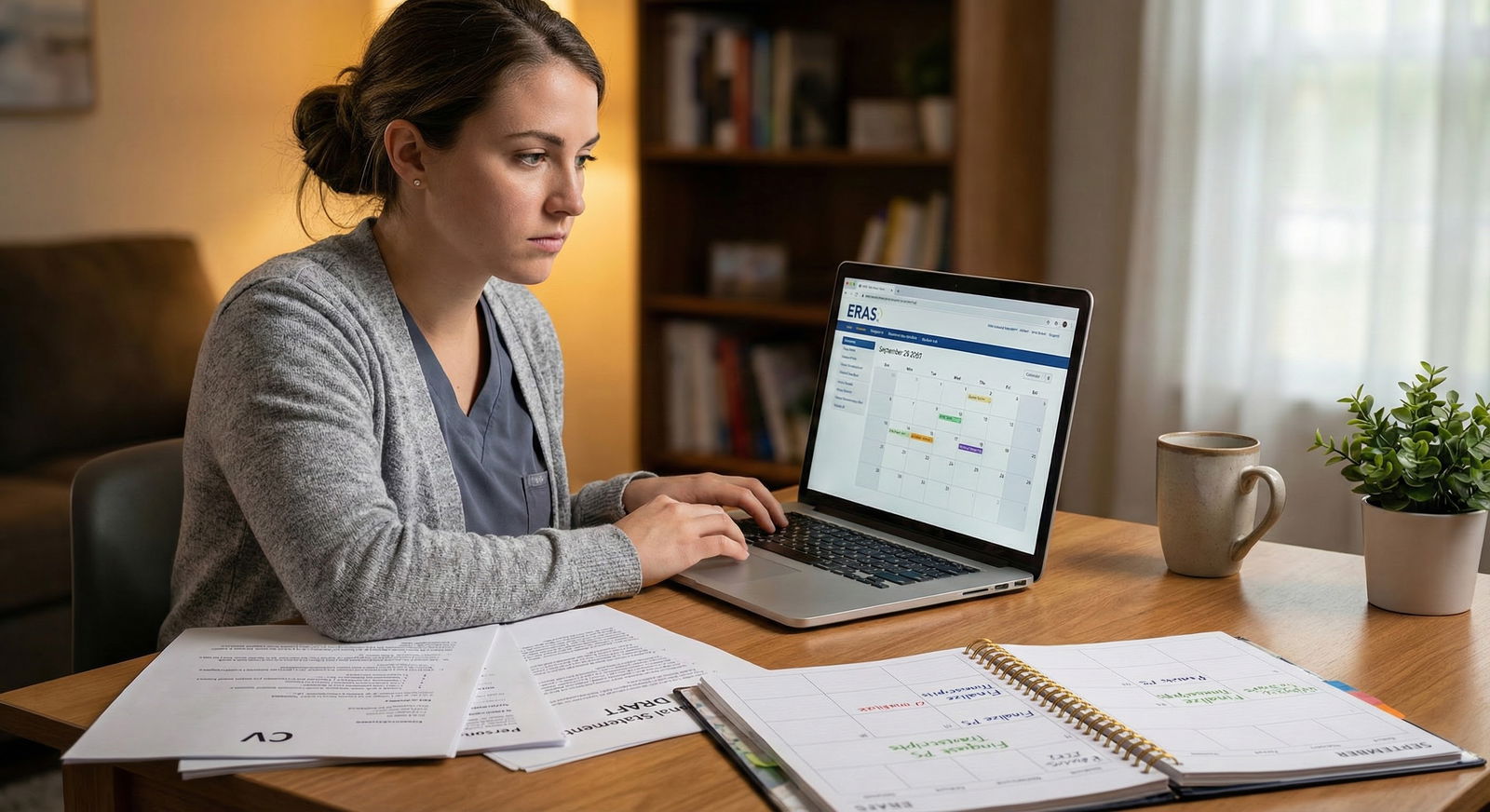
And please, protect your mental health while you wait. This part is brutal. You send the correction and then hear nothing. You check ERAS, you check email, you check Reddit. Every day without a reply feels like a rejection. It's not. Coordinators get 50+ emails a day in application season. No response often means "noted, moving on."
Don't email the same program three times. Don't DM the PD on Twitter. Don't ask your letter writers to intervene unless your dean tells you to. You'll make a small thing bigger.
What You Can Still Control Before Interview Season Ends
Here's the thing your anxiety doesn't want you to believe: there's still a lot you can control, even after the mistake.
You can control timing. One good email within 24 hours beats five perfect emails in two weeks.
You can control consistency. Whatever you tell Program A, tell Program B. If they compare notes, and sometimes they do, inconsistency looks worse than the error itself.
You can control your interview explanation. Prep a calm line. Practice it out loud so you don't spiral if someone asks, "I noticed your application had a different score listed initially." Answer, apologize, move on. Don't spend 10 minutes of your interview defending a typo.
You can control the rest of your season. I know it feels like this one error is the only thing anyone will see. It's not. Programs keep reading files. New programs may still send invites. A great audition or a strong letter in November can absolutely outweigh an early October correction email.
And you can control what you learn from this. Annoying as it is, use it as your systems check. I now have a checklist for every piece of paperwork: licensing, credentialing, future job apps. Because residency is... paperwork. Forever. Better to learn the "double-check before submit" muscle now.
Look, a late-found ERAS mistake is terrifying. Especially as a DO applicant where you already feel like you have to prove you're just as good, just as detailed, just as competitive. But I need you to hear this: Most PDs have seen this before. A lot. They've seen far worse. And many applicants who messed something up still match. Still get their top 3. Still become great residents.
You caught it. You're fixing it. That's what a good future doctor does. Not perfect, accountable.
Breathe. Fix what you can today. Then go do the next right thing for your application. You've still got a path.