Here is the article, written from the perspective of a worried medical education expert.
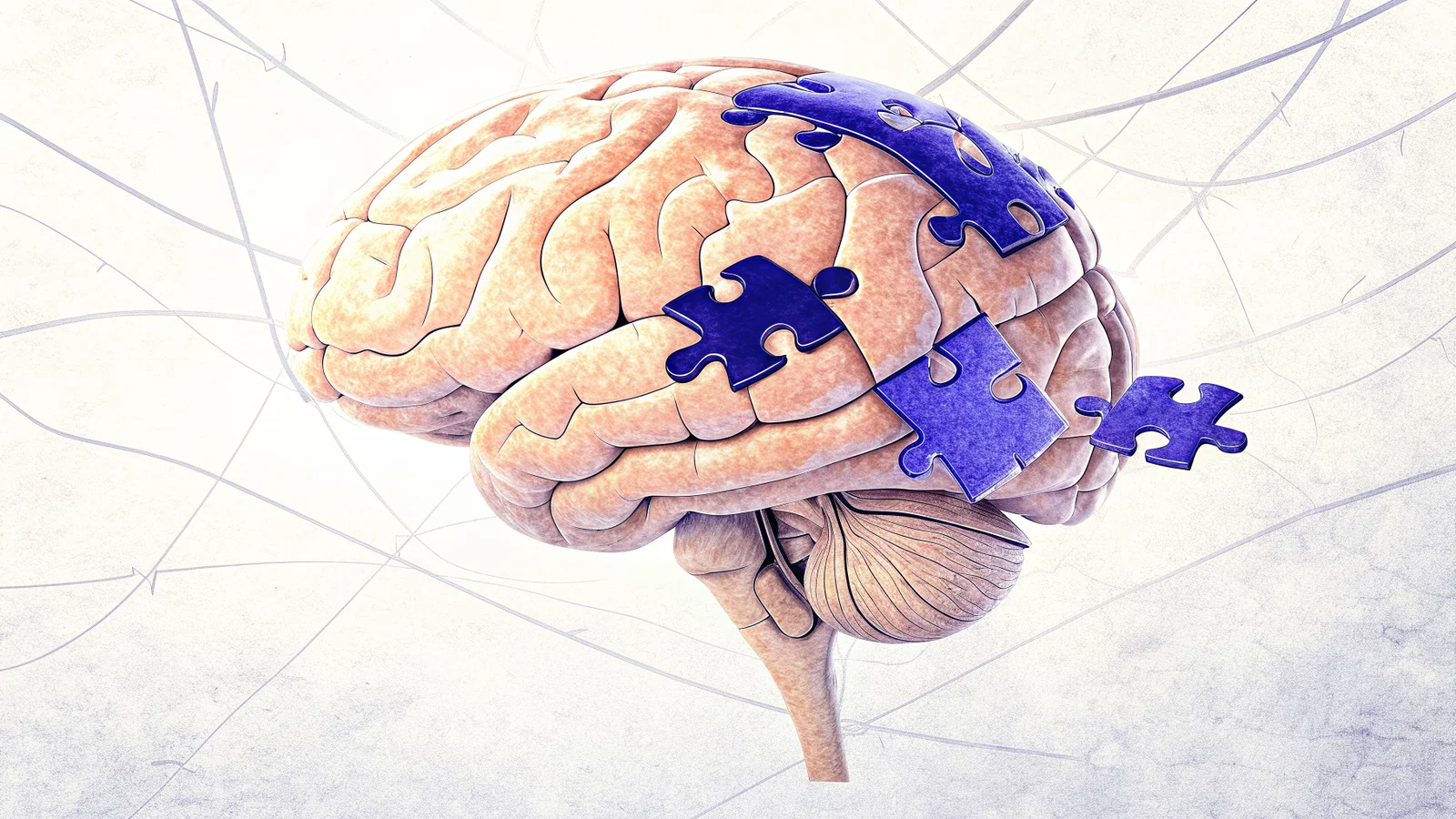
I see this question in my inbox constantly, usually timestamped at 2:00 AM. The subject line is always some variation of "Am I throwing it all away?" You're staring at the ceiling, convinced that taking a single month away from the Q-bank grind will somehow erase four years of medical school from your brain. It's a specific, desperate fear. The logic, as anxiety dictates it, goes something like this: "If I stop the daily drip-feed of 80 timed questions, my graph won't just plateau, it'll nosedive. A 245 will become a 215. I'll open the shelf exam or, God forbid, Step 2, and my mind will be a blank white screen."
Deep breath.
You aren't a hard drive that gets wiped. You're a fatigued, terrified human with a brain that's actually far more resilient than you're giving it credit for. Let's walk through exactly what happens when you stop, what's recoverable, and how to prevent the catastrophe that lives in your head.
This article is for educational purposes only. It is not financial advice, not legal advice, and not tax advice. Figures vary by individual circumstances, so consult a qualified professional before acting.
The Panic Sets In: Is One Month Really That Dangerous?
Let's name the beast. The panic isn't really about forgetting the Krebs cycle. It's the visceral belief that scores are fragile, temperamental little numbers that can shatter if you look away for five minutes. I've been there. You check your UWorld percentile like a stock ticker, and the thought of skipping a day feels like market manipulation that will inevitably crash your portfolio.
(For a structured approach to recovering from low practice scores, see how to recover when Q-bank percentages are low weeks before boards.)
So, what actually happens to memory after 30 days of zero active recall? Does it evaporate? Yes and no. The real fear here is the "worst-case scenario" loop: "If I miss my target score by 10 points because of this break, my application is dead on arrival." Let's kill that myth first. A 10-point dip feels monumental in the echo chamber of online subreddits, but admissions committees aren't robotic sorting algorithms. They look for a reason to reject you on technicalities, sure, but a slight blip after a documented life event or scheduled break isn't the smoking gun you think it is. A 10-point dip in a single shelf exam? That's Tuesday. A 10-point dip on Step 2? Disappointing, maybe, but not a rejection letter. The real danger isn't the number dropping; it's you spiraling so hard because of the break that you can't re-engage.
The fear of "permanent knowledge loss" is a misunderstanding. You are not losing the hard-won neuroanatomy facts you burned into your hippocampus at 3 AM. You are losing the speed of the lightbulb moment. That's retrieval fluency. It's the difference between knowing an answer in 5 seconds and knowing it in 25 seconds. When you stop doing questions, your internal clock gets rusty. That's what feels like "tanking." It's not ignorance, it's lag.
The Neurobiology of Forgetting: Why Your Brain Feels Like It's Failing
(If you find yourself already behind on blocks due to burnout, review the 4-week recovery protocol for catching up on Q-Banks.)
I know a graph doesn't cure anxiety, but look at what's actually happening inside your skull before you catastrophize. The Ebbinghaus Forgetting Curve isn't a death sentence; it's just a map of how lazy our brains are without a prompt. When you stop actively recalling information, your brain doesn't delete the folder, it just zips the file and throws it in a deep subfolder in a dusty attic. The information is there. You just can't double-click it fast.
Let's distinguish between two concepts that are constantly conflated in frightened late-night texts. Storage decay is actually losing the physical engram, the synaptic connection. That takes years, not weeks, and often requires some kind of neurodegenerative process. You don't have that. What you have is retrieval failure. The synaptic weight is still there, but the threshold to fire it has risen because you haven't exercised the circuit.
During a gap month, if you're lucky, you're doing passive reading. You're scrolling through First Aid feeling a warm glow of recognition. That's dangerous comfort. Recognition falsely flags itself as knowledge, but without the struggle of recall, you fail to maintain the myelin on those retrieval pathways. You weaken the "getting to" the memory. The reassuring truth? This is biochemically efficient. Reactivating a dormant circuit takes a fraction of the energy it took to build it originally. You're not rebuilding Rome. You're just power-washing the cobblestones.
The Reality Check: Data on Score Fluctuation During Breaks
Let's cut through the noise. Reddit and Discord will have you believe that a month off is the equivalent of taking your score out back and shooting it. But that's survivorship bias. Nobody logs on to post, "Took four weeks to deal with a family emergency, took an NBME, scored exactly what I did before." They only post when the sky falls.
Here's the reality I've observed across hundreds of students and score reports: the significant drop (>15 points) is actually rare in a vacuum. When I've seen a crater form, it's almost never just the break. It's the break layered on top of pre-existing burnout or, crucially, a student who hadn't actually finished the content before they left. They pause at 40% of UWorld completed, come back, and blame the time off, when really, they just haven't seen half the pathology yet. That's a curriculum gap, not a pause penalty.
More interesting is the cohort that sees stable or improved scores. I know, it sounds insane. But I've seen it happen enough times to believe it's a real phenomenon. Deeply fatigued students, whose scores were already dipping from burnout, step away. They sleep. They remember why they like medicine. They return with a normalized cortisol level and suddenly stop making dumb, anxious reading errors. For these people, the break was a performance-enhancing drug. Their NBME self-assessments actually trend upward because they can finally think straight.
The gap-month doom isn't a law of physics. It's a manifestation of pre-existing panic. The drop isn't from forgetting; it's often from rushing to make up for lost time the second you're back and frying your amygdala all over again.
Mitigation Strategies: How to Protect Your Score If You Must Stop Q-Banks
Okay, so the world is burning around you, a rotation from hell, a family health crisis, or just a mental health cliff that demands you step away. What do you do? You don't just close the laptop and hope for the best. You use the "Minimum Effective Dose" approach. Think of it like maintenance IV fluids for your brain. You don't need a full steak dinner; you just need electrolytes.
You don't need to do full blocks. Honestly, if you're burned out, doing a 40-question timed block will just reinforce your hatred for the test. The goal is synaptic tickling, not a marathon. Even 30 minutes of Anki completely halts the steep cliff of the forgetting curve. It's the difference between losing 40% of your retrieval speed and losing maybe 5%.
If you can't even look at an Anki card without wanting to cry, I get it. Use passive strategies, but be aggressive about how you use them. Don't just read First Aid. Read your incorrect answers from the last month. The error log is your goldmine. It's targeted reactivation of your weakest points. Beyond this, do not jettison sleep. I'll say it bluntly: losing sleep to cram in 20 questions during a break designed to fix burnout is malpractice against yourself. Your test-taking stamina, the ability to sit still and focus for 9 hours, is primarily a function of your REM cycle, not your Q-bank percentage.
Here's the protocol: Wake up tomorrow. Commit to 10 questions. That's it. Ten. If you feel okay, do 10 more. If you don't, you've done your IV bolus. You've told your brain, "We're not quitting, we're just coasting." That psychological safety alone prevents the re-entry panic that actually does tank scores.
Final Thoughts: Calming the Worst-Case Scenario Mindset
Listen, I can't promise a magic number won't dip slightly the first week you're back. I can promise you it's rarely catastrophic unless you do absolutely nothing and sit in a dark room doom-scrolling. A month isn't a black hole. It's more like a pothole. If you're driving carefully, you might feel a slight bump, but you won't total the car.
Your application isn't a single static number on a page. No PD has ever said, "Wow, look at this incredible candidate, wait, a 6-point drop between their third and fourth shelf? Into the trash." They look at your trajectory. Resilience looks better than a sterile, perfect upward line. It shows you're human and you can recover. That's what you're going to do.
Control what you can. Consistency at a very low dose beats a chaotic, guilt-ridden intensity that leaves you weeping into your keyboard. You are allowed to step away from the machine. The knowledge is still there. It's waiting for you. It hasn't gone anywhere. You built this. Now let yourself breathe.