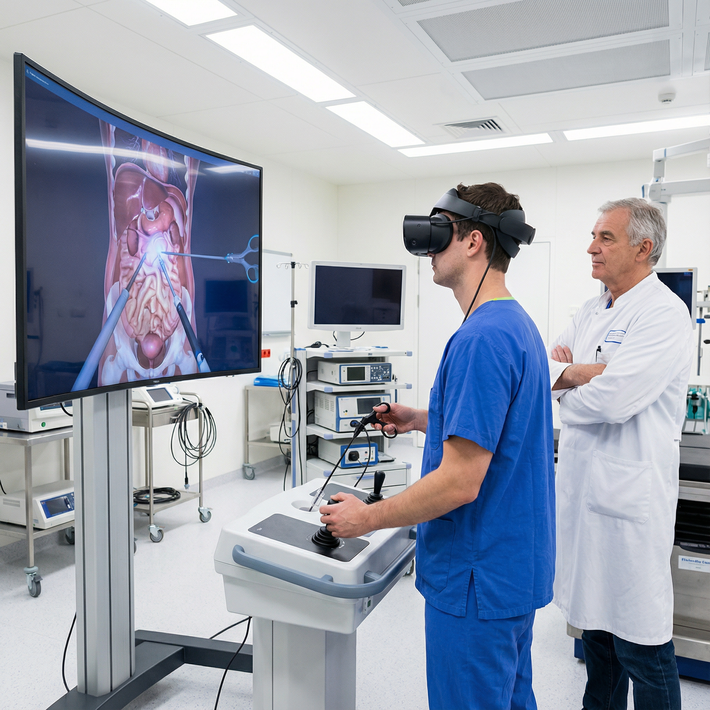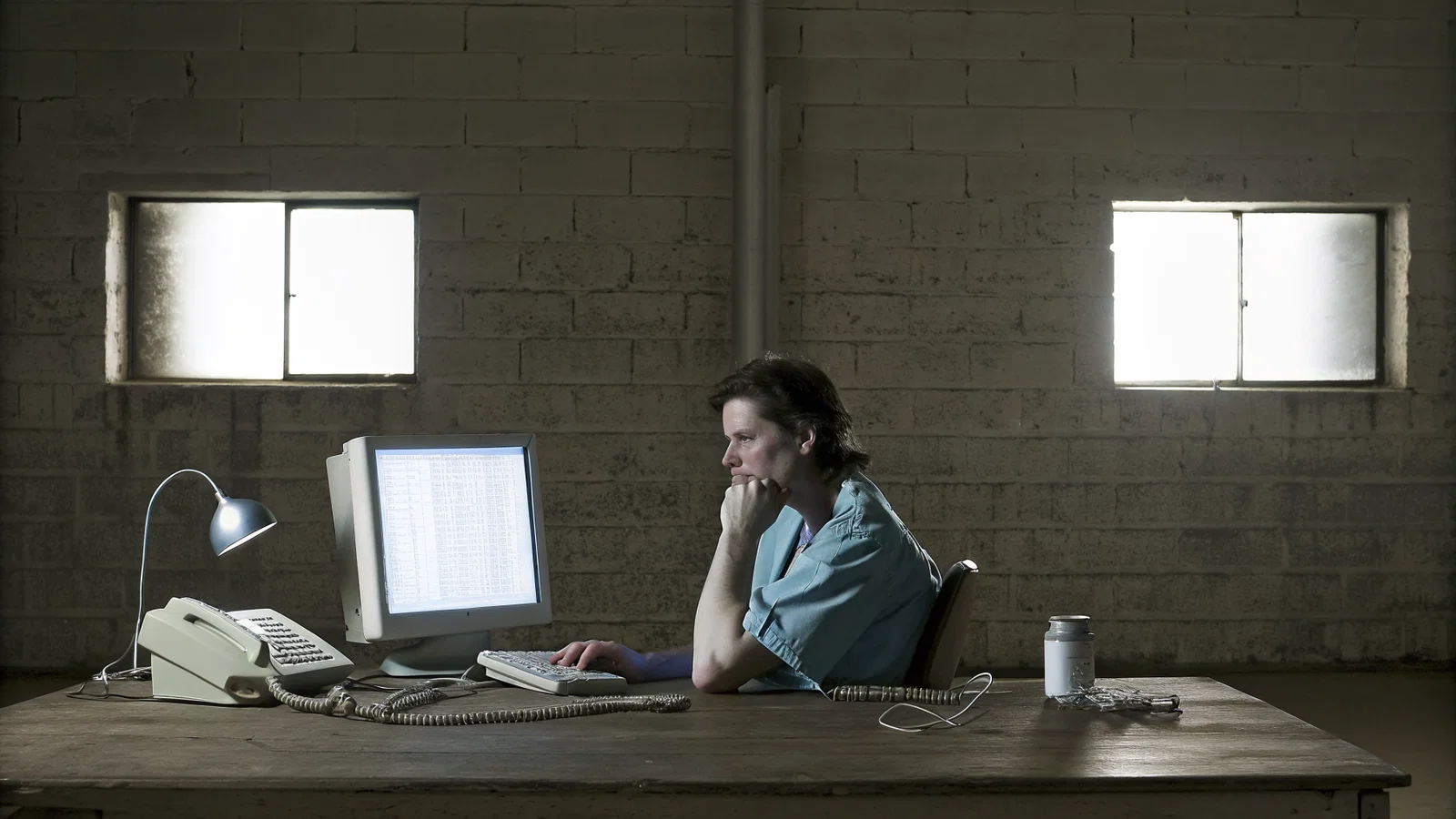
It's 2 a.m. in the call room. A PGY-3 who's been awake since yesterday's admit surge has Llama-3 spinning on a scavenged gaming rig under the desk. He's pasting de-identified (he swears) progress notes into a local chat window so the model can spit out discharge summaries before morning rounds. The door's propped open with a textbook. The machine isn't encrypted. No one from IT knows the box exists. He tells himself it's fine, nothing ever leaves the room, so HIPAA can't touch him.
I've sat in enough faculty lounges to know the dirty parallel: half the attendings on that same service quietly paste real patient blurbs into consumer ChatGPT on their phones between cases because the official "enterprise AI" portal takes seventeen clicks and still hallucinates medication lists. They just don't get caught on camera the way the resident does.
That assumption, "if it never touches the cloud, compliance is automatic", is the single most expensive myth currently circulating among residents and junior faculty. I'm going to pull the curtain back on why program directors, CISOs, and hospital counsel quietly lose sleep over exactly this scenario.
This article is for educational purposes only. It is not financial advice, not legal advice, and not tax advice. Figures vary by institution and jurisdiction; consult a qualified professional before implementing any local AI system that may handle protected health information.
The Resident's Midnight Experiment: What Attendings Don't Say Out Loud
I've watched this movie before. The resident is sharp, the model is fast, and the hospital's official documentation tools feel like they were designed by people who have never written a note after a 28-hour shift. So he does what ambitious people do: he solves the problem himself. Local weights. Offline inference. Zero API keys. In his head the compliance box is already checked.
Here's what actually gets said once the lounge door closes and the residents leave. Attendings use unapproved consumer tools every single day. Not because they're reckless cowboys, but because the sanctioned platforms are still clunky, throttled, or trained on data so sanitized they become useless for real differential generation. One program director told me flat-out, "If I banned every faculty member who ever dropped a de-identified H&P into a public model, I'd have no one left to staff the wards." They just keep the evidence trail clean and hope OCR never asks for phone logs.
The dangerous leap is believing physical isolation equals legal isolation. HIPAA does not award points for noble intentions or air-gapped idealism. It awards points for documented controls, risk analyses, and the ability to produce an audit trail when the Office for Civil Rights shows up after a complaint. Your call-room gaming rig has none of those. The resident thinks he's protecting patients by keeping data local. In reality he's created an unmonitored PHI reservoir sitting on consumer hardware that the environmental services staff can wheel out with the biohazard bins.
I've seen the aftermath. A similar setup in a midwestern academic center got imaged during a routine device inventory. The vector database still held embeddings of full clinic notes. No encryption at rest. No access logs. The resident kept his job only because the hospital decided the PR risk of a public firing was worse than the quiet remediation. That is not a win. That is luck.
Myth vs. Reality: The Illusion of Absolute Local Security
Program directors and health-system CISOs already know the secret that never makes the residency handbook: a properly configured HITRUST or FedRAMP cloud environment is usually harder to compromise than the average "secure" local box sitting under a call-room desk. Local hardware feels safer because you can see it. That feeling is a liability.
Physical security is the first gap. Call rooms are unlocked half the night. Cleaning crews, float nurses, code-team members, even lost family members walk through. I've watched a MacBook with a local RAG index walk out of a workroom in under ninety seconds during a rapid-response. The thief didn't need to crack anything sophisticated; the disk wasn't even FileVaulted. Consumer SSDs with "local only" vector stores are walking PHI breaches waiting for a bored EVS tech or a determined resident from another service.
Then there's the logging vacuum. Enterprise cloud tenants spit out immutable access records, key-usage metrics, and anomaly alerts that satisfy the HIPAA Security Rule. Your gaming rig logs... whatever the Linux kernel felt like writing before the OOM killer fired. When OCR or a state attorney general asks for "all systems that processed Mr. Smith's data between March and June," the cloud tenant produces a spreadsheet in twenty minutes. The local box produces a shrug and a corrupted syslog.
Look at the actual vulnerability surface.
The legal reality is colder still. HIPAA compliance is not a vibe. It is a chain of Business Associate Agreements, documented risk analyses under § 164.308, and technical safeguards under § 164.312. A self-hosted open-source model on hardware you own does not magically generate a BAA with Meta or Mistral. There is no covered entity relationship that lets you offload liability. If PHI hits that disk and later walks, the covered entity, your hospital, and by extension you if you're the one who stood up the system, owns the breach notification, the fines, and the possible exclusion from federal programs. Sentiment about "open source purity" does not appear anywhere in the regulation.
Under the Hood: What a Program Director Won't Tell You About AI Procurement
Hospitals do not ban open-source models because the models are dumb. They ban them because the general counsel cannot indemnify floating weights downloaded from Hugging Face. There is no counterparty to sue if the model regurgitates training data that turns out to contain residual PHI from some earlier scrape. There is no SOC 2 report, no penetration-test attestation, no contractual right to audit the training corpus. Legal would rather approve a mediocre vendor with a thick BAA than a brilliant local Llama that leaves them naked in front of OCR.
That administrative bottleneck is exactly why shadow IT thrives. I've watched entire research divisions quietly divert residual grant dollars into a couple of A6000s in a locked closet, stand up a private Ollama instance, and tell central IT "we're just doing methods development on synthetic data." Six months later the same box is summarizing real tumor-board notes because the official path is still "pending architecture review." The CISO finds out during the annual risk assessment when someone finally maps the IP range. By then the damage is already done and everyone starts rehearsing their "we thought it was de-identified" lines.
The audit trap is nastier than most residents realize. Local RAG pipelines and OCR preprocessors love to write crash dumps, swap files, and debug logs in plain text. I've personally reviewed a forensic image where a single unhandled exception in a Python FastAPI wrapper dumped three full progress notes, names, MRNs, diagnoses, into /var/crash. The disk was "encrypted," but the encryption key lived in a world-readable config file because someone wanted the service to auto-start after reboot. That single file turned a contained experiment into a reportable breach.
Here's the pathway that keeps compliance officers awake:
Once that path exists, every subsequent laptop theft, every curious med student with physical access, every improperly wiped drive sent to surplus becomes a potential OCR letter. Program directors know this. They just don't put it on the orientation slide because the official message is still "innovation is encouraged, within the sandbox."
Building It Right: The Blueprint for Legitimate Local Healthcare AI
If you actually want local inference that won't end your career, stop thinking like a hobbyist and start thinking like the people who sign the BAA. Real compliant local stacks live on air-gapped or tightly firewalled enterprise servers, not under desks. Hardware root of trust matters: TPM 2.0 modules that bind disk encryption keys to the platform, measured boot, and remote attestation so the CISO can prove the box hasn't been tampered with. Full-disk encryption with keys held in a hardware security module, not a sticky note in the admin's password manager. Physical cages, badge access, camera coverage, and chain-of-custody logs for every drive that ever enters or leaves the rack.
Logging is non-negotiable. You need immutable, centralized system logs that capture every model invocation, every prompt that contained potential PHI, every admin login, and every failed access attempt. Those logs have to survive the box itself dying. Ship them to a SIEM that the security team already monitors, retain them for the period your state and federal rules demand, and make sure the clock is NTP-synced so the timeline holds up in court. That is how you satisfy HIPAA Security Rule § 164.312(b) and the addressable implementation specifications around audit controls. A Jupyter notebook with print statements does not qualify.
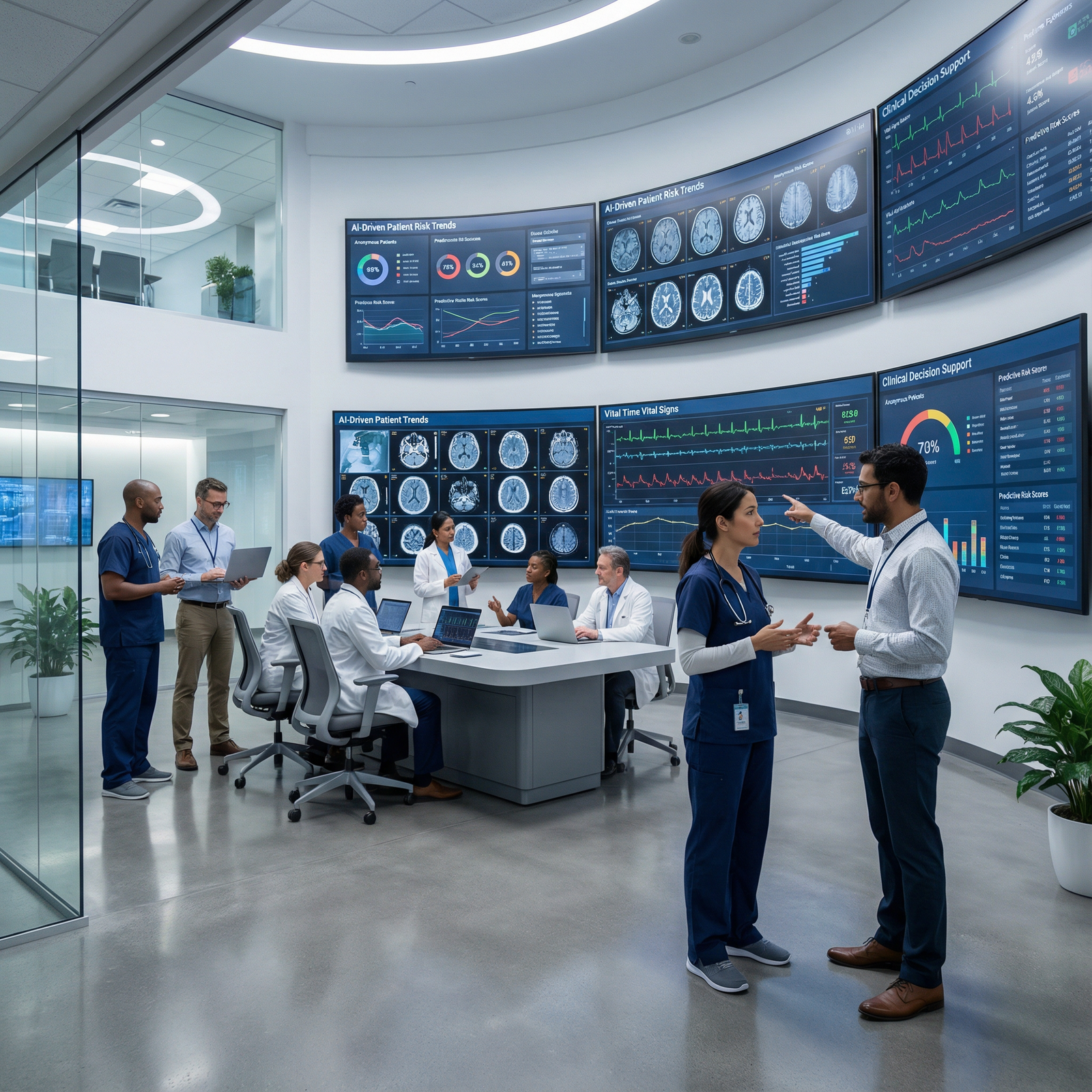
The only sustainable path I see working inside real health systems is the shift from consumer GPU hacks to on-premise, enterprise-grade edge appliances that the CISO has already blessed. Think locked-down NVIDIA DGX or similar medical-device-adjacent boxes sitting in the hospital data center, enrolled in the same patch and vulnerability management program as the PACS servers, covered by the same incident-response runbooks. Several vendors are now shipping exactly these appliances with pre-negotiated BAAs and model cards that legal can stomach. That is the difference between a science project and infrastructure.
The Road Ahead: Where Open-Source Healthcare AI is Actually Heading
The next wave is already visible if you know where to look. Open-weight models purpose-built for clinical text, trained or heavily instruction-tuned on de-identified notes under proper data-use agreements, are starting to appear with explicit on-prem licensing. The smart ones ship with tooling for differential privacy noise, automatic PHI redaction before embedding, and exportable audit packages. Regulatory bodies are slowly catching up; you can already see draft language from ONC and OCR that contemplates "local-first" and "edge" AI as long as the covered entity can still demonstrate the full suite of administrative, physical, and technical safeguards. The rules are not being rewritten to bless every basement experiment. They are being clarified so that hospitals that do the hard work of proper local deployment are not punished relative to cloud-only peers.
My final advice is blunt. Stop risking your medical license and your hospital's accreditation on a desktop tower and a prayer. Learn the language of risk analysis, demand a seat at the architecture table, and advocate for the enterprise-grade local infrastructure that actually lets open-source models deliver value without creating a career-ending side channel. The attendings who are quietly using consumer tools today will not protect you when the breach notification goes out with your name on the root-cause analysis. Build it right, or don't build it at all.
The future of healthcare AI will be hybrid, some workloads in hardened cloud, some on locked local silicon. The winners will be the clinicians who understand both the model cards and the Security Rule well enough to force the institution to meet them halfway. Everything else is just midnight theater that eventually gets an audience you never wanted.
Key takeaways
- Running an open-source model locally does not automatically grant HIPAA compliance; physical security and audit logs are mandatory.
- Shadow IT involving unencrypted local AI rigs puts medical licenses and institutional accreditation at severe risk.
- True local compliance requires air-gapped enterprise hardware, rigorous disk encryption, and formal risk assessments, not just a powerful consumer GPU.