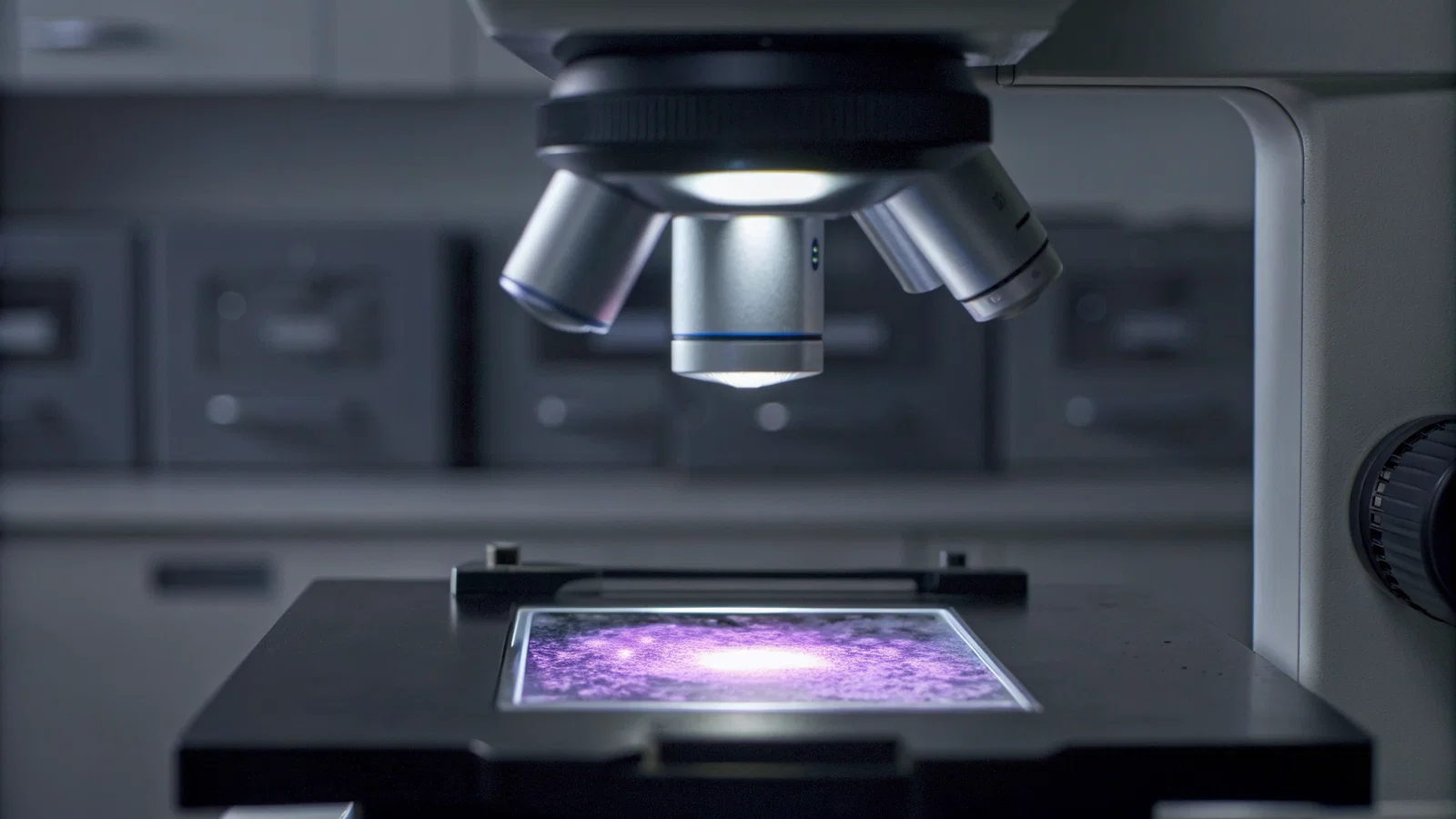
Picture this. It's 4:30 PM on a Thursday. You're a PGY-3 dermatology resident, and you're staring at your twentieth prior authorization denial of the day. The patient in room four is crying because their biologic was rejected. The patient in room five is furious about a surprise copay. Your attending is double-booked, running an hour behind, and snapping at the nurses. You're charting in the hallway, eating a stale granola bar, and wondering if matching into the most competitive specialty in medicine was a massive mistake.
I see this every single year. Bright, brilliant residents grinding themselves into dust because they think clinical dermatology is the only finish line. Let me tell you what really happens behind closed doors. The attendings who actually have their lives together, the ones leaving at 5 PM to play golf or pick up their kids without a pager screaming in their pocket? Half of them aren't seeing patients at all. They're sitting in a quiet, climate-controlled room, looking through a microscope. They are dermatopathologists. And they are laughing all the way to the bank while you fight with insurance companies.
The compensation structures and practice models discussed here are for educational purposes only and should not be construed as not financial advice, not legal advice, or not tax advice. Because market dynamics shift and figures vary by region and contract, always consult a qualified professional before making career or financial decisions.
What They Don't Tell You: The 'Derm-Path' Hybrid

Dermatopathology is the ultimate hybrid. It sits right at the intersection of dermatology and pathology. You read the skin biopsies taken by the clinical dermatologists, providing the definitive diagnosis that dictates patient care. But here is the insider truth that nobody talks about on the residency trail: Program Directors secretly salivate over residents who want to do derm-path.
Why? Because academic departments are in a perpetual staffing crisis. Clinical dermatology attendings hate taking call, and they hate staying late to read slides. When a PD finds a resident willing to go into the lab, they see a golden ticket. You solve their coverage problem. You become the pressure release valve for the entire department.
But let's talk about why you should want it. It's the ultimate arbitrage of medical billing. In clinical derm, your revenue is capped by the physical space in your clinic and the time it takes to talk to a patient, examine them, and document the visit. In derm-path, your revenue is tied to the volume of biopsies. A busy clinical derm might take 40 biopsies in a day. You can read 40 slides before lunch. The reimbursement per slide is incredibly high, and your overhead is practically zero. No medical assistants to manage, no front desk staff to hire, no exam rooms to lease. Just you, a microscope, and a high-speed internet connection.
The Money: Why You're Leaving Money on the Table
Let's cut through the noise and talk about the money. There is a massive misconception among medical students and junior residents that clinical dermatology is the undisputed king of compensation. In a strictly academic, pure-salary setting, maybe. But in the private practice, corporate, and partnership models where the real wealth is generated, dermatopathology frequently out-earns general clinical dermatology. Look at the numbers.
The economics of dermatopathology rely on a simple, brutal formula: Volume over Complexity. You aren't spending 20 minutes explaining the side effects of isotretinoin to a teenager's anxious mother. You are looking at an H&E stain, identifying a basal cell carcinoma, signing it out, and moving to the next one. You diagnose more patients in a single morning than a clinical dermatologist sees in an entire week. In a private lab, your income scales directly with your speed and accuracy. The fastest, most accurate readers pull in the highest margins.
And if academia is your goal, here is another secret. Academic dermatopathology offers incredible research funding and heavily protected time. Clinical derm attendings in academia are heavily pressured to generate wRVUs (work Relative Value Units) to justify their salaries. They are on a relentless, exhausting treadmill. Derm-path attendings, on the other hand, bring in massive lab revenue with a fraction of the clinical footprint. Because of this, departments give them the luxury of protected academic time. You want to run a translational research lab? Derm-path gives you the time and the institutional leverage to actually do it without sacrificing your paycheck.
The Lifestyle Secret: No Call, No Politics
Money is great, but time is the only currency you can't earn back. This is where dermatopathology completely breaks the medical paradigm. Your workflow is beautifully, ruthlessly simple. You review slides. You don't review patients.
Let me tell you what really happens when the pager goes off at 2 AM. For a clinical dermatologist on call, it's an emergency. A patient with Stevens-Johnson syndrome, a severe drug eruption, or a necrotizing infection. It means driving into the hospital, managing a crisis, and dealing with terrified patients and demanding ER docs.
For a dermatopathologist? Call is basically a myth. When you do take "call," it usually just means a clinical derm calls you to discuss a complex slide you already signed out, or they ask you to look at a frozen section for a Mohs surgeon during regular hours. There are virtually no derm-path emergencies that require you to physically rush to a hospital in the middle of the night. The slides will sit safely on your desk until 8 AM.
Here is the PD secret I mentioned earlier. Academic departments actively hire dermatopathologists specifically to reduce the call burden for the clinical attendings. The clinical faculty will fight tooth and nail to get a derm-path partner because it means they get to sleep through the night. You become the most popular person in the department simply by existing in the lab. No patient complaints. No nursing staff politics. No front-desk drama. Just pure, unadulterated diagnostic autonomy.
The Reality Check: It's Not for Everyone
I'm not going to sell you a fairy tale. Dermatopathology is not for everyone. Here is the insider warning: if you hate staring at microscopes, if you get severe eye strain, or if you genuinely love the emotional connection of patient care, this path will be absolute torture. You are trading human interaction for cellular patterns. If you don't find deep, intrinsic joy in solving visual puzzles, you will burn out just as fast as you would in the clinic.
Then there is the dual board grind. To be fully board-certified and highly marketable, you need to pass both the Dermatology boards and the Pathology boards. That means extra years of studying, extra fellowship time, and a massive cognitive load. But the ROI is undeniable. You become a dual-threat attending with a monopoly on a specific, highly lucrative skill set that very few people possess.
If you want to make this pivot, here is my best insider tip. Stop just schmoozing the clinical dermatology Program Directors. Start networking with the Pathology PDs and the dermatopathology attendings during your dermatology rotations. Show up in the lab. Ask to sit at the multi-headed scope. Let them see that you actually care about the tissue, not just the clinical photos. The derm-path fellowship match is heavily influenced by who already knows you can handle the glass.
Closing: Your Path to the Top Tier
You don't have to choose between the prestige of dermatology and the lifestyle of pathology. You can have both. The lucrative, low-stress life you've been dreaming about isn't a myth; it's waiting for you in the lab.
When you sit down for your fellowship or attending interviews, don't just nod and smile. Ask the hard questions. Ask about slide volume, ask about the partnership track, and ask about the exact call schedule. The truth about dermatopathology is that it is the best-kept secret in modern medicine. Now that you know the secret, it's time to claim your seat at the microscope.