
It’s 11:47 p.m. You’ve got three tabs open: FREIDA, Doximity rankings, and a Reddit thread titled “Don’t even think about derm if you’re under 250.” Your Step score is sitting on a PDF in another tab. You haven’t opened it in 3 days, but you know the number by heart. And in your head the loop is:
“I’ll never match derm. I’ll never match ortho. I’ll never make real money. I screwed this up. It’s over.”
So now what?
Let’s walk through this like someone who’s actually seen it play out. Because the story in your head right now is probably way harsher than reality.
First: What You’re Actually Afraid Of
You’re not just thinking: “I’m not competitive enough.”
You’re hearing:
- “If I don’t match something high-paying, I’ll be drowning in loans forever.”
- “Everyone else is gunning for derm/ortho/rads and I’m already behind.”
- “My score / rank / research doesn’t scream ‘rockstar’—so I’m done.”
- “If I go for something ‘less competitive,’ I’m settling and I’ll regret it.”
And the ugliest one:
“If I don’t get a lucrative specialty, I failed.”
I’ve seen MS3s in call rooms whisper this stuff like it’s a confession. People with 240s, strong evals, good letters—convinced they’re doomed because they’re not Step 260 robots with 10 first-author pubs.
Let me say the uncomfortable thing clearly:
You’re overestimating how much one metric determines your entire future… and underestimating how many paths there actually are to a very good life in medicine.
Reality Check: How “Lucrative” and “Competitive” Actually Work
Let’s pull the curtain back a bit. Yes, some specialties are brutally competitive. But they’re not identical, and “I’m not a 270” doesn’t automatically mean “I can’t have a high-income career.”
Here’s a rough snapshot of some high-paying specialties and how “hard” they are on average:
| Specialty | Overall Pay (High) | Competitiveness | Lifestyle Intensity |
|---|---|---|---|
| Derm | Very High | Extreme | Generally Lighter |
| Ortho Surgery | Very High | Extreme | Very Heavy |
| Plastics | Very High | Extreme | Heavy |
| Radiology (DR) | High | High | Moderate |
| Anesthesiology | High | Moderate-High | Variable |
Is it tough to break into derm or ortho from a mediocre academic record and no research? Yes. People don’t want to say it out loud, but yeah, that’s an uphill road.
But here’s where everyone spirals incorrectly:
They treat competitiveness like a brick wall instead of what it actually is:
A steep hill that you might still be able to climb, or work around strategically.
Step 1: Get Specific About Your Actual Situation (Not the Reddit Version)
Right now your brain is doing this vague, global thing: “I’m not competitive.” That’s honestly useless. Programs don’t read your file and see “vibe: mid.” They see pieces.
Break it down like a grown-up, even if your inner voice is losing it.
Ask yourself:
- Step 2/Level 2 score:
Is it truly out of range for your target, or just not “flex on SDN” level? - Clinical performance:
Honors? High pass? Any shelves you tanked? - Research:
Any at all? First author? Case reports? Poster at a random regional conference? - Letters:
Anyone who would go to bat for you? Strong vs generic vs “who are you?” - School:
Mid-tier? DO? IMG? Is your school known in that specialty at all?
Then compare what you’ve got to realistic ranges for those specialties.
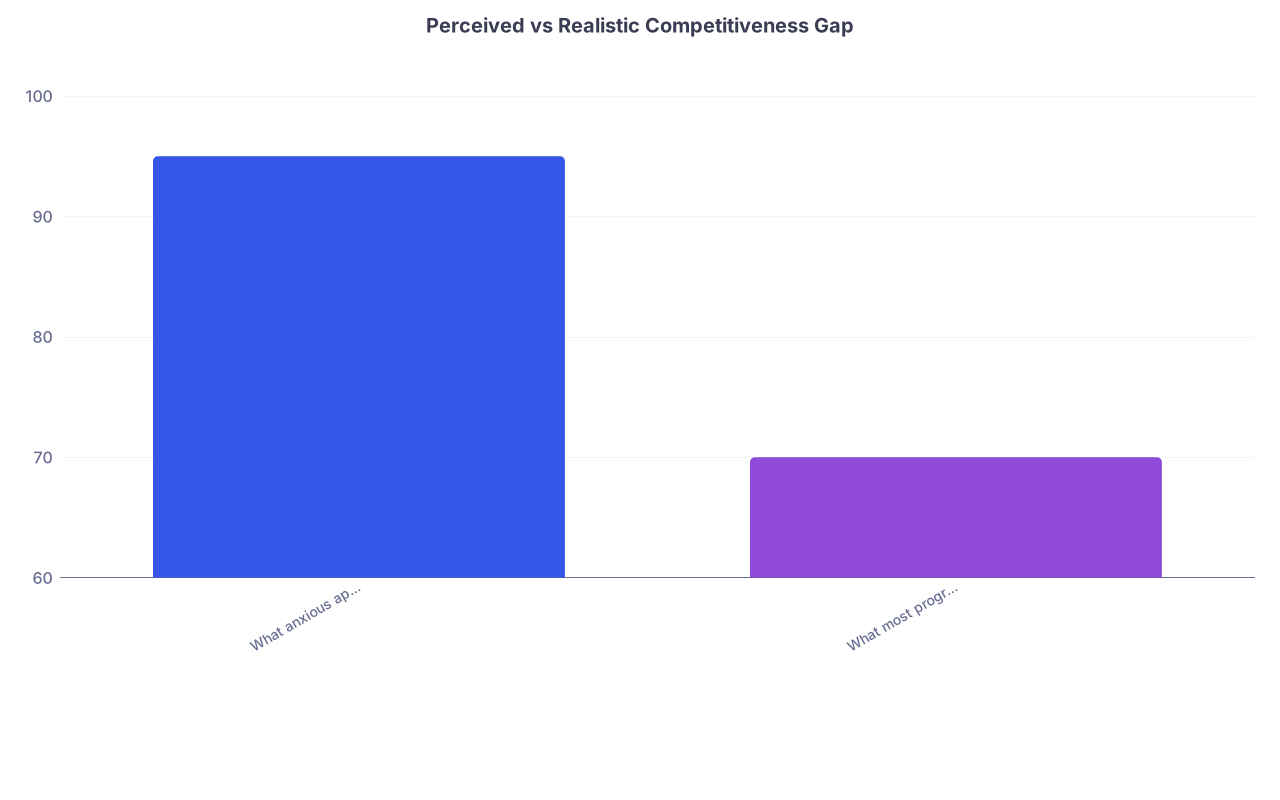
| Category | Value |
|---|---|
| What anxious applicants assume | 95 |
| What most programs actually require | 70 |
Most anxious applicants assume you need to be in the top 5–10% of applicants for any chance. Reality: a lot of high-paying fields still have viable paths for people who are “pretty good but not insane.”
If you’re a DO or IMG trying to match plastics with no research and average scores? That’s not anxiety, that’s reality. But if you’re a US MD with a 230–240 Step 2 thinking anesthesia or radiology are impossible? That’s anxiety lying to you.
Step 2: Decide Which Hill You Actually Want to Fight On
You basically have three options once you admit you’re not a “golden ticket” applicant:
- Still go for the super competitive field, but smartly, not delusionally.
- Pivot to a different lucrative / solid-paying specialty where your app is realistic.
- Play the long game: pathway + fellowship → high-ish income later.
Let’s walk through those without sugarcoating.
Option A: “I Still Want Derm/Ortho/Plastics”
Okay. Not impossible. But you’re not allowed to do this half-committed and then cry on SOAP day because you “thought it would work out.”
Ask:
- Can you take a research year in that field?
- Can you get a true mentor in the specialty (not just someone who once did a rotation there)?
- Are you willing to apply very broadly and stomach the cost and stress?
Real talk I’ve seen:
- MS3 with mediocre Step, did a derm research year, got strong letters, matched community derm. Took longer, worth it.
- DO with solid but not crazy scores, hammered ortho away rotations, got to know programs that actually took DOs, matched. But they treated this like a full-time campaign, not a wish.
If you stay in the game, you need to brutally target:
- Programs with a history of taking candidates like you (DO/IMG/average scores).
- Mentors in that specialty reviewing your app and telling you, “Yes, if you do X, Y, Z, you have a shot.”
If everyone who knows your full situation is saying, “Your odds are single-digit percent,” and you still go 100% into that specialty with no backup? That’s not brave. That’s gambling your life.
Option B: “Maybe I Want a Lucrative but More Attainable Path”
There are high/solid-paying specialties that plenty of “average” but responsible and strategic applicants match into every year.
Think:
- Anesthesiology
- Radiology (diagnostic)
- EM (though the market is messy and changing; be cautious)
- Gas + pain later
- Cards/GI via IM
- IR via DR or IR-Integrated if you’re stronger

A lot of people sleep on this move:
Go into something like internal medicine, match well, work hard, land a competitive fellowship (cards, GI), and walk out with a very strong income and flexibility in practice setting. It’s slower gratification, but it’s real.
If your anxiety is 90% about “I’ll never be able to pay off my loans,” you need to step back and ask:
“Do I want this exact specialty, or do I want long-term financial stability and a decently controlled life?”
Because those are not the same question.
Option C: Play the Long Game and Stop Chasing the Hype
Here’s something most M3s don’t get: once you’re out working, the differences between, say, $350k vs $550k are meaningful but not character-defining, especially if you’re miserable in your job.
The big levers later are:
- Where you practice (big city academic vs community vs rural)
- How much you work (0.7 FTE vs 1.2 FTE)
- Side gigs (urgent care, telehealth, consulting, entrepreneurship)
- Whether you manage money decently (or set it on fire)
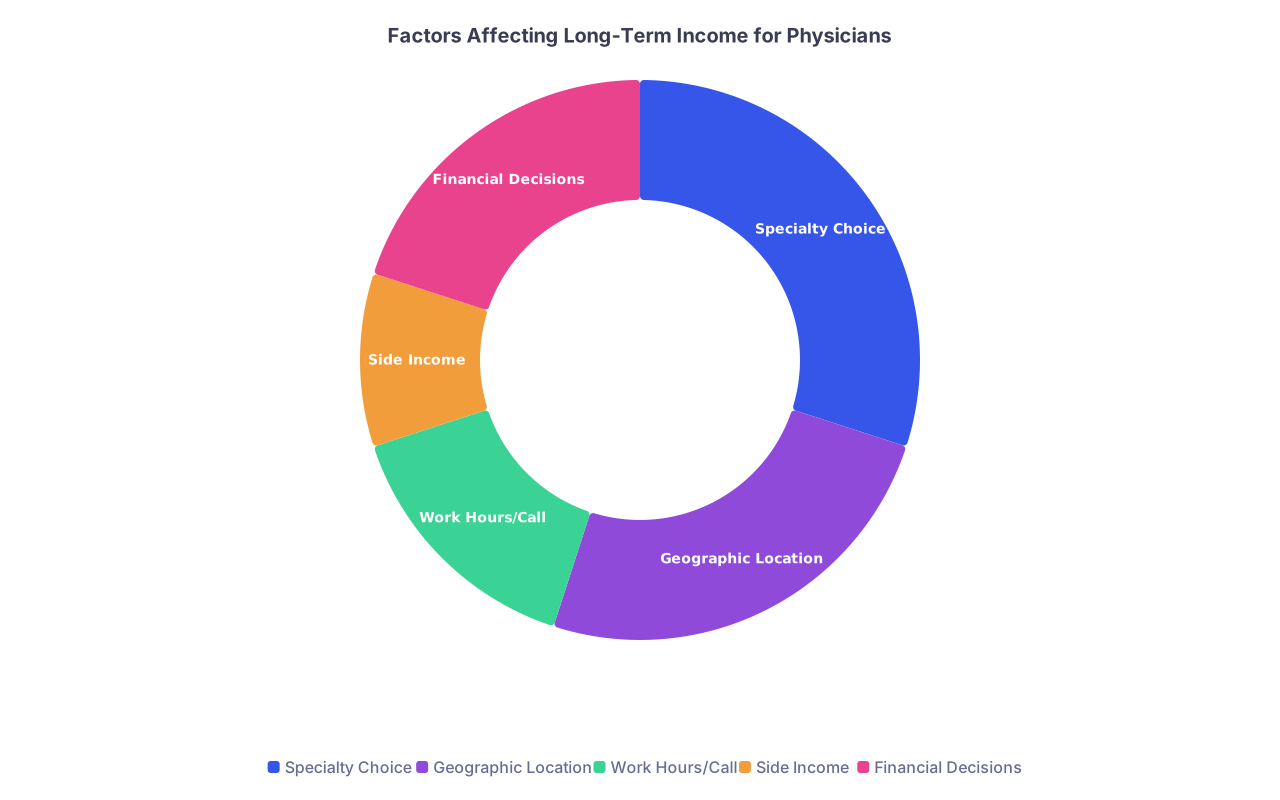
| Category | Value |
|---|---|
| Specialty Choice | 30 |
| Geographic Location | 25 |
| Work Hours/Call | 15 |
| Side Income | 10 |
| Financial Decisions | 20 |
Your specialty isn’t the only dial that controls your income.
I’ve seen:
- A cardiologist in the Midwest making less than an anesthesiologist in a busy private group in a smaller city.
- A hospitalist with smart real estate investments out-earning a plastic surgeon who bought a mansion and three cars.
- An EM doc part-time plus telemedicine + urgent care shifts clearing more than some academic surgeons.
So yeah, specialty matters. But it’s not the entire story.
Step 3: Stop Playing to the Imaginary Judge in Your Head
Here’s the disgusting part of all this: a lot of what you’re afraid of isn’t actually money. It’s status.
- “Derm = success”
- “Primary care = you couldn’t hack it”
- “High-paying specialty = people respect you”
Nobody says it out loud on rounds, but the hierarchy is there. I’ve heard attendings casually say, “Oh yeah, he wanted ortho but ended up in IM” in that pity tone. It sucks. It’s toxic. And it worms into your brain.
If you don’t attack that directly, you’ll keep making decisions for an imaginary audience.
You have to ask:
- Who am I trying to impress? My classmates? Attendings who won’t remember my name? Random forum strangers?
- If nobody knew my specialty, and it paid the same as everything else, what work would I actually want to do all day?
Because if you chase a “big name” specialty you don’t even like just to feel okay about yourself, you can absolutely end up rich and miserable. That outcome is more common than people admit.
Step 4: Concrete Moves You Can Make This Year
Enough mindset talk. Here’s what you actually do when you’re spiraling.
1. Build a Realistic “Primary + Backup” Strategy
I’m not talking about “derm + IM as backup” without changing anything about your application. That’s just vibe-based planning.
I mean:
- One primary target that’s ambitious but not delusional for your stats.
- One backup specialty you’d genuinely tolerate, not hate, that you actually build for (letters, rotations, personal statement, not last-minute fakery).
| Profile | Primary Target | Backup Plan |
|---|---|---|
| US MD, Step 240 | Radiology | IM with cards interest |
| DO, Step 232 | Anesthesiology | IM or FM in good locations |
| US MD, Step 225 | EM (careful) | IM, anesthesia at select |
2. Get Specialty-Specific Feedback From Someone Who Knows
Not your school’s generic “career office” alone. You want:
- A faculty advisor in the specialty
- A chief resident or senior resident who’s seen recent match cycles
Ask them directly:
“With my stats and this CV, what tier of programs and what specialties would be realistic and what would be a long shot only?”
If three different people who know what they’re doing all say, “You’re fine for anesthesiology, cautiously for rads, derm is basically a lottery,” believe them.
3. Fix the Parts You Still Can Move
You can’t un-take Step 1 or magically become AOA. But you’re not powerless.
Things still in play:
- Crush the rest of your clerkships. Strong clinical performance can patch over a lot.
- Nail your away rotations and act like a human they want to work with at 2 a.m.
- Hunt for any research / projects in your target field, even if it’s a case report.
- Get your personal statement and ERAS reviewed by people in that specialty, not only your roommate.

People love to pretend this stuff is secondary. It isn’t. Two borderline applicants with similar scores? The one with better letters, professionalism, and a track record in that field wins.
4. Have a Financial Reality Conversation With Yourself
If the core fear is, “I will never be financially okay if I don’t match a top-paying specialty,” run some numbers, not emotions.
Basic questions:
- What’s your total debt?
- What are realistic starting salaries for your likely specialties (not just derm vs FM, but hospitalist vs subspecialist vs rural vs urban)?
- How does that combine with repayment plans (PSLF, income-driven, private refinance) over 10–20 years?
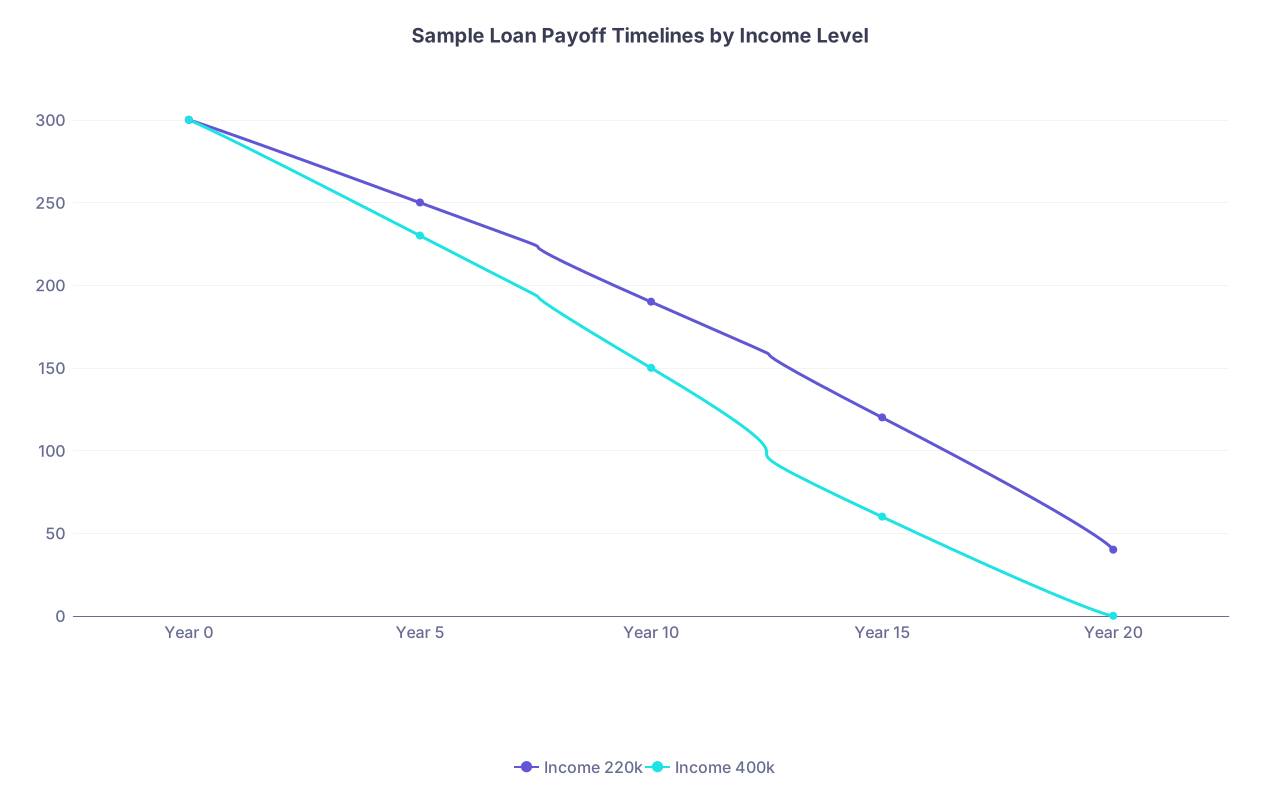
| Category | Income 220k | Income 400k |
|---|---|---|
| Year 0 | 300 | 300 |
| Year 5 | 250 | 230 |
| Year 10 | 190 | 150 |
| Year 15 | 120 | 60 |
| Year 20 | 40 | 0 |
(values in that chart = remaining loan balance in thousands; rough idea, not exact modeling)
The main takeaway:
With any decent attending income, plus not making catastrophic money mistakes, your loans become a survivable problem. Painful, yes. Eternal doom, no.
The Anxiety You’re Carrying Is Real. The Catastrophe You’re Predicting Probably Isn’t.
You’re scared you’ve already ruined it. That you should have gunned harder M1. That your one failed shelf or average Step 2 closed every door that matters.
Here’s the pattern I’ve actually watched in real people:
- Plenty of “average” students end up in high-paying specialties through persistence, targeting, and humility.
- Plenty of “top” students flame out in competitive fields because they were unbearable to work with or refused to adjust.
- Plenty of people who “settled” for less shiny specialties end up with great lives, strong incomes, and zero desire to redo it.
You’re allowed to grieve the version of yourself who was going to crush Step, walk into derm, and be That Person. That fantasy had a grip on a lot of us.
But then you have to do the adult thing:
Look at who you are on paper. Decide how much risk you’re actually willing to take. Choose a path that balances ambition with survival. Then own that choice.
Because years from now, you won’t be thinking about that one point on Step or that one Honors you missed. You’ll be thinking about whether you built a career and life that feel like yours—not something you chased just to quiet the panic for a little while.
FAQ (Exactly 6 Questions)
1. My score is “average” for my class. Does that automatically knock me out of high-paying specialties?
No. “Average” in a decent US med school is often still very workable for things like anesthesia, radiology, EM (with caution given current trends), and a solid IM program that can lead to a high-paying fellowship. It may knock you out of the top tier of the most extreme specialties (plastics, derm at powerhouse programs), but that’s different from “no chance at any lucrative field.”
2. I’m a DO / IMG—should I just give up on competitive lucrative specialties?
You shouldn’t give up by default, but you do need to be brutally realistic. Some pathways (like derm, plastics, certain ortho programs) are extremely DO/IMG-unfriendly. Others (anesthesiology, some rads programs, many IM programs that lead to strong fellowships) are more open. Your job isn’t to believe generic discouragement; it’s to find data: where people like you have actually matched, what they had on their applications, and what mentors in that specialty say after seeing your full profile.
3. How risky is it to apply to a super competitive specialty without a true backup?
Very. Every year there are people who SOAP into something they never wanted—or don’t match at all—because they treated a long-shot specialty like a sure thing and never built a parallel plan. If everyone you trust is calling your chances “lottery ticket” level and you still go all in, you are choosing risk, not being victimized by it.
4. Is it “selling out” to pick a specialty mostly for money?
Honestly? If money is your only reason and you actively dislike the work, that’s going to backfire. You’ll feel trapped. But being honest that you care about income isn’t immoral. You’re allowed to factor in loans, future family, burnout risk. The sweet spot is a field you can tolerate (or even enjoy) that also gives you the financial runway you want. It doesn’t have to be your “soulmate” specialty.
5. Can I really make up for a weaker Step score with research and letters?
You can’t turn a 205 into a 260. But strong research and letters absolutely move you within the pile of applicants around your score. For some specialties and some programs, that’s enough to cross from “probably not” to “realistic.” Especially if your letters say you’re the kind of person they want on call at 3 a.m. That matters more than anxious forums want to admit.
6. What if I pick a less competitive specialty now and regret not “going for it” later?
That’s a real fear. Two things help. First, make the decision consciously: talk to mentors, understand your odds, choose instead of just defaulting from panic. Second, remember there are late-career pivots: fellowships, niche skills, location changes, side gigs. I’ve seen people reposition themselves financially and professionally in their 30s and 40s. You’re not sealing your fate forever with one Match—no matter how final it feels right now.
Years from now, you won’t remember every sleepless night staring at score reports and salary charts. You’ll remember whether you were honest with yourself and brave enough to choose a path that fit you, not just the loudest voices in your head.