

The biggest mistake high-earning specialists make is assuming “If I am good, referrals will just come.” They will not. Not consistently. Not in the volumes that move your income, case mix, or fellowship options.
You need an explicit, aggressive, and structured plan to build a referring physician network—starting in residency, not five years into attending life.
This is that plan.
1. Understand the Game You Are Actually Playing
Before you build anything, you need to be blunt about what high-paid specialties are optimizing for.
We are talking about fields like:
- Interventional cardiology
- Orthopedic surgery (especially sports, spine, joints)
- Neurosurgery
- Dermatology (procedural / cosmetic-heavy practices)
- GI with advanced endoscopy
- Radiation oncology
- IR (interventional radiology)
- Urology (oncology, female, prosthetics-heavy practices)
- Plastic surgery (reconstructive and cosmetic)
In these fields, your professional life depends on three pipelines:
- Referrals from other physicians
- Institutional channels (ED, inpatient services, tumor boards)
- Direct-to-patient access (self-referrals, online, word-of-mouth — important but secondary early on)
You are asking other clinicians to do three things:
- Think of you
- Trust you
- Act on that trust immediately by sending the patient
That does not happen “organically.” It happens because you intentionally design for it.
The Four Levers of Referral Behavior
From watching this play out in real practices, the four levers that actually move referral volume are:
- Accessibility – How easy is it to get you on the phone and the patient in your clinic?
- Reliability – Do you do what you say you will do, consistently?
- Communication – Does the referring physician feel informed and respected?
- Value to Their Practice – Do you make them look good and make their life easier?
Everything in your network-building strategy should be explicitly focused on those four.
2. Start in Residency: This Is When the Network Really Begins
If you wait until you are an attending to think about referrals, you have already lost time. Residency is your dry run and relationship incubator.
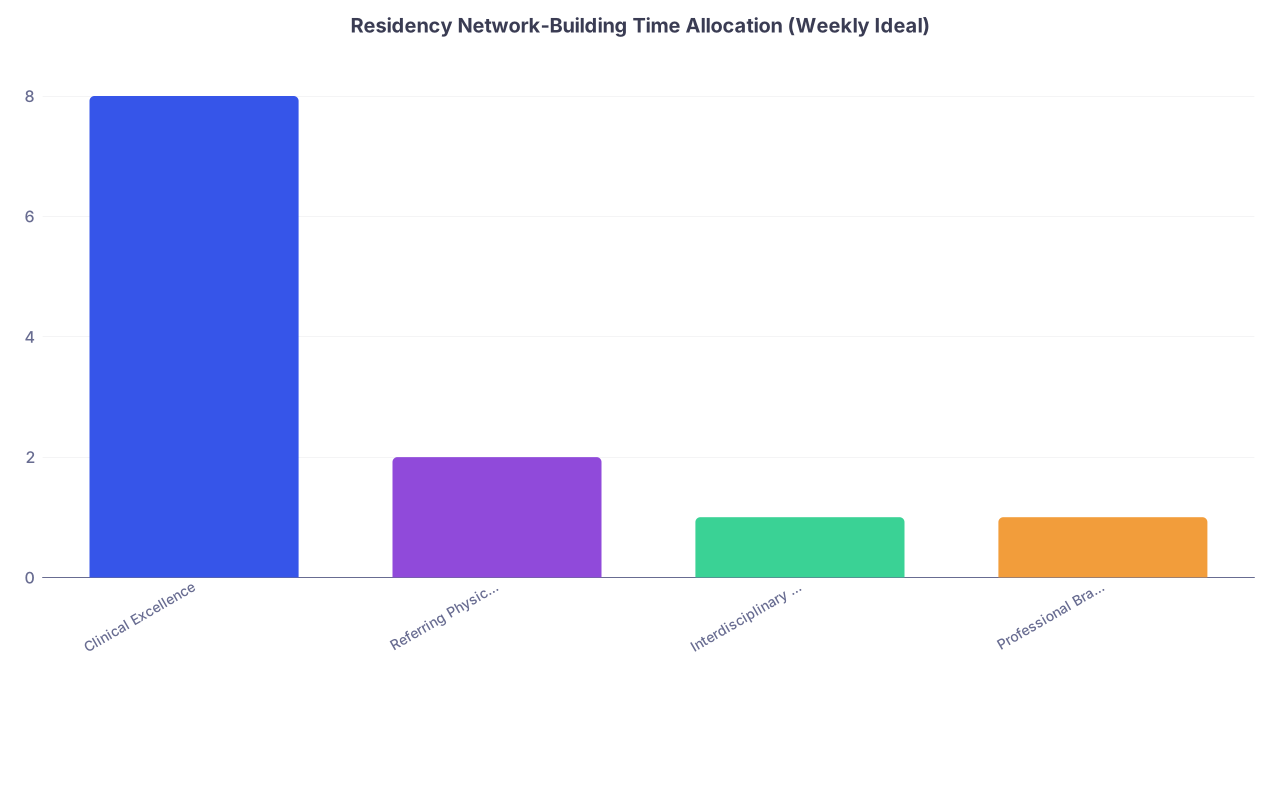
| Category | Value |
|---|---|
| Clinical Excellence | 8 |
| Referring Physician Relationships | 2 |
| Interdisciplinary Meetings | 1 |
| Professional Branding | 1 |
Step 1: Map Your Referral Ecosystem
On any given rotation, ask yourself: “Who would refer to me in real life?”
Examples:
- Orthopedics:
- PCPs, sports medicine, ED, rheumatology, oncologists, neurosurgery
- Interventional cardiology:
- PCPs, hospitalists, ED, cardiac surgeons, nephrology, endocrinology
- GI/Advanced endoscopy:
- PCPs, hospitalists, surgeons, oncologists, rheumatology (IBD), bariatrics
- Dermatology (procedural):
- PCPs, rheumatology, oncology, pediatrics, OB-GYN, ENT, plastics
During residency, make a simple running document for each rotation:
- Names of attendings and senior residents from other services
- Their subspecialty and institution
- What kind of cases they send out
- Who they currently “like” to refer to (you will hear this in casual comments)
Do not overcomplicate this. Plain text note. Rough categories. But keep it.
Step 2: Behave Like the Future Specialist You Plan to Be
You are not just “the resident.” You are a prototype of the specialist they might one day refer to.
Rules:
- When you are consulted:
- Call back quickly. On the same page, same day.
- Give a clear answer and a concrete plan, even if it is “I will see them in clinic within 48 hours.”
- Always close loops:
- “I will send you a note after the procedure summarizing what we found and what I recommend.” Then actually do it.
- Treat their patient as if it were their family member. They notice.
I have seen attendings decide, “When this resident finishes fellowship, I will send to them,” solely because of how they handled consults and talked to families.
Step 3: Build Micro-Relationships Intentionally
You are not networking at a cocktail party. You are building clinical trust.
Actions you can take during residency:
- After a good shared case, say quietly:
- “I really appreciate the chance to work with you on this. Down the line I am planning to practice [X subspecialty] — I would be honored to be someone you think of for similar cases.”
- Ask for quick teaching:
- “When you see early [disease X], what makes you decide to refer vs. monitor? It will help me be a better consultant down the line.”
- Stay in touch when appropriate:
- Simple email at end of rotation: “Thank you for the chance to work with you on GI. I learned a lot about how you approach [topic]. I am leaning toward advanced endoscopy and would welcome your advice as I get closer to fellowship applications.”
That last line is critical: people help who ask them for advice. And those same people later refer.
3. Design a Referral-Friendly Practice Model (Before You Start)
You can be clinically brilliant and still destroy your referral pipeline with a bad practice design. Long waits. No access. No updates. That is how you lose.
Non-Negotiables for a High-Referral Specialist Practice
| Element | Target Standard |
|---|---|
| New patient wait time | 3-7 days for routine, 24-48 hours for urgent |
| Direct line for MDs | Dedicated phone or text channel |
| Referral intake process | Single contact point + clear template |
| Consultation reports | Sent within 24-48 hours |
| Urgent feedback | Same-day call or secure message |
If you are still in training, you do not control all of this yet. But you can:
- Learn what efficient practices do differently
- Ask interview questions about each of these when choosing jobs
- Avoid joining a group that actively sabotages referrals with bureaucracy
Build “Easy Access” Systems From Day One
When you start as an attending, you want every potential referrer to know three things:
- How to reach you directly
- How to get a patient in quickly
- What type of patients you especially want
Tactically:
- Create a one-page “Referral Quick Guide”:
- Your name, subspecialty, and photo
- Direct office line and secure message options
- Urgent referral process (“Call this number, ask for [you]”)
- Clear list: “Ideal patients to send me” and “Usually better for X service”
- Make sure your scheduling staff understands:
- “If Dr. X calls, you page me.”
- “These indications are always urgent slots.”
You are training your front desk and staff to be part of your referral engine.
4. Systematic Outreach: How to Win Referring Physicians One by One
Word of mouth helps, but scheduled, deliberate outreach wins.

| Step | Description |
|---|---|
| Step 1 | Identify Targets |
| Step 2 | Research Their Practice |
| Step 3 | Warm Intro via Shared Patient or Colleague |
| Step 4 | Short Meeting or Call |
| Step 5 | Deliver Fast High-Quality Care |
| Step 6 | Send Clear Report Back |
| Step 7 | Follow Up and Maintain Contact |
Step 1: Identify and Segment Your Targets
For a new specialist practice, start with three buckets:
- High-volume PCP practices
- Relevant specialists who share your patients
- Hospital-based teams (ED, hospitalists, oncology, ICU, etc.)
For each bucket, list:
- Names
- Practice locations
- Approximate patient population (sports-heavy, elderly, oncology, etc.)
- Current known referral patterns (who they “like” now)
You should end up with a realistic list of 30–60 individual physicians for your first 6–12 months. Not 500. Depth over superficial volume.
Step 2: Warm Entrances, Not Cold Spam
Referring physicians are bombarded with brochures and generic “I am new in town” emails. Most go straight to the shredder.
You need warm, specific contact:
- Use shared patients:
- After you see their patient, call them:
“I saw Ms. Jones you referred. Thank you for sending her. I thought I would summarize what I am planning and how I will keep you updated.”
- After you see their patient, call them:
- Use shared colleagues:
- “Dr. Smith in hospital medicine mentioned you see a large volume of spine patients. I am focusing my practice on complex spine and deformity; would you have 10 minutes to talk about how I can be useful to you and your patients?”
If you have nothing, you can still make it personal:
- “I noticed your clinic has a strong diabetes population, and many of those end up needing XYZ (e.g., PAD intervention, advanced wound care). My practice focuses heavily on that space and rapid access. I would like to hear how I can align what I do with your workflow.”
Step 3: What to Say in a 10–15 Minute Meeting
Stop trying to “sell yourself.” Ask them how you can solve their problems.
Key questions:
- “When you refer to [my specialty], what tends to go well? What makes you frustrated?”
- “What would ‘perfect’ look like from your perspective when you send a patient like X?”
- “Are there types of cases you currently struggle to find the right home for?”
Then you respond with specifics:
- “For urgent [indication A, B, C], I will hold same-week or 48-hour slots. Here is exactly how your staff should reach us for those.”
- “For stable patients, I will always send a summary to you within 24–48 hours after I see them.”
- “If I am not the right person, I will tell you directly and help route them instead of just bouncing back a vague note.”
You write all this down and then send a short follow-up email:
“Thank you for your time today. As we discussed, for urgent [X] your team can call [direct line] and ask for me. I will ensure they are seen within [Y timeframe]. I will send you clear updates after each visit.”
Clear. Repeatable. Memorably easy.
5. Deliver on the Promise: Operational Discipline
If you do flashy outreach and then fail on execution, you are done. Some referrers give you one chance. Maybe two. Never three.
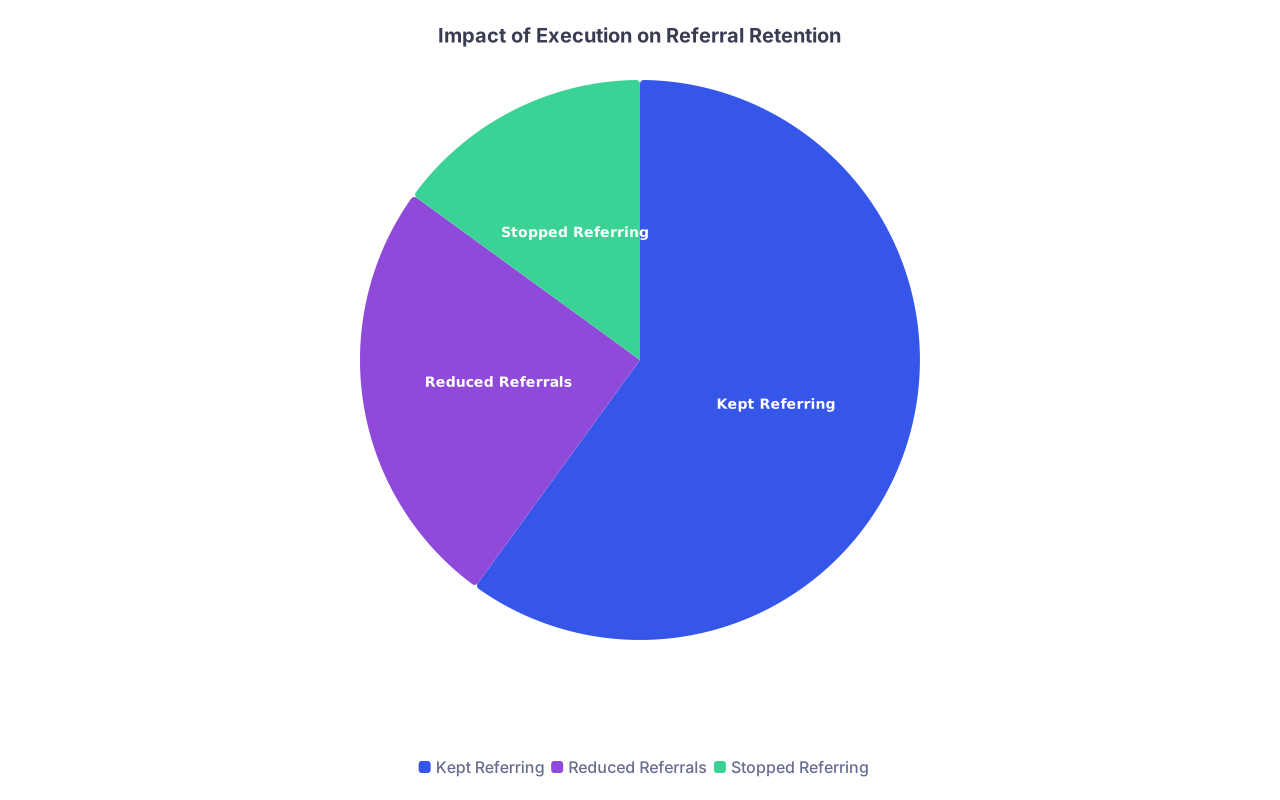
| Category | Value |
|---|---|
| Kept Referring | 60 |
| Reduced Referrals | 25 |
| Stopped Referring | 15 |
Those “reduced” and “stopped” slices often come from:
- Slow or no communication back
- Patients complaining about access or front-desk behavior
- Perceived disrespect of the PCP’s or other specialist’s role
- Aggressively “stealing” patients for ongoing issues that PCPs wanted to manage
Tighten Your Consultation Loop
Make it boringly consistent:
- New consult seen → note or letter to referrer within 24–48 hours
- Any major decision (surgery, procedure, high-risk med) → direct message or call
- Unclear or contentious case → explicit acknowledgement of their role:
“I discussed this option with Ms. Lopez, but given how well you know her longitudinally I suggested she follow up with you to make the final decision.”
You want the referring physician to think, “I never have to wonder what is happening with my patient once I send them.”
Be Surgical About Scope Creep
This is where a lot of specialists shoot themselves in the foot.
If you start managing everything:
- Routine hypertension, depression, hyperlipidemia, generic chronic issues
- Annual health maintenance that belongs with PCP
- Non-core problems better suited to another specialist
You teach the referrer: “If I send my patient there, I lose them.”
Instead:
- At the end of your note, explicitly state:
- “Primary care to continue management of [A, B, C].”
- “I will limit my role to [D] and will return the patient to you once [condition] is stabilized.”
- In follow-up:
- “I feel we have achieved the goals we set. I recommend follow-up with you as primary, and I am happy to see them again if new issues arise.”
When you do need to keep them longer (e.g., complex oncology, post-op, high-risk follow-up), communicate why and for how long.
6. Use Institutional Platforms Without Becoming Invisible
Do not ignore the institutional referral channels: ED, tumor boards, multidisciplinary clinics, inpatient services. They are power multipliers for high-paid fields.

| Step | Description |
|---|---|
| Step 1 | ED |
| Step 2 | Specialist Clinic |
| Step 3 | Hospitalists |
| Step 4 | Tumor Boards |
| Step 5 | PCP Network |
| Step 6 | High-Complexity Procedures |
Be the Go-To in Multidisciplinary Spaces
If there is a tumor board, valve team, spine board, inflammatory bowel disease conference—show up prepared.
- Be the person who:
- Has imaging reviewed in advance
- Knows the latest guideline or trial relevant to the case
- Offers clear, actionable recommendations
- And afterward:
- Follow up on the plan without being chased.
- Update the primary team and PCP.
Hospital-based clinicians notice. They talk. “Send to Dr. Y, they actually follow through.”
ED and Hospitalist Channels
For many high-paid specialties, ED and hospitalist referrals are the backbone of high-acuity work:
- STEMI, stroke, acute GI bleed, spine emergencies, surgical consults
Your targets there:
- Be reachable. Rapidly. Reliably.
- Give ED / hospitalists very clear “call me for X, Y, Z” rules.
- Create simple order sets or referral order templates with your name attached if your system allows it.
And—and this is big—after a complex inpatient case, send a short email or message:
“Thanks for looping me in on the case of Mr. K. I appreciated your thorough workup and clear handoff. If similar cases come up, you can always reach me directly at [contact].”
You are building a memory trace: your name → good experience → send more.
7. Protect and Scale the Network Over Time
Once you have referrers, you must protect them. And carefully grow.
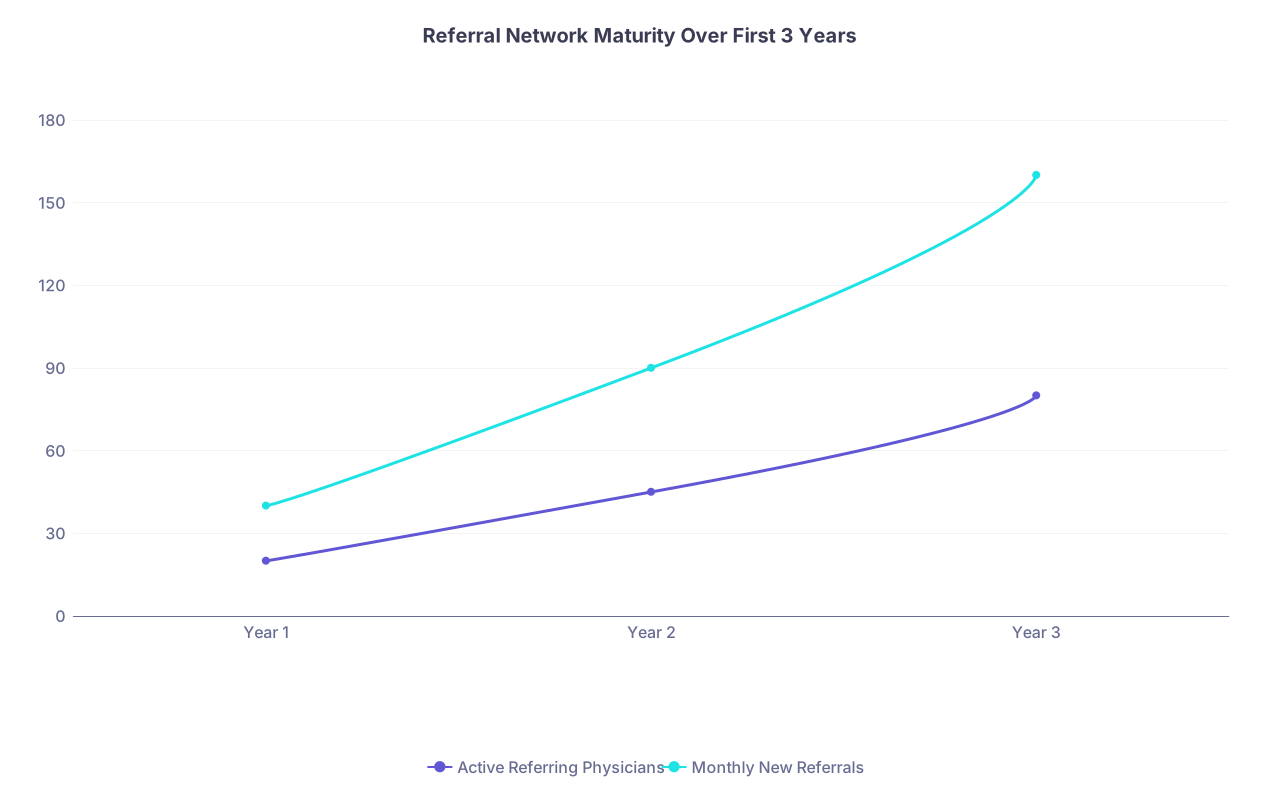
| Category | Active Referring Physicians | Monthly New Referrals |
|---|---|---|
| Year 1 | 20 | 40 |
| Year 2 | 45 | 90 |
| Year 3 | 80 | 160 |
Track Your Data Like a Business, Not a Hobby
If your group has a decent EMR or analytics tool, use it. If not, start manually.
Track:
- Who is referring (name, specialty, clinic)
- Volume per referrer, per month/quarter
- Type of cases you are getting from each source
- Drop-offs: referrers who used to send and then slowed or stopped
Then actually act on it:
- For top 10–20 referrers:
- Reach out 1–2 times per year. Gratitude, quick update, offer of help.
- For drop-offs:
- Carefully ask: “I noticed I have been seeing fewer of your patients lately. Is there anything I could do differently to be more helpful to you and your practice?”
- Sometimes they changed systems. Sometimes they were annoyed by a single bad patient experience. You cannot fix what you do not ask about.
Periodic “Service Check-ins”
Once a year, send a very short, specific survey or ask in conversation:
- “When you send patients to me, do you get the information you need in a timely way?”
- “Is it easy for your staff to schedule or reach my office?”
- “Are there any types of cases you are not sure whether to send my way?”
Then, change things accordingly. And tell them what you changed.
8. Specialty-Specific Angles in High-Paid Fields
You wanted concrete, not generic. So here are some targeted plays by specialty.
Orthopedic Surgery (Sports / Joints / Spine)
- Primary sources: PCPs, sports med, ED, rheum, neurosurgery, pain clinics, PT/OT.
- Play:
- Offer rapid access for acute injuries (ACL tears, rotator cuff, fractures).
- Build tight relationships with PT groups. They influence surgeons patients choose.
- For joints: cultivate PCPs managing severe OA who need reliable surgeons with good communication about perioperative risk.
Interventional Cardiology
- Primary sources: PCPs, ED, hospitalists, nephrology, endocrinology, cardiac surgery.
- Play:
- Promise and deliver fast access for chest pain and high-risk CAD.
- Knock out clean, clear cath reports; PCPs and hospitalists hate deciphering vague notes.
- Educate PCPs on when to refer early for valve disease, PAD, complex lipid issues. Short, focused teaching sessions go far.
Gastroenterology / Advanced Endoscopy
- Primary sources: PCPs, oncologists, surgeons, rheumatology (IBD), bariatrics, hospitalists.
- Play:
- Be the “no drama” solution for GI bleeding, complex polypectomies, ERCP/EUS.
- Very clear guidance to PCPs about when to send for dyspepsia, anemia, abnormal imaging.
- Rapid turn-around on pathology and next-step plans.
Dermatology (Procedural / High-Value)
- Primary sources: PCPs, oncology (esp. melanoma), rheumatology, pediatrics, OB-GYN, plastics, ENT.
- Play:
- Priority access for suspected melanoma, atypical lesions, severe psoriasis / biologic-eligible disease.
- Provide crisp, image-rich reports that PCPs can reference.
- Do not hoard routine chronic disease follow-up if the PCP wants it back.
Plastic Surgery (Reconstructive / Cosmetic-Adjacent)
- Primary sources: Trauma surgery, ENT, derm, breast surgeons, oncologists, OB-GYN, PCPs.
- Play:
- For cancer reconstruction (breast, head and neck), make oncologists and surgeons look like heroes by delivering excellent functional and cosmetic results and updating them fast.
- For trauma and hand: ED and ortho/hospital trauma teams should have a one-call route to you.
- For cosmetic cross-over patients from PCPs or derm, be absolutely respectful of the referring clinician’s relationship.
9. If You Are Still in Training: What You Can Do This Month
You may feel like all this is “future attending” talk. It is not. You can start now.

Here is a 30-day action plan, even as a resident or fellow:
Week 1: Map and Observe
- On your current rotation, list 10 physicians from other services you respect and might one day want as referrers.
- Pay attention to how consults are handled. Who calls back fast? Who communicates clearly? Copy the good habits.
Week 2: Improve Your Consult Game
- For every consult you do, call the primary team personally with:
- Your impression
- The immediate plan
- What they should expect next from you
- Ask once or twice: “When you call our service, what makes it a good or bad experience for you?” Learn from the answers.
- For every consult you do, call the primary team personally with:
Week 3: Build Two Micro-Relationships
- Choose two attendings from another specialty who seem like potential future referrers.
- After a good case, say something like:
- “I am leaning toward [subspecialty]. Down the road I would like to be someone clinicians like you feel comfortable sending patients to. If you ever have feedback on how I manage these consults, I would appreciate it.”
Week 4: Start Your Network File
- Open a simple document.
- Add:
- Names
- Specialty
- Where they practice
- What kinds of patients they see
- Any comments like “loves detailed call-backs,” “hates unnecessary workups,” etc.
- This is the first draft of your future referral network map.
Do not wait for some magical “networking moment.” This is the work.


