

The idea that “lifestyle specialties” are automatically lower paid is outdated, lazy, and often flat-out wrong.
You’ve probably heard the script: if you care about work‑life balance, you accept less money. If you want to get paid, you sacrifice your life to surgery, ortho, or procedural fields. That was never fully true, and the more recent data make it look even dumber.
Let me walk through what the numbers actually show in the US: compensation, hours, and how certain so‑called “lifestyle specialties” quietly out‑earn some of the traditional “big money” fields once you factor in reality instead of hallway folklore.
Where the myth came from (and why it’s stuck in your head)
The “lifestyle = low pay” myth was built on a couple of partial truths from 10–20 years ago.
Historically, cognitive outpatient fields like pediatrics, family medicine, and general internal medicine did (and still do) pay less than heavy procedural or surgical specialties. At the same time, some of those cognitive fields had relatively more predictable hours and fewer emergencies. So the story became: either you make money or you have a life.
That story got generalized way too far. Preclinical students started lumping everything with “better hours” into a single bucket called “lifestyle specialties” and assuming they all paid like outpatient peds. Huge mistake.
Because in that same era, a handful of fields quietly blew up in compensation while keeping excellent schedules:
- Dermatology
- Radiology
- Anesthesiology
- Ophthalmology
- Some outpatient subspecialties (e.g., allergy/immunology, certain GI/heme-onc setups)
These are not fringe examples. They’re consistently near the top of income lists.
The myth persists because students and early residents mostly see:
- Academic salaries
- Training years (not true attending life)
- The loudest complainers in each specialty
What you rarely see as a student: the private group radiologist who works 4 days a week and makes over $600k, or the dermatologist who sees 25–30 patients a day, no nights, and brings in $500k+ with procedures.
What the money and hours actually look like
Let’s get concrete. Recent surveys (think Medscape and large MGMA‑type data) aren’t perfect, but they’re good enough to destroy the simplistic myth.
At a broad level:
- Top‑earning specialties almost always include: orthopedics, cardiology, gastroenterology, dermatology, radiology, plastic surgery, urology, anesthesiology.
- Lowest‑earning specialties: pediatrics, family medicine, general internal medicine, psychiatry (though psych has risen fast), endocrinology, infectious disease, rheumatology.
Now look at work hours. A lot of the supposedly “cush” specialties are not working 80‑hour weeks. Far from it.
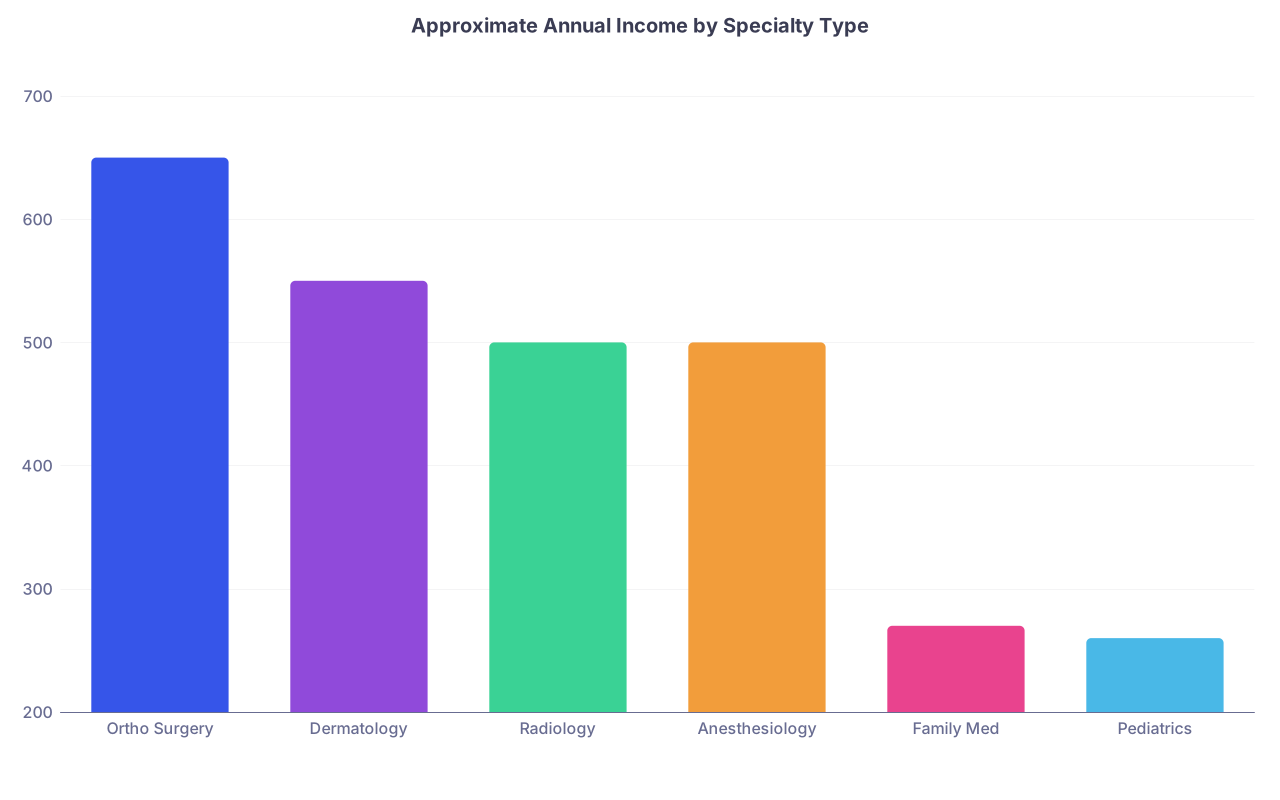
| Category | Value |
|---|---|
| Ortho Surgery | 650 |
| Dermatology | 550 |
| Radiology | 500 |
| Anesthesiology | 500 |
| Family Med | 270 |
| Pediatrics | 260 |
These are ballpark attending numbers in thousands of dollars per year, obviously with huge variation by region, practice type, and seniority. But you see the point: three of those historically labeled “lifestyle” (derm, rads, anesthesia) are sitting right under ortho in raw dollars.
Now look at hours per week, roughly:
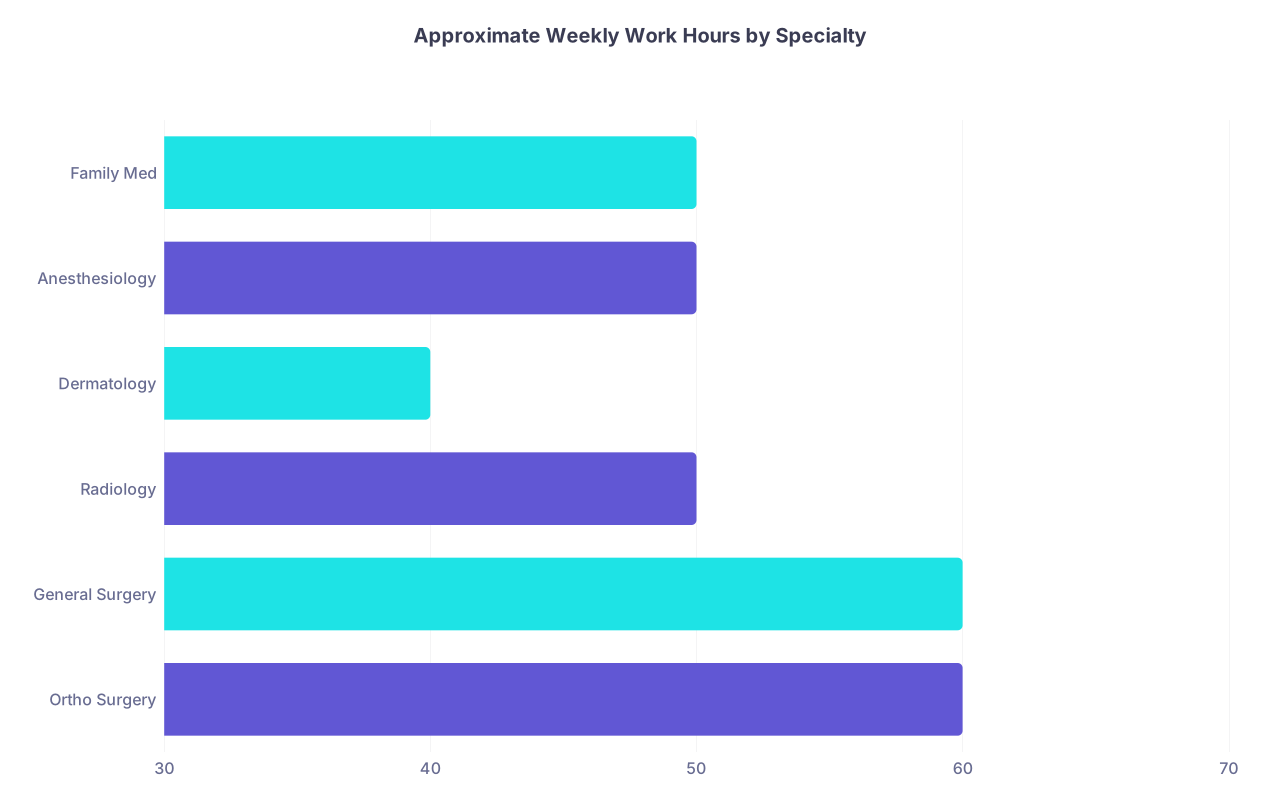
| Category | Value |
|---|---|
| Ortho Surgery | 60 |
| General Surgery | 60 |
| Radiology | 50 |
| Dermatology | 40 |
| Anesthesiology | 50 |
| Family Med | 50 |
You’re not seeing 70–80s here for the lifestyle specialties. Many private practice derms are under 40 hours. Plenty of radiologists and anesthesiologists hover near 45–50 structured hours with very manageable calls depending on setup.
So the blanket: “Lifestyle specialties are lower paid” is already dead on impact. Some of them sit right in the highest‑paid tier while working fewer hours than surgery or interventional subs.
The real trade‑off: hours, intensity, and leverage
Here’s the uncomfortable reality the myth tries to hide:
You don’t get paid for “suffering.” You get paid for leverage.
Leverage = how much billable value you can produce per unit of time and how scarce your skill set is in your market.
That’s why:
- Dermatologists can do high‑RVU procedures (biopsies, excisions, cosmetics in some settings) rapidly in a clinic environment.
- Radiologists can read high volumes of studies without the time sink of family meetings, primary care problem lists, or social work.
- Anesthesiologists can manage multiple rooms, high‑value surgeries, and procedures in blocks of scheduled time.
Contrast that with outpatient general internal medicine: it’s complex, emotional, and cognitively challenging, but it’s not valued well by payers. Long visits, lots of charting, and many issues per patient that don’t directly produce RVUs.
So no, you’re not choosing between “paid” and “lifestyle.” You’re choosing between:
- High‑leverage, often procedural or interpretation‑based fields that can be structured for good hours or bad hours depending on how you set up your career.
- Lower‑leverage, cognitive, relationship‑based fields that are vital but undervalued in US reimbursement.
The smartest move is not “chase lifestyle” or “chase money.” It’s: choose a field where you can create leverage, then shape your practice model.
Lifestyle specialties that absolutely are high‑paid
Let’s be direct. These are routinely lifestyle‑friendly and often among the highest paid, if you choose the right practice setting.
Dermatology
This one alone destroys the myth.
Clinic‑based, predictable hours, almost no nights, very limited emergencies. In many markets, private practice dermatologists clear $450k–$700k+, sometimes more if they add cosmetics or own a practice.
Residents always know someone who jokes: “Derm is two things—hard to get into and hard to retire from.” You don’t hear that about low‑paid fields.
Radiology
Call can be real, yes. Nights exist, yes. But relative to surgical fields, radiology can be structured as:
- Daytime only jobs (with telerads covering nights)
- 4‑day weeks
- Shifts that end when they end—no “I got called back for an admission”
And for that, incomes in the $450k–$600k+ range are common in many groups. It’s not the old “radiology is dying from telerads” doom story people were pushing a decade ago. The shortage has flipped that narrative in many regions.
Anesthesiology
Again, depends on setup. The in‑house trauma/anesthesia group at a huge center has a very different life from the ambulatory surgery center anesthesiologist doing ortho scopes and cataracts.
But across the board, anesthesia remains:
- High compensation
- Schedule‑able, block‑based work
- Often with options to trade money for lifestyle (drop calls, go part‑time, or do outpatient‑only)
It’s not unusual for anesthesia to sit shoulder‑to‑shoulder with GI, cards, or urology on income surveys.
Ophthalmology
Clinic plus OR. Mostly elective, predictable. Emergencies happen but not at the frequency or life‑and‑death chaos of general surgery or trauma.
Cataract surgery is one of the most common operations in the country and highly refinable. Private ophtho incomes are often in the high $300k–$500k+ range, with some practice owners and sub‑specialists doing much better.
The flip side: low‑pay but not always lifestyle‑friendly
Here’s where the myth looks especially dumb: some of the lowest paid specialties are not cushy at all.
Think of:
- Inpatient academic pediatrics: busy services, night shifts, emotionally heavy, and still relatively low pay.
- Infectious disease: complex cases, often high call burden for consults, but one of the lowest compensated IM subs.
- Endocrinology or rheumatology in certain systems: high cognitive load, clinic‑heavy, and not rewarded proportionally.
And general internal medicine hospitalists: more money than primary care, yes, but 7‑on/7‑off with 12+ hour days is not what most people mean by “lifestyle.” Especially on a high‑acuity service with endless admits.
So no, “lower paid” does not automatically mean happy, chill, or balanced.
Where lifestyle really comes from (and why students misjudge it)
Lifestyle is not mainly about specialty label. It comes from three much less sexy, more adult realities:
- Your practice setting
- Your region and market
- Your boundaries and career choices
I’ve seen a general surgeon who works 4 days a week in a surgicenter, no trauma, no nights, making mid‑six figures and going home for dinner every day.
I’ve also seen outpatient psychiatrists who are drowning in high‑acuity, under‑resourced patients, documentation, and insurance fights, working more hours than some orthopedic attendings.
Same “specialty.” Completely different lives.
Here’s where the myth misleads you the most: it treats residency life as if it reflects attending life.
It doesn’t.
Radiology residency can be brutal with call and nights; anesthesia residents often feel destroyed by long OR days. Meanwhile, outpatient FM residents sometimes have decent schedules. Students look at that snapshot and conclude: radiology/anesthesia = rough lifestyle, FM = cush. Then they hit attending life and realize radiology/anesthesia rachets way up in control and pay, while outpatient FM hits the system’s volume/lower‑pay ceiling hard.
If you’re making a long‑term choice based on residency hours alone, you’re optimizing for a 3–7 year window at the cost of the 30–40 years after that. Terrible trade.
Dollars per hour: a better metric than raw income
If you want to actually compare “lifestyle vs pay,” you look at effective hourly compensation, not just annual salary.
Rough example, intentionally simple:
| Specialty | Annual Income (k$) | Hours/Week | Weeks/Year | $/Hour |
|---|---|---|---|---|
| Ortho Surgery | 650 | 60 | 48 | 226 |
| Dermatology | 550 | 40 | 46 | 298 |
| Radiology | 500 | 50 | 48 | 208 |
| Anesthesiology | 500 | 50 | 48 | 208 |
| Family Medicine | 270 | 50 | 48 | 112 |
Again, these are rounded. Real life is messier.
But look at that derm row. Fewer hours. Fewer weeks. Still very high income. Dollars per hour are excellent. That’s why people fight so hard to get into it.
So if your goal is “good money and a real life,” you’re not restricted to one side of a clean pay/lifestyle trade‑off. Several specialties give you both, if you’re competitive enough to match and intentional enough in how you structure your career.
How to think about “lifestyle specialties” if you care about money
You’re in med school or early residency. You’re hearing 12 different opinions a day. Here’s a more evidence‑based way to think instead of swallowing the myth.
First, separate three groups in your head:
- High‑pay, high‑intensity (e.g., ortho, neurosurgery, CT surgery, interventional cards)
- High‑pay, moderate‑intensity with structurable lifestyle (rads, derm, anesthesia, ophtho, some GI/cards setups)
- Moderate‑ to low‑pay, variable‑intensity (FM, peds, psych, IM subs like ID/endocrine)
Then ask:
- In this specialty, can I control my nights, weekends, and call by choosing a different practice model (private vs employed, hospital vs outpatient, academic vs community)?
- What do high‑earning physicians in this specialty actually do all day? Is that work tolerable or enjoyable to me?
- What does the best‑case look like in this specialty, not just the worst horror story?
Stop asking, “Is this a lifestyle specialty?” Ask, “In this field, what levers exist to trade money for time or time for money, and do I like the underlying work?”
You can be a low‑volume concierge internist making good money with fantastic hours. You can also be a burnout‑level anesthesiologist covering multiple hospitals with brutal calls. The specialty didn’t “give” them their lifestyles. Their practice models did.
A quick reality check on competitiveness
Here’s the piece everyone conveniently omits in the lifestyle discussion: the market knows which specialties hit the money‑plus‑lifestyle sweet spot. They’re fiercely competitive.
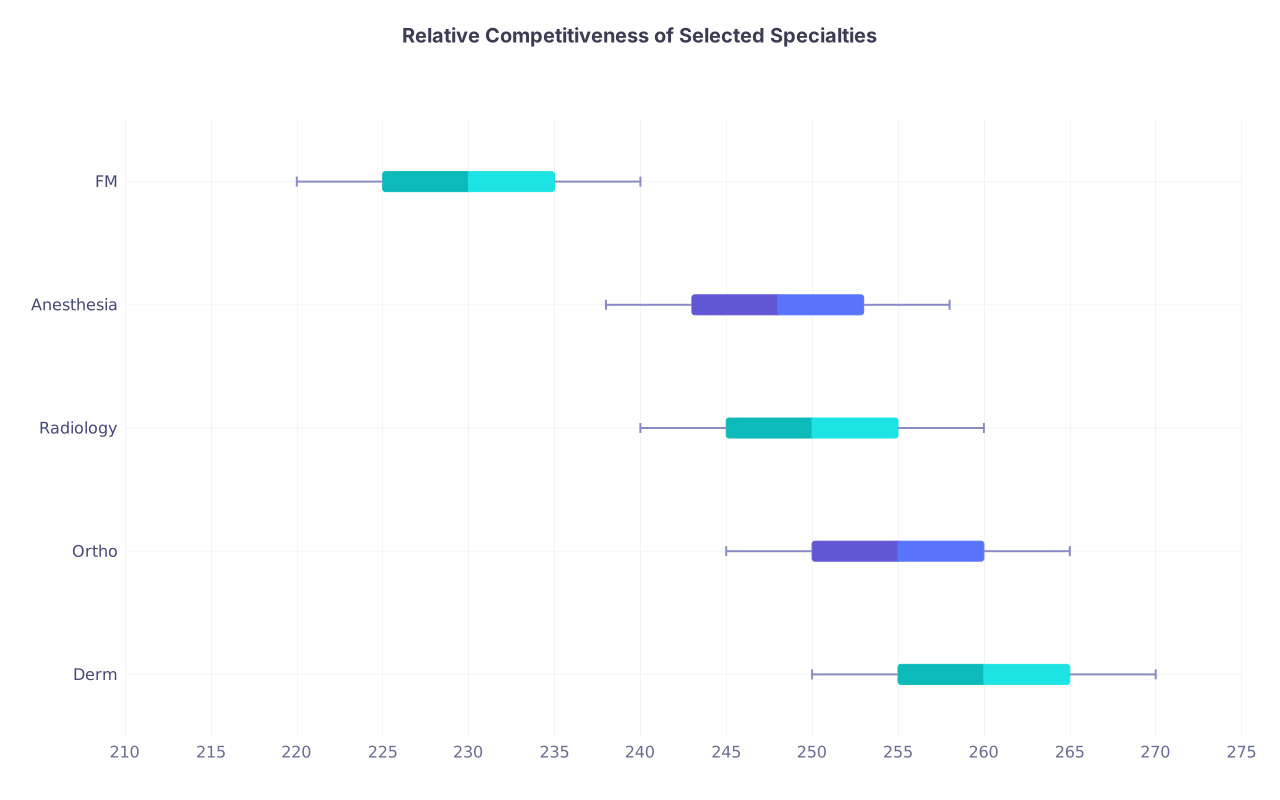
| Category | Min | Q1 | Median | Q3 | Max |
|---|---|---|---|---|---|
| Derm | 250 | 255 | 260 | 265 | 270 |
| Ortho | 245 | 250 | 255 | 260 | 265 |
| Radiology | 240 | 245 | 250 | 255 | 260 |
| Anesthesia | 238 | 243 | 248 | 253 | 258 |
| FM | 220 | 225 | 230 | 235 | 240 |
Those Step/COMLEX ranges are illustrative, but the pattern is real: derm, ortho, and rads sit in the top tier of competitiveness. High score expectations, heavy research, lots of audition rotations.
So when someone in the lounge shrugs and says, “Yeah, derm is lifestyle but low‑pay compared to ortho,” what they’re really doing is retrofitting narrative to hide the fact they didn’t or couldn’t gun for it. It’s ego protection.
Don’t base your career on someone else’s rationalizations.
The bottom line: what the data actually say
Let’s strip this down.
“Lifestyle specialties” as a monolithic group is a fake category. Some (derm, rads, anesthesia, ophtho) are among the highest paid specialties while offering excellent controllable hours. Others (FM, peds, some psych/IM subs) are genuinely lower paid despite variable lifestyles.
Pay vs lifestyle is not a simple see‑saw. High leverage, procedural or interpretation‑heavy specialties can deliver both good money and good hours if you pick your practice setting wisely.
Your long‑term lifestyle will come far more from practice model, boundaries, and negotiation than from the name of your specialty on a badge.
That’s the reality. The “lifestyle = low pay” myth just lets people feel better about not understanding how the system actually pays physicians. Don’t be one of them.


