It is 3:17 a.m. Your phone is buzzing so hard it has slid halfway off the bedside table. You have been asleep for 22 minutes. Again. You fumble for it, accept the call, and before you can sit up fully someone is already saying, “Doctor, we need you here now.”
This is not some unusual disaster night. This is your job. Your very normal Q3 home call that “wasn’t that bad” when you ranked the program. The job that looked phenomenal on MGMA and Doximity salary reports. The “high-paying specialty” your classmates envied you for matching into.
This is the part nobody really made you look at: the call.
You chose big numbers. You did not truly understand call burden. That is the big mistake.
Let me walk you through how people get trapped here, specialty by specialty, and what you need to look for before you sign up for a lucrative but brutal life.
The Seduction of “Highest Paid” Without Reading the Fine Print
People love rankings. “Top 10 highest paying specialties.” “Average salary by specialty.” You have seen the charts.
The problem: those charts almost never show the cost of that income in nights, weekends, burnout, divorce, or missed life.
Here is where I see residents and fellows go wrong:
- They focus on base salary and maybe a bonus structure.
- They completely ignore:
- Call frequency
- Call intensity
- In-house vs home call
- Post-call expectations
- Backup / cross-cover structure
- How many people share the call pool
- They believe phrases like:
- “Home call is pretty chill.”
- “You can sleep most nights.”
- “Average 1–2 calls per night” (which is already awful, by the way).
Then 6 months into their first attending job they are Googling “nonclinical jobs for physicians” at 4 a.m. between consults.
If you remember nothing else: money numbers mean almost nothing unless you place them next to call burden and lifestyle.
The Reality Behind High-Paying Specialties: Call Is the Tax
Let us look at some of the usual “highest-paid” suspects and the common traps. I am painting with a broad brush here, but the patterns are real.
| Specialty | Typical Call Risk | Common Trap |
|---|---|---|
| Neurosurgery | Very high, intense | Q2–Q4, true emergencies all night |
| Orthopedic Surg | High, variable | Trauma coverage, post-op complications |
| Cardiology | High, often brutal | STEMI call, nights + weekends |
| GI | Moderate–high | GI bleeds, ERCP emergencies |
| OB/GYN | High, lifestyle killer | L&D never sleeps |
| Radiology (IR) | Moderate–high | On-call procedures at all hours |
Neurosurgery: “$900K” Without Reading the Asterisk
Neurosurgery offers some of the highest earning potential. People see:
- Base: $700K+
- Potential: $900K–$1M with RVUs
But they miss:
- Call pool of 3–4 surgeons covering:
- All cranial trauma
- Spinal emergencies
- Post-op complications
- Nights where:
- You are operating from 8 p.m. to 4 a.m.
- Then expected in clinic at 7:30 a.m.
- No protected post-call day or only “use your judgment” (translation: good luck).
The mistake: thinking “only Q3 call” is fine because you did Q4 trauma during residency and survived. Residency is finite. Cramming misery into a few years is different from choosing that schedule for 20–30 years.
Orthopedic Surgery: Trauma on the Menu
Orthopedic surgeons in private practice, especially with trauma, can earn very well. But:
- Level I trauma center + small group = constant call.
- “Home call” that:
- Turns into multiple middle-of-the-night trips for open fractures.
- Includes being called for every questionable “possible septic joint at 2 a.m.”
- “You can sleep post-call if you are wiped” is often fantasy when the schedule is packed, and admin wants RVUs.
The common mistake: hearing “we get paid well for trauma call” and not calculating what that means yearly in actual nights sacrificed.
Cardiology: STEMI Pager = Handcuffs
Cardiology consistently ranks near the top in compensation. Interventional and EP are especially lucrative. What people forget:
- STEMI call is a lifestyle unto itself.
- You will:
- Be 30 minutes or less from the hospital, always.
- Drop everything when the pager goes off.
- Get called repeatedly on some nights.
- In many markets:
- Small groups share large coverage areas.
- Hospitalists lean on cardiology heavily at night.
- Post-call clinic expectation is still full.
The trap: “$600K+ plus bonus for STEMI call” sounds great until you realize you have never truly turned your phone off in 3 years.
Gastroenterology: Bleeds Do Not Respect Your Dinner Plans
GI is another high-earner, especially with procedures. What residents underestimate:
- GI bleeds show up at:
- 11 p.m.
- 2 a.m.
- 4:30 a.m. (right before change of shift).
- Smaller groups might have:
- 3–5 GI docs covering multiple hospitals.
- One person on “bleed call” most nights.
A big GI mistake: choosing the group with slightly higher RVU bonuses but tiny call pool, instead of the group with lower pay but a stronger call-sharing arrangement or nocturnist coverage.
OB/GYN: The Call That Never Stops
OB/GYN often does not crack the top couple of spots on salary lists, but some high-volume OB-heavy practices can pay very well. At a terrible price.
- Labor does not stop at 5 p.m.
- In private practice setups:
- You carry your own patients’ calls.
- You may be up all night, then still have your full clinic.
- Partners can be resentful if you push for better call structures.
Massive OB/GYN mistake: underestimating the mental toll of never being off the hook for your pregnant patients, and chasing a high RVU salary “with great bonus potential.”
The Numbers Lie If You Ignore Nights, Weekends, and Post-Call
You would think physicians, of all people, would be good at reading the small print. They are not. I have seen very smart residents fall into the same traps again and again.
You must adjust salary by call burden. Otherwise, you are comparing fantasy to reality.
Think about income per truly off day, not raw dollars.
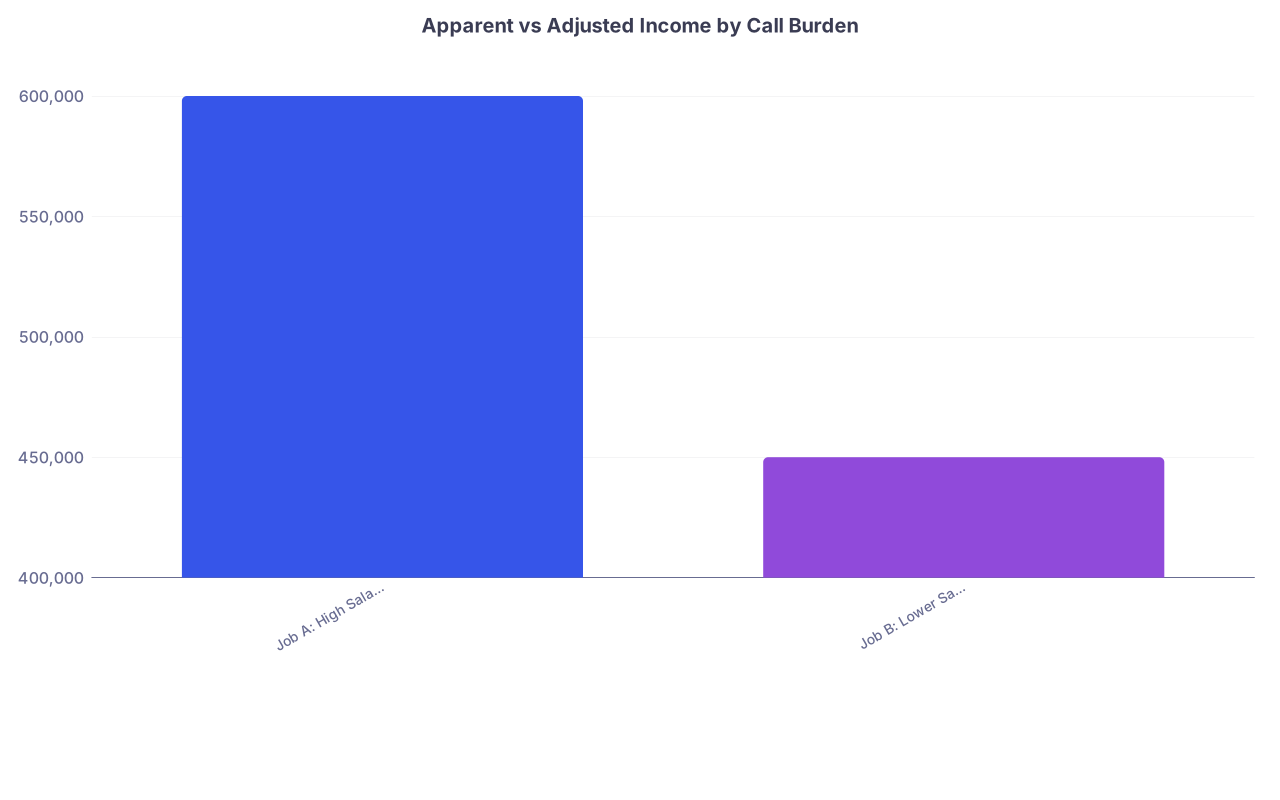
| Category | Value |
|---|---|
| Job A: High Salary, Heavy Call | 600000 |
| Job B: Lower Salary, Light Call | 450000 |
On paper:
- Job A: $600K, Q3 call, frequent overnight work
- Job B: $450K, Q8 call, light nights, post-call protection
If Job A steals:
- 1–2 nights of real sleep every week
- Many weekends
- Post-call days that are still full clinic / OR
And Job B gives:
- True days off
- Real post-call recovery
- More predictable evenings
Which one is actually “higher paying” per unit of sanity and health?
You are not a robot generating RVUs. You have a nervous system. There is a ceiling to how long you can function under chronic sleep disruption before something breaks: your health, your relationships, or your clinical performance.
Call is not just “a few phone calls”:
- It is chronic interrupted sleep.
- It is continuous hypervigilance (“will my phone go off?”).
- It is inability to leave town spontaneously.
- It is constant low-grade stress about the pager.
Stop pretending that is free.
The Nasty Details of Call Burden People Skip Over
Applicants routinely fail to drill down on the details that matter. You need to be annoyingly specific when you evaluate call.
Here is what gets missed:
1. Frequency vs Intensity
Two jobs can both be “Q4 call” and feel completely different.
- Job X:
- Q4 home call
- 1–2 calls per night, most manageable by phone
- Rare 3 a.m. trips in
- Job Y:
- Q4 home call
- Multiple middle-of-the-night trips
- ICU-level emergencies
- You are basically working a second shift.
If you only ask “how often is call?” and not “what actually happens on call?” you are blind.
2. In-House vs Home Call
People love to dismiss home call with, “At least you are not in-house.” That is lazy thinking.
For some specialties and hospitals, home call is:
- 10–15 phone calls per night
- Multiple “you need to come in now” events
- Constant chart-checking from bed
You need to know:
- How often are you physically coming in?
- How long do you stay when you come in?
- Do you get post-call relief if you were up all night?
3. Post-Call Expectations
This one ruins a lot of young attendings.
You must ask clearly:
- Are post-call days guaranteed off?
- Or “use your judgment” (code for: work unless you are in the ICU)?
- Does the schedule actually support being off, or will you be canceling a full clinic if you go home?
A brutal but common arrangement:
- Take call.
- Operate or manage high-acuity problems all night.
- Still have:
- Full clinic the next morning.
- Scheduled procedures.
- Pressure to not cancel because of “patient access” and RVUs.
You get your big salary. You also get a 20-year slow motion crash.
4. Call Pool Size and Coverage
One of the worst things you can overlook:
- How many people share the call?
- Are there locums or hospitalists / nocturnists that help?
- Are you covering multiple facilities?
Small group + high-acuity specialty + multiple hospitals = heavy call slavery, even if they dress it up as “great earning potential.”
How to Actually Evaluate Call Burden Before You Sign
Let me be blunt: if you are not actively interrogating call when you look at a high-income job, you are gambling with your future.
Use this mindset:
- Salary is the opening bid.
- Call is the hidden surcharge.
- You do not accept the number until you see the surcharge.
Here is a practical, non-fluffy way to approach it.
Step 1: Get Real Numbers, Not Vibes
During interviews and second looks, ask:
- “How many nights per month am I on call, realistically?”
- “Of those nights, how many result in me coming in to the hospital?”
- “On a typical call night, how many calls or pages do you get?”
- “How often are you still working or charting at 2–3 a.m.?”
- “What percentage of call nights allow at least 5 uninterrupted hours of sleep?”
If anyone answers only in vague adjectives (“pretty light, not too bad”), push:
- “Can you put a number to that based on last month or last quarter?”
Step 2: Ask About the Worst Weeks, Not the Best
Nobody suffers during the lightest weeks. The breaking point comes during the worst stretches.
Ask:
- “What does your worst call month look like?”
- “How often do people here feel they are at their limit with call?”
- “Have any partners left in the last 3–5 years solely because of call?”
If they dodge the last question, that is an answer.
Step 3: Talk to People Without the Script
You will get a polished story from leadership. You want the hallway version.
Find:
- The youngest partner.
- The one who looks tired.
- The one not on the official interview itinerary.
Ask them privately:
- “If you could go back, would you take this job again, given the call?”
- “How has call affected your family, sleep, and health?”
- “What did you underestimate the most about call here?”
Listen to the hesitation more than the words. People will soften their criticism in front of strangers, but the pause before “It’s…manageable” tells you plenty.
The Psychological Trap: You Think You Can “Tough It Out”
This is the resident mindset bleeding into your attending life:
“I survived 80-hour weeks. I can do anything.”
Wrong frame.
Residency is a time-limited sprint. You can white-knuckle your way through 5 years of terrible call knowing there is an end date.
Attending life is open-ended. There is no graduation from your own job. If you choose a high-paying, brutal-call position, that is not a phase. That is your life design.
Common delusions I have seen over and over:
“I will do the crazy call for 5–7 years, then switch to something lighter.”
- Reality: By the time you can switch, you are burnt out, locked into a mortgage, kids in school, and golden-handcuffed to the income.
“I will pay off loans fast then go part-time.”
- Reality: Groups often do not love partners going part-time. Your call share may not even change.
“I can handle sleep deprivation. I always have.”
- Reality: Chronic sleep disruption in your 40s and 50s is not the same as in your 20s. Your body will disagree with your ego.
Do not build a life plan based on the assumption that you will be the outlier who thrives forever under high-intensity call.
Comparing Two Jobs the Right Way
Let me give you a very real-type scenario.
You are finishing a cardiology fellowship. You have two offers.
Job 1: Big Money Private Group
- Base: $650K after partnership.
- Call: Q4 STEMI, covering 3 hospitals.
- Home call but:
- Average 2–3 STEMIs / night when on.
- Constant phone calls from hospitalists.
- No guaranteed post-call day off.
Job 2: Academic / Large Group Hybrid
- Base: $480K with solid benefits.
- Call: Q8 STEMI.
- Larger call pool, fellows help with nights.
- Reasonable post-call relief; lighter clinics.
Most fellows I have seen early on are drawn like moths to Job 1. “I will just grind, make bank, pay off loans.”
5–7 years later, who is more likely to:
- Still like their specialty?
- Still have a functioning marriage?
- Still have normal blood pressure?
- Still be able to focus in the cath lab?
Stop pretending income is a one-dimensional number. It is not. It is purchased with time, sleep, presence with family, and long-term health.

| Step | Description |
|---|---|
| Step 1 | Job Offer |
| Step 2 | Ask specific questions |
| Step 3 | Compare to lighter call option |
| Step 4 | Assess if lifestyle fits values |
| Step 5 | Reject or negotiate |
| Step 6 | Consider with caution |
| Step 7 | Know exact call details |
| Step 8 | High salary with heavy call |
| Step 9 | Long term sustainable |
Hidden Red Flags in Contracts and Interviews
Hospital and group recruiters will not highlight call problems for you. You need to look for landmines.
Common red flags:
- “Reasonable call” with no numbers attached.
- “We all pitch in” in a small group covering a large area.
- “We are hiring you to help share the call burden”
- Translation: everyone is drowning.
- No explicit post-call policy
- They will say, “Use professional judgment.” That usually means, “We expect you here.”
- Noncompete clauses in markets with only a few groups:
- If you hate the call, you may literally have to move cities or states to escape.
Watch out for compensation structures where:
- A big chunk of pay relies on:
- Night procedures.
- Call-related RVUs.
- The culture quietly pressures everyone to say yes to extra call for money.
You will think you can resist. Then someone waves an extra $5K per call weekend in your face when you are paying daycare for two kids, and suddenly you are taking Q2 call.
How Different Personalities Misjudge Call Burden
Not everyone underestimates call in the same way.
The grinder
- Believes they can outwork everyone.
- Underestimates cumulative fatigue.
- Risks catastrophic burnout or serious medical error.
The anxious perfectionist
- Hypervigilant about every patient on call.
- Does not sleep even when the phone is quiet.
- Ends up in a near-constant state of exhaustion.
The optimist
- Takes every reassurance at face value.
- Does not ask hard questions.
- Only realizes the problem when they cannot back out.
Know who you are. If you are extra conscientious or anxious, heavy call hits you harder.
What To Do Instead: A Smarter Way to Chase “High Pay”
You do not have to avoid high-paying specialties. But if you choose them, be smart. Ruthless, even.
Here is what “smart” looks like:
- Rank programs and jobs on call burden as heavily as on salary.
- Prefer larger groups or systems where call is:
- More evenly spread.
- Backed by nocturnists, APPs, or fellows.
- Look for written, enforceable post-call policies.
- Be willing to accept $50K–$150K less per year in exchange for:
- Half the call.
- Real time off.
- Predictable evenings.
And remember: an extra $100K on paper can vanish quickly in:
- Extra childcare because you are never home.
- Health costs from stress and sleep deprivation.
- Divorce, if we are being completely honest.
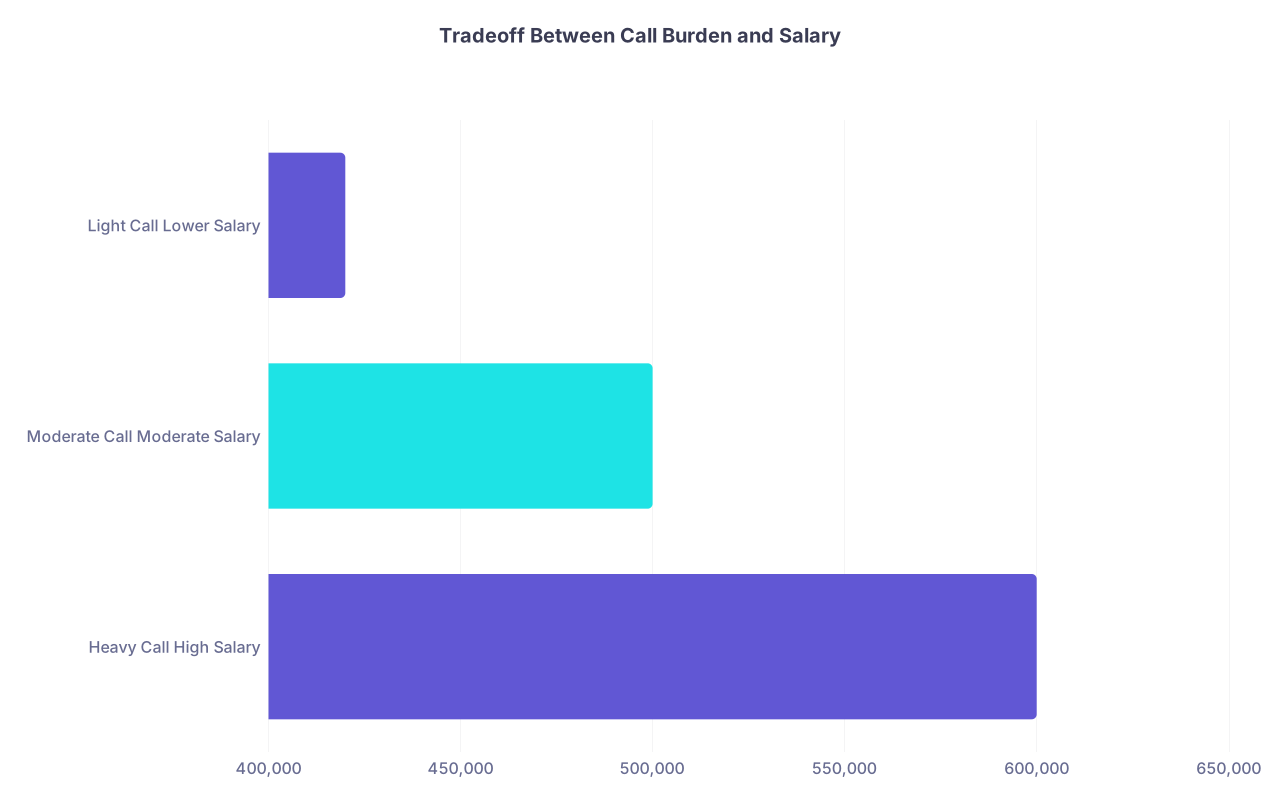
| Category | Value |
|---|---|
| Heavy Call High Salary | 600000 |
| Moderate Call Moderate Salary | 500000 |
| Light Call Lower Salary | 420000 |
The “lower-paying” job with light call often ends up giving you:
- More usable life per year.
- More career longevity.
- More actual joy in practicing medicine.
That is a better deal than it looks on any spreadsheet.
Key Takeaways
- Do not judge high-paying specialties or jobs by salary alone. Always factor in call frequency, intensity, and post-call expectations.
- Vague language about “manageable” or “reasonable” call is a red flag. Demand specific numbers, and talk to the youngest, most honest people in the group.
- A slightly smaller paycheck with lighter, well-structured call often wins over 20–30 years. Your future self will not thank you for trading sleep, health, and relationships for a few extra RVUs.