
What if the extra 2–3 years of fellowship you are about to sign up for actually lowers your lifetime earnings compared with stopping at general practice?
That is not hypothetical. I have watched it happen. Multiple times.
Residents assume: “More specialized = more money.” Programs are happy to let you keep believing that. Fellowship directors sell “prestige,” “complex cases,” “cutting-edge procedures.” What they do not put on the slide deck is: you may be paying six figures per year for the privilege of earning less for the rest of your career.
This is about avoiding hidden financial dead-ends inside otherwise high-paying specialties.
The Core Mistake: Confusing “More Training” With “More Money”
Let me be blunt. There are three recurring errors:
- Assuming any fellowship in a high-paying base specialty must raise income.
- Ignoring the cost of delayed attending-level income.
- Underestimating how non-procedural or low-RVU-heavy niches get underpaid.
Most residents never run the numbers. They look at:
- Base specialty: “Derm is high-paying.”
- Fellowship: “Mohs is competitive and procedural; must be better.”
- Or: “Cards is lucrative; I will sub-specialize to be even more niche.”
Sometimes that logic works. Often it does not. And sometimes it backfires so badly that the best financial move would have been: finish residency and go straight to work.
Before I call out specific fellowships that frequently cap or cut your earning potential, you need a frame:
The 3 Key Questions You Are Not Asking (But Should)
Does this fellowship genuinely increase my billable procedures or RVUs?
Not “prestige.” Not “complexity.” Money. Does it add billable stuff or mostly shift you to consults, conferences, and cognitive work?Will I work more, earn less, or both?
Some fellowships lock you into heavy call, ICU time, or inpatient scut, with salary differences that do not remotely compensate.What is my break-even point on lost attending years?
If you give up 2–3 years of $350–500k attending income to earn $65–80k as a fellow, how many years of higher pay later does it take just to get back to even?
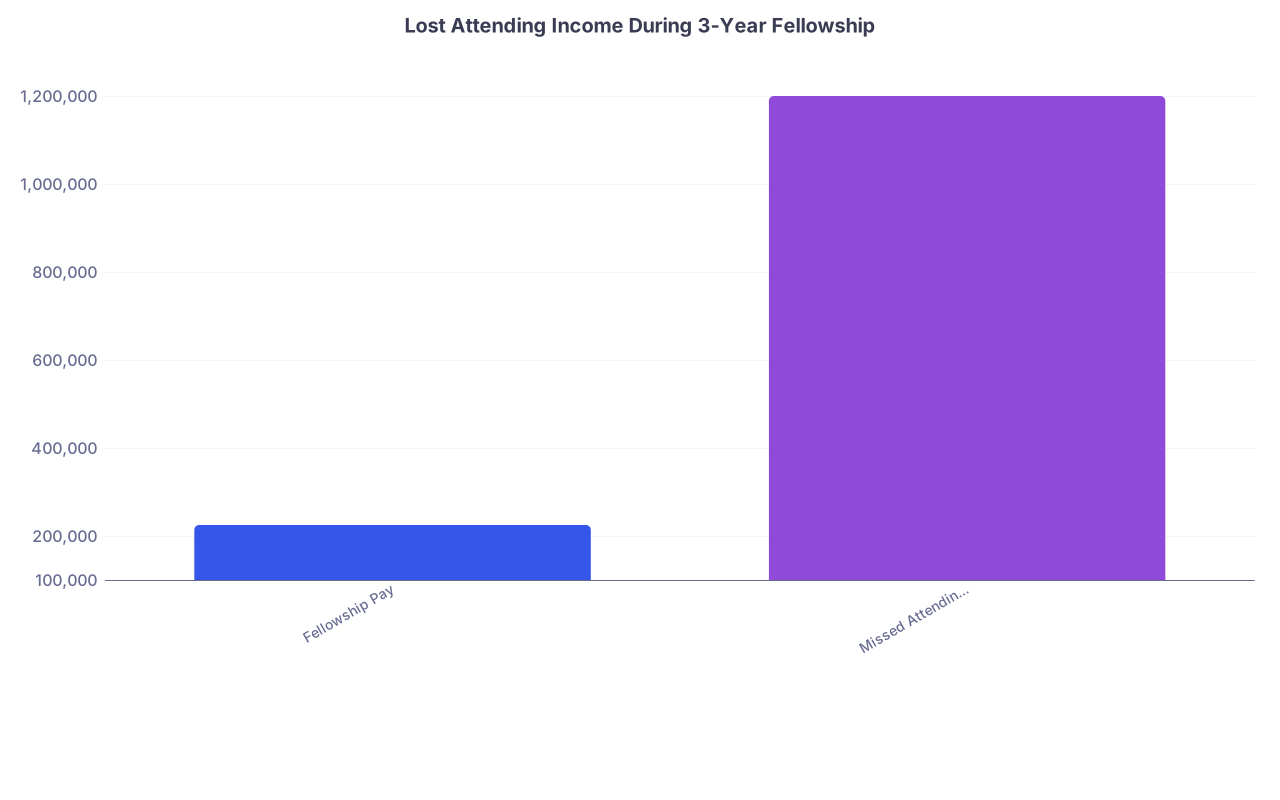
| Category | Value |
|---|---|
| Fellowship Pay | 225000 |
| Missed Attending Pay | 1200000 |
That bar on the right? That is the part nobody wants to stare at.
High-Paying Base Specialties Where the Wrong Fellowship Can Hurt You
Notice the pattern: high-paying specialty at the base, then fellowships that sound impressive but often pay less than the generalist track, or increase effort without proportional compensation.
1. Internal Medicine → Certain Non-Procedural Subspecialties
Internal medicine has two roads:
- Hospitalist / outpatient IM – often $250–350k+ with flexible schedule, moonlighting, and geography leverage.
- Subspecialties – can be huge wins (cards, GI) or subtle financial traps.
Here are fellowships that often do not improve lifetime pay and can even lower it:
a) Endocrinology
Exception: you join a unique private group with insane diabetes volume and ancillary income. That is not most jobs.
Typical reality:
- 2–3 extra years of fellowship at ~$65–75k
- Starting salaries often lower than hospitalist IM
- Heavy clinic volumes, high-complexity patients, lots of non-billable work (messages, prior auths, pump management)
Endocrine is intellectually rich. But if you are doing it because you think “subspecialty = more money,” that is a mistake.
b) Rheumatology (financially mixed, often overestimated)
Rheum can be decent with infusion revenue and smart coding. But look at what actually happens for many:
- Salaries not dramatically higher than strong outpatient IM
- Long visits, complex chronic disease, tons of charting and messages
- Infusion margins tightening in some markets as payors cut rates
If your only driver is “rheum pays more,” you are on thin ice. It might. It might not. And you just spent 2 extra years making less than a hospitalist moonlighter.
c) Infectious Disease
This one is notorious.
- Low salaries relative to other IM subspecialties
- Heavy inpatient consult service, high complexity, burnout risk
- Public/academic funding dependent, lots of “mission” language, less financial leverage
Do it for love of ID, HIV care, global health. Do not do it expecting it to compete with GI or cards. It will not.

2. Anesthesia → Fellowship That Adds Work, Not Pay
Anesthesiology is a classic high-earning base field. You can:
- Finish residency
- Join a private group or locums
- Push $450–600k+ in certain markets
So where do people quietly sabotage themselves?
a) Critical Care Only (Anesthesia-CCM with no high-paying hybrid role)
If you love the ICU, fine. But from a pure financial lens, many anesthesia residents make this mistake:
- 1–2 extra years of fellowship
- Then step into intensivist roles that often pay less than OR anesthesia work
- Night-heavy schedules, holidays, burnout, sometimes academic compensation
The only time this can be neutral or slightly positive is if you:
- Cobble together an anesthesia + ICU hybrid with strong pay, or
- Use it to get into rare, better-paying leadership / medical director roles
Do not assume “fellowship = higher anesthesia pay.” ICU-only can be a downgrade.
b) Cardiac Anesthesia – Not always the upgrade you think
This one is subtle. Cardiac can be lucrative. But I have seen:
- Groups where everyone is paid the same regardless of fellowship
- Or small bumps ($20–30k) for significantly more stress and call
- And sometimes less flexibility or more burnout
If your group pays flat salary by FTE and not by fellowship credentials, 1 year of cardiac fellowship may never pay back the income you sacrificed.
3. Emergency Medicine → Fellowships That Do Not Move the Needle
Emergency medicine by itself can be well-paying, especially in rural or understaffed regions. You can crank shifts and hit high numbers.
Then people add fellowships that feel like advancement but barely change pay:
a) Global Health / Wilderness / Disaster Medicine Fellowships
These are often passion projects wrapped in the word “fellowship.”
- Extra 1–2 years of lower pay
- Jobs afterward are often standard EM positions with maybe a title or some academic responsibility
- Minimal salary bump, if any
If you need this for visa reasons, academic niche, or life satisfaction, fine. But it is rarely a financial upgrade.
b) Administration / ED Leadership Fellowships
You do not need a fellowship to become ED medical director or an admin doc. Many groups promote from within based on:
- Reliability
- Willingness to do unpleasant meetings
- Experience and longevity
An “administration fellowship” that costs you 1–2 years of attending pay often does not provide any salary advantage you could not have achieved by just working, then stepping into leadership.

| Step | Description |
|---|---|
| Step 1 | EM Resident PGY2 |
| Step 2 | High risk of disappointment |
| Step 3 | May be justified |
| Step 4 | Accept pay tradeoff |
| Step 5 | Reevaluate assumptions |
| Step 6 | Choose targeted program |
| Step 7 | Plan for lower lifetime pay |
| Step 8 | Why fellowship? |
4. Radiology → Over-specialization That Narrows Earning Options
Diagnostic radiology is already a high-paying specialty. Many residents do fellowships because “everyone does one.” That herd mentality can hurt you.
Fellowships that may cap your income if chosen blindly:
a) Academic-leaning Neuroradiology Without Market Demand
Neuro can be great. But here is the trap:
- You land in a saturated metro where neurorads supply exceeds demand
- You get stuck with academic or hospital-employed jobs with heavy call, modest pay
- Meanwhile, general rads and body imagers 2 states over are quietly making far more with less competition
The problem is not neuro itself. It is ignoring geography and market. A narrow fellowship in an oversupplied niche boxes you in.
b) Very Narrow Niche Fellowships With Little Community Demand
Think: high-end oncologic imaging or niche research-heavy tracks that mostly exist inside big tertiary centers.
If you cannot or will not live near those handful of centers, that extra year of training may actually reduce your flexibility and negotiating power.

5. Pediatrics → Subspecialties With Terrible Pay–Training Ratio
Pediatrics is notoriously underpaid relative to responsibility. So you would think subspecialization must help. In some cases (peds cards, PICU, neonatology in certain markets), yes. But many pediatric fellowships are financial sinkholes.
Common offenders:
- Pediatric endocrinology
- Pediatric infectious disease
- Pediatric rheumatology
- Pediatric nephrology
Pattern:
- 3 more years of training
- Salaries often not much higher than general pediatrics, sometimes even lower
- High complexity, high emotional burden, lots of non-billable work
If you choose these, it should be because you are mission-driven or academically oriented. Do not pretend they are high-earning tracks. They are not.
Hidden Costs That Residents Chronically Ignore
The fellowship decision is not just “attending salary A vs attending salary B.”
You are also deciding:
| Factor | Example Impact |
|---|---|
| Lost attending income | $700k–$1.2M pre-tax over 2–3 years |
| Delayed loan payoff | Extra interest, slower principal drop |
| Lost retirement compounding | Smaller 401k/IRA by 60s–70s |
| Delayed home equity | 2–3 years later entering market |
| Opportunity cost of side gigs | Missed locums, consulting, etc. |
Now combine that with the reality that some fellowships:
- Do not significantly increase your hourly rate
- Or even reduce it (more hours, more call, small salary bump)
- Or trap you in academic salaries where raises are an afterthought
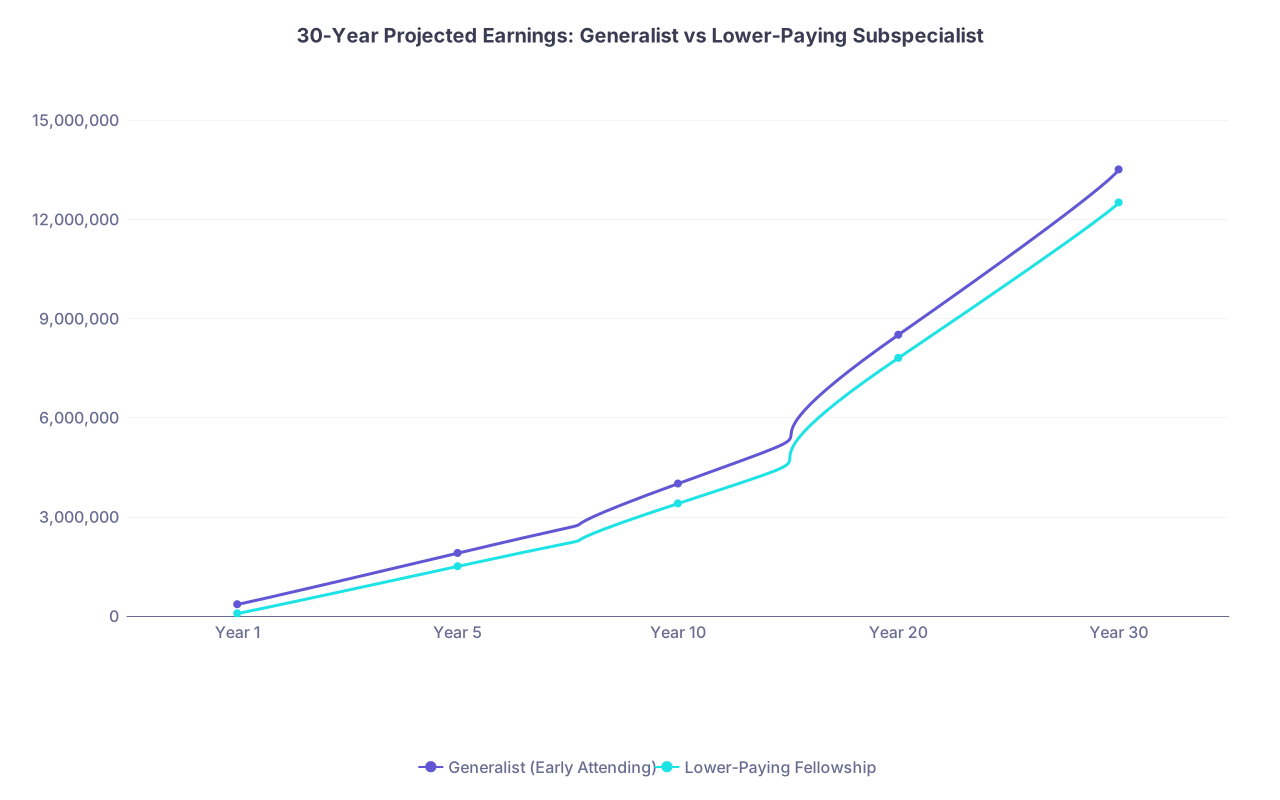
| Category | Generalist (Early Attending) | Lower-Paying Fellowship |
|---|---|---|
| Year 1 | 350000 | 75000 |
| Year 5 | 1900000 | 1500000 |
| Year 10 | 4000000 | 3400000 |
| Year 20 | 8500000 | 7800000 |
| Year 30 | 13500000 | 12500000 |
The fellow “catches up” on annual salary eventually. But the lost compounding from those early attending years never fully disappears.
Fellowship Red Flags That Signal a Lifetime Pay Cap
Forget specific titles for a moment. Watch for these patterns.
1. Fellowship Director Sells “Lifestyle” or “Intellectual Satisfaction” Hard
When they lean heavily on:
- “You will love the complexity”
- “The patients are so grateful”
- “This is very lifestyle-friendly”
…ask yourself why they are not showing you:
- Median salaries by region
- RVU data compared with core specialty
- Placement into private practice with real income numbers
Translation: when money is good, they brag about it. When they do not, that is your warning.
2. Your Future Job Will Be Mostly Cognitive, Not Procedural
In a broken US payment system, purely cognitive specialties get punished.
If your fellowship:
- Reduces procedural volume
- Shifts you to consultative roles
- Involves long visits with complex documentation
…you are probably moving down the income ladder unless there is some unique niche reimbursement model.
3. Everyone in the Field Talks Mission, Not Money
Listen in at conferences and on the interview trail. If you keep hearing:
- “We do this because someone has to.”
- “You are not in this for the money.”
- “The work is so meaningful.”
That is code. Not always, but often. It means you will be paid on the low end for the training you endured.

| Step | Description |
|---|---|
| Step 1 | Considering Fellowship |
| Step 2 | Potential financial gain |
| Step 3 | High risk of pay cap |
| Step 4 | Needs detailed number check |
| Step 5 | Check job market and geography |
| Step 6 | Reconsider or accept tradeoff |
| Step 7 | Adds procedures or RVUs? |
| Step 8 | Raises hourly pay? |
When “Low-Paying” Fellowships Still Make Sense
You are not a robot. Money is not everything. There are legitimate reasons to choose a financially weak fellowship:
- Visa constraints and limited alternatives
- Desire for academic career and research
- Deep personal commitment to a patient population or disease area
- Health or family needs that align with specific schedules / locations
Just be honest with yourself:
- You are buying meaning, lifestyle, or stability at the cost of income.
- That is acceptable as long as you made the trade consciously, not under an illusion that this was a high-earning path.
The real mistake is self-deception, not sacrifice.

How To Protect Yourself Before You Sign That Fellowship Contract
If you remember nothing else, remember this process:
Get actual salary data, not brochure talk.
- Use MGMA, AMGA, Doximity, specialty societies, alumni.
- Ask recent grads privately: “What is your actual W2?”
Compare against what you could earn as a generalist.
- Realistic hospitalist, general IM, EM, anesthesia, general peds, or general rads salaries in your desired regions.
- Include realistic hours and call.
Run a simple 10–30 year projection.
- Lost attending years × likely salary vs fellowship track salary.
- Assume modest growth. Do not overestimate future raises.
Check job postings and talk to recruiters.
- How many jobs exist for your target fellowship in the places you would live?
- Are they academic-only, or is there private practice with real upside?
Ask the uncomfortable question on interview day:
- “For graduates of this fellowship in the last 5 years working full-time clinically, what is the typical starting salary range in private vs academic practice?”
- If they dodge or mumble, that is a sign.
FAQs
1. Is doing any fellowship in a high-paying specialty always a bad financial move?
No. Some fellowships clearly increase pay: interventional cardiology, GI, many surgical subspecialties, certain pain/anesthesia tracks, some radiology niches in the right markets. The mistake is assuming that every fellowship within a high-paying specialty automatically raises your income. You must look at procedure volume, RVU structure, and real-world salary data, not just the name of the subspecialty.
2. How can I quickly compare generalist vs fellowship financial outcomes without being a finance expert?
Build a simple back-of-the-envelope model. Assume 2–3 years of fellowship at $70k vs those same years as an attending at your realistic generalist salary. Project 10–20 years out with a modest annual raise (2–3%). Compare total gross earnings between paths. Even a crude spreadsheet will show you whether the fellowship must raise your future salary by $20k or $150k per year just to break even.
3. Are academic jobs always financially worse than private practice after fellowship?
Not always, but often. Academic medicine typically pays less cash but offers certain offsets: prestige, research time, teaching, possible PSLF eligibility, and sometimes better benefits. For many of the lower-paying subspecialties mentioned above, the only jobs available are academic, which compounds the income hit. If you are aiming for academic life and that genuinely matters more to you than income, fine—just do not pretend it will pay like private GI or ortho.
4. What if I already started a “low-paying” fellowship and regret it financially?
You still have options. First, see whether there are private-practice variants of your subspecialty that pay better or allow you to mix in generalist work (e.g., 50% ID, 50% hospitalist). Second, learn the business side hard—coding, billing, ancillary revenue, efficiency. Third, consider geography; many lower-paying fields are less awful in underserved regions. And if you are early in fellowship and truly miserable, it is not forbidden to step back and reassess rather than sinking more years into a path you know is wrong.
5. How much should money matter in choosing a fellowship versus interest or passion?
You are the one who has to service your loans, fund your retirement, and live with the schedule. Money should matter a lot more than most residents allow themselves to admit. Passion and interest are crucial, but you can easily care about a field and still be completely miserable on a $210k salary after 11–14 years of training and $300k of debt. The safest approach: narrow to a few fields you genuinely like, then within that subset, avoid the versions that quietly cap your lifetime pay for no good reason.
Key points:
- Do not assume “more specialized = more money”; many fellowships inside high-paying specialties lower your lifetime earnings.
- The real cost of fellowship is not just extra years but lost attending income plus lost compounding, which some subspecialties never repay.
- If you choose a low-paying fellowship, do it consciously—because you value the work or lifestyle more than income, not because someone told you “subspecialty always pays better.”