
It’s 10:45 p.m. You’re a PGY‑3 on trauma call. The ED is finally quiet, you’re half‑eating a stale muffin in the call room, when your co‑resident walks in, grinning, and casually drops: “Just signed my offer. $750k first year, plus a $150k sign‑on.”
You look up, exhausted, doing the math in your head on your 60k resident salary and your 400k debt.
What you think is: How the hell did they pull that off?
What you say is: “Nice, man. Where at?”
Here’s the part nobody tells you: that number didn’t “just happen.” Those offers are built quietly, over years, while everyone else is too busy grinding through Q4 call and boards.
Let me walk you through how residents in the highest paid specialties actually set themselves up. The stuff discussed at 1 a.m. in workrooms and closed‑door meetings with department chairs. Not on official “career development” slides.
We’re talking neurosurgery, ortho, ortho spine, IR, GI, cards, CT surgery, some EM in the right markets, anesthesia, private‑practice heavy fields. That 600k‑1M+ world.
Step 1: They Pick a Lane Early – And Commit
In the high‑earning specialties, the big money rarely goes to the “I’m flexible, I like everything” type. It goes to people who look like a clear revenue engine.
You’ll see this pattern over and over:
- Ortho residents locking into joints, spine, or sports by PGY‑3.
- GI fellows differentiating early as “advanced endoscopy” or “general GI in the community.”
- IR residents making it very obvious they’re procedural workhorses, not clinic‑only types.
They’re not just picking what’s “interesting.” They’re picking what fills a painful gap in the market.
I sat in on a private practice ortho group’s recruitment meeting once. The partners looked at each other and said, almost word for word: “We don’t need another generalist. We need a joints guy who can do 600 cases a year within three years, and who isn’t trying to be a celebrity on Instagram.”
That’s how blunt it is.
The residents who end up with insane offers usually:
- Decide their niche by mid‑residency (or early fellowship).
- Make sure their case log and reputation align with that niche.
- Start quietly branding themselves as “the future [X] person.”
Not social‑media branding. Internal branding. Chiefs, attendings, and department administrators start saying things like, “Oh yeah, she’s our spine person,” or “He’s basically our future advanced endoscopy guy.”
Once you look like a solution to a specific clinical gap, people start thinking of you as an investment, not just another employee.
Step 2: They Build a Reputation With the Only People That Matter
You’re told to impress program leadership. That’s incomplete.
The residents who pull the biggest offers understand there are four power centers to impress:
High‑volume, high‑revenue attendings
The ones whose schedules are packed and whose RVUs pay for half the department. They’re the ones private groups call when they need a new partner. If those attendings like you, your name gets passed around before you’ve even updated your CV.Clinic and OR staff
Nurses, techs, schedulers, OR managers. They know exactly who’s efficient, who’s a nightmare, who patients love. I’ve seen a practice call an OR manager at an academic hospital, ask about two graduating fellows, and choose based on who “runs a clean room” and doesn’t meltdown when a case gets added on.Schedulers and administrators
In procedural fields, schedulers are the quiet gatekeepers of your future volume. If you’re known as the resident who finishes on time, communicates clearly, and doesn’t create chaos, that reputation follows you. When departments get recruiting calls, your name gets floated.Referring services
For IR, GI, cards, ortho—surgeons and hospitalists are your future referral base. Residents who respond quickly, give good consult notes, and don’t act like gods? Those are the ones people want in their community.
The mistake most residents make: they’re on their best behavior with fellowship or job interviews, but sloppy or dismissive with the people who actually write the off‑the‑record reviews.
A neurosurgery chair I know literally said on a reference call: “Technically good, but the OR staff hate him. You’ll lose nurses over him.” That guy’s dream offer evaporated in one phone call.
Step 3: They Understand Where the Money Actually Comes From
You want to be well paid? You need to understand where the revenue is.
Not abstractly. Specifically.
Residents who end up with huge offers quietly learn the business side during training:
- They ask how RVUs work and what codes are used for their common procedures.
- They notice which cases are being pushed into the schedule and which ones get bumped.
- They see which hospitals are begging for call coverage and which are overloaded with specialists.
- They ask the practice manager or department admin: “What’s hard for you to hire for right now?”
That last question is gold.
To make this concrete, here’s the kind of thing attendings and recruiters actually look at:
| Specialty | Resident Reputation | Why Offers Get Big |
|---|---|---|
| Ortho Spine | Fast, safe, heavy deformity exposure | Huge RVUs, call coverage gaps |
| GI (Advanced) | ERCP/EUS capable, efficient, low comp | High procedural revenue, backlogged demand |
| IR | Takes call, broad skills, no diva behavior | Covers strokes, trauma, can build service |
| Cardiology (IC) | STEMI workhorse, good with staff | Drives cath lab revenue, 24/7 coverage need |
| Anesthesia | Cardiac/OB, does tough cases, no drama | Critical coverage, lifestyle spots pay up |
Residents who end with top offers don’t just become good clinically. They become good at the right things, in the right volume, in the right markets.
And they know which levers to pull when they talk to potential employers: call coverage, backlog reduction, scope expansion, procedural growth. The words that make administrators’ eyes light up.
Step 4: They Start “Looking” Earlier Than You Think
You think: “I’ll start my job search mid‑PGY‑5 or late fellowship.”
The people landing 700k+ packages? They were on the radar in PGY‑3/4 for residency, or first half of fellowship.
Not blasting out CVs to cold emails. That’s what desperate people do.
They start with something quieter and more powerful: reconnaissance.
They:
- Ask graduating seniors where they’re going and what offers look like. And then they ask, “Who else was recruiting you?”
- Talk to industry reps in the OR and cath lab. These people know every high‑volume practice and which groups are fighting, merging, or growing. I have seen more job leads come from device reps than from faculty.
- Go to regional specialty meetings, not just the big nationals, and actually talk to the community docs at the booths and breakfasts.
- Ask their attendings bluntly: “If you were me, aiming for high compensation, which markets and practice types would you look at?”
At some point, they shift from recon to soft presence.
They send an email to a private group: “I’m a PGY‑4 resident in X at Y, planning on a fellowship in Z, originally from your region. Would love to learn more about your practice and what you look for in a new partner.”
Notice the language. Not “are you hiring?” Just: “what do you look for.”
That’s how you get informal interviews, early mentorship, and eventually, offers tailored around you rather than you begging to fit whatever is available.
Step 5: They Quietly Line Up Leverage
You never negotiate well from a single option. Employers can smell it.
The well‑positioned resident usually has three types of leverage lined up:
Multiple geographic options
They’re not so boxed in by one city or spouse job that they have to say yes to the only game in town. Even if they prefer one city, they keep real alternatives alive.Diverse practice settings
Maybe one academic hybrid job, one big private group, and one smaller community practice. They don’t get stuck comparing apples to apples. They compare what actually matters: earning potential, partnership track, call, support, and exit options.At least one place that really needs them
Could be a regional hospital without enough specialists. A growing suburb. A practice where a senior partner is retiring. They identify at least one situation where they’re not just “another candidate,” they’re the solution to an urgent problem.
I watched a GI fellow play this perfectly.
He had:
- One big‑name academic offer (low pay, prestige).
- One large private GI group in a saturated coastal city (mediocre starting pay, slow partnership).
- One mid‑sized group in a “boring” Midwest city where two older partners were retiring and they were booked out 6 months.
Guess which one gave him >$800k realistic year‑3 earnings, with a sign‑on, relocation, and a strong partnership track? The “boring” place.
He didn’t just get lucky. He targeted a high‑need market, framed himself as an advanced endoscopy workhorse, and had enough other options to negotiate instead of beg.
Step 6: They Learn How to Talk Like a Revenue Partner, Not an Employee
This is where residents blow it. They walk into interviews talking about:
- “Work‑life balance”
- “Mentorship”
- “Research support”
- “Protected time”
That’s fine once you’ve established your value. But if you lead with that, every private group hears: “High maintenance, low volume.”
The residents/fellows who get the lucrative offers talk differently.
They say things like:
- “In fellowship I’ve been doing about X cases per week, including [high‑value case type]. What’s the current backlog like here?”
- “How are your RVUs distributed between partners? Do new partners tend to get busy quickly?”
- “I’m comfortable taking call and I don’t shy away from complex cases. How do you handle call compensation and case allocation for new hires?”
- “What service lines do you wish you could expand if you had more procedural capacity?”
See the difference? They’re framing themselves as a solution to:
- Backlogged clinics and ORs
- Overworked partners
- Lost downstream revenue
- Unserved market demand
Once the employer is thinking, “If we land this person, we can open a new clinic, take more call, reduce wait times, and grow volume,” that’s when you can talk seriously about compensation, tail coverage, partnership buy‑in, and restrictive covenants.
Step 7: They Don’t Rely on the Program’s “Career Guidance”
Your program’s official “career development” efforts are almost always decoration. Some slides. Maybe a noon conference. A random talk from an admin who hasn’t been on the real job market in 15 years.
That’s not where the good intel is.
The real playbook comes from:
Talking off the record with attendings who left jobs
Ask why they left, what was hidden in their contract, what they wish they’d understood about buy‑ins, ancillaries, and non‑competes. This is where you hear the truth.Befriending 2–3 classes ahead of you
They’re in their first or second job. They remember the interview process clearly. They’ll tell you which groups lied, which hospitals burned them out, and which recruiters are actually helpful.Reading actual contracts from friends (blacked out names)
Not just your own. See how clauses differ between a hospital‑employed anesthesiologist, a private orthopedist, and an academic interventional cardiologist. You start to see patterns, and what “normal” looks like in your field.Learning when to pay for a contract lawyer
The smart ones don’t cheap out here. They find lawyers who do physician contracts all day long, ideally in that state and specialty. The partner track, non‑compete, and bonus language are where the landmines live. Residents who sign garbage buy‑in or non‑competes lose millions over a career.
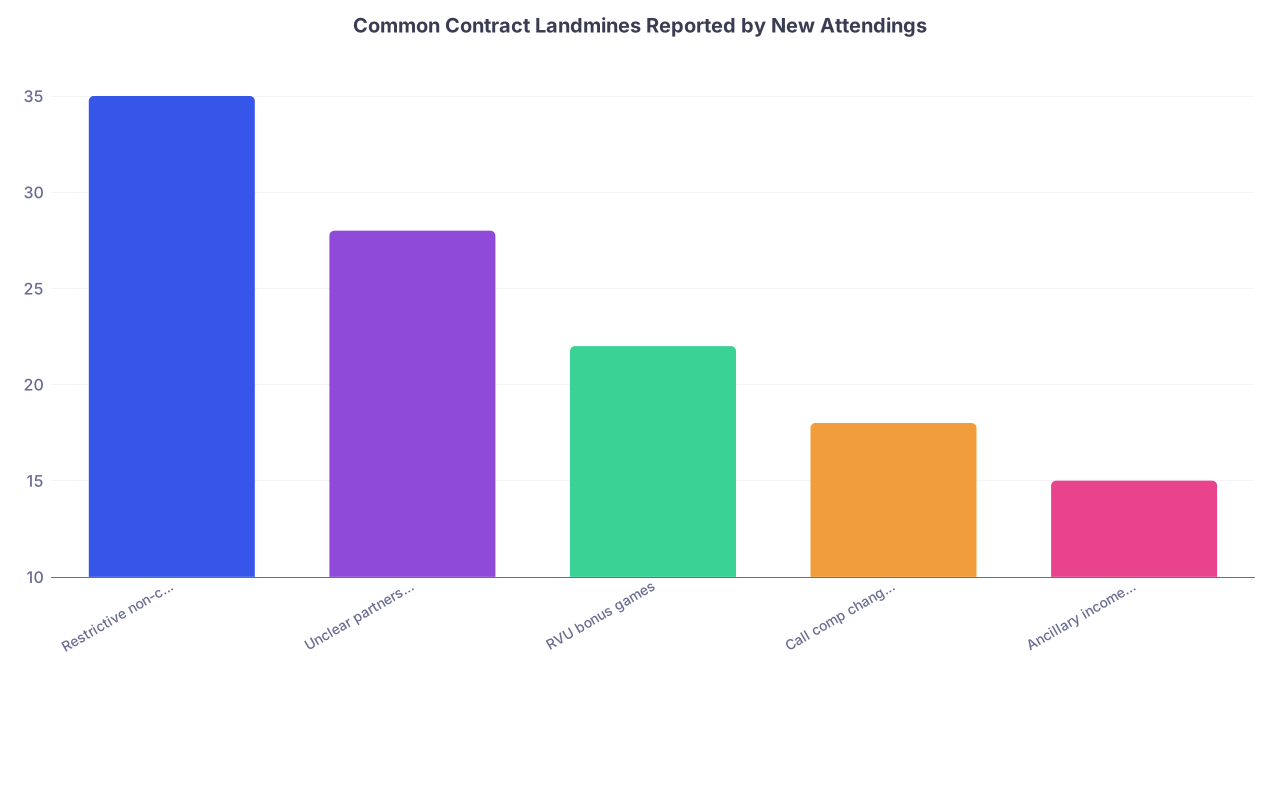
| Category | Value |
|---|---|
| Restrictive non-compete | 35 |
| Unclear partnership track | 28 |
| RVU bonus games | 22 |
| Call comp changes | 18 |
| Ancillary income excluded | 15 |
Those are self‑reported pain points from new attendings I’ve talked to over the years. No one warns you about this in “Professionalism Seminar #4.”
Step 8: They Optimize Their Final Year(s) For Marketability, Not Just Training
There’s a dirty little secret: your last 12–18 months of training are not primarily about becoming “better” in the abstract. They’re about becoming hireable.
Residents who end up with the big offers make strategic choices:
- They load up on the highest‑value cases (the ones they’ll be doing often in practice).
- They ask to run rooms, manage multiple cases, and prove they can handle volume safely.
- They get comfortable with the EHR, documentation, coding for their bread‑and‑butter work.
- They stop trying to be “perfectly balanced” and instead lean into the niche they want to sell themselves on.
And they’re doing something else quietly: polishing the intangibles.
This is what I’ve heard in actual hiring meetings:
- “He’s fast, but he radiates panic. Staff will burn out.”
- “She’s not the absolute fastest, but patients love her and staff adore her. She’s a glue person.”
- “Technically fine, but complains constantly. Hard pass.”
By PGY‑4/5, skills are assumed. What separates you is: are you the kind of person a group wants to be in a call room with at 3 a.m. for the next 10 years? Will staff stay with you, or quit?
You’d be shocked how much that matters in compensation discussions. A partner who keeps staff happy and patients coming back is worth every extra dollar.
A Quiet Reality: Geography Is a Multiplier
We need to talk about something residents pretend isn’t real: geography is a massive multiplier on compensation.
In high‑demand, lower‑desirability markets (Midwest non‑metro, parts of the South, some Rust Belt cities), I have seen:
- Ortho: $700k+ starting, partnership to 1M+ quickly.
- GI: mid 600s starting with realistic 7‑figure potential.
- Anesthesia: $500–600k employed, more in strong private groups.
- IR: base salaries + bonuses pushing them into upper 600s fast.
Same person, same training, but wants NYC or SF? Chop off 200–400k, sometimes more, and add higher COL and often heavier call.
The residents who maximize earning power are brutally honest with themselves:
- “Am I willing to go somewhere I would not have considered for 3–5 years to build wealth?”
- “Can my spouse/partner tolerate that?”
- “If I do that, what’s my exit plan once loans are killed and I’ve built savings?”
Some of the smartest people I know did 5–7 years in a less “sexy” market, annihilated their debt, bought real estate, and then moved to their dream city later with actual leverage and options.
The ones who insisted on prestige coastal cities as new grads? Many are still trapped in lower‑pay, high‑burnout jobs with ugly non‑competes and limited exit ramps.
Process Map: How the Savvy Resident Approaches the Job Hunt
Here’s roughly how the smart ones run the play.

| Step | Description |
|---|---|
| Step 1 | PGY 2-3 - Pick lane |
| Step 2 | PGY 3-4 - Build niche + reputation |
| Step 3 | Early recon - markets and practices |
| Step 4 | PGY 4-5 - Soft contacts and site visits |
| Step 5 | Fellowship - Formal interviews with leverage |
| Step 6 | Compare offers with real intel |
| Step 7 | Contract review and negotiation |
| Step 8 | First 2 years - Prove value and grow volume |
Notice the timeline. This is not: “Start in November of your last year and panic‑apply to 40 postings on some job board.”
What This Actually Looks Like Day‑to‑Day in Residency
Let me make it painfully concrete. A resident who’s quietly setting up big offers will, in a typical month:
- Ask at least one attending about their own job path and what they’d do differently.
- Have one real conversation with a fellow or recent grad about actual numbers and contract terms they saw.
- Say yes to slightly painful but high‑value cases or calls that build reputation and volume.
- Grab coffee with a rep or admin and ask them what practices and hospitals are “always hiring.”
- Do a 5‑minute mental check: “What niche am I signaling? If you asked my program director what I’m known for, what would they say?”
You don’t need a 10‑page career plan. You need to consistently do these small, directional things while everyone else is only thinking about board questions and next weekend off.
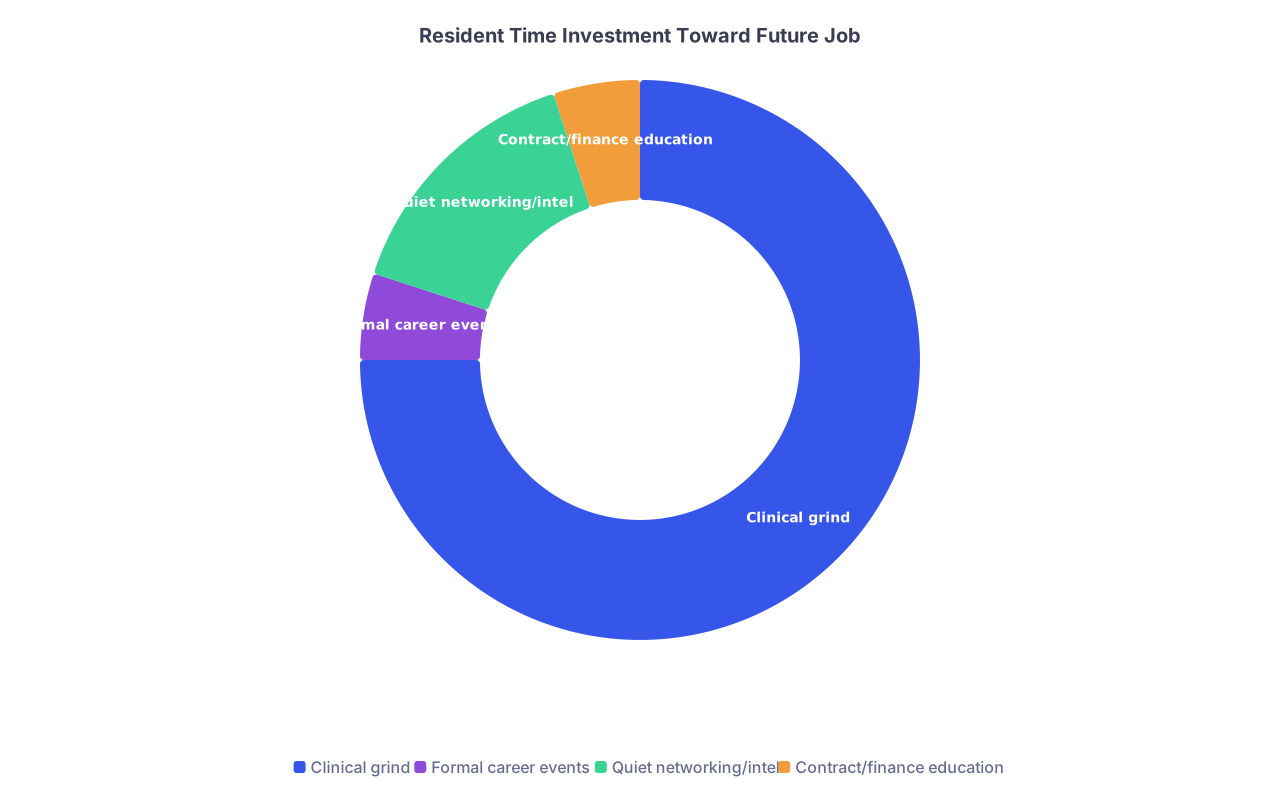
| Category | Value |
|---|---|
| Clinical grind | 75 |
| Formal career events | 5 |
| Quiet networking/intel | 15 |
| Contract/finance education | 5 |
The people with the strongest offers skew that pie slightly. Same clinical grind, but 10–15 percent of their mental bandwidth is always watching the board two moves ahead.
FAQ (Exactly 4 Questions)
1. When is “too early” to start thinking about lucrative job offers?
If you’re an intern, calm down and learn medicine. But by PGY‑2 in a high‑paid specialty, you should at least be:
- Noticing which niches are in demand.
- Listening closely when attendings talk about their jobs.
- Collecting mental notes on what makes someone “highly recruitable.”
Serious reconnaissance by PGY‑3/4 is not “too early” for ortho, neurosurg, IR, GI, anesthesia, or cards. That doesn’t mean signing anything. It means you’re not blind.
2. Do I need to do a fellowship to get top pay?
Depends on specialty. For ortho, your subspecialty fellowship often defines your earning potential. For anesthesia, fellowship can help (cardiac, pain, critical care in some markets) but you can still do well without it. For EM, most fellowships don’t massively boost income unless you pivot to admin, ultrasound, or niche roles.
The better question: “Does this fellowship make me harder to replace in the job market I want?” If the answer is yes, it probably raises your ceiling. If the answer is no, you might just be punting your real job search because it’s scary.
3. How many offers should I realistically aim to have?
At least two serious, written offers. Three is better. Not 10 “maybe we’ll talk later” emails. Multiple written offers give you:
- Real comparison points on salary, bonuses, partnership, call, and non‑competes.
- The ability to negotiate without bluffing.
- Psychological freedom to walk away if something smells wrong.
Residents who accept the first semi‑decent offer they see usually regret it. Not because it’s always terrible, but because they have no idea what they left on the table.
4. Is it still possible to prioritize lifestyle and get paid very well?
Yes. But not usually in your dream city, in a prestige system, with no call, and part‑time. Pick two, maybe three, of those. You want both high pay and a sane schedule? You’ll often find that in:
- Slightly less competitive cities where supply/demand is in your favor.
- Groups that are desperate for coverage and will pay for fewer but more intense weeks.
- Hybrid setups (e.g., 7 on/7 off hospitalist‑style models for some specialties, or heavy block scheduling).
The residents who pull this off are flexible on location and smart about which levers to push. They don’t lead with “I want lifestyle.” They lead with “Here’s the volume and value I can bring” and then negotiate to structure that value into a sane schedule.
If you remember nothing else:
- Look like a clear, high‑value solution to a real market problem, not a generic “good resident.”
- Start quiet reconnaissance and relationship‑building years before you need a job.
- Get multiple real offers, read the contracts like your future depends on it—because it does.