
Last week I watched a resident step out of sign-out to FaceTime his toddler goodnight from the hallway, still in his N95 and face shield. Two minutes later he was back in the workroom, clicking through labs like nothing happened. Meanwhile, another attending was casually talking about their upcoming two‑week trip to Italy with their kids and the new house they just bought.
So of course my brain went straight to: who am I going to end up like? The person missing bedtime every night… or the person with the big house, nice trips, and actual time to enjoy their family? And is there any specialty where you can realistically have both a high salary and a real family life—or is that just fake social media stuff that doesn’t survive residency?
The ugly truth first: you can’t have everything all at once
Let me rip the band‑aid off, because this is the part no one says clearly.
No specialty gives you:
- Top‑tier salary
- Super chill hours
- Total control over call
- Minimal training length
- Easy job market
- And a happy, low‑stress family life
All. At. Once.
Something has to give. Always.
You can absolutely have:
- A high salary and a family
or - Great lifestyle and a family
or - Hyper‑competitive specialty and a family
But you will pay for it somewhere: in training length, hours, stress, or geographic flexibility.
The real question isn’t “Is it possible?”—because yes, it’s possible. I’ve seen it. The real question is “In which specialties is it most realistic for someone like me to land in a setup where salary stays high and family life isn’t destroyed?”
Because the horror stories you hear aren’t random. They cluster in specific fields, in specific practice settings, and in specific personality styles that can’t say no.
Where the money actually is (and what it costs you)
Let’s talk about the usual “highest paid specialties” people throw around and what they really look like for family life once you’re past residency.
| Specialty | Approx Median Salary (USD) |
|---|---|
| Orthopedic Surgery | $600k–$800k |
| Neurosurgery | $700k–$900k+ |
| Cardiology | $550k–$700k |
| Dermatology | $450k–$600k+ |
| Radiology | $450k–$600k |
| Anesthesiology | $400k–$550k |
These are ballpark numbers, but they’re enough to frame the anxiety.
Surgical big earners: Ortho, Neurosurg, CT surgery
Reality check here.
You can have a family in these fields. People do. I’ve seen ortho attendings leave early for kids’ games because they control their OR days. I’ve seen neurosurgeons with protected family vacations.
But:
- Training is brutal and long.
- Call can be soul‑crushing (trauma, spinal emergencies, aneurysms at 3 a.m.).
- Your schedule is tied to OR time, emergencies, and hospital needs.
- Even later in life, when you have more control, it’s not a “9–5 and done” kind of career.
If your core, non‑negotiable dream is coaching soccer, doing bedtime, and actually being there consistently, these paths are high‑risk for resentment later—unless you’re the type who genuinely loves the OR enough that it doesn’t feel like losing your life.
Financially? Amazing. Family‑wise? Possible, but the margin for error is thin. Marry the wrong person, have minimal support, or struggle with boundaries—and this combo gets ugly fast.
The weird sweet spot contenders: Radiology, Anesthesia, Derm
This is where a lot of us start whispering, “Is this… the cheat code?”
Radiology
Pros you actually care about:
- Very high salary potential, especially in private practice and telerad.
- No clinic. No patients calling you at home.
- Many jobs are shift‑based: when you’re off, you’re off.
- Increasing remote options—plenty of rads read from home.
Cons that matter for family:
- Nights and weekends still exist. Someone has to read the emergent scans.
- Some groups are sweatshops: insane RVU expectations, pressure to crank through studies.
- During residency, hours can still feel brutal (night float, call, etc.).
If you land in a decent group, radiology is one of the more realistic “high salary + very solid family time” combos. I’ve seen radiologists home for dinner, coaching Little League, while still out‑earning many surgeons.
Anesthesiology
Pros:
- High salary, particularly in private groups or high‑volume centers.
- Work is mostly contained to the OR day; fewer long‑term patient relationships.
- In many setups, you know your schedule in advance and can plan life around OR days.
Cons:
- Early mornings, often 6–7 a.m. starts.
- Call can be nasty in certain hospitals (trauma, OB, transplants at night).
- Corporate buy‑outs (PE) have created some horror‑story practices—bad for lifestyle and morale.
Some anesthesiologists structure their lives very intentionally: 3–4 long shifts, then real time off. Others pile on extra shifts to chase income and end up exhausted. The specialty gives you room to earn a lot or protect your time—your choices will drive which way you tilt.
Dermatology
Everyone’s fantasy: no call, short days, cash pay, lasers, and six‑figure income.
Reality:
- Still demanding, still busy, still a real job.
- Practice ownership means admin headaches, staff issues, marketing.
- Some derm practices run like factories for volume and cosmetic revenue—fast pace, not chill spa vibes.
But out of all high‑income specialties, derm probably lands closest to the “I have a family, I make a lot, and I’m home for dinner most nights” dream. The bottleneck is: getting in is brutally competitive. You need strong stats, research, and strategy early.
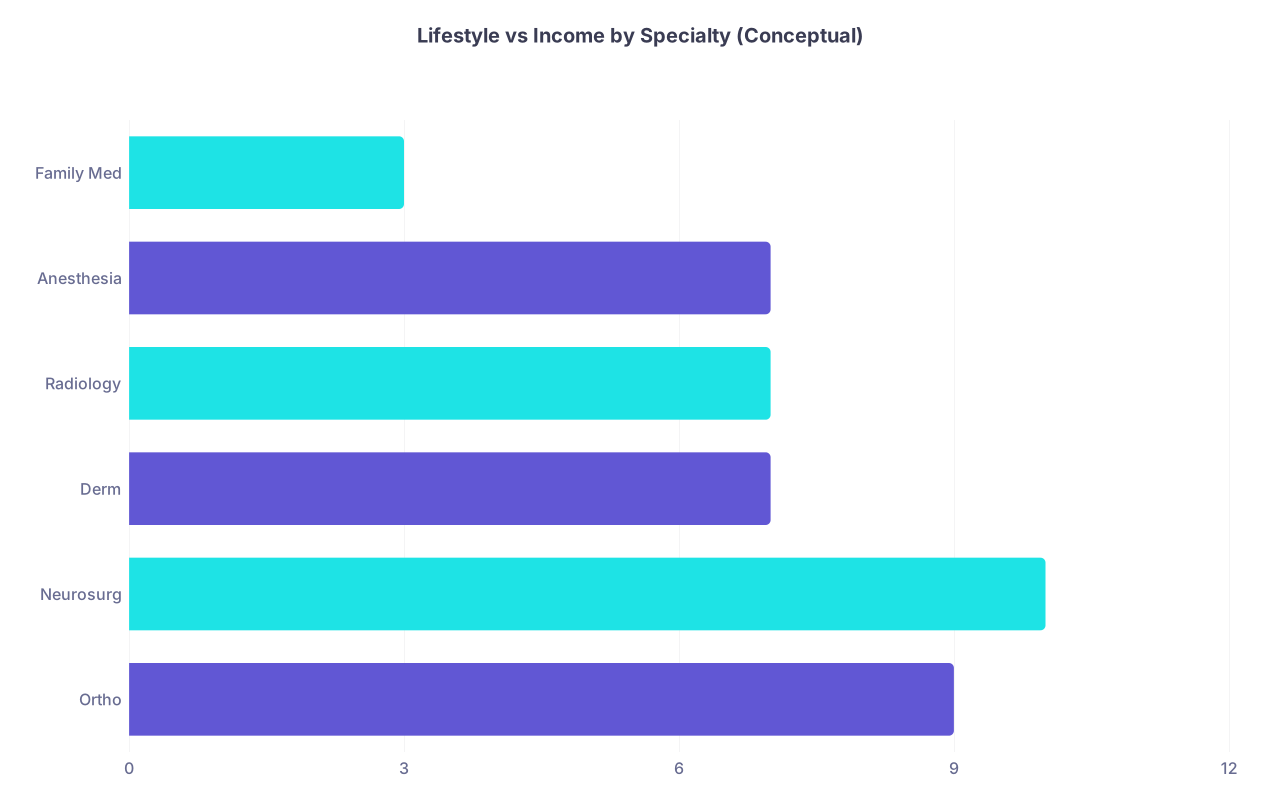
| Category | Value |
|---|---|
| Ortho | 9 |
| Neurosurg | 10 |
| Derm | 7 |
| Radiology | 7 |
| Anesthesia | 7 |
| Family Med | 3 |
(Imagine 10 = maximum income, not lifestyle. Notice how derm, rads, and anesthesia sit in a more balanced middle.)
The residency problem: where family dreams go to die (temporarily)
Here’s the part that’s haunting you: even if the attending job is good, residency feels like a direct attack on having a family, especially if you want kids in training or right after.
You’re not imagining it. Residency is rough on partners, marriages, and mental health.
Typical realities:
- 60–80 hour weeks still very common in demanding fields.
- Nights, weekends, 28‑hour calls.
- No control over holidays or important dates.
- Chronic fatigue that makes you a shell of a partner when you finally do get home.
The thing to remember: residency is a stage, not the rest of your life. It colors everything when you’re in it, but it’s not the final verdict on your family prospects. I’ve seen people have kids in:
- Surgical residencies
- Anesthesia
- Radiology
- EM
- Even neurosurgery
It’s never “easy,” but some programs genuinely support it better than others.
The better question than “Can I?” is:
“Does this field plus its training path align with the family timeline I think I want?”
If you know you want kids in your early 30s and you’re staring at:
- 7 years of neurosurg
vs. - 4 years of anesthesia
That matters. Not because one is impossible, but because your margin for flexibility is very different.

| Step | Description |
|---|---|
| Step 1 | Med School Grad |
| Step 2 | 3 Years |
| Step 3 | 4 Years |
| Step 4 | 5-7 Years |
| Step 5 | Family Med |
| Step 6 | Internal Med |
| Step 7 | Anesthesia |
| Step 8 | Derm |
| Step 9 | Radiology |
| Step 10 | Ortho |
| Step 11 | Neurosurg |
| Step 12 | CT Surgery |
The hidden variable no one talks about: practice setting
This is where things actually live or die for both salary and family time. Not the specialty. The job type.
Broadly:
Academic jobs
- Lower pay (usually)
- More teaching/research/admin
- Sometimes more predictable hours, sometimes worse (depends heavily on culture)
Private practice / group practice
- Higher earning potential
- RVU/volume pressure
- You can carve out lifestyle if the group is sane and you hold boundaries
Employed by hospital system
- Middle‑of‑the‑road pay
- Benefits, HR structure, some stability
- Often shift‑based for things like rads/anesthesia/EM
You could be a radiologist in:
- A sweatshop telerad gig reading 120 RVUs a day, fried, making $700k
or - A balanced hospital‑employed job reading a steady pace, making $450k but home by 5
Same specialty. Completely different life.
So when we say “Is it realistic to have high salary and a family in any field?” the real translation is:
“Is it realistic that I can land in a decent practice environment within a high‑earning specialty where I still get to see my family and not hate my life?”
Yes. If you:
- Prioritize culture and schedule as much as salary when job‑hunting.
- Are willing to say no to toxic “but the money is so good” offers.
- Accept that sometimes “only” $350–450k in a better job is the right trade over $600k in a nightmare situation.

Non‑negotiables you need to be honest about (or this will eat you alive)
Here’s the part that keeps me up at night: what if I pick a specialty that literally cannot coexist with the kind of family life I want, and I don’t realize it until I’m stuck?
So you have to be brutally honest with yourself now. Ask:
How important is predictability to me really?
Can I live with missing some holidays, some school events, some evenings?
Or will that gut me?Am I okay with shift work?
Some of the best salary‑plus‑family setups are shift‑based (rads, anesthesia, EM).
But you’ll still have nights, weekends, or blocks away.How badly do I want top 1–5% income vs. “very comfortable” income?
Because a lot of the absolute top earners sacrifice something big: time, geography, or sanity.Am I willing to move to get the good jobs?
High‑pay + good lifestyle gigs are often in smaller cities, not coastal prestige locations.How scared am I of burning out?
If you already run anxious and exhausted, stacking neurosurg or CT surgery on top of that… might not end well.
There’s no right answer. But lying to yourself because a specialty is shiny? That’s how people end up bitter, divorced, or quitting medicine.
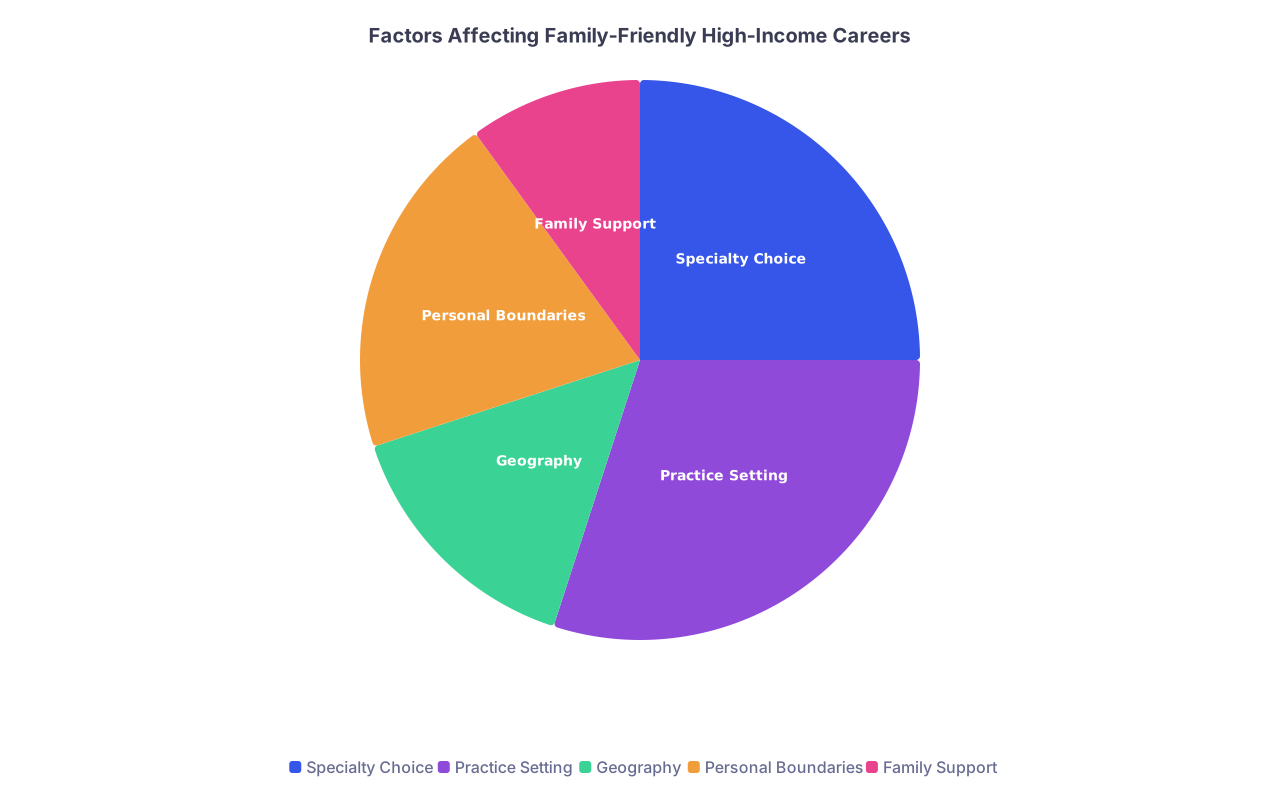
| Category | Value |
|---|---|
| Specialty Choice | 25 |
| Practice Setting | 30 |
| Geography | 15 |
| Personal Boundaries | 20 |
| Family Support | 10 |
So… is there any field where this is actually realistic?
Yes. More than one. But they each come with a fine print.
Realistic combos where I’ve personally seen people thriving with family and high salary:
Dermatology
- High income ceiling, especially with cosmetics/procedures.
- Often clinic hours, minimal call.
- Very good for kid‑centric schedules if you design it that way.
Fine print: insanely competitive to enter; practice management stress if you own.
Radiology
- Broad options: in‑person, remote, academic, private.
- Many jobs are shift‑based and well‑paid.
- High control over time between shifts.
Fine print: nights/weekends possible, need to vet groups carefully.
Anesthesiology
- Strong pay, especially with overtime and specific niches (cards, pain).
- Some setups allow 3–4 workdays/week with solid income.
- When you’re off, you’re off.
Fine print: call can be brutal in some places; early mornings forever.
Certain procedural IM subspecialties (GI, cards with controllable practice)
- GI in particular can pay extremely well.
- Cardiology in a non‑interventional, more clinic‑heavy setup can be solid.
Fine print: training is long, call can follow you far into attending life, and lifestyle varies wildly.
Do people also build beautiful family lives in:
- Ortho
- Neurosurgery
- CT surgery
- EM
- OB/GYN
Yes. I’ve seen it. But the risk is higher, and the path is steeper.
You’re not wrong for wanting high income. You’re not selfish for wanting a family. You’re not naive for wanting both. You just have to be smarter and more strategic than the average person drifting into “whatever’s cool on my rotations.”

What you can do right now (so you’re not just spiraling)
You can’t magically decide your whole future today. But you can stop it from being random.
Today, not tomorrow, do this:
Open a blank page and write, without editing:
- “What I want my family life to look like on a normal Tuesday when I’m 40.”
Include: what time you wake up, who you eat with, when you see your kids (if you want them), how often you’re at home at night.
- “What I want my family life to look like on a normal Tuesday when I’m 40.”
Under that, write:
- “What I refuse to sacrifice long‑term.”
That might be: bedtime with kids, living near grandparents, being able to take 2 weeks vacation, never working 90‑hour weeks again after training.
- “What I refuse to sacrifice long‑term.”
Then:
- Compare that list with your current specialty crushes.
- If they look wildly incompatible, don’t panic—but start asking much more pointed questions to attendings and residents in those fields about their real lives.
Because the worst outcome isn’t “I didn’t pick the absolute highest paying specialty.”
The worst outcome is “I fried my 20s, wrecked my relationships, and ended up in a job I hate just to hit a number that doesn’t fix any of that.”
You can absolutely have a high salary and a real family in medicine. The trick is designing for it early, instead of just hoping it works out.
So: open that page. Write your 40‑year‑old Tuesday. Then ask yourself if your current dream specialty even has jobs that can get you close to that. If the answer is “I don’t know,” that’s your homework for this month.