
The belief that “every high-paying specialty means inevitable burnout” is exaggerated—and dangerously one-dimensional.
You’re not crazy for thinking it, though. The way people talk about neurosurgery, ortho, derm, GI, anesthesia, rad onc, it starts to sound like you’re choosing how you’d like to be chronically exhausted for the rest of your life. Residency horror stories don’t help.
Let me say this clearly: There are high-paying specialties that can be sustainable. There are also ones that will absolutely chew you up if you walk in blind, people-pleasing, and boundary-less. The difference isn’t just the field. It’s the job structure, your tolerance for certain stressors, and whether you’re honest about what you can’t live with.
You’re not really asking: “Which specialties pay well?”
You’re asking: “Can I have a good life and make good money without destroying myself?”
Let’s actually answer that.
The Burnout Trap: It’s Not Just “Hours = Miserable”
People oversimplify burnout as “more hours = more burnout” and “high salary = more hours.” That’s lazy thinking.
Burnout is more about:
- Lack of control
- Constant emotional load with no relief
- Chronic sleep disruption
- Feeling like a cog, not a human
- Mismatch between your temperament and your daily tasks
You can work 60 hours a week and be okay, if:
- Your call isn’t soul-crushing
- You aren’t being screamed at daily
- You actually get real days off
- You feel competent and supported, not constantly drowning
And you can work 35–40 hours and be miserable if the work is mentally toxic, chaotic, or morally distressing.
That’s why some people in “chill” high-paying gigs burn out, while others in intense fields like trauma surgery are oddly fine. They thrive on acute chaos and procedural adrenaline. You might not.
Let’s put some structure to this.
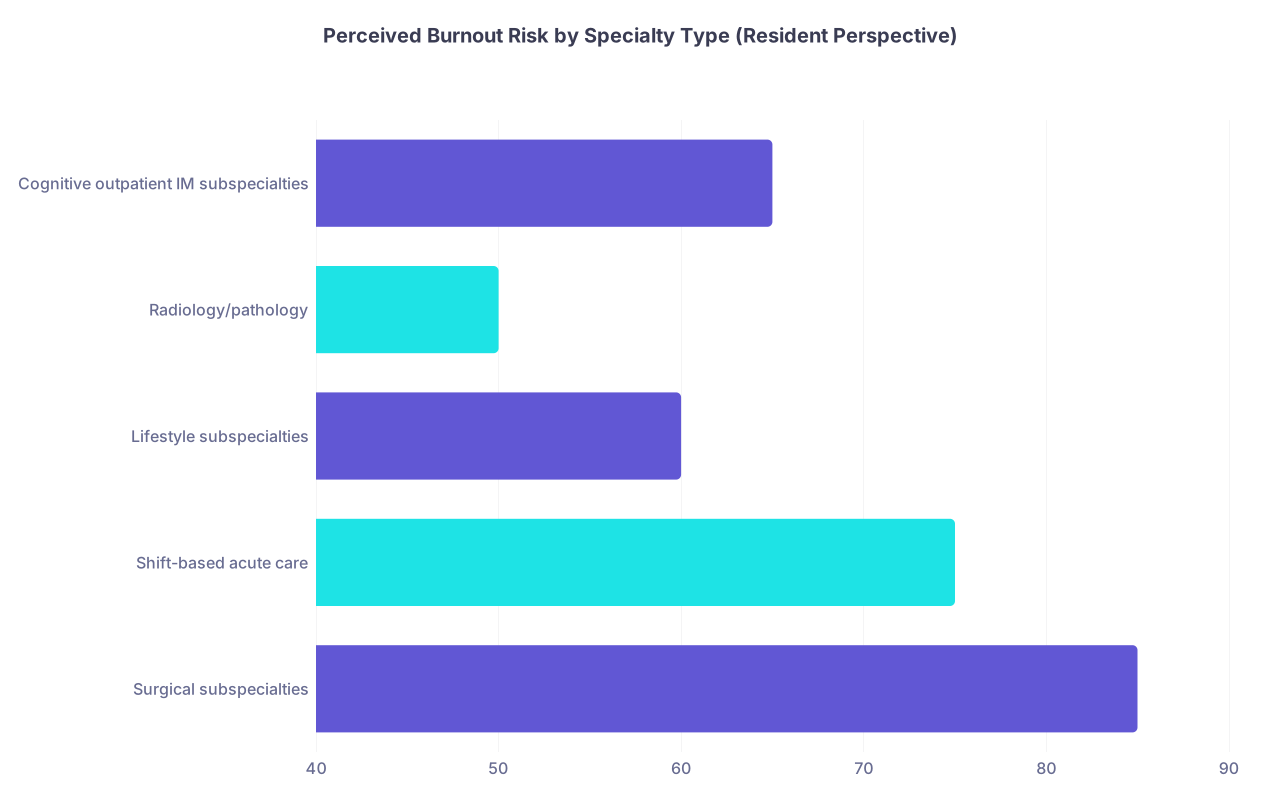
| Category | Value |
|---|---|
| Surgical subspecialties | 85 |
| Shift-based acute care | 75 |
| Lifestyle subspecialties | 60 |
| Radiology/pathology | 50 |
| Cognitive outpatient IM subspecialties | 65 |
These numbers aren’t exact; they’re the way residents talk when the door closes. Rough vibe: surgery residents complain the loudest, shift-based people complain about nights, outpatient sub-specialists complain about admin and RVUs.
The point is: it’s not that “high pay = doomed.” It’s “high pay + wrong structure for you + no boundaries = doomed.”
Residency vs. Attending Life: You’re Probably Blending Them Together
Your brain keeps doing this thing:
“Cardiology = 80+ hour weeks, 24-hour call, never see family.”
But a lot of that is fellowship and early attending life in specific practice models, not some universal rule.
Residency and fellowship are artificially intense. They’re designed to stuff insane amounts of experience into a short window. That’s not what your entire career has to look like.
Think of it like this:
| Stage | Typical Hours | Control Over Schedule | Burnout Feel |
|---|---|---|---|
| Residency (surgical) | 70–90 | Very low | High |
| Fellowship (proced.) | 60–80 | Low | High-moderate |
| Early attending | 55–70 | Variable | Variable |
| Mature attending | 40–55 | Moderate to high | Very variable |
During residency, nearly everyone feels like all fields are unsustainable. Sleep-deprived brains have no nuance.
The real question you should be asking is: “In this specialty, do attendings have options later to change the way they practice?”
Because if the answer is yes, then even if residency is rough, you’re not stuck in that pattern forever.
Derm? Tons of options.
Anesthesia? Tons of options.
GI? More than people think.
Neurosurgery? Fewer, but not zero.
Ortho? Actually more and more options now than 10–20 years ago.
Which High-Paying Fields Are More Sustainable Long-Term?
Not “easy.” Just more malleable if you decide residency-style life will break you.
1. Dermatology: High Pay with Built-In Levers
Derm is the cliché “lifestyle specialty” for a reason. High pay, mostly outpatient, minimal emergencies, very limited nights.
Burnout does exist in derm. People get crushed by:
- Cosmetic-heavy practices with insane volume
- Business pressure to sell procedures and products
- RVU targets that turn clinic into a conveyor belt
But you usually have:
- Daytime hours
- Very few true emergencies
- The ability to slow down and still make a good living
If your main fear is: “I won’t survive endless 3 a.m. phone calls,” then derm is one of the safest high-paying bets.
2. Radiology: High Pay, Invisible Pressure
Rads is underrated when anxious people think about burnout. It seems “quiet” compared to surgery. And sometimes it is.
Pros:
- Often predictable schedules, especially in outpatient or teleradiology
- Very high hourly rate in many practices
- Night shifts can be stacked and then you actually get time off
Cons:
- Very high mental load and focus required
- Constant production pressure (“more studies, faster reads”)
- Isolation, if you’re extroverted
- Telerads can become “dark cave + 14 days of 12-hour shifts + repeat”
But here’s the thing: radiology is modular. You can choose:
- Academic vs private
- Day-heavy vs night-heavy
- Telerads vs on-site
- Subspecialty that fits your brain
For many anxious, somewhat introverted people who like pattern recognition and high control over their environment, radiology can be shockingly sustainable.
3. Anesthesiology: Shift-Based with Real Exit Ramps
Anesthesia gets a bad rep online: “line up at 6 a.m., live in the OR, call forever.” A lot of CRNA vs MD politics talk. Also the fear of “one mistake and disaster.”
But in reality:
- Many anesthesia jobs are true shift work
- You can leave when your case-load is done
- You can negotiate for low/no in-house call in the right group
- Pain medicine opens another world (clinic-based, procedural, high pay)
Burnout here tends to come from:
- Toxic groups that exploit new attendings
- Perpetual call with no control
- Poor staffing and lack of breaks
I’ve seen anesthesiologists who are utterly fried. I’ve also seen 7 a.m. to 3 p.m. folks in stable groups who coach their kids’ sports teams, travel, and still make very solid money.
It’s extremely practice-dependent.
Which High-Paying Fields Are Higher Risk for Burnout?
Higher risk doesn’t mean “don’t do it.” It means you need to walk in eyes open and be ready to aggressively control your environment later.
Surgical Subspecialties (Ortho, Neurosurg, ENT, Plastics, etc.)
You already know the stereotype: infinite hours, OR days that never end, constant call.
A lot of it is true during training. The question is what happens later.
Big risk factors:
- Trauma-heavy call with emergencies at all hours
- Long, complex cases back-to-back
- Intense patient expectations (cosmetics, spine, etc.)
- Culture that glorifies suffering (“We did it, so you should too”)
But here’s the nuance almost no one tells terrified med students:
Many surgeons later:
- Drop trauma and only do electives
- Join group practices or surgery centers with very defined hours
- Narrow their case types to things that are efficient and predictable
- Trade some income for fewer call nights, and are thrilled with that trade
The people who burn out hardest are often those who:
- Can’t say no
- Agree to all call, all cases, all locations
- Stay in toxic hospital politics environments forever “because money”
You can like surgery and still refuse to live in the hospital as an attending.
Procedural IM Subspecialties (Cards, GI, Pulm/CC)
These pay very well. They also have some of the worst call and cognitive/emotional load, especially ICU/CC.
Cardiology: nonstop consults, post-MI management, cath lab call.
GI: GI bleeds at 3 a.m., procedures, clinic, inpatient rounding.
Pulm/CC: 24-hour ICU chaos and end-of-life talks every other day.
But again, career phase matters:
- Many interventional cardiologists later move toward more clinic + less cath
- Some GI docs cut inpatient work and focus on outpatient scopes and clinic
- Some intensivists move into more pulm-heavy setups or part-time ICU
If you’re already anxious about burnout and you hate the idea of being on constant phone duty for crashing patients, these may feel like the wrong fit—unless you know you love the pathology and can craft an eventual low-intensity practice slice within them.
The Part No One Wants to Hear: You Matter More Than the Field
You keep hoping there’s a clean answer like: “Derm = safe, neuro = doomed, ortho = doomed, rads = safe.”
Reality is messier. Two big uncomfortable truths:
You can absolutely burn out in “lifestyle” fields if you:
- Overcommit
- Work in a toxic group
- Let RVUs and money drive every decision
- Never say no and never leave bad environments
You can absolutely be okay—even content—in harder, higher-intensity high-paying fields if:
- You like the day-to-day work
- You feel competent and valued
- You consciously choose slower practice options later
- You’re willing to earn less for sanity (and still earn more than most people)
](https://cdn.residencyadvisor.com/images/articles_svg/chart-drivers-of-burnout-reported-by-residents-7690.svg "Drivers of Burnout Reported by Residents")
| Category | Value |
|---|---|
| Workload/hours | 30 |
| Toxic culture | 25 |
| Lack of control | 20 |
| Poor sleep | 15 |
| [Debt/financial stress](https://residencyadvisor.com/resources/highest-paid-specialties/anxious-about-debt-is-a-lower-paid-specialty-financially-safe) | 10 |
Notice “high salary” doesn’t even show up there. Money isn’t a direct burnout driver. It just keeps people trapped in bad situations longer.
How to Think About This Without Melting Down
You’re trying to pick a field while you’re still in the worst work-life phase of your career. It’s like picking a life partner based only on how they behave during a house fire.
Here’s a more grounded way to think about it:
Ask: “What kind of misery am I least sensitive to?”
- Night call vs early mornings vs intense clinic pace vs OR stress
- Being alone with screens vs constant patient contact
- Sudden crises vs slow chronic sadness
Ask: “Does this specialty offer multiple practice models?”
- Outpatient vs inpatient
- Academic vs private vs employed
- Full-time vs part-time vs locums
- Procedures vs clinic-heavy
Ask attendings in that field:
- “What are the least burnout-y jobs in your specialty?”
- “If you had to design a lower-intensity practice in your field, what would it look like?”
- “Who in your field seems happiest at 45–55, and what are they doing?”
You’ll hear patterns. You’ll also hear a lot of fake bravado. Ignore the flexing. Listen for regret and for relief.
To help your brain sort the noise, here’s a simplified vibe table:
| Specialty | Main Stressors | Built-In Escape Hatches |
|---|---|---|
| Dermatology | Volume, business pressure | Cut volume, focus niche, 4-day |
| Radiology | Production, isolation, nights | Day jobs, outpatient, telerads |
| Anesthesia | Call, OR stress, politics | Pain clinic, low-call groups |
| Ortho/Plast | Long OR days, trauma, call | Electives only, ASC-based |
| Cardiology | Call, ICU, cath emergencies | Clinic-heavy, non-invasive |
| GI | Bleed call, volume, admin | Outpatient scopes, limited call |
No field is perfect. The question is: Can you see a version of that specialty that feels livable to you at 40, not just during fellowship?
A Quick Reality Check Timeline
Your anxiety is trying to convince you that you’re locking in your forever life right now. You’re not.
Here’s how this actually unfolds:
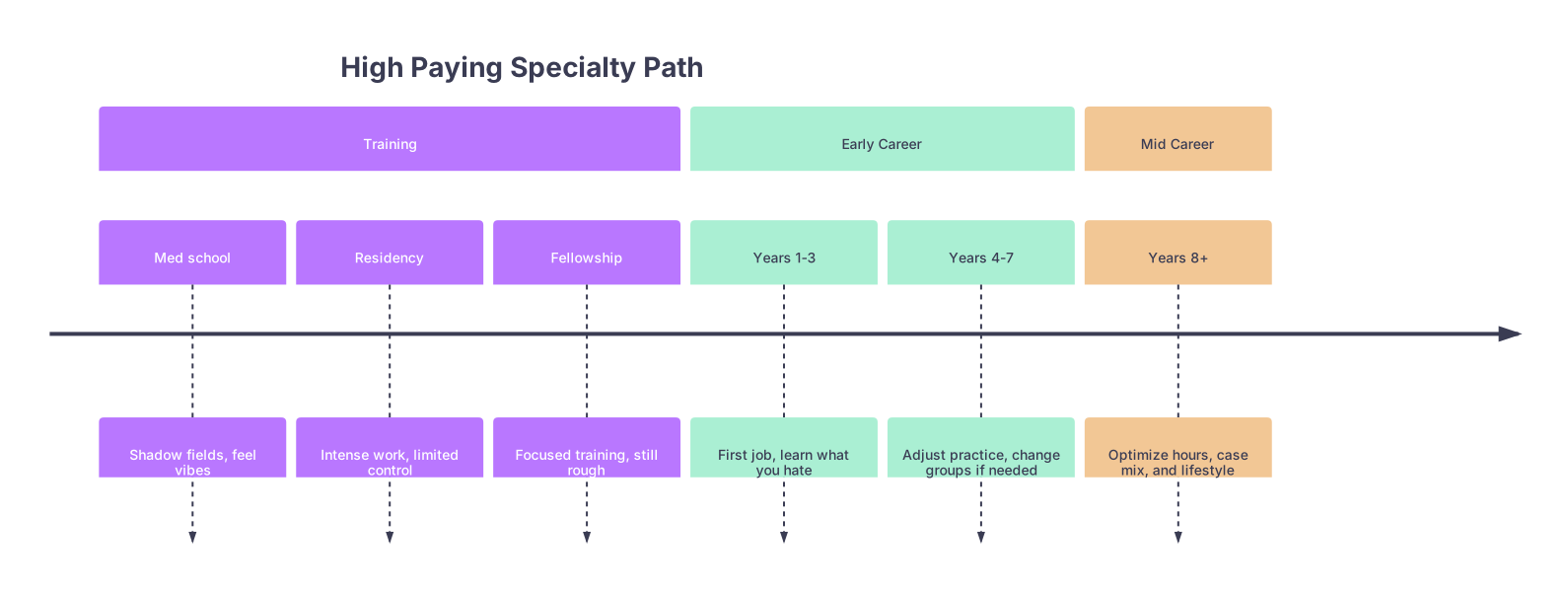
| Period | Event |
|---|---|
| Training - Med school | Shadow fields, feel vibes |
| Training - Residency | Intense work, limited control |
| Training - Fellowship | Focused training, still rough |
| Early Career - Years 1-3 | First job, learn what you hate |
| Early Career - Years 4-7 | Adjust practice, change groups if needed |
| Mid Career - Years 8+ | Optimize hours, case mix, and lifestyle |
You’ll have multiple points where you can:
- Switch jobs
- Change practice settings
- Reduce call
- Cut volume
- Drop certain types of patients or procedures
Burnout gets locked in when people don’t use those switches because they’re scared to rock the boat, or they’re over-anchored to their peak earning years.
You Want Reassurance? Here’s the Honest Version.
No, high-paying specialties are not all unsustainable.
Yes, some of them are more dangerous for burnout-prone people.
Yes, you can still pick one and protect yourself.
If your core fear is, “What if I trap myself in a golden hell?” then your job now is not to find the magic safe field. It’s to:
- Be ruthlessly honest about what kind of call, hours, and emotional load you cannot handle long-term.
- Favor specialties with multiple practice models and levers you can pull later.
- Commit now that you’ll actually use those levers, even if it means making less than the absolute max possible.
You can be well-paid and not broken. But you can’t be well-paid, maximally productive, always agreeable, never disappointing anyone, and also perfectly fine.
You’re going to have to choose. The good news is: you get to choose more than once.

FAQ (Exactly 6 Questions)
1. If I’m already anxious and exhausted in med school, should I avoid all high-paying specialties?
Not automatically. Being tired in med school doesn’t mean you’re doomed in a high-paying field. It does mean you should pay attention to what specifically wears you down.
If you crumble with chronic sleep disruption, 24/7 emergency-type work (like trauma surgery or busy ICU-heavy paths) might be rough. But something like derm, rads, or certain anesthesia jobs could still be realistic. Don’t rule out whole income brackets. Rule out patterns you know are poison for you.
2. Is burnout really that different between, say, derm and cardiology?
Yes. The flavor of burnout is different. In derm, people complain about RVUs, cosmetic pressure, and monotony. In cardiology, they complain about middle-of-the-night calls, endless rounding, crashing patients, and admin battles.
Both can burn you out, but derm has more control knobs: you can slow down, cut to 3–4 days, trim cosmetics or add them, switch practices. Cards is more entangled with hospitals and emergencies. You need to actually be okay with that world to last.
3. How much does debt matter in choosing a high-paying specialty?
Debt absolutely turns the pressure dial up. It can push you toward higher-paying fields or toward taking the highest-paying job in that field—sometimes at the cost of your sanity.
But here’s the reality: most physicians in any mainstream specialty (FM aside) will be in the top income brackets in the country over time. The difference between “very good” and “insane” salary matters less than your brain wants to believe. If a slightly lower-paying yet more sustainable role keeps you practicing 10 extra years, you actually “win” financially too.
4. Are shift-based jobs (EM, anesthesia, radiology) safer from burnout?
They’re safer on one specific axis: boundaries. You leave when your shift is over. That mental separation helps a lot of people.
But each has its own landmines. EM has chaotic volume and variable nights. Anesthesia has OR intensity and call. Rads has production pressure and isolation. They’re not magically protected; they just give you cleaner lines between work and home, which can be a huge deal if you’re prone to carrying stress around.
5. What if I choose a high-paying, high-burnout-risk field and regret it later?
You’ll have options that your fear-brain is pretending don’t exist. You can:
- Switch jobs or groups
- Move to a lower-intensity setting (VA, academic with more teaching, smaller city)
- Drop certain kinds of call or cases
- Go part-time once loans calm down
- In some cases, pivot to related work (industry, admin, informatics, med-legal, etc.)
Is changing paths painful? Sometimes. Is it impossible? No. I’ve watched multiple cardiologists and surgeons radically restructure their careers when they hit a wall.
6. Bottom line: if I want good money and a life, what should I focus on right now?
Stop obsessing over the label of the specialty and start noticing:
- Which rotations leave you tired but still yourself
- Which kinds of stress you bounce back from vs which linger for days
- Which attendings at 45–55 actually seem like people you’d want to be
Then, favor high-paying fields where:
- There’s more than one way to practice
- Night work and call are optional or reducible later
- You can throttle your volume without dropping to poverty-level income (you won’t)
Two or three years from now, you’ll know yourself better. This choice doesn’t have to be perfect. It just has to leave you room to adjust.
Key Takeaways:
- High-paying doesn’t automatically mean unsustainable—practice structure and your personality matter more than the name of the specialty.
- Look for specialties with multiple practice models and real levers you can pull later (hours, call, setting) instead of chasing or avoiding income alone.
- Commit now that you’ll trade some money for sanity if you need to. Your future self will not regret making $50–150k less to actually feel like a human being.