
It’s PGY-2.
You’re walking out of a brutal ICU month, bleary-eyed, and you overhear two co-residents in the call room:
“Dude, I’m telling you, I’m switching to derm. Chill lifestyle, great money. Work three or four days a week, print cash, done.”
You’re exhausted. You’re also worried about loans. The math sounds great. Dermatology, radiology, PM&R, maybe anesthesiology or optho. The whispered “lifestyle specialties.” The fantasy is simple: work less, earn more, be happy.
This is where people make expensive, career-long mistakes.
Not because those fields are bad. They’re not. A lot of them really are among the highest paid specialties.
They get screwed because they build their entire plan on lazy, half-true assumptions about lifestyle and income. Then ten years later, they’re stuck in a corner of medicine that doesn’t fit them, with golden handcuffs, high fixed costs, and less freedom than the “poor” hospitalist they used to look down on.
Let me walk you through the specific assumptions that blow up financially — and how to avoid them.
Mistake #1: Believing “Lifestyle Specialty = Lifestyle Job”
The first landmine is confusing specialty reputation with actual job reality.
A specialty being labeled “lifestyle” tells you almost nothing about:
- Your call schedule
- Your hours
- Your autonomy
- Your income trajectory
I’ve seen dermatologists burned out in high-volume cosmetics mills. Radiologists chained to 12-hour overnight telerad shifts. PM&R docs driving between three SNFs with productivity quotas that would make a surgeon blush.
Here’s the pattern that backfires:
You assume the specialty’s average lifestyle is what you personally will get, and you lock yourself into that field chasing an imaginary future.
The financial consequence
You construct your entire loan payoff and savings plan on a dream:
“I’ll work 4 days a week, no weekends, make $500k, and easily crush my loans.”
Then you match into a competitive “lifestyle” field, graduate, and discover:
- Your first job is 5 days a week plus call
- The actual comp is heavily RVU-based
- The group expects you to see 35–40 patients a day or read 100+ studies per shift
- The “no weekends” clause vanished in the fine print at contract signing
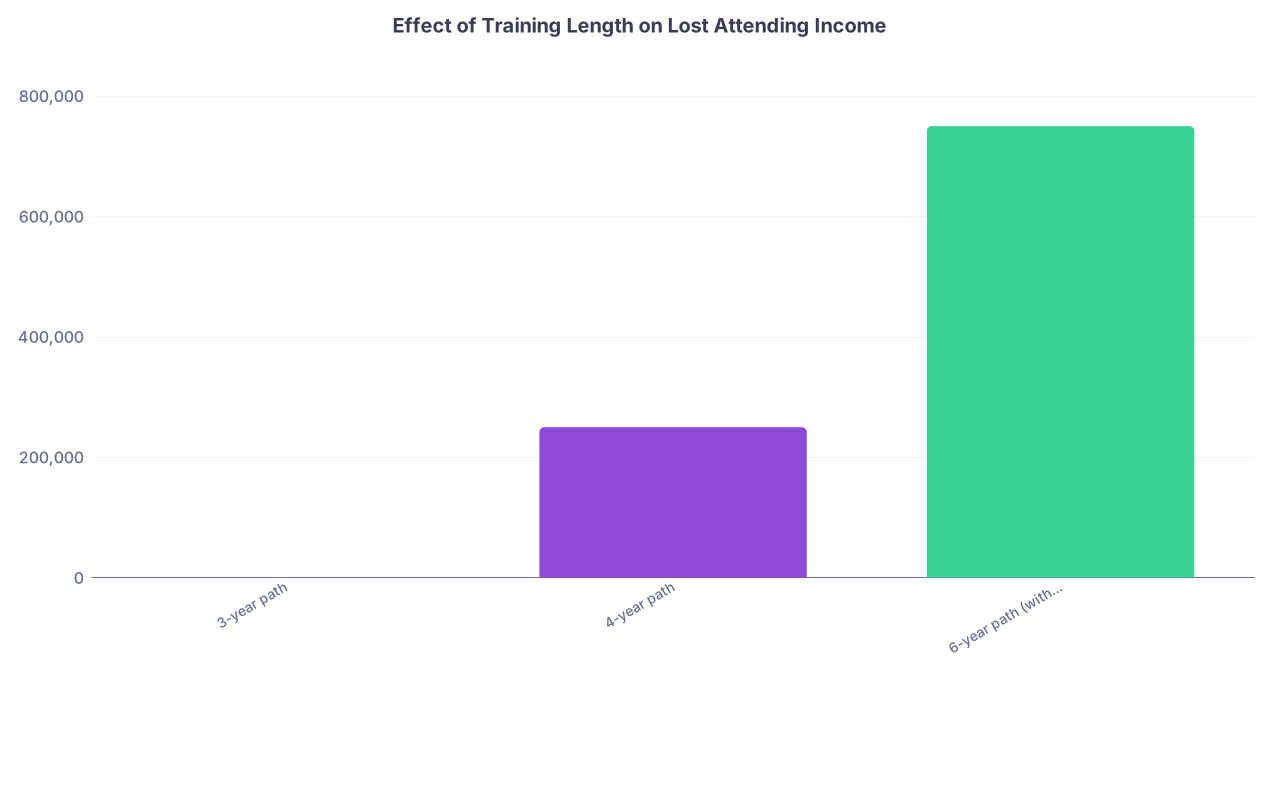
Meanwhile, you delayed earning power by doing extra research years, away rotations, or fellowships just to get into the field.
So your break-even point moves further away.
| Category | Value |
|---|---|
| 3-year path | 0 |
| 4-year path | 250000 |
| 6-year path (with fellowship) | 750000 |
That bar chart is conservative. Many “lifestyle specialty” people tack on:
- Research years
- Extra degrees (MPH, MBA)
- Competitive fellowships
All to chase a job they assume will be cushier and richer. Sometimes it is. Often it isn’t.
How to avoid the mistake: Before you mentally spend the mythical “derm money” or “rads lifestyle,” talk to actual attendings in non-academic, real-world jobs — including the ones who look tired and annoyed. Ask about:
- Real hours
- Call structure
- Patient volumes / study counts
- What’s changed in the last 5–10 years
If you’re scared to ask pointed questions, you’re at high risk of being sold a fantasy.
Mistake #2: Ignoring How Compensation Really Works in “High-Pay Lifestyle” Fields
A lot of students think:
Derm = high pay
Rads = high pay
Anesthesia = high pay
They stop there. Massive mistake.
In reality, many of the “highest paid specialties” are highly sensitive to:
- RVU productivity
- Payer mix
- Procedure volume
- Local competition and saturation
- Corporate/PE ownership
You don’t just sign up and collect a big paycheck. You earn that number by grinding in specific ways.

Here’s what gets glossed over during training:
Dermatology: Income can be very bimodal. Medical derm for Medicaid-heavy populations vs cosmetic-heavy private practice are different planets. Your “$700k derm” fantasy often assumes a cosmetic or procedural-heavy panel you may never realistically build in your chosen location.
Radiology: Telerad has good money but often terrible hours (nights, weekends, constant volume). Private practice partnership track vs hospital-employed vs corporate-owned group — all radically different economics.
Anesthesiology: CRNA saturation, hospital contracts, and group politics matter more than your raw skill. “Lifestyle” can mean supervising multiple rooms under heavy production pressure.
PM&R / Pain: Pain can be extremely lucrative but carries high regulatory, legal, and burnout risk. And not every PM&R job is pain. Many straight PM&R jobs are modestly paid and heavily RVU-driven in SNFs or outpatient settings.
| Specialty | Conservative W2 Job Range | High-End Niche Range |
|---|---|---|
| Derm | $250k–$450k | $700k+ (cosmetic-heavy) |
| Radiology | $350k–$500k | $700k+ (PP partner, heavy call) |
| Anesthesia | $300k–$450k | $600k+ (high volume, partnership) |
| PM&R | $220k–$350k | $500k+ (interventional pain) |
If you only look at the right-hand column, you will make terrible decisions.
The financial consequence
You overestimate your average lifetime income, underestimate the grind needed to reach the top range, and delay your financial independence by 5–10 years.
You then:
- Buy the big house too early
- Inflate lifestyle based on “projected income”
- Take on private school, luxury cars, vacations…
- Then discover your actual comp is the low or middle range for your field
This is how lifestyle specialties create lifestyle traps.
How to avoid the mistake: Build your long-term financial plan on:
- The lower half of the realistic income distribution for your field
- Assumptions of some career turbulence: job change, contract loss, reimbursement cuts
If you end up earning top-quartile income, great. That becomes upside, not baseline.
Mistake #3: Using “Lifestyle” To Justify Extra Years of Low or No Income
Here’s one of the worst financial traps:
“I’ll do an extra research year and competitive fellowship because once I’m in a lifestyle specialty, I’ll make it all back easily.”
No. You might make it back. You might not.
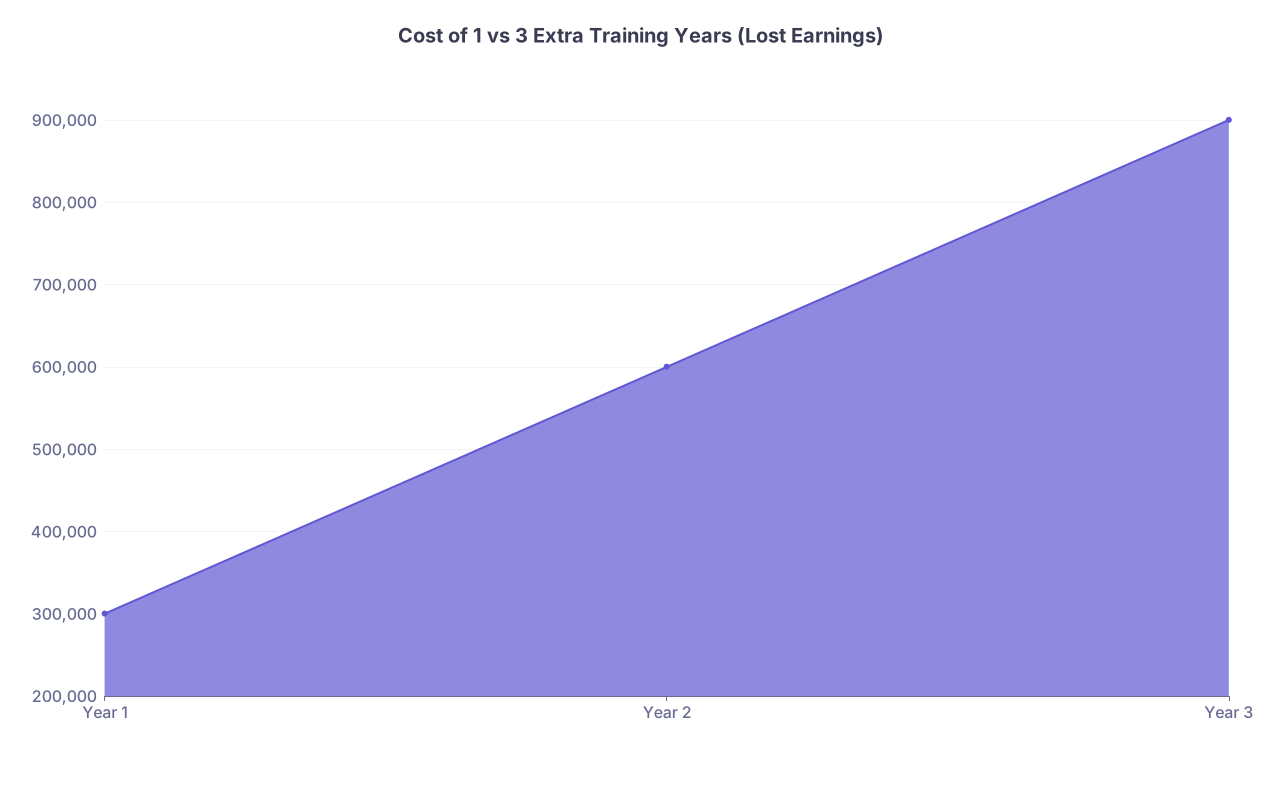
Every additional year of training or research has two costs:
- Direct: Lost attending income
- Indirect: Delayed debt payoff, delayed compounding investments, delayed retirement savings
| Category | Value |
|---|---|
| Year 1 | 300000 |
| Year 2 | 600000 |
| Year 3 | 900000 |
That’s before you even count interest on loans or missed market growth. And yet people casually toss away 1–3 extra years because they’re fixated on the end-point prestige of derm, rads, or optho.
The financial consequence
You end up in a highly competitive field, sure. But your net worth at 40 might be lower than a general internist who started working at 29, lived reasonably, and invested aggressively from day one.
I’ve seen hospitalists with “average” pay out-wealth anesthesiologists who:
- Trained longer
- Chased prestige
- Bought a bigger life early because of “future earning potential”
Your field matters, yes. But your behavior with money and time matters more.
How to avoid the mistake: Do not take extra years (research, degrees, fellowships) unless:
- You would choose that path even if the eventual income was only moderately better than a shorter route
- You have a clear sense of how that extra training realistically changes your earning power (not just in theory, but based on actual job offers people get)
If you’re adding years of training purely because you’re scared of a “less fancy” field, you’re likely making a bad financial trade.
Mistake #4: Assuming “Lifestyle Specialty” = Lower Burnout and More Happiness
Big myth:
If you choose a lifestyle specialty, you’ll be protected from burnout, and that will save you from expensive career derailments.
Reality: Every field has unhappy, exhausted, checked-out physicians. Including the so-called lifestyle ones.
I’ve seen:
- Dermatologists who hate cosmetics but feel trapped because it pays their overhead
- Radiologists stuck in dark rooms, isolated, miserable despite huge paychecks
- PM&R docs who wanted more procedural work but ended up in nursing home mills
- Anesthesiologists constantly fighting surgeons and administrators, feeling disposable
What does this have to do with money? Everything.
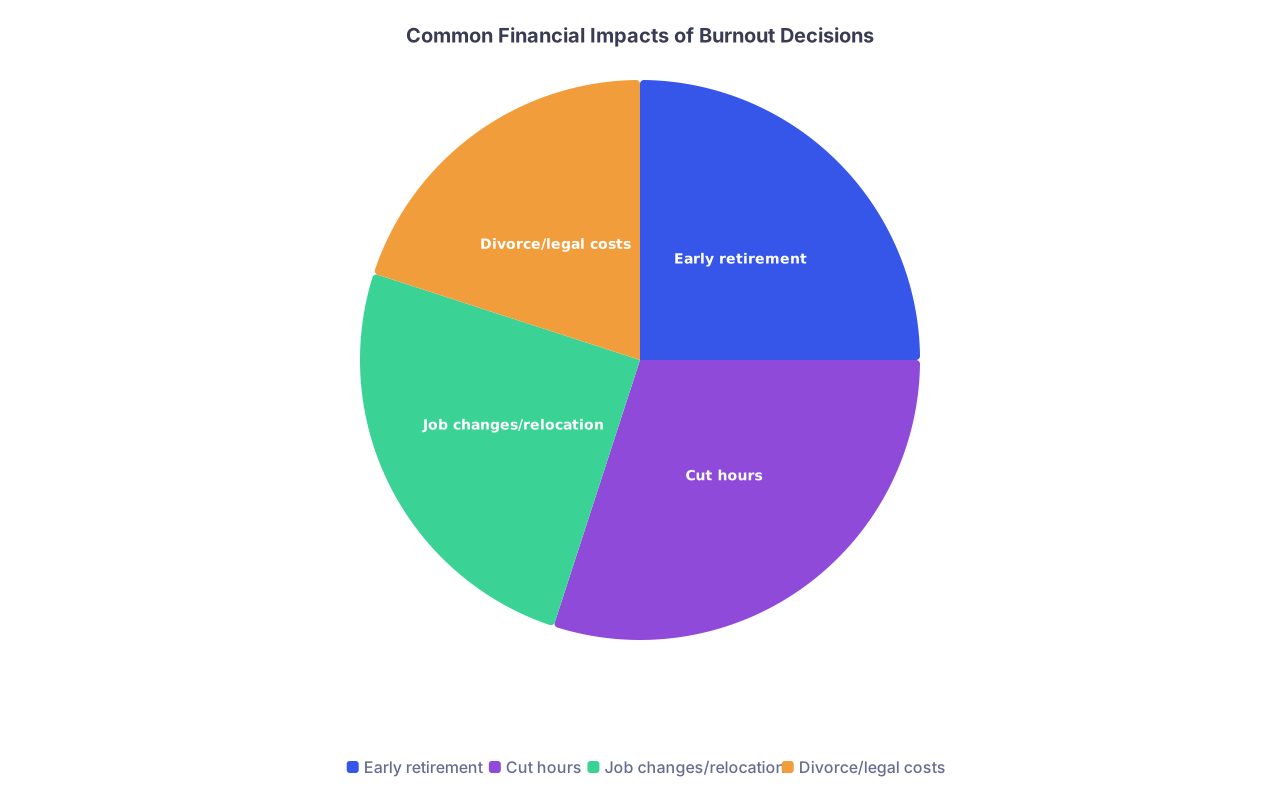
Burned-out physicians make expensive decisions:
- Early retirement with insufficient savings
- Cutting back hours without cutting back lifestyle
- Job hopping with gaps and relocation costs
- Divorce (don’t underestimate how financially devastating this can be)
| Category | Value |
|---|---|
| Early retirement | 25 |
| Cut hours | 30 |
| Job changes/relocation | 25 |
| Divorce/legal costs | 20 |
Choosing a field you don’t truly fit — just because of its “lifestyle” reputation — is like building a mansion on a sinkhole. The collapse is slower but still ugly.
How to avoid the mistake: Ask residents and attendings in those fields:
- “What do you dislike about your job?”
- “If you had to start over, would you choose this again?”
- “What are your colleagues most burned out about?”
- “What type of personality crashes and burns in this specialty?”
Then pay more attention to the hesitations and the “off the record” comments than the polished public answers.
You don’t need a perfect match. But if you’re already rationalizing away major misalignments (“I hate procedures, but anesthesia pays well, so I’ll manage”), you’re playing with fire.
Mistake #5: Forgetting How Fast “Lifestyle” and Compensation Can Change
Another quiet danger: assuming the current market for a specialty will hold for 30 years.
It won’t.
Reimbursement moves.
Regulation shifts.
Technology disrupts.
Non-physician clinicians expand scope.
Private equity restructures entire markets overnight.
Lifestyle specialties are not immune. Sometimes they’re more vulnerable.
Examples you should not ignore:
Radiology and teleradiology: Offshoring, AI, corporate consolidation — the field is being reshaped in real time. Doesn’t mean “bad,” but it absolutely means “changing.”
Anesthesia: CRNAs and anesthesia assistants, plus tight hospital budgets, can squeeze comp and bargaining power. Contract losses can nuke an entire group’s livelihoods overnight.
Dermatology: PE-backed rollups, product-driven cosmetic models, and heavy market competition in desirable cities. The “easy money” story is already different than it was 15 years ago.
Pain / PM&R: Regulatory tightening on opioids and procedures can hit practices hard. Practices can go from booming to barely sustainable quickly if payers change coverage.

The financial consequence
If you lock yourself into a specialty solely because of its current perceived advantage, you’re betting your entire 30-year career on:
- Policy stability
- Economic stability
- Technological stability
That’s…optimistic.
When the winds change, you may find:
- You’re regionally locked (kids, spouse job, family)
- The few remaining high-paying jobs are brutal on lifestyle
- Changing specialties is basically impossible without starting over
How to avoid the mistake: Pick a field where:
- You can tolerate that field’s worst realistic job situations
- You’d still be okay if reimbursement dropped 20–30% over time
- The core day-to-day work aligns with your temperament, not just your bank account
Because reimbursement will move. The question is whether you can still stand your job when the “extra” money evaporates.
Mistake #6: Overlooking Geographic and Market Trade-offs
This one bites hard:
You imagine a high-income, low-stress derm or rads job in a major coastal city with perfect weather, great schools, and a 10-minute commute.
So does everyone else.
What you actually get, especially early in your career, might be:
- Midwest or rural locations
- Lower COL but limited amenities
- Heavy volume or tough call to justify higher pay
Or invert it:
You land in that dream city…at the cost of:
- Lower compensation
- Higher housing costs
- Heavier competition for procedures and referrals
| Market Type | Lifestyle Reputation | Pay Level (Typical) | Housing Cost |
|---|---|---|---|
| Major Coastal City | Great | Lower | Very High |
| Suburban/Regional | Balanced | Moderate–High | Moderate |
| Rural | Tougher socially | Higher | Low |
I’ve watched new lifestyle-specialty attendings move to San Diego, Seattle, or Boston, making “good” money on paper, then quietly drown in:
- Mortgage
- Childcare
- Taxes
- Loan payments
Meanwhile, their “non-lifestyle” colleagues in flyover states quietly build real wealth and live actual easy lives.
How to avoid the mistake:
When you say “lifestyle,” be precise. Is it:
- Hours worked?
- Commute?
- Cost of living?
- Proximity to family?
- School quality for kids?
Then realize: You rarely get all of those plus top-quartile specialty pay in the same package.
You’ll trade something. Know what you’re willing to give up before you commit to a field whose best jobs cluster in the exact places you don’t want to live.
Mistake #7: Confusing “High Income” With “Financial Freedom”
This might be the most dangerous assumption of all:
“If I just get into a high-paying lifestyle specialty, money will take care of itself.”
No. It won’t.
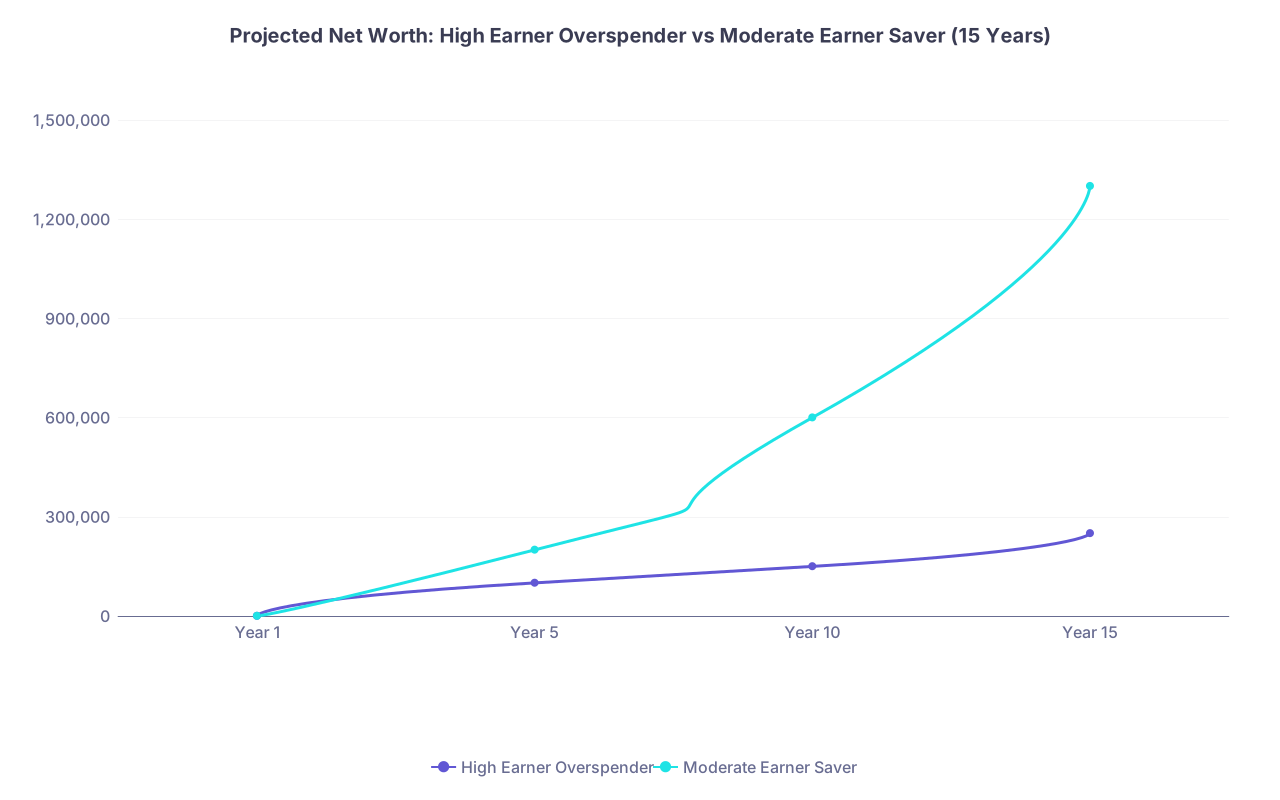
A $500k salary with:
- $1.2M house
- Private school
- Two luxury leases
- Maxed-out credit
- Little investing discipline
…is a financial prison.
While a $280k hospitalist or outpatient IM doc who:
- Buys a reasonable home
- Drives paid-off cars
- Maxes retirement accounts
- Invests consistently
…will probably hit genuine financial independence years earlier.
| Category | High Earner Overspender | Moderate Earner Saver |
|---|---|---|
| Year 1 | 0 | 0 |
| Year 5 | 100000 | 200000 |
| Year 10 | 150000 | 600000 |
| Year 15 | 250000 | 1300000 |
Most med students I talk to drastically underestimate how fast lifestyle creep eats “top” specialty salaries.
They also overestimate how much happier they’ll be at $450k vs $300k if they’re miserable at work.
How to avoid the mistake:
Stop thinking, “Which specialty makes the most?”
Start thinking, “Which specialty can I do for 20+ years without hating my life — and where I can live below my means?”
That combination — reasonable longevity plus consistent saving/investing — beats the prestige-and-pay-chasing game almost every time.
Putting It All Together: Smarter Questions To Ask Now
If you want to avoid being another cautionary tale, start interrogating specialties with better questions.
Not:
- “What’s the average salary?”
- “Is the lifestyle good?”
But:
- “How do most attendings in this field actually get to the top-earning positions?”
- “What percentage of people in this specialty end up with the schedule and income I think I want?”
- “What are the worst 20% of jobs in this field like, and could I stomach those if I had to for a few years?”
- “What has changed in the last 10 years in your specialty — and what worries you about the next 10?”
- “What kind of person thrives here, and what kind of person crashes and burns?”

If you consistently get vague, rosy answers from attendings, push harder. The ones who sigh before they answer — those are the people you should listen to.
The Single Biggest Error To Avoid
The core mistake is simple:
Treating your specialty choice like a get-rich-quick hack instead of a long-term life design decision.
You’re not choosing a lottery ticket. You’re choosing:
- Your daily problems
- Your colleagues
- Your stress profile
- Your location flexibility
- Your vulnerability to policy and market shifts
The money will follow from those things. Not the other way around.
If you anchor on “lifestyle specialty” because you’re traumatized by residency and seduced by salary tables, you’re exactly the person these traps were built for.
FAQ (Exactly 3 Questions)
1. If I care a lot about money, should I still avoid lifestyle specialties?
No. You should avoid lazy thinking about them. Many lifestyle specialties really are among the highest paid — dermatology, radiology, anesthesia, certain PM&R/pain setups. But you need to understand the real distribution of incomes, the hours and pressures behind those paychecks, and how fragile some of those positions can be. Chase fields where you like the work and can imagine doing the less glamorous versions of the job, then build wealth by living below your means. That beats chasing a specialty purely for its top-line salary.
2. Is it dumb to do extra research years just to match a competitive lifestyle field?
It’s not automatically dumb. It’s dumb if you’re doing it only because you’re afraid of matching into something “less prestigious” or “lower-paying,” without a clear, honest alignment with the work itself. Every extra year you spend not earning attending income comes with a large financial opportunity cost. If you’d still choose that extra year knowing your future income might end up only slightly higher than a shorter pathway, then it may be a good trade. If not, you’re likely overpaying for a brand name.
3. What’s one practical way to reality-check a “lifestyle” specialty before committing?
Shadow attendings in that field in at least two very different settings: an academic center and a community/private setting. Ask each of them the same three blunt questions: “What sucks about your job?”, “What do you worry about financially in your specialty over the next decade?”, and “If your kid wanted to do what you do, would you encourage them?” Pay attention to any hesitation or contradictions. If the red flags you hear make you say, “I’ll be the exception,” you’re setting yourself up for a painful surprise.
Next step today:
Pick one lifestyle specialty you’ve been idealizing. Track down a mid-career attending in that field (not the super-star, not the department chair — a regular, working doctor). Email or message them and ask for 20 minutes to ask very specific questions about income variability, hours, call, and what’s changed in their field. Then actually listen to the answers, not just the parts that match your fantasy.